Thursday, 5 August 2021

Blood and power

 Sunday, 27th June: Wisdom 1:13-15; 2:23-24 and Mark 5:21-43


Up until the first lockdown, to move through London was to move among the crowds: from the tube to the theatre, Soho to Southbank, commuting and culture, Kings Road to Kings Cross.


Perhaps we miss it, or dread it: the wave of bodies passing down a street - feet,  trudging; shoulders bumping. The pace of urban proximity. A pace that can become a tide of hasty, preoccupied indifference; a sea of feet.


Today’s gospel takes us onto a crowded streets - the the ebb and flow of people and of power.
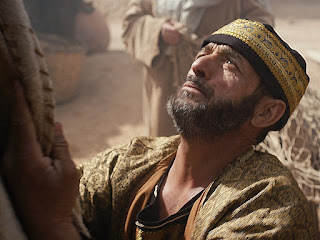


Jairus


First we encounter Jairus. He’s a powerful man, a religious leader, but he has no power to save his daughter. In the midst of the crowd, in the midst of the clamour and pace, he falls to his knees at Jesus’ feet.


From his position of power, he reaches out in desperation. His daughter - who is growing to womanhood - is dying. He needs help and attention, hope and restored life.


Jesus says nothing: he simply goes with him.


And the crowds continue to press in; they move with the pace of urgent curiosity with Jairus and Jesus.


Image from catacombs


And there in the crowd is someone else whose need is great. A women who has lived with erratic and persistent bleeding for 12 years. 


Mark’s description of her situation might echo many a menopause documentary: she’d endured; visited many physicians; had spent all she had; and felt worse rather than better. For as long as one daughter had lived, this middle-aged daughter had bleed; the one is on the cusp of  adolescence, the other becoming infertile.


She’s been locked down by pain, discomfort and fatigue; her own menstrual cycles bound by the cycles of law and purity; her own social, spiritual and economic life, depleted. 


She moving towards Jesus in the flow of people, with her flow of blood; longing for life-restoring power to flow into her to make her well. 


We might read or hear her story as a moment of interruption or disruption whilst Jesus is on the way to someone else’s house.  He’s going to a twelve year old daughter who’s dying, at the point of death or already dead. 


Dare we pay some attention to this woman, to look her in the eye as she too reaches it out in need, in faith and in hope? Some commentators do treat her story with brevity: crediting her faith, pronouncing her cured; as her isolation ends, she can move on and so do we: and quickly.


Perhaps there is more to this: the stories of women’s bodies - bleeding and dying - are intertwined. Both of them are in violation of laws on purity; yet Jesus extends himself to them as he moves through the crowd. 


On the way to restore the younger one, Jesus also restores the older other. The Father of the one, makes a public claim for Jesus’ attention; she reaches out in secretly, privately.


Amongst these moving feet, there is a flow of blood and a flow of power; a flow of hope and of new life. She felt in her body that she was healed; Jesus felt in his body that power had gone out from him.


They are both aware of their own embodiment, their own physical reactions. 


This says something about who Jesus is: the fullness of his humanity but also the fullness of God dwelling in him. God abiding with us in flesh of our flesh. 


Yet, this moment of need, of trust and of healing also becomes a public moment of recognition: she is to take heart for her faith has made her well; she becomes a witness to Jesus - as she tells of how she was healed, he affirms her testimony.


If we refuse to skip over this disruption, and instead pay attention to this woman, what do we find? There is no return to youthfulness or “normal” cycles of fertility; and yet, as her bleeding stops, she finds her voice. May be she joins the company of those who follow Jesus; may be she returns to her community.


Either way, she is no longer depleted but full of life.


Perhaps her body can speak to bodies going through the transition of the peri-menopause and the time when bleeding stops at the menopause. How does it allow us to talk about and inhabit women’s bodies in a hopeful way - enabling us to grieve for what might have been and embrace new life?


The wideness of God’s mercy in this moment is something that raise her up, allowing her to share the wisdom, presence and time of the matriarch


But we also become aware that a different sort of biological clock is ticking: the little girl has died. 


The scene shifts dramatically. The crowd is now wailing: there is an intensity of commotion as we move towards loss and grief; the heart stopping moment of death. 
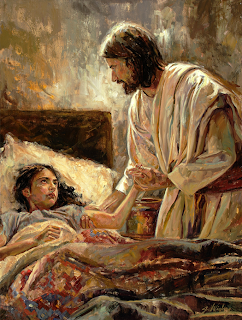


Image via Pinterest


And yet, here power pours forth. God in Jesus does not delight, as the book of wisdom puts it, in the death of the living. 


Here, as he holds her hand there is a wholesome and generative force at work; as he breathes those words ‘Taliltha cum’, life is restored; for God has made us in the image of his own eternity. 


For now, food is shared; life is renewed.  It gives us hope, that in the bodies of these women, young and old, we are marked for resurrection rather than death. 


The church too, as Christ’s body, is moved and changed by the power of Jesus:  when we touch and taste and see the fragility of what is given; the power of what is poured out.  This body given for us is a redeemed life of the flesh. In the Eucharist, the power of blood and love flow - a constituting and reconstituting memory of God’s character shared with us in death and resurrection. 


Rachel Mann expresses this sacramental turn vividly: ‘in the eucharist we are sustained and renewed as we take God into our guts. To be members of the Body of Christ means that we are people of compassion - of gut and womb’.  Wombs that bleed and birth and dry up and yet speak of new life. 


In these bodies - menopausal and adolescent - there is an opening up perhaps the power and possibility of new life and wisdom which anticipates the resurrection. 


What of those other bodies, those other daughters?


How often do we make eye contact with the person who’s made their home, pitched their tent, outside a tube station? Do we appreciate the small, but human scale, difference we make when we chat to a Big Issue vendor? Do we make time to give directions to someone who’s lost or confused about what bus to take?


May daughters of Zion rejoice: with healing, truth and justice, the kingdom comes.


Listen to The Porter's Gate: Daughters of Zion here


© Julie Gittoes 2021


Care for Creation

 Sunday, 5 June: Care for Creation - Genesis 3.8–15 and Mark 3:20-end


Original Image

Nature writing has become increasing popular: books about footpaths and coastlines; birds, butterflies and trees. Writers such as Richard Maybe explore how we think about nature in relation to our lives - describing the earth as a commonwealth of all species.


Perhaps are tapping into or reflecting on our increased appreciation of the countryside; but there’s more to it than a whimsical nostalgia. Much of this writing is questioning our current values and lifestyles; economic growth and materialism. Some, like George Monbiot, use their words as journalists to make us think about climate, sustainability and environmental degradation. 


Original Image


Words about the natural world are doing more than expressing beauty or describing eco-systems. Maybe describes nature writers as ‘translators of the language of the natural world’; and perhaps Genesis is also in the business of translating the language of the natural world as God's creation and our place within it.


We’ll be familiar with the way Genesis tells multiple stories about goodness and diversity of the created order, irreducible to binaries or polar opposites. It speaks of water and land - the salty seas, fresh water lakes, peaty moorland and fertile deltas. It speaks of creatures that swim and fly and bestride the earth, each named and given a place. 


Genesis also speaks of us: of human beings formed out of dust with the breath of life. Created with purpose - to till and keep this earthly garden. There is goodness here too; and freedom and creativity; curiosity and order. This breathe of life is not something we can hold on to; we have to exhale - live moment by moment; to live lightly; to live in relation to the gift of what surrounds us. 


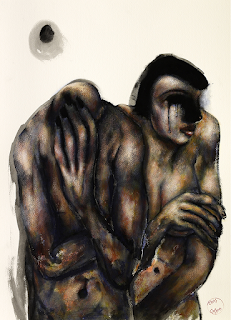
Image: Chris Gollon


But, as we are all too aware, there is a moment of disruption. The word fall or sin doesn’t occur in reading we’ve heard today. But we do hear of enmity - of fear, shame and secrecy; of using the natural world; of blame and trickery. All those things which mark a shift from trust to mistrust; codependence to fragmentation. 


Human beings were created with freedom as well as purpose: they had options framed by permission and also prohibition: they were allowed to eat the fruit of the earth, but they were also given boundaries.


One commentator describes the place of the serpent as a ‘living metaphor’: presenting options to the human will; inviting action in response to new possibilities. The passing of blame between human and non-human creatures reveals the attractiveness of the enticement, and the guilt at not valuing the gift of freedom and instead ignoring the boundaries. 


As one writer puts it: ‘they had wanted knowledge rather than trust. And now they have it. They now have more than they could have wanted to know. And there is no place to run’. 


The rebellion in this story is in thinking that we can have purpose and freedom without limit; that living without limit risks our freedom; that embracing freedom without purpose takes away the safety of the boundaries. 


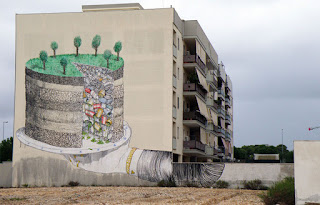
Original Street Art


There is enmity - a split, a breach, a shift in relating. There is a separation between creatures; a desire to hide in shame; the pain to live with consequences. It’s a harm caused by a shortness of breath - a shortness of breath that drives us to consume and control, to pollute and destroy.


Original poster


We are invited to look at our own carbon footprint - to consider ways where we can buy less; and use our economic influence to shape a more sustainable future. This might be part of our calling to be ea ‘second wind’ to breath deeply and live lightly. 


Stanley Spencer: Christ in the Wilderness


In the gospel, we encounter Jesus: we are drawn into the stories of how he walked the earth. The grain he plucked and ate on the journey; the lakes, deserts and mountains he knew; the birds, flowers and animals he notices, whose language he translates to teach us about God’s love. 


Those who encounter him, don’t quite know what to make of him: the scribes are hostile, misunderstanding and provoke questions about power and motive; his family are sceptical and want to protect him, fearing his out of his mind; and some listen, respond and commit, the disciples - the women, the twelve, the curious; those with power wealth, status and those with little.


They listen. They catch this second wind; and draw a deeper breath. They are inspired. They do God’s will as members of Jesus’ kin, his body; led by the Spirit. 


Jesus is stronger than any enmity or enticement: he knows the impulses of the human heart and calls out the gravest sin. That is to think we can have freedom without boundaries; that we can find our purpose without trust; that we can do as we please without causing hostility. This is to sin against the Spirit - to distort trust in God who gives breath and life and invites us to breathe with praise and hope, justice and imagination. 


To care for creation is to live not only with breathtaking wonder at beauty but to enlarge our imaginations as we care for the fragile complexity. We are to find inspiration - breathing in from our tradition - in order to inspire others and reshape expectations. 


Miriam will be working with the Eco-Church team to guide and encourage us as we seek to care for creation; as we seek to overcome enmity and separation between human beings and other animals. 


That might mean reusing/recycling; looking at lowering our energy usage; composting and encouraging the wildlife in our churchyard; as we seek to drive or fly less; as we reduce our meat consumption; as we work with schools and other organisations - including our friends of other faiths to learn habits of consuming less “stuff” and conserving energy more. 


Marsh Green URC Eco-Church


We commit ourselves to this work as our world cries out for healing. As we cry out for mercy and forgiveness we find new ways of serving one another and our world with reverence, for the Lord is our hope.


 This work of renewal and care is one of the marks of mission of the Anglican Communion: to strive to safeguard the integrity of creation and sustain and renew life of the earth. 


© Julie Gittoes 2021

Wednesday, 4 August 2021

Hungering for bread

 1st August: Exodus 16:2-4, 9-15 and John 6:24-35


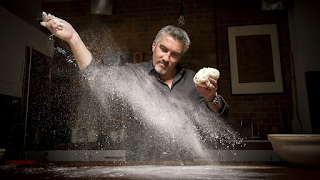
Paul Hollywood image BBC


Paul Hollywood has become known at the ‘King of Bread’ by fans of the Great British Bake Off. It takes a lot to impress him in terms of taste and technical skill - and the coveted Hollywood handshake is a rarity in bread week. 


For all the exotic flavour combinations on show, Paul himself talks about the simplicity and nostalgia of baking: the taste and smell evokes memories of childhood, community and comforts. Civilisation, he says elsewhere, is ‘built around wheat, around people’s settling down and not being nomadic.’


No wonder then that the Israelites long for Egypt: for the time when they were able to eat their fill of bread. It seemed to them that forced labour was compensated for by the sensory delights of bodies and food. 


They’d have been content to die there. Now, in the wilderness, they were unsettled and hungry; hungry and vulnerable. 


In the wilderness, in their vulnerability they see only the prospect of death: they complain and cling to nostalgia of the old ways. Perhaps we recognise that longing. 


They hunger for life, for comfort, for bread; but life was nomadic, relentless, unpredictable. The congregation complained. 


The Lord hears this complaint.

The Lord speaks to Moses.

Moses speaks to Aaron.

Aaron speaks to the congregation of the Israelites.


In their hunger and vulnerability, the Lord does a new thing.

That new things is a gift of bread from heaven.


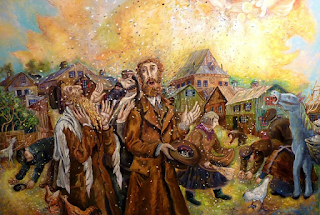
Manna from Heaven - Original by Alexander Kanchik


What is it? They ask. It is the bread that the Lord gives.


This bread rains down from heaven and settled on the wilderness as the dew lifted. Fine. Flaky. Fragile.


And in those gathered fragments hunger is satisfied; it is a practical gift of physical food.


More than that: in these fine, flaky, fragile fragments, the faithful God calls a people back to faithfulness.


In this substance they find sustenance: but it is just enough.


No selfish storing up; no greedy gathering of too much; no excessive consumption.


It is enough for hunger to be satisfied; for complaining to turn to gratitude; for vulnerability to become community.


There is grace. It is enough.  Day by day.


Loaves and Fishes - John August Swanson original


Jesus too had looked upon a crowd with rumbling stomachs and grumbling words: in compassion he responded to that hunger and vulnerability and took what was offered - blessed it and broke it. 


He gave it to them, and they ate their fill; they had enough.


Fragments are collected up and baskets are filled. 


But they wanted more: they look for him.


When they find him, he points them beyond the meeting their physical needs to a deeper longing.


He points them beyond the food that perishes, to the food that fills our stomachs and leaves us wanting more.


He points them to the food that endures for everlasting, abundant and eternal life.


He points to himself: the one who is God’s eternal word; the one who is flesh of our flesh. 


Believe in me, he says; believe in the one sent to you because of God’s love for this world.


They know the story. 


They jump in with their own telling of the story of fine, flaky and fragile bread.


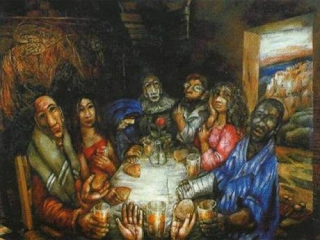
Sieger Köder 


Jesus listens. Yes, he says, you’re right about Moses. You’re right about the way a faithful God calls people back to faithfulness with these gathered fragments.


But he says, there is more: there is more than eating your fill; there’s  more than nostalgia for the old ways.


There is more than the bread shared that day: which smelt so fresh and filled their stomachs; but which will go stale and mouldy. 


This more than is the true bread from heaven: God’s own son.

This more than is the living bread: giving life to the world.


This bread is known to us in the fine, flaky, fragile fragment which we break and snap, bless and share at every communion.


For there, in that place, we receive a fragment of Christ’s body to be united as Christ’s body.


The body that was bruised and bled; died and rose to new and eternal life. In communion we are draw near to this gracious and fragile life. 


In that place, the fragments of our lives, our stories, our hungers and our vulnerabilities are gathered up; they become more than the sum of their parts.


There is communion in this. As the bodies within one body we are fed; where we learn to hunger for God; where we learn to love each other as God loves us.


Our faithful God calls us into faithful communion in this way: through the giving of himself in fragility that our fragments might be made one.


So we pray that our bodies may be revived; that the body of Christ might be revived. That we might be strengthened in the Spirit; that we might hunger for God’s ways; that we might meet others in their vulnerability. 


With open hearts might we touch and taste and see how gracious our Lord is. For what is fragile and fragmented is the stuff that makes for communion. Amen.


© Julie Gittoes 2021

Saturday, 10 July 2021

It's coming home...!

 Sunday 4 July: Ezekiel 2:1-5 and Mark 6:1-13


Football’s coming home: It's a quarter of a century since Frank Skinner and David Baddiel teamed up with The Lightning Seeds to write the song Three Lions; a song with the famous refrain “it’s coming home. Football’s coming home, it’s coming home”. 


It’s got hints of nostalgia and has become a code for optimism: it veers from disappointment and underachievement to hope for the future and a trust that the team can play.


After last night, may be football’s coming home. 


Ahead of this year’s Euro’s, Gareth Southgate wrote an open letter which quickly went viral beyond the world of football. He said something about the desire for a diverse, modern and inclusive nation. A vision rooted in tradition, without being nostalgic; radical whilst being alert to the present and supporting communities post-pandemic. 


It acknowledges that this country is a work in progress: it’s full of hopes and disappointments, but wanting to be part of a move towards being a more tolerant, equal and understanding society. 


For us, home is daring to seek heaven on earth. For in Jesus, the home of God is with us and through the power of the Spirit, God’s perfect will for humanity is breathed through us.  Dare we allow our imaginations to be enlarged by a vision of God’s kingdom?


Heal the earth; meet the need; set the captives free. 


Image


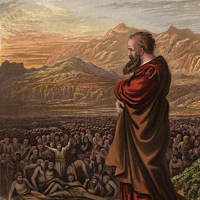
Ezekiel:  Yet, we know that there will be challenges - within the church and beyond: reducing inequality and social isolation; strengthening families and households; offering the hope of restoration to the vulnerable; inviting the privileged to seek the flourishing of all.


Ezekiel knew all too well the challenges of restoring a people at a time of crisis. He’d trained to be a priest - following in his Father’s steps by serving God in the Temple. Instead he finds himself in exile with his people - far from Jerusalem. 

There he his called into service as a messenger of God, a prophet.  This call was accompanied by a vision of God’s splendour and majesty; of the dazzling brightness of divine glory.


Against this awesome insight, he becomes aware of the need to rebuild community in the face of disruption. He becomes aware of the ways in which his nation has fallen short; the way hearts had turned inwards away from God and the other.  


Today we stand with him as that’s described in stark terms: a rebellious humanity, abandoning the call to seek justice and mercy; a people who’ve transgressed, stubbornly clinging to selfish ways. 


Ezekiel’s calling in response to this crisis of fractured to community is to remind them that God is the Lord. The one who sees the ways humanity falls short - and on the one hand offers a rebuke (we were called to more than this) and on the other offers the promise of restoration.  


There will be new life; love will be shown in hearts of flesh. God’s loving power will help us live aright and give power to be light.


This God, makes a home with us; but as we hear today, for Jesus’ return home is complicated.  Wisdom and power are revealed, yes; but rather than crowds being amazed, it is Jesus who is amazed at their unbelief, and the offence that is taken.


We hear elsewhere, that when Jesus reads and teaches in the synagogue, he takes up texts which speak of God’s power and human need. Texts which speak of God’s perfect will for humanity - speaking life to cities and neighbours. 


The refrain might be: heal the land, meet the need, set the captives free.


Image


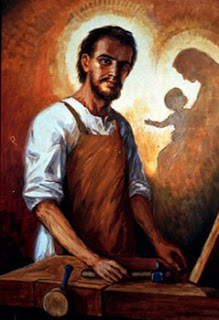
Carpenter’s workshop:  Jesus is one who had an earthly home in Nazareth; who grew up amidst the smell of sawdust and had a trade; one who knew the energy of life with siblings.


But for his hearers, perhaps that was just too familiar.  He was in their minds the ordinary lad; they took offence rather than lay hold on this wisdom and love. 

This Jesus continues to draw near to us in the places we call home; we are invited to see his words not as a threat but as a gift; as not only rebuke to those things which are out of kilter, but invitation to forgiveness and renewal.


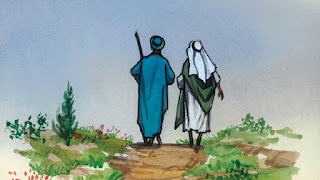
On the road:  For those who do respond, who see signs of God’s kingdom and long to understand its meaning, there is another step on the journey. They literally take to the road. 


This is the pace of the life of the church: to walk within our communities, step by step. In schools and cafes, in shops and homes, in businesses and surgeries.


The disciples are sent out in pairs - to travel lightly, relying on others to meet their daily needs. They walk and they go to the homes of others; they meet people at the threshold and break bread around a table. 


Image 


Perhaps these are habits we are now slowly beginning to relearn: learning how to be in each other’s company; learning how to be at home with another, to talk and listen; to break bread.


Where they find a welcome, they are to stay; where they are not welcomed, they move onwards.  This judgement comes from being able to listen well; a listening that opens up space for repentance, the turning of hearts to God and others; it allows space for healing, blessing, anointing and renewal.


As God’s people in this place, we welcome Andrew as our deacon: one who will walk with us as we go to the hidden places of our world, as we strengthen connections between our homes and schools.  


Deacons remind us that our lives are to proclaim God’s word of healing and reconciling love; and that our hearts and hands are to show that love in healing the land, meeting the need, setting the captives free.


We will listen. We will walk. We will be at home in Hendon.


For it's coming home; God's kingdom's coming home.


We do that fuelled by gathering together - for here as we respond to God’s word and as we break bread together we pray that our bodies - made one in the Body of Christ - will be made alive. 


Let us come of one accord; let us see each other and our needs. For when we gather, there is power all around. 


Let us gather as our Creator is glorified; all earth knowing God’s name. May the Spirit give us eyes to see God’s will for humanity. For God has made a home in our midst that every nation, tribe, creed and colour might know life and hope. 


Heal the land, meet the need, set the captives free...


Refrain  taken from The Portersgate "The earth shall know".


© Julie Gittoes 2021