Showing posts with label creation. Show all posts

Thursday, 5 August 2021

Care for Creation

 Sunday, 5 June: Care for Creation - Genesis 3.8–15 and Mark 3:20-end
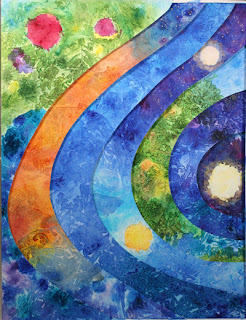

Original Image

Nature writing has become increasing popular: books about footpaths and coastlines; birds, butterflies and trees. Writers such as Richard Maybe explore how we think about nature in relation to our lives - describing the earth as a commonwealth of all species.


Perhaps are tapping into or reflecting on our increased appreciation of the countryside; but there’s more to it than a whimsical nostalgia. Much of this writing is questioning our current values and lifestyles; economic growth and materialism. Some, like George Monbiot, use their words as journalists to make us think about climate, sustainability and environmental degradation. 


Original Image


Words about the natural world are doing more than expressing beauty or describing eco-systems. Maybe describes nature writers as ‘translators of the language of the natural world’; and perhaps Genesis is also in the business of translating the language of the natural world as God's creation and our place within it.


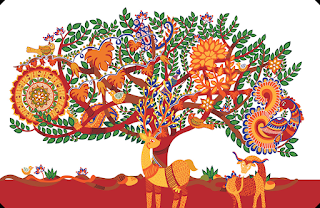
We’ll be familiar with the way Genesis tells multiple stories about goodness and diversity of the created order, irreducible to binaries or polar opposites. It speaks of water and land - the salty seas, fresh water lakes, peaty moorland and fertile deltas. It speaks of creatures that swim and fly and bestride the earth, each named and given a place. 


Genesis also speaks of us: of human beings formed out of dust with the breath of life. Created with purpose - to till and keep this earthly garden. There is goodness here too; and freedom and creativity; curiosity and order. This breathe of life is not something we can hold on to; we have to exhale - live moment by moment; to live lightly; to live in relation to the gift of what surrounds us. 
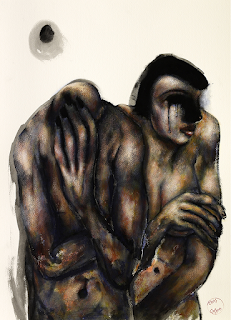


Image: Chris Gollon


But, as we are all too aware, there is a moment of disruption. The word fall or sin doesn’t occur in reading we’ve heard today. But we do hear of enmity - of fear, shame and secrecy; of using the natural world; of blame and trickery. All those things which mark a shift from trust to mistrust; codependence to fragmentation. 


Human beings were created with freedom as well as purpose: they had options framed by permission and also prohibition: they were allowed to eat the fruit of the earth, but they were also given boundaries.


One commentator describes the place of the serpent as a ‘living metaphor’: presenting options to the human will; inviting action in response to new possibilities. The passing of blame between human and non-human creatures reveals the attractiveness of the enticement, and the guilt at not valuing the gift of freedom and instead ignoring the boundaries. 


As one writer puts it: ‘they had wanted knowledge rather than trust. And now they have it. They now have more than they could have wanted to know. And there is no place to run’. 


The rebellion in this story is in thinking that we can have purpose and freedom without limit; that living without limit risks our freedom; that embracing freedom without purpose takes away the safety of the boundaries. 
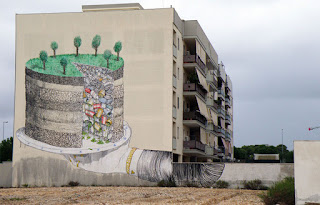


Original Street Art


There is enmity - a split, a breach, a shift in relating. There is a separation between creatures; a desire to hide in shame; the pain to live with consequences. It’s a harm caused by a shortness of breath - a shortness of breath that drives us to consume and control, to pollute and destroy.



Original poster


We are invited to look at our own carbon footprint - to consider ways where we can buy less; and use our economic influence to shape a more sustainable future. This might be part of our calling to be ea ‘second wind’ to breath deeply and live lightly. 


Stanley Spencer: Christ in the Wilderness


In the gospel, we encounter Jesus: we are drawn into the stories of how he walked the earth. The grain he plucked and ate on the journey; the lakes, deserts and mountains he knew; the birds, flowers and animals he notices, whose language he translates to teach us about God’s love. 


Those who encounter him, don’t quite know what to make of him: the scribes are hostile, misunderstanding and provoke questions about power and motive; his family are sceptical and want to protect him, fearing his out of his mind; and some listen, respond and commit, the disciples - the women, the twelve, the curious; those with power wealth, status and those with little.


They listen. They catch this second wind; and draw a deeper breath. They are inspired. They do God’s will as members of Jesus’ kin, his body; led by the Spirit. 


Jesus is stronger than any enmity or enticement: he knows the impulses of the human heart and calls out the gravest sin. That is to think we can have freedom without boundaries; that we can find our purpose without trust; that we can do as we please without causing hostility. This is to sin against the Spirit - to distort trust in God who gives breath and life and invites us to breathe with praise and hope, justice and imagination. 


To care for creation is to live not only with breathtaking wonder at beauty but to enlarge our imaginations as we care for the fragile complexity. We are to find inspiration - breathing in from our tradition - in order to inspire others and reshape expectations. 


Miriam will be working with the Eco-Church team to guide and encourage us as we seek to care for creation; as we seek to overcome enmity and separation between human beings and other animals. 


That might mean reusing/recycling; looking at lowering our energy usage; composting and encouraging the wildlife in our churchyard; as we seek to drive or fly less; as we reduce our meat consumption; as we work with schools and other organisations - including our friends of other faiths to learn habits of consuming less “stuff” and conserving energy more. 


Marsh Green URC Eco-Church


We commit ourselves to this work as our world cries out for healing. As we cry out for mercy and forgiveness we find new ways of serving one another and our world with reverence, for the Lord is our hope.


 This work of renewal and care is one of the marks of mission of the Anglican Communion: to strive to safeguard the integrity of creation and sustain and renew life of the earth. 


© Julie Gittoes 2021

Monday, 25 February 2019

Garden, sea and city

It was a delight to preach and preside at the Eucharist at Holy Trinity, Guildford yesterday. The texts were: Genesis 2:4b-9, 15-25, Revelation 4, Luke 8:22-25


Given the choice, where would you prefer to spend a day:
  1. in a garden, your own or Wisely perhaps or;
  2. by the sea, sitting in a deckchair or;
  3. at the heart of the city?
As a rural lass, with an urban heart and a sister who loves the sea, like many of us I end up inhabiting all three. 

But lacking the green fingers of my parents, and the proximity to the coast, the buzz of the city draws me moth like to it’s light.

Gardens: places of tranquility and seasonal beauty; a haven of privacy and place for conviviality; a glimpse of paradise and a place of labour.


The sea: the expanse of sand or shingle ridges and the hypnotic roar of waves; a place of ice-cream and fish and chips; a haven of peace, subject to nature’s unpredictable force.


City: the energy of people filling streets and theatres, platforms, hostels and galleries; the vendors, commuters, performers and consumers; a sleepless place of restless inequality.


Today’s readings straddle all this: a garden blessed and tended; a sea raging that is calmed; a city dazzling consumed by praise. 

In the garden, by the sea and amidst the city, we are caught up in the story of God’s ways with the world and the destiny of humanity.

In Genesis we see a world which is teaming with life in all its diversity: it is good and pleasing, generative and sustainable.

We are earth creatures, formed of clay; we are God’s creatures, breathed into life.

We are placed in a world of mutual interdependence. We are in a profound way bound together with the glorious goodness of the created order. It is not a world of our own making. God’s gift is one of interdependence. We are blessed by delight and entrusted with responsibility.

In this delicate eco-system, we are confronted with the reality that it is not good for this human to be alone. 

A fresh creative act of God brings forth a helpmate.

It is not good or right for this man, this one formed of earth, this adam, to be alone.


Like each one of us, this solitary human needs a helpmate. 

We need companionship. The wellbeing of one is not fulfilled by dependence on God or creation alone. 

Out of our creaturely flesh our most intimate other is formed: one who opens up what it is to be human - in relation to God and the world.

In the first instance this is not about hierarchy, complementarity or marriage. Rather it points to a fundamental goodness in being together.  There is the possibility of work and creativity as custodians of the earth. As we face one another, we learn compassion, generosity and joy. 

As Walter Brueggemann puts it: ‘The place of the garden is for this covenanted human community of solidarity, trust and well being. They are one! That is, in covenant. The garden exists as a context for the human community.’

This vision of generative human companionship and shared endeavour, is gifted to us freely. God’s loving purpose for us is based in freedom, not coercion. But such freedom is fraught with risk. 

Goodness is disrupted. Faithful obedience becomes an assertion of self-will. Life and knowledge are within our grasp. The prohibition will be scrutinised and misquoted and we seize the fruit of that tree for ourselves. 


And, as Genesis will tell it in the following scene, freedom, trust and calling are exchanged for autonomy, oppression and fragmentation

We know all too well the pain of what happens when we selfishly take the mysteries of life and knowledge into our own hands apart from God: freedom to act becomes the capacity to control. 

We become fearful and mistrusting; our hearts turn inwards, away from the other; we are ashamed of our naked vulnerability and dependence. 

The tranquility of the garden paradise breaks; we find ourselves on stormy seas.

Our struggle to know how to live well with one another is met by the commandments to love God and neighbour as ourself.

Our struggle with how to live wisely in the world is bet by the prophets cry for justice and mercy.

Our struggle to know how to live is ultimately met with a new act of solidarity. By God refusing to refuse love; by God dwelling with us in Christ Jesus. 

Jesus understands our anxieties and fears; he knows our tendency to selfishness and self-protection; he knows our capacity to wound and be wounded; and also knows our desire to heal and be healed.

Jesus stepped into the boat: and he slept. As flesh of our flesh, he gives into his physical need for rest; as Word made flesh, he abides in trusting rest with God.


The storm arises: disruptive and ferocious. It stirs the chaos from the deep. It surges and threatens to overwhelm. It has mastery over the boat and over seasoned sailors.

And amidst the terror and looming disaster, Jesus sleeps.

The storm does not disturb him; but wakes to our cries.

And with a word of rebuke the Word brings calm: wind and waves are subdued. This sign of mastery over creation and is also a renewed breathing into us of God’s life.

Who then is this?

Here is perfect love casting out fear. 

Here God’s Word addresses us in the midst of the storm.

In the midst of those things which fill us with dread, heartache and trembling... God is. 

God is with us in the betrayals and losses; the anxiety and grief; in the things which break us down and when faith wavers.

God. is. with. us.

Loving us. 

The God who created us that we might be one, comes to us in flesh and blood. His body heals and teaches; is touched and anointed; is spat at and wept over; breaks bread and is broken for us.

And we God’s creatures are made one as we share in fragments of bread. Here we are moved beyond the ties of biological kinship and commitment of flesh and blood. Genesis speaks of being one and here, though we are many we are one body.

Here we are called by name and nourished with the bread of heaven: the covenant of love is renewed. 

Here we at this Eucharist we are led through stormy seas from creation to new creation. From the beauty and labour of our earthly garden, we are given a glimpse of a heavenly city. 


A city where, in the words of John Donne, there is no darkness nor dazzling but one equal light; no noise nor silence, but one equal music;  no fears nor hopes, but one equal possession; no ends nor beginnings, but one equal eternity.

Here and now we unite our voices with the saints and angels singing ‘holy, holy, holy; Lord God almighty; who was and is and is to come.

As we praise our creator God, we are united with Christ in one body. But what we say and sing with our lips we are to live out in our lives: in the urban heart of Guildford and in our gardens; amidst personal storms and at work or school.

In a world of chaos, pain and noise, in the power of the Spirit, may we be one as a people whose hearts are turned outwards to the other. 

Breath by breath may we be compassionate, generous and peaceable companions on stormy seas.

Gesture by gesture, may we be creative and just in our commitment to the earth’s sustainability.


Word by word, may we walk in the light of Christ, seeking the equity and fearlessness of a heavenly city. 

© Julie Gittoes 2019

Monday, 2 April 2018

This is goodness!

A sermon preached at Mattins  on Easter Day at Guildford Cathedral. The texts were Genesis 1:1-5, 26-end and 2 Corinthians 5:14-6:2 . The curious thing about preaching at mattins is that unlike at Evensong/Eucharist, the lectionary doesn't set a text which tells of the woman confronting an empty tomb or one of the vivid and moving encounters with the risen Christ. Instead we are caught up in the movement from creation (Genesis) and new creation (in Paul). It is an opportunity to ponder the nature of the goodness for which we are made - and the hope of transformation. Resurrection is both an event and a lived reality.

Alleluia: Christ is risen!
He is risen indeed: alleluia! 

‘What happens when children rewrite the house rules?’ asked an article yesterday’s Guardian Magazine.

No bedtime, no tidying up and no arguing; sweets for breakfast and pizza for supper; watching more TV...

In light-hearted way, the ‘experiment’ expresses the contradictions of our human nature: the use and misuse of our freedom; our needs versus our wants; the distractions and power struggles; our tendency to selfish and our longing to spend more time with those we love.

Participants name the addictiveness of sugar and technology; the frustration of chaos and the delight of playfulness.

They recognise the demands of responsibility, kindness, gratitude, self-control and forgiveness. 

Perhaps we have our own relational epiphanies - at home for at work: of realising we’ve been so busy we’ve neglected to have fun; or that our unconstrained choices have been unhealthy for us. 

In our corporate life too we experience the limitations and possibilities of our freedoms and desires, of rules and power. We long for something more: more sustainable, hopeful and compassionate.

Today, we are directed back to the fundamental goodness of creation and the potential of human life to be a blessing. 

Alleluia!

Today, we celebrate the triumph of God’s love over suffering and death; resurrection renews creaturely goodness, potential and blessing.

Christ is risen!

We are a new creation. The future unfolding before us now is one of hope and of reconciliation; of being made one with God and each other. 

Christ is risen indeed: alleluia!

Genesis reminds us that God calls the world into being: that creation is to be diverse, beautiful, fruitful and harmonious. From the first day until the sixth day, it’s a poetic vision of goodness. 


We are called into being by a word; by a breath. God choses to make space for us in creation and invites us to listen, response and act. 

We are one with creation, reflecting the likeness of God. We are commanded to care for the world whilst remaining dependent on its fragility. Obedience to one rule of love fulfils creation’s purpose: unity, beauty, playfulness and joy.

This love is risky: goodness and life given in freedom means that we can be like children making up our own rules, we do not always chose what is healthy. We fulfil our desires in self-indulgence; we grasp what we want; we exploit people, opportunities and resources. 

But God doesn’t stop reaching out to us: in a generous, self-giving and powerful movement of love. 

When the goodness of creation is distorted by our selfishness or when relationships are broken; when we face addiction, anxiety and conflict, God continues to call us back to his ways of love. 

Alleluia!

The words of scripture echo with that call to compassionate and generous love: on the lips of prophets and exiles, in poets and rulers, in the grief-stricken and hopeful.

God so desires unity with us and goodness for us, that words of justice, mercy, peace and love are most eloquently revealed in the Word made flesh, Jesus Christ.


In all that he said and did, Jesus reveals both who God is and who humankind is called to be. He meets the contradictions of our human nature. In our tears, laughter, shame and fulfilment; in our curiosity, hurts, playfulness and greed he loves us.

Alleluia!

He loves us in the chaos and beauty of our lives: he will not let us go - however big our dreams or failures; however small our hopes or anxieties. He loves us in all the stuff of life: in feasting, questioning, storms and suffering, from cross to grave and into new life. 

Christ is risen!

And as we crack open our hollow chocolate Easter eggs, we are reminded afresh of an empty tomb and of the depth of that love. A love that reconciles all things. Restoring the goodness, unity and blessing of creation.


It’s a love which brings joy out of grief; hope out of despair; life out of death.

Alleluia!

God’s response to our human tendency to make our own rules to satisfy what we want, is to love us. To love us in a way which gives us all we need. Dying for all, that all might live. That we might live no longer for ourselves.

Alleluia!

God’s will for us is a life of generosity, humility, gratitude, justice, mercy, trust and a depth of relationship that is full of joy and delight. 

This is goodness. 

We are new creation. 

Now is the day of salvation. 

We are ambassadors. 

Entrusted with a message of reconciliation.

Of new life. 

Of deep love.

Alleluia: Christ is risen!
He is risen indeed: alleluia!

© Julie Gittoes 2018