Showing posts with label discipleship. Show all posts

Saturday, 10 July 2021

It's coming home...!

 Sunday 4 July: Ezekiel 2:1-5 and Mark 6:1-13



Football’s coming home: It's a quarter of a century since Frank Skinner and David Baddiel teamed up with The Lightning Seeds to write the song Three Lions; a song with the famous refrain “it’s coming home. Football’s coming home, it’s coming home”. 


It’s got hints of nostalgia and has become a code for optimism: it veers from disappointment and underachievement to hope for the future and a trust that the team can play.


After last night, may be football’s coming home. 


Ahead of this year’s Euro’s, Gareth Southgate wrote an open letter which quickly went viral beyond the world of football. He said something about the desire for a diverse, modern and inclusive nation. A vision rooted in tradition, without being nostalgic; radical whilst being alert to the present and supporting communities post-pandemic. 


It acknowledges that this country is a work in progress: it’s full of hopes and disappointments, but wanting to be part of a move towards being a more tolerant, equal and understanding society. 


For us, home is daring to seek heaven on earth. For in Jesus, the home of God is with us and through the power of the Spirit, God’s perfect will for humanity is breathed through us.  Dare we allow our imaginations to be enlarged by a vision of God’s kingdom?


Heal the earth; meet the need; set the captives free. 


Image


Ezekiel:  Yet, we know that there will be challenges - within the church and beyond: reducing inequality and social isolation; strengthening families and households; offering the hope of restoration to the vulnerable; inviting the privileged to seek the flourishing of all.


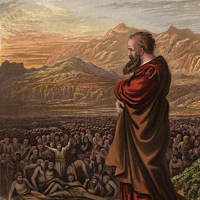
Ezekiel knew all too well the challenges of restoring a people at a time of crisis. He’d trained to be a priest - following in his Father’s steps by serving God in the Temple. Instead he finds himself in exile with his people - far from Jerusalem. 

There he his called into service as a messenger of God, a prophet.  This call was accompanied by a vision of God’s splendour and majesty; of the dazzling brightness of divine glory.


Against this awesome insight, he becomes aware of the need to rebuild community in the face of disruption. He becomes aware of the ways in which his nation has fallen short; the way hearts had turned inwards away from God and the other.  


Today we stand with him as that’s described in stark terms: a rebellious humanity, abandoning the call to seek justice and mercy; a people who’ve transgressed, stubbornly clinging to selfish ways. 


Ezekiel’s calling in response to this crisis of fractured to community is to remind them that God is the Lord. The one who sees the ways humanity falls short - and on the one hand offers a rebuke (we were called to more than this) and on the other offers the promise of restoration.  


There will be new life; love will be shown in hearts of flesh. God’s loving power will help us live aright and give power to be light.


This God, makes a home with us; but as we hear today, for Jesus’ return home is complicated.  Wisdom and power are revealed, yes; but rather than crowds being amazed, it is Jesus who is amazed at their unbelief, and the offence that is taken.


We hear elsewhere, that when Jesus reads and teaches in the synagogue, he takes up texts which speak of God’s power and human need. Texts which speak of God’s perfect will for humanity - speaking life to cities and neighbours. 


The refrain might be: heal the land, meet the need, set the captives free.


Image


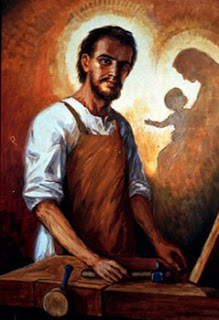
Carpenter’s workshop:  Jesus is one who had an earthly home in Nazareth; who grew up amidst the smell of sawdust and had a trade; one who knew the energy of life with siblings.


But for his hearers, perhaps that was just too familiar.  He was in their minds the ordinary lad; they took offence rather than lay hold on this wisdom and love. 

This Jesus continues to draw near to us in the places we call home; we are invited to see his words not as a threat but as a gift; as not only rebuke to those things which are out of kilter, but invitation to forgiveness and renewal.


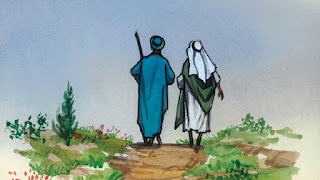
On the road:  For those who do respond, who see signs of God’s kingdom and long to understand its meaning, there is another step on the journey. They literally take to the road. 


This is the pace of the life of the church: to walk within our communities, step by step. In schools and cafes, in shops and homes, in businesses and surgeries.


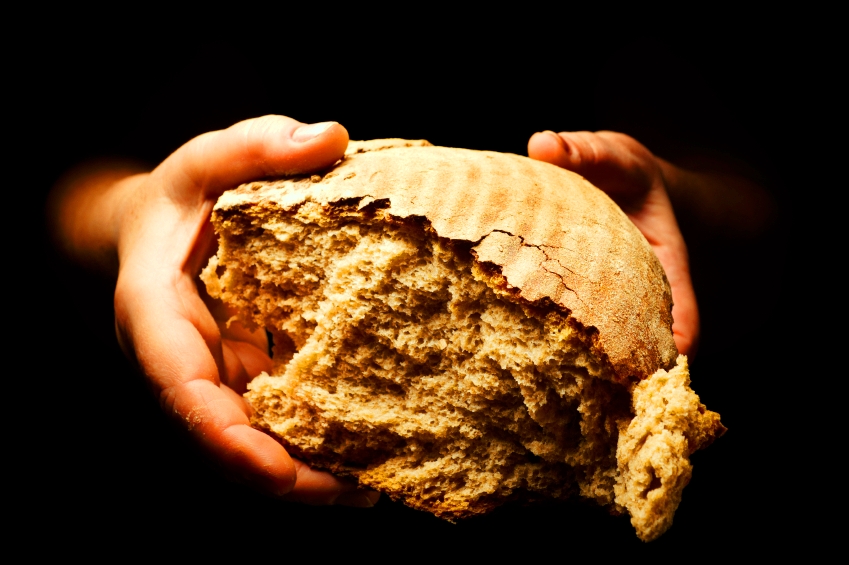
The disciples are sent out in pairs - to travel lightly, relying on others to meet their daily needs. They walk and they go to the homes of others; they meet people at the threshold and break bread around a table. 


Image 


Perhaps these are habits we are now slowly beginning to relearn: learning how to be in each other’s company; learning how to be at home with another, to talk and listen; to break bread.


Where they find a welcome, they are to stay; where they are not welcomed, they move onwards.  This judgement comes from being able to listen well; a listening that opens up space for repentance, the turning of hearts to God and others; it allows space for healing, blessing, anointing and renewal.


As God’s people in this place, we welcome Andrew as our deacon: one who will walk with us as we go to the hidden places of our world, as we strengthen connections between our homes and schools.  


Deacons remind us that our lives are to proclaim God’s word of healing and reconciling love; and that our hearts and hands are to show that love in healing the land, meeting the need, setting the captives free.


We will listen. We will walk. We will be at home in Hendon.


For it's coming home; God's kingdom's coming home.


We do that fuelled by gathering together - for here as we respond to God’s word and as we break bread together we pray that our bodies - made one in the Body of Christ - will be made alive. 


Let us come of one accord; let us see each other and our needs. For when we gather, there is power all around. 


Let us gather as our Creator is glorified; all earth knowing God’s name. May the Spirit give us eyes to see God’s will for humanity. For God has made a home in our midst that every nation, tribe, creed and colour might know life and hope. 


Heal the land, meet the need, set the captives free...


Refrain  taken from The Portersgate "The earth shall know".


© Julie Gittoes 2021

Monday, 8 July 2019

Eating what's put in front of you!

This is the text of a sermon preached at St Mary's and at Christ Church: I was struck by the phrase about the 70 disciples being told to eat what is set before them; and the sense of peace being shared over food and in a household. The challenges of bearing burdens and being restored in gentleness flow from this sense of deep peace being gifted and shared; a peace shared in households and work places. 

The texts were: Isaiah 66:10-14; Galatians 6:1-10; Luke 10:1-11, 16-20

Writing in The Guardian’s food supplement, Yotam Ottolenghi says: ‘now’s the time when we all head outdoors to soak up every last bit of rare sunshine’, so it’s only natural he muses, that we take food outside with us.


The al-fresco options in this feast include spicy pulled pork vindaloo; lime and poppy seed law; mango ice-cream; and summery savoury tarts filled with lamb and courgette; tomatoes and mozzarella; crab and broad beans; salmon and fennel.

It’s mouthwatering fare, but it’s not the stuff of the average hastily assembled picnic of baguettes, cheese and porkpies; nor is it the spontaneous, seize the moment it’s stopped raining BBQ!

But most of our dealings with food and hospitality are not like the glossy magazines. We have family favourites: the meals of our childhood; the recipes we learnt in food-tech; the comfort food we can cook without thinking; the pasta and pesto standby. 

The food landscape we inhabit stretches from Deliveroo to food banks; from indulgence to basic need. The food we take outside with us, might be wrapped in plastic for convenience; consumed in a way which publicly reinforces the pace, isolation and inequality of our food culture.

There’s a line in today’s gospel which takes me straight back to school meals, Saturday tea and a variety of invitations given and received: eat what is set before you. 

What sort of economy of food is this? 

Jesus sends out 70 disciples: they’re officially commissioned or appointed to go ahead of him. They operate as a critical mass of witnesses; dispersed in pairs, walking the roads, covering the ground. 


Jesus describes this task as a harvest: there’s a sense of urgency and abundance. Time is short; the labourers are few.

There’s risk to this enterprise: they take no money and go with the clothes they stand up in. They won’t be taken for wealthy travellers or merchants; they will be vulnerable and defenceless. They walk the roads, cover the ground prepare the way; and they do so by finding a place to stay.

The place for greeting and witness, for safety and harvest is in the home. The place for encounter is around the table; it’s over food and drink provided for them.

Embedded in Luke’s narrative is a system of mutual relationship. 

Peace is given, received and shared.

This peace is something tangible; something we can experience.

It’s a gift of wholeness, of calm, of bringing together: to begin with such a greeting to offer a physical gift. A gift of being present, or words which create a feeling of belonging. 

Peace isn’t spoken of on the road - but in the home. In the place of birth and marriage, of parenting and intimacy, of family and household. As one biblical writer these ties are ‘disrupted and a new family connected through loyalty to Jesus and through hospitality, is created’.

This peace can rest on and bring rest to the household willing to receive it.

This peace can be rejected and return to the one who gave it; but it doesn’t evaporate or shrink or disappear.

Peace is given, received; shared, returned. 

This is an economy of gift within which we can live and relate and flourish.

Food is part of this peace-able social system: the disciples themselves aren’t to seek out a better offer - rejecting the eastern equivalent of the beans and baked potato in favour of the perfect spinach and ricotta cannelloni!

They are to eat what is provided for them: complaining or pushing food around the plate causes offence.

To eat what is provided to them is not only reward for labour but a seal of new relationship. 

Sharing food in peace is a sign of the nearness of God’s Kingdom. 

The small moments of acceptance, of breaking bread, of fellowship at the table, point towards something bigger.


There are moments of rejection in this story too: of bread not broken, of quieter tables which point us to the pain of separation and brokenness.

Not every place is receptive to a message of peace; not every seed will bear fruit. 

There are times when we have to let go and move on: shaking the dust off our feet. 

But when the disciples return, what is it that they rejoice in? It’s not proclaiming good news or seeing a change in ordinary homes; it’s not in proclaiming peace or seeing it accepted.

No, it’s the stuff that sounds more heroic: defeating powers of darkness, what we Paul sometimes calls principalities and powers. Jesus’ response reminds them that the struggles of this world are all too real.

Rather than boasting of their own power and taking pride in what they have done, Jesus reminds that God is the source of all insight and power. He reminds them that at the heart of the good news is the work of drawing others into relationship with God. 

By reaching out to the poor and despised; by restoring hope and bringing healing, victory over sin and death is embodied; and in bridging that separation, we are better equipped to overcome our separation with others. 

There is no place for lone-rangers or superheroes in this way of witness: there will always be vulnerability alongside this work of transformation. To sit and eat together, to eat was is provided for us, is one of the most intimate, generous and powerful things we can do. Here we become family.

It is across that table that we build networks of support and friendship, resistance and peace. Over broken bread, light breaks into our lives.

Jesus is invested in who we live in the world now; how we find peace in our own hearts and our own households; how we seek to follow the commandments of God. 

Paul describes this as sowing in the Spirit: not because we are reaping a harvest through our own efforts, but because we are taking our share in God’s harvest. This harvest signals the fulfilment of the Isaiah’s promise: there will be joy and gladness; that we will be nourished and comforted; that even grief and mortality will be transformed.

This is a harvest of the new creation. 

Through the triumph of the cross, this new realm is everything.

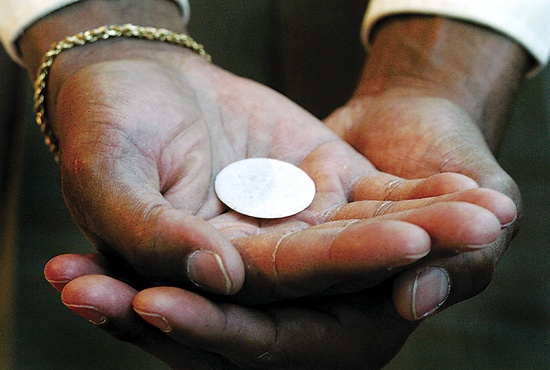
At the Eucharist is a place where we come together around one table and break one bread.

Each time we come to this place, we receive afresh a message of peace. 


We are invited to eat what is put in front of us; what is placed into our hands.

This meal nourishes us here and  now as we find new strength for the journey. We are fed by the life and love of God, given for us in Christ Jesus; we are given a foretaste of the eternal heavenly banquet. 

At the end of the mass, we walk away from this holy place, fed by this sacred food. And often the frustrations and separations of the world confront us more acutely. We get swept up in them. 

The challenge of living and working for the good of all raises challenging questions - what does peace feel like here, what action leads to justice there?  How does this meal change our own households? Whose burdens will we cary this week? Who will be the one to restore us in a spirit of gentleness?

May we who eat what is placed into our hands this day, dedicate our freedom to God’s service: may our households reflect the economy of life-giving love; may we speak and act for peace; for we are a new creation.


© Julie Gittoes 2019