Thursday, 15 June 2017

Come, eat my bread


A sermon preached at Guildford Cathedral on the feast of Corpus Christi: Genesis 14:18-20; 1 Corinthians 11:23-26; John 6 51-58.  The refrain ‘Come, eat my bread’ is a translation of Homo quidam by Thomas Tallis. Preaching on the Eucharist in the light of bread - what we waste, buy, lack and give - is particularly poignant in the light of the catastrophic fire at Grenfell Tower. 

Come, eat my bread - because everything is ready!

Toasted, it’s a breakfast staple. It’s the main component in a sandwich lunch.


Garlic bread, ciabatta, sourdough, rye: taken, broken and shared over dinner, perhaps with a word of grace.

Bread is the epitome of ordinary. But, from the days of Melchizedek, when combined with a glass of wine, bread is an expression of blessing, celebration, conviviality, peace and fellowship. 

Yet, in the face of this abundance,  32% of bread purchased in the UK is thrown away. That’s 4.4 million tonnes of edible food wasted as1000s queue at food banks. 

Bread is the stuff of painful paradoxes: we buy too much because we fear running out; but a cheap commodity is easily discarded.   The factory “white-sliced” competes with the artisan or homemade loaf for time, cost, energy, skill and taste.   


Is it that we’ve lost touch with the process of making bread? 

Have we lost respect for this ordinary, life-sustaining food?  

Do we squander this gift of creation and work of human hands?

Everything is ready.  Come,  eat my bread.


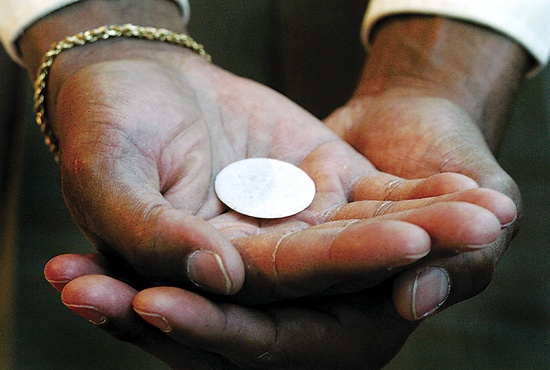
The bread we break tonight - this fusion of flour, kneading, resting and baking - is a sacred mystery.  We take ordinary bread so seriously, that through the power of the Spirit it becomes more than. More than material stuff - a gift of grace, of Christ’s presence with us - and in us.

Yes, this bread is blessed, broken and shared by human hands; Yes, this bread is placed into human hands to be touched, taken and eaten.  And yet, in this wonderful sacrament the King of kings has given himself to us for heavenly food.
On Maundy Thursday, we entered into the solemnity of betrayal, denial and death; tonight we enter with thanksgiving into the deep joy of Christ’s nearness to us and his promise to be with us for evermore.  

Every Eucharist is a repetition - but it’s never the same.  Paul wrote to the Corinthians reminding them of what he had received and passed on to them: that Jesus took the blessing and breaking of bread, and imbued it with a new reality. 


Even before those words were written down, Christians - followers of the way - had broken bread together. It’s not only a command ‘do this’ - it is relationship ‘this is my body, my blood’. It’s more than memorial, it’s proclamation. It’s not just what we hear, it’s who we are: ‘The body of Christ’.

Come, eat my bread and drink the wine I have mixed for you.

‘Was ever another command do obeyed?’, wrote the liturgist Gregory Dix. 

Today, in prisons, parishes, homes, hospitals, universities and refugee camps; at weddings and confirmations, at a death bed in hours of darkness and as rays of light breakthrough our Lady Chapel window. 

Over centuries in trenches, monasteries, slums, portacabins and palaces; in the face of persecution and influence, on the edges of the known world.  And Sunday by Sunday by unremarkable Sunday from Melbourne to Cairo, Beijing to Oslo, Guildford to Mexico City. 

Come, eat my bread.

This pattern of ‘non-identical repetition’ is like the continuity and difference in a Bach fugue or Jazz improvisation. The liturgical repetition ‘do this’ is just the beginning. This great feast of Corpus Christi directs our attention to Christ with us so that we might be sent out to be his body. 

Our communion with God and one another is renewed in this wonderful sacrament.  Heaven and earth touch; divisions cease; we glimpse the peace of God’s Kingdom. For a moment our alleluias resound with saints and angels.

This night we extend the moment of communion - my seconds, by minutes -  to ponder with reverence, praise and wonder ‘for with blessing in his hand, Christ our God to earth descended, our full homage to demand’.  But what we see, what we honour, is who we are. The Body of Christ.  

As we process with beauty and honour, with music and song, with rose petals and footsteps, we remember that Christ is with us - reigning over heaven and earth. That is our ultimate reality.  We reverence Christ’s nearness in ordinary bread, on steps looking out over the community. There we are challenged and inspired to walk in his steps, on this earth, as a pilgrim people. 


Yes, the profound mystery and wondrous reality is that ‘Word-made-flesh, true bread he taketh by his word his flesh to be’. But the equally profound and wondrous reality is that we have been grafted into Christ. By the power of his Spirit we are to both know within us and also show forth in our lives, the fruits of redemption. 

What that looks like has been demonstrated by St Clement's Church - and others - which have opened their doors in response to the fire at Grenfell Tower.  To those who have no bread, they said ‘come’.  ‘Come’ find refuge, breakfast, consolation; ‘come’ bring toiletries, clothes and food; ‘come’ pray, rest and know that you are not alone - in the immediate catastrophe and in the long term. 

In the power of the Spirit, may we too show forth God’d healing and reconciling love; may we too be with others as Christ is with us: in the mundane and in the crisis; in celebration and sorrow; in abundance and in need.

Jesus said, ‘I am the living bread’. The bread that he gave for the life of the world was his flesh.   

Come, eat that bread.
Everything is ready.
Come.


© Julie Gittoes 2017

Sunday, 21 May 2017

Blessing

A sermon preached at Guildford Cathedral Evensong on  21 May: the readings were Zechariah 8:1-13 and Revelation 21:22-22:5.

Alleluia: Christ is risen!

Frocks and flowers; vintage cars and a village church; a designer dress for a society wedding; locals, journalists, celebrities and royalty: it seems that on the topic of #PippasWedding, both social and print media were in sync.

Wedding feasts feature in our scriptures as an image of God’s Kingdom - of the peaceable and joyful unity of earth and heaven, creation and Creator.  The excitement surrounding ‘the day’ touches on our human longing for faithfulness, intimacy, love; it delights in the orientation of our lives towards a future of blessing.

Blessing which is not just about ‘a couple’ or ‘their children’; but the stability of a household which enables generous hospitality. A wedding celebrates a marriage - a union of both radical exclusivity in fidelity and radical inclusivity in strengthen bonds of society.


We know, of course, that our human relationships are complex and fragile: we live amidst disagreement, the compulsions of self-interest, failing health; we face demands of work, the experience of loneliness, the harm done by coercion and abuse.

Being human embraces the tenderness of care for others - and the challenges, cost and strain of those acts of love. Being human embraces the reality of being cared for by others and the need for dignity in holding the memory of who we are.

If we scroll past photos of #PippasWedding and read beyond the front page of the newspaper, we confront the things which preoccupy editors and readers alike; the news weaves our individual cares and concerns into the uncertainty of our national life and global context.


We read of concerns for the wellbeing of the elderly and social care; concerns for the welfare of children in terms of nutrition and education.  There are stories about media bias and alternative facts; climate change, missile testing, asylum seekers and knife crime.

Words like 'tension', 'uproar', 'chaos', 'opportunism', 'feuds' and 'crisis' dominate headlines. Yet we also glimpse joy as some of the girls held captive in Nigeria are reunited with their families; and hope for reform in Iran as Rouhani wins a second term in an unexpected landslide.

How do we live wisely as disciples of Christ in the midst of uncertainty? Our readings offer us prophetic visions - words of hope and expectation of a world which will be renewed.  These are more than snappy slogans or dreams to anaesthetise us in the face of painful realities.

Both texts emerge in response to situations of great upheaval. For Zechariah it was return from exile, and the longing to rebuild the Temple; for John, it was the terror of persecution and a longing for heaven, when our Temple will be Godself.


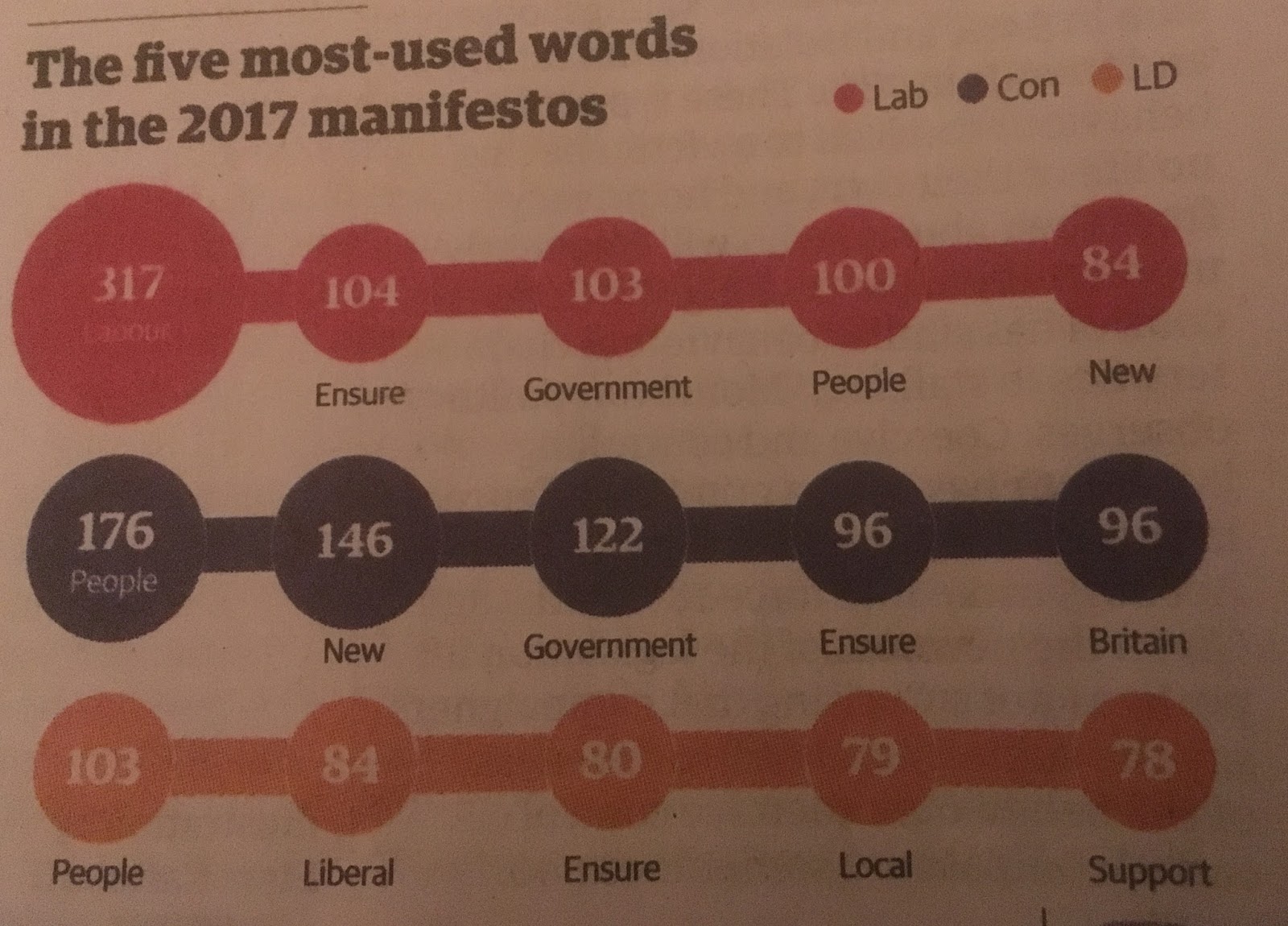
The most used words in the main political parties’ 2017 manifestos suggest that they will ‘ensure’ that in ‘government’ they will ‘work’ to do ‘new’ things to ‘support’ the ‘people’. 

The words resonating through our texts, speak of that which is faithful and holy; of salvation, strength and peace; of blessing, light and life; of humanity sharing in love divine. The new thing for which we long - and which God will fulfil - is the healing of the nations.

Neither Zechariah nor Revelation tell us how to vote - whose manifesto to support.  But they do give us a set of measures to hold each and every earthly power and authority to account.  They do not speak of GDP or taxation - but they do express signs of a flourishing social order within the abundance of creation.  They do not speak of policy - but they do hold a vision of joy, peace, justice and flourishing by which policies can be judged.

For Zechariah, there is a deep longing for the centrality of worship of God: for us too, worship is time and space set apart to offer our petitions and thanksgivings, to seek forgiveness and receive blessing.  Worship redirects our attention to the light and love of God - restoring our vision for right relationship with others.

Can we enable old and young to live together in safety? Might we honour the wisdom of age and cherish the joyful playfulness of youth?  This drawing together of all peoples might seem impossible for us - with our competing loyalties and priorities, but it is not impossible for God.

But to be God’s people in faithfulness and righteousness strengthens us to work hard. It is a recalling to rebuild the place of worship on firm foundations; it is calling to ensure reward for labour, safety and harmony. This vision of the good life is reflected in the the fruitfulness of agricultural land. People are blessed to be a blessing to others - we cannot possess this goodness, rather it flows ever outwards and onwards.

Zechariah’s prophetic measures are vital for us: vital as we seek to establish interdependence between the generations, deploying our social and economic capital with equity; vital as we renew our bonds of culture, trade and diplomacy across Europe; vital as we seek a fruitful sustainability in agriculture, industry and environmental policy across our regions.

I will save you, says our Lord; I will bless you. Do not be afraid but let your hands be strong.

The Revelations of John stretch our imaginations with colour, sound, metaphor and symbol. He wants us to be inspired by the dazzling glory of God’s reconciling love.  William Harris gives musical voice to this imagining in setting the words of Edmund Spenser: For Faire is the heaven... how then can mortal tongue hope to express the image of such endlesse perfectnesse? We glimpse that love through a glass darkly - yet God is with us in Christ Jesus, breaking bonds of sin and death; God continues to abide with us by the power of the Spirit, breathing upon us the blessing of peace.


There is no temple in the heavenly city for then we will see God face to face: God dwells with us and we with God. God who creates, redeems and sustains us, gathers all the nations into this renewed creation. This is a vision of all being made new. All our longings are satisfied; all our griefs are healed.

We walk by the light of God - bringing with us all that reflects the divine honour and glory in us. The waters of life - bright as crystal - wash away all that is false. The tree of life is fruitful; its leaves are for the healing of the nations.

This is less a prediction that a hope made real; a hope which we are being exhorted to reflect in the world which we inhabit.  If God is the one in whom we live and move and have our being, may we be a blessing to the world in which we live and move and have our being.

Blessing in how we treat employees, care for carers and the benefit we bring to our communities, and the careers we pursue. Blessing - by engaging with our MPs and in the choices we make about food, fuel and waste. Blessing - in all that this week holds. We are a new creation - in the power of the Spirit, may we reveal the light and love of God as Christ’s body here on earth.

© Julie Gittoes 2017

Sunday, 23 April 2017

Making the unmissable, unmissable

The text of a sermon preached today - the first Sunday of Easter. The texts were Acts 2:14a, 22-32; 1 Peter 1:3-9; John 20:19-end

Alleluia: Christ is risen!
He is risen indeed, alleluia!

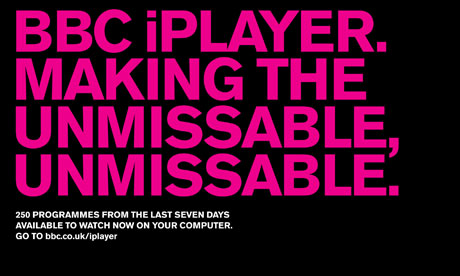
It seems incredible that it’s almost a decade since the BBC launched a multi-media campaign for iPlayer with the catch-line:

Making the unmissable, unmissable.

No longer do we worry about remembering to record a programme; no longer do we wrestle with video tapes. We can download or restart; watch live or catch up; viewing on flat screens, lap tops or mobile devices. 


But making the unmissable, unmissable is more than reliance on technology. We talk to one another, read reviews, pick up on trends - and we try to avoid spoilers. 

The latest BBC One trailer captures this in a matter of seconds through a series of conversational exclamations: Really? What? What? Where did you hear that? Really! Believe me! Did I imagine it?

No you didn’t reads the tagline - "new shows are being added every minute".

Making the unmissable, unmissable.

That could be the catch-line for today’s texts too: only we’re not in the realm of digital technology and autonomous viewing habits. Rather we’re in the realm of God’s reconciling love which transforms lives and communities. 

Today we hear of locked doors and public proclamations; fears, doubts and words of peace. There are exclamation of really, what and believe me? Some might say, did I imagine it?  “No you didn’t” respond Peter and Thomas; “no you didn’t” confirm Mary Magdalene and the Beloved Disciple. The resurrection is being made known every minute. 

Their words are shared so that we might believe; but the unmissable is unmissable not only through their testimony but in our lives and worship, fellowship and prayer. Our risen Lord continues to breath peace into our troubled, joyful, curious, courageous and questioning hearts.

Behind locked doors, they are caught between news of an empty tomb and fear of those in authority. Behind locked doors they ponder Mary’s passionate declaration “I have seen the Lord”. Behind locked doors they are held captive by their feelings of grief, shock and exhaustion; by their expectations, disappointments and guilt.

The manner of Jesus’ being present amongst the disciples continues to reveal the self-giving love of God. His presence was unmistakable and undeniable and unmissable. This body bore the marks of nails and wounds. It was him. Resurrection signalled the defeat of suffering and death; their joy declared that love wins.

And into this unmissable moment is breathed peace.
Peace flows from the one who abided in the heart of God.
The peace that took the sting out death, touching places of infidelity and hopelessness.

This is the one who brings peace to us too.


In our locked and fearful hearts: peace!
When fear, guilt and inadequacy paralyse us: peace!
In the midst of our inconsistencies: peace!

But this is not the end. For the one who breathes peace sends disciples to be peace.

The one who had called them, affirms their call.
The one who had reached out to them, assures them they are loved.

For God so loved the world that he sent his only Son; to forgive and heal, not to condemn.
His Son now sends us in the power of the Spirit to transmit that love and forgiveness.

But Thomas wasn’t there. And perhaps sometimes we, like him, feel that we’ve missed the unmissable.  We have seen the Lord, they told him. And perhaps his exclamations of “what?” or “really!” are met by their “believe me”, “believe us”. 

No wonder he replies with “unless”: unless I see and touch, I will not believe.

Thomas is still locked in - locked into disappointment or jealously; disbelief or hurt.  And he lives with news of the unmissable for a week. He waits with the disciples - talking, eating and praying. Did he notice a change in them? Did their enthusiasm kindle something in them? Were they reaching out to him, being present with him and breathing peace?

The doors remained shut. And Jesus spoke a word of peace.

And he meets Thomas where he is: there is no belittling or rebuke. 
Thomas is invited to reach out and to touch; to believe and place his trust.
And his doubts are caught up in worship: my Lord and my God!


The Incredulity of Saint Thomas - Caravaggio (1603)

His declaration takes us more deeply into the truth of the unmissable. In him two positions are tested. Both the individualised observational evidence - of seeing with his own eyes - and also unconditional acceptance of truth - are seen as insufficient. 

The truth of resurrection is made known to him in encounter, in relationship and in worship.  
His own expectations are transformed. A deeper engagement is made possible. His faith flows a word of peace and the embodiment of self-giving love — and in his life the meaning and continued presence of those realities are communicated to others.

We stand with Thomas in receiving Jesus’ gift of peace. We are healed by the same wounds. The new life of God with us is one and the same. The Gospel was written that we might believe and have life; that we might know ourselves as loved, made whole, forgiven and blessed. 

In broken bread and outpoured wine, the unmissable is made unmissable.
Today, in this Eucharist, we are both penitent and restored.
Here God reaches out in love to the places where we feel locked in though fear, control and doubt.

In broken bread and outpoured wine, our calling as the body of Christ is affirmed.
Today, we are sent; using our gifts, passions to make the unmissable, unmissable in our networks.
Here we become an Easter people: unlocking the fears of others with peace, patience and kindness.

Many came to believe through the witness of Thomas - in South India and beyond. We are emboldened by his honesty and faith. He refused to walk away when he thought he has missed the unmissable but stayed with those who spoke words of peace and joy. He recognised Jesus as Lord.

Peter points others to ‘this Jesus’. The crowd addressed by Peter were caught up in Jesus life and death in a very particular way. In our generation, many people already know something of his life and teaching, holding on to sayings about loving neighbour or turning the other cheek. The values he professed still shape our discourse about justice and compassion.

But, says Peter, this Jesus is not merely a controversial, inspiring or popular public figure. This Jesus was raised from the dead. This Jesus endured the very worst that human beings can do; he went to the depths of our shame and failure; he took our fickleness and selfishness and burnt it away in a crucible of love.  

God’s action transforms us - restoring in us the image of his glory. Our world longs to hear that message of hope and life; of a love that brings dignity and grace. 

Like King David, our world seeks to outwit ageing and mortality - ensuring legacy and lineage, relying on creams and medicines. Like David, our world gets ensnared in cycles of violence, fear and death.  Yet, David’s hope was fulfilled. Death and decay are not the last things. God’s love sets us free. God with us in Jesus makes this known in life, death and risen life.

The reality of this Jesus is unmissable; we are to be witnesses to it.

We are to speak of this new life: the Spirit is already at work in us in. The unmissable is unmissable in the first fruit of this new creation. We see it when we seek justice, healing and consensus; when we love with generosity and conviction; being present with those who mourn; offering stability in chaos; seeking the transformation of structures within our world of work; being wise stewards of creation. 


Even when life is hard and faith is difficult, there are moments of beauty and delight which remind us that this too shall pass. Our hope does not perish; it is unfading. We are to love our risen Lord, allowing his peace to seep through layers of pain. We believe. We rejoice. We hope. In the power of the Spirit, making the unmissable love of God known in Jesus, unmissable.


© Julie Gittoes 2017


Sunday, 16 April 2017

Easter: the main event!

The text of a sermon preached today - Easter Day. The texts were Exodus 14:10-18, 26-15 and Revelation 15:2-4

Alleluia! Christ is risen.
He is risen indeed: alleluia!


Bunny versus Santa Claus ran the headline.

Hot-cross buns or Christmas cake, bland Turkey or luscious lamb? ran the tagline.

You’d expect a weekend cookery supplement to run with a virtual ‘food fight’’ between Christian festivals; and after the misplaced ‘outrage’ over Easter eggs, it might be wise for a preacher to stay well away from references to chocolate on Easter Day. 


Bunny versus Santa Claus with illustration by Sam Island


However, the columnist Stephen Bush began his article with what he calls the ‘theological side’.

He wrote: ‘Easter is better than Christmas for many reasons. If, like me, you grew up in a religious household, you will know this is because the Easter festival is the main event, AKA the Resurrection, while Christmas is just the warm-up band, in which some bloke and his misses forget to book a hotel and accidentally invent Airbnb to solve the problem’.

Yes, Easter is the main event. Resurrection speaks of life, joy and the transformation of the world. In Jesus dying and rising a new age has begun. We are a new creation!

But Christmas is much more than the warm up act:  that bloke and his misses AKA Mary and Joseph held in their arms a speechless infant. That child is God with us; the Word made flesh.

Christmas celebrations gives us the first song of the main event. Then we sang ‘Hark! the herald angels sing glory to the new-born King, peace on earth and mercy mild, God and sinners reconciled’. Today that work of reconciliation is made visible.  Our songs of praise continues: ‘Jesus Christ is risen today, Alleluia!’ and ‘Love’s redeeming work is done’.

All that Jesus said and did was an expression of God’s love; an embodiment of God’s life.  

When he washed feet and broke bread; when he touched the sick or he spoke to the marginalised; when he welcomed the child or challenged the rich; when he told stories about the lost being found; when he calmed storms on the sea or of the mind in turmoil. 

Then. 

In these moments. 

We see the power of God work bringing healing, wholeness, forgiveness and peace.

On Good Friday we recalled Jesus’ identification with our suffering, wounded, struggling and failing humanity.

On Holy Saturday we waited. Jesus death took God’s love to the very depths of despair and life-less-ness.

On Easter Day we rejoice through life-giving love, that pain and grief is transformed and made beautiful.

Now.

Moment by moment.

We can begin again, enabled by the love and power of our risen Lord.

Today we celebrate because resurrection is a remaking of creation itself.

This remaking is something we see only in part: we and all creation are groaning in eager longing to see the fulfilment of this vision of peace and everlasting joy. It’s a longing expressed in another song: the hope of life and and love of Song of Songs which we heard in today’s anthem.


Our readings today might be surprising We haven’t heard about the empty tomb; or the fear, bewilderment, and amazement of the first witnesses; of Mary Magdalene in the garden or the disciples on the road to Emmaus, or of Peter’s proclamation to the people of Jerusalem.

Instead we’re given a bigger perspective on the main event of life, joy and resurrection. It’s a bigger story which renews our hope.  Scripture begins with the goodness, diversity and beauty of creation. Although we are created in and for love, we become ensnared by bitterness, misdirected desires; our capacity to control and harm; our own fears.

Exodus tells of those who’d been enslaved by the Egyptians - exploited, degraded and oppressed. Now they’re afraid of what lies ahead.  For Israel, the certainty food and shelter as slaves seemed preferable to the unpredictable journey of liberation, through the wilderness, to the promised land.

Their flight to freedom was complicated and dangerous. We hear of the casualties amongst those who wanted to recapture them.  A microcosm perhaps of the tensions and cycles of violence, protest, freedom and domination we see in our world today. 


Crossing the Red Sea: Dura Europos Synagogue, C3rd

In the chaos of the mud and the drama of a divided sea, these people take a step towards the freedom God desires for all people. No wonder that they sing; no wonder they rejoice in a glorious triumph; no wonder they attribute salvation to God; no wonder they take the risk of journeying on. 

This is a foretaste of what is accomplished in Christ’s death and resurrection: in love made perfect in weakness, powers of destruction are broken.

Our second reading gives us the finale if you like: the book of Revelation uses kaleidoscopic images to communicate what is beyond the limitations of our human language, but which fulfils our hopes. A glimpse of everlasting life; the time when God will be all in all.

It speaks of a time when evil is conquered and suffering is no more.This fiery, glassy sea echoes the liberation from slavery through the sea; it echoes the baptismal waters through which we die and rise with Christ. The song of heaven resounds; giving us a glimpse of time when all peoples and nations will be united in glorious joyful song to God.

We long for that day.

Today is the main event. Through Jesus’ life, death and resurrection, human history has changed. He restores broken relationships - freeing us from all that limits human flourishing and from death itself.  

We are mortal: we live, breath, create, suffer, rejoice, grieve, endure, restore and we love. We are mortal; vulnerable. And yet, because God acted in his Son Jesus Christ, we are able to live in a new way, living breath by breath in his Spirit. We are to be the gift we receive: a people of joy and healing.


As we sing ‘alleluia’ today, our lives are caught up in the main event of resurrection: our life begins anew today and every day. Because Jesus was, is and will be, God with us. Our alpha and omega; our beginning and our end.


© Julie Gittoes 2017