Showing posts with label Body of Christ. Show all posts

Tuesday, 15 April 2025

The most precious thing

 Sunday, 6 April, Passiontide: Isaiah 43: 16-21, Philippians 3:4b-14 

and John 12:1-8


What is most precious is often most fragile.

Our world, our friendships, every human heart; like a jar of precious perfume. 

In his novel “Alabaster”, Chris Aslan reimagines the story of Mary, Martha and Lazarus. He narrates their shame and sorrow, the freedom they long for and the stigma they face. They hear rumours about a new teacher; someone who might bring hope. 

The jar of pure nard is the most expensive thing they have, but it has not brought them good fortune. When the teacher comes to stay, Maryam smashes it open. 

Her words take us into the tender and provocative moment in today’s gospel:

At the upper room I hurry inside, dripping spikenard all over the carpets, to where the teacher is reclining. Then I take one of his feet and I pour… I’ve never smelled anything like it… It’s rich and warm and a little heady…

The scent fills the room, intoxicating everyone… Spikenard spills everywhere and I pull off my headscarf to use as a mop… my hair falls around me and catches in the liquid, so I use it to wipe his feet as well. 

Spikenard might’ve been a year’s wages; a dowry perhaps. 

No wonder the reaction - assuming scandalous waste rather than abundant generosity. 

Could it not have been sold? Would not the poor have benefitted?

The air fills with fragrance, hands and  feet are drenched in perfume, skin and hair are soaked with oil. 

And Aslan’s Maryam says to the teacher:  “It’s the most precious thing we have”... it’s not enough, I know, but I want to honour you and to prepare you for what’s to come.”

Mary, like our imagined Maryam, dares to love with abundance and holds nothing back - even her own future. 

She faces criticism, scorn and censure for this show of devotion, for the waste.

Yet this outpouring is meeting a different kind of need - it's a fragrance of love which encompasses death, an embodied worship which expresses hope; which gives an unspoken glimpse of resurrection before the pain.

As Maryam holds the teacher’s feet, she thinks ahead: This body will soon be broken and destroyed like this jar. He chooses to do this for us…I start to weep. I wipe and I weep, whispering my adoration. 

Her body is communicating her longing, her worship, her gratitude; her relief, her trust, her sorrow. She sees the brokenness and anticipates burial. 

His feet are washed with oil before he washes the feet of others with water.

A jar is broken in devotion, before his body breaks to heal and restore. 

This is a holy moment: intimate and tender as oil mingles with tears; blessing and sorrow; dignity and honour and grace. 

In describing this chapter in his commenary on, David Ford says the essentials are: being loved by Jesus, loving and trusting Jesus, recognizing who Jesus is, a heart open to the suffering of others, prayer, service, life-giving signs, extravagant attention and generosity. 

We are invited to play our part in this drama of friendship with Jesus. 

Such friendship is the most beautiful thing: it is to be held in the loving gaze of God. 

Our bodies are fully part of our life with God as we offer our whole selves without shame or fear; resisting some of the harsh judgements we make about them.

Embodiment goes to the heart of the incarnation: God’s word dwells with us as we break bread and share wine, weep and find consolation in our tears. 'God's presence and his very self, and essence all divine' as the hymn puts it.

Jesus names the goodness in this moment saying that it is worthy of being remembered - not for its waste but because Mary has dobne a beautiful thing. 

She antipates Jesus’ act of self-giving love by anointing his precious body with the most precious thing she has. She’s not  being cautious or holding back; she lives beyond the metrics of calculation; of growth or exchange. It is a pure gift in response to love.

As Isaiah has promised, God will do a new thing - it springs forth and we are invited to perceive it. He writes of a new way - of fresh waters; he writes of people being formed anew - declaring their praise and adoration. 

Mary’s gift of life and love fill our senses as an act of worship, drawing our attention to God’s love in Jesus: spilling over to forgive, breaking to make whole, lifted up do draw us to Godself. 

In the Eucharist, we are drawn into the abundance of  Jesus’ act of self-giving love. In fragments of bread, a cup of wine and words of blessing, we are made welcome, forgiven, restored and made new. Drawn into communion, our bodies in one body. 

Consider for a moment the things that have sustained us when life has been painful or we’ve found ourselves in turmoil - what comforts us?  Often, it's time with those who love us; the gestures of those who care; the body language that doesn’t count the cost. 

These aren’t merely pragmatic or calculated; not empty platitudes or politeness. They are acts of kindness or creativity that resist the pain of a fragile and finite world - which capture our senses like spring flowers. 

The body language between Mary and Jesus speaks of facing  suffering and death with generosity - sharing all that we have, breaking it open; somehow finding with it a gift of beauty with a fragrance that hangs in the air. 

It is an act of resistance against the grave - death does not win, instead the sacred notes of love rise above it. 

When challenged, Jesus is not suggesting that the needs of the poor do not matter - or that we accept society's inequalities as inevitable. It invites us to worship wiht our whole heart and to be open-hearted with what we have. 

Mary reminds us to love in the moment - aware of what lies ahead for Jesus, she offers comfort and tenderness. The breaking open the jar is a breaking open of her heart with deep gratitude and love. 

We too are to love Jesus without limit; that friendship is the source of goodness, reminding us that we are from love, of love and for love; that we are also to show the same open-heartedness to those who are in need. 

Paul writes of the vindication of unconditional love. He has desecribed the way in which Jesus does not cling to power but empties himself for us. In the light of that, Paul sees his gains as fleeting, counting them as rubbish (a polite translation of the Greek!). 

There is nothing that we can do to attain our own righteousness - it is a gift in Christ by faith. He shared our embodied experience, suffering and death that we might know his resurrection.

Mary responds to the need in front of her - the one who’ll die outside a city wall and be buried in a stranger’s tomb.  She loves what is before her eyes, in her dining room, amongst friends and those who’ll deny or betray love. 

Her body language shows that it is always Jesus we serve when we love those whose need confronts us. Judas faces rebuke rather than blessing for holding back; for thinking in the abstract. 

The perfume is an anticipation of resurrection - it is a glimpse of hope, it is a reminder of beauty and goodness, of extravagance and vulnerability. It is the fragrance of love, broken open and spilling out. 

As Passiontide begins, we are gifted an image of utter generosity; of being present; Jesus between us and judgment; holding nothing back. 

The cross awaits with all its pain and abandonment; but in this moment, one woman chooses to make a gesture that fills the room with the scent of what is possible. That there will be life again. That love will triumph. 

We press on in this way of love, as friends - recognising Jesus and being open-hearted to others; in prayer, service, attention and generosity, that our bodies too might be life-giving signs, broken open in love. The spiritual writer Ignatius says this, may it be our prayer:

Lord my God, when your love spilled over into creation You throught of me. I am from love, of love, for love. Let my heart, o God, always recognize, cherish, and enjoy your goodness in all of creation. Direct all that is in me toward your praise. Teach me reverence for every person, all things. Energize me in your service. Lord God may nother ever distract me from your love. Neither health nor sickness, wealth or poverty, nhonour or dishjonour, long life nor short. May I never seek nor choose to be other than You intend or wish. Amen.


© Julie Gittoes 2025


Tuesday, 3 December 2019

They will walk behind the ploughshare

A sermon preached on Advent Sunday. Isaiah's words about swords and ploughshares have become iconic. I was stuck by the finale of Les Mis - and by the important work of the Institute for Criminology in Cambridge - in the risk of grace and rehabilitation. The texts were Isaiah 2.1-5; Romans 13.11-end; Matthew 24.36-44

In a few weeks time, a season of waiting will come to an end.

There will be dazzling lights and heartfelt song.

In mid-December, Les Mis reopens at the Sondheim Theatre in the West End.

The tunes: they get us right here.

They tug at us: from 'I dreamed a dream! 'to 'Do you hear the people sing?'


Translating Hugo Victor’s epic novel into musical theatre, draws us into a revolution of the past. 

Through song we are drawn into the struggle of the poor getting older and colder; we grapple with law and grace.

That struggle is framed around how to restore order and harmony: the struggle between the idealist revolutionary uprising and the conservative stability of the state.

Both see political power as  means to accomplish God’s justice and harmony; both seek to violently take charge of the world in order for God’s Kingdom to come.

Les Mis is also shot through with love, grace and mercy.  These things can’t be reduced to politics, law enforcement or economics.

Perhaps it’s the character of Valjean who helps us most vividly navigate a way though the violence of judgement and idealism. It’s through him that the plight of the poor - Les Misérables - becomes personal, rather than abstract.

Valjean’s first experience of grace is when the pries gives back to him the candlesticks he’s stolen. That one act of mercy saves him. The thief is forgiven; he experiences kindness; he sees the world differently. He is restored. 

Valjean’s second experience of grace is when he - now a factory owner and mayor - faces his own complicity with the fate of Fantine: her story is one of exploitation; her song is heartbreakingly and soul-crushingly tragic. 

In his response to Fantine and Cosette, we see Valjean himself become a channel of the grace, mercy and kindness he’d received himself.

In some way, we might see Les Mis as the archetypal Advent musical. For at its heart is the cry for justice; and such a cry is the thread running through this season.

As we light candles week by week, we are laying claim to the hope of our ancestors in the faith; the prophetic cries for peace and; the joy and love of those who point us to a wordless infant who is God with us.

Our Advent cry perhaps echoes the finale of Les Mis:
They will live again in freedom
In the garden of the Lord.
They will walk behind the ploughshare,
They will put away the sword.

The musical puts on the lips of the chorus the cry of the prophet. 

It is a cry that expresses our desire to bring an end to war and injustice; a cry that invites to look at the world around us; to examine our hearts; to name the inconsistencies.

At the very beginning of Isaiah’s witness, this is what he talks about.  He brings into the present this future hope; the ultimate decommissioning of weapons. Swords and spear are put beyond use. The means of mass destruction become the means of food production. 


"Swords into ploughshares..." - Wall at Raoul Wallenberg Place, near the United Nations Headquarters, New York City


The worlds of Valjean and of Isaiah share with us this concern for justice and peace.

Their worlds are marked by criminality and corruption; exploitation and privilege; by judgements and governance that are always imperfect and sometimes unjust.

But these things breed mistrust and fear. Isaiah cries out to a people who’ve drifted away from their first love: who’ve neglected God and God’s ways of mercy and justice. 

Isaiah’s cry calls them back to God and invites them to relearn God’s ways, to walk a different path - placing one step in from of the other. 

This Kingdom is coming, but it is not here yet. We seek it; struggle for it; glimpse it; build it.

And that is why we need to remain alert; so that we can be prepared; and not taken by surprise.

Today we light the first our of our Advent candles: a glimmer of light which reminds us of the hope of the Kingdom where no one is left behind to grow older and colder; where all are made welcome; where human concerns for status, power and wealth melt away before God’s justice.

Jesus’ words in today’s Gospel both alarm us and give us hope.  The task of the disciple is not to predict the ‘end times’. Instead our task is to live by faith - that means refusing to live by fear and embracing life lived in loving obedience to God. Just like Isaiah and Paul, we are in this for the long haul. 

How do we live in these bewildering and uncertain times?

By faithfully embodying the love of God; witnessing, in the power of the Spirit, to that love made manifest in the humility of Jesus. 

But what of Jesus’ words about division, separation and the brutal disruption of daily life?

It’s by use of dramatic and apocalyptic language that Jesus seeks to convert the urgency of the situation and the demands of the challenge he presents to us.  We are called to be ready and prepared; we do not know how much time is left to us here on earth. We are to use the time that we have to an active waiting on God, which makes hope possible. 

All this is summed up in the imperative: keep awake!

We come to Jesus in the hope that he’ll rouse us from sleep: that our hearts might be directed to God in worship; that the Spirit might kindle in our hearts the fire of love; that our wills and desires might be directed to ways of peace.

Perhaps we find in Paul’s letter to the Romans a particularly timely reminder for how to live in the face of upheaval. He asserts that in Christ there has been the ultimate regime change from darkness to light; from night until day. Therefore he urges us to be prepared both inwardly and outwardly. 

If we are alert to the nearness of God, if we live in his light. To live in light means that we lay aside the need to gratify temporal desires; jealously, quarrelling and the revelling are distractions.   

To live in light means being alert to the risks we take for justice and peace in our own generation.  Some of that risk taking for the sake of others was evident on Friday afternoon - as two men used a fire extinguisher and narwhal tusk. 

But it was also evident on Friday afternoon in the work that the Cambridge Institute for Criminology is doing as a force for good in seeking to rehabilitate offenders. Jack Merritt lost his life was part of this project - a 21st century version, perhaps, of Valjean being given the candlesticks as an act of grace and mercy.

Jack's father said: ‘Cambridge has lost a proud son and a champion for underdogs everywhere, but especially those... who ended up in the prison system’. The pursuit of justice and mercy is a matter of the personal as well as the policy.

The Eucharist in which we share, restores our hope in God’s kingdom. We hear of God’s work of creation and redemption; of love which patiently reaches out to us in love. Here we come to the one who is to come; here we lament and repent; here we are forgiven and sent out.

Here receive what we are, and become what we receive: the Body of Christ. And bodies live and move and breath and act in the world.  

We are a body called to both hope and patience - in world which is often devoid of the former and which has no time for the latter. 

And yet, our song is of a hope of restoration, of peace and of justice:
They will live again in freedom
In the garden of the Lord.
They will walk behind the ploughshare,
They will put away the sword.


© Julie Gittoes 2019

Sunday, 17 November 2019

Kaleidoscopic colour

A sermon preached on the Second before Advent - having been moved by Eliasson's exhibition at the Tate Modern and how his work makes us aware of our bodies and our place in the world, reading Jesus' warnings in Luke's Gospel resonated differently.   The texts were Malachi 4:1-2a, 2 Thessalonians 3:6-13, Luke 21:5-19


Is it possible that art can change the world?

The Danish-Icelandic artist Olafur Eliasson thinks so.

He’s reputation is based on playing with our senses: he creates work of beauty - giant kaleidoscopes shedding colourful patterns on the wall; light installations which turn our bodies into a playful shadow displays.

He creates work which brings the natural world inside: the delicate beauty of fine mist falling, gently, as light casts a rainbow; the trepidation of stepping into a corridor of dense fog, seeing nothing ahead but being enfolded with a dazzling light shifting from yellow to pink and white.

But as one reviewer puts it: there is more to Eliasson’s work than cheap thrills and damp air.  


By drawing  on nature and creating multi-sensory phenomenon, he makes us aware of our bodies; but he also makes us alert to our place on this planet; his expanded studio addresses the questions facing us - renewable energy, climate justice, migration and melting glaciers. 

Eliasson’s work might be described as ‘sublime’: that is the utterly awe-inspiring point where beauty, wonder, fear and vulnerability meet. 

As Rosemary Waugh puts it in Time Out magazine: he captures power and beauty and humanity for one reason, that is: to make it explicitly clear that THIS – this glorious, miraculous planet with its winds, rains and rocks – is precisely what we’re systematically destroying by letting it melt, crack and fall apart. This is epic environmentalism and, yes, it’s sublime.

In Real Life, we become agents in answering the question: how do we live together?


How do we live together when we don’t know what the future holds for humankind? 

In today’s Gospel, we some were speaking admiringly of the beauty of the temple stones - their majestic proportions, hewn from the earth, carved by human hands, reflecting the light.

And Jesus’ response makes us acutely aware of our bodies, our senses, our place in the world: it is a moment of beauty, wonder, fear and vulnerability.

In that moment, Jesus addresses the way in which human history opens up before us. Each generation facing its crises as nations, empires and kingdoms rise and fall; as environmental upheavals loom and the cosmos brings forth its own portents.

Human agency participates in and magnifies this disorder; and yet we strive for peace; we’re motivated to respond to disaster with generosity. The shorthand for this time between Jesus’ proclamation of the nearness of God’s Kingdom and its fulfilment or consumption is ‘now and not-yet’.

We live in this realm of in-between times as the disciples did: Jesus speaks words which are discomforting to our ears. He names the human tendency to seek power. 

First many will attempt to lead followers astray by falsely claiming his name; second, the powers of earthly kingdoms will rise against each other with violence; third, the church will be hated because of his name. 

In short, Jesus is saying that the good news he shares of healing, hope, liberation and forgiveness will stand in contradiction to the idols of possession, exploitation, abuse and greed of every age. 

This takes us to the heart of spiritual conflict: Jesus is God’s Word made flesh, the truth that brings light into darkness. In him, the love of God draws near to us; naming all that diminishes - the idleness, indifference and selfishness. 

As children of God, Jesus reassures us that the works of darkness have no power over us. we are to resist them by placing our trust in the peace Christ brings; allowing that to shape our lives and our witness. 

Such resistance is courageous. It means that we must cultivate habits of self-discipline and endurance. 

First, we are not to be distracted by false teaching; those things which suggest there’s an easier way than that of costly love. Second, we are to stand firm as worldly powers exert their influence and kingdoms clash with each other. Thirdly, we must be remain faithful to our witness - even when friends and family disagree or turn against us.

In short, Jesus is saying that we must not lose our focus: to pray for peace and reconciliation, for justice and mercy. We are to use whatever gifts and resources we have to aid others in that struggle; to come alongside them to raise them up and give them dignity.

We can commit ourselves to that struggle in the knowledge that Jesus has already defeated suffering and death; love has won. As members of Christ’s body, any resistance or hope we offer is through his grace; and change we effect is through his power.

The epistle also speaks in robust terms about the need for such self-discipline. Paul’s naming of idleness implies a senes of living in disorder. The notion of being busybodies suggests that he’s concerned with those who are intent on meddling in the affairs of others; those who like to give the impression of being kind-hearted, but in reality offer little meaningful aid or support. 

To reframe the challenge of Eliasson’s interactive exhibition, how do we live together? It is in part by not growing wearing of doing what is right - however much other factors appear to conspire against us. 

When if feels as if all is melting, cracking and falling apart, our worship engages us with our senses, reconnects us with the natural world and makes us more aware of our bodies.

Throughout our liturgy we are reminded that our identity is in Christ: we seek forgiveness and share in peace. It is when the fruit of the vine and the work of human hands are taken and blessed, broken and given to us that we, are nourished as this one body. 

Though we are many, and though we will be sent out to live and work in many homes and places, we are united.  Though we are many our hearts are shaped by one love. Can the gift of this sacrament change the world? I believe so.

We are called to be people who reflect that love like a kaleidoscope - casting the shape and colour of God’s Kingdom in the world around us. We are to be people whose bodies bring beauty and kindness; justice and hope.


When we see what is sublime in our world, we are called to live with a lightness that resists consumption and exploitation. When the fog of political debate descends we are to speak with clarity of the one whose name is righteousness, who brings healing in its wings. 

As we long for the world’s salvation, we pray that the Sprit will stir us from apathy; restrain us from excess; and revive in new hope: that all creation may be healed in Christ Jesus our Lord. 

© Julie Gittoes 2019


Monday, 13 May 2019

Fleabag!

Last night I preached at Guildford Cathedral for the last time (probably need to change the title of this blog now!). It is one of the riskiest and toughest sermons I've delivered. Risky because talking about Fleabag might be a bit left-field. Tough because it was about love. Tougher still became it explores how we place/misplace it and because it talks about power.  But the incarnation is nothing if not about the risk of God's love for us - and of the power of resurrection to transform our 'body language'. I want our churches to be safe. 

The texts for Evensong on 12 May were Isaiah 63:7-14 and Luke 24:36-49


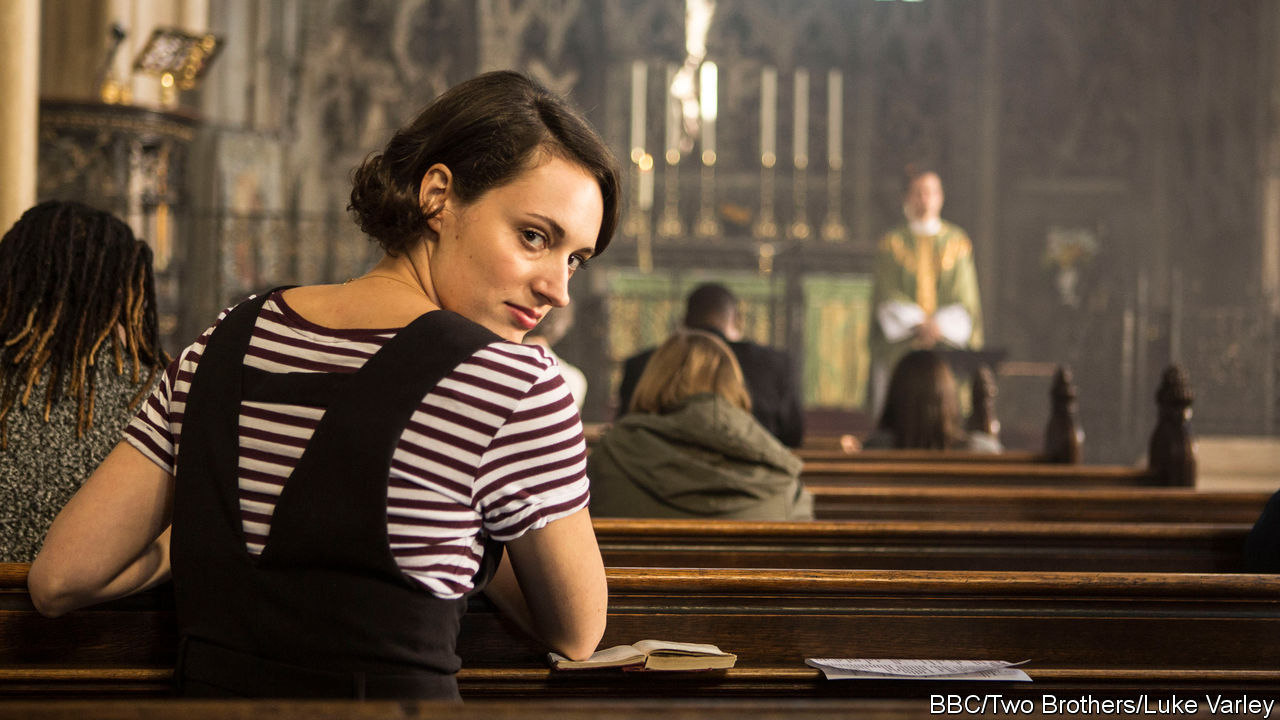
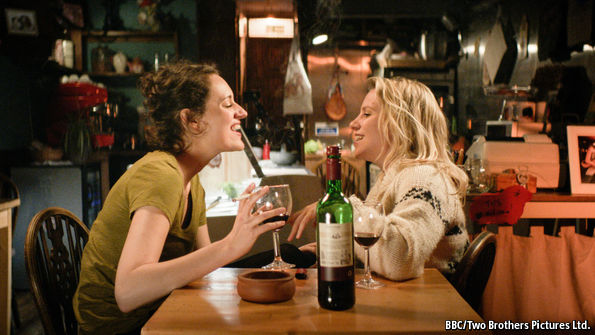
Having been appointed, as rumour has it, because of an answer to a question about Rev it is only appropriate to being this sermon with another BBC series: Fleabag.


Some reviewers called it: Heart-rending and darkly hysterical.

Others called it sharp and shocking.

When Phoebe Waller-Bridge brought Fleabag back to our screens, her protagonist announces ‘This is a love story’.

It’s a love story which presses into the harsh realities of grief, guilt and addiction; which casts light on arrogance and exploitation; which somehow graces our attempts to muddle through.  

As friends, colleagues, siblings, parents; as disciples and those called to Christian leadership Waller-Bridge holds up a mirror. She dismisses love’s fairytale; brings us in on the joke, the therapy, the struggle. But when she breaks the forth-wall, it’s us she gazes at. 

This is a story which explores where we place and misplace love.

‘I don’t know what to do with it’ says Fleabag of all the love she has for her mother. Following her death, she says to her friend Boo ‘I don’t know where to put that love now.’


Fleabag laughs when Boo says she’ll take it. ‘I’m serious’ she says, ‘It sounds lovely. I’ll have it’.

We have so much love that our hearts cannot contain it; nor remain silent.

We can be so greedy for love that we risk clinging on far too tightly; suffocating it.

We love so passionately that our hearts break; healed with tenderness.

Sometimes we, like Fleabag, don’t know quite what to with our most precious loves. Like her, the church can be guilty of reducing intimacy to sex; of learning another’s vulnerabilities only to exploit them; of grieving another and not knowing how to channel the depth of our affection; or being so afraid that we resort to control.

How can this be a love story?

For Waller-Bridge, the institutional embodiment of this obsessive misplaced love is the sweary gin-drinking, far from perfect priest. His crossing of boundaries of trust and friendship creates a co-dependence; a vortex of collusion and abusive behaviour. 


This is an uncomfortable place to be.

Perhaps that is why Fleabag is so heart-rending: it reveals the extent to which we are capable of power games; it reveals our longing for catharsis, for redemption and for peace.  

Yet there is love which feels like hope.

A love which dares to confront and transform our fears.

Isaiah knew of this love as he recounted the gracious deeds of the Lord. 

This is God’s love story. The one which is to be our plumb line; the love which shapes our hearts and minds.

This love is abundant and steadfast: it raises a people up that they may flourish; it carries them when they are weak. 

This love is merciful and just: it calls out the false dealings; it is grieved by enmity, rebellion and power games.

This is the love we are to remember: love which liberates; love which creates within us a new heart.

This love is alpha and omega; compassion, unbounded.

Love begotten of the Father: love divine, all loves excelling.

Love which scatters fear and gloom.

This love comes among us when we are fearful, joyful, startled and doubting saying: 
shalom aleichem; peace be with you.


This embodied love is not a ghost; it is something new.

The body born of Mary; the body which brought healing and broke bread; the body which calmed storms and ate with those of the margins.  

In this body, the fullness of God was pleased to dwell.

This body holy and human. This body was betrayed and died on the cross.  

This body was laid in a stranger’s tomb; this resurrected body is real, imperishable, glorious and powerful. 

This risen body, fulfils the law of love and the prophetic cries for justice; this death defying love, opens our minds to the scriptures.

This love sets in train a proclamation of repentance and forgiveness: here we're accountable for the placing or misplacing of our love; grieving the harm we do. Here we walk with others with changed hearts; being mindful of the traumas and dreams of our fragile bodies.

The love we are to place measured by the Spirit’s wisdom: by the fruit of joy and peace, and a refusal to diminish the other. Such love waits patiently with the vulnerable, allowing them to thrive. It guards our own hearts with self-control.


Our anthem describes our Lord’s body as the living and life-giving bread; a soft self-wounding pelican.  This love mixes with our mortality; and raises us up. It increases our hope and grants us peace.

This love demands more of us to ensure that the church becomes a safe space. 

To be a community whose body language witnesses to kindness and justice; a body which recognises patterns of bullying and embodies instead gestures of liberation; which dispels delusions and embraces ways of wisdom and truth.

In the power of the Spirit, we are called to love in the way God so loved the world in Christ: with maturity and tenderness; building up and restoring.

Father, pour out your Spirit upon us and grant us a new vision of you glory; a new experience of your power; a new faithfulness to your word; and a new consecration to your service; that your love may grow among us; and your kingdom come: through Christ our Lord. Amen.


© Julie Gittoes 2019