Showing posts with label God's story. Show all posts

Tuesday, 16 May 2023

Story all the way down

Sunday 7 May, 5th of Easter: Acts 7:55-end, 1 Peter 2:2-10 and John 14:1-14


It is story all the way down. There is no life without story. We enter story from the time we are born and never exit story even in death. 


Words from Willie Jennings - the black American theologian whose commentary on Acts draws us vividly into the story of the early church.


We are a story telling people. We break the ice in conversations, shape communities and or influence decisions by the stories we tell. 


Some stories will seek to confirm identity or offer us certainty or stability; others will open up questions or stir our imaginations with new possibilities.


Telling stories is powerful because they embody or even conjure up reality - confirming the past, shaping the present and determining the future. 


Today’s readings open up and challenge the kind of stories we tell: 


In Peter’s letter we find ourselves called into God’s story - called to be God’s people, holy, faithful and beloved.


Peter invites us to become like infants - to be in a place of vulnerability and dependence.  This is where we begin to grow into salvation - into that place of healing and wholeness. 


It’s the beginning of a story: there is the expectation that we will explore and grow, but also the reality that we will be finding our way, sometimes stumbling or sometimes reaching out. 


This story is grounded in, or indeed on, Jesus: a durable corner stone which bears the weight, but also shame and rejection, alongside election choice and grace.  


We are built on a foundation which is a living stone - and we too live: we will grow and change, being shaped and honed within a community.


Peter paints a picture where it is safe to grow and learn; a community where sacrifices might be made for the sake of others; where mutual love shapes patterns of life; where we tell a different story reflecting what God has done in Christ - and not only that, what God continues to do in us, for the sake of a future we can only just glimpse.


What matters is God’s appraisal of us  - God’s choice, calling and grace.


To be a community called to the dignity of a holy, royal priesthood, might not be about  having all the answers or crossing our fingers that a fixed response might work.


It is instead submitting ourselves to a process of refinement; refined by the fire of God’s love; to be a continual work in progress through the loving mercy of God.


Our shared pattern of life shaping lives - trusting that if we place our trust in God, we will never be put to shame. 


The communities, churches and households we are part of sometimes reinforce fixed expectations; yet through the Spirit we are called into a new story. 


In Acts, we see Stephen at the moment in his life where his gaze extends beyond this world. He has come to this point because of such a new story. A story that has Jesus at the centre - a story that has reshaped, redirected and reordered his life. 
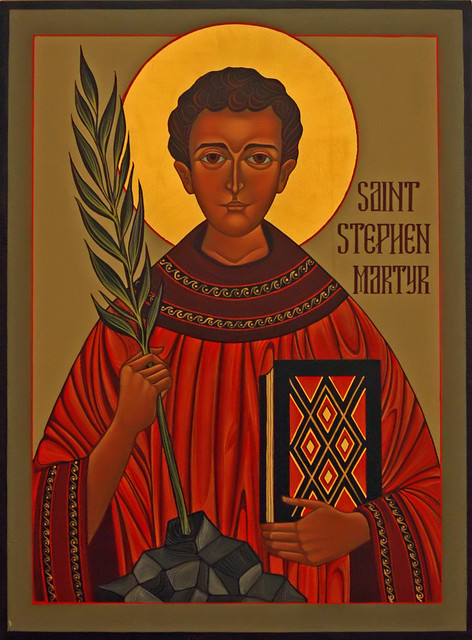


Image link here

Jesus spoke in stories - drawing all human life and story-telling back to our creator. In Jesus, God entered into our story and drew it into his own body as Jennings puts it. It is this story that Stephen tells when he faces false accusations.


In the power of the Spirit, he tells God’s story of promise, vulnerability and waiting…. of pain, rejection and waiting…  For it is in the waiting that we are drawn into a life of love with God; a hope fulfilled in an embodied word of love. 


Stephen’s life was filled with his Saviour’s story: of Jesus’ words and deeds, life and death; of the Spirit’s movement to raise up and break cycles of despair. 


And now his eyes are drawn beyond the violent fray to gaze on heaven; to glimpse the end of the story.  As his life passes from earthly reality to eternal promise, his words are scattered and love takes root. 


Alongside Stephen the persecuted we see  Saul, the persecutor who’d become Paul.  Jennings writes that Stephen found his way to love. Saul was yet to find his way.


In John, we hear about such a way.  Thomas and Philip are asking lots of questions - they are seeking out something certain that they can hold on to. 


In his response, Jesus is inviting them into a place of trust and prayer, a place where they can dwell and grow in mutual love.


He speaks to these troubled and anxious disciples of a way of truth and life, which leads them deeper into the love of God.


It is a way which seeks out what is just and honourable; a way which builds up and sets us free from shame.


Jesus promises his disciples a place in God’s story - in the unfolding drama of what it is to love and be loved.  All that is through him. In us trusting that Jesus is as God is; and that the Spirit will continue to encourage, comfort and help us in this way. 


In laying down his life for us, Jesus goes to the depths of the grave and reveals the power of the resurrection. The way, truth and life of Jesus is to reconcile all things in love. That is our ultimate reality.


Yet even our frail human bodies can also reflect something of this way of life. God’s Spirit is at work in us - when we show compassion and kindness, when we show hospitality and friendship. We are to walk this way; embrace this truth; to dwell in this love.


Here in this place, we are given a glimpse of a way of love and friendship; we are invited to discover the truth of such love in action; and to rejoice that signs of life are indeed signs of love. 


Here we receive the bread of life, given for us.


Here we are recalled as God’s people.


Here we are refined by the fire of God’s love.


Here we are sent out to tell a story of healing and possibility, of mercy and hope. 


This is a story of life out of death, and a world healed by love’s wounds: we enter into this story which invites us to risk ourselves for those we serve in compassion and courage. 


© Julie Gittoes 2023

Monday, 26 August 2019

Freedom, Life and Love

A sermon preached in one way at the baptism of Michael, Ariana and Benaiah at St Mary's; preached as invitation to consider what it is to be baptised at Christ Church. 

In part inspired by Esi Edugyan's magnificent novel Washington Black: lyrical and compelling exploration of the nature of freedom in the face of brutality and beauty; meditating on the capacity of the human heart, to harm and to heal. 

The readings were: Isaiah 58.9b-end; Psalm 103.1-8; Hebrews 12.18-end; Luke 13.10-17


Today we welcome three new members of the church, the body of Christ.

We welcome them with joy and thanksgiving.

We welcome them into freedom; into life; into relationship.

Today is the beginning of a journey and an opportunity for us to ponder our baptism - not as past event but as present identity and future hope.

The story of our lives is woven into God’s story.

As human beings we’re hardwired to respond to stories.

It’s why we get addicted to soaps or spend hours with our head in a good book.

From the most popular west-end show to the latest Hollywood blockbuster; from the bedtime stories we tell our children to the lyrics of our favourite album we love to get lost in a good story.

Sorry telling isn’t the preserve of the professionals: we do it every day. 

When we meet up with friends of colleagues; when we gather to celebrate or grieve; when we logon to Facebook or tell a joke; and over refreshments after this service, we tell stories. 

Words and expressions hold our interest; connections are made between; and we look forward to a satisfying ending!

One story which has captivated and challenge me recently is the novel Washington Black by Esi Edugyan. She’s a masterful storyteller - full of strength, beauty, courage and creativity.

She takes us from the heat of the  sugar cane plantations to the dazzling frozen wastelands of the Arctic; through the muddy streets of London to the Moroccan desert. Inspired by a true story, this tale of liberation rests on taking a risk. 

The risk of stepping into the new-fangled cloud-cutter: what we’d recognise as a hot air balloon.

This story of freedom, identity, empowerment and being fully human is also a quest to make the world more whole.

Early on young Washington, or Wash as he’s known, asks: ‘What does it feel like, Kit? Free?’

She gathers him close, her hot breath at his ear, saying: ‘Oh, child, it like nothing in this world. When you free, you can do anything.’

By the end, Wash is a scientific explorer and an artist; no longer slave or assistant but accomplished in his own right. The urge to draw gave him a sense of peace and calm. He says, ‘At the easel I was a man in full, his hours his own, his preoccupations his own’.

Freedom.

Peace.

Fullness of life.

These are the things of God’s story.

These things are good news.

The life stories of those baptised today will unfold as they discover their gifts and skills; they will forge deep connections with family and the friends they’ve yet to meet.

Today we commit ourselves to pray for them and to encourage them; to show by our example how to live fully as members of one body; to seek, with them, the things that make for peace.

We began with Isaiah reminding the people of God of the purpose of the Sabbath.

Living in Hendon, we glimpse something of the gift and command of Shabbat as our Jewish bothers and sisters cease from their routine pattern of work and actives when control or pressurise us.

The pace of life visibly changes; life in all its fullness is rediscovered.

For Isaiah, the discipline and rhythm of Sabbath also teaches us that our neighbour is not a burden.  Our neighbours are our community. There is freedom in the gift of Sabbath; their is life in its command.

Remove the yoke, the burden.

Stop pointing the figure; speaking of evil.

Offer food. Satisfy the needs of the hungry and afflicted.

This is Sabbath. Here is light shining in the darkness.

Sabbath invites us to set aside our own interests.

Rest, renew your strength; be refreshed by God’s word.

With the Lord as our guide, God’s people rebuild, repair and restore.

The setting aside of a holy day is to be a delight.

But.

As with good gifts, there is always a temptation to subvert it or to turn away. We risk burdening others rather than releasing them from the yoke of oppression. The weakest and powerless suffer most from our collective failures of self-interest.

But.

God keeps calling us back to the heart of God’s own story: of life, of freedom and love.

This is freedom from all that hurts, wounds and burdens us, what in short hand we call sin.

The freedom of this new life has God's love at its heart. It means we can do anything: anything that echoes that love in what we say and think and do.

God speaks of life and freedom and love by the prophets; and God’s word becomes flesh in Jesus.

In our Gospel reading, Luke tells a story of how Jesus revealed the power of God to heal and set free.

Think about the woman at the heart of this story. We don’t know her name; but Jesus sees her. 

Imagine the world lived from her perspective: not being able to make eye contact; the narrowness of sight-lines; the frustration and vulnerability; the impact on her social life and household.

She was welcome in the synagogue; she was there to embrace the gift of Shabbat.

Shabbat was the day was a day for healing: for life, liberation and community. 

Synagogue was a place for praise: the right place for her burden to be lifted.

Woman, says Jesus, you are set free.

Set free to participate in the community she’s already part of; to embrace fullness of life.

In the face of indignation, Jesus invites his critics to grasp afresh the meaning of the Sabbath: a time to restore human dignity and bring release.

In the face of freedom, the crowd rejoiced at all the wonderful things Jesus did.

Baptism draws us into this story of life and liberation.

Anointed with oil, we tell the story of God’s blessing as they discover their own gifts.

Water is poured out, we tell the story of God’s love from slavery to freedom, from death to life.

Receiving a candle, we tell the story of God’s calling to be light in our world.

As they grow up, these three human beings need the love and support of their parents, godparents and extended family; they need the prayers and encouragement of all of us, Christ’s body in this place; they will need the wisdom of teachers, friends and mentors who they’ve yet to meet.

At every Eucharist, we tell the story of God’s love poured out in creation and the human struggle to set aside self-interest; we tell the story of the prophets crying out for justice and the cries of the vulnerable. 

Each week, we tell the story of God’s own Son abiding in flesh of our flesh; teaching, healing and telling stories; giving his life blood that we might live; giving us bread that we might be one body.

At every Eucharist, the cross with which we are marked in baptism, calls us to worship with joy and thanksgiving; and we are sent to continue that story of life and freedom by the power of the Spirit at work in us. In our words and actions.

Welcome.

Here you find freedom, peace and fullness of life.

Make this story your story. Amen.


© Julie Gittoes 2019

Sunday, 24 June 2018

What will this child become?

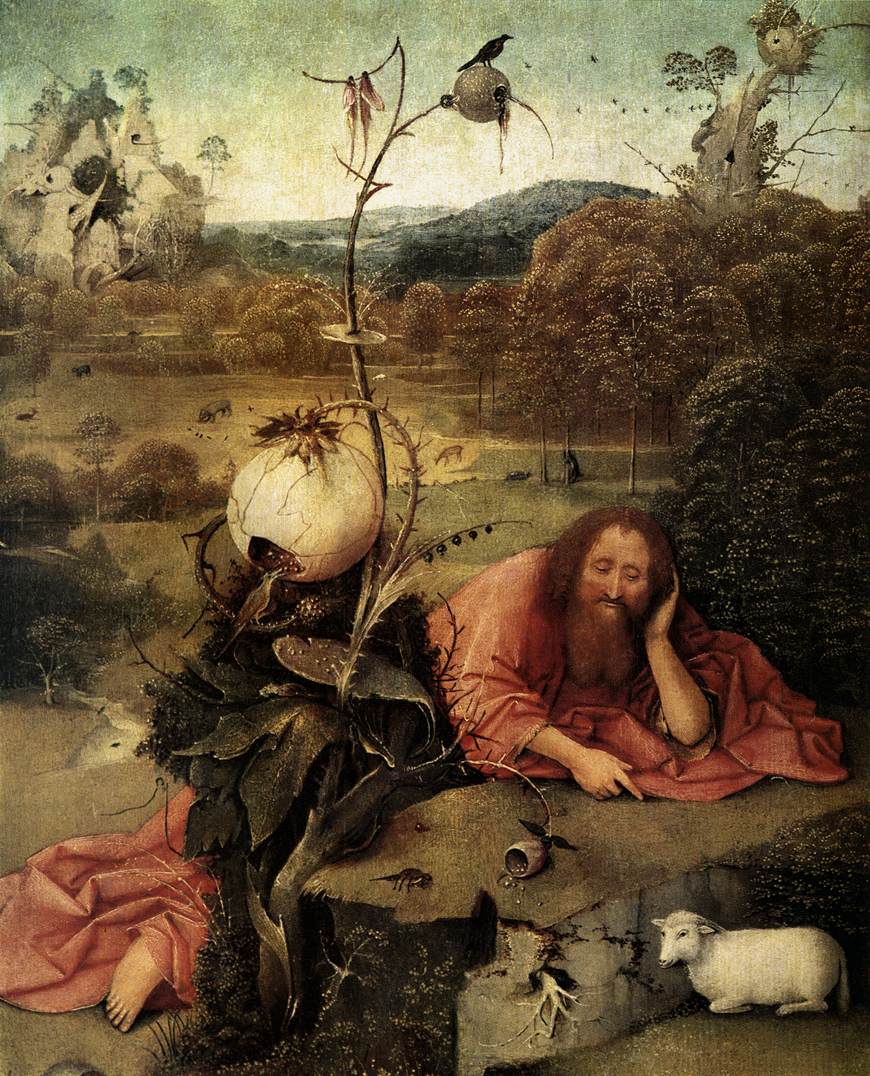
A sermon preached at the Cathedral Eucharist on the feast of the Birth of John the Baptist. In the light of how we treat children - and the images from the US border and boats crossing the Mediterranean - the question of what this child/these children become is acute. The parallels with reflections on Hamilton in relation to John were thought provoking. The texts were: Isaiah 40:1-11, Galatians 3:23-end and Luke 1:57-66, 80


Hamilton.  Alexander Hamilton.

First US Secretary of the Treasury.
Overlooked as the face on a ten dollar bill.
Brought to life in an exuberant mega-musical.
A score infused with hip-hop, rap, indie-rock and operetta.

Hamilton: praised on this side of the pond for its ‘political passion’ and ‘nimble wit’.
Alexander Hamilton: who lives, who dies, your tells your story?

This is about the independence of a nation: about revolution and government; interpreting the constitution and managing the economy.

It’s about American identity and European destiny; it’s about urban entrepreneurs and agricultural labourers.

It’s about opportunists and visionaries: the people in the room with power and immigrants getting the job done.

It’s about Alexander Hamilton, as the opening song puts it:
How does a bastard, orphan, son of a whore and a Scotsman, 
dropped in the middle of a forgotten spot in the Caribbean by providence, 
impoverished, in squalor grow up to be a hero and a scholar?

It’s about us too - our history, legacy and identity; our cries for comfort, justice and unity.  

For something so historically engaged, Hamilton fizzes with contemporary challenge. 

From this week’s news headlines we are confronted by:  the orphan, the forgotten, the impoverished; the migrant, the president, the constitution; the negotiations behind closed doors, the concerns of business, public services and national debt. 

As we navigate these challenges as people of faith, we unite our cries with the voices of scripture. 

When we’re angry, bewildered and heart-broken, we ask who lives, who dies, who tells God’s story?

One who does just that is John the Baptist.

Today we celebrate his birth: 
How does an only child, son of barren woman and an old man, 
dropped in the middle of a forgotten spot in Israel by providence,
with rejoicing, a sign of mercy grow up to be a prophet in the wilderness?

At the point at which Zechariah and Elizabeth had given up all hope of parenthood, they are promised a son. A son who will bring joy; who will be filled with the power of the Spirit. 


In the words of the angel, this child who will turn our hearts: moving us from disobedience to wisdom, bringing reconciliation to our households.  This child will make us ready, will prepare the way for the Lord.

Whist his father, was literally speechless, this child leapt in the womb as his mother, embraced Mary: the God bearer.

John’s birth is greeted with rejoicing. His name meaning God is gracious expresses something of paternal gratitude. But his name and calling will be challenging too.

What will this child become?
It’s a question which hovers on our lips when we see an infant: godchildren, nieces, grandson; the orphan, the longed for, the impoverished; the child wailing at the American border.  

What a child becomes depends on the stability, nurture and opportunities we provide. We give thanks for them, worry about them and rejoice in them before ultimately letting go of the children in our care. It’s the risk of teaching, parenting or mentoring.

This child, John, grew and became strong. He wasn’t to be the practical consolation in his parents’ old age. John was drawn to the wilderness and there is name and calling become one - declaring God’s name and inviting us to walk in God’s ways. 

Echoing Isaiah, he is a voice crying out in the wilderness. 


He lives, he dies, he tells God’s story.

Words which declare comfort to the afflicted; which speak tenderly of God’s love to the brokenhearted.

Words of comfort when we go astray and face the consequences of our selfishness and disobedience.

Words which remind us that whilst our human life is fragile and limited, God’s love endures forever. 

Words which speak of God’s glory being revealed: the vulnerable lifted up, the mighty brought down, a path made straight for us to walk in through the wilderness.

Elizabeth and Zechariah let John go: freeing him to speak truthfully to those in power; to challenge the complacent; to encourage the visionaries; and to bring compassion to the weak. 

His father’s words of praise - the Benedictus we say or sing at morning prayer - invites us to share in John’s prophetic message.

It’s a message which calls for repentance, an acknowledgement of all that hurts us and breaks our hearts; sins of negligence, weakness and our own deliberate fault.

It’s a message which proclaims forgiveness, the promise of healing, freedom, compassion and peace; being justified by faith.

We too are called to lift up our voices as heralds of this message of good tidings.

Like John, we are to point others to Jesus: declaring, here is your God!

The God who in Christ Jesus, rebukes and forgives, feeds and guides, lives and dies for us; who dies and lives for ever.

This proclamation includes a commitment to fulfil the promise of feeding, gathering, carrying and leading others. 


Feeding, gathering, carrying and leading our children: those who’re anxious about exams or ensnared by debt; those whose relationships falter or who face addiction; those whose ideas challenge and inspire; the revolutionaries and visionaries; those fleeing across the Mediterranean to seek refuge.

What will these children become?

Feeding, gathering, carrying and leading our children: those who slip through the net of social security; those abused within the church; those whose lives are shaped by our immigration control; those who will graduate in this cathedral to be lawyers, politicians, scientists, musicians, financiers and nurses.

What will these children become?

We like them, are called by name; we raise our voices in praise and protest, tenderness and hope; we like them are children. 

By the power of the Spirit, in union with Christ, we are all children of God: There is no longer Jew or Greek, there is no longer slave or free, there is no longer male and female; for all of you are one in Christ Jesus.

We are called by name not simply to tell our story but to take our part in proclaiming God’s story; not to make a name for ourselves, but to speak tenderly to God’s people; our legacy in life and death is to prepare a way for Jesus our Lord; being Spirit led and seeking God’s Kingdom.

Who lives, who dies, who tells your story?

For Hamilton, it was his wife Eliza. She was proud to set up an orphanage - a legacy which showed responsibility for enabling others to take their place in society.  

Who tells God’s story?

We who break bread together are to be heralds of good news - tidings of repentance, forgiveness and peace. In every gesture, every task, every donation, every conversation, every vote, every petition, every act of compassion and every legacy: we live to tell God’s story.


© Julie Gittoes 2018