Showing posts with label child of God. Show all posts

Sunday, 24 June 2018

What will this child become?

A sermon preached at the Cathedral Eucharist on the feast of the Birth of John the Baptist. In the light of how we treat children - and the images from the US border and boats crossing the Mediterranean - the question of what this child/these children become is acute. The parallels with reflections on Hamilton in relation to John were thought provoking. The texts were: Isaiah 40:1-11, Galatians 3:23-end and Luke 1:57-66, 80


Hamilton.  Alexander Hamilton.

First US Secretary of the Treasury.
Overlooked as the face on a ten dollar bill.
Brought to life in an exuberant mega-musical.
A score infused with hip-hop, rap, indie-rock and operetta.

Hamilton: praised on this side of the pond for its ‘political passion’ and ‘nimble wit’.
Alexander Hamilton: who lives, who dies, your tells your story?

This is about the independence of a nation: about revolution and government; interpreting the constitution and managing the economy.

It’s about American identity and European destiny; it’s about urban entrepreneurs and agricultural labourers.

It’s about opportunists and visionaries: the people in the room with power and immigrants getting the job done.

It’s about Alexander Hamilton, as the opening song puts it:
How does a bastard, orphan, son of a whore and a Scotsman, 
dropped in the middle of a forgotten spot in the Caribbean by providence, 
impoverished, in squalor grow up to be a hero and a scholar?

It’s about us too - our history, legacy and identity; our cries for comfort, justice and unity.  

For something so historically engaged, Hamilton fizzes with contemporary challenge. 

From this week’s news headlines we are confronted by:  the orphan, the forgotten, the impoverished; the migrant, the president, the constitution; the negotiations behind closed doors, the concerns of business, public services and national debt. 

As we navigate these challenges as people of faith, we unite our cries with the voices of scripture. 

When we’re angry, bewildered and heart-broken, we ask who lives, who dies, who tells God’s story?

One who does just that is John the Baptist.

Today we celebrate his birth: 
How does an only child, son of barren woman and an old man, 
dropped in the middle of a forgotten spot in Israel by providence,
with rejoicing, a sign of mercy grow up to be a prophet in the wilderness?

At the point at which Zechariah and Elizabeth had given up all hope of parenthood, they are promised a son. A son who will bring joy; who will be filled with the power of the Spirit. 


In the words of the angel, this child who will turn our hearts: moving us from disobedience to wisdom, bringing reconciliation to our households.  This child will make us ready, will prepare the way for the Lord.

Whist his father, was literally speechless, this child leapt in the womb as his mother, embraced Mary: the God bearer.

John’s birth is greeted with rejoicing. His name meaning God is gracious expresses something of paternal gratitude. But his name and calling will be challenging too.

What will this child become?
It’s a question which hovers on our lips when we see an infant: godchildren, nieces, grandson; the orphan, the longed for, the impoverished; the child wailing at the American border.  

What a child becomes depends on the stability, nurture and opportunities we provide. We give thanks for them, worry about them and rejoice in them before ultimately letting go of the children in our care. It’s the risk of teaching, parenting or mentoring.

This child, John, grew and became strong. He wasn’t to be the practical consolation in his parents’ old age. John was drawn to the wilderness and there is name and calling become one - declaring God’s name and inviting us to walk in God’s ways. 

Echoing Isaiah, he is a voice crying out in the wilderness. 
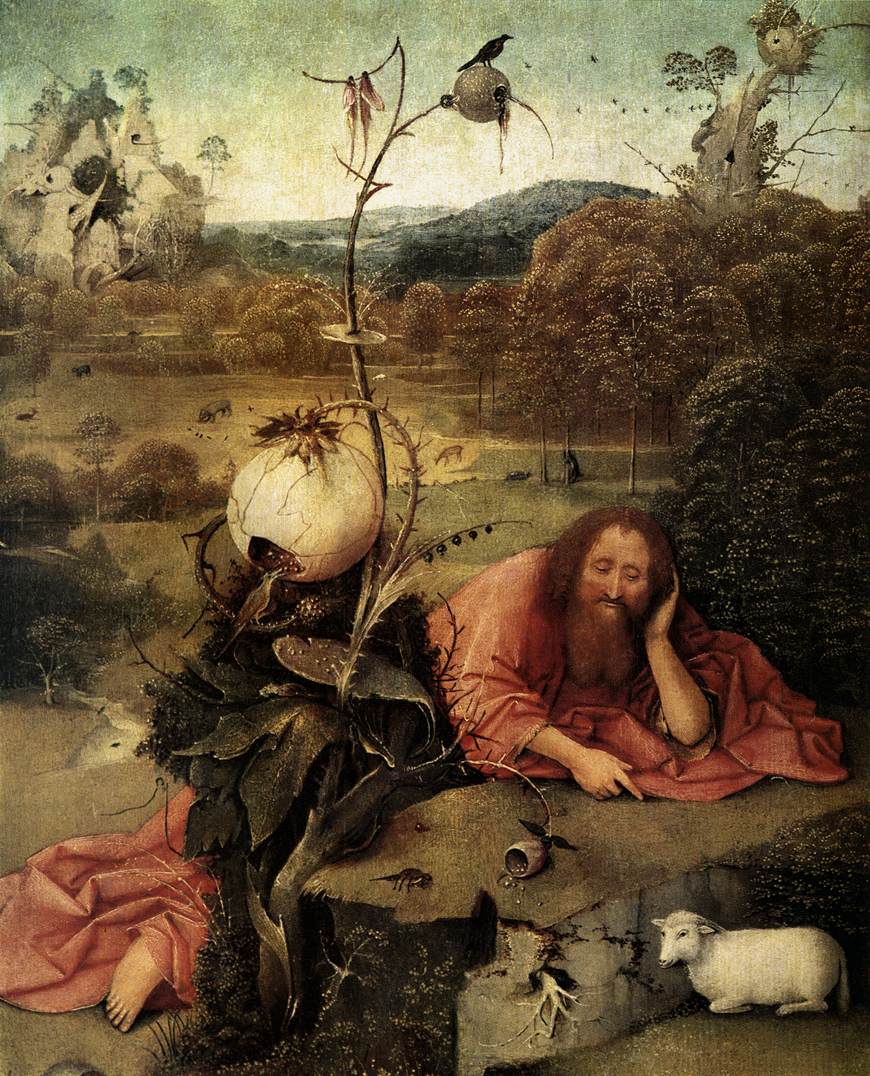


He lives, he dies, he tells God’s story.

Words which declare comfort to the afflicted; which speak tenderly of God’s love to the brokenhearted.

Words of comfort when we go astray and face the consequences of our selfishness and disobedience.

Words which remind us that whilst our human life is fragile and limited, God’s love endures forever. 

Words which speak of God’s glory being revealed: the vulnerable lifted up, the mighty brought down, a path made straight for us to walk in through the wilderness.

Elizabeth and Zechariah let John go: freeing him to speak truthfully to those in power; to challenge the complacent; to encourage the visionaries; and to bring compassion to the weak. 

His father’s words of praise - the Benedictus we say or sing at morning prayer - invites us to share in John’s prophetic message.

It’s a message which calls for repentance, an acknowledgement of all that hurts us and breaks our hearts; sins of negligence, weakness and our own deliberate fault.

It’s a message which proclaims forgiveness, the promise of healing, freedom, compassion and peace; being justified by faith.

We too are called to lift up our voices as heralds of this message of good tidings.

Like John, we are to point others to Jesus: declaring, here is your God!

The God who in Christ Jesus, rebukes and forgives, feeds and guides, lives and dies for us; who dies and lives for ever.

This proclamation includes a commitment to fulfil the promise of feeding, gathering, carrying and leading others. 
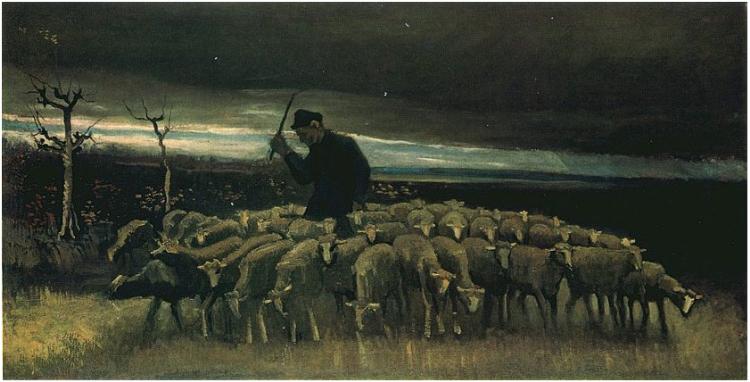


Feeding, gathering, carrying and leading our children: those who’re anxious about exams or ensnared by debt; those whose relationships falter or who face addiction; those whose ideas challenge and inspire; the revolutionaries and visionaries; those fleeing across the Mediterranean to seek refuge.

What will these children become?

Feeding, gathering, carrying and leading our children: those who slip through the net of social security; those abused within the church; those whose lives are shaped by our immigration control; those who will graduate in this cathedral to be lawyers, politicians, scientists, musicians, financiers and nurses.

What will these children become?

We like them, are called by name; we raise our voices in praise and protest, tenderness and hope; we like them are children. 

By the power of the Spirit, in union with Christ, we are all children of God: There is no longer Jew or Greek, there is no longer slave or free, there is no longer male and female; for all of you are one in Christ Jesus.

We are called by name not simply to tell our story but to take our part in proclaiming God’s story; not to make a name for ourselves, but to speak tenderly to God’s people; our legacy in life and death is to prepare a way for Jesus our Lord; being Spirit led and seeking God’s Kingdom.

Who lives, who dies, who tells your story?

For Hamilton, it was his wife Eliza. She was proud to set up an orphanage - a legacy which showed responsibility for enabling others to take their place in society.  

Who tells God’s story?

We who break bread together are to be heralds of good news - tidings of repentance, forgiveness and peace. In every gesture, every task, every donation, every conversation, every vote, every petition, every act of compassion and every legacy: we live to tell God’s story.


© Julie Gittoes 2018

Sunday, 7 January 2018

Resolutions and Revelation

This is the text of a sermon preached at Guildford for Evensong on 7th January 2018. Being the first sermon of the year, as I prepared I couldn't help but notice the ubiquity of headlines about resolutions, fitness and weight loss. This seemed to stand in stark contrast to the intense season of 'revelation' in the church's year.  The texts were Isaiah 42:1-9 and Ephesians 2:1-10


Glancing along the display of news papers in the local Co-Op yesterday, the headlines about the NHS, Trump, Brexit and the Royal wedding,  jostled for space alongside endorsements for weight loss plans or imperatives to get fit in 2018.

The Guardian seems to have deployed its journalists and columnists to write about their self-improvements plans. Decca Aitkenhead’s piece entitled ‘My extreme year of living healthily’ begins with cold baths and a vegan diet. Tim Dowling’s article was billed as ‘The lazy person’s guide to self-improvement’ - including listening to speeded up Podcasts, as if the pace of life isn’t frenetic enough!


According to a 2017 ComRes poll, the top too New Year’s resolutions are: exercise more (38%) and lose weight (33%). Eating healthily, drinking less, learning a new skill or hobby and spending more time with friends and family are all in the top ten.  

For all the column inches promoting a ‘Fast track to fabulous’ or trends that take us ‘Beyond the Fitbit’, psychologists and common sense advice agree: changes in patterns of health and happiness take time - setting specific, measurable, achievable goals which excite or inspire us.


Having discovered the physical, social and psychological benefits of doing circuits at Surrey Sports Park, there is much to be gained by realistic goals - resolving to run, walk, sing, paint, cook, read and reconnect with others at a deeper level.  

However, the pressures and expectations of the world can be corrosive - not just at the level of body image and dress size, but the temptation to live for self. 

The notions of self-interest, self-gratification, self-improvement, self-reliance, self-determination represent a turning in on one’s self. These things aren’t the preserve of the “selfie generation” but have perhaps helped to shape the widely documented age of loneliness. 

As we gather this evening, we are reminded that these early days of January are not solely to be marked by resolutions or quick fixes. Instead, we are drawn into a season of revelation and adoption. 

The last 14 days has been an intense season of revelation: we have celebrated a birth with all the associated joy and wonder at the gift of life. We celebrate because this speechless babe is the communication of Godself to us, the Word made flesh, abiding with us. He is the light and glory of God.


Yesterday, we knelt alongside the Magi, in reverence and awe; glimpsing in the Christ child the bright splendour whom the nations seek. And, like them, we journey knowing that, in the words of anthem, ’Thy word, Jesu, inly feeds us, rightly leads us, life bestowing’ [The Three Kings, Peter Cornelius (1824-1874)].

Today, we stand on the crowded, muddy banks of the Jordan with John the Baptist, in repentance and forgiveness. And as we do, Jesus stands with us. He identifies with our human condition - with our selfish desires and our desire for self-improvement. But this is but the start!


What is revealed to us today is that Jesus is God’s beloved Son. As he is anointed with the Holy Spirit, we recognise him as our Lord. The one who does not just identify with humanity but who restores it.

In his public ministry of teaching and healing, challenging and forgiving, feeding and calling he brings salvation.  In his life, the fullness of God is made present; in his death, our selfish fleshly passions and weaknesses are overcome; in his risen life, all that we receive the gifts of grace, mercy and healing.

This is salvation from the corruption of selfishness and salvation for a life of selflessness. As Paul puts it to the Ephesians: we are what he has made us, created in Christ Jesus for good works’.  

Today reminds us, that in the midst of this season of revelation, we are adopted. Being born again by water and Spirit, we are to know ourselves as beloved children. In the power of that Spirit we are to be faithful to that calling.

Our readings grapple with the reality of revelation and adoption: making sense of our calling in the light of God’s mercy and in the face of the challenges of our world.

One of the great themes of Isaiah is the extent to which we listen to God’s word - and upon hearing it, the extent to which we speak and act for the sake of what is justice. At points, God’s people are chastised for their failure to speak and act rightly. There are times of lament and times of praise; times of lengthy silence and times when the community regains its voice. 


Isaiah is also looking forward to a time when God will be with his people - fulfilling that role of suffering servant, prophet and king.  He is looking for a time when God will come in glorious apparel and in great strength. We rejoice in the nearness of our God - not in overwhelming might, but in flesh of our flesh.

Jesus is God’s chosen. The servant king who brings justice to the nations. This is the one who will not grow faint or be crushed. The one who is God with us - restoring our human nature in merciful kindness and an invitation to be forgiven and to seek justice. 

The images of Isaiah speak with poetic realism about the frailty of our nature. But the one revealed to us today is the means of our adoption as beloved children: he upholds bruised reeds, kindles smouldering wicks. 

This is revelation and adoption: God is with us in Christ, a light to the nations, opening our eyes to his love, liberating us from powers of darkness; God has called us in righteousness, taken us by the hand and kept us. As beloved children, we are to make known to others this light which brings freedom; we too are to pursue what is just, that others may know that they are beloved.

Paul’s letters are infused with the language of revelation and adoption. In the passage we heard this evening, his honesty about our human nature and God’s mercy jolts us into appreciating the significance of Christ - for us, for our world and for the whole cosmos.

He knows, as we do, that following the course of the world can distort our desires; he knows the deadening effect of our selfish hearts turned inwards and away from others. Trespass, sin and disobedience is strong language marking out in shorthand those things which we do carelessly or wilfully which harm others. It names our human propensity to pursue patterns of greed, jealousy, anger or dishonesty and the impact on ourselves and others. 


But if Paul is brutally honest about what happens when we live solely by the desires of the flesh and our senses, he is also utterly convinced of the impact of God’s love. He is assured that in Christ, our humanity is exalted.  Two words stop us in our tracks: But God. 

But God is rich in mercy. 
But God shows great love. 
But God makes us alive together with Christ. 
But God, by grace, saves and raises. 
But God bestows immeasurable riches of grace and kindness.

This is revealed in Jesus Christ. 

This is not our own doing.

It is the gift of God.

For by grace we have been saved by faith.

This is our adoption as beloved children in Jesus Christ. 

Now in the power of the Spirit, we are invited to lived for the purposes for which we were made: such good works as God has prepared for us to walk in.

Our heavenly Father revealed Jesus as his Son, our Lord, anointing him with the Holy Spirit.

May that Spirit equip us to be faithful to our calling as adopted and beloved children.

May we walk in God’s ways of love and trust; justice and compassion; kindness and peace.


© Julie Gittoes 2018