Showing posts with label freedom. Show all posts

Saturday, 27 June 2020

A is for apple

Reflections from Sunday 21 June - Trinity 2 - the texts were: Jeremiah 20: 7-13 and Matthew 10: 24-39. Thinking about the connotations of 'A is for Apple' held in Eve's hand and ours, and in the hand of Mary and Jesus reaches out to take it; and reflecting to on how we employ our freedom. 

Reflection One 

Apple: A is for apple, so goes the alphabet rhyme. Or perhaps the old wives tale: an apple a day keeps the doctor away.  Motherhood and apple pie, something good and important. 

Harvested and baked under crumble with lashings of custard; pressed into sweetness for refreshing juice; or fermented a while longer for the stronger cider.

A is for apple. It's appealing, enticing.  

Enticing to the point of seduction; to the point of temptation. 


Eve was here - Chris Gollon

Eve. Was. Here.

Eve took.

It looked so good. So healthy. So enticing. 

But this apple wasn’t pressed into sweetness; it had a bitter taste. 

A is for apple. Our tendency to take what we desire. Our human capacity to consume.

For freedom is enticing; even though we risk turning away from God and others, getting caught up in ‘stuff’. 

In the words of opening hymn we seek forgiveness for our foolish ways; asking God to breath through the heats of our desire. 


Image: unknown

We are not immune from it. The MacBook through which I see you; the iPhone from which I’m reading carries the mark of that bitten apple. It’s the signifier for our quest for knowledge; it marks out a brand. 

Map [Matthew Cussick]: As human beings we face countless decisions; and find ourselves pulled in multiple directions; seeking meaning, knowledge, purpose and identity. 


Chasing the Dragon - Matthew Cusick

It can feel conflictual: not so much a cross roads but a spaghetti junction of decisions and desires; fears and freedoms. 

And as we think about what we stand up for and what we call out, those desires and fears and freedoms come under pressure. We might be enticed to do the thing that’s most expedient or which makes life easier.

It can be tempting to ask: what does this do for my professional  reputation or for my popularity? Who will I offend or what will it cost?

These are the kind of questions facing Jeremiah. 
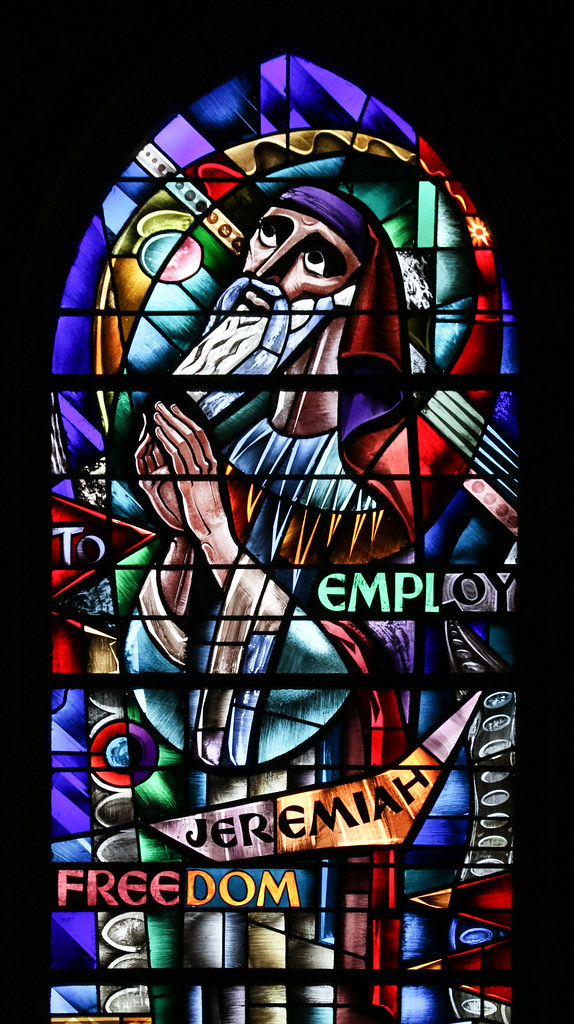

Jeremiah [San Francisco, Grace Cathedral]

We encounter him today reflecting on God’s call to be a prophet - to be one who called people back to God’s ways of love. As a prophet he exhorted God’s people to be faithful to the commandments and to make love visible in public through the pursuit of justice.

The language he uses is of being enticed and empowered by God’s call. It was compelling and he could do no other than say ‘yes’ to this work, this life of costly service.

In the words in the stained glass window from Grace Cathedral in San Francisco, he employed his freedom. He employees his freedom to serve God in a particular way. 

But it was a challenging task.  It made him a laughing stock. It was not popular. 

He was mocked for calling out the violence done through failure to do what was just, merciful and compassionate. 

He was mocked for naming the destruction caused by the refusal to obey the  commandment to love.

He spoke, cried out and shouted. 

And the very thing he loved - the word and life and love of God - became a source of derision. 

It felt as if this calling had cost him everything: influence, friends, status and reputation.

He’d employed his freedom. 

So when he’s temped to give up, the original burning conviction wells up within him. He cannot to anything else but speak up for the needed, abused and marginalised. 

And yet, when enticed by those who are watching for him to stumble, he remains steadfast.  However wearied he is, he won’t abandon this long labour of seeking what is right.

He has employed his freedom to God’s cause.
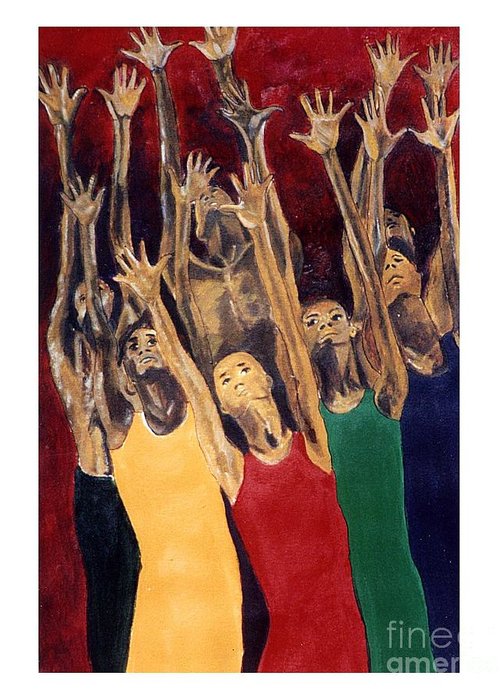

Unity of Praise - Jackie O Kelley  

Jeremiah’s moment of crisis, his grappling with the cost of his work, reveals to us something that it as the heart of today’s discomforting gospel.

It is an illusion to think that seeking God’s ways of peace means a comfortable life. 

We have each been called by name; we have employed our freedom to God’s ways.  And like Jeremiah there are times when we might waver or feel enticed to seek an easier path.

But Jeremiah reminds us, as long as the fight for what is just continues, we will somehow find peace in that struggle.

It’s not comfortable or painless: but on Jeremiah’s lips those cries for what is just turn to praise. For God will deliver the lives of the exploited and overlooked, the discriminated against and the marginalised. 

We’ve heard that song of praise: of laudamus the - we praise, bless, adore and glorify the Lord our God; and now we hear another song, which reminds us that God is among us.

God is with the broken and the weak and in the spaces in between.

Reflection Two
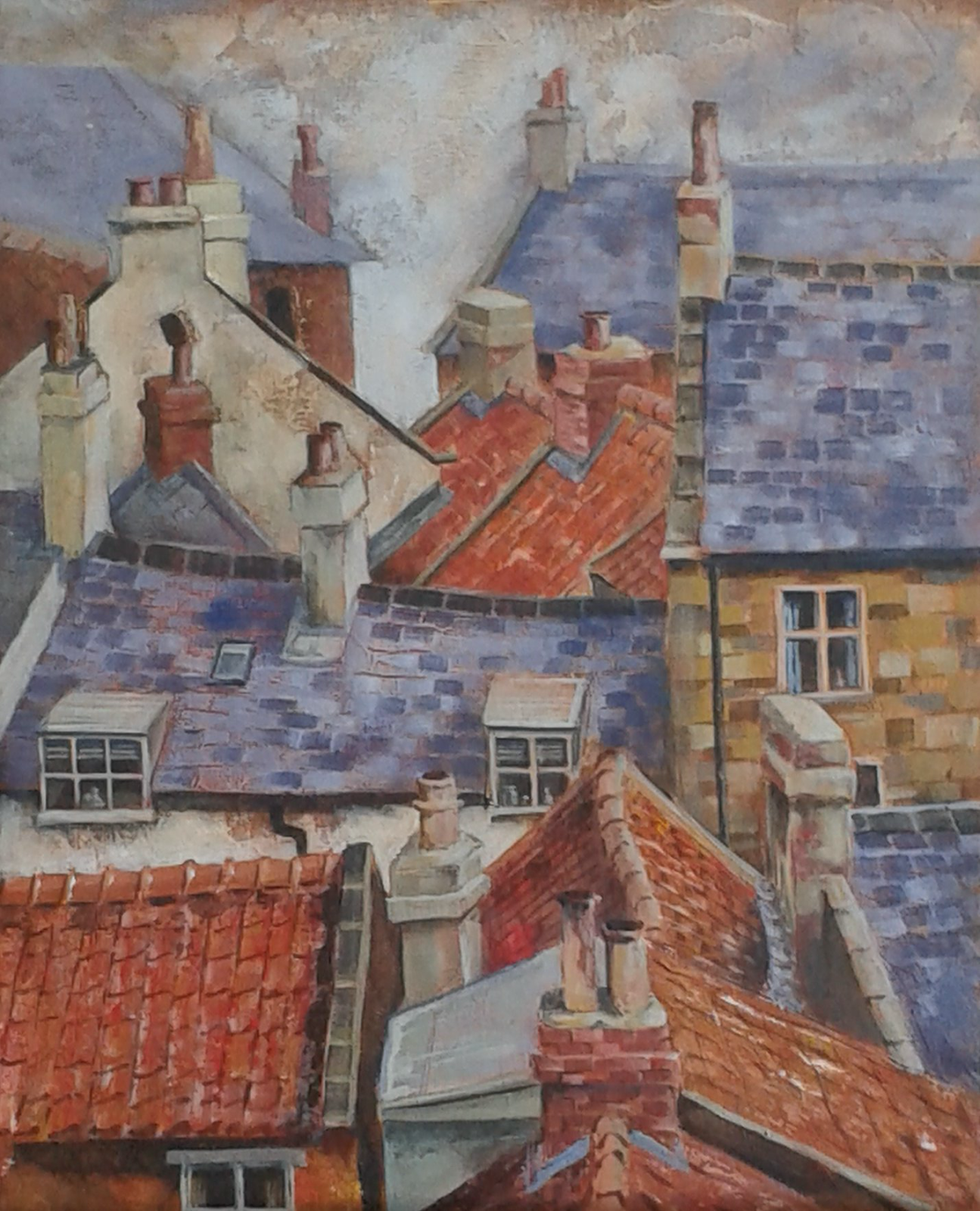


Staithes Rooftops - Terry Chipp

In this curious and challenge set of teaching, takes us to the heart of how we are to employ our freedom: not in competition with others for the their sake. 

Jesus takes what is whispered and invites us to share it from the roof tops. There is no zero sum game in God’s economy; we do not live out of scarcity of love but out of an abundance that calls us to seek justice.

Do we hear God’s voice cry out? Are we listening?  Do we come together with the ones without a voice, the forgotten and ignored?

In this, we are one flesh. Whatever our gender, class, race, sexuality, wealth, age or health.
We live in Christ. We are one flesh. And by the power of the Spirit, we are to listen.

To listen to what entices us, and to ask, is this the way of God?
To listen to what entices us, and ask if it names the dignity and equality of others.
To listen to what entices us, and to seek what it is a blessing for all.

We all have a share in these tasks: and for some of us, because of the stories we’ve been told, it’s a time to listen; for some of us, because of the stories we’ve been told, it’s a time to be heard.
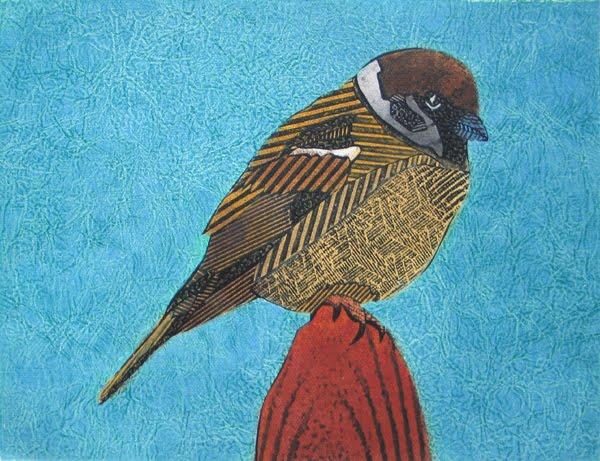


Sparrow Bonnie Murray

That process of speaking and being heard takes time. It doesn’t just happen in the public square but in our one to one relationships. 

Jesus moves us from the public realm of our rooftops; to the intrinsic value of every human life. He invites us to look upon a sparrow. To see the thing that is small and seemingly insignificant; and to know that God’s tender care for even the tiniest thing extends also to us. 

Just as the sparrow is precious, so are we: God knows the hairs of our head, the thoughts of our hearts, our cries and our songs. Dare we extend that loving regard to each other - seeing each other as who we are - with our burdens and privileges, our gifts and our needs?

And seeing each other dare we employ our freedom as members of one body, to stand against all the harmful longings of the flesh that entice us - of power used for self. 

Dare we do this, together, hearing our stories: hearing the hope and challenge, the cries and dreams.  For in this we find our peace.


Wallsily Kandinsky - Composition VII

The language of peace that Jesus uses is full of conflict and division; it really challenges us about tour priorities. 

This image by Kandinsky is full of bold lines, and vibrant colours; it’s full of overlapping forms and shapes. We may not see it immediately, but in it are the biblical themes of the apple tasted in Eden - the moment our longings for power and knowledge enticed. It speaks of judgement - and how we use our freedom; but it also speak of resurrection and the gift of new life. 

Jesus speaks of this life that comes when we lose it for his sake, and the sake of God’s kingdom of justice and righteousness. The conflict of which he speaks is not destructive but creative. It is not bent towards destruction, but liberation.

Writing in her book Seeking God, Esther de Wall writes of the stability we find in God’s love for us; it means that we don’t run from where battles are being fought, but that rather we have to stand still where the real issues have to be face.

This way of being is based on Gospel paradox of losing life and finding it.

How do we employ our freedom - for self fulfilment or to the struggle of liberation for all?
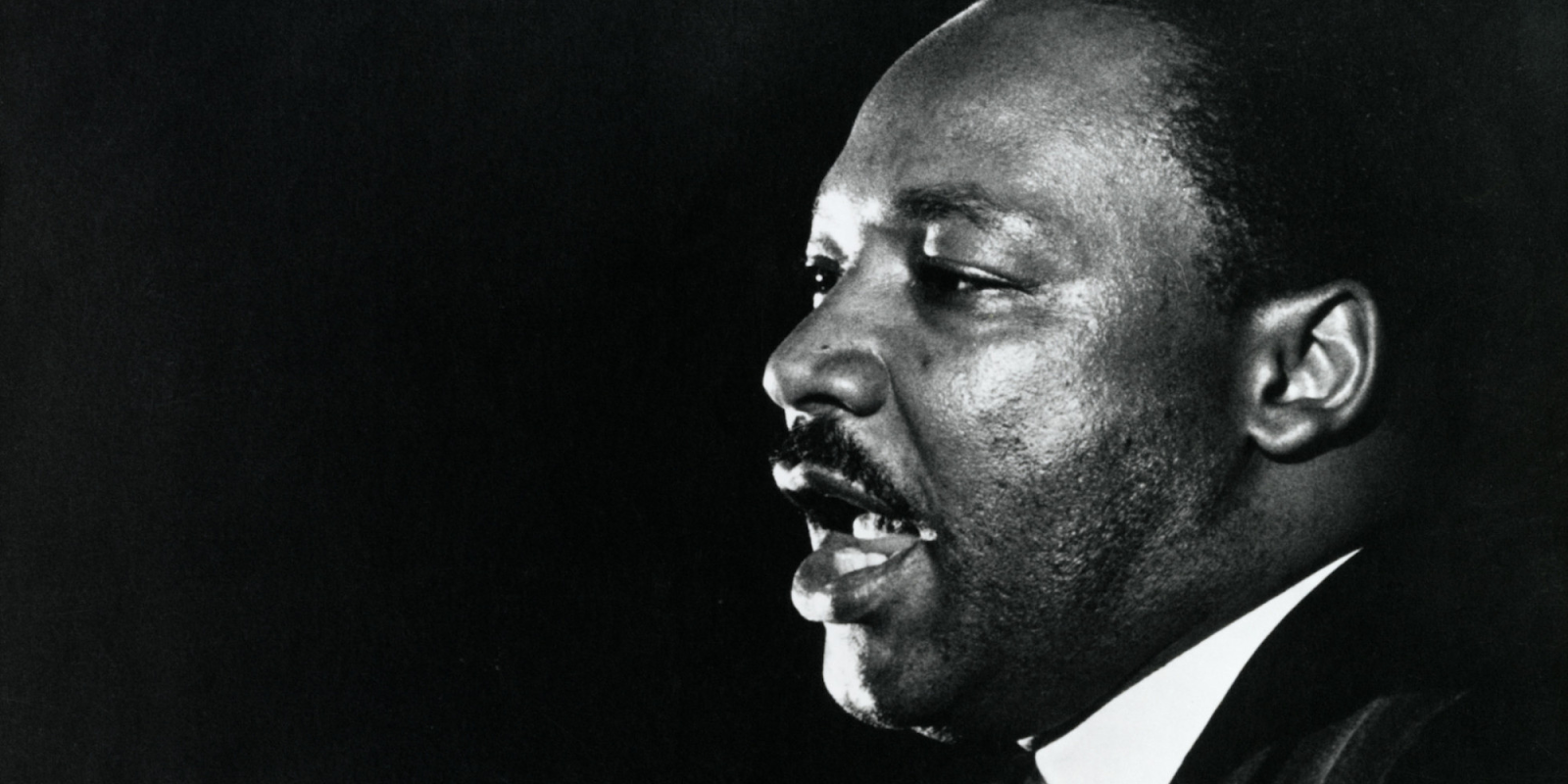


Martin Luther King -  Huffington Post

Perhaps this is evoked most powerfully - and in a way which frames the question in a practical way - by Martin Luther King. He said:  Cowardice asks the question, ‘is it safe?’ Expediency asks the question, ‘is it politic?’ Vanity asks the question, ‘is it popular?’ But conscience asks the question, ‘is it right?’ And there comes a time when one must a position that is neither safe, nor politic, nor popular, but one must take it because one’s conscience tell one that it is right.

We are called to do what is right. To listen carefully and to be willing to change; to cry out in the expectation that we will be heard; to sing a song that brings joy and hope.
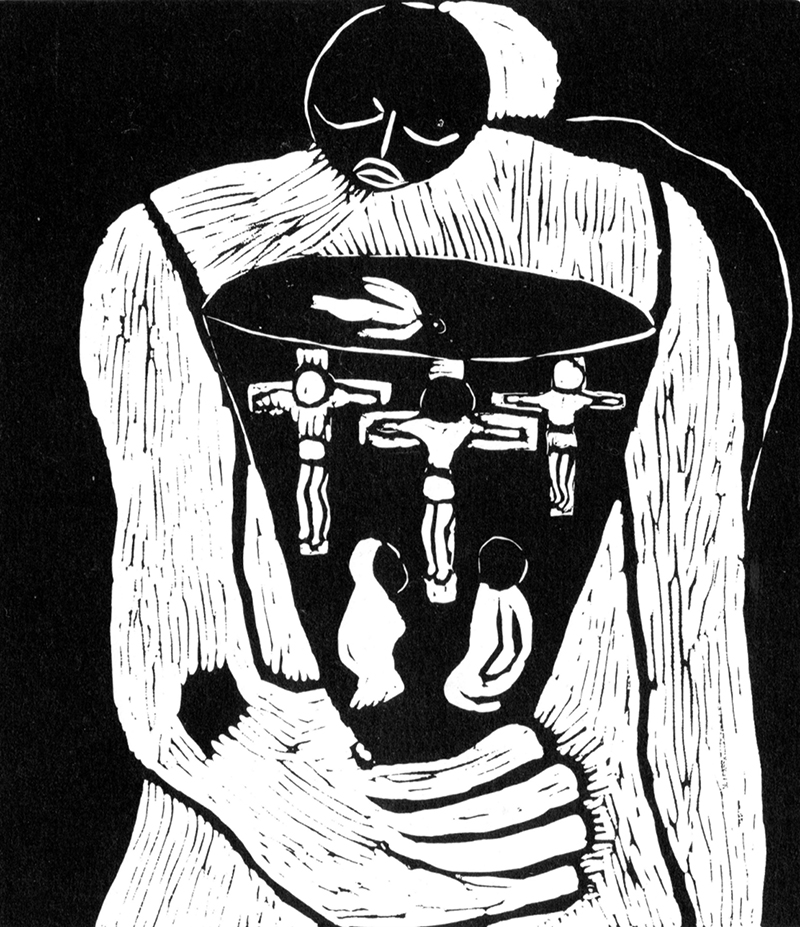


Crucifixion - Lindiwe Mvemve

We all have a role in this Kingdom of change:  

Are you a caregiver: nurture and nourish people around me via creation and sustaining community of care, joy and connection.

Or perhaps your freedom is employed in being a disrupter: taking uncomfortable or risky actions to shake up the status quo, raise awareness and build power.

Do you like to teach and guide - using gifts of discernment and wisdom?

Are you called to the work of telling stories - sharing experience and histories in words and art in order to shape a community moving forward together?

Or are you visionary - setting out possibilities, hopes and dreams, reminding us of our direction?

Are you someone who helps us weave lives together? Or someone gifted in tending to the traumas of oppression and isolation?

We need all these gifts - deploying our individual freedoms for the sake of God’s call to love, justice and mercy.
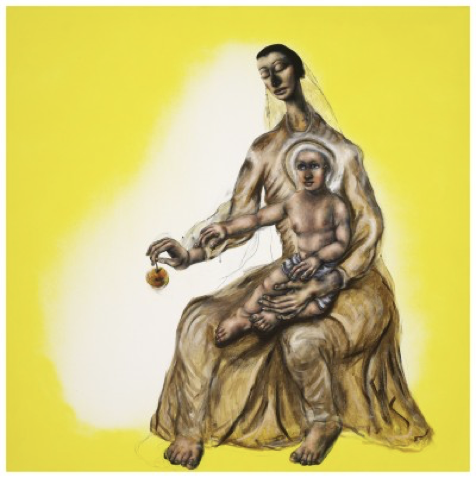

Madonna and child - Chris Gollon

And we do it not in our own strength. But because God so loved the world. So loved the world that God’s very self dwelt among us in flesh of our flesh. Taking the apple. 

The apple in our hand reflects our tendency to mess things up; the apple in the hand of Mary, as Jesus reaches out to take it, reflects God’s capacity to love and forgive.

Let us pray:

Lord, you have taught us that all our doings without love are nothing worth:
send your Holy Spirit and pour into our hearts that most excellent gift of love,
the true bond of peace and of all virtues,
without which whoever lives is counted dead before you.
Grant this for your only Son Jesus Christ's sake,
who is alive and reigns with you, in the unity of the Holy Spirit,
one God, now and for ever. Amen.


©  Julie Gittoes 2020


Sunday, 29 March 2020

Passion Sunday

Passion Sunday

We adore you, O Christ, as we bless you,
for by your holy cross you have redeemed the world

TODAY is Passion Sunday. As we move towards the end of Lent, our focus turns to the cross. It is such a familiar symbol to us - we wear it as a treasured item of jewellery, it adorns our churches and we remember that in baptism we too are marked with the sign of the cross.  For Christians, the cross becomes a sign not only of Jesus’ suffering and God being with us in ours; but it also points to life and hope, healing and redemption. 

The word ‘passion’ conjures up perhaps intense feelings or energy, strong convictions or a deep commitment to an interest, hobby or person. In this season, passion is the lens through which we see afresh the depth of God’s love for us. Love that is a profound commitment to be with us in the midst of suffering and death. 

We enter into this time of our Lord’s passion, acutely aware of the reality of illness and death due to the Coronavirus; and perhaps aware of our own vulnerability too. Our readings take us to a place of dry bones and to a tomb. Perhaps they allow us both to acknowledge our reality, along with the pain of separation; may they also give us hope - there will be connection and life again; for love is stronger than death.  

To focus on Christ’s Passion increases our capacity to be compassionate.  As today’s post communion prayer says, what we do for our brothers and sisters we do also for God. Sometimes that means sharing in or being with them in intense emotion. Many people are weeping today, and in today’s Gospel, Jesus also weeps. Pope Francis has called today the “Sunday of Tears”

Today, we make space and time in our own homes to pray and to reflect on the readings for this Sunday.  This is a journey for all of us; together we will be learning how to pray for, support, encourage and care for each other.

As well as the readings and short reflections, I have also included to images: one from the Jesus MAFA which was an art project based in Cameroon; the other an image taken from the Methodist Art Collection. 

As we read, alone or in company, we might want to use an ancient practice called ‘lectio divina’ or divine reading. First, read the text slowly - aloud or silently - and notice what word or phrase holds your attention. Then, sit with that word or phrase in silence. Read the text again and then reflect on what the Spirit might be prompting you to think about or do.

We begin with today’s prayer for the day - which ‘collects’ together the themes at the heart of this Passion Sunday.

The Collect

Most merciful God, 
who by the death and resurrection
of your Son Jesus Christ delivered and saved the world:
grant that by faith in him who suffered on the cross
we may triumph in the power of his victory;
through Jesus Christ your Son our Lord,
who is alive and reigns with you,
in the unity of the Holy Spirit,
one God, now and forever

You might want to read all three texts before reflecting; or focus on one, perhaps coming back to others over the day or week ahead. Note that the Gospel is quite a long passage; so you may want to focus on that, or return to during the day/week.

Ezekiel 37:1-14

The hand of the Lord came upon me, and he brought me out by the spirit of the Lord and set me down in the middle of a valley; it was full of bones. He led me all round them; there were very many lying in the valley, and they were very dry. He said to me, ‘Mortal, can these bones live?’ I answered, ‘O Lord God, you know.’ Then he said to me, ‘Prophesy to these bones, and say to them: O dry bones, hear the word of the Lord. Thus says the Lord God to these bones: I will cause breath to enter you, and you shall live. I will lay sinews on you, and will cause flesh to come upon you, and cover you with skin, and put breath in you, and you shall live; and you shall know that I am the Lord.’

So I prophesied as I had been commanded; and as I prophesied, suddenly there was a noise, a rattling, and the bones came together, bone to its bone. I looked, and there were sinews on them, and flesh had come upon them, and skin had covered them; but there was no breath in them. Then he said to me, ‘Prophesy to the breath, prophesy, mortal, and say to the breath: Thus says the Lord God: Come from the four winds, O breath, and breathe upon these slain, that they may live.’ I prophesied as he commanded me, and the breath came into them, and they lived, and stood on their feet, a vast multitude.

Then he said to me, ‘Mortal, these bones are the whole house of Israel. They say, “Our bones are dried up, and our hope is lost; we are cut off completely.” Therefore prophesy, and say to them, Thus says the Lord God: I am going to open your graves, and bring you up from your graves, O my people; and I will bring you back to the land of Israel. And you shall know that I am the Lord, when I open your graves, and bring you up from your graves, O my people. I will put my spirit within you, and you shall live, and I will place you on your own soil; then you shall know that I, the Lord, have spoken and will act, says the Lord.’

Romans 8:6-11

To set the mind on the flesh is death, but to set the mind on the Spirit is life and peace. For this reason the mind that is set on the flesh is hostile to God; it does not submit to God’s law—indeed it cannot, and those who are in the flesh cannot please God.

But you are not in the flesh; you are in the Spirit, since the Spirit of God dwells in you. Anyone who does not have the Spirit of Christ does not belong to him. But if Christ is in you, though the body is dead because of sin, the Spirit is life because of righteousness. If the Spirit of him who raised Jesus from the dead dwells in you, he who raised Christ from the dead will give life to your mortal bodies also through his Spirit that dwells in you.

John 11:1-45

Now a certain man was ill, Lazarus of Bethany, the village of Mary and her sister Martha. Mary was the one who anointed the Lord with perfume and wiped his feet with her hair; her brother Lazarus was ill. So the sisters sent a message to Jesus, ‘Lord, he whom you love is ill.’ But when Jesus heard it, he said, ‘This illness does not lead to death; rather it is for God’s glory, so that the Son of God may be glorified through it.’ Accordingly, though Jesus loved Martha and her sister and Lazarus, after having heard that Lazarus was ill, he stayed two days longer in the place where he was.

Then after this he said to the disciples, ‘Let us go to Judea again.’ The disciples said to him, ‘Rabbi, the Jews were just now trying to stone you, and are you going there again?’ Jesus answered, ‘Are there not twelve hours of daylight? Those who walk during the day do not stumble, because they see the light of this world. But those who walk at night stumble, because the light is not in them.’ After saying this, he told them, ‘Our friend Lazarus has fallen asleep, but I am going there to awaken him.’ The disciples said to him, ‘Lord, if he has fallen asleep, he will be all right.’ Jesus, however, had been speaking about his death, but they thought that he was referring merely to sleep. Then Jesus told them plainly, ‘Lazarus is dead. For your sake I am glad I was not there, so that you may believe. But let us go to him.’ Thomas, who was called the Twin, said to his fellow-disciples, ‘Let us also go, that we may die with him.’

When Jesus arrived, he found that Lazarus had already been in the tomb for four days. Now Bethany was near Jerusalem, some two miles away, and many of the Jews had come to Martha and Mary to console them about their brother. When Martha heard that Jesus was coming, she went and met him, while Mary stayed at home. Martha said to Jesus, ‘Lord, if you had been here, my brother would not have died. But even now I know that God will give you whatever you ask of him.’ Jesus said to her, ‘Your brother will rise again.’ Martha said to him, ‘I know that he will rise again in the resurrection on the last day.’ Jesus said to her, ‘I am the resurrection and the life. Those who believe in me, even though they die, will live, and everyone who lives and believes in me will never die. Do you believe this?’ She said to him, ‘Yes, Lord, I believe that you are the Messiah, the Son of God, the one coming into the world.’

When she had said this, she went back and called her sister Mary, and told her privately, ‘The Teacher is here and is calling for you.’ And when she heard it, she got up quickly and went to him. Now Jesus had not yet come to the village, but was still at the place where Martha had met him. The Jews who were with her in the house, consoling her, saw Mary get up quickly and go out. They followed her because they thought that she was going to the tomb to weep there. When Mary came where Jesus was and saw him, she knelt at his feet and said to him, ‘Lord, if you had been here, my brother would not have died.’ When Jesus saw her weeping, and the Jews who came with her also weeping, he was greatly disturbed in spirit and deeply moved. He said, ‘Where have you laid him?’ They said to him, ‘Lord, come and see.’ Jesus began to weep. So the Jews said, ‘See how he loved him!’ But some of them said, ‘Could not he who opened the eyes of the blind man have kept this man from dying?’

Then Jesus, again greatly disturbed, came to the tomb. It was a cave, and a stone was lying against it. Jesus said, ‘Take away the stone.’ Martha, the sister of the dead man, said to him, ‘Lord, already there is a stench because he has been dead for four days.’ Jesus said to her, ‘Did I not tell you that if you believed, you would see the glory of God?’ So they took away the stone. And Jesus looked upwards and said, ‘Father, I thank you for having heard me. I knew that you always hear me, but I have said this for the sake of the crowd standing here, so that they may believe that you sent me.’ When he had said this, he cried with a loud voice, ‘Lazarus, come out!’ The dead man came out, his hands and feet bound with strips of cloth, and his face wrapped in a cloth. Jesus said to them, ‘Unbind him, and let him go.’

Many of the Jews therefore, who had come with Mary and had seen what Jesus did, believed in him. 


Art Source: JESUS MAFA

Reflections

It might be that one of the most powerful lines in today’s readings is also the shortest. In the Gospel of John we read: “Jesus began to weep.” We might want to begin there; beginning in the middle of the story we hear. A story in which Jesus is set within a network of relationships: the debates with his disciples; the intimacy of close friendship; the wider community of the Jews. At the heart though is a tomb; the tomb of a dear friend. So he weeps.

Pope Francis speaks of today as the “Sunday of Tears”: it is also a day when we see Jesus confront death. The compassion of the tears identifies with us; but Jesus is not overcome by the darkness and finality of a tomb. Instead he confronts it: naming the pain of separation, the disruption of loss, the chaos of grief and giving us a glimpse of what is to come. That in his own passion he will confront, wrestle with and overcome death itself.

Jesus restores life to Lazarus. He restores life to the household of Mary and Martha. The stench of grief and decay is dispelled. They receive back what they thought they had lost. How might they have felt?  How might Lazarus have felt? 

The Jesus MAFA project captures something of joy and freedom and new life. This is the first-fruit of something greater and perhaps Riley’s image captures something of the mystery of that. For yes, Lazarus will still die to this world; but Jesus, in his Passion will defeat sin, suffering and death. 

This story gives a foretaste of that new creation; a new reality is beginning to break in. We are invited to receive it and to share it. But first we must enter into Jesus’ Passion. In our own households, in our own networks of love and care, will share some of the same vulnerabilities and questions of that home in Bethany; might we also be receptive to the love and life and hope Jesus brings. 

Martha expresses this trust in an eternal future - of life in abundance - when she speaks of the resurrection; but she and her sister glimpse something of that breaking into human history, into the disruption of grief that they carry.  Perhaps this new life is as disruptive as death itself. Certainly those in positions of power feel threatened by it. 

We see this life that really is life in the compassion of Jesus tears; in the restoration of a brother to his siblings; we will see it again in the passion of Jesus as he descends from cross to grave. And there too we might wait and weep. 

We wait trusting that this life that really is life will burst forth. Romans 8 is one of my favourite passages of Scripture. In today’s reading, we hear Paul exploring this new life. The life of the Spirit dwelling in us.  Rather than being preoccupied with the needs of the flesh, we are invited to please God, seeking all that is righteous. 

It is life that opposes and overcomes all that diminishes others; it resists the violence of injustice; it strips away claims to status and power; it reveals our vulnerabilities and also our dependence on others.  As it does so it reveals the gift of God’s Kingdom - where the need for justice and mercy and compassion

Some are re-naming today as the Second Sunday of Corona-tide.  For all the challenges, fears and disruption; amidst the very tangible nearness of illness, grief and death; are we also seeing new life in this shared experience of passion and suffering?

We are seeing a renewed commitment to public service. We witness the numbers offering to be NHS volunteers, the applause echoing around our streets as we showed appreciation for those working safe. There are renewed discussions about a citizens income; a review of universal credit and the resourcing of all that builds up our society.

We’re travelling less and perhaps consuming less. Streets are setting up WhatsApp or Facebook groups to connect those in need with those able to help; we are making more time to speak to those we cannot see. The loss of physical touch is hard; keeping our distance feels strange; but perhaps at a deep level we are relearning a collective body language of both passion and compassion. 

One day we will this season of isolation will end. One day we will be able to hug one another again. One day we will look back on this season of grief and pain and the nearness of death; and we will give thanks for the small things we’ve given or received, with love. Even now, as we break bread, may we know what really matters: a depth of love given for us in Jesus Christ. 

For now it may feel as if the seeds of that are buried in the ground. Some of you may be planting vegetables, perhaps for the first time; trusting that as those seeds die, they will take root and bring a modest yet rich harvest. Others of us may be watching tree blossom and flowers budding with a new delight. God’s Kingdom too might be hidden, but will spring forth in new ways. 

Ezekiel’s vision gives us a very vivid image for this new body language. It seems to the prophet that God’s people are forgotten - their bones lie scattered. He sees an absence of God when there is great need; it is a scene of lifelessness and fragmentation. It seems as if hope is lost. 

Yet this desolation is not the end either: the Lord declares ‘I will put my spirit within you, and you shall life’. May this be our prayer for our communities and our households, for our government and our creative industries; for NHS staff and those supplying food; for businesses and free-lancers.  May there be life.

Perhaps we might pray especially for those who are anxious and unwell; those who are facing death and having to mourn in ways that are very different in this lockdown season. May they know that they are loved; that there is compassion in their suffering; may they find life and hope.  Pray that they and we may know the breath of life; God’s holy and healing Spirit. 

Is this a season where the Spirit does make our dry bones live; where we are released from our tombs. What might it mean for us to be set free - to praise God but also to seek the justice of God’s Kingdom?

© Julie Gittoes 2020

Prayers

Lord Jesus Christ,
you have taught us 
that what we do for the least of 
our brothers and sisters
we do also for you:
give us the will to be the servant of others
as you were the servant of all,
and gave up your life and died for us,
but are alive and reign,
now and for ever. Amen.


John Reilly - The raising of Lazarus (Methodist Art Collection)

Friday, 13 March 2020

Temptation and freedom

A Sermon preached on the first Sunday of Lent. The texts were: Genesis 2:15-17, 3:1-7, Romans 5:12-19 and Matthew 4:1-11


Dan Price is the boss of card payment company in Seattle. He’s the boss who took a $1million pay cut to put  himself, and all 120 of his staff, on a $70,000 minimum salary.

In a piece for the BBC he reveals the trigger for such a policy: when a friend revealed how she was struggling to pay rent and bills whilst working 50 hours a week in two jobs, he saw the human face of financial and social inequality. 

Price is the same age as Mark Zuckerberg, the founder and CEO of Facebook; but he’s no longer living out the lifestyle clichés of a tech millionaire.  He confides that on some days, he has dark moments, when he wants to be just as rich as Zuckerberg, to compete with him; to be on the Forbes list, have his face on the cover of Time magazine and make lots of money. 

He says, ‘All these greedy things are tempting. It’s not like it's easy to turn down. But my life is so much better’.The health, productivity, morale and stability of his staff have also improved.  As Price puts it, ‘We saw, every day, the effects of giving somebody freedom.’

The twin poles of temptation and freedom are at the very heart of our human experience.

We are created in and for freedom.

That gift of God to us is fraught with risk and possibility. 

It makes every act of generosity and love, creativity and kindness of great value; because those actions and attitudes spring from a freedom not compulsion.

We are created in and for freedom.

The way in which we inhabit and exercise that gift is fraught with temptation.

It means we are susceptible to the desire to possess and consume; exploit and manipulate.

Freedom means that we are not puppets or robots, controlled or programmed by God.

Freedom means that we are curious, longing for knowledge and life; testing the ‘what ifs’, the shortcuts and ambitions.

We’re tempted: attracted to go beyond limits; to find ourselves out of our depth and fearful.

That is the story that Genesis seeks to capture: it invites to inhabit its images and metaphors and find therein a recognisable truth.

The ubiquitous apple; an apple with a bite taken from it. 


The apple is good and pleasing to the eye; surely to take it and touch it would cause no harm? And if no harm was caused, if no death occurred, why not eat for the sake of wisdom and knowledge; for a fully awareness of what is good and evil?

The man and the woman share in this first act of trespass. They assume their independence from God; it’s an act of separation which means their relationship to one another is impaired. Shame and suspicion creep in; they cannot look upon each other in the same way.

In succumbing to temptation, their freedom is for the other is distorted. 

Freedom becomes bondage; a limitation on our capacity to do good. We are bound to sin. 

Bound to those the things that glitter and attract, the wealth and status rejected by one tech entrepreneur; to the darker compulsions to violence, which we have seen bubble up in our own parish.

As our litany on Ash Wednesday reminded us, our lives are laid open before God: our pride and impatience; our self-indulgence and hypocrisy; our negligence and laziness; our envy and indifference. 

And yet, we are rescued from the chaos of sin and separation; from our misdirected desires.

We are rescued by the same means as which we were created: by overflowing love of God.

In Jesus Christ, God is with us: as Paul puts it, through him, all know the grace of God. Through his obedience we are justified, or restored to right relationship with God and each other.  We pray that through the ongoing work of the Spirit in our lives and in our world, that that grace will be a sign of hope; a bond of peace and the source of all virtue.

Resisting temptation and setting people free is not a one-off act for us: it is a response to God’s love moment by moment; and often we will fail through our own negligence or will.

Our hope remains in Christ. 

In our Gospel reading today, we see him facing temptations which urge him to act from a position of power and privilege: to meet his own needs; to be protected from the vulnerability of his humanity; to rule the kingdoms of the world by domination.

Jesus is tempted to one thing: but in his refusal, his redemptive act liberates us for life in all its fullness. This work is of freedom is through the costly path of service, suffering and death.

For the people of Israel, the years in the wilderness had been a time of testing, but also of divine guidance; aligning their wills and lives with the love of God. We see God’s loving care in the provision of manna; but we also see it in the revelation of the commandments; the framing of community life by love, and a naming of those things which do harm including lies, theft, adultery and dishonouring others.

Jesus faces three temptations or challenges about the use of his power; which take us to the essence of who he is as God’s son.


Christ in the Wilderness -  Briton Riviere

He’s invited to turn stones into bread; to provide a lavish supply of food.

Satisfy your hunger, says the tempter: no, says Jesus, for we are sustained not by bread alone. No, I will not love the world simply by satiating physical desires; by refusing to go deeper into human longings; by colluding with greed.  Love that gets to the heart of our needs and hopes, that is real.

Jesus has no need to prove himself or satisfy is physical needs here: he remains faithful to God and uses his ministry to not only feed others, but to challenge others to a radical life of hospitality and generous service. 

He’s invited to take the risk of demonstrating his power and identity in a sensational act of bravado.

No, says Jesus, I won’t perform a stunt. He  won't take a short cut to cultivate human regard or a fleeting celebrity. I won't put God to the test in that way; I won’t take advantage of that love. Instead, I will take up the cross. I will will walk with humanity in the way of sorrow. 

God’s love doesn't change human hearts by performing dramatic feats of reckless showmanship. Such love is superficial and fleeting: it doesn't forgive or heal; it doesn't challenge or embrace.

He’s invited to accept the splendour and power of earthly kings, to rule over rather than be with.

Jesus has no need to seize glory and authority in that way. It is not God's way of loving. Resorting to domination on someone else's terms is not real love.  Love that coerces and bullies a response isn't real.   

Attention to God in worship is the beginning of love; serving others by attending to their needs, that's real love.  This is love that walks the way of grief and exclusion; transforming it into joy and welcome.

It is through this love that the eating of an apple becomes a happy fault; the means by which God’s love stoops down to us to raise us up.  We are no longer condemned and death has no more dominion

Here in bread and wine we are offered the food that gives life: which sets before us the cost of love and the gift of freedom. May we embrace that not just for our own sake; but for the sake of our world. 

May we too make those costly and ordinary acts of love; standing against powers of darkness and bringing light: let us pray.

© Julie Gittoes 2020