The texts of two reflections shared on during our zoom worship this morning. Thinking about parting conversations, being enfolded by, and letting go in, love and the ways in which our lives are drawn into God's story. The thing about an embrace is that it is risky - we have to wait with outstretched arms for the other to respond; but for an embrace to be an embrace, we have to let go as we open our arms again. May we enfold and bless in our communities. The texts were Acts 7:55-end and John 14:1-14.
Reflection One
Like many folk, I’ve found the BBC’s adaption of Sally Rooney’s bestselling novel Normal People to be utterly compelling.
The ending however, is about a letting go.
A parting conversation.
Looking back on misunderstandings, triumphs, disappointments, failures in communication.
These have been troubled hearts.

A still from the BBC's adaption of 'Normal People'
And Connell says: I wouldn’t even be here if it wasn’t for you. And Marianne contemplates this new life that’s been made possible.
They emerge from the shadows of loneliness; hearts troubled by being unloveable beat with purpose. One person has shaped another; the other has marked them with love.
They’ve had a place in each others lives and hearts; they still do. They’ve grappled with questions of truth, trying to find their own way and are embarking on a new phase of life.
I wonder if the disciples, as we encounter them today, feel a bit like that too. Partly despondent and uncertain. In the midst of this parting conversation, do their minds drift back to that moment of calling? The time when the stepped out of boats and looked to a broader horizon?

Fishers of Men - Michael Dudash
Did they perhaps recall other meals? The familiarity of the home of Mary, Martha and Lazarus; the seats amongst the religious leaders; the intense debate and the way Jesus would turn an observation into a new parable, a story to re-tell. How many of our deepest relationships and most memorable moments have been over a meal?

Jesus walking with his disciples - unknown
And there would have been conversations along the way. The one to one discussions; the opportunity to ask Jesus something away from the crowd; the moments of rebuke when they’d started to disagree. We will have our own recollections of those we love and those who’ve had an impact on us: genuine love and kindness; the colleague who inspired us; the person who held us close when we cried.
Yet now, all those things are cast in a different light; conversations now are under a shadow. This is a farewell conversation. He’s talked of love. Again and again he says this commandment is made new. Love. But it isn’t cheap.
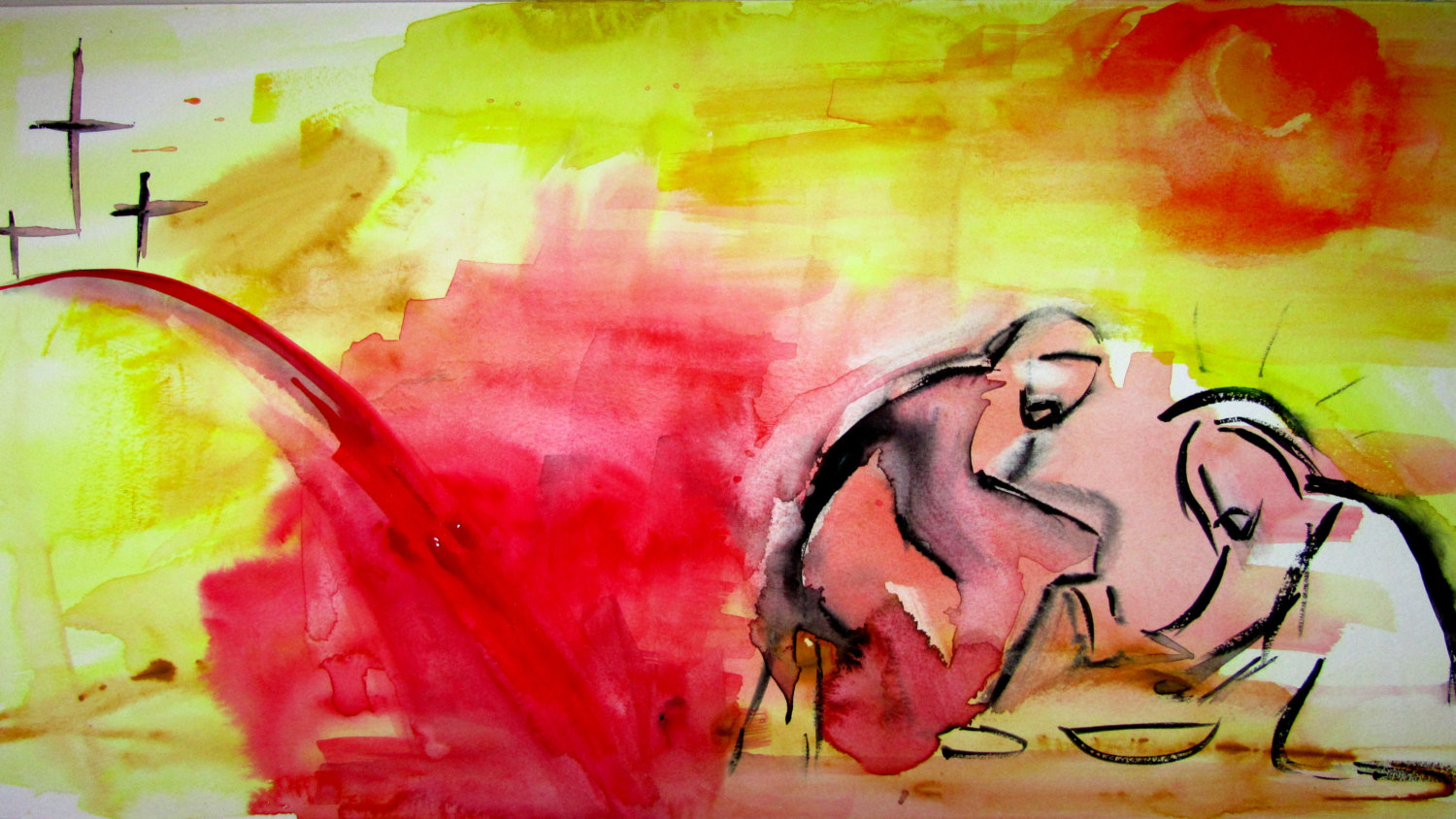
Jesus washes his disciples feet - unknown
Some parting words we anticipate and script: the leaving do or the exit interview. Others we sit lightly too, aware that it might be the end: graduation days, the house moves, the lengthening gaps of time between calls. Yet every day holds that possibility of last words: things we can’t say; don’t say; the things we dismiss, cling to or only really hear long after the last breath.
This conversation is one which shaped lives and imaginations; which has been dwelt on and lived with. A parting conversation which says: love allows you to do great things.
Now what does he say, the one who’d asked them what they were looking for and invited them to see? He says don’t let you hearts be troubled. He says trust me. Believe in God. He says there’s a place for you; and I’ll come to you. He says, after feet are washed and before bread is dipped, he says you already know all this.

The Lord's Last Supper - Okaybabs Studio
In Jesus, God chooses to dwell with us; to have a place with us. In the midst of grief, uncertainty and all that troubles our hearts, Jesus invites us to place our trust in God; to abide, with him, near the heart of the Father. We are held in this eternal embrace.
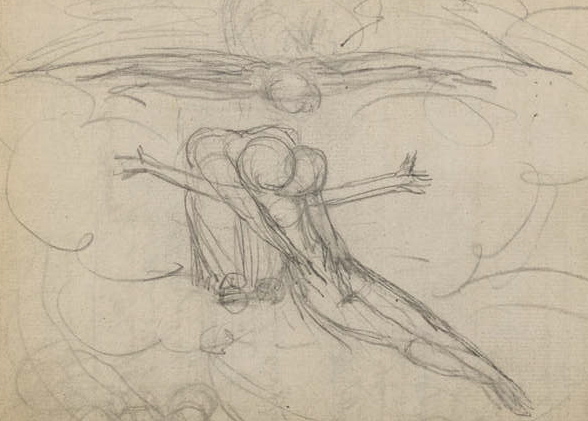
William Blake
Yes, we trust that when earthly life is over, we will have a place at home with God, in whose image we are made. But here and now, in troubless days; in days of possibility, we have a place too. A place amidst homes and colleagues; churches and communities.
A place where new life is made possible, even when - especially when - there is sickness, disruption and death; even when we have let go of all that is familiar. In this letting go, we are embraced by a love that opens our hearts; by a love that gives us a share in God’s story.
We will explore that in a moment through Stephen’s story woven into God’s story.
Let not your hearts be troubled.
Reflection Two
We know that in our human experience, moments of letting go can be hard and messy. As adults, we experience the nervousness and courage of a toddlers first steps: when we say yes to a job; when we say I do to a loved one; when children move out; or when we empty a parental home. And there will be many more ‘letting gos’: moment by moment, when we resist the urge to cling on tightly to what we know in order to do a new thing.

Banksy
Our reading from Acts tells us of Stephen: of his letting go of life in order to gain life. He is enfolded in love. Earlier in Acts, we hear how he is one of those who is committed to care for some of the most vulnerable. He is one of those deacons, filled with the Spirit, who with wisdom and compassion to a great work. They take on the great work of enabling many bodies to become one body. Hope and struggle are bound together as resurrection life, life in abundance, breaks into the ordinary and intimate, the domestic and the public.
Stephen reminds us that we live in what Willie Jennings calls ‘the tight space between faith and fear’. Wherever we are placed - at home or at work, in our daily activity and times of isolation, it is the nearness of the Spirit that prevents faith being overcome by fear. The Spirit that Jesus promises in his parting words enables us to imagine the embrace of Jesus; and embrace that enfolds our deepest longings and enables us to embrace a new way of life.
The Questions: We will have our own questions; uncertainty about finding the way; needing others to point us in the right direction; allowing us to trust the compass point, the GPS of God’s love. We are enfolded love so that our lives are unfolded in love. Rachel invited us to sit with one particular question last week: where do we find abundant life, even in lockdown.
The Way: It’s a journey. Yes, Jesus is our way; he walks with us; guiding us behind and before. It takes time; and the process of placing one foot in front of the other changes us. In the 2010 film, The Way, Martin Sheen’s character experiences this change on the way to Santiago in Spain. A pilgrimage route walked by thousands, each one carrying hopes, griefs, expectations; yet the personal, as the film reveals, cannot be contained. On this way, the lives and loves of others change us.
The Truth: Jesus promises to be our guide; to be with us on path to the place he is going - through life and death to life eternal. Jesus reveals the truth of God’s love: in all its depth and breadth. Jesus reveals the truth of our human condition - in all its contradictions and confusion, its potential and beauty. Light shines in the darkness - attracting us back to the truth of love.

The Baptism of Christ with Dove - Daniel Bonnell
The Life: The way, truth and life of Jesus is to reconcile all things in love. That is our ultimate reality. In laying down his life for us, Jesus goes to the depths of the grave and reveals the power of the resurrection. It is perhaps this image of baptism that speaks also of the power of this new life.
We see in Stephen the embrace of this new life. Like him, may our hearts be set on the world to come; like him, may we sow seeds of new life on earth. Stephen has become a story teller: it’s a story with Jesus at its centre; a story of God, the great I AM, in the midst of all things - past, present and future. In the moment we heard today, Stephen is able to witness to the way, the truth and the life; he is enfolded by the Spirit. As he speaks the Spirit speaks; he point us to the love of God revealed in Jesus.
Let not your hearts be troubled; I have prepared a place for you; I am the way, the truth and the life. Those things are about love: consoling, reimagining, embracing, convicting, cherishing.
Stephen has found his way to the truth of this love; and through his life, so will Saul. That figure, lurking in the shadows of hatred will become that great witness, Paul.
Our human bodies reflect something of this way of life. Jesus taught his disciples to love. God’s Spirit is at work in us - when we show compassion and kindness, when we show hospitality and friendship. We are to walk this way; embrace this truth; discover this new life. We are called - like Stephen and Saul, Thomas and Philip.
For a long time, Christian Aid has adopted the slogan: we believe in life before death. Like Stephen may we perform with grace and power the story of Jesus. This Christian Aid week may our gestures reveal the divine life made flesh.

Heart of God - Gary Rowell
© Julie Gittoes 2020