Sunday, 6 December 2020

Keep Awake, Stay Alert

 Advent Sunday: Isaiah 64:1-9 and Mark 13:24-end



Stay Alert: Back in May, after three months of being told to ‘stay at  home’, the government introduced a new slogan. Stay alert. Stay alert to control the virus and save lives.


Some, including Scotland’s First Minister, said that they didn’t know what ‘stay alert’ meant. It was seen as too vague, imprecise and unenforceable. Some turned created their own parodies of the campaign.


Other’s explained what alert meant: staying at home as much as possible; limiting contact with others; keeping our distance; wearing masks; washing our hands.


Perhaps we’ve swung between being hyper-vigilant and feeling complacent? What does it mean for us to stay alert in this season - as SAGE issues advice on avoiding board-games and recommends meeting households outside?


Advent takes up this theme of staying alert and redirects it.


Staying alert is combined with a longing of God’s presence; a longing for God to act to bring hope and justice; for suffering to end.


It is perhaps in a time such as this that we are more receptive to the themes of Advent, to the vivid imagery laced with judgement.  


Isaiah expresses that longing for God’s presence vividly; his words cry out for God’s decisive action:


O that you would tear open the heavens and come down,
    so that the mountains would quake at your presence.


It’s a passage full of awareness of God’s awesome deeds and power; of fires kindled; of creation quaking and human beings trembling.


Isaiah paints a picture of a God who is powerful - and asks why don’t we turn to him? Why don’t we call upon the name of God of devotion, remembering acts of deliverance; out of obedience and gladly doing right? 


Why don’t we call upon God out of an awareness of iniquity, that is being alert to the ways in which the world is out of kilter?


The 19th century painter, John Martin produced vibrant canvases which he gave colour and drama to themes.  His work depicts the ways human desires turn away from God chasing after the fleeting and dazzling prizes of this world; he depicts the way the world is shaken up, refined and restored by the blazing and dazzling fire of God’s love. 
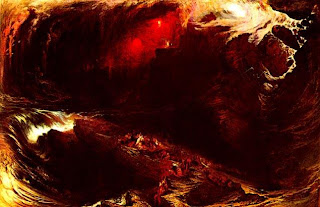


John Martin: works at The Tate


Yet the language of judgement - this longing for God’s coming into our midst - makes no sense without an awareness of God’s mercy. 


We are to call upon God’s name because we know it: we know it in our hearts and on our lips; we know it from the moment we were created out of dust and earth; from the moment we drew breath:


Yet, O Lord, you are our Father;
    we are the clay, and you are our potter; we are all the work of your hand.


God at the heart of this world holding us and shaping us: holding the suffering and pain; transforming it with the sheer energy of mercy that God’s very self brings into our midst. 


In the words of Martin Luther King, it’s a challenge that although: ‘we must accept finite disappointment, but never lose infinite hope.’


We face the disappointments of criticism and illness; of disappointments and loss. And yet, and yet, we are still invited to place our trust in the God who loves us.  Who considers us all a people who are precious.


The cry goes up to God: we are your people!


Image from the Hubble Telescope


Heavens: At the beginning of this new church year, we begin to focus on Mark’s Gospel; we recall that he was writing to a Christian community facing fear, uncertainty and disillusionment.


The threats facing us might be different - the social, relational, economic and cultural impact of lockdowns and tiers; the concerns triggered by a virus, but a global pandemic which has changed our life locally. 


But perhaps the impact is the same: it feels as if the world as we know it is being shaken. 


The first hearers of the passage read to us today, would have related the cosmic imagery that Jesus uses to their own political upheavals. The fall of Jerusalem, the disruption of familiar world order; dynamics of power and loss.  


It is in this context that Jesus call his followers, including us, to be alert: for although it might feel that poverty, oppression, and pandemic have the last word, he is pointing us to God’s sovereignty. 


It might seem as if the heavens are in upheaval; that the sun and moon are being cast aside; but this powerful language points to God’s reign. A reign of greater light and love and hope. 


To quote Martin Luther King again: ‘Only in the darkness can you see the stars.’


God’s presence is near to us; we must remain alert.


Fig Tree: Jesus points to the fig tree and invites us to read the world just as we read the changing of the seasons. 


The changing of the seasons are disruptive; processes are at work, seen and unseen. 


This Advent, we are to look with honesty at the world we live in; the sadness the loss, the confusion and the disruption. But we are also to look towards the hope of a world we would like to be part of, that we long for; that we want to see brought to brith in our midst. 


We are to be alert.


To look for signs of God’s reign.


To draw strength and comfort and hope from the nearness of God’s presence.

To trust in the turning of the seasons; the hope of the world to come.


The world is pregnant with the new life that God wants to bring to birth; but there are labour pains too.
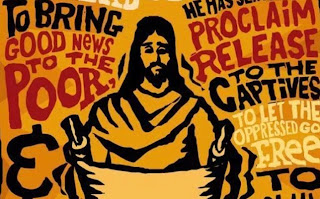


Jesus: For Jesus came with a promise of regime change - for was Rowan Williams reminds us in his little book on Mark’s Gospel, that is the force of the euvangelion, or good news. 


When we are tempted to despair of our political discourse or the behaviour of the human race, we are to go back to that good news. As Michelle Obama once put it, when they go low, we go high.


We go high because the face of Jesus Christ reminds us that there is justice and mercy.


He speaks and acts for the poor; for freedom; for life. 


He is God’s presence with us; calling us to be alert.


To be courageous and to treat others with the dignity they have as children of God; he enlists our help and demands that we take a side in this world. 


His face turns us from despair, resignation, indifference or even cynicism.


That our faces might be written with love and mercy; that our lives might seek after justice and compassion. 


Light: Keep awake; be alert; God is with us. 


This Advent: let us not act as if God is hidden from us, but lift our cries to God and live as people of light. 


The person of hope is the person who waits; who sees the light shining ever more brightly in the darkness.


Waiting. Trusting. 


For God will make all things new; and that work of renewal begins in us.


Expectantly we wait for God is faithful.

In darkness we see signs of salvation.


Emmanuel, Emmanuel

Our God has sent his only son

Awake our hearts to sing your praise

Our Lord has come to change the world

To change our hearts


© Julie Gittoes

Heal the land, meet the need

 Christ the King: Ezekiel 34:11-16, 20-24 and Matthew 25:31-46

The refrain in this sermon is taken from a song by The Porters Gate called "The earth shall know' which can be found here.


Excellent Danish TV has been one of my lockdown discoveries including the political drama, Borgen, which runs over three series. So far. Netflix is planning a forth. 


The central character is the politician Birgitta Nyborg; the first woman Prime Minister. So yes, it’s about democracy, policy making, negotiations and election campaigns. But it is about far more than that. It intricately and intimately makes politics human; work, home life, relationships.


Writing in The Guardian, Sam Wollaston says: It is about journalism, women, values, having children, not having children. It is about you and me. Nyborg  is a fabulous character: strong, ambitious, confident, but also genuine and honest.


There is ambition and rivalry; compromise and spin; but it also explores the nature of power. It’s dynamic and relational; it’s sometimes costly and damaging; but it doesn’t always preclude honesty, principles and character.


Every episode begins with a quote: from  Machiavelli or Churchill, Lenin or Shakespeare. One line, from the pacifist thinker Bertrand Russell, says: much that passes as idealism is disguised love of power. Such an observation challenges our motivations and commitments; but the in the following episode, the quote was from Matthew’s Gospel takes us to the power of love:  love your enemies and pray for those who persecute you.


This is not mere idealism: they’re words spoken by the one who unveils the love of power; and embodies the power of love.


As we keep this feast of Christ the King, this is a challenging place to start. The risk of the work of reconciliation is that it begins by trying to understand the enemy; by seeking to establish some common ground. 


Love is about the exercise of justice and mercy: to strands, bound together.


An image from an American tapestry found here


We’ve heard so much in the press this weekend about power gone wrong: about breaches of codes; and party whips.  But today redirects our attention to the fruit of power used well. Power that seeks to heal the land and meet the need; power that sets others free. 


Today we are reminded that every exercise of human power will be held to account under Christ’s kinship, which stands in contrast to world aspirations of status and markers of power.


Miriam spoke powerfully about the nature of God’s judgement last week; and today we learn that it is the practice of mercy that is the measure of that judgement. 


In our first reading, Ezekiel addresses the powerful with a vivid critique. 


The flock has been scattered as the fat sheep push and butt against the leaner ones. The poorest and most vulnerable of God’s people have not been protected or cared for by their rulers.


There will be judgement. The strong will be feed with justice. 


It’s an interesting phrase: suggesting a change in diet. 


Being fed with a portion of God’s desire for human beings.


A diet of justice is reflected in the practice of mercy. 


In Ezekiel, we see God’s desire to search and seek and rescue the lost; to feed and water; to bind up and strengthen. 


Their shepherd who will be both judge and show mercy is Son of David and Son of God: Jesus Christ, our Lord and King.


Today we hear his teaching on judgement in the face of oppression and injustice. 


This teaching is rooted in his own identification with Isaiah: Heal the land; meet the need; set the captives free


This teaching is the source of our hope.


Borgen makes politics human; but here, Jesus reveals God’s justice and mercy in the intimacy of human lives.


An image from a sixth-century mosaic in Ravenna found here


Sheep and goats: In the parable he tells, everyone is surprised by the judgement: the sheep didn’t realise that when they fed the hungry, there were feeding the king; the goats didn’t realise that when they neglected the sick, they were neglecting their Lord too. 


Feed the hungry

Give drink to the thirsty.

Shelter the homeless.

Clothe the naked.

Visit the sick.

Visit those in prison. 


It is a matter of justice that we show mercy; that those who have, care for those in need. 


There is no consideration here of social approval or status, of reward or of receiving a blessing.


Did you show compassion?


Yes, it is about who we are called to assist; the wounded we are called to respond to. 


It is also about who we are called to be; as Luke puts it in his Gospel, it’s the call to be a neighbour.


Heal the land

Meet the need

Set the captives free


The light and hope of such mercy has its origin in the mercy God shows to us in Jesus Christ. 


Jesus told this parable of sheep and goats just before he was anointed by an unknown woman. She pours oil on his head - marking him out as king. Yet as the perfume fills the room, we’re reminded that this king will love so radically and deeply that he will suffer and die. 


Our King is one who judges the power of exploitation, selfishness, dishonesty and abuse; from the cross justice reigns.

Our King is one who shows mercy not simply as judge, but as the one who is present in the midst of suffering and need; from the empty tomb, mercy reigns.


To show mercy is a willingness to enter into the life of another, irrespective of the pain or chaos; showing mercy means coming alongside in the intimacy of human life.


These practices of mercy are about meeting the need - bringing healing and freedom.


Christ on the Tube 

Part of an amazing series by Antonia Rolls (website)


Jesus on Tube: To live in this way is to be always ready for the judgment - no excuses, this is a warning.


Where do we see Jesus on the Tube? In the food bank queue? In this community of Barnet, can we work with others to bring hope to Hendon?


How we spend our money and use our time; the partnerships we form and the needs we respond to: all this is an expression of mercy.  It is to give without hesitation; to give in love; to support works of mercy. 


To heal the land, meet the need and set captives free. 


One Jesuit writer James Keenan writes: When we understand that our sins our forgiven by God’s mercy, then like all good Christians before us, we are called to initiate God and practise mercy for our neighbour in need, especially the most forgotten and those most shamed and most likely to be excluded.


As we meditate on the one who is the source of our hope - our crucified, risen and ascended Lord - we pray that we might be faithful in showing mercy: with confidence, courage and creativity.


Heal the land

Meet the need

Set the captives free.


© Julie Gittoes 2020


Love is all around

Final Sunday of Trinity: Leviticus 19:1-2, 15-18 and Matthew 22:34-45


Love is all around: When Richard Curtis approached Wet Wet Wet about recording a cover song for the Four Weddings and a Funeral soundtrack, they chose Love is All Around. 


They knew they could make it their own - and the single entered the charts in 1994. 


It remained at number one for 15 weeks. Some radio stations banned the song - because listeners were getting fed up of it. 


Despite that it remained the UK’s best-selling love ballad: ‘love is all around’.


We want to believe that; to trust it; to feel it in our fingers and toes.


We long for someone to be beside us; supporting us. 


As the lyrics express it: There's no beginning, / There’ll be no end /‘cause on my love you can depend.


We long for a love we can depend on: bonds of kinship expressed between siblings, partners, spouses, parents and friends.


A love that we should feel in the fingers and toes of the body of Christ.

A love that flows from the one who is the beginning and the end.

A love that is the Spirit’s bond of peace.


The great commandment: today’s gospel takes us to the heart of love - faithful and unending; but also particular and relational.


This talk of love comes in the midst of what must have sounded like a cross examination or question time debate.


The Pharisees and Sadducees has been asking questions of theology - about the nature of the resurrection; and also questions of practical ethics - is it lawful to pay Roman taxes. In both cases, Jesus replies to lead them and us to think deeply about God’s faithfulness; and to find a way to live that is neither colluding with or overthrowing the ways of the world.


This leads us to the heart of the matter: the greatest commandment. 


Of the 613 laws of the rabbinic tradition, which were to be respected and obeyed, what’s the greatest? Which law carries the most weight and importance?


Jesus goes to the heart of the law: to the shared tradition of the shema.


Love God with heart, mind, body and soul; love your neighbour as yourself.


It could be seen as a mic-drop moment. 


This is the heart of the matter.


Love. 


Faithful and unending.


Particular and relational.


Our first reading reflects part of the teaching that Jesus was drawing on. The legal codes as set out in Leviticus give substance and shape to what love looks like and what it means.


We’re given sets of practices. 


Habits and attitudes that we’re called to live out together.


Our kinship as a body means that loving God does not stand alone as an abstract concept or individual spiritual practice.


Love is a practical discipline: speaking honestly, judging wisely, dealing fairly, 


Love shows not partiality; but supports the weak.


Love seeks no vengeance; but cares for neighbour.


As one writer puts it, these two great commands are ‘simple to say without even taking a breath, but utterly absorbing to live out, claiming every breath we take’.


To love God with all that we are - all that we can be, all we can give - also means learning to love ourselves as God does.


That can be as hard as obedience, as costly as service and challenging as worship (especially right now).


To love  ourselves means letting go of our self-centredness and self-reliance to discover that we have dignity and purpose. That who we are is held in love by the God who made and called us; and the community we are called to live in.


Jesus:  to love and be loved in this way flows from God loving us in flesh of our flesh.


The anthem we’ve heard today expresses the scope of that love; and its presence with us.


All around our life, God is guiding and watching; in the good times and the bad.


Love is all around.


Born in a stable - this enfleshed love brings the light of hope and raises us up. 


Jesus sets us free from temptation; restores our good intentions.


Our rock, our salvation, our beacon and our Lord.


Taken from his friends. Mocked and murdered, left to die alone.


This love goes to the depths of a tomb; dispels all our terrors; pointing us forward to new life.


There is not beginning and no end to this love.


Love is all around. 


This love is cross shaped; and we too are marked with the sign in baptism.


Jesus knew the cost and shape and depth and substance of his way of loving when he asked the Pharisees his own question.


The Messiah is the son of David; but also Lord of all things. 

Love without beginning and end is with us.

This is the love of the Lord of sea and sky;

The love that hears our our crys; who comes to save.

This love sends us into the world.


Love is all around:  People need to love and be loved. Jesus takes us to the heart of the matter.


Love is all around.


Faithful and unending.


Particular and relational.


In our world, love needs to be all around more urgently than ever.


If God is love, then we too are to love. 


It isn’t a Richard Curtis romcom; it’s more than a sentimental love ballad. 


It’s a love that is so real that it will hurt. 


We will need to discern carefully within our parish what that love looks like: hungry and refugees; in the tasks we’re call to in our work and homes. 


Laying down our personal agendas, we are called to something more. 


Through us - through our hands and feet, fingers and toes - may love be all round. 


Let us be known by our love

In every word, in every deed honor the son

Let our light shine in every eye

Let us be known by our love


© Julie Gittoes 2020


You, we, they: are blessed!

 All Saints: 1 John 3:1-3 and Matthew 5:1-12. The series of images I drew on in worship, and which inspired the sermon, are by the artist Hyatt Moore and can be found hereThey make up a beautiful and moving series and it is worth reading the story of how they came to be produced.


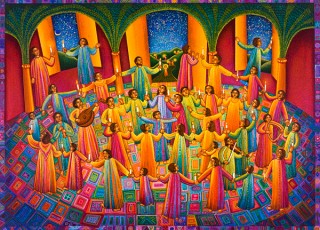
Celebration© 2014 John August Swanson | Eyekons


All Saints: See what love the Father has give us, that we should be called children of God.


In her brief statement yesterday, +Sarah talked about our calling to bring hope and light; as we face new restrictions, we are called to keep the flame of faith burning. 


To pray that the Spirit will kindle in our hearts that flame of love, for our own generation yes; but for those to come. And we do that in unity with all those who have gone before us.  


In some ways, that calling is to embrace an alternate reality: for to love as God loves will as one writer puts it ‘chaff against the present reality’. 


Although what we hope for is yet to be fully revealed, we are to commit to entering that reality now. 


With all the saints, we are invited to step into the light.


It is about wanting to know the heart of God; and to see God’s kingdom come.


Jesus goes up goes up the mountain to teach his disciples. These are are people who have already encountered and responded to him. But on that hillside the crowds overhear. They too glimpse this alternative reality - life under God’s loving and just reign.


The words that Jesus speaks are full of blessing; but they also demand a commitment. 


Transformation is possible when we step into the light of God. 


In the words we hear today, hard circumstances and  are transformed into blessing.

In these words we hear, acts of service are named as a blessing.

Words blessing human life. 


These blessings - the beatitudes - are more than instructions. They are as much painting this new world; describing and lending colour to this alternative reality. 


As one person said, they are a ‘report from the other side of radical commitment for those who have entered into life within God’s community of love and justice’.


Jesus declares a blessing on those who’re protected under the law of love - the bereaved, the poor, those seeking and longing for justice. 


Jesus declares a bless on those who seek to fulfil the law of love; showing mercy and building peace; those who bear the cost of radical love in enduring persecution. 


And often there will be a rub; a sharp edge; because we love the world, because God loved the world, we pray for grace to serve in need and protest when needed.


There are implications to our desire to live under the reign of God.


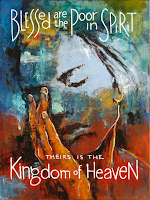
Blessed are the poor in spirit: theirs is the kingdom of heaven:

The uncertain; the curious;

Those who’re struggling; 

The overburdened or under-occupied.

The wearied; the anxious.

Those with a glimmer of hope.


You, they, we: are blessed.


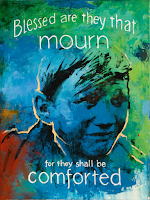
Blessed are those who mourn:  they will be comforted:

Those who face death day by day;

those who’ve wept for loved one;

those who've loved and lost, and keep loving.

Those who’ve laboured in love from cradle to grave.

Those who are holding it together for the sake of someone else;

Those who don’t get over it; those who wait with them.


You, they, we: are blessed.


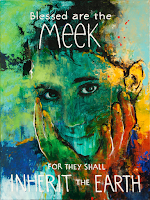
Blessed are the meek: they will inherit the earth:

The unnoticed; the silent ones.

The ones whose bodies we do not see.

The homeless, jobless, seeker;

The sofa surfer and self-doubting;

The hopeful ones; 

Those persisting with acts of kindness.


You, they, we: are blessed.


Blessed are those who hunger/thirst for righteousness: they will be filled:

The refugee and migrant; those courageously seeking a new life;

Those who give away generously; those who receive in need;

The accused and imprisoned; the advocate and volunteer;

The fostered and adopted; the high-achiever and all rounder; the one who gets by;

Those longing for safety; and making the world safer.


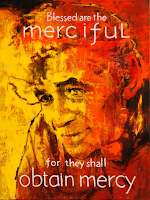
Blessed are the merciful: they will receive mercy:

The teachers and the medics; the social workers and the nurses;

The rubbish collectors and hospital porters. 

The parts of ourselves we don’t give away, or reveal.

The overlooked the over stretched;

The patient time-takers; the persistent care-givers.

Those who speak out and speak up.

Those who hear.


You, they, we: are blessed.


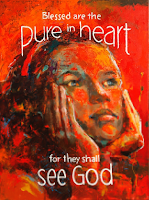
Blessed are in heart: they shall see God.

The searching; those who thirst and wait.

The dreamers and the visionaries; 

The radicals and the writers; 

The artists and the environmentalists;

Those who show their needs and pray.


You, they, we: are blessed.


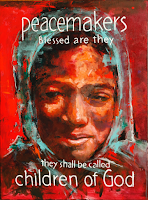
Blessed are the peacemakers: they shall be called children of God.

Those who seek for peace; 

who live to serve, who love to set free;

who give that others may live.

The bridge builders; reconcilers; 

Those who embrace conflict as creative;

Those who strive with hope not fear.


You, they, we: are blessed.


Blessed are the persecuted: for theirs is the kingdom of heaven.


When one’s life is characterised by the attributes highlighted in the beatitudes, two things are assured: blessedness on the one hand and persecution on the other. 


Blessed are those who are persecuted; for the faith or ethnicity, gender or sexuality; for their commitment justice and peace.


You, they, we: are blessed.


In a way, the beatitudes turn the world upside down. The promise the good news being lived out in relationship. 


The alternative reality the present, these blessings are balm to our souls: comfort for the grief stricken; the hope of justice, the longing for peace.


We are invited to live this reality - in a world where the poor are still oppressed, where violence stalks the streets and where consumption harms our planet.


The pastor and writer, Anna Case-Winters frames that invitation in a series of questions:

What gestures will we offer that accompany these words? What commitments will we make? What risks will we take? what dreams will we dream?


In all our days; in all our ways - may we see God and see God’s kingdom.

Blessed to bless - that God’s will is done.

Kindling a flame of love and faith.

Being light and hope.


© Julie Gittoes 2020