Saturday, 24 December 2022

Are you the one? Finding hope and joy

 Advent 3: Isaiah 35:1-10, James 5:7-10 and Matthew 11:2-11


In 1980, the sitcom Hi-de-Hi! appeared on the BBC. 


After the customary “ping, ping, ping” of the xylophone, Gladys Pugh - played by the late Ruth Madoc - says: ‘Hello campers; rise and shine. It’s a beautiful Maplin morning and we’ve got lots of Maplins’ fun in store for you today’.


Set in a fictional holiday camp, there is an atmosphere of forced amusement and fun. It’s expected that the ‘first laugh of the day’ will be at breakfast, with sports, laughter, games and entertainment filling every minute thereafter. 


Underneath that performed jollity, the entertainers are mainly out of work actors or faded stars and former champions; people out of pace and looking for something more. 


We have reached the third Sunday of Advent - known as Gaudete Sunday, a Sunday of rejoicing. As the liturgical “ping, ping, ping” introduces us to gladness, abundance, blessing and joy, perhaps we have arrived with a sense of unpreparedness, dread, tiredness or overwhelm.


Gladys Pugh’s ‘Hi-de-hi’ demands an Advent type response of rise and shine; wake up be alert. Yet, when we read the newspapers, see the evidence of our own senses, the beautiful mornings are shot through with discontent; the fun or laughter in store is combined with tears. 


And yet, and yet, our readings today allow us to be honest about that reality and tension; they draw us from despair to longing; they renew in our flesh and bones something of the mystery of God’s.


The one who gives us permission to long for joy when we don’t always feel it is John the Baptist.  In him, we see questioning and patience in our waiting; and the conviction to trust the promise that God will come. 


For today, the forerunner sends his disciples to ask Jesus a question: ‘Are you the one?’ And he waits, in prison, for an answer. 


When he lept in his mother’s womb, Elizabeth felt joy, connection and recognition that the child her younger cousin carried was indeed ‘the one who is to come’. 


In the wilderness, he was the one who prepared the way by preaching a message of repentance. His dress and diet were strange and other - yet he was compelling,  inviting others to turn back to God’s ways of justice and love.


Now we find him imprisoned: his seeking after truth and courageous unmasking of abused power  had confined him to the loneliness of a cell He challenged a faithless and unfaithful king; he faces death as a result of a flirtatious whim and vain promises. 


Has it all been for nothing? Or are the stories he’s hearing true? His boldness has given way to uncertainty, his clarity becomes a need for reassurance. So he openly, honestly, bravely turns his despair into longing; he asks that poignant question: ‘Are you the one who is to come, or are we to wait for another?’ 


He asks. He waits. Might his patience give way to gladness; might joyful news strengthen his heart?


Jesus’ response isn’t a simple yes of self-identification. He points to what can be seen, known, talked about, witnessed to. He sends the disciples back to John saying - tell him your stories, for those stories reveal who Jesus is. 


The truth of Jesus emerges in these encounters: in fear and shadows, in whispers and speech, in movement and song. Listen to that, and be glad; may that news strengthen your hearts. As John waits, as we wait, God comes near; the promise of Isaiah is fulfilled. 


We aren’t told how John received the news and stories. Perhaps his joy renewed as relief broke in? Perhaps he saw life beyond his own death as God in Jesus raises up, restores and brings hope.  


We receive those stories today - trusting that Jesus is indeed the one who was to come, who came and will come again. In his words, we find encouragement and a depth of joy that goes beyond the first joke of the day. 


You are blessed, he says, if you don’t take offence at me: even when things are harder or more complicated than we’d imagine, he invites us to stay rather than run, to ask questions rather than quit; to wait patiently for the dawn when it is still dark.


For God is present in both the joy and the pain. There is something sacred about what we are gifted on this gaudate Sunday. We can trust our responses to the world - grief, rage, shock, despair - because those things reveal what needs to change. 


Our experience sharpens our longings and refines our actions - if every second we exist is a gift, is something sacred, we can dare to feel deeply because God is in it; God feels it too. As James wrote, we can allow for patience in sorrow and joy in abundance; we can ask questions and choose to act in a way that sets others free. 


Perhaps in a way John understood real joy. It is not sentimentality or superficiality: it’s not the rise and shine of Maplins’ fun. It is  the depth of assurance that God will come to save us;  that God’s activity is beyond his own circumstances; that life extends beyond the grave and finds completion in God. He has gone ahead of us - knowing that his hope was not in vain, despair to joy. 


Prayer for this Sunday from Christian Aid:


Every second we exist is a gift, 

Gone in a whisper, it will not come again…

So God of us all, we come to you and ask

That you help us unwrap it,

and teach us to share it,

and call us to cherish it - 

this precious life we’ve been given.

There are gifts we can offer each other;

time, forgiveness, consideration…

things we cannot purchase,

but which are priceless.

And there are the lessons

we desperately need to learn -

about love that does what it says,

about concern that changes our behaviour,

about this life that we’ve been given that

explodes in beauty when we understand 

how to give it up.

Every second we exist is a gift.

Gone in a whisper, it will not come again…

When poverty robs our sisters and brothers,

when unfettered power proclaims some lives 

are more important than others, 

when the prophetic voice of those struggling

under the chaos our over-consumption has 

caused, is drowned out, call us to listen,

to learn, to change.

Every second we exist is a gift.

Gone in a whisper, it will not come again.

Your creative, joy-filled love gave us life.

May we share it with the same joy and generosity.


(C)    Julie Gittoes 2022

Monday, 7 November 2022

A matter of life and (beyond) death

3rd Sunday before Advent: Job 19: 23-27a, 1 Thessalonians 2:1-5, 13-end and Luke 20: 27-38


In an interview last month, Bill Nighy said: “I think about death 35 times a day”; he continues “I know it’s gonna happen, but I think that maybe at the last minute somebody might make an exception”


It's an apt and fascinating remark given his latest film called Living in which he plays Mr Williams, a widowed civil servant in post-war County Hall who’s been given 6 months to live. At that moment he realises that he’s not been living fully, but literally shuffling paper, deferring decisions, sticking to his routine.


Film still


When Mr Williams reflects on what he’d say when he’s called to meet his maker, he expresses the mortal prognosis we all share. He decides to get something done; to express gratitude and kindness; to find space for wonder, playfulness and song; to leave a modest legacy of social justice. 


It’s an extraordinary and exquisite performance: every movement understated; every gesture refined; every word a whisper; every emotion restrained. It’s increasingly joyous - shot through with humanity and hope. 


If you can see it, do; it might well be a cinematic parallel to the question in today’s Gospel. The Sadducees were asking a question about what happens when we are called to meet our maker; but doing so from the starting point of their own scepticism. 


They turn talk of life after death into an absurdist riddle exaggerating the human concerns of this life: marriage and family life, death and childlessness, law and legacy.  


Jesus does not respond on their terms. Resurrection cannot be grasped in earthly terms; their imagination is limited and makes God too small. They approach the question through hypotheticals rather than faith. 


As one commentator puts it: “To speak of God as a living God, the Bible means not merely that God is real or alive, but that God, as the beginning of Genesis makes clear, is the very source of life. Therefore, God is just as capable of raising people from the dead as of giving life.’  


This divine life is different from human life; resurrection life is different from lives lived from birth to death. Of course we have questions but we can’t resolve them in simply human terms. Resurrection takes us beyond the logics of bio-medical and physical realities; instead Jesus’ life, death and resurrection, the story of Easter, invites us to stretch our imaginations.


Part of what  Jesus’ response to the Sadducees reveals is that resurrection speaks of liberation and the reversal of human injustice. Our scriptures place widows within the realm of God’s preferential option for the most vulnerable; yet here she is treated like chattel, a possible means of continuing the family line.  Even her grief and loss is, in this instance, amplified and abstracted for the sake of debate.


For those longing for all those longing for consolation and peace, resurrection is a radical hope. Given our human experience of anxiety, loneliness, disappointment; those times when love is met with unkindness or control; and also the inevitability of our mortal prognosis,  then this hope is a matter of life and death, as well as life beyond death.


For Jesus, and in the letters, we see marriage as an earthly institution for the good of human beings - goods of faithfulness, mutual comfort and not just family life but the building up of community through generosity and compassion. It is a good commended alongside being single - through choice, circumstance and calling - as we seek to live in love of God and neighbour.


Resurrection is the entering into an eternal love - where there is no more suffering, crying, pain or death. Being caught up in such a depth of love can bring comfort; whilst here and now we treasure our earthy ways of loving. Loves which are fragile and tender, imperfect and evolving; the love of friends and siblings, parents and spouses.


In Jesus, we see love divine made perfect in our human weakness. He takes up his cross, bears the weight of our capacity to wound and be wounded. He takes all that separates us from God and others to his final breath. Like a seed, his life is buried in the ground, dying to bring forth new and abundant  life.


In him, love has the final word; in him all things are restored to Godself. Love’s redeeming work is done - where thy victory, o grave?


Jesus invites us to walk this way. To take up the cross in this life - and follow the way of new life. There we find love in community and intimacy beyond any human loving.  In Thessalonians we hear of several dimensions of this life.


There is the hope of being gathered together in this universal, peaceable, consoling love. Hard though it is to conceive, poets such as John Donne have given us a vision of life beyond darkness, dazzling, silence and noise of one equal light, one equal music.


There is also the lived reality of life on earth shaped by this heavenly hope: we are assured that God loves us in Christ Jesus; we are assured of salvation, the promise of healing and making whole; we are also assured of the Spirit being at work in us. So we hold onto eternal comfort, this good hope; but we also commit to the work of comforting the hearts of others, of strengthening them in what we say or do.


In Living Mr Williams finds his own way of putting into practice this purpose. Around him, we see others wanting to order their own lives - for the good of community or for self-interest, the blossoming of love or the shuffling of papers, expressing gratitude and sharing food.


As we gather to celebrate this Eucharist, we come in gratitude to share heavenly food in earthly bread. We eat for the laying aside of self-interest and the good of community. Here we pray that love blossoms making strangers, friends. Here there is sacrifice and joy, mystery, wonder and hope. Here our grief, pain and betrayals are transformed as we become restored penitants. 


Here we are recalled to serve a Kingdom where no-one belongs to another; but where all are beloved of God. Here in a way, the patriarchy of the Sadducees' trick question dies. Before we eat together, we pray ‘thy kingdom come’. We pray that the radical hope of the gospel might make us free to live for others in love. 


We serve the God of the living. The great I AM who was and is and is to come. The one who makes all things new and whole and alive. The one who invites us to repent and grow and flourish.  In the power of the life-giving Spirit, we serve a living and loving God who came near to us in Christ Jesus.


Like Bill Nighy we know that death is going to happen; but we trust in a rather more radical exception than mere continuation; the exception is life eternal offered through God’s merciful and loving judgement. So we can declare, like Job, with confidence: I know that my redeemer lives and that we shall see our God here on earth and in the world to come. 


© Julie Gittoes 2022


Saturday, 29 October 2022

Beyond Reith's vision

 Bible Sunday, 23rd October: Isaiah 45: 22-25, Romans 15:1-6, Luke 6:16-24


This month marks the BBC’s centenary: their first director General, Lord Reith, famously said that the BBC was ‘to inform, educate and entertain’.


That’s still the corporation’s stated mission. In a 2 minute ad celebrating 100 years, the Beeb’s described as an unique experiment - no corporate sponsors - a bridge, a common ground, a reflection on who we are; something that  only exists if we really believe it matters, and which belongs to all of us.


We probably each have our favourite: from The Archers to Eastenders, Newsnight to  Strictly, HIGNFY to Songs of Praise; from the Proms to Top of the Pops, Blue Peter to Life on Earth, Panorama to Dr Who; the World Service to local radio and the Shipping Forecast; from CBeebies to Sounds and iPlayer.


However impressive the visuals and graphics, the sheer diversity of how the BBC has sought to inform, educate and entertain highlights the importance of the spoken word - in drama, news, comedy, documentary, and even praise. Those words reflect what’s going on in the world, conveys meaning and may even change lives. 


Today is Bible Sunday: a day when we give thanks for the Scriptures - for those who’ve translated them and helped us to learn from them in commentary and teaching.  Yet it’s more than that. It is a reminder of the way God speaks.


The Bible is made up of hundreds and thousands of words - of human beings trying to make sense of the world and ourselves, seeking after meaning and purpose; and hundreds and thousands of words of God reaching out to us, seeking to reveal something of Godself and God’s ways of love - and guiding us as we walk in them. Ultimately, those words point us to the Word made flesh in Jesus. 


As a prophet, Isaiah used words to encourage others to turn back to God. Prophets educated and informed - telling as it is; speaking truth and justice; naming the consequences of human action - what builds up or destroys, what raises up or marginalises.  Today we hear Isaiah speaking words of righteousness and strength - following a time of captivity, freedom is breaking in. Babylon may have been defeated by the human agency of other rulers, but to inhabit that gift, to rebuild their life together, God’s people were called back to God. There is no other. 


Image: Mike Moyer


In today’s Gospel, we hear of that moment when Jesus returns to that place where he’d been brought up and nurtured; and, in the familiar rhythm of attending synagogue, he stands and takes up the scroll of Isaiah. He reads those familiar words - words of good news and freedom, recovery, favour and release.


Eyes remained fixed on him as he sat down. In that moment of ordinary worship and observance, the words point to the Word: anointing, fulfilment and goodness.  Then there is amazement - perhaps a desire to celebrate the local lad made good; high expectations of him or the hope that they could hold on to him. 


Yet, this isn’t about change just in his own community - but a vision of radical inclusion which enfolds the whole world.   This goes beyond merely informing and educating; it is more than entertainment. This is about teaching that makes whole; words that proclaim the habits of justice and hope of sustained transformation through mercy and compassion. 


Interestingly there is only one  prisoner to be set free in direct connection to the words of Jesus, or by his presence as God’s Word of love made flesh. That person was Barabas. The one who was released from prison as Jesus was bound, held captive and mocked before he walked the way to the cross. There, in the weight of that isolation and suffering and death, God’s Word has the last word: a love brings new life even from the grave. 


This fulfilment of God’s word was not just for the life of the church but the whole world. Yet today, as we gather as is our custom, we are reminded of what is at the heart of our life together. God’s words remain a source of encouragement, learning and hope; God’s Word made flesh, broken and poured out in bread and wine, remaining a gift to sustain us. 


Paul, when writing to the church in Rome, is aware of the ways in which they are divided - disagreeing over whether to eat meat offered to idols or to refrain; disagreeing over other pressure points in their life together - strong and weak. And yet, God is at work in them - and in us. God desires that we unite around a  common purpose.  


Here in Hendon we are continuing to tease out that common purpose - what does that look like in response to those seeking company, friendship and warmth; what does it look like in music and creativity; what does that look like for our young people, families and teachers; what does that mean in the partnerships we form?


Rather than focusing on our differences, we are invited to extend a vision of encouragement, justice, and a love that strengthens and builds up.  All of that flows from and flows into our worship - giving glory to God. 


Bible Sunday isn’t just about reading more of it more often: but seeing where God is at work in church, world, community and creation.  In a way, we are all broadcasters. Going beyond a Reithian vision to inform, educate and entertain 


Our words can transmit love and  beauty, our actions share justice and  joy. We share God’s promises that are fulfilled in Jesus Christ in the building up of our neighbours: the church isn’t just an  unique experiment - with no corporate sponsors. It in some ways offers a common ground - in all our diversity and disagreement; it is a bridge between the world as it is and how God longs for it to be. 


The Bible too reflects who we are and who we’re becoming. The church as Christ’s body doesn’t exist because we believe it matters - but because we believe in something that matters, we’re called into a life which belongs to all of us.  


We are called to proclaim the year of God’s favour - that season of jubilee when debts are erased, land restored, justice enacted and inequality reduced. In the power of the Spirit we are to witness to the love of God revealed in Christ Jesus. The one who is the Word made flesh. 


Tuesday, 18 October 2022

Prayer: the heart of advocacy and action


Sunday October 16, 2022: Genesis 32:22-3, 2 Timothy 3:14-4:5, Luke 18:1-8

In ‘The Diary’ column of the New Statesman, a criminal defence barrister comments on going back to court after strike action. Our advocates had been advocating not for clients but for the justice system itself. 

When confronted with her inbox, this barrister, like many others, finds ‘a long and brutal queue’: the people making up the 60,000 case backlog. She opens the files - the first an 18 month wait for a date, the next two years for a muder case, then three years for a theft. 

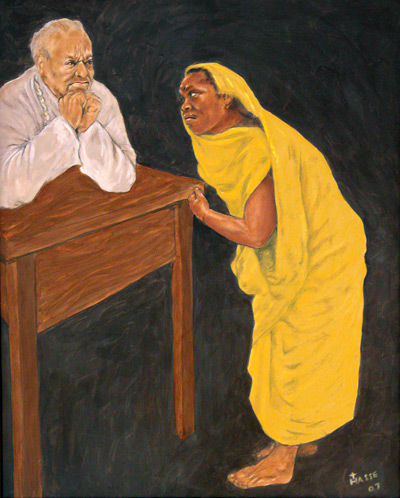
Those held on remand and those waiting to give evidence might well feel like the widow in today’s parable: someone waiting for justice. 

She is one of those, who along with the poor, the stranger and the orphan, is among scripture’s protected characteristics; a person who’s vulnerability and plea for justice evokes our empathy.  Afterall, for the prophets, providing justice for widows was a  litmus test for being faithful to God’s commandments.

We know nothing of her circumstances - her age, or means - but here she stands in the public square, courageously demanding that an injustice is put right. Day after day, she makes her appeal.

Day after the judge resists her pleas and refuses to help - he owns the description of himself as having no respect for God or people by repeating in his own inner dialogue.  It seems unlikely he was concerned for his reputation by being shamed into action.

Would he give in through boredom or irritation? Maybe.  But, we are told, she is bothering him and wearing him out - to the point he feels verbally, if not literally, beaten black and blue.

When he sets up this parable, Jesus says this is about the need to pray and not lose heart. 

In saying that, it’s not that he suggests that prayer is a matter of grinding God down with our petitions and requests. Indeed, there is a basic contrast - unlike the mean-spirited and heartless judge, God desires to grant justice to those who cry out for it.

And yet, our experience of prayer can involve urgency and struggle; how do we experience God in those seasons of longing and waiting; as we wrestle and cry out; as we long for peace or healing, comfort of justice?

If we read this parable through the lens of the widow and the judge, we might find that the story is more about us and prayer. It allows space for God to disturb us - opening up our hearts as we seek justice, but also hearing the justice demanded of us.


Image

First, let’s stand in the place of the widow.  We know nothing of the details of her petition, but we can think of times when we risk losing heart: when we feel a bit rudderless or lacking in direction; when we’re wearied by the changes and changes of this fleeting world, as one prayer puts it; when the news real makes us cynical or despairing; or when we feel resigned to situations which don’t seem to change for the better.   

This  widow does not lose heart: she remains focused and determined;  her courageous advocacy shapes the rhythm of her day giving her purpose. She is also precise in tackling this one thing - the thing that is most pressing and urgent. She continues. Like many who’ve campaigned - for the release of hostages, for justice of Hillsborough or Grenfille, or more local cases needing change.

Her example reminds us that prayer is hard: especially as we look for, strive for, long for significant change. Every day she risked disappointment - but remained convinced by justice and patiently pressed into that hope.  

Prayer is also  mysterious. Sometimes the power is basically showing up - being present before God with the cries of the world in our heart; maintaining those daily habits of repetition and determination. Praying when justice seems slow, peace fragile and healing painful - that’s part of our faithfulness. Praying through the silence or frustration until something shifts and opens up.

Second, let’s stand in the place of the judge: what if it’s God being the persistent widow pleading with us?   What if part of prayer is allowing the space and time for God to knock at our door - that heart might soften; that we might respond to demands of justice; perhaps attending to  the wounded world which wounds God’s heart - and opens ours. 

Without being too hard on ourselves, it is ok to acknowledge that sometimes we feel indifferent or fed up; that we feel irritable or unsympathetic; that sometimes - out of fatigue or helplessness of being overwhelmed perhaps - our hearts sometimes turn away from the pain and brokenness of others.

Then we are called back to the multiple and various cries of scripture - finding there words of consolation and challenge. There we find the cries of human beings seeking justice; and of God crying out for them. Those cries prompt us to care enough to listen and act.  

It is a truism to say prayer changes us, but it does in ways we might not always expect. In prayer, the Spirit cries within us - changing that inner critic or judge; removing the obstacles of our own fear, prejudice, hurt; building us up when we feel exhausted or inadequate.

Leonard Cohen wrote in ‘Anthem’ that there is a crack in everything, that’s how the light gets in. Prayer is such a crack - through which the light of God works through our imperfect loves. Cohen rarely spoke about his lyrics, but on this he said: there is a crack in everything…that’s where the light gets in, and that’s where the resurrection is and that’s where the return, that’s where the repentance is.

Cries for justice and our prayers for change confront us with the brokenness of things but also with the hope of healing.  There is a crack. The light gets in. A light that shines in our hearts, that reveals the world as it is and brings a glimmer of hope and compassion and a desire to act. 

This way of praying and wrestling can be bruising!

Jacob experienced that in the long, dark hours of the night; yet at dawn, light breaks in. He persisted until the blessing of a new name and a new future were granted to him. 

Paul encourages Timothy to persist too - continuing in what has been learnt and believed; proclaiming the message of the gospel. That a message of hope and love, forgiveness and justice was to be shared whether the time was favourable or unfavourable. 

So let us pray in a what that opens us up to wrestling with God: to do so is to hold God close, as God draws near to us; it is to refuse to walk away, give up or succumb to compassion fatigue. To wrestle with prayer is the opposite of indifference, it might let more light in. 

As we wait and pray, blessings might come; our desire for justice might grow. Praying is at the heart of our action, our advocacy.  So may we run the way of God’s commandments  - open to truth, trusting in love, seeking justice. Amen. 


© Julie Gittoes 2022

Saturday, 15 October 2022

Divine significance - a different metric

Sunday 2 October: Habakkuk 1:1-4, 2:1-4, 2 Timothy 1:1-14 and Luke 17:5-10


W. H. Auden wrote:

And still they come, new from those

nations to which the study of that 

which can be weighed and measured 

is a consuming love.


It often seems that to be human is to measure things: to quantify everything in numbers: from birth weight to height, from calories to pass marks. We know we need accurate measurements when lending money, administering medicine, constructing buildings or even baking bakes. A mistake or miscalculation has consequences ranging from the mildly inconvenient to expensive or even fatal. 


Yet in other ways perhaps we over rely on numbers to make things real or to make good judgements: interpreting data to quantify performance, health and growth. Even the church is not immune from the study of that which can be measured - counting Sunday attendance at certain times of the year. 


Yet, what we are call to is a consuming love - not of that which can be weighed and recorded, but an alternative metric of value and purpose: for example, the sincerity of faith shared across the generations by Lois, Eunice and Timothy. A faith that is quantified by life lived with love and thanksgiving, not by works alone.


And yet, in today’s Gospel we hear the apostles saying to Jesus: "Increase our faith!" 


In the verses before they express this longing or request, Jesus has shared with his followers words of demanding teaching: he has presented the challenge and responsibility of guiding others; he’s spoken of  broken relationships, and the patterns of repentance and forgiveness. 


In response, it’s perhaps unsurprising that the disciples want ‘more faith’. They aren’t seeking short cuts or an easy life - but somehow wanting more, wanting to measure up, or to quantify that they’re up to it.


This can’t be weighed in numbers or quantity, but perhaps we too want to know if we have faith that is genuine or sufficient.


Commenting on today’s Gospel Pope Francis says: Jesus explains this by indicating what the measure of faith is: service.


Jesus’s response might seem strange, dramatic or impatient; he deploys bold or exaggerated imagery to make a point. The smallest seed is enough to follow him in ways we feel are impossible.  For as Paul reminds Timothy, we need not fear or be ashamed because we trust in the power of God - and the help of the Holy Spirit.


Jesus doesn’t end there: he continues with a parable which grates and disturbs us - it presents an overbearing or perhaps indifferent master - and ends with a line inviting us to see ourselves as worthless slaves.


Elizabeth Johnson writes that the master-slave relationship, now totally abhorrent in human society [is] no longer suitable as a metaphor for relationship with God. 


It’s an image which might remind the wealthy and powerful of their privilege and remind them of the need for humility; but for others, for whom the present experience of servitude or the legacy of slavery is real, it sounds as if that denial of dignity is being locked in. 


To our ears, the questions and responses jar. Yet Jesus is leading us to a point of acknowledging that however small or great our achievements, we are ultimately dependent on God, fulfilling obligations of love. 


To recognise the offence of the imagery, reminds us that we are not the centre of the world. Somehow, we find freedom in this duty to live with a consuming love we cannot measure or quantify. 


Recognising the risk and offence of the imagery, Pope Francis leans into the attitude of being willing to serve. He says: Jesus wishes to say that this is how people of faith are with regard to God: they completely give themselves over to his will, without calculations or pretexts. 


More faith then is not a matter of what we want - something manipulative or dramatic; it isn’t a matter of removing all doubts or fears; or even having all the answers to challenging questions. It is not something that we can quantify, weigh, measure or count - there is no ‘more’, ‘better’ or ‘stronger’ in this life of faith. 


Rather, faith is a way of life. It’s an attitude, a posture, an alignment of wills in love and trust. It’s a matter of engagement and hope - something that we live out in our lives. Something which brings strength and blessing in the sharing of this consuming love. 


Small is significant. Every word and gesture; the dignity of every human person. In the words taken from a linocut by a New Zealand priest, Divine significance usually looks like insignificance. 


Images by the Rev'd Sarah West can be found here


As Paul reminds Timothy, faith is  a matter of turning to Jesus. Coming to him in hope and trust - leaning into his mercy and love and goodness; finding justice and mercy and challenge; bringing to Jesus the pain, vulnerability and risk. 


Jesus is telling them that they have faith - in relation to him. There isn’t more to be measured out or bought. 


Faith as trust and relationship. 


Faith as living out what we have encountered.

Ordinariness of loving and forgiving, serving and caring. 


As straightforward, intuitive or committed as when someone pulls a pint, fulfils a day’s teaching, comes to the end of a shift in hospital or in the supermarket, or feeds a  child, bakes a cake or walks the dog.

Faith is the business of living out not so much an employment contact but a covenant of love. 


Even against the backdrop of destruction, violence, strive and contention, the prophet Habakkuk reminds us that we are to live by faith: we stand at our watch posts seeing what is happening, the Spirit crying within us for an end to wrongdoing; we stand at our watch posts, rekindling the gift of God that is within us.


As Paul reminds Timothy, this rekindling is the basis of daily living. Embracing the gift - committing to habits, to the discipline of this consuming love. 


Resting in the assurance of God’s creative and recreative love; and taking that into our lives. Faith is being who we are and doing what we do - inspired, equipped, sustained by love.


This love was revealed in Jesus - the one who through the cross abolished death and brought life. We can trust in him - in faith and love - with the help of the Holy Spirit. 


Having faith is to trust in and lean on God: there will be struggles, doubts and worries; there will be questions and moments when things don’t make sense.  Yet, we continue to walk this way - seeking God’s ways and knowing God seeks after us. 


Faith deepens as we live it; lean into it. We give much of it away in love - rather than clinging on to it ourselves in the hope of increase we can weigh and measure. As we are fed by a wafer of bread, we receive and become Christ’s body - living and breathing, walking and serving in the world.


God comes to us in a way that looks insignificant; God comes in an overwhelming love in small things; Divine significance usually looks like insignificance. And there is ultimate value in that.