Showing posts with label death. Show all posts

Monday, 7 November 2022

A matter of life and (beyond) death

3rd Sunday before Advent: Job 19: 23-27a, 1 Thessalonians 2:1-5, 13-end and Luke 20: 27-38


In an interview last month, Bill Nighy said: “I think about death 35 times a day”; he continues “I know it’s gonna happen, but I think that maybe at the last minute somebody might make an exception”


It's an apt and fascinating remark given his latest film called Living in which he plays Mr Williams, a widowed civil servant in post-war County Hall who’s been given 6 months to live. At that moment he realises that he’s not been living fully, but literally shuffling paper, deferring decisions, sticking to his routine.
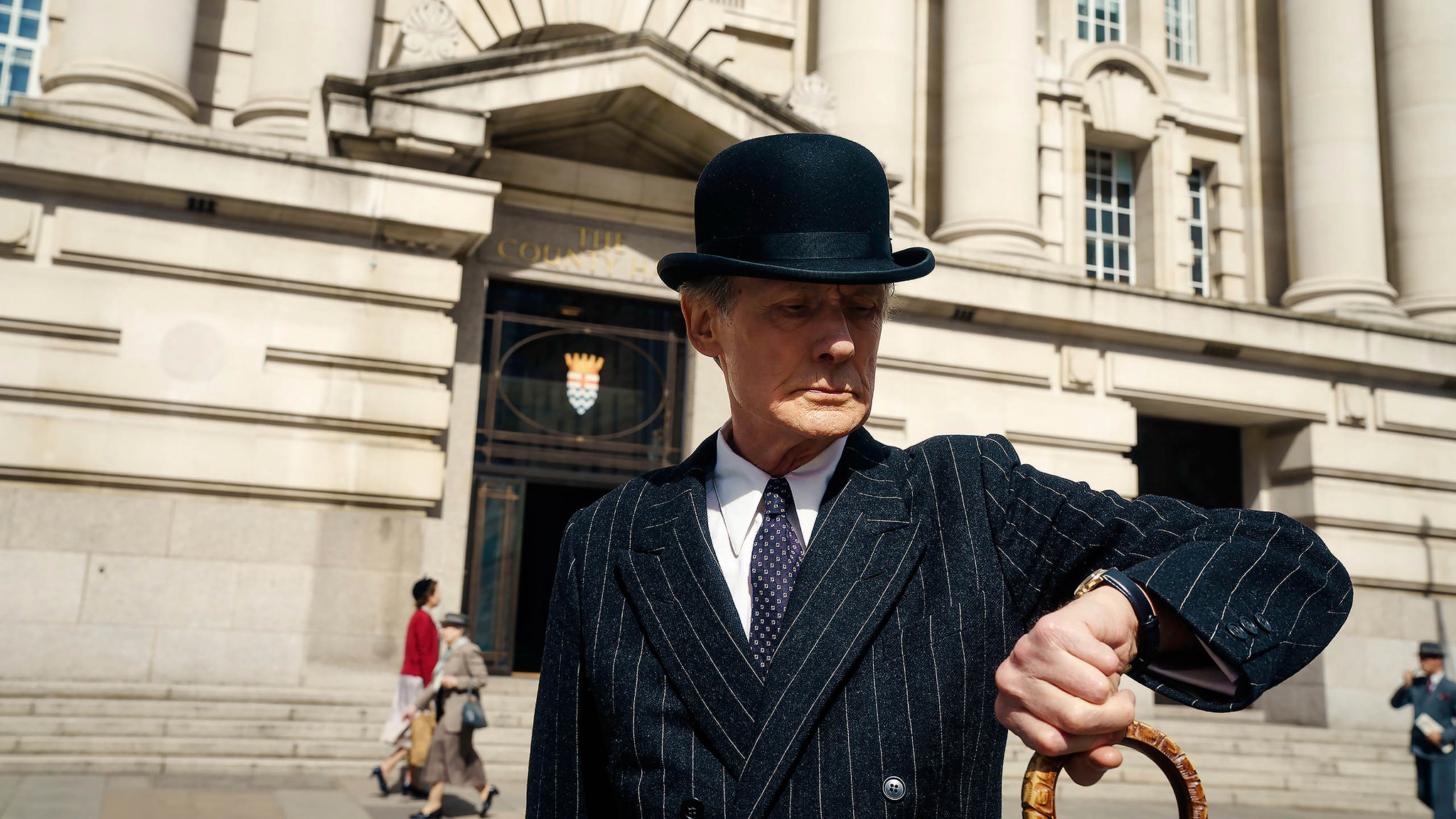


Film still


When Mr Williams reflects on what he’d say when he’s called to meet his maker, he expresses the mortal prognosis we all share. He decides to get something done; to express gratitude and kindness; to find space for wonder, playfulness and song; to leave a modest legacy of social justice. 


It’s an extraordinary and exquisite performance: every movement understated; every gesture refined; every word a whisper; every emotion restrained. It’s increasingly joyous - shot through with humanity and hope. 


If you can see it, do; it might well be a cinematic parallel to the question in today’s Gospel. The Sadducees were asking a question about what happens when we are called to meet our maker; but doing so from the starting point of their own scepticism. 


They turn talk of life after death into an absurdist riddle exaggerating the human concerns of this life: marriage and family life, death and childlessness, law and legacy.  


Jesus does not respond on their terms. Resurrection cannot be grasped in earthly terms; their imagination is limited and makes God too small. They approach the question through hypotheticals rather than faith. 


As one commentator puts it: “To speak of God as a living God, the Bible means not merely that God is real or alive, but that God, as the beginning of Genesis makes clear, is the very source of life. Therefore, God is just as capable of raising people from the dead as of giving life.’  


This divine life is different from human life; resurrection life is different from lives lived from birth to death. Of course we have questions but we can’t resolve them in simply human terms. Resurrection takes us beyond the logics of bio-medical and physical realities; instead Jesus’ life, death and resurrection, the story of Easter, invites us to stretch our imaginations.


Part of what  Jesus’ response to the Sadducees reveals is that resurrection speaks of liberation and the reversal of human injustice. Our scriptures place widows within the realm of God’s preferential option for the most vulnerable; yet here she is treated like chattel, a possible means of continuing the family line.  Even her grief and loss is, in this instance, amplified and abstracted for the sake of debate.


For those longing for all those longing for consolation and peace, resurrection is a radical hope. Given our human experience of anxiety, loneliness, disappointment; those times when love is met with unkindness or control; and also the inevitability of our mortal prognosis,  then this hope is a matter of life and death, as well as life beyond death.


For Jesus, and in the letters, we see marriage as an earthly institution for the good of human beings - goods of faithfulness, mutual comfort and not just family life but the building up of community through generosity and compassion. It is a good commended alongside being single - through choice, circumstance and calling - as we seek to live in love of God and neighbour.


Resurrection is the entering into an eternal love - where there is no more suffering, crying, pain or death. Being caught up in such a depth of love can bring comfort; whilst here and now we treasure our earthy ways of loving. Loves which are fragile and tender, imperfect and evolving; the love of friends and siblings, parents and spouses.


In Jesus, we see love divine made perfect in our human weakness. He takes up his cross, bears the weight of our capacity to wound and be wounded. He takes all that separates us from God and others to his final breath. Like a seed, his life is buried in the ground, dying to bring forth new and abundant  life.


In him, love has the final word; in him all things are restored to Godself. Love’s redeeming work is done - where thy victory, o grave?


Jesus invites us to walk this way. To take up the cross in this life - and follow the way of new life. There we find love in community and intimacy beyond any human loving.  In Thessalonians we hear of several dimensions of this life.


There is the hope of being gathered together in this universal, peaceable, consoling love. Hard though it is to conceive, poets such as John Donne have given us a vision of life beyond darkness, dazzling, silence and noise of one equal light, one equal music.


There is also the lived reality of life on earth shaped by this heavenly hope: we are assured that God loves us in Christ Jesus; we are assured of salvation, the promise of healing and making whole; we are also assured of the Spirit being at work in us. So we hold onto eternal comfort, this good hope; but we also commit to the work of comforting the hearts of others, of strengthening them in what we say or do.


In Living Mr Williams finds his own way of putting into practice this purpose. Around him, we see others wanting to order their own lives - for the good of community or for self-interest, the blossoming of love or the shuffling of papers, expressing gratitude and sharing food.


As we gather to celebrate this Eucharist, we come in gratitude to share heavenly food in earthly bread. We eat for the laying aside of self-interest and the good of community. Here we pray that love blossoms making strangers, friends. Here there is sacrifice and joy, mystery, wonder and hope. Here our grief, pain and betrayals are transformed as we become restored penitants. 


Here we are recalled to serve a Kingdom where no-one belongs to another; but where all are beloved of God. Here in a way, the patriarchy of the Sadducees' trick question dies. Before we eat together, we pray ‘thy kingdom come’. We pray that the radical hope of the gospel might make us free to live for others in love. 


We serve the God of the living. The great I AM who was and is and is to come. The one who makes all things new and whole and alive. The one who invites us to repent and grow and flourish.  In the power of the life-giving Spirit, we serve a living and loving God who came near to us in Christ Jesus.


Like Bill Nighy we know that death is going to happen; but we trust in a rather more radical exception than mere continuation; the exception is life eternal offered through God’s merciful and loving judgement. So we can declare, like Job, with confidence: I know that my redeemer lives and that we shall see our God here on earth and in the world to come. 


© Julie Gittoes 2022


Sunday, 3 January 2021

Look up at the stars!

A sermon for Epiphany 2021 (feast transferred): Isaiah 60:1-6 and Matthew 2:1-12


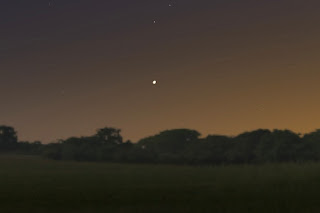
Jupiter and Saturn


The late Professor Stephen Hawkins once said:  “Remember to look up at the stars and not down at your feet. Try to make sense of what you see and wonder about what makes the universe exist.”


Look up at the stars: perhaps we miss that in north London; perhaps we only remember when we’re away from the functional glare of street lights. 


Maybe we peered at the night sky hoping to see the rare conjunction between Saturn and Jupiter; an unusual light, shining a little brighter.


Perhaps it's an innate human instinct to look up: and the longer we stare the more we see and the smaller we feel; with awe and expectation we try to make sense of the cosmos. 


In the beginning, the Spirit moved over a formless void; and lights were set in the dome of the heavens; the sun and moon and stars.


“Be curious” said Hawkins. In the midst of trying to make sense, he continued “however difficult life may seem, there is always something you can do and succeed at… It matters that you don't just give up.”


Image unknown


The magi in today’s Gospel were experts in heavenly realms; they were certainly curious. 


As astronomers, they were disciplined in the science of mapping the stars and planets; alert to different constellations; noticing changes in alignment; asking the kind of questions Professor Hawkins did.


Perhaps, like us, they looked upon a similar conjunction to the one seen last month. 


And as they looked, they saw not personal fate; but a sign of cosmic hope. 


Jupiter and Saturn blazing bright; a light had come causing them to arise.

A sign of royalty: the glory of the Lord rising upon them.


Years before, Abraham had been promised that his descendants would be more numerous than the stars; Isaiah foretold that nations would be drawn to this light; kings, to this bright, new dawn.


A still from T. S. Eliot reading Journey of the Magi


And the journey begins: in words from a sermon by Lancelot Andrews, taken up by T. S. Eliot, we’re drawn into their steps [text of The Journey of the Magi here]:


‘A cold coming we had of it,

Just the worst time of the year

For a journey, and such a long journey:

The ways deep and the weather sharp,

The very dead of winter.


There are camels too: not the multitude of which Isaiah spoke, but perhaps sore-footed; with camel men cursing and grumbling as the poem goes.


And did these star-gazers, at times, regret their journey, as Eliot supposes? Longing perhaps for the precision of their science over against the seeming folly of this journey?


Did they miss the the summer places as night-fires went out? Did they avoid those cities hostile and the towns unfriendly and instead travel all night, sleeping in snatches?


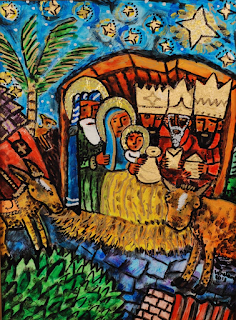
Herod and the Magi


This star of wonder had made them curious; they’d wondered about the universe; they could not give up.


These nameless pilgrims seek a royal birth; they go to a palace to pay homage. 


They find a named king seeking to cling to power; his palace a place of fear, deceit and brooding violence.


Amidst the pieces of silver and empty wine skins, Eliot simply says: 

But there was no information, and so we continued.


They continued to a smaller town; a more marginal place; a town that was satisfactory


Brian Whelan: 


Their curiosity and expertise, their determination and endurance had led them this far.


Their arrival looks back to Abraham and Isaiah - to promise and prophecy. All nations shall come to the light - God’s blessing of Israel becomes hope of healing for the nations. 


The bring gold and frankincense, yes; gifts marking this child our as a king; as the Lord worthy of worship. 


Yet they also offered at his feet the gift of myrrh; foreshadowing burial.


This is unexpected. As Eliot’s magi puts it: were we led all that way for

Birth or Death?


There was evidence of birth, for sure; and yet the poetic star-gazer continues: I had seen birth and death,

But had thought they were different; this Birth was

Hard and bitter agony for us, like Death, our death.


This birth is hard for Jesus will face opposition; a sword will pierce his mother’s heart.


This child who is Emmanuel - God with us - will not cultivate fear and deceit. Instead he is with us where the pain and grief is. 


This birth prefigures his life: in fulfilment of the law and prophets; in love that heals and sets free; that binds up broken-hearts and breaks down divisions.


Here is the King of the Jew; the hope of the nations. 


Not a king who rules through fear, oppression and violence; but the Lord who brings reconciliation through justice and compassion.


He dies with us; and we die with him.

He lives; that we might live.


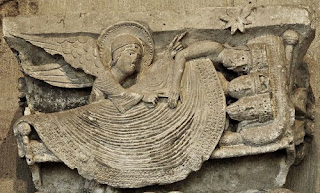
Gislebertus: The Dream of the Magi, Autun Cathedral


The magi sleep and dream.


They are warned about Herod’s intentions.


They return, but not to him; they return home by another road.


They returned to their palaces and kingdoms, their maps of the cosmos.

Yet, as Eliot puts it, they were: no longer at ease here, in the old dispensation.


They no longer clutched their gods.


For they had worshipped the beauty of holiness.

They had knelt and adored.

They’d set down burdens and sorrows alongside their costly treasures.


There they’d found comfort and prayerfulness.

Truth took on this strange beauty of birth and death.

Love enfleshed in tenderness. 


And now: curiosity had been met with joy.

Their ease unsettled in the face of this glory.

The old dispensation giving way to a new world.

A world where we too are called to carve out space that is less polarised.


We are to look up at the stars and to look into the face of Christ.


We are to dream: to dream that we will find another road where a commitment to being with and living for overcomes the fearful ‘I’. 


A world that may be more compassionate and just.


© Julie Gittoes 2021


Saturday, 5 September 2020

Death is not the end

A sermon preached on Sunday 30th August: Jeremiah 15:15-21 and Matthew 16:21-28


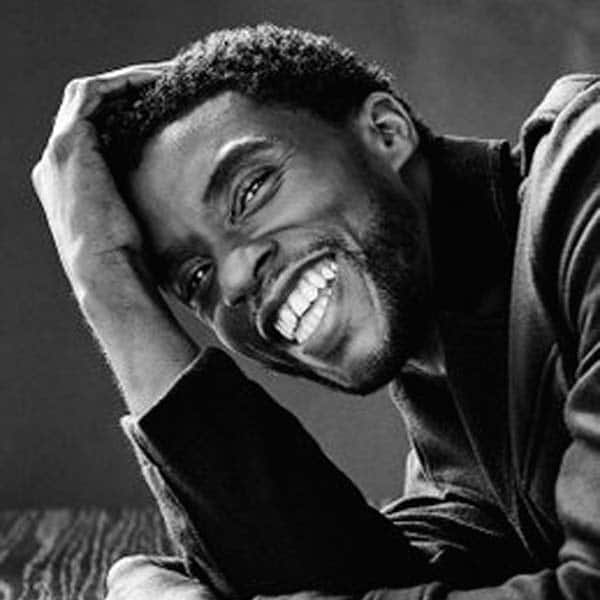
On hearing of the death of the actor Chadwick Boseman, Martin Luther King’s son - a human rights activist said: he ‘brought history to life on the silver screen’ in his portrayals of Black leaders.


He’d portrayed the baseball star Jackie Robinson in 42; James Brown the soul singer in Get on Up; and in Marshall played the Supreme Court justice Thurgood Marshall.


But many of us will remember him in Black Panther the ground breaking superhero movie which shattered stereotypes.  He lent enormous dignity, strength, vulnerability and depth to the role. 


In a previous Marvel film, his character T’Challa says: In my culture, death is not the end. It’s more of a stepping-off point. 


That single line was chosen by many to serve as a testimony or tribute over the last 48 hours.


A line that perhaps expresses the hope that death does not have the final word; a line which expressed the faith not just of a fictional character, but of a man whose pastor recalled his commitment to worship and service. 


But also perhaps a line that is fitting for someone who lived his life in the face of death following a cancer diagnosis 4 years ago. 


As Black Panther, he was a superhero; as a man, Chadwick quietly, and less publicly was a role model. 


When visit a children’s hospital, undergoing treatment himself, he didn’t just bring toys and a moment of starstruck glamour; he brought joy, inspiration and courage. Barack Obama met him at a White House workshop. Obama’s own tribute called him blessed; that he used his own power to give young people heroes to look up to. He said, to do it all while in pain - what a use of his years.


What a use of his years.


Death is not the end.


It’s a stepping-off point. 


Image unknown, found here


Last week we reflected on the moment when Peter grasped who Jesus was.


Today, there’s a shift: from that point on, from that moment of recognition, Jesus begins to teach his disciples what being God’s Messiah means. 


The words of rejection and suffering and even death don’t seem to fit with Peter’s assumptions or hopes.


Perhaps he and the others held onto a a view of the Messiah as a superhero; a mighty warrior who’d transform the world.


He was not prepared for this ‘something else’; for the implications of love.


It’s perhaps understandable that his loyalty kicks in; he’s pained by rejection and suffering, it doesn’t fit his assumptions.  


It’s not surprising that his newly expressed and tentative faith should well up; that his reaction is one of protest and protection.


Peter’s words take Jesus back to the wilderness; to the experience of grappling with power, with vulnerability and with love.


The Temptation in the Wilderness: Briton Rivière


There, Jesus was haunted by the question: if you are the Messiah you can do anything.

You could grab attention and make some easy wins; create a spectacle and assert one’s might.


Peter’s words take him back to that moment of commitment to a way of love which went to the depths of human life. 


Here we see again the vulnerability of God with us in human flesh.


Last we heard that it was not flesh and blood that enabled Peter to express who Jesus was, it was an insight from God.


Today, we hear him speak with human concerns and attitudes; he’s invited again to fix his heart on God.


Jesus looks on Peter and sees the tensions between head and heart, flesh and blood, faith and fear.  


Jesus looks at him with love: love that blazes with challenge.


His response echo the words he used to confront the tempter: get behind me.


It’s a stinging rebuke: get behind me, get out of the way, don’t make me stumble.


But could it also be an invitation?


Get behind me: walk with me, place one foot in front of the other, follow me!


Follow me, be with me, learn from me.


From this time on the focus shifts. He Jesus is on the road now. 


The one who’d healed those who suffered, will suffer to heal the world. 


He’s on the road: walking to Jerusalem knowing that he’s on a collision course; knowing that he’ll confront those who hold on to power - religious, economic, political and social.


He’s on the road now: 


Whilst others might ask, what a use of his years; of his power.


But this is love. 


Death is not the end.


It’s a stepping-off point.


Jesus walks from Caesarea Philippi to Jerusalem.


He walks a narrow path; he walks through death’s dark vale.


And yet, in trial and ill, in fear and pain: this is not the end.


From this point of onwards, love is exposed for what it is. 


Love that bears all things: that aches and consoles, reveals the human heart and forgives. 


Jesus is committed to this path - the calling to walk to Jerusalem knowing that death is not the end; it is a jumping off point. 


Perhaps we too need to walk from Caesarea Philippi to Jerusalem: asking what we need to let go of and asking if we’ve been attracted to the wrong sort of power.


What do we see as we look at our city: the fears the bind us and the powers the oppress?


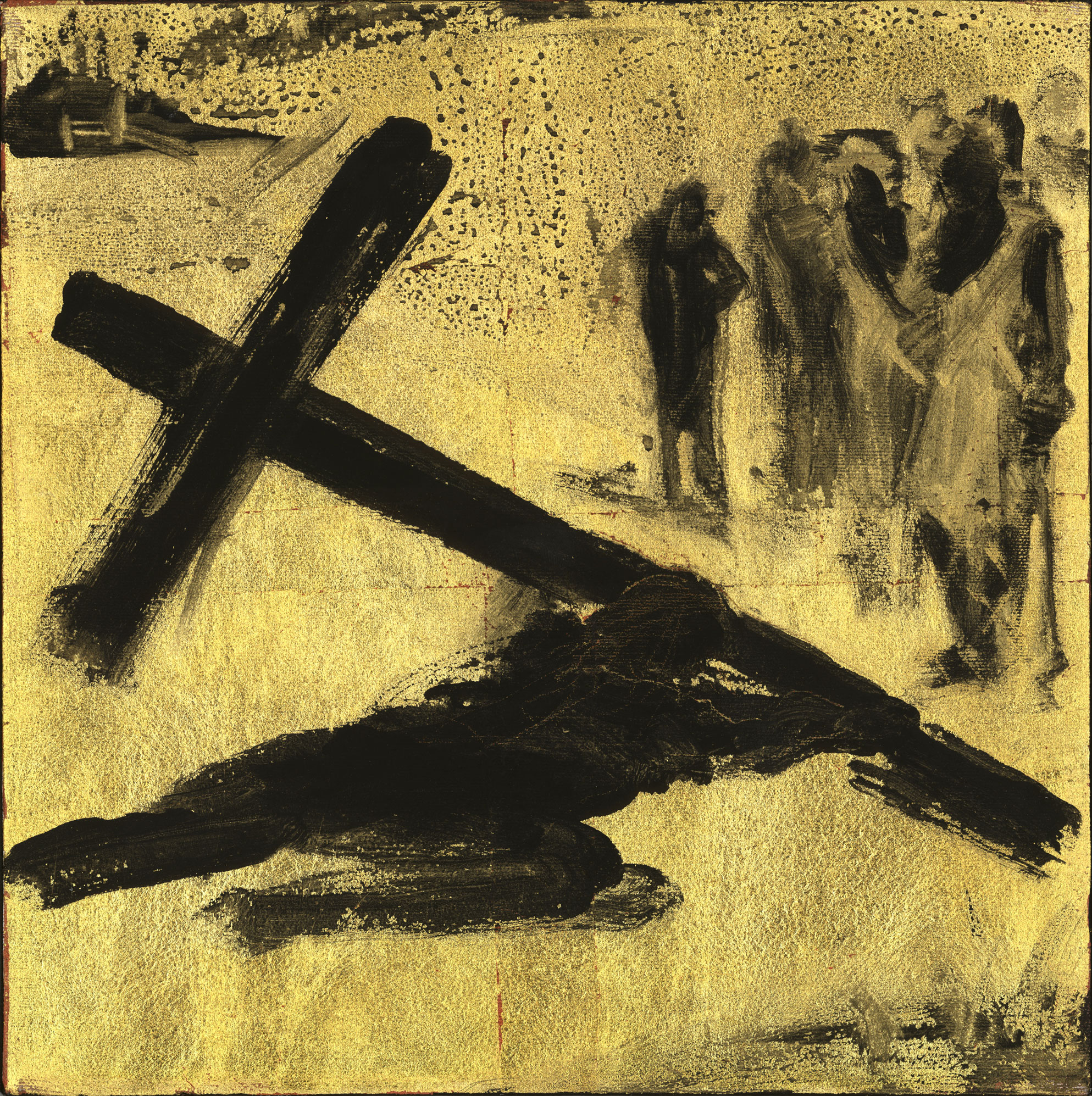
Stations of the Cross: Audrey Frank Anastasi


To walk this way of the cross, to get behind our Lord, is to take steps in love: to be with the suffering, the heartbroken, the curious and the lonely.


To walk this way, to get behind our Lord, is to let go of concern for wealth, power and status; it it to embrace our vulnerability, to find their courage and creativity.


And sometimes, like Peter our expressions of faith and trust and love with be both profoundly real, and also fragile.


Yet, as the challenges of life encompass us, as we struggle we find new life, new purpose and new hope. 


As our final hymn expresses it, we find in the cross our peace: for it’s very honestly about our human capacity to wound and to hurt. 


If today’s culture sometimes risks being an analgesic, numbing us to the reality of suffering and death; the cross becomes instead a jumping off point. 


A brighter day will dawn; all creation is renewed. 


This love makes its home with us; heaven and earth will praise.


In death, Jesus reveals the limits of earthly power and control; his love deifies our death dealing patterns of life.


In resurrection, we see that death does not have the final word. Through God’s power, death is not the end, but a jumping off point. 


The cross becomes the tree of life. 


But walking this way, living this live, sharing this love can sometimes be costly.


This is the source of Jeremiah’s lament.


As a prophet, he lived through a turbulent period of history: God’s people had turned away from the commandments and his calling was to deliver unwelcome truths about the consequences of their actions.


This calling - to speak God’s word - has been a joy and delight; but it was increasingly a burden and source of misery. 


It was hard to invite people to open their hearts to God; to turn their hearts outwards to others. 


Yet in that bleak place of isolation, God is with him; in his vulnerability, we see signs of authenticity and hope.


To be human is to be vulnerable: we cry and bleed; we labour to bring life; we labour in our dying; we love and hope and strive; we grieve and seek justice.


And when we’re vulnerable, sometimes fear of death can become fear of life, or fear of living. 


In trying to save our life we lose it: we keep our protective armour on and fear rejection. 


And yet, in that valley of the shadow of death, we need have no fear for God is with us; and will comfort us.


The way of vulnerability is an invitation to live lightly and intensely; to live wholeheartedly; every moment, precious; to love with mutual affection.  What a use of our years to encourage and show kindness to others; to bless and be hospitable; to welcome friend and stranger; to listen and be present. What a use of our years to love in ordinary. 


Brené Brown, who writes a lot about Christian leadership - says: We live in a vulnerable world - yet instead of leaning into the messy side of life we try to numb vulnerability, but we forget that vulnerability is also the birthplace for joy, gratitude and happiness.


Taking up our cross - getting behind Jesus as we follow him - makes us vulnerable: to ridicule and misunderstanding; it invites us to take risks for love, even when we can’t guarantee the outcome.  


Jesus invites us to walk this path: in him we find truth that sets us free - allowing us to be courageous and creative, to be authentic in love - alone and together.


Stock image


Jeremiah feed on God’s word: as to we as scripture is broken open, as as bread is shared.  


At the heart of cross shaped discipleship is the truth that the fullness of God is pleased to dwell in our fragile humanity; many of us will long to touch and take, eat and digest this word.


A fragile host, full of life and power; our anthem spoke of this body - a suffering body given for us; a dying body which brings us new and abundant life; transforming our bodies in his Body.


What a use of years.


To live in love.


Death is not the end.


It’s a stepping-off point.


© Julie Gittoes 2020


Thursday, 14 November 2019

Vanity - life is but a breath!

Evensong 27 October: Ecclesiastes 11:1-end, 12:1-end and 2 Timothy 2:1-7


The end of the matter; all has been heard. Fear God, and keep his commandments; for that is the whole duty of everyone.

Over the last two weeks, students from Middlesex University have been using the church yard as the back drop or context for short films on grief and loss.

Using their skills in acting and directing, they are seeking to say something about our mortality. 

Like the writer of Ecclesiastes they are exploring some of the most pressing and intimate questions we face as human beings: youth and ageing, anxiety and frailty; the inclinations of our hearts and the weariness of the flesh.

In these short films, mourners go about the streets, clutching their flowers, as dust returns to the earth. 

Breath returns to God who gave it. Is all then just vanity? Or is this our hope and consolation?

In life we are in the midst of death. 

We know not when the silver cord will be snapped or when the golden bowl will be broken, as Ecclesiastes puts it; we know only the jolt when the wheel or cistern breaks.

In our lives, we carry those moments of ‘breakage’.  We carry the personal sorrows, regrets and passing breaths; the moments that come too soon; that hurt too much. We carry the collective horrors too: of victims of terror or trafficking, of ebola or earthquake.

When we face the end of the matter, has all been heard?

Yet it is in the face of death that words of wisdom take on a different hue. 

We tell stories of last words; of Oscar Wilde’s complaint about the wallpaper or George V’s utterance of ‘Bugger Bognor’. Yet when asked, the most common deathbed conversations have been affairs of the heart: advice about relationships or careers, finding happiness and living without regrets.

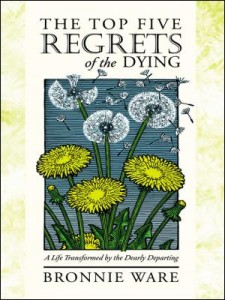
Bronnie Ware, an Australian palliative care nurse, recorded some of the most common regrets: wishing that I’d had the courage to live a life true to myself; wishing I hadn’t worked so hard; wishing we’d expressed our feelings; wishing we’d stayed in touch with our friends; wishing for happiness and laughter. 

Ware writes of the phenomenal clarity of vision that people gain at the end of their lives, and how we might learn from their wisdom. Perhaps her book of observations serves to accomplish a similar task to the writer of Ecclesiastes: how do we live well in the face of death?

Perhaps our health or your brings a freedom we don’t realise until we’ve lost it; perhaps we’re all to aware of the things we miss out on because of the demands of work. 

Ware also noticed the importance fo friends - the people who’ve known us deeply for years; or who were significant at particular moments.  How important it is to cherish them; to express our feelings and to find to be able to laugh; to find happiness in small things 

The writer of Ecclesiastes puts such human observations in different words. He notes that there are times and seasons; he cautions against idleness and yet invites us to delight in the pleasantness of the sun. Delight in the sun, because there will be darker days. 

In youth and in old age there are causes for rejoicing. The writer suggests that we follow the inclination of our hearts; whilst cautioning us to be mindful of God’s judgment. Rejoice and live - for all is vanity. 

Such vanity does not mean something worthless or futile; it doesn’t carry the connotations of pride or superficial concern for appearance. 

Vanity in Ecclesiastes is more like a breath or vapour: the thing which we try to grasp but which slips through our fingers. We cannot control or foretell our future; but we can live lightly and intensely moment by moment.

Perhaps that is a habit of living well that we can cultivate. To be present. To see what the moment demands of us.

Of course we all carry with us work and responsibilities, concerns and plans. Rather than abandoning them or laying them aside, we are to infuse them with love and meaning and purpose.

The end of the matter; all has been heard. Fear God, and keep his commandments; for that is the whole duty of everyone.

Dare we entrust our lives to God - in order that we might live more fully? The commandments contain the promise of life rooted in love of God and neighbour. Dare we chose this life? 

We do not know what the future holds: we fear living with regrets and yet can be cautious and hesitant. Yet living wholeheartedly releases us to find fulfilment moment by moment. 

God calls us to love - with all that we are: hearts and minds, souls and strength. Such love is our calling - being committed to the work entrusted to us, the people with whom we interact. This can be demanding - this is faithful loving, living life in the face of death. 

And we do this because God goes with us and before us through sorrows and laughter, through friendships and all our endeavours. Nothing is wasted or lost. All is vanity, a breath; and yet each and every breath is infused with the love of God. This is the commandment to love and live; to heal and build up; to care and be carried; to cherish and pay attention to small things.

Live lightly and intensely. Breath by breath.

God breathed life into our earthly bodies; and when dust returns to earth, that same breath calls us to eternal life. For Christ Jesus died and rose again; nothing can no separate us from the love of God. By the power of the Spirit, we are to love God; to keep the commandments. Until shadows lengthen and the busy world is hushed. 


As Paul instructs Timothy:  You then, my child, be strong in the grace that is in Christ Jesus; and what you have heard from me through many witnesses entrust to faithful people who will be able to teach others as well.

© Julie Gittoes 2019