Wednesday, 26 July 2017

He was called James

Last night I had the very great pleasure to preach at Evensong at the opening of the Endellion Summer Festival. This year it fell on the Feast of St James - so I was grappling with how we think about this example of being called by name to share good news, in the context of the a living community celebrating the gift of music.  Added to that, the texts were both complex and challenging in their different ways: first the stark warnings of a prophet (Jeremiah 26:1-15) and the immediacy of James’ response to Jesus (Mark 1:14-20).  In the end, calling and good news resonated through the text - and I managed to sneak in a reference to the other “James”… the indie rock band and their famous anthem ‘Sit Down’ releases  in 1989!


St Endellion Church

He saw James.
James, with his brother in their boat.
Sitting together mending the nets.

Mending nets demanded skill and patience: checking, untangling, knotting; nibble fingers handling needles; four hands holding the weight and tension.  It’s a scene which still plays out along our coastline. So mundane and time consuming we’d hardly notice it; we barely see.

And there Jesus saw him. 
Really saw him.
The fisherman: gazed upon;
by one who is God with us.


Guido Reni - Saint James the Great

He was called James.
James was called. 

He left his father and followed.
James listened, witnessed and asked a favour.
He questioned, doubted and was weighed down with sleep.
James believed, followed and fished for people.
Sharing life transforming good news made him apostle, martyr, saint.

If you Google “St James” you discover a boutique hotel, royal palace and a wealth management group; numerous schools, hospitals and a creative media company which, according to its website, injects a ‘thrill into a tailor made message’. St James’: a crown estate - a market like no other - food, fashion, lifestyle, art and events.


And in all these places, men, women, young and old, are engaged in tasks which demand skill and patience: planning lessons, cleaning offices, fulfilling ambitions, asking questions, making beds, welcoming diplomats, shaping campaigns, resisting sleep, cooking meals, managing wealth, suturing wounds, seeking work, creating art.

And God sees them; sees us.
We are seen with all our questions, passions, exhaustion and potential 
Like James, we are called by name.
By name we are called. 
Called to follow and listen, believe and share good news.
To see others as we are seen; and to see lives transformed by love. 

This is good news.

This news is, in the words of Rowan Williams, ‘a message about something that altered the climate in which people live, changing the politics and the possibilities; it transforms the landscape of social life’.  

Mark’s Gospel expresses possibility and transformation by with urgency: moments of amazement and ordinariness punctuated by the words kai euthys  ‘and immediately’. The universal scope of this good news is told in a series of intimate encounters. Today we glimpse James at the beginning of a journey. He spent the next days, months, years enfolded by good news. Good news he proclaimed. 

Good news that God’s beloved Son stood came to us in the midst of our longing, frailty and need for forgiveness. He taught with authority - revealing scope of God’s love in parables about sowers, seeds, lamps and yeast. He sought solitude as he prayed in a deserted place; he fed thousands on a hillside and taught thousands more on seashores and synagogues.  


Eugene Delacroix: Christ Calming the storm

Jesus stilled the storm and brought peace to the troubled mind.  Lepers, paralytics, the deaf, the blind and a woman with haemorrhages knew his healing power; he restored a little girl to life.  Fishermen, religious leaders, children, a tax collector and a Gentile women followed him in faith. 

He showed how God’s law of sabbath rest enabled human kind to flourish; he challenged the rich and ambitious, to serve God’s Kingdom; and treasured the widow’s mite. Jesus radically extended our understanding of kinship - all who love mercy are his mother, sister and brother.  

In him, love divine plumbs the depths of humanity.  

A close companion betrayed him; another denied him; a woman poured out lavish oil to anoint him. Bread is broken and wine is poured; tears, sleep, arrest and trial. Hosanna becomes crucify. At a moment of utter forsakenness a centurion sees God’s Son. And at an empty tomb risen life bursts forth. 

This is good news: God’s Kingdom breaks in, transforms and empowers; in our daily tasks, our journeys and our resting places. In all this is the love of God sees us as we are. Like James we are addressed by name and invited to turn and respond. Follow me!

New possibilities lie ahead; we are co-workers in this Kingdom. Transformation unfolds as we love God with all that we are; with every fibre of our being; voices, gestures, heart and mind; loving neighbour as ourself.  

The speed of James’ response is remarkable: can we imagine letting go of the equivalent of nets, family, boat and crew?  What could be so compelling that we leave familiar rhythms behind? 

And yet, we are here - we’ve stepped aside from our regular round of commitments and responsibilities to join with this living, festival community.

Do we recognise in the pull of this place of pilgrimage, something that James might have seen in Jesus? A longing for the opportunity to reconnect and reflect;  for encouragement, joy, renewed relationship and spiritual refreshment? 

Richard Hickox described the spirit of this place as something on which ‘we all feed’. He called it a ‘magnet’ as well as a ‘refuge’.  There is something magnetic and irresistible about Jesus too - but it’s not always easy or comfortable.  James found himself re-deploying his trade - a fisherman becoming a fisher of men. 

To be caught by the love of God - to draw others into that abundance - is to find our refuge, our place and our purpose. In creation God gave us freedom to follow or reject love; in Christ that rift is overcome; by the power of the Spirit’s guidance we bear the witness to the good news of that love, bringing healing and wholeness.  

To ‘catch’ people for this Kingdom is joyful and demanding. It means seeing people as they are - being with them as God was with us in Jesus. To take words from another “James”, this time the indie rock band, we are to ‘sit down’; to sit down ‘in sympathy’ with those ‘who feel the breath of sadness’, those ‘touched by madness’ or who ‘find themselves ridiculous’.


When we sit down in love: in the face of fear, or hate or tears, heaven touches earth.  To sit alongside others - to see them as God does - is prophetic. It makes hope and consolation known in the present. 

It’s not easy.

Some days, we’ll sympathise with the reluctant prophet Jeremiah. At a time of political and social upheaval he carries the lonely weight of continuing to speak of the demands of God’s love. Although he was shunned and ill-treated, he was not a defeatist. 

He was persistent in speaking truth to those in positions of authority; calling them to return to listen to God; to avoid the impending disaster by walking in the way of his law of love. 

Even in the darkest times of rebuke, mockery and condemnation, Jeremiah holds on to the hope that God will not abandon him. Nor would God abandon his people - but would touch every human heart. James saw that prophecy come to fulfilment - as Jesus brings a new covenant in his blood; as the Spirit brings new life to the law. 

Jesus saw James.
Like James we are called by name.
By name we are called.
Called to follow and listen, believe and share good news.
To see others as we are seen; and to see lives transformed by love. 
Your music gives voice to that vision with joyful song.

Over the coming days, may you glimpse a new heaven and a new earth. 
May you hear and respond to the heavenly voice declaring that God dwells with us.
Over the coming days, may you find refuge, encouragement, joy and delight.
May the Holy Spirit equip you return home embracing new possibilities.

This is good news.


© Julie Gittoes 2017

Sunday, 16 July 2017

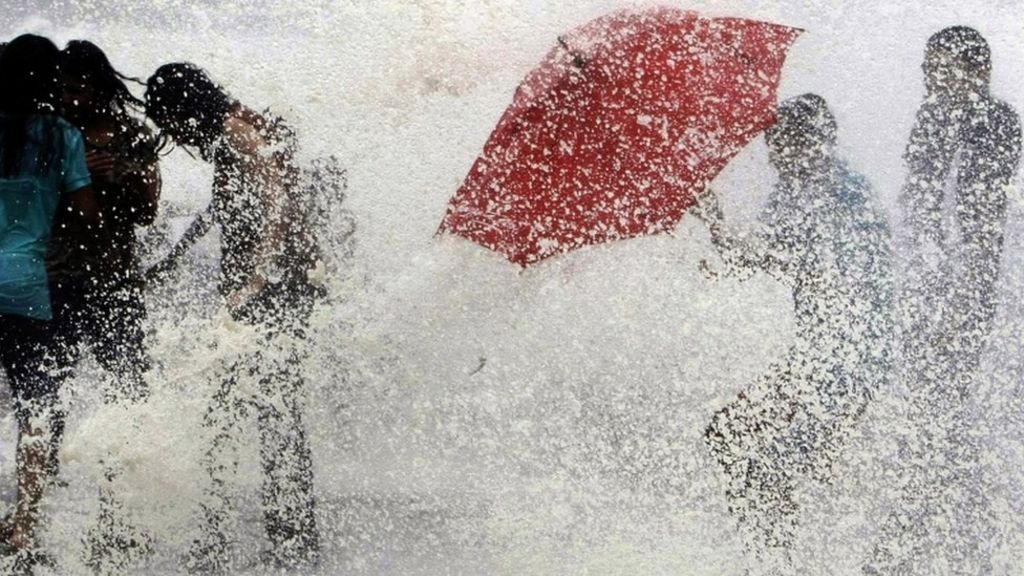
The smell of rain

This is the text of a sermon preaching at the Cathedral Eucharist on 16th July 2017. The texts were: Isaiah 55:10-13, Romans 8:1-11, Matthew 13:1-9, 18-23.  I read and mull over the readings early on in my sermon prep - just sitting with the language and narrative - and before I'd even reached for a commentary, I found myself obsessed (for want of a better word) with the falling rain. Rain led me to smell. Smell to soil. Suddenly Isaiah 55 had opened up a new reading of the famous and familiar parable of the sower. We think we know what it means - them and us, those who whither away and those who remain faithful. Suddenly the challenge of soil management and the grace of rain subverted all that. So here are musings... musings on the smell of rain (time wise, paragraphs in italics I cut as I preached). 


The smell of rain.

That, sweet earthy fragrance as rain falls; as rain falls on parched soil after a long period of warm dry weather.  The scent of rain falling drop by drop; lightly, persistently, building towards a summer storm.

It evokes memories of hazy, lazy days: the intensity of unbearable heat broken by refreshing rains; the patter of water droplets on the picnic hamper, skyward glances, is that rain? Plants thirsting for every drop; sandals splashing through puddles; lawns recovering their verdant hew. 

The smell of rain. It has a name. 

Petrichor.

‘Petrichor’ is derived from ‘petra' meaning stone and ‘ichor’, the life blood of the gods in Greek mythology.  Water on soil is rich in life. That evocative aroma is the combination of plant oils and chemical compounds released from the soil when it rains. 


Recent research using high speed cameras show hows petichor, the fruitful fragrance of rain, gets into the air.  As raindrops hit the soil, they capture tiny bubbles of air; these ‘bubbles’ shoot upwards, erupting into a fizz, releasing fine droplets; they remain suspended in the air as ‘aerosols of scent’.

The smell of rain: a scent which fills the air evoking perhaps a primal sense of dependence. Raindrops which stave off fear of drought; summer showers signalling the potential for growth, fruitfulness and harvest.  The smell of rain signals survival; ‘the smell of rain is rich with life’.

In India, the monsoon rains have an impact on psychological, agricultural, political and economic life. In the UK, Isaiah’s imagery of rain watering the earth giving seed and bread still resonates for farmers, gardeners, retailers and shoppers effected by yield and price. 


What is true of rain, is true of God’s word and purposes. Isaiah’s vision of life, hope, joy and peace is expressed in the extraordinary vibrancy of the natural world: song breaks forth and we are invited to imagine the rapturous applause of creation. 

The smell of rain brings life. 

The sound of creation’s praise signals a new thing.

If the smell of the rain is a sign of God’s kingdom, might the distinctive nature of discipleship carry its own fragrance? Might the trees of Isaiah’s vision give us a clue?

Residents of Cathedral Close know that brambles grow with particular vigour; and whilst we delight in plucking the fruit and making blackberry jam, thorn and brier colonise a garden.  Here in Isaiah, those plants give way to the fragrance of the myrtle and the strength of the cypress.  

Like trees, lives transformed by fulfilling God’s purposes, will have have distinctive form and shape.  Unlike thorns, we aren’t to colonise or chock. Yet we are rooted and visible within our public space. 

There will be vitality in our deeds which have the ‘fragrance’ of healing the broken, concern for the vulnerable and an infectious joy; there will be strength in standing up against abuse or neglect, and standing for justice, mercy and peace. 

Isaiah associates God’s word with rain, watering the earth; Jesus’ parable orients us towards the soil itself - inviting us not to solve a riddle, but simply to listen. To let words surprise, challenge, inspire and shape our posture - the body language of the church if you like; what we reveal of God’s love.


Soil is a complex mix of minerals, organic matter, base material and water - with varying qualities acidity, drainage, fertility. Soil is in some way ‘managed’. 

The Environment Agency and Gardeners’ Question Time offer advice on soil types and appropriate plants. 

On Surrey clay and chalky Downs, the smell of rain means it is rich with life: but we also have some input in cultivating good soil.  


Perhaps Jesus is pointing us to the need to cultivate receptive soil - preparing different types for sowing, rainfall and harvest. Listen!

That soil isn’t just out there in the world; soil is our inner life too. Stanley Hauerwas is a theologian alert to the challenge of discipleship. We are to proclaim the Gospel afresh in a world which is asking questions about identity, authority, hope and fear. Society may be shaped by Gospel values in our judicial or health care system - but is it ready to hear anew? Are we? What’s the soil like? Has it rained lately?


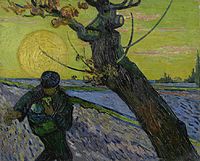
The Sower with Setting Sun, 1888
Van Gogh Museum, Amsterdam

In his commentary on Matthew, he writes of being ‘possessed by possessions’ and our desire to act in the world and serve the poor without losing them.  He speaks of the lure of wealth and cares to the world which ‘darken and choke our imaginations’ which reduces the Gospel to a sentimental ‘formula for “giving our lives meaning” without judgement’.  He also challenges the strategies we adopt as a church to ‘recover lost status and/or membership’ without facing the demands of being a disciple.

Canon Andrew, Neil Vigers and I have been discussing his engagement with Dietrich Bonhoeffer, who challenged the shallowness of what he called ‘cheap grace’. He argued for the increased visibility of the church - a church were the soil is being prepared for deep roots to be established and where we embody the fragrance of the joy and peace proclaimed by Isaiah. 

Hauerwise writes:  ‘What Bonhoeffer gives those in the ministry to do is imagine how the social significance of the everyday ministerial tasks such as preaching, presiding at the Eucharist, and caring for the dying are practices for the formation of a people who are capable of being a political alternative to the world.’

To speak of being an alternative is about cultivating an imaginative, social and ethical common life - which is a sign of God’s Kingdom. Our body language is shaped by practices which speak both of the truth of our human condition in all its frailty; and of the truth of God’s love which binds up the broken. In a complex world, we are to name signs of God’s Kingdom in mutual care and ecological concern and to challenge the toxicity of selfish desires to possess and consume.

Last week, we heard Paul grappling with these recognisable existential realities of tension, choice and struggling to do the good that he wills - for the soil of his life to be fruitful. Today, we hear him express the ultimate reality of his hope in Christ: there is no condemnation. Through his death and resurrection, sin and death are defeated;  the power and richness of resurrection life breaks in. Despite human weakness and distress, grace, joy, blessing bubbles us within us. The Spirit brings life and peace to our mortal bodies.

We share with Paul, Bonhoeffer and Hauerwas  practices which call for humility and repentance, joy and self-giving.  In word, sacrament and care we do taste, touch, see, hear and even ‘smell’ the rain of God’s Kingdom. Our practices embody and express with an intimacy and patience the blessing of God - enabling us to be a blessing to the world, that the world might clap and sing in praise. 

These practices they are rooted in the love of God which is spoken in the word of creation and the Word made flesh dwelling with us; it is a word we still hear in the cries, murmurs and songs of the Holy Spirit. 

In this Eucharist, the sower’s seed becomes bread for the eater; Christ the grain that dies, multiplies and feeds with heavenly food. Here we become alert to the signs of God’s Kingdom in our world - to the smell of the rain as God’s word touches the soil of our lives. We also need to cultivate the soil of our hearts; in prayer, God’s refreshing word rains down on us.

Whether we take a psalm, a favourite hymn, the Lord’s Prayer, or a line from Scripture; whether we use an app to pray the daily office or re-appropriate the monastic hours in our daily life, or pause as the kettle boils, as we walk from the station or sit beside another in compassionate, companionable silence. 


The rhythm of life is made holy; the soil is prepared; the seed is sown.
We smell the rain; it is rich with life.
May our lives carry the fragrance of life-giving, self-giving love.


© Julie Gittoes 2017


Sunday, 25 June 2017

Prayer and Rage?

Recently it seems as if the lectionary is bowling me some challenging text: it's just the way the preaching rota falls, of course! Yet, combined with the undercurrents of protest, political uncertainty and powerful acts of compassion within communities, the complexity of Scripture in speaking into that is accurately evident. Today's readings at the Eucharist were: Jeremiah 20:7-13; Romans 6:1-11; Matthew 10:24-39.  As human beings, events provoke strong reactions in us - including anger at injustice and events which are cataclysmic. How do we pay attention to that rage in prayer, action and deeper engagement with our communities and structures. After all, there is no 'us' and 'them' but only us. 

This is a personal grappling - it's not a definitive homiletic answer. As I wrestle with this, I am very grateful to a post by Mike Higton which named the discomfort around prayer versus rage.

One of the things which puzzled me was Jesus talk of proclaiming what we hear whispered and telling things in the light. At the back of my mind as I wrote this sermon as a series of Facebook threads in response to posts by Linda Woodhead about the report 'An Abuses of Faith', produced by the Independent Peter Ball Review. It painfully sets out how far short we have fallen in our institutional faithfulness to the Gospel. When authority colludes with the abuser, we have failed to hear the cries of the most vulnerable. Prayer and rage are responses which become the impetus for change.


On Wednesday, the hottest day of the year, hundreds of protestors marched from west London to Downing Street to protest in support of Grenfell Tower survivors: an event billed as a ‘day of rage’.


On Wednesday, the hottest day of the year, an impromptu prayer meeting was held at Kensington Temple to intercede for a city rocked by terror attacks and fire: an event billed as a ‘day of prayer’.


Both events were motivated by the devastating consequences of a ravaging fire, by anger and compassion.

Both events expressed fierce emotions in cries of lament, cries for justice, for change, and yes, of rage. 

In discussions on social media - and face to face - there was much discussion about the relationship between the two - and the appropriateness of ‘rage’. Some Christians came down on the side of ‘day of prayer’.  Others felt that we should be angry - and that now was time of going beyond heavenward piety towards practicing righteous or prophetic anger 

Is it such a stark dichotomy - directing our emotions to God, perhaps, rather than expressing them in a march along our streets?  Or is it a delicate balancing of both/and - of us learning to lament well, learning to acknowledge, and harness, the depth of anger without tipping into hatred?


Do we channel our emotions into prayer, express them in protest or explore how they go together? 


As Christians we need to pay deep attention to our emotions and reaction, to that which is provoked in us. 


When we face heart-break and grief, we might cry in despair: we express those things before God - but we also seek to console and be consoled.

When we receive wonderful news, something wells up within us; we want to talk about it, celebrate it, relish it; but we also give thanks to God. 

When we are elated, hurting, exhausted, fearful or joyful, we do something with those emotions: we act on them - and as Christians we bring them to God in prayer. 

Our prayer is a response to tragedy, part of our public witness; it also enables us to align our actions with God’s  will and purposes for us and for creation.  

If our faith has everything to do with justice - and the structuring of our society - then there is more for us to do in exploring how prayer relates to anger, prophecy to action.  As a friend of mine put it: ‘it’s complex. Anger is not the opposite of peace or love’. 


Each of us will know that we fight against things which hurt those we love. Today’s readings invite us to grapple with what that might mean.  They are honest and raw; hopeful and inspiring; demanding and reassuring. They are difficult. But they are also about love - in prayer and protest.

The laments of the psalms reveal brutal honesty before God; the passionate voices of the prophets cry name abuse and neglect. Those voices teach us to challenge the ways of the world - and to seek a kingdom of peace and mercy for widow, refugee and orphan. Those voices are full of love, prayer and rage -  they name oppression, self-seeking and the neglect of the commandments.  

When Jeremiah laments, he is angry with God - he’s become a laughing stock; he’s derided and mocked for the cries of his rage against those who exploit the poor and needy. It’s not popular. Even his close friends seem to be waiting for him to stumble.


The Prophet Jeremiah is a painting by Michelangelo

Yet he perseveres knowing that those who are against will not prevail; that the unrighteous will face shame not success. He hands over judgement to God - who knows our hearts and minds. His rage becomes a prayer of praise to the Lord: ‘For he has delivered the life of the needed from the hands of the evildoers.’

In Jesus Christ, God reaches out our broken and fragile world by dwelling with us. What we see in him is a refusal of revenge and the breaking of cycles of violence. And yet, we must be wary of smoothing out the challenge - the one who cast out the money changes and turned over tables - a radical and disruptive act - also breathed on his disciples at his resurrection, saying ‘peace be with you’.

In today’s Gospel, Jesus describes the cost of our witness to the love of God: a love which brings healing, and stands against injustice. It takes us to the heart of prayer and rage. We hear of fractured families, the reality of persecution and the challenge of being ‘like’ Christ Jesus our teacher in hostile conditions. And yet, in the midst of this prophetic lament, Jesus defuses our fear, saying: So have no fear of them; Do not fear; So do not be afraid.

Grappling with the text again this morning during our weekly time of Lectio Divina, drew out the complexity of a text full of challenge and paradox. What is it that we are called to proclaim and make known in the light? What does Jesus mean when he says, ‘I did not come to bring peace by a sword’?

Dietrich Bonhoeffer answers this by saying: ‘The cross is God’s sword on this earth. It creates division… all for the sake of God’s kingdom and its peace - that is the work of Christ on earth!’  Or as our opening hymn puts it:


Let in the light; all sin expose
to Christ, who life no darkness knows.
Before his cross for guidance kneel;
his light will judge and, judging heal.

On the cross, God’s love for people goes to the very depth of weakness, despair, sin and abandonment. Naming division, it destroys it; the challenge of the cross is that such peace demands a bigger vision.  

It is a love that shifts our focus from the priority of biological kinship to a more radical concern for the created order.  The Kingdom that has come near in Christ Jesus is one which challenges violence, abuse and exploitation - within church and society. 


It will cost us to love those who are broken-hearted, dispossessed and vulnerable as we work for a Kingdom where there is equity and dignity.  

It will cost us to love those who are in positions of power as we bring to the light abuses of authority; we proclaim a message of repentance, a radical change of heart and practice. 

It will cost us to articulate a vision for the NHS, taxation, Brexit and social care which protects the weak, fosters interdependence, encourages enterprise and condemns greed.

Prayer and rage can express this love: God’s love for all people is reflected in the cross and resurrection; it summons us to discipleship and life in its fullness - life not as possession, but as gift for our world.

Here in this Eucharist we are invited to name the things which assail us in the present, focusing our prayers and shaping our actions. Here we are drawn back to the memory of God’s faithfulness - recalling that we die and rise with Christ; knowing that we are no longer enslaved to sin - that we are to live in him.

When Paul writes to the Roman Christians in this way, this is both a powerful vision of the world being reconciled to Godself though his Son; it is also a compelling challenge to walk in newness of life.  Here in this Eucharist we glimpse God’s Kingdom and allow our future to be reimagined.

Do we stop praying and raging? No. For God’s love makes possible a confidence that drives out fear: the God who loves the sparrows - counts the hairs of our head. Sometimes confession our faith in Jesus will make us stand out; sometimes responding to the good news will disrupt our life.
The theologian Bill Cavanaugh writes: The church, as the body of Christ, is called to be an alternative to the atomisation of [US] society promoted by individualism, the market, and the state. As an alternative social body, the church realises the eucharistic imperative to be what we receive, to become the body of Christ and allow others to feed on us.’  

We are to be faithful to the task that God has given us - in prayers of raw lament, in acts of compassion, in understanding our rage and, in the power of the Spirit, directing it to build God’s Kingdom.

Awake and rise, like people renewed,
and with the Spirit’s power endued,
the light of life in us will glow,
and fruits of truth and goodness show.


© Julie Gittoes 2017

Sunday, 18 June 2017

Our beautiful world

I was preaching for Evensong at Guildford Cathedral this evening - 18 June. When I read the text last week, I wasn't sure what I could say. Since then, we've been confronted with the catastrophic fire in Kensington - and the desperate human need and the generosity of response. So often we try to be 'superhuman' in ways which are unrealistic - it's not for nothing that my sister has Franzmusik's 'Wonder Woman' as her ring tone for me - reminding us, quite bluntly, that 'your candle burns at both ends / and mostly in the middle... cause even Wonder Woman takes a break... and don't you know that it's OK / to take a rest some days'. The text were Samuel 21-1-15; Luke 11:14-28

I used to want to save the world, this beautiful place, but the closer you get the more you see the great darkness within.  

So says Diana Prince a.k.a Wonder Woman at the opening of one of this summer’s blockbuster superhero movies.


Somewhere - in the recesses of my mind, if not the pages of our family photo album - is a vivid image of me pretending to be Wonder Woman. The lasso was a skipping rope - the famous headband and cuffs a careful cut out of a replica from the back of a Weetabix packet.  Childhood memories led to midlife nostalgia in watching this film.

Diana Prince joins a motley band of flawed characters; she falls in love - perhaps that most bewildering and complex expression of desire, power and sacrifice.  As every comic book and cinematic superhero has done before her, Wonder Woman sheds her 'ordinary' disguise and reveals her identity in a crimson and navy warrior dress. She goes it alone; exhibiting feats of inexplicable strength, resilience and agility.


Restoring the cosy conviviality of village life is not the peaceable ending we think.  A super-heroine vanquishes super-villain - but this fiction is not salvation.  Scripture doesn’t collude with dualisms of goodies and baddies, of superheroes and super-villains. It speaks of beauty, darkness and the triumph of love.

In our first lesson, we are plunged into a drama about two complex characters Saul and David - about two men who ruled over Israel.  When God’s people wanted a king - to be like other nations - Samuel anointed Saul. Not only is he caught up in skirmishes with the Philistines, but he’s also plagued by jealously, paranoia and dramatic mood swings.  

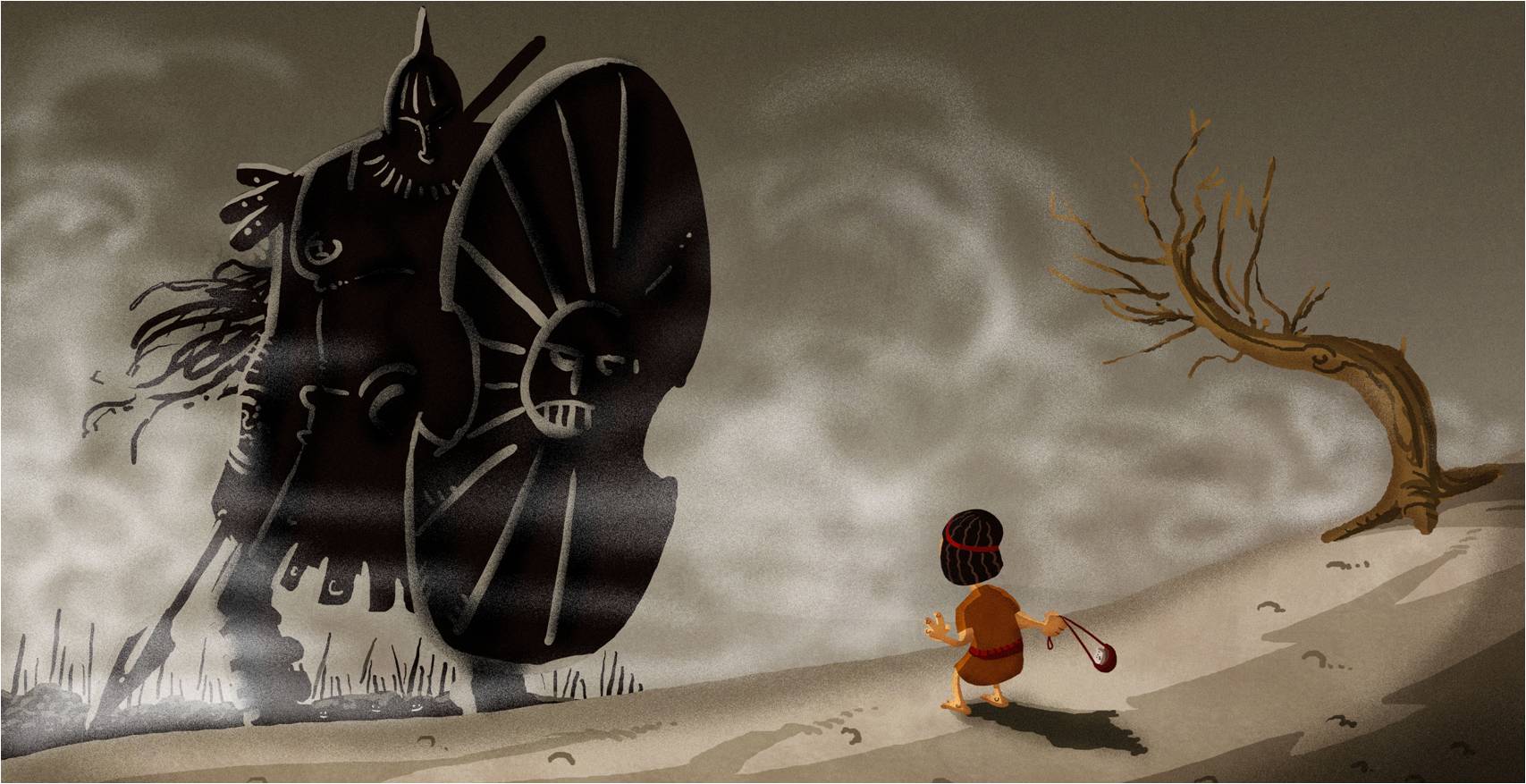
David takes centre stage - the child-hero who slays Goliath with a shepherd’s slingshot; the talented musician who can calm the unpredictable Saul; the poor boy who defies death to claim a royal bride; the likeable youth who is held in deep affection by the Saul’s son and heir Jonathan. Jonathan cannot bring reconciliation between father and friend: David flees from court. 


Reading 1 Samuel charts something of the ‘great darkness’ within our beautiful world:  there is revenge, violence and deception. But it also charts something hopeful within human lives - the capacity to show mercy, encouragement and comfort. Here the fugitive hero receives from a priest protection and help in the guise of food and a means of defence.  Fear drives him to feign madness as a disguise. 

It would be easy to place onto David a form of hero-typology - he’s brave, attractive, successful, loyal, courageous and impulsive - a leader who refuses to return hatred to Saul.  We know too that his faithfulness to God wavers - with dire consequences. 

When he has established his own royal palace and looks to the stability of his own dynasty, he pursues his own desires with aggressive entitlement. He seduces Bathsheba - leading to spiral of adultery, deception, abuse of power and a successful plot to murder her husband. 

This gifted leader sees how far he has fallen and repents: he lives with the tensions of kingdom, throne and family. He’s a flawed hero - whose tears remind us that in the world of suffering and forgiven sin, it is God who remains faithful. God who can save. 

God sent his Son in this beautiful world. In Jesus we see not a superhero but the Word made flesh. He is the light that shines in the darkness - and the darkness has not, cannot, will not overcome it. 

That does not mean that there is no darkness: but it does mean that the darkness is not the ultimate reality.   In our second lesson we heard a text which points us to the depths to which God’s love reaches out to us - but also the nature of the kingdom which we are called to seek, find and participate in. 

Jesus the one who is the Word of God restores speech to one who was mute: such an act arouses not only amazement but opposition. There were those who had their own ideas about what kind of dramatic and heroic deeds constituted a sign from heaven. Jesus won’t play that game.

Instead he names the problem - speaking of the way in which division drives division - jealousy, suspicion, greed and selfishness breaks our bonds of kinship.  We see the great darkness deep within a world rich in beauty and resources.   That is our human propensity to mess things up; but in that place, God meets us in his Son and reveals God’s propensity to love.

Jesus loves in standing with the one who was a stranger, an outcast, who who could not express his identity in eloquent speeches. Jesus went to that place of isolation - to the one who was voiceless - and spoke words of grace, dignity and mercy. 

That is the sign of God’s kingdom: that even in the face of our deepest fears, fragmentations and pain, there is restoration.   

What we see Jesus in this episode expresses love on the margins, challenging power. It foreshadows his being with broken humanity as on the cross we hear his cries of forgiveness from the depths of agony; in the tomb, that love goes to the cold and silent depths of sin death; in resurrection the power of God’s life is uncontainable. 

Jesus presents us with a choice: to be with him, and to gather; or to be against him and to scatter?  Our choice is to fix our eyes on the light - and to participate in the ongoing transformation of the world. Then we bring light - we see the beauty and we push the darkness back.  

We saw that in One Love Manchester: when Justin Bieber, who has more Twitter followers than Justin Welby, said said I’m not letting go of hope, or love, or God.  We saw it when the Bishop of Southwark led a liturgy or re-hallowing or re-claiming the space of Borough Market. 

We see that when Britain remembers Jo Cox in neighbourhood get togethers which reflect that we have more in common than divides us. We see it when we refuse to allow poor public services to become public services for the poor. We will see it when 9 year old Alfie tells Graham,  Bishop of Kensington that he’s saved his pocket money for the people in Grenfell Tower. 


We will participate in it when we persist in responding to tragedy by running towards it rather walking away.  In gathering together, we scatter that darkness. God’s Kingdom is not brought near by superhero intervention; it is brought near my ordinary, courageous, compassionate and costly acts of love.  


It comes near when the voiceless find a voice; when power is dispersed in mutual service; when the vision for our community is bigger than the vision we have for ourselves. May the Holy Spirit stir up in us a passion to be with others as God in Christ Jesus was with us. 


God has saved our beautiful world.
Love dwelt with us, and the darkness did not over come it. 
The closer you get, the more you see light deep within.


© Julie Gittoes 2017