Showing posts with label Jeremiah. Show all posts

Sunday, 3 September 2017

Follow me!

This is the text of a sermon preached at Guildford Cathedral Eucharist - 3rd September. Having confessed to my shame of Tolkein being amongst my  'great unread', I rather enjoyed entering into that world (albeit briefly and hopefully not for the final time) when I was visiting friends last week. I couldn't help by engage with some of the resonances between the themes of the readings  [Jeremiah 15:15-21; Romans 12:9-21; Matthew 16:21-27] and the Middle Earth epic.


In a hole in the ground there lived a hobbit. 

For those familiar with J.R.R. Tolkien’s novel, you’ll recall the description of Bilbo Baggins world: Not a nasty, dirty, wet hole, filled with the ends of worms and an oozy smell, nor yet a dry, bare, sandy hole with nothing in it to sit down on or to eat: it was a hobbit-hole, and that means comfort.

For some reason, for a child who loved books, I wasn’t captivated by this world and the adventures about to unfold. As an adult, I remain embarrassed by this confession of the ‘great unread’; a shame which is intensified as the movie franchise also passed me by. 

Until, that is, last week.


The Battle of the Five Armies is the third and final instalment in Peter Jackson’s three-part film adaption based on J. R. R. Tolkien’s The Hobbit. Replete with dragons, orcs, elves and mystical rings, this version of Middle Earth has been described as a ‘colossal technical achievement’; as well as a ‘magnificent,Wagnerian-style finale, full of sound and fury, and with an unexpected emotional kick’.

The visual extravaganza improvises on Tolkein’s text and draws us into a world closer to our own than we might imagine: warring factions and refugees seeking safety; courageous leaders and sacrificial love. 

In Thorin, the leader of the Dwarves, we see someone who is paralysed by despair and paranoia;  by anger at broken promises and an obsession with false idols. Shut away in Lonely Mountain, he places his trust in riches of ‘dragons gold’. 

And yet, as crisis looms he addresses his company saying: I have no right to ask this of any of you… but will you follow me … one last time?

Thorin faces past mistakes and steps up to lead his people, galvanising them in service of their kingdom. We see glimpses of tenacity, humility, loyalty, determination, trust and hope; none of those come without cost.

Follow me!

Today, the Scriptures, which shaped Tolkein too, invite us to face the demands of walking in God’s ways. We hear in Jeremiah something of Thorin’s despair; we hear on the lips of Peter misunderstanding; Jesus’ rebuke re-focuses our life; in Paul’s we confront the practical implications of genuine love. 

Jeremiah is facing disappointment and disaster. He had received God’s word with delight. He hadn’t needed to seek out human merrymaking because he rejoiced in the one who called him by name. Now he faces rejection and persecution; he's wounded and feels deceived by God. He shuns his ‘first love’.


Jeremiah Lamenting: Rembrant 

At this low point of introspection and bitterness, God draws near to him. There he is recalled. 

My word is precious, declare it! I am with you, they people will turn to you! Follow me!

The demands of this calling lie at the heart of the Gospel.

Last week, we were left with a cliff hanger: Peter declared that Jesus is the Messiah and the disciples were instructed not to tell anyone. And now we see why.

Jesus wanted to teach them what being Messiah meant: he wasn’t, as many expected, a triumphant figure, claiming his Kingdom with power and might. Instead glory and victory followed suffering.  In him, God’s love reached out to the depths of agony and isolation, suffering and even death; the victory of that  love would be revealed in resurrection. 

This isn’t the ending Peter expected. He rebukes the one who had rebuked the waves and calmed the storm. Jesus own words of rebuke are harsh; but perhaps that’s the point. He’s jolting Peter - and us - out of our collusion with a human perspective. 

Peter’s vision is shaped by the world’s understanding of power. Jesus is revealing the nature of God’s love, made perfect in the form of a servant. He is also giving a pattern for us to follow.  God’s love can be seen in our humanity; in our weakness not strength; in the face of threats not just opportunities. 
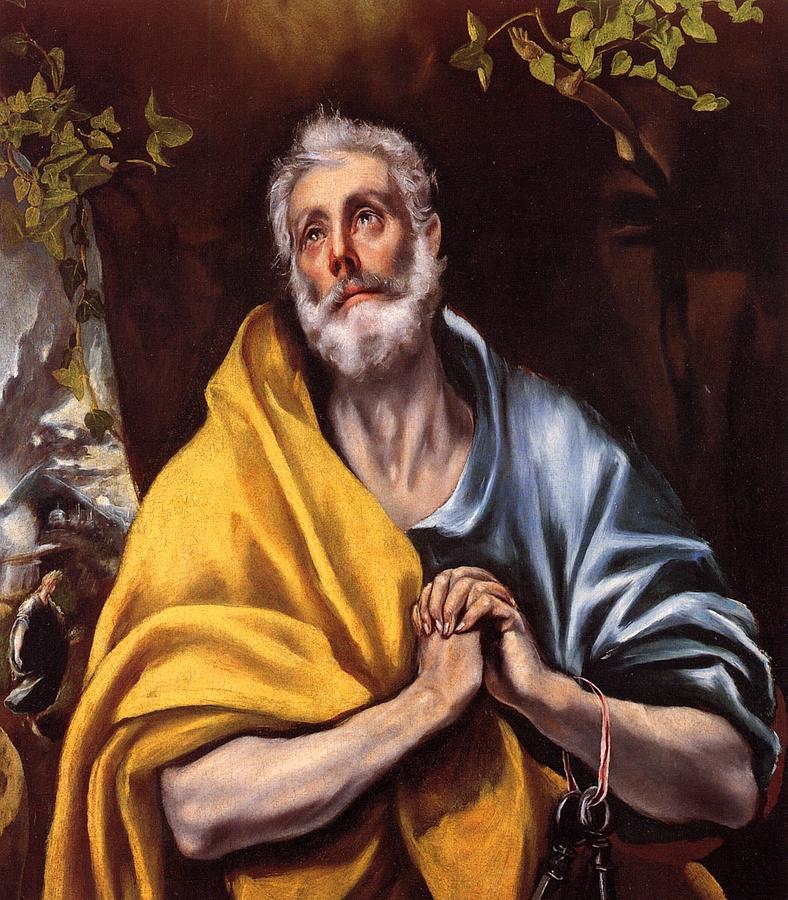

Follow me: obedience to that call involves taking up the cross. It means laying aside all that the world counts as ‘successful’; no longer striving to possess, consume, control or judge.

Our attempts to ‘save our life’ amount to being selfish: preserving our interests and indulgences; placing ourselves at the centre of the world. We could so easily rattle off a list of the petty, seemingly insignificant, moments when we know we’ve nudged what we want to the centre. The fruit of our selfishness might be impatience, greed, jealousy anger, quarrels or indifference.

Instead, losing our lives for the sake of Jesus begins by placing him at the heart of everything - of our lives, our work, our ministry, our friendships, of this cathedral. His love becomes our centre of gravity, pulling us closer. 

In a broken and complex world, loving faithfully, deeply and patiently is very hard indeed. But if we are precious in God’s sight, so is our neighbour - the one we find difficult, who isn’t like us, who is hostile to us. 

At the heart of the Battle of the Five Armies, we grapple with loving our enemy. When the Elf Thranduil turns away from the Dwarves, Tauriel rebukes him saying:  You think your life is worth more than theirs, when there is no love in it? There is no  love in you! At that moment, she takes her personal love of Kili and translates it to love for a people. 

Love that is selflessness makes us more human; and in that fullness we see the love of God with us.  To learn this love we have to follow Jesus; and in following we find life. And in following, God’s kingdom is glimpsed here.

Like Peter and Jeremiah before him, we find ourselves to be transformed. Paul explores what that looks like.  Having described the way in which we are united in Christ, and co-dependent on one another, he says ‘let love be genuine’.  

That is the acid test of our life and ministry in this cathedral - is love being made real amongst us?

Holding fast to the goodness of God’s love s an expression of corporate love which overflows in sincere hospitality to the stranger mutual affection. 
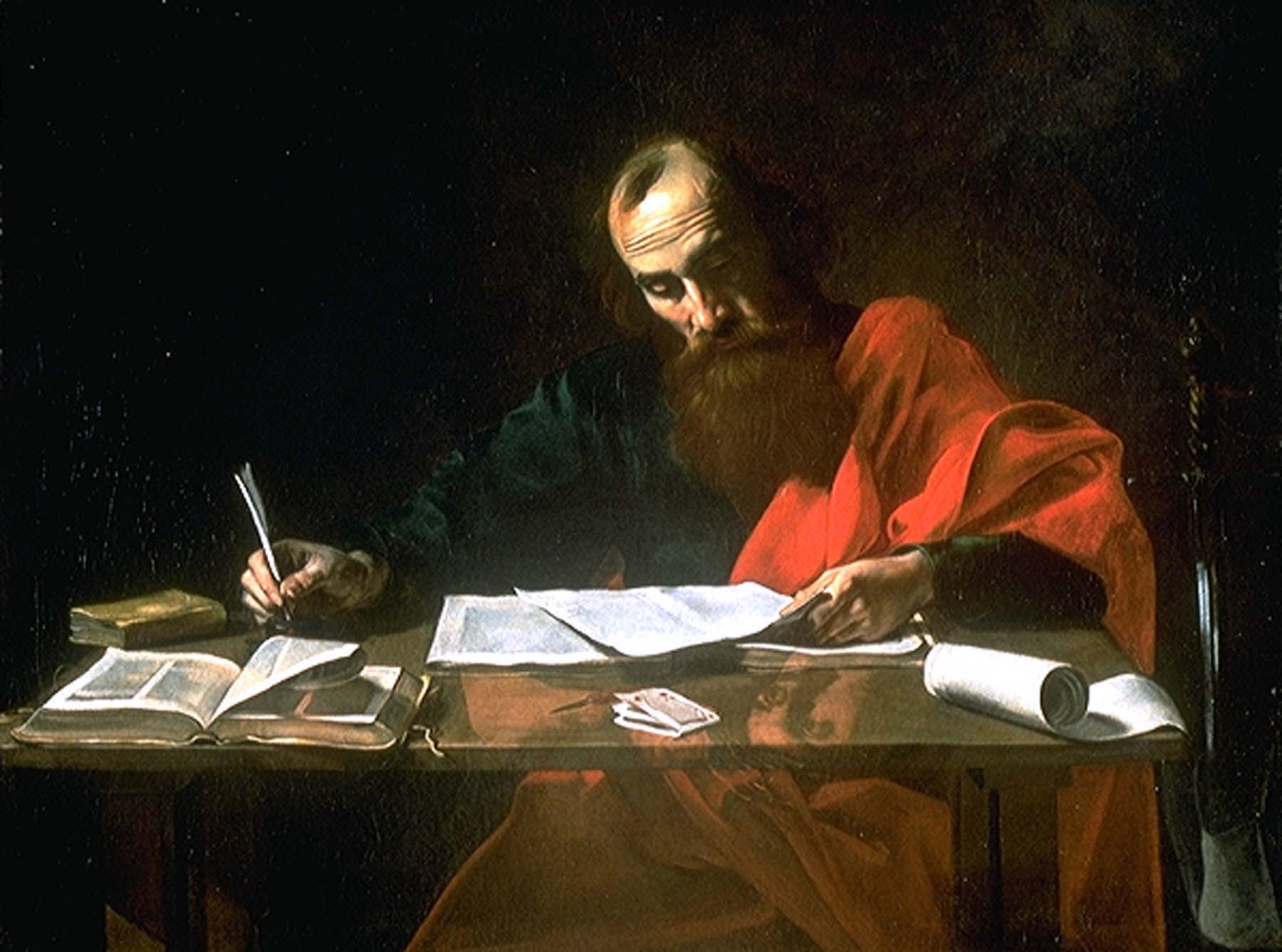


St Paul Writing his Epistles: Valentin de Boulogne 

This love is generous and good; leading to flourishing of the other; this love does not collude with abuse or hurt. Paul recognised the evangelistic impact of our character - of goodness, patience, kindness, self-control and joy.

The language that Paul uses is powerful and dynamic: be eager, earnest, diligent and zealous. There is no drudgery in this vision of life together - rather it is vibrant and animated by the Spirit. Paul’s language also calls us to perseverance - being aware of Christ moment by moment.

In this Eucharist, we like Jeremiah taste the sweetness of God’s word; like Peter we find challenge and forgiveness as we follow Christ; and in the power of the Spirit, the fire of God’s love is re-kindled in us. 

Like Bilbo Baggins, we’re called out of the comfort of our home. In fondness, Gandalf says he’s quite a little fellow in a wide world after all!  Sometimes we too might feel quite little; yet we like Bilbo have potential of learn, love and grow; let’s not underestimate the impact as we are sent as as the body of Christ; walking as a movement of love in the wide world.  

© Julie Gittoes 2017

Sunday, 25 June 2017

Prayer and Rage?

Recently it seems as if the lectionary is bowling me some challenging text: it's just the way the preaching rota falls, of course! Yet, combined with the undercurrents of protest, political uncertainty and powerful acts of compassion within communities, the complexity of Scripture in speaking into that is accurately evident. Today's readings at the Eucharist were: Jeremiah 20:7-13; Romans 6:1-11; Matthew 10:24-39.  As human beings, events provoke strong reactions in us - including anger at injustice and events which are cataclysmic. How do we pay attention to that rage in prayer, action and deeper engagement with our communities and structures. After all, there is no 'us' and 'them' but only us. 

This is a personal grappling - it's not a definitive homiletic answer. As I wrestle with this, I am very grateful to a post by Mike Higton which named the discomfort around prayer versus rage.

One of the things which puzzled me was Jesus talk of proclaiming what we hear whispered and telling things in the light. At the back of my mind as I wrote this sermon as a series of Facebook threads in response to posts by Linda Woodhead about the report 'An Abuses of Faith', produced by the Independent Peter Ball Review. It painfully sets out how far short we have fallen in our institutional faithfulness to the Gospel. When authority colludes with the abuser, we have failed to hear the cries of the most vulnerable. Prayer and rage are responses which become the impetus for change.


On Wednesday, the hottest day of the year, hundreds of protestors marched from west London to Downing Street to protest in support of Grenfell Tower survivors: an event billed as a ‘day of rage’.


On Wednesday, the hottest day of the year, an impromptu prayer meeting was held at Kensington Temple to intercede for a city rocked by terror attacks and fire: an event billed as a ‘day of prayer’.


Both events were motivated by the devastating consequences of a ravaging fire, by anger and compassion.

Both events expressed fierce emotions in cries of lament, cries for justice, for change, and yes, of rage. 

In discussions on social media - and face to face - there was much discussion about the relationship between the two - and the appropriateness of ‘rage’. Some Christians came down on the side of ‘day of prayer’.  Others felt that we should be angry - and that now was time of going beyond heavenward piety towards practicing righteous or prophetic anger 

Is it such a stark dichotomy - directing our emotions to God, perhaps, rather than expressing them in a march along our streets?  Or is it a delicate balancing of both/and - of us learning to lament well, learning to acknowledge, and harness, the depth of anger without tipping into hatred?


Do we channel our emotions into prayer, express them in protest or explore how they go together? 


As Christians we need to pay deep attention to our emotions and reaction, to that which is provoked in us. 


When we face heart-break and grief, we might cry in despair: we express those things before God - but we also seek to console and be consoled.

When we receive wonderful news, something wells up within us; we want to talk about it, celebrate it, relish it; but we also give thanks to God. 

When we are elated, hurting, exhausted, fearful or joyful, we do something with those emotions: we act on them - and as Christians we bring them to God in prayer. 

Our prayer is a response to tragedy, part of our public witness; it also enables us to align our actions with God’s  will and purposes for us and for creation.  

If our faith has everything to do with justice - and the structuring of our society - then there is more for us to do in exploring how prayer relates to anger, prophecy to action.  As a friend of mine put it: ‘it’s complex. Anger is not the opposite of peace or love’. 


Each of us will know that we fight against things which hurt those we love. Today’s readings invite us to grapple with what that might mean.  They are honest and raw; hopeful and inspiring; demanding and reassuring. They are difficult. But they are also about love - in prayer and protest.

The laments of the psalms reveal brutal honesty before God; the passionate voices of the prophets cry name abuse and neglect. Those voices teach us to challenge the ways of the world - and to seek a kingdom of peace and mercy for widow, refugee and orphan. Those voices are full of love, prayer and rage -  they name oppression, self-seeking and the neglect of the commandments.  

When Jeremiah laments, he is angry with God - he’s become a laughing stock; he’s derided and mocked for the cries of his rage against those who exploit the poor and needy. It’s not popular. Even his close friends seem to be waiting for him to stumble.


The Prophet Jeremiah is a painting by Michelangelo

Yet he perseveres knowing that those who are against will not prevail; that the unrighteous will face shame not success. He hands over judgement to God - who knows our hearts and minds. His rage becomes a prayer of praise to the Lord: ‘For he has delivered the life of the needed from the hands of the evildoers.’

In Jesus Christ, God reaches out our broken and fragile world by dwelling with us. What we see in him is a refusal of revenge and the breaking of cycles of violence. And yet, we must be wary of smoothing out the challenge - the one who cast out the money changes and turned over tables - a radical and disruptive act - also breathed on his disciples at his resurrection, saying ‘peace be with you’.

In today’s Gospel, Jesus describes the cost of our witness to the love of God: a love which brings healing, and stands against injustice. It takes us to the heart of prayer and rage. We hear of fractured families, the reality of persecution and the challenge of being ‘like’ Christ Jesus our teacher in hostile conditions. And yet, in the midst of this prophetic lament, Jesus defuses our fear, saying: So have no fear of them; Do not fear; So do not be afraid.

Grappling with the text again this morning during our weekly time of Lectio Divina, drew out the complexity of a text full of challenge and paradox. What is it that we are called to proclaim and make known in the light? What does Jesus mean when he says, ‘I did not come to bring peace by a sword’?

Dietrich Bonhoeffer answers this by saying: ‘The cross is God’s sword on this earth. It creates division… all for the sake of God’s kingdom and its peace - that is the work of Christ on earth!’  Or as our opening hymn puts it:


Let in the light; all sin expose
to Christ, who life no darkness knows.
Before his cross for guidance kneel;
his light will judge and, judging heal.

On the cross, God’s love for people goes to the very depth of weakness, despair, sin and abandonment. Naming division, it destroys it; the challenge of the cross is that such peace demands a bigger vision.  

It is a love that shifts our focus from the priority of biological kinship to a more radical concern for the created order.  The Kingdom that has come near in Christ Jesus is one which challenges violence, abuse and exploitation - within church and society. 


It will cost us to love those who are broken-hearted, dispossessed and vulnerable as we work for a Kingdom where there is equity and dignity.  

It will cost us to love those who are in positions of power as we bring to the light abuses of authority; we proclaim a message of repentance, a radical change of heart and practice. 

It will cost us to articulate a vision for the NHS, taxation, Brexit and social care which protects the weak, fosters interdependence, encourages enterprise and condemns greed.

Prayer and rage can express this love: God’s love for all people is reflected in the cross and resurrection; it summons us to discipleship and life in its fullness - life not as possession, but as gift for our world.

Here in this Eucharist we are invited to name the things which assail us in the present, focusing our prayers and shaping our actions. Here we are drawn back to the memory of God’s faithfulness - recalling that we die and rise with Christ; knowing that we are no longer enslaved to sin - that we are to live in him.

When Paul writes to the Roman Christians in this way, this is both a powerful vision of the world being reconciled to Godself though his Son; it is also a compelling challenge to walk in newness of life.  Here in this Eucharist we glimpse God’s Kingdom and allow our future to be reimagined.

Do we stop praying and raging? No. For God’s love makes possible a confidence that drives out fear: the God who loves the sparrows - counts the hairs of our head. Sometimes confession our faith in Jesus will make us stand out; sometimes responding to the good news will disrupt our life.
The theologian Bill Cavanaugh writes: The church, as the body of Christ, is called to be an alternative to the atomisation of [US] society promoted by individualism, the market, and the state. As an alternative social body, the church realises the eucharistic imperative to be what we receive, to become the body of Christ and allow others to feed on us.’  

We are to be faithful to the task that God has given us - in prayers of raw lament, in acts of compassion, in understanding our rage and, in the power of the Spirit, directing it to build God’s Kingdom.

Awake and rise, like people renewed,
and with the Spirit’s power endued,
the light of life in us will glow,
and fruits of truth and goodness show.


© Julie Gittoes 2017

Thursday, 19 March 2015

Desire and love that reaches out to us when we fall

Laura?
Yes, dear.
Whatever your dream was, it wasn't a very happy one, was it?
No.

So begin the closing moments of Brief Encounter. It evokes an era which feels remote to us now. The defined gender roles, social conventions, style of dress and clipped RP accents become the stuff of parody. Yet it's a film which evokes the intensity of human feeling: the longing of Laura and Alec, from their serendipitous meeting until their disrupted parting moment, is captivating.  The Rachmaninov stirs us as we are swept up in their smouldering passion; the romance of steam trains and the desolation of lashing rain; the ordinariness of routine and the ease with with which we do the very thing that we hate and regret.


I ran until I couldn't run any longer. I leaned against a lamp post to try to get my breath... I know it was stupid to run but I couldn't help myself. I felt so utterly humiliated and defeated and so dreadfully dreadfully ashamed.

Having fled the apartment, Laura's voiceover reflects on her response to the interrupted rendezvous with Alec. She rings her husband, compounding her guilt and shame, saying: it's awfully easy to lie when you know you're trusted implicitly. She finds herself at the foot of the War Memorial and sits down.  The disruption of her personal and family life and her inner turmoil are evident.  A policeman approaches - her guilt is magnified as he eyes her suspiciously. Confronted by this tangible representation of law enforcement, she feels like a criminal. She is no longer law-abiding.

The dramatic narrative of Brief Encounter draws us into exactly the dilemma that Paul finds himself wrestling with in Romans.  A few verses earlier he acknowledges that the commandments are good and holy; the law itself is of spiritual value. Yet, like the archetypal bobbie, who asks Laura if she's feeling alright, the law reveals our human frailty. It reveals our propensity to make a mess of things. We know what is right - and we long to do it. Yet we don't do it.  Our own actions are a mystery to us.

Laura reflects on her relationship with Alec, describing what they have done as being cheap and low. Alec himself says: the feeling of guilt is and doing wrong is too strong isn't it. The prospect of separation also brings a violent wretchedness, even to the point of Laura wanting to die. Trembling on the platform edge, she faces the overwhelming desire not to feel anything ever again.

The noise of the train roaring and screeching through the station; the flickering lights in the carriages; the clattering wheels: there is no other sound track to this moment of despair.  I am of the flesh sold into slavery under sin. I do not understand my own actions. I do the very thing that I hate... I do not do the good I want.

Such moments of crisis are not unknown to us - personally, pastorally, collectively.  Perhaps they are less dramatic: the inability to delight in others, but rather to undermine them; the moments we lose patience with the person who frustrates us; our persistence in pursuing desires which end up possessing us; our institutional anxiety that makes us desperate, undermining our capacity to tell the compelling good news of salvation.

Paradoxically, this expression of our embodiment - our very fleshly nature - is a consequence of the overflow of love and freedom in creation.  Our creatureliness is good; yet we get caught up in 'stuff' that redirects our desires.  The priest and theologian Dan Hardy has a word for this: he calls it extensity. The risk of the gift of creaturely freedom is that as we are sent forth, we are drawn outward; this 'spread-out-ness' means we are in danger of losing the sense of God's presence with us.

We are overwhelmed with choice and our desires are ignited by new and exotic things.  Our increasingly dispersed lives, no longer fully centred on God, leaves us feeling at the mercy of the law of our minds. Lest we think that consumerism, promiscuity, fragmentation and injustice are twenty-first century concerns, we only have to revisit our first lesson.  Jeremiah challenges God's people over their abandonment of God's law, their stubbornness and refusal to listen. Rather than worshipping the Lord their God, they worship other gods, indeed any gods.

The consequences of this 'spread-out-ness' are dire: Jeremiah gives voice to a very physical disruption of life in terms of the loss of land and heritage. This expresses a spiritual dislocation. The people called to be holy and beloved, the people called to bring light to the nation, are cast adrift. How can they retain their identity and purpose apart from the God who is holy?

The response of a faithful God, a God of covenant and promise, is to seek out his people. He will bring them back - like a fisherman or a hunter.  God reaches out to us.  Our iniquities are not concealed, nor can we hid from God's love. Dan Hardy has a word for this too. He calls it intensity.  By that he means God's self-movement of love towards the world - in creation and redemption, in the ongoing perfection of human life in the world.  Such love is attractive and compelling; we are drawn to the light.  We are gradually turned away from self-absorption back towards attentiveness to God, and to right relationship with others.

Jeremiah's exhortation affirms that nature of God offering strength and refuge in the midst of trouble. Alongside the hope of restoration of God's people, we glimpse a vision of universal scope:   to  you, O Lord, shall the nations come.  The consequences of sin are corrosive on human hearts and within communities. But this extensity is met by intensity.  Wretched man, writes Paul, who will rescue me from this body of death?   Then wretchedness turns to praise: thanks be to God, through Jesus Chr ist our Lord.  In him there is no more condemnation.

In Christ, God dwells with us.  In his life, death and resurrection, the power of God breaks in.  In face to face encounters men and women find healing, purpose and dignity.  In teaching and proclamation, in acts of justice, compassion and reconciliation,  the proximity of God's Kingdom is made known. Our human brokenness is named; our failure to fulfil the demands of the law is evident.  Yet, that failure is not the final word.

Rather in the midst of the complexity of our lives - our loves, joys, sorrows and burdens - we are assured of forgiveness. We are called to respond to this in a spirit of repentance: returning and resting in God's love. On the cross God's Son defeats the power of sin and death; in the resurrection the promise of new life and abundant life is revealed.

As T. S. Eliot expresses it:  we become renewed, transfigured, in another pattern./Sin is Behovely, but/ All shall be well, and / all manner of thing shall be well... All manner of thing shall be well / By the purification of the motive / In the ground of our beseeching.

As God's people that hope of being redeemed from fire by fire is expressed in our worship: as we share in praise and prayer, bread and wine our humanity is transformed because we are confronted with the holiness of God - in power, might, strength and love. Our appetites and longings become desire for God and for the well being of the other. We are caught up in God's involvement in the world - not in our own strength, but in the power of the Spirit. Paul goes on to dwell on this new life in subsequent chapters - knowing that all creation groans with longing for the fulfilment of this promise; knowing that whatever assails us, nothing can separate us from the love of God in Christ Jesus.

That love is the source of our values - the virtues we learn incrementally.  Sometimes we speak about them in terms of the fruit of the Spirit - love and joy, patience and self-control.  On other occasions we explore the particular charisms of an institution - perhaps a corporate commitment to the formation of a diverse community, which handles disagreement by means of honest, generous and transformative conversation.   Day by day, we are called to pay a deep attention to God in prayer and worship, and we are also called to deep engagement with the world.

Our work, hobbies, relationships and passions will draw us into a range of networks and responsibilities. Wherever we find ourselves, we are to speak and act with integrity and creativity; improvising on the love of God within which we abide.  We are to be a sign of God's love in a world in which disrupted desires are not as romantic as Laura's passion, but the heart break as great.  In the face of human fears we bring the promise of peace.  With joyful hearts proclaim afresh in this generation the good news of salvation.

© 2015 Julie Gittoes