A sermon preached at the Eucharist on the third Sunday before Lent thinking about what it is to be salt and light. The readings were: Isaiah 58:1-9a, I Corinthians 2:1-12 and Matthew 5:13-20

The format has been described as MasterChef meets Bake Off; with some critics panning it as overdone, derivative and a cooking contest too far.
Nevertheless, each week, I’ve caught up with the contestants on Best Home Cook as they’re put through their paces by Mary Berry, Angela Hartnett and Chris Bavin.
They’re challenged to make the Ultimate meringue, curry of pie before having to Rustle Up a dish from scratch, with a single humble ingredient as the start of the show.
Someone will be sent home after an Eliminator: a fast paced test of technical skill, precision timing and perfect seasoning.

Inevitability one of the judges will pull a face and dismiss a dish as needing a little more salt; and contests crumble before the culinary heroes; confronted with a hug from Claudia Winkleman.
A pinch of salt makes the food we taste become more fully what it is meant to be: from risotto to soup.
Salt doesn’t exist for its own sake; nor does light. Flavour and illumination are metaphors that suggest we have purpose in turning towards the world.
We aren’t to be hidden away or called to be less than ourselves: rather Jesus seems to be telling his followers, our calling is to be a blessing.
Somehow, when we are fully ourselves, we participate in God’s ways with the world, allowing it to become what it’s called to be too.
Creation is called into being by and for the love of God. The impact of our own lives is not merely self-satisfaction, but to play our part in this fundamentally connected pattern of life. Commitment to this way of living and loving is directed beyond ourselves to the praise and glory of God; the one whose breath gives us life.
These themes of being called, connected and committed were at the heart of a conference for CofE school leaders last week.
We may not all be teachers; but we all have a calling. To inhabit that well - individually and collectively - is an inspiration to others.
Paula Gooder reminded us that first and foremost, God calls you to be you.
In creation, God calls all things into being: giving names, defining purpose and shaping identity.
Within that calling to be you, to be called by name, we discover a call to a longer term role: shaped by our gifts in health care or music, technology or business, as parent or volunteer.
Within the cope of that work, we are entrusted with particular tasks: what is God inviting us, you and me, to do today?
Whatever we do, we are both dependent on others and needed by them.
Each Eucharist, we remember that though we are many, we are one body, because we share in one bread. It was Augustine who coined the phrase, that here we receive what we are and become what we receive: that is the Body of Christ.
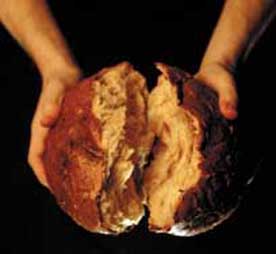
It is through the life and movement of this body that the world sees Christ: through the work of our hands, in the places we walk, in the gestures we make. Our body language says something about the life and love of God - in embrace and protest, hospitality and care, inspiration and joy, kindness and challenge.
What we receive is all we have to offer the world: the life of our Lord Jesus Christ.
In the power of the Spirit, we are to love as God so loved the world.
We are to be salt and light: a living and breathing body, moving in our world.
We are called in a world where all around us there exists a competitive matrix of mis-directed desires: desires to consume and control. The fruit of such desire is greed and oppression, indifference to others for the sake of personal ambition.
Isaiah reminds us that the people of God are susceptible to forgetting their calling and becoming ensnared in these dynamics self-interest and argument and injustice. As a prophet, Isaiah repeatedly calls people back to the things they have forsaken: love of God and love of neighbour.
The promise of universal restoration remains: words of challenge and rebuke invite us back into a life of calling, connection can commitment; back into ways of love which bring stability and life, rebuilding and flourishing.
Isaiah gives practical examples of what this way of life looks like, if we cease from finger wagging or blaming others; if we give up on factious and quarrelsome talk: feed the hungry, welcome the homeless, seek what is just and release people from burdens. We might add to that list: reach out to the lonely, teach the young; stand alongside the migrant, show kindness to the fearful.
This way of light and life must be visible: a lamp on a stand, a city on a hill. A light that is dispersed and moving in the world - carried with us like a torch or beacon or lantern.
Paul describes this calling as one which flows from weakness. It demands of us a vulnerability which doesn’t cling to worldly status or privilege. Paul knew all too well that we will fail and fall short; and in acknowledging that reminds us that God is greater than all our failures.
We are called to be ourselves; to be vulnerable and to bless. There are many things which can obscure our vision or disrupt this way of life - our Archbishop spoke on Thursday about tiredness, bereavement and the pressures of immediate crisis. Then it is our prayer and scriptures which ground us - reminding us that there is strength and grace to be found in God.
The God who dwelt among us, who lived and died for us, also rose again that we might know the power of risen life; that we might know that death does not have the final word.

Jesus teaches about being salt and light in the context of his Sermon on the Mount: a set of teachings which go to the heart of what it means to live our lives with attention fixed on God’s love; and which helps us relate to each other in new ways. It is a teaching which brings hope for humanity and for a better world.
This teaching is about the fulfilling law and prophets: in the way Jesus brings into being what the law and prophets promised, drawing us into a deeper of commands to love which require more than outward observance. Instead, this love calls us to attend to weighty matters.
It is about the risk and challenge of loving without limits; of doing justice; being merciful; of learning to practice forgiveness, to liberate ourselves and others by God’s grace.
It is about whole relationships.
It about being blessed in order to be a blessing. It is about speaking God’s wisdom not with plausible words but with courageous service after the example of Christ; that in the power of the Spirit we might bring hope to our world. In the words of a colleague from the URC, Richard Becher :
You have all been invited at this time to this place
We don’t just want an invitation: We want to be welcomed.
You are all offered a warm welcome to this place
We don’t just want a welcome: We want to have a voice.
You are all welcome and this is a place for listening
We don’t just want a voice: We want it to be heard.
You are all welcome here, and your story will be heard
We don’t only want to be heard: We want to be believed.
You are welcome to this place where no truth is denied
We don’t only want to be believed: We want to be trusted.
You are welcome to this place where your words are accepted
We don’t only want to be trusted: We want to be loved.
You are welcome to this place where God’s love embraces all
We don’t only want to be loved: We want to know we belong.
Whoever belongs to God, belongs among us, for we are one in Christ.
© Julie Gittoes 2020




.jpeg/1200px-Transfiguration_by_Feofan_Grek_from_Spaso-Preobrazhensky_Cathedral_in_Pereslavl-Zalessky_(15th_c%2C_Tretyakov_gallery).jpeg)