Showing posts with label salt. Show all posts

Saturday, 11 February 2023

Being salt and the shaker

 Third before Lent: Isaiah 58:1-12, 1 Corinthians 2:1-12 and Mathew 5:13-20
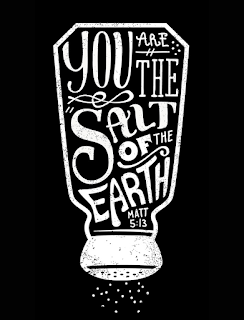


The poet and author   Anthony Liccione wrote: ​​To be the salt, you also need to be the shaker. To shake the world. Shake the truth. Shake the people. Shake the word. Have it sprinkle, melt and preserve humanity.


The slang to ‘be salty’ in modern slang is to be angry or upset by something; perhaps shaking the truth of injustice or the unkindness of people. As saltiness sprinkles, perhaps it melts hearts and preserves humanity. 


Today we hear the phrase ‘salt of the earth’ fall from Jesus’ lips. It’s a strong statement - not might be, could be or will be, but you are. It’s a marker of our identity. 


If salt also requires a shaker, then this is no patronising or condescending marker. An expectation of honesty and reasonableness might be part of it; but the goodness of dignity flows from the one in whom we live and move and have our being. That is the light and love of God.


Before he makes this statement, Jesus has been addressing the crowds on the mountain top. He teaches them about the way in which God’s grace and our obedience are woven together - plotting out the ways in which the pattern of our lives echo God’s love. 


Jesus names both the blessing and risk of this commitment: he speaks of what sustains us in grief and persecution, of God’s defence of the vulnerable; he speaks of the service we are called to give - seeking peace and seeking justice and righteousness with the fierce instinctiveness of thirst or hunger. 


As he names these ‘beatitudes’ or blessings, we might think of our attitudes: within a community of love - the body of Christ, the church - we are invited to cross over into this radical commitment, to the alternative reality of God’s ways with the world. Saltiness entails a response - it is useless without ‘taste’.


To be salt is to shake the world, the truth, the people, the word: sprinkling, melting, preserving. What words and actions, what stories and commitments, what risks and dreams might this entrail?  For it is because we love the world that we not only pray for it, but quarrel with it when there’s injustice and sooth it where there is pain, enhance it where there is joy and preserve it where there is goodness.


We take salt for granted - or regard it as a health concern - and yet for millennia it has been a sought after commodity with medical as well as culinary uses. Jesus is applying this to us - identifying us with  a substance which seasons, melts, soothes and cleanses; or which irritates or ruins; a substance with an edge?


We are salt: what sort of identity statement is that? We make a difference - goodness, anger, preserving or melting, healing or irritating, enlivening - and knowing when too much might spoil or embitter. 


Salt is precious: Jesus is confirming dignity and value to those who are poor, grieving, persecuted, humble; the frightened, the misfit, the hungry, the peacemaker; the advocate and mediator, the counsellor and healer; those who’d been wounded or who were forgotten; those who were rejected or felt unloved. 


Salt needs to be sprinkled, ground up or poured out - it needs a shaker - it dissolves, its flavour enhancing its surroundings. If it is bringing out the best - we have to be out in the world too; preserving, restoring, healing, soothing, cleansing; sometimes being the ‘edge’ that reflects strong response for change. 


Jesus talks about dying in order to live; salt too does not exist to preserve itself, but to enliven what is around it. It enhances, rather than overpowers; it heals, sometimes with a sting, rather than wounds; it melts away and purifies, rather than destroying or ruining. Even when it has an edge, it's a saltiness that makes us thirst for the true water of life.


It is this mystery which Paul proclaims: rather than put his own lofty words as the main thing, he points to Jesus Christ crucified; the one who came in weakness, fear and trembling; not plausible words of wisdom but the demonstration of the Spirit. All we have rests on the power of God. Beyond what the human heart conceived has been prepared for those who love him - revealed through Spirit, Spirit who searches everything, even the depths of God and gifts bestowed on us. 


What we do with salt matters - it is precious and is also poured out. It is meant to enhance not overwhelm. It's meant to heal and bless, not ruin. To be salty isn’t to leave bitterness and irritation in its wake; to be humble rather than proud. 


Sometimes it would feel easier to retreat - to be bland rather than bursting with boldness. That’s not what it is to be salty; sustaining, enriching, soothing, healing; where necessary challenging with a definite anger. 


Salt - and light. What this fulfils rather than abolishes. Not to break commandments but teaching them - love God, love neighbour as self. Jesus takes us deeper into what the law demands of us - in the conduct of our lives, in the subordination of all that we do to love: of acts of service, our financial stewardship, our acts of worship, our reading of scripture. All those things are to heighten our commitment to justice, mercy and faith. 


This is the opposite of self-interest, quarrelling and oppression - as Isaiah puts it it is about breaking bonds of injustice, breaking yokes of burden, sharing bread with the hungry, providing shelter for the homeless and comfort for the afflicted; this is the light of saltiness - the healing that springs up quickly. 


That's the kind of saltiness in our prayer: healing, loving and transforming. We are to be bold not bland, to be something enriching both when we gather together but also when we are poured out or dispersed in the world.  We are to seek and be part of a kingdom with a rich depths of flavour - rooted in the works of mercy and compassion, healing and justice. In the power of the Spirit, we are to be in the world to bless not ruin, for the life of the world.


We are to be rebuilders, repairers and restorers. This is also the universal scope of God’s blessing. Returning to Anthony Liccione: ​​“To be the salt, you also need to be the shaker. To shake the world. Shake the truth. Shake the people. Shake the word. Have it sprinkle, melt and preserve humanity.” 


(C) Julie Gittoes 2023


Tuesday, 18 February 2020

A pinch of salt

A sermon preached at the Eucharist on the third Sunday before Lent thinking about what it is to be salt and light. The readings were: Isaiah 58:1-9a, I Corinthians 2:1-12 and Matthew 5:13-20


The format has been described as MasterChef meets Bake Off; with some critics panning it as overdone, derivative and a cooking contest too far.

Nevertheless, each week, I’ve caught up with the contestants on Best Home Cook as they’re put through their paces by Mary Berry, Angela Hartnett and Chris Bavin.

They’re challenged to make the Ultimate meringue, curry of pie before having to Rustle Up a dish from scratch, with a single humble ingredient as the start of the show.

Someone will be sent home after an Eliminator: a fast paced test of technical skill, precision timing and perfect seasoning.


Inevitability one of the judges will pull a face and dismiss a dish as needing a little more salt; and contests crumble before the culinary heroes; confronted with a hug from Claudia Winkleman.

A pinch of salt makes the food we taste become more fully what it is meant to be: from risotto to soup. 

Salt doesn’t exist for its own sake; nor does light. Flavour and illumination are metaphors that suggest we have purpose in turning towards the world. 

We aren’t to be hidden away or called to be less than ourselves: rather Jesus seems to be telling his followers, our calling is to be a blessing. 

Somehow, when we are fully ourselves, we participate in God’s ways with the world, allowing it to become what it’s called to be too. 

Creation is called into being by and for the love of God. The impact of our own lives is not merely self-satisfaction, but to play our part in this fundamentally connected pattern of life. Commitment to this way of living and loving is directed beyond ourselves to the praise and glory of God; the one whose breath gives us life.

These themes of being called, connected and committed were at the heart of a conference for CofE school leaders last week. 

We may not all be teachers; but we all have a calling. To inhabit that well  - individually and collectively - is an inspiration to others.

Paula Gooder reminded us that first and foremost, God calls you to be you. 

In creation, God calls all things into being: giving names, defining purpose and shaping identity. 

Within that calling to be you, to be called by name, we  discover a call to a longer term role: shaped by our gifts in health care or music, technology or business, as parent or volunteer. 

Within the cope of that work, we are entrusted with particular tasks: what is God inviting us, you and me, to do today?

Whatever we do, we are both dependent on others and needed by them.  

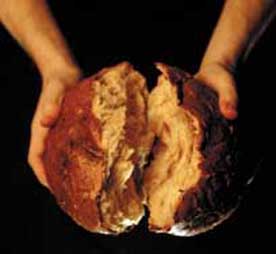
Each Eucharist, we remember that though we are many, we are one body, because we share in one bread.  It was Augustine who coined the phrase, that here we receive what we are and become what we receive: that is the Body of Christ.


It is through the life and movement of this body that the world sees Christ: through the work of our hands, in the places we walk, in the gestures we make.  Our body language says something about the life and love of God - in embrace and protest, hospitality and care, inspiration and joy, kindness and challenge.

What we receive is all we have to offer the world: the life of our Lord Jesus Christ.

In the power of the Spirit, we are to love as God so loved the world.

We are to be salt and light: a living and breathing body, moving in our world.

We are called in a world where all around us there exists a competitive matrix of mis-directed desires: desires to consume and control. The fruit of such desire is greed and oppression, indifference to others for the sake of personal ambition.

Isaiah reminds us that the people of God are susceptible to forgetting their calling and becoming ensnared in these dynamics self-interest and argument and injustice.  As a prophet, Isaiah repeatedly calls people back to the things they have forsaken: love of God and love of neighbour.

The promise of universal restoration remains: words of challenge and rebuke invite us back into a life of calling, connection can commitment; back into ways of love which bring stability and life, rebuilding and flourishing. 

Isaiah gives practical examples of what this way of life looks like, if we cease from finger wagging or blaming others; if we give up on factious and quarrelsome talk: feed the hungry, welcome the homeless, seek what is just and release people from burdens. We might add to that list: reach out to the lonely, teach the young; stand alongside the migrant, show kindness to the fearful.

This way of light and life must be visible: a lamp on a stand, a city on a hill. A light that is dispersed and moving in the world - carried with us like a torch or beacon or lantern. 

Paul describes this calling as one which flows from weakness.  It demands of us a vulnerability which doesn’t cling to worldly status or privilege. Paul knew all too well that we will fail and fall short; and in acknowledging that reminds us that God is greater than all our failures. 

We are called to be ourselves; to be vulnerable and to bless. There are many things which can obscure our vision or disrupt this way of life - our Archbishop spoke on Thursday about tiredness, bereavement and the pressures of immediate crisis.  Then it is our prayer and scriptures which ground us - reminding us that there is strength and grace to be found in God.

The God who dwelt among us, who lived and died for us, also rose again that we might know the power of risen life; that we might know that death does not have the final word.


Jesus teaches about being salt and light in the context of his Sermon on the Mount: a set of teachings which go to the heart of what it means to live our lives with attention fixed on God’s love; and which helps us relate to each other in new ways. It is a teaching which brings hope for humanity and for a better world.

This teaching is about the fulfilling law and prophets: in the way Jesus brings into being what the law and prophets promised, drawing us into a deeper of commands to love which require more than outward observance. Instead, this love calls us to attend to weighty matters.

It is about the risk and challenge of loving without limits; of doing justice; being merciful; of learning to practice forgiveness, to liberate ourselves and others by God’s grace. 

It is about whole relationships.

It about being blessed in order to be a blessing. It is about speaking God’s wisdom not with plausible words but with courageous service after the example of Christ; that in the power of the Spirit we might bring hope to our world. In the words of a colleague from the URC, Richard Becher :


You have all been invited at this time to this place
We don’t just want an invitation: We want to be welcomed.
You are all offered a warm welcome to this place
We don’t just want a welcome: We want to have a voice.
You are all welcome and this is a place for listening
We don’t just want a voice: We want it to be heard.
You are all welcome here, and your story will be heard
We don’t only want to be heard: We want to be believed.
You are welcome to this place where no truth is denied
We don’t only want to be believed: We want to be trusted.
You are welcome to this place where your words are accepted
We don’t only want to be trusted: We want to be loved. 
You are welcome to this place where God’s love embraces all 
We don’t only want to be loved: We want to know we belong.
Whoever belongs to God, belongs among us, for we are one in Christ.


© Julie Gittoes 2020