Showing posts with label Guildford Cathedral. Show all posts

Thursday, 30 March 2017

Speak Lord, your servant is listening!

A text based on the homily given at the Annual Guild of Guides Service last week. It was a reflection on Samuel and Eli - learning to recognise the voice of God calling us.


First of all, on behalf of Chapter this service is an opportunity to say thank you for all that you do as Guides: for many people you are the human face of this amazing sacred place. You welcome, inform, inspire and engage. You greet people in their curiosity, joy and sorrow; the first time visitors familiar faces and, at the moment especially, the builders and tradespeople working here. 

For all of that thank you. Thank you in particular for doing what you do in the midst of a time of transformation, which is disruptive. I hope that amidst the scaffolding and boarded floors, you and others will glimpse something of the transformed vaulting and improved access. 

This annual service often falls during Lent, when we are reminded of our journey of prayer and discipline in preparation for Holy Week and Easter; when we call to mind Jesus’ time in the wilderness captured in our opening hymn (Forty days and forty nights).  That is appropriate for us on a journey of restoration - in terms of the building and our life together. 

However, today’s readings and music capture another theme which is appropriate for us in our ministry here: that of listening to the voice of God.  In Samuel’s story we hear echoes of our own.

Samuel was Hannah’s son: she’d longed for a child and prayed with wordless urgency that she might conceive. When she did give birth she dedicated her child to the Lord. She entrusted hi into he care of Eli, that he might minister to the Lord in the Temple.

Like you, he spent his time in a sacred place: attentive to its rhythm of prayer and worship; attentive to the space itself, its story and the way in which is spoke of God. 

Like you, he was attentive to the people who came and went; attentive to their motivations and needs. To the anxious and those seeking consolation; to the familiar faces and those passing by, perhaps he was also attentive to craftspeople and builders. I like to think so any way!

The temple, like this place was set apart for attention to God. Yet we heart that the word of the Lord was rare; that visions were not widespread. Was it that the Lord no longer spoke? Or was it that in certain circumstances people had stopping listening for it? Perhaps in the midst of disruption we wonder if the word has become rare. Does the pace of transformation make us doubt the vision?

Yet the lamp of God had not yet gone out in the Temple. Nor has the lamp of God gone out for us. This building has been prayed alive. It speaks of the light and glory of God; If we look beyond the scaffolding, we see restoration; if we look beyond the lack of heating, we see a more accessible building. 


The light of God still shines beyond bricks and mortar. This place is dedicated to the glory of God still shines as a beacon on a hill. Whatever the headlines say, we are very much open! Our rhythm of worship breathes life into architecture. In our Lady Chapel a light shines. Over the aumbry it burns. It shines reminding us of the presence of God with us. In bread and wine, the body of Christ is present. And that same light shines in us, as members of his body. 

Although Eli’s eye’s had grown dim, he had not completely lost his sight. Nor had he totally lost is spiritual vision. His sons had gone astray; but here he is able to guide and teach the young Samuel how to listen, to hear, to discern and respond. Despite his short comings he offices advice - he understands who it is that is speaking. Samuel. Samuel. Samuel.


We are still called by name, but sometimes we too need to help each other to hear. God hasn’t stopped speaking - do we like Eli perceive what is going on? Can we recognise, advise, reassure and guide? Through all the challenges and disruptions we face, God continues to address us by name. Through all the new things - leaflets, resources, the interpretation and a transformed building - perhaps others will hear God’s voice afresh too.  And it’s a message which will make our ears tingle! Speak Lord, for your servant is listening.

I want to end with some words written by +George Reindorp in 1963 as he talked about this place as a house of prayer and worship and a centre of learning. He speaks of this cathedral belonging to everyone: ‘more than 2 1/4 million visitors (okay, we don’t quite hit that number!) in a steady stream are welcomed by our magnificent band of Guides and Cathedral Chaplains. The glorious Angel by day and night will beckon many more. The Garths will give them warmth and shelter as soon as they arrive”.


May we take hope and encouragement from this as we seek to invite and welcome.

Speak Lord, for your servant is listening. Speak Lord we are listening. 


© Julie Gittoes 2017

Wednesday, 1 March 2017

Ten or 10,000 reasons

Matt Redman's song 10,000 Reasons occasionally becomes a bit of an ear worm for me: singing out words of blessing in response to God's love and goodness. Even on that day when our strength is failing - still our souls sings out ten thousand reasons to worship God's holy name.


Over recent weeks I've been pondering what makes the place where I worship day by day somewhere that speaks of blessing and song, goodness and love. This blog is 'a view from Stag Hill'; a view from a cathedral which looks out over a town; a cathedral on the level with The Mount; a cathedral looked down upon by the Surrey Hills.


It's a place rooted in the rhythm of daily prayer. The architect Sir Edward Maufe's design means that those prayers offered in a place of light and space, without ornamentation. Breath taking and awe inspiring; still generating a 'wow' factor despite the temporary scaffolding (which is itself a beautiful engineering feat!).  It is more than a light space; it is hub of activity. It's a place of prayer which hosts fosters relationship.

In 1963, the then Bishop of Guildford, George Reindorp, gave thanks that the newly consecrated cathedral had been 'prayed alive'; he gave thanks for the dignity, music and beauty of the worship. He also gave thanks because his hope for a cathedral as a lively centre of learning was being fulfilled. He talked about commuters and lectures, organ recitals and small group discussions.

He expressed a deep longing that the cathedral should belong to young and old, ordinand and bishop. He spoke of a mother church that was 'loving, warm, friendly and welcoming'. In the midst of his hopes fulfilled hopes and answered prayers, he spoke of not only human engagement, but also of being moved or touched by the Holy Spirit.


So, what of my hopes, prayers and aspiration? What are the things about my work here on Stag Hill which give me ten - or 10000 - reasons to praise God? Where are the blessings which reflect something of the love and goodness of God - both when our hearts are full of joy and when our strength is failing?


One: as a parish priest, I was moved by the way in which we gathered at times of celebration, grief and remembrance. My story was woven into the local stories, all held in the story of God's love for the world. At a cathedral, the same is true - albeit on a different scale. The cathedral is a place of commemoration on occasions such as the  WWI Vigil in 2014 as well as place where transition at achievement is rejoiced in - from university graduations to young enterprise awards.

Two: I am privileged to work with a team of exceptional musicians - our organists are amongst the best in the country - who teach and inspire young people. The choir has a repertoire which include the best of the choral tradition - from Bryd and Tallis to Herbert Howells and Tarik O'Regan.

Three: the cathedral stands next to the A3 - which might be a modern pilgrimage route! For some, it is a tourist destination as coaches turn off on route from London to Portsmouth and the Isle of Wight; visitors enjoy tea, cake (a refreshment break!) and explore the building (and building restoration). For others, its a place of particular heritage interest - textiles, local history, archives and oral history.

Four: it is great fun to welcome hundreds of school children over the course of the year. Some will be taking part in season workshops during Advent/Christmas or Lent/Easter - crafts, prayer and story telling. Others come for Sixth Form Question Time - to hear a panel of experts and leaders respond to their questions about ethics, politics and faith, and, in true QT style, to continue the conversation with their own views.

Five: cathedrals are places of solace; places where we can explore our curiosity. Guildford is no different. It's open every day: candles are lit; prayers offered; messages left. Some might want to sit quietly - valuing the serenity and anonymity; others might want to ask questions of the guides or join in the worship.

 
Six: The view from Stag Hill is a wonderful vantage point; the view from the tower (on a clear day) gives us a glimpse of London!  As I drive up the A31, walk up the hill or step off the train, the cathedral - with its golden angel - is also a marker of returning home. Perhaps I'm not alone in that - appreciating a regional 'marker' and a place of 'belonging'.

Seven:  Since arriving five years ago, the cathedral has embraced the arts. It's hosted an amazing range of concerts: from local choral societies to male voice choirs; orchestral work which has raised the roof;  children taking part in Surrey Get Vocal. The bright space and clear sight lines enables the cathedral to be an unique place to exhibit large scale art exhibitions. Chris Gollon told the story of the incarnation and women in the Bible afresh; or the bold canvases of Catherine Clancy took us on an spiritual journey from the dark night to resurrection hope. Local artists exhibiting their work here is a celebration of human creativity.

 
Eight: Cathedrals contribute to the local economy as an employer and by hosting a range of commercial events. That's true in Guildford too - from festivals to open air cinema, conferences and vintage fayres. It offers opportunities for volunteering as a guide or shop assistant for example. However, its contribution to social capital is also extensive - through a range of civic gatherings involving those of all faiths and beliefs.

Nine: Bishop Reindorp's vision of a cathedral as a place of learning is still true. That does include Lent Talks - this year's series is on 'Creation and New Creation' - but it also involves offering space for debate and learning on a range of issues in the public square. Over recent years, I've had the pleasure of hosting lectures on surveillance, human rights and freedom of speech; sustainable development, ethical decision making and care for farmed animals. 

Ten: The events that take place here whether in the Cathedral or in our marquee (aka 'canvas cathedral'), enable us to extend a welcome to all generations. Those in residential and nursing care come to enjoy a rich programme of coffee concerts; listening to jazz, arias, songs from musicals, classical music or rock choirs. Those who care for younger children enjoy family activity days - such as the forthcoming 'Mothering Saturday' event with the opportunity for crafts and creativity, card making and spiritual reflection. 

 
As the Theos Report Spiritual Capital puts it:

The present and future of English cathedrals lies particularly in their ability to enable and sustain a range of connections – between the tourist and the pilgrim; between people and the traditions from which modern life cuts them off; between the diverse organisations and communities that share the same social and physical space and infrastructure yet never meet; and between a people who may be less Christian than their parents but are no less spiritual, and the God who made, sustains, loves and hopes for them to join Him at His table [p. 62]. 

So, that's my 10 (or 10,000) reasons: what are yours?


© Julie Gittoes 2017 

Monday, 25 July 2016

Augmented Reality?


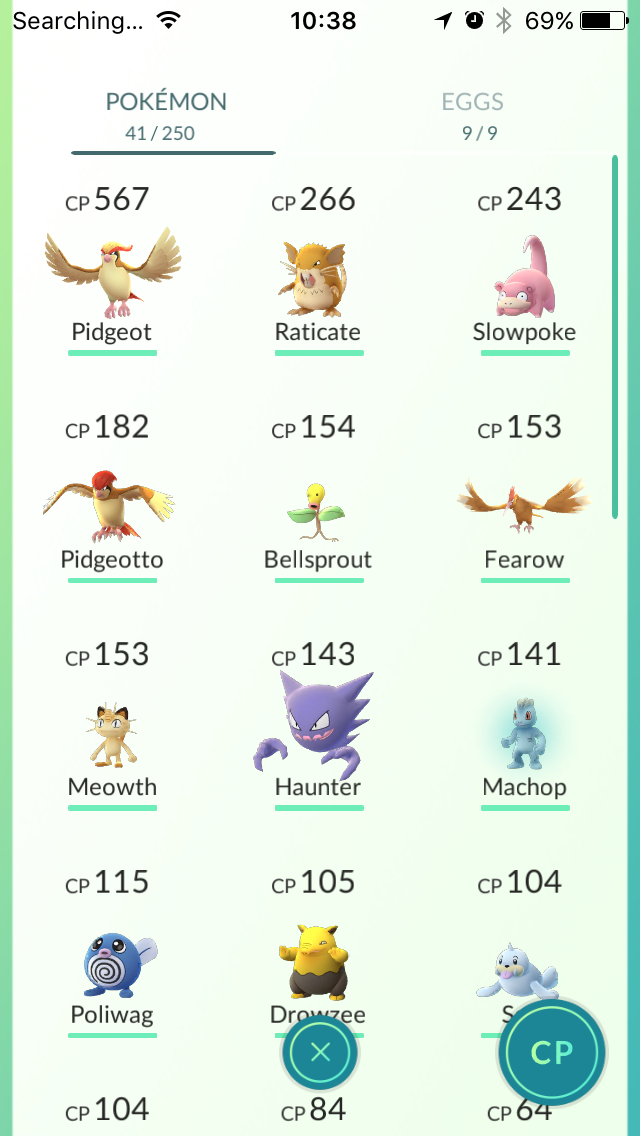
I never thought I'd end up preaching a sermon on Pokémon! However, if part of what we are called to do is describe the things of the world and make connections to with the challenge of the Gospel, then the question of 'augmented reality' merits consideration.  


According to the Surrey Advertiser, Guildford has been invaded: by Pokémon.

Stag Hill is fruitful territory for those collecting Zubats, Drowzees, Raticates, Spearows and even a Meowth.

If this makes no sense, let me take a step back.  Pokémon Go is a mobile app - an updated version of a video game which was popular in the 1990s (which passed me by at at the time). The aim is to seek out, catch and train animated creatures - whose names echo their real world equivalents.

So far, so unremarkable you might think; but as an augmented reality game, Pokémon Go enables players to interact within and between virtual and real worlds.

Dotted across our town are Pokéstops where you can collect items needed to play the game. There are five within the cathedral precincts!  All around us there are virtual fluttering leaves, indicating the proximity of Pokémon.


People of all ages are going on walks; discovering new landmarks; becoming tourists in their own neighbourhoods. If you see groups gathering gazing at their phones, flicking seemingly invisible objects, perhaps you've come across a Pokémon Gym where characters can compete and test their strength.

In the cathedral  office, on the university campus, at the station, in the supermarket car park, along the river, outside the Friary Centre... commuters, teenagers, lay clerks, shoppers and even a Canon can be spotted building their collections.

So, whether you're an active participant or not, we can't help noticing that it is having an impact on our public landscape. It's an individual pursuit; but it generates informal gatherings, People literally congregate - attracted by animation breaking into reality.  

It's no accident that the launch was timed with the end of term. It might seem trivial, but I wonder what else is going on.

Is there a longing for playfulness amidst the bewilderment of political upheaval? There's something nostalgic as well as innovative, a harking back to childhood. Is it good that people of all ages are exploring their local neighbourhoods on foot? Yet it's also disconcerting that this is in done whilst inhabiting a parallel universe, cut off from reality

On Friday evening, there were more people in and around the cathedral seeking out Pokémon than there were watching our glorious peregrine falcons. How do we communicate that this place is more than just a Pokéstop but somewhere of welcome, beauty, inspiration and worship?

Today we recall that, like James the Apostle, we are to witness to the good news of Christ with joy and boldness; we are to draw people to the fire of God's love.  As we come to terms with the allure of augmented reality, we are called to explore a life that is more real. 

Life that is life. Life that is about experiencing every moment, every conversation, every task, every meal more deeply - as opportunities to glimpse something of God's grace, mercy, and love in the ordinary.

In a world of Pokémon, we see that human beings are entranced by something more; yet, we know such games will go out of fashion, leaving a void waiting to be filled with some other fad or activity. Perhaps this game has slowed down the pace of our experiences, encouraging us to wait patiently and pay attention to what's going on around us.

Of course the paradox is that paying attention to the virtual world may mean we miss the real human need or possibility of encounter with God.   How to enable people to walk into, rather than past, the children's garden - to take time to pause, reflect, rest and pray? Perhaps we hope that being there will arouse curiosity that it's a place which is more than just a Pokéstop.

This is where the challenge of our texts cuts across the Pokémon phenomenon. Ultimately, it isn't life giving. However much fun it is, it's short-lived. It doesn't satisfy or transform; it's playful without generating kinship. It is a worldly false attraction, or in the words of our collect a 'worldly and carnal affection'.

James' life, work and context  was by no means devoid of such claims on our attention either. He demonstrated a radical and single-minded devotion to walking with Jesus. He left his father, livelihood, friends, all that he had and all that was familiar. He walked the land with Jesus; he visited sacred sites. This was not augmented reality in the way that Pokémon is. It was augmented in the experience of the nearness of God's Kingdom in ordinary, full of love, life and hope.

James followed Jesus in some of the most intimate moments of his ministry - glimpsing glory, restored hope and renewed life. He was there when the crowd wanted to hear more and see more; when they sang hosanna and when they cried crucify. Called by name, he saw his Lord betrayed by a kiss; re-called by the power of the Spirit, he gave his life witnessing to Jesus' resurrection.

Perhaps James continued to reflect on the episode we heard tonight. Perhaps like him, we sense the desperate need and extraordinary hope of Jairus and an unnamed woman. One falls to his knees, begging repeatedly in public; he's articulate, determined and trusting. One reaches out to touch, wordlessly placing her trust in him; in her determined 'if only'.

One watched a precious child fade from health and vitality; one had endured alienation, pain and worsening health. And Jesus goes with the one; he turns towards the other. His power brings peace and healing, he publicly acknowledges her unspoken faith. His power cuts through wailing, weeping and mocking laughter. In a private, tender moment he restores a daughter's life; he doesn't court amazement, but simply instructs others that this 12 year old girl must eat.

Jesus met people where they were. Unlike the Pokémon player, he isn't capturing them with a triumphant 'Gotcha'.  Rather he frees them - allowing the grace of God to work through the dignity of human agency.  He makes them whole - and draws them into the Kingdom.  This is the augmented reality we are called to inhabit.

For many, this place is just another Pokéstop: a place to pick up the items we need to seek out, attract, find and capture elusive virtual creatures. But it is more than that.


For us, and for our world, this place is where we can learn what is real. 

Where we can sink to our knees in longing and distress; where we're restored, forgiven healed;  where we find new and deeper bonds of kinship; where we can learn to pray in words; where the Spirit sighs within us wordlessly; where we explore the creativity of solitude; where we can playfully and imaginatively be drawn into the good news; where  that God was in Jesus Christ reconciling the world to himself.

Even now, his call on us to love is very near to us: on our lips and in our heart.

This is the augmented reality of which the book of Deuteronomy bears witness: love God, walk in his ways, choose life. We are to love, obey and hold fast to God's faithfulness. Choose life.


© Julie Gittoes 2016

The readings for the Eve of James the Apostle were: Deuteronomy 30: 11-end and Mark 5:21-end

Saturday, 14 May 2016

Language of the heart

Today it was very good indeed for former Gosden Scholars (lay chaplains) at Selwyn College to be reunited in th leading of worship at Melbourne Cathedral.  


A section of the stunning window in the 'west-end'  of St Paul's Melbourne

Over the last few days it's been a delight to spend time with old friends Andreas and Katherine, and also Gillian our former organ scholar; it's been an equal delight to meet new colleagues/friends and to explore a wonderful city.  Bringing with me greetings from the Cathedral Church of the Holy Spirit in Guildford, it was an honour to preach at the Choral Eucharist at St Paul'sl Cathedral, Melbourne.  The readings were: Acts 2:1-21; Romans 8:14-17; John 14:8-17, 25-7.

As we celebrate this feast of Pentecost, may the Spirit renew our vision, kindle in us the fire of love and bring forth fruit in our lives for the sake of God's Kingdom: in the name of God Father, Son and Holy Spirit. Amen.


What's your story?

That's the question posed by visitors to the State Library this month: already home to millions of stories, treasures and curiosities about the Victoria's history, we're all invited to file our own story to add to their collection. On Instagram, interactive displays or on special catalogue cards there are messages about romance and heartbreak; family and change; hopes and memories; quirky statements
of identity.


What's your story?

Exploring the art, culture and history of new places over the last couple of weeks has been a thought provoking and delightful experience for me.  Spending time with family has been a process of sharing stories about life and work, politics and faith - creating space for connection, laughter, discovery, and banter. It's about identity, yes; but it's also been about purpose. Who are we? What's important to us? What might our legacy be?

Those personal stories don't exist in isolation. They're woven into a complex matrix of narratives; layers and patterns of meaning, waves of disruption. Every gallery, exhibition, museum and garden; every tour, beach and cathedral has an impact. Learning new things and deepening my understanding; being inspired or having my curiosity aroused.

When we encounter something new - or the unexpected other - we adapt and change. Stories get re-written. We ask how well we know ourselves; we change in response to our encounters with others. We confront our prejudices and revise our first impressions. Although its relatively easy for a Brit to fit in here - belonging is intensified when you catch an accent from home.

What's your story?

Family, food, names, dress, daily rituals and, above all, our language roots us. The stuff of our dreams, our emotional reactions, the expression of our senses and the testing of ideas - all of that is so much easier in our mother tongue. When we lose our language, we lose part of our ourselves.

To name that reality heightens the significance of what today's celebration of Pentecost is about.

Today we are caught up in the transmission of a story which is both intensely personal and also cosmic in scope. It's a story which stretches language to the limits of imagination, passion and extravagance: rushing wind, tongues of flame, exuberant speech.

This story reveals the intimacy and power with which God communicates his love for us.

One of the many striking things about this story is that amidst the amazement, bewilderment and sneering, there is a radical home coming. People hear in their native tongue; in the the language of their heart.

This shouldn't surprise us: it is in continuity with the expression of God's love in the diversity of creation; in the commandments to love; in faithful calling and recalling in wilderness, exile and restoration. In the face of our human tendency for our desires to misdirected to things we consume or control, God's love remains faithful. In response to our propensity to exclude and wound - and our experience of being wounded and excluded - God comes to be with us.

This is our story.

John's Gospel began with the declaration that the Word became flesh; the Son who abided with the Father dwelt with us.  His identity was revealed all that he said and did: in words spoken to Nicodemus under the cover of darkness and to a Samaritan woman in the glare of noonday sun; on the boarder zones of blindness and sight; at a wedding feast in Cana and in the home of Mary, Martha and Lazarus. In all this he brought life in all its fullness in the embodied language of touch, taste and gesture.

The language of God's love, forgiveness and mercy, is expressed in Jesus physical death and risen life in the body. In going to the depths of human despair and alienation, to those places even when we lose ourselves, there is no longer anywhere where God's love is not. Christ's risen life, calls us to new life. In the power of the Spirit, he calls and recalls each of us by name.

This is the promise of abundant life - not just for a few, but for the whole world.  In advance of his death and resurrection, Jesus speaks words of farewell to his disciples. His words express enduring presence, not aching absence.

The promised Spirit, the Advocate, continues to guide and inspire us; drawing us more deeply into truth; enabling us to take risks as we improvise on the theme of God's love in all that we do and say. It's a risky  and costly pattern of life: speaking with hope rather than colluding with fear; offering compassion not resentment.

The Spirit speaks of energy and movement; imaginative creativity and prophetic challenge: wind, flame and breath.

The Advocate speaks of peace, comfort and courage; of a presence that guards against loneliness; of the pursuit of wisdom in uncertainty.

Today we celebrate that that is how God communicates with us still: holding, loving, guiding and inspiring with every breath.

This is our story.

The power of God is revealed in the core of our identity; moving close to us in the recognisable, authentic and compelling pattern of a rhythm of speech. We 'hear' that God knows and understands us - every hurt and hope, every joy and regret, every fear and desire.

This is love: restoring, forgiving, compassionate and transformative.

Today we are presented with a vision for how human beings become channels of such love - to be transmitters or translators; to be embodiments of God's story.

Paul reminds us that we are caught up in the process of salvation: some thing decisive has been accomplished in the reconciling love of God in Jesus' death and resurrection; the gift of the Spirit is at work within us, and all creation, as we await the fulfilment of God's Kingdom.

In baptism, we are now adopted children - heirs through grace. Our kinship is manifested in the way in which the Spirit bears fruit in our lives: enabling us to grow in patience and kindness; kindling in us generosity and joy; fostering the capacity to be gentle and forgiving. All these incremental shifts in virtue begin with the cry of prayer - Abba, Father.

That cry of prayer is reassuringly simple and intimate: our Father. It is memorable, profound and transformative: thy kingdom come. It is prayed second by second in 100s of languages;  yet, we are united in one language, that of God's Spirit in our human hearts.

This is our story.

But not ours alone. Assurance of God's love and presence is not a gift to possess; but a gift for the sake of the world. In world of upheaval where men, women and children seek freedom and a better life; when they flee conflict and disaster we have a story which speaks to the human heart. We have a language of kinship that transcends ethnicity and status; we proclaim a Kingdom where all have an honoured place.


This iconic holy place in the heart of a city stands amidst the clamour of sirens, birdsong and trams; it stands at a busy intersection, with commuters, the homeless and fashionistas, the student and the refugee. Here, in this place, your welcome releases gifts in others. Gifts of hospitality and conversation; gifts of advocacy and a concern for justice.

You are a dynamic holy people: you live, worship and work in the heart of this city and beyond. Wherever you are, the Spirit is at work in you: in acts of encouragement and compassion; in your skill and creativity; in your public service and private devotion. In all this, people come to know, explore and respond to the love of God; they worship in the language of their heart; they grow in fellowship, learning a second language.

The Eucharist is our food, our family, our ritual, our language, our identity.

As we touch and taste bread and wine; as we receive God's blessing, may we be renewed as Christ's body. Your story is God's story; God's story is revealed in your lives.

In the power of the Holy Spirit, may we like those Galileans in Acts,  witness to the love of God made manifest in Jesus Christ.

Julie Gittoes © 2016

Tuesday, 29 March 2016

Burning like fire!


A sermon preached at Evensong at Guildford Cathedral on Easter Day Evensong: The texts were Psalm 66; Isaiah 43: 1-13; John 20:19-23. The film Watership Down happened to be showing that afternoon - some comments on Twitter suggested it wasn't an appropriate children's movie for Easter Day. However, perhaps the story of rabbits names the reality of pain and hope in the face of mortality. The Gospel of Jesus' life, death and resurrection brings the good news into our human condition; it reveals the destiny of the whole created order. Sin and death are overcome: Alleluia: Christ is risen! 


Bright Eyes by Art Garfunkel is guaranteed to make me cry.

My eyes begin to well up in the opening bars.  Is it a kind of dream?

The words and melody of the refrain are really gut-wrenching:

Bright eyes, burning like fire
Bright eyes, how can you close and fail?
How can the light that burned so brightly
Suddenly burn so pale?
Bright eyes.

It's a favourite song for my sister too. Most of us probably associate it with the film for which it was written - Watership Down.  As eleven year old, it was the book which gripped my imagination - exciting, beautiful, sad, terrifying and hopeful. My copy is dog eared and held together with sellotape.

Watership Down begins with the decision to leave a comfortable warren behind when safety is compromised by a vision of its destruction. Hazel leads them on along and dangerous journey. Snares and threats surround them; the viability of their peaceful habitat is established as a result of courage, loyalty and ingenuity.

The places are real; as are the animal instincts. Yet, the addition of a rabbit 'culture' with its own language and mythology perhaps touch our own hopes and fears. That includes the reality of death.


In the epilogue, Hazel dozes. He dreams. He senses the nearness of a mythical rabbit. It seemed to him that 'he would not be needing his body anymore, so he left it'. He's told not to worry. He slips away - 'running easily down through the wood, where the first primroses were beginning to bloom'.

Bright Eyes is a fitting evocation of our mortality: how can eyes that burn so brightly close and fail?

Whether or not we read it as a child or discovered it as an adult; whether we're captivated by Richard Adams' words or Martin Rosen's film adaptation: this saga about a motley band of rabbits poses stark questions about life and death. It does so more effectively than the Kinder chocolate bunnies wrapped in gold with neat red bows around their necks!  But it's our scriptures - not rabbits - which speak truthfully about life, death and resurrection.

Our life span is a fleeting breath. For the disciples, caught up in what was a catastrophic cycle of violence, perhaps they too asked, how could one whose life had burned to brightly suddenly burn so pale?  Jesus, the one who'd proclaimed the nearness of God's Kingdom, burned like fire: words of forgiveness and challenge; acts of healing and nourishment.

It seemed to them that all this was undone by their acts of betrayal, denial and misunderstanding. All that might have been was brought to a hideous end by the corrosive combination of power, fear and weakness. They fled and waited; they watched and prepared spices.

Like us, they had words and rituals for grief. Even if death didn't make sense there was a body to tend with love and dignity.  Grief has its own emptiness: the shadows reaching into the night; the habits of relating and quirks of character; the things left unsaid and undone.

The emptiness of a tomb is of a different order.  


The very absence of a body points to a presence that is more real. Resurrection is an expression of abundance not lack. It reveals the transfigured, incorruptible embodiment, to which we move; as we are transformed from one degree of glory to another.

Bright Eyes speaks of a fog on the horizon and a strange glow in the sky; it asks 'what does it mean?'
Locked doors were for the disciples a response to that question. It meant something risky; it meant something new; something that would change them and us, and the cosmos.

Resurrection reveals the fullness of God breaking into our lives. It is something that we cannot contain; but something in which we can trust.

Resurrection declares that God is with us from first cry to final breath: with us with such love that death is overcome; with us to such an extent that forgiveness and peace pour forth. 

Resurrection fulfils the words of the prophet Isaiah: the one who created us says 'do not fear for I have redeemed you; I have called you my name you are mine'.

To believe in the risen Jesus is to trust that the transformative power of God is active in the sphere of human life; it empowers us in the present. More than that, that transformation and recreative activity is at work in the whole created order.

The disciples in that upper room encounter resurrection in the intimacy of known relationships and in the honesty of their despair and disappointment.

Fears are named in the Gospel of John - in an exhaled breath if you like.
And in response a word peace is expressed - it is breathed out.

They are shown their Lord's wounded hands and pierced side. He has not left his body behind, like the rabbit Hazel. Rather it is transformed in power and glory. The disciples' outward sight kindles in them their inner joy.

The refrain is not: is this a dream?
The refrain of resurrection is: Peace be with you!

Today is not the end of something. It is but the beginning - they are commissioned.

The Son was sent by the Father - to draw the whole world to himself.
The Son now sends the disciples - in the power of the Spirit.

The mission they receive - the calling we share - is to reveal the compassionate, liberating and forgiving love of God.

Oftentimes, as human beings - alone and together - we feel just as frightened and confused as those locked behind physical doors. Perhaps our constraints are the fears of our hearts; the memories of hurt and failure we lock down inside ourselves.

Our risen Lord stands alongside us - just as he stood alongside those first disciples, without reproach for their shortcomings. He breaths his Spirit on us. Our life is but a breath; but it is to be a breath of peace.

In Watership Down, the rabbits were motivated by their fears and hopes - and by trust in a dream of a better place. In Christ, we are motivated by hopes and new realities - and by trust in God, working his purpose out in and through us, by the power of his Spirit.  

Fictional rabbits journeyed across a real landscape. In the reality of our lives, across the tangible landscapes of work, relationships, places and circumstances, we are to show the same courage and perseverance; the same hope and resilience.

That means we are to live love; that means we are live forgiveness.

Sometimes that means naming, challenging and freeing others from the human equivalents of 'snares' or 'dictator-state warrens'.

Love and forgiveness of the Spirit's work within us. As Rowan Williams puts it in his book Resurrection: 'Forgiveness is precisely the deep and abiding sense of what relation - with God or with other human beings - can and should be; and so it is itself a stimulus, an irritant, necessarily provoking protest at impoverished versions of social and personal relationships'.

The one who died has risen in love.
That power is at work in us enabling us to rise in hope.
This is our faith: to witness in the power of the Spirit, to the compassionate and liberating love of God.


Resurrection light that burns brightly, does not burn pale; it burns brighter still.
Resurrection is cosmic in scope: with deeply personal impact.

God's Kingdom embraces non-human animals: God's Spirit refines our smallest gestures. 
As the psalmist puts is: be joyful in God, all the earth... say to God, 'how awesome are your deeds'.

Christ is risen: flame of love burns within us!
Christ sheds his peaceful light in all the world!
Live that love; share that peace.