Showing posts with label rest. Show all posts

Wednesday, 31 July 2024

Sabbath rest

 2 June 2024 - Trinity 1: Deuteronomy 5:12-15, 2 Corinthians 4:5-12 and Mark 2:23-3:6


Before we set off for church this morning, how many of us checked that our phone was charged? 


We know the anxiety of hitting the red bar, switching to power saving mode; carrying a charger or battery pack ‘just in case’. 


Image Barnes & Nobel website


When it comes to recharging, some of us might be more mindful of the health of our phones than our minds and bodies.  Like our electronic devices, if we’re left on, if we keep going, we gradually run out of strength, energy and capacity.


There’s lots of advice out there for how to recharge: good sleep habits and eating well; taking time for exercise, getting out into the natural world as well as patterns of meditation or prayer.


Recharging feeds into what we need to rest. 


At a fundamental level we need rest and connection: it’s part of the created order. The writer of Deuteronmy reminded God’s people of that - 6 days of labour and 1 of rest, not just for individuals but whole households. Human lives were to echo the divine pattern of creativity.


This commandment, this call to holiness, is in invitation into the rhythm of sabbath: of life lived with God and each other was rooted not only rooted in creation but in the call to freedom from slavery. It expresses liberation from labour not just symbolically but in concrete terms: for immigrants, dependents, employees and creatures


Loving God and neighbour includes a practice or rest - regardless of economic status.It has within it a concern for social justice and the fair treatment of others; remembering and protecting those who’re marginalised, rebalancing social and economic power. 


The scholar Walter Bruggeman calls the sabbath an act of resistance and alternative. 


In the face of the rat race of anxiety and pressures he says  it is resistance because ‘it is a visible insistence that our lives are not defined by the production and consumption of commodity goods’. 


He says that it is an alternative to ‘the demanding, chattering, pervasive presence of advertising’; an alternative to all those things which ‘devour our “rest time”.’


In our Gospel reading, Jesus underscores that sabbath is a principle for just, dignified and humane relationships. It takes us to the heart of God’s will for us - loving God, neighbour and self with all that we are is shaped by the substance of this call to rest. Rest is an expression of being faithful in love. 


Rest is a gift from God; a sign of faithfulness and justice. Within it, there is the freedom not just to recharge from what we refrain from doing, or good habits of sleep and exercise. It also includes those restful goods of rejoicing, being present, hospitality, living lightly - relying on divine grace and delight not human force or coercion. It includes perhaps the gift of compassion as something sacred.


‘The sabbath was made for humankind’, says Jesus, ‘not humankind for the sabbath’.


Like all of us, the Pharisees in today’s gospel have their own values and convictions, preferences and commitments they regard as absolute. Like them, we might find that those things, however well-intentioned - can get in the way of compassion. 


To be human means that sometimes we will set things in stone which block that channel of love. We will sometimes preserve those things which sustain or shape our faith, our habits and preferences, and miss the call to honour what is sacred. That might be the appropriate rest and care for ourselves; it might be the compassionate response to another. 


Perhaps here in Hendon, we are acutely aware of the holy disruption of sabbath: streets quieter, shops closed, cafes falling silent as our Jewish brothers and sisters make space for worship, rest, households and food. 


But what can we relearn from that pattern?


In a world where life runs 24/7, where work is both zero hours and every hour, where what we want is often but a click away; where news, filtered by algorithms, scrolls across our phones, how do we seek what is just? 


When we face the pressure to juggle the demands of work, friends, interests, exams, family, chores can feel overwhelming or paralysing, where are our intentions met by rest and compassion?


When fear fragments and a lack of hope chills our hearts, how do we return to love? To that which is truly sacred and which shapes our lives?


There is something unsettling about the gospel story: as Jesus walks through fields and into the temple and challenges us about what we hold dear - or what we’re too holy, prideful, selfish or judgemental to notice.  


It’s a story about being present and wholeness, about reaching out and the risk of hope. It’s a story which reminds us of the just rhythms of sabbath which will disrupt the relentless expectations - of rest and compassion, of love that notices what is around us.


As Bruggeman explores the traditions of interpreting Sabbath, he says this: it ‘is not simply a pause. It is an occasion for reimagining all social life away from coercion and competition to compassionate solidarity. Such solidarity is imaginable and capable of performance only when the drivenness of acquisitiveness is broken. Sabbath is not simply the pause that refreshes. It is the pause that transforms.’ 


There is something more to sabbath than following a human instruction manual - a physical plugging in waiting for the battery to top up. Rest is necessary for us, allowing exhaustion and grumpiness to be replaced by love; but there’s depth of solidarity too, a reimagining of what relationships and communities might be like as we attend to God and to ourselves and our neighbour.


Our Sunday worship is one such moment of pause: as wanderers through life we come ‘Nearer, my God, to thee, nearer to thee!’ Our anthem speaks of rest and mercy, and walking a path that allows us to rise upwards. God does indeed come near to us - in the words of blessing, in the bread of life and the wine of joy. God comes so near to us here that as Paul puts it we carry in ourselves the body of Jesus - so that his life might be visible in us. 


However afflicted or perplexed, despairing or tired we are, we carry in us light and life and love. We have that treasure in clay jars - because this power comes from God, not us. It’s a power that, as our anthem reminds us, raises us up - may we take that song into our working week and our times of sabbath rest. 


© Julie Gittoes 2024

Sunday, 21 July 2024

Under pressure

 Sunday 21 July:  Jeremiah 23:1-6, Ephesians 2:11-end and Mark 6:30-34, 53-end


What happened when Queen and David Bowie had individually booked recording sessions in Montreux, Switzerland back in 1981?


"We were fooling around and then just sort of jamming with tracks, recalled the late Freddie Mercury, and suddenly we said ‘why don’t we just see what we can do in the spur of the moment?’"


The rock anthem “Under Pressure” was the result.  Though they never went on to perform it together, we’ve probably all heard it. 


Still of Bowie/Mercury from BMU video of 'Under Pressure' (1981) 

As a piece of spontaneous collaborative music making, it certainly had impact - not just because of its unmistakable baseline and introduction, but because of the human sentiment of the lyrics: poignant as well as powerful. 


It talks about the pressure pushing down on me and you: pressure which risks splitting families and puts people on the streets. 


People take the streets for all sorts of reasons: campaign groups marching in protest or councillors trying to calm community tension; to gather in vigil, to walk with pride or dance in carnival. Some take to the streets because they have no home or place to rest. 


The world is about all that: people and pressure. Sitting on the fence, according to the lyrics, doesn’t work; and love might be torn; but ‘why can’t we give love one more chance? Give love, give love, give love.’


Queen and Bowie wrote that love was ‘an old-fashioned word’; ‘and love dares you to care for the people on the streets… dares you to change our way of caring about ourselves’. 


People under pressure need love and care. We see that running through today’s readings.


Scattered sheep neglected by their shepherds, left fearful, dismayed and lost. People who needed to be saved, finding care and safety. 


Peoples without hope - divided, othered and facing hostility. People longing for peace and reconciliation, being drawn into one new humanity in Christ.


Friends, family, neighbours bring the sick from villages, cities and farms so that they might touch the hem of Jesus’ cloak, finding compassion and healing. 


And love dares us to care for the people. 


Jeremiah was railing against the way in which bad leaders had destroyed lives and communities - through being self-serving and lazy as much as being corrupt or violent. The prophet not only speaks words of judgement but also promises that God will gather and bind up.


Raising up new leaders who will execute justice and righteousness resonates with hopes for temporal leadership: where power is exercised with accountability, in pursuit of justice rather than oppression. Jeremiah looks to a future where God will raise up those who will enable life to flourish; fulfilling the promise of creation 


Such life flows from obedience to the commandments, that old fashioned word ‘love’. A love which changes how we care for those under pressure, who risk life on the streets: the widow, the orphan, the migrant, the vulnerable. 


Such a righteous branch points us to Jesus: the one who not only deals wisely in love, but who is God’s love made flesh.


It is this love dwelling with us who draws all peoples into a new humanity.  Reading Ephesians reminds us of that uncomfortable experience of otherness - of life lived as strangers, without hope or belonging; life beyond the kinship of covenant. 


And yet, by God’s grace, we Gentiles are also drawn into the promise of peace. The pressures that separate us from God and each other are overcome in a love that goes to the very depths of pain and alienation. 


This is a love that dares to create one new humanity. This was the love that walked the streets of Jerusalem, the via dolorosa; the way of sorrows. This love bears the pressure in one body on the cross in order to break down hostility and division. He takes those things to the grave - and brings forth peace and new life. 


This peace reconciles God and humanity; our identities aren’t given up, but renewed in our shared identity in Christ.  His body draws us into a household of faith, giving us a new foundation. As we hear bread breaking, that life gets inside of us. Though many we are one. 


We are dared to love and dared to care. We are invited to deal with pressures and differences by being present to each other. Hearing each other's stories with curiosity; caring enough to begin to imagine a new future, together. 


We become a dwelling place of God’s Spirit - multiplying life and care and love in the face of pressures; being rooted in love across our cultures and bonds of kinship, to be drawn into a covenant of hope and peace; our torn loves are woven anew into a richer fabric; a reconciling passion and compassion. 


How do we dare to care and are to love? Today’s gospel presents us with glimpses of how Jesus notices the pressures on human bonds and responds with practical care. 


The disciples return from their time on the way - exhilarated and exhausted by all they’ve said and done, speaking words of peace and inviting others to turn back to God’s ways of love.  Perhaps they had shared hard stories too - of rejection and failure; the pressures of expectation. 


He sees this need and invites them to rest; to have some time in solitude. Given all we heard last week of the heartbreak and horror of his cousin, John the Baptist's death, perhaps he too knew he needed to find a  quiet place; to retreat for a while, to recuperate in the face of weariness and pressure. The leaders and the led need a love that changes how they care for themselves too. 


Mark’s gospel is famous for its pace - episodes of activity and moving on to the next thing - immediately and then immediately. It’s significant then that he also leaves us clues of how to respond to pressure - prayer, solitude, sleep, food, rest. 


It points us to the depth of the love at work in Jesus - fully human and fully divine. Reminding us that God also rests. 


Yet the pressure on the people - their desire for safety and healing, for hope and new life - means that they find a way of getting ahead of Jesus. Like crowds on the street seeking out a celebrity, they crash into the quietness of Jesus’ sanctuary.


In response to the pressure of others on him, Jesus doesn’t run or hide. He sees the sheep without a shepherd and has compassion on them. He begins to teach them - to dare to care in that old fashioned word of love.


What we don’t hear of, as our lectionary skips over the verses, is that Jesus also feeds the crowds. Broken bread falling over them that they might be satisfied. Then again, he insists on going away, seeking a quiet moment. 


The people press on. The pressure continues - from towns and villages and farms and onto the streets and into the market places. Those in need are carried by the love and care and hope of friends and neighbours, families and those who have noticed their need. 


They press in. They press on. The pressure leads them to touch just the edge of his robe.


And love dares him - us, you and me - to care for those on the streets. 


There was no passing the buck on compassion for Jesus; nor is he apologetic when it comes to the need for rest. We too live with that tension. How do we turn that pressure into love? 


For Jesus, there was no shame in taking a break, seeking a deeper peace; but he also saw the urgent needs of the crowd and knew what the world was about. He was able to hold his own hunger and yearning for peace together with the pressures of those who were scattered and afraid. We too need to recognise both - resting to restore our capacity to care. 


We live in a world of constant need. The demands are high. We can’t sit on the fence. We can give love one more chance, erring on the side of compassion. 


As broken bread gets inside of us this morning, as words of blessing enfold us, dare we remain hopeful that rested or under pressure our last dance is love: daring to care both for ourselves and those on the streets?


In this place of peace and sanctuary, may the eyes which have seen the tokens of God’s love in Christ, shine with the light of hope; may our bodies which have been fed and refreshed, share the fullness of life in the spirit. On the streets. In our households. Love. Under pressure.


© Julie Gittoes 2024


Saturday, 20 July 2024

Learning to live

 Sunday, 3rd March - Lent 3: Exodus 20:1-17, 1 Corinthians 1:18-25 and John 2:13-22


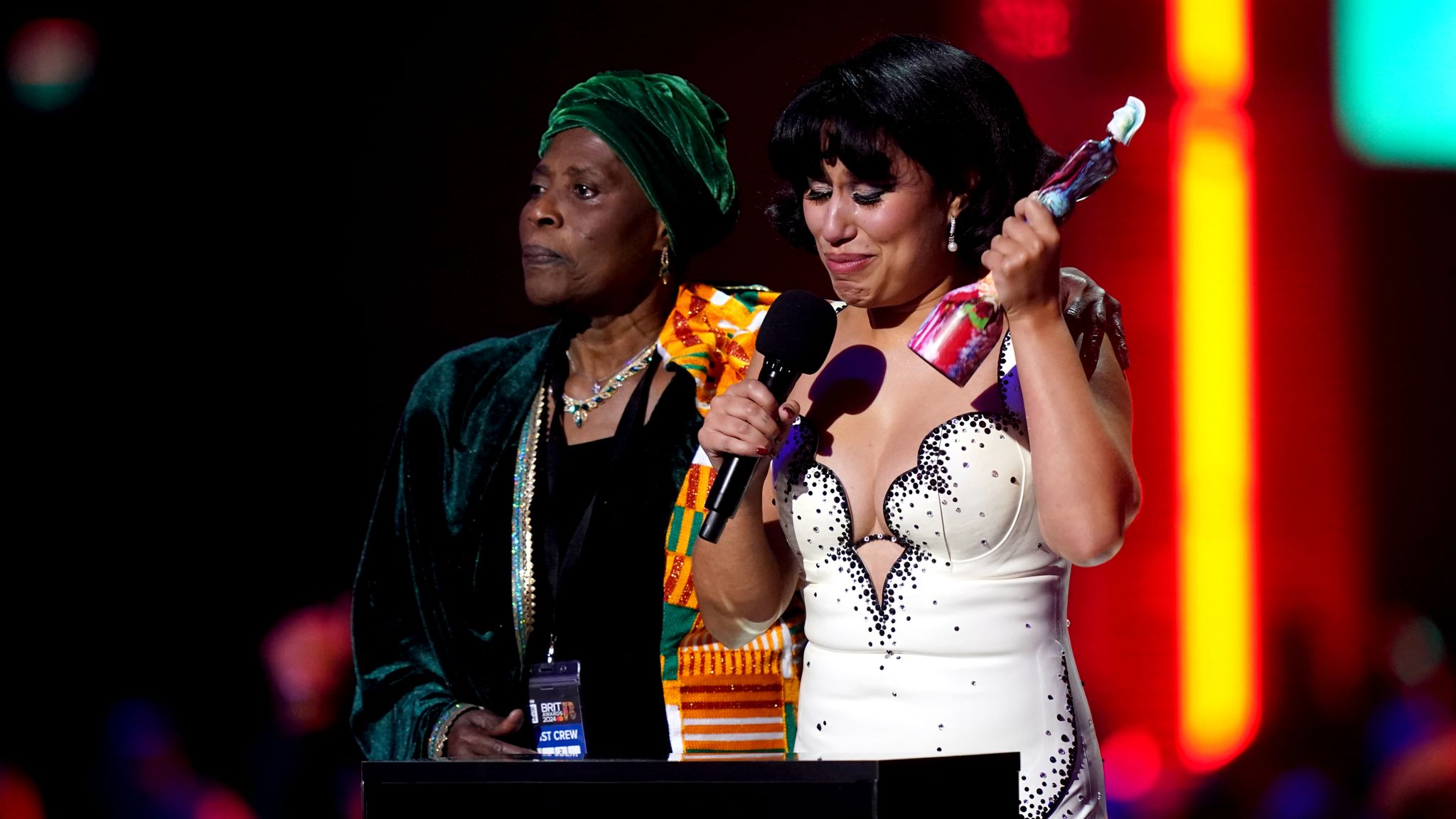
At the Brits last night, Raye made history by winning six awards. Her love of music drove her to be an artist - her beginnings in a Christian home where her father placed her hands on piano keys.


She’s not unusual in finding that the course of life took her away from church, but now she hosts hymns services at home with friends. After thanking her producer, she thanked her grandmother for her prayers. 


Raye with her grandmother at the Brits: Sky News article

Elsewhere she’s talked about how grateful she is for her own faith - how it’s pulled her out of what she calls a ‘really dark place’: coping with trauma, addiction and pressure. It’s a reality she acknowledges in her song “Hard out here”. She said: there was  ‘a moment where I really found God, in the time that I really needed it and it saved my life… I really owe my life to faith, it’s kept me going and it’s kept me okay, it’s given me strength’. 


In our first reading today, we hear the words of the ten commandments which frame life in relation to God: words which emerged after a time of crisis, after a period of slavery and migration. In our Lent book Tarry Awhile Selina Stone talks about the place of movement in our journey of faith. 


For God’s people there were times of temptation and frustration in the wilderness; times when stability seemed a distant hope.   These instructions or guidance on living well emerged at a time when the community was beginning to take on a more settled form. Having owed their life to their faith, what did they now need to keep them going - to keep them ok?


The Greyhound might be the only pub in North London - if not in the city - with the text of the ten commandments on wooden panels on the wall.  


Today we have the opportunity to hear them afresh not as something life-limiting, but as something life-giving.  In the midst of the challenges of our own lives, how do  these words help us use this gift of freedom - of healing and salvation?


The commandments speak about God and human relationships and, in the middle, the need for rest.


They invite a certain kind of self-awareness - taking seriously our embodied existence. They ask us to consider how attending to the pulse of divine love might help us live wisely. 


Perhaps obedience to the commandments is one of those things which, as Rowan Williams puts it, ‘is about learning how to live in heaven by learning how to live on earth, in the body, in the moment.’


‘Learning how to live in heaven by learning how to live on earth’ might include naming what it is to be human: where are the challenges, the risk of harm, the things that overwhelm us or niggle away at us or our relationships?  


It also has to do with how we live well with freedom and desire:  not just for ourselves, but for our neighbours. There is something profoundly practical about the commandments - honouring life in various ways, setting aside the idols we create of wealth or status, looking at our relationship with work and time.


The command to rest lies at the heart of this list of guidance: it echoes the rhythm of creation - goodness poured forth, life, breath and love taking shape, and then God rested. We are invited to hold onto that space as something holy, special, consecrated, set apart and blessed. 


As God’s people moved from slavery, migration to the settled state of a home, they could find rest. However, we know how easy it is for us as human beings to have an uncritical or unhealthy relationship with the opposite of rest: our work. 


If we are tired, overworked and stressed we risk burning out and our relationship to activity and to rest become dysfunctional: holding onto the hope of a lie in or time away; becoming ill the moment we stop; or missing those moments to delight in life as it happens around us.


To think of the balance between work and rest looks shifts across our lives: the pressures of work and parenting, the domestic labour we juggle and long hours or multiple jobs; our self-worth impacted by seasons of illness where we are unable to work, or times when we are unable to find the work we’d love to or need to do; the years of retirement which itself might have seasons of being occupied with volunteering, family, service and the things which bring pleasure. 


In all this rest might elude us - sleeplessness, worry or loneliness. Rest might elude us as we strive for the things that command our attention which become idols: from wealth and possessions, to social media and status.  


The problem with idols is that not only do they demand our focus but they can also demand a high price in terms of well-being, addiction, envy and dissatisfaction. All of which negatively impacts on our relationships - and displaces that first call to love God, to know ourselves as beloved by God, and to allow that love to shape how we live. 


The purpose of the commandments was to create and support a community: helping us to learn to live well, on earth, in our bodies. They still have a relevance - challenging us when we stop honouring each other in our primary households, parent and child, partner and friend; inviting us to be faithful in work, rest and relationships; reminding us that there is more to life than exchange and consumption. Inviting us to shape our lives around a pulse of love.


When Rowan talks about learning to live in the body, in the moment he is inviting us to see faith as a deeply natural rhythm - it’s not just about our minds, but our whole reality.  If the commandments point out some of the pitfalls in life, imagination and relationship, he points reminds us that ‘this is the sort of challenge and transformation that trust in Christ is likely to open up for you, and this is how you can guard against losing the plot’ - or being consumed by the dark places as Raye puts it. 


In today’s gospel we witness Jesus inviting us to honour holy places - as places of sanctuary and inspiration, as places holding us safely as we share the depths of our loves, hopes and faith.  But he goes beyond that in pointing to his body as the palace where God chooses to dwell - God’s goodness in the flesh. 


That body would live and die and rise again: with the unstoppable power of God’s love and breath.  It’s a way of seeing bodies as sites of the sacred - in need of rest and honour, because they are loved by God.  If that is true of our bodies, what of the bodies around us. If we value our bodies as places where God’s grace and delight are made known, then we are called to value the bodies of those who’re exploited, suffering, addicted, lonely. 


Jesus moves in a few verses from concern to compassion, anger to action when he sees the loving commandments of a loving God being broken: he reveals the power of love to act and to deepen relationships - with compassion and justice. 


Paul reminds the Corinthians that the message of the cross - the place where God’s goodness and love in Christ goes to the depths of human pain, darkness and alienation - is power rather than foolishness, strength not weakness. His death carries the weight of our restlessness and disobedience and allows us to find peace and renews our obedience in love. 


Sometimes we see power as foolishness and weakness as strength in the world around us. Alexei Navalny’s death and funeral have attracted as much attention as his political campaign and arrest. What is being talked about more is his conversion to Christianity following Putin’s attempt to kill him in 2020. 


The following year he told a court: ‘the fact is that I am a Christian, which usually rather sets me up as an example for constant ridicule in the Anti-Corruption Foundation, because most of our people are atheist and I was once quite a militant atheist myself.’ He went on to describe how his faith gave him clarity and focus in grim circumstances.


We might not win Brit awards or face persecution for our religious or political convictions, but we are called to live with a radical new awareness of how we belong to each other: a depth of connection between us and creation, between all that is and a loving God. 


We can sit a bit lighter to material satisfactions - and go beyond the surface of things; we find that our inclination to selfishness is transformed into selflessness; our failures forgiven. We are invited into an economy of gift rather than exchange - and find here, in song and word, silence and peace, blessing and bread all that helps us to ‘learn how to live in heaven by learning how to live on earth, in the body, in the moment.’


© Julie Gittoes 2024


Selina Stone: Tarry Awhile - Archbishop's Lent Book 2024

Rowan Williams: "We learn to live in heaven by learning to live on earth', Catholic Herald Feb 20204