Showing posts with label parable. Show all posts

Wednesday, 28 March 2018

Giving honour...

Last week I was invited back to my old school to preach at the end of term service Commemoration service. For the girl who rarely spoke in class, this was quite overwhelming. Looking out over a nave of 600+ teenager faces; knowing that my former Headteacher - and my mother - were in the congregation... yes, that was pretty emotional. 

Some reflections on being at HCS: Whilst at Hereford Cathedral School, I developed a love of literature which led to studying English, French and German at A-level, despite not being a very confident linguist!  I enjoyed being a member of the Choral Society and First Orchestra; Saturday morning lessons and the Hull Cup were perhaps less fun. My particular memories of this place - my favourite cathedral - include serving at Carol Services, Monday morning hymn practice and singing Jerusalem on Leaver’s Day. 

So what follows is a sermon exploring the theme of honour based on Proverbs 25:2-7 and Luke 14:7-11 - written on a severely disrupted train journey!


Lats year, The Shed at Dulwich was rated by Trip Advisor as the number one dinner venue in London. Described as exclusive and quirky, this appointment only restaurant offered a menu of options based on moods such as "comfort" and "contemplation". 

PR companies and suppliers all wanted a slice of the fame; the phone didn’t stop ringing with potential bookings.

All this… without The Shed at Dulwich serving a single customer.

In the end, the blogger behind the enterprise opened his garden shed for one evening only - serving cuppa soups and ready meals adorned with edible flowers. 

He’d made his fake restaurant real.

The Shed at Dulwich reflects how our food culture is experienced on social media: the lure of exclusivity and new 'experiences'; capturing moments, filtering the selfie and tagging friends.

Apparently I’m part of the Xenial generation - growing up with an analogue childhood and growing into a digital adulthood. So I’m sucked into this too.   As we sit down to eat, we might be texting, using Snap Chat, checking in on Facebook or posting photos of our meal on Instagram.

What would Jesus, an astute observer of our social attitudes, make of the impact of the digital world on our face to face interactions:  the way we share meals, the judgements we make about others and our own pride or status?

When we’re concerned with our Twitter followers, he invites us to follow his example. 

When we’re addicted to Facebook likes, he invites us to be humble and generous. 

When we tempted to leave our phone on the table when we eat, he invites us to give our full attention to the people we’re with.

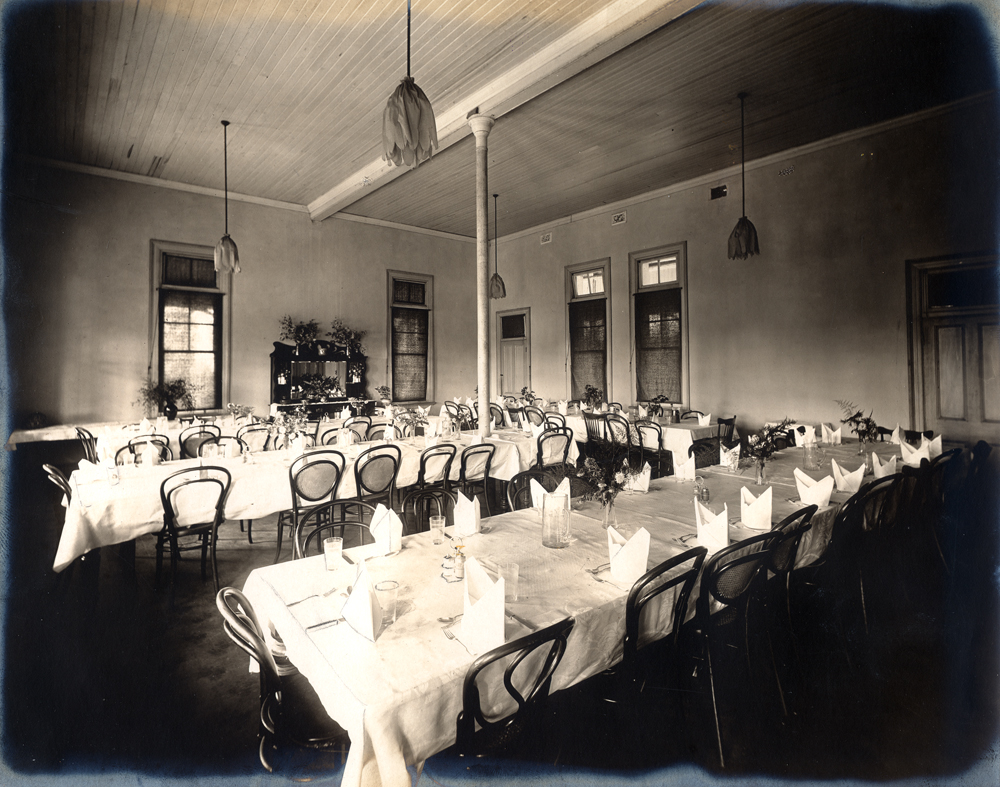
The scene described in our second reading, is recognisable. Walk into any dining room, and we’ll be alert to the signifiers of status, honour or importance. 

Perhaps there’s a top table; perhaps the sixth form don’t have to queue. Do the popular or sporty people sit together? do we notice others sitting alone? Have we ever been asked to move - or find ourselves looking around anxiously for a friendly face? 

It can be a struggle to make sense of the subtle - or less than subtle - social signals about status and belonging.  Jesus decodes what’s going on around the table. 

The really important people could rock up fashionably late and, after making a grand entrance, use their confidence and privilege to claim ‘their place’. Meanwhile, those who had arrived early would want to find a good seat - possible the best seat - knowing there was a risk of immense social awkwardness or embarrassment. 

Jesus responds by telling a story drawing on the wisdom of Proverbs. He has compassion on them - and  us - as we try to navigate the system. At first glance, we might think he’s simply saying: to get the best seat, chose the worst seat.

It’s more radical than that. Rather than offering us a different way to play the game, he calls us out on how self-seeking this game of disgrace and honour is. Instead he stretches our imaginations and invites us to think about how we live well.

If we are less anxious about where we sit or whose company we keep, if we stop trying to exalt ourselves, might we make space for others? Might our impact be one of generosity and kindness? In being humble ourselves, might we give dignity 
others and allow them to flourish?

Today, as we give thanks for those who have generously supported this school as a place of learning, Jesus’ wisdom challenges us to follow their example. We are invited to think about our impact on others - in the kindness we show them and the encouragement we give. We are invited to think about our own legacy. 

That’s not just pursing excellence in our chosen subjects, activities, passions and careers - seeking a place of honour for its own sake. Rather we are to honour others - delighting in their difference and their brilliance; choosing to welcome rather than humiliate; challenging exclusion based on age, gender, race, sexuality or ability.

As we look at the communities we’re part of, who is regarded with honour and who is looked down upon? Dare we do things differently!



A Christian foundation such as this cathedral - as this school - has the potential to build huge amounts of social capital: where the teacher and the virger, the lab technician and the form monitor, the laundress and the high sheriff, the lawyer’s son and the plumber’s daughter are held in equal dignity and potential.

And this is good news not just for us, but for our world. What we learn in this school - empathy and generosity, compassion and service - enables us to contribute to the wider society. 

It’s a society where many are lonely or live alone; where inequality is increasing and many are fearful; where there are flourishing enterprises, vibrant arts and new discoveries; where we need investment in housing, health, social care and education; where Brexit has revealed divisions, challenges and opportunities. 

We - you and me- have our part to play in shaping a vision for our national life which cultivates a sense of being in community; where all can be valued and contribute. Where every seat at the proverbial table is a seat of honour.  You can be a sign of hope and generosity. In the power of the Spirit, you share the love of God revealed in Jesus.

This message is not for HSC: it is a message for how we might, encouraged by our Archbishop, reimagine Britain on foundations of hope. 


As Archbishop Justin puts it: ‘the people of God are called to be a blessing to those places where they live. Obedience to God is seen in imitation of God, and those in love for those in the world around and in care for the concerns of God: the poor, the weak, and the creation. Most of all… a people of hope, of faith and of love for one another, for neighbour and even for enemy’.

Let’s be generous, hospitable and humble. Let’s honour others.

We aren’t in the business of making a fake restaurant real; but in making real the true values of God’s Kingdom.

© Julie Gittoes 2018


Monday, 27 November 2017

Sheep and goats

Yesterday we celebrated the Feast of Christ the King. As I was preparing to preach - including reading a Saturday paper - I was struck by the ways in which political cartoons seek to provoke and persuade in a world of turmoil.  I wondered if parables served a similar purpose - engaging our imaginations to challenge our attitudes or behaviours.  

In his commentary on Matthew, the theologian Stanley Hauerwas points out that there are those who ‘claim to need power to do good but in fact just need power’. Our shepherd-king reveals the fallacy of that; and uses the parable of sheep and goats to enable us to reflect on our place in God's Kingdom.  The texts were:  Ezekiel 34:11-6, 20-24; Ephesians 1:15-end; Matthew 25: 31-end

Political cartoonists have an uncanny knack of distilling complex news stories and political agendas into a single image. 


In The Telegraph, “Nature Notes” combined Brexit negotiations and animal sentience with caricatures of Boris Johnson and Michael Gove as ‘infant puppies’ which ‘whilst exuding great charm, are just agony’.


Meanwhile, The Guardian’s Martin Rowson depicts those same politicians in the Workhouse  of ‘Sovereign Penury” alongside Theresa May in leopardskin kitten-heels: the graffiti on the walls reads ‘Give up all hope’, ‘The wages of sin is stagnant’ and ‘Eternal Austerity’.


Cartoons provoke and persuade. To understand them, we need to interpret the exaggerated symbolism, alongside the captions and characters; we pay attention to the details, allusions and the use of irony. They make sense within the context of a wider narrative or set of situations. The same is true of parables - Jesus uses images and allusions to prompt us to think and act as God’s people.

What might your favourite cartoonist make of today’s parable: nations under judgement, acts of mercy and the division of the blessed and accursed. Who would “Nature Notes” depict as sheep and goats? How would Rowson express eternal life and eternal punishment alongside eternal austerity?

Such musing aren’t out of place. For we, like the disciples, live within the same matrix of earthly loyalties, international upheavals and domestic uncertainties. Like them, we need to learn how to live well in the face of change and adversity, by placing our trust in God’s faithfulness.


The story of the sheep and goats is the last in a series of parables which Jesus deployed in response to the disciples’ admiration of the grandeur of the Temple.  As Canon Paul reminded us, Jesus named the transience of worldly powers and impressive buildings; emboldening them - and us - to seek God’s kingdom.  

Parables - like cartoons - shed light on our motives, desires and the consequences of our action or inaction. They provoke and persuade us by engaging our imagination - to live without fear, bringing hope to others and acting with mercy.  To speak of sheep and goats reveals the impulses of our hearts, our priorities and divisions. 

To speak of sheep would evoke passages like those from the prophet Ezekiel: passages which depict God as the chief shepherd of the people: searching and seeking; rescuing and gathering; feeding and binding up; strengthening and judging. 


Ezekiel’s words resonate with the human condition. We live in a world where peoples are scattered; where greed, ambition and self-service distorts the responsibility of leadership. His words names our hopes - for a place of rest and safety in our life together. He also names the ways in which we can become divided amongst ourselves - the weak are bullied, the strong exploit their position. 

This is the backdrop to Jesus’ parable: a narrative of God’s faithfulness - of a love reaching out towards us, bringing us home. And that love isn’t abstract. Nor is it the cry of ancient prophets alone. This love is revealed in one who is heir of David; the shoot from the stock of Jesse; the one on whom the Spirt of the Lord shall rest. He is Emmanuel.


He taught the crowds on the mountainside and brought healing to those in sickness or distress.  Children have been blessed and the rich invited to store up heavenly treasure;  matters of divorce, taxation, hospitality and forgiveness have been debated.  

Now as we hear the parable of sheep and goats, our generation stands among the nations.  We face righteous judgement - standing before the loving gaze of one who is both shepherd and sheep; the king and the one in need.

This parable also sets before us a vision of God’s Kingdom which is marked by showing mercy, loving justice and walking with humility.  Jesus words hold leaders to account, but he also calls our attention to ordinary acts of feeding, clothing, welcoming, visiting and caring for others. 

Curiously, neither the sheep nor the goats know that in ministering - or failing to do so - that it was Jesus before their eyes. Perhaps our cartoonist would have given them expressions of surprise, shock, joy or embarrassment. Perhaps they too would have added the drama of hell fire versus heavenly bliss to spell out the seriousness of the situation. 


The consequences of our action or inaction having enduring impact - on ourselves and others; we can strengthen or scatter, bind up or wound. In this parable, the eyes of our hearts are enlightened. We know the hope to which we are called; the inheritance of faith and love we are to share. 

That’s because in these moments, we see and are seen at a level of authentic human engagement; it’s compassion which frees the host and the guest. In going beyond the realm of duty, we see God. In the least of these, we see the Imago Dei, the image of God. 

That likeness is embodied and enacted - in face to face intimacy as we counsel the distressed, comfort the anxious and sit with the broken hearted. 

This likeness is performed in participation with others in networks which feed, cloth and visit; using gifts to support economic transformation, sustainability and fair trade; in supporting and praying for those who work in immigration centres, prisons and shelters for the homeless or victims of domestic abuse. 

The dignity of the Imago Dei is restored as lives and systems are transformed.

Learning to live like this when the future is uncertain is to endure upheaval with our hearts fixed on the victory of the shepherd-king, Emmanuel.  

The disciples learn a tough lesson. And so do we. For the one who is God with us, is the least of these. He is stripped of clothing and agency; dignity is crushed, his face smeared with blood and spittle. Hail, king of the Jews!  


This king embraced the pain and suffering of humanity in his broken body; his outstretched arms reconciled us to God and each other. In him God’s power is at work - healing, forgiving, challenging, inspiring. As we hear in Ephesians, God’s power raised him from the dead. burst from the tomb, in the silence of the night, to renew our hope that life and death leads to risen life. 

Now the one who reigns above all rulers, authority and power,  pours out his Spirit on us that we might be united in a bond of peace. 


And the most remarkable thing is this: we are members of his body. 

We are ‘the fullness of him who fills all in all’. Our agency, our bodies, our breath, our wealth: all this can express the fullness of God’s love in unremarkable yet significant moments. 

Here we are fed by that fullness. Here we are called.

Bread broken. Fragments shared. Hands outstretched. Fullness tasted.
A body given that we might be that body.

Then we depart in peace with assurance, hope and challenge of today's communion motet*:

Christ conquers,
Christ reigns,

Christ commands. Alleluia!


* A setting of Christus Vincit by James MacMillan

© Julie Gittoes 2017

Sunday, 16 July 2017

The smell of rain

This is the text of a sermon preaching at the Cathedral Eucharist on 16th July 2017. The texts were: Isaiah 55:10-13, Romans 8:1-11, Matthew 13:1-9, 18-23.  I read and mull over the readings early on in my sermon prep - just sitting with the language and narrative - and before I'd even reached for a commentary, I found myself obsessed (for want of a better word) with the falling rain. Rain led me to smell. Smell to soil. Suddenly Isaiah 55 had opened up a new reading of the famous and familiar parable of the sower. We think we know what it means - them and us, those who whither away and those who remain faithful. Suddenly the challenge of soil management and the grace of rain subverted all that. So here are musings... musings on the smell of rain (time wise, paragraphs in italics I cut as I preached). 


The smell of rain.

That, sweet earthy fragrance as rain falls; as rain falls on parched soil after a long period of warm dry weather.  The scent of rain falling drop by drop; lightly, persistently, building towards a summer storm.

It evokes memories of hazy, lazy days: the intensity of unbearable heat broken by refreshing rains; the patter of water droplets on the picnic hamper, skyward glances, is that rain? Plants thirsting for every drop; sandals splashing through puddles; lawns recovering their verdant hew. 

The smell of rain. It has a name. 

Petrichor.

‘Petrichor’ is derived from ‘petra' meaning stone and ‘ichor’, the life blood of the gods in Greek mythology.  Water on soil is rich in life. That evocative aroma is the combination of plant oils and chemical compounds released from the soil when it rains. 


Recent research using high speed cameras show hows petichor, the fruitful fragrance of rain, gets into the air.  As raindrops hit the soil, they capture tiny bubbles of air; these ‘bubbles’ shoot upwards, erupting into a fizz, releasing fine droplets; they remain suspended in the air as ‘aerosols of scent’.

The smell of rain: a scent which fills the air evoking perhaps a primal sense of dependence. Raindrops which stave off fear of drought; summer showers signalling the potential for growth, fruitfulness and harvest.  The smell of rain signals survival; ‘the smell of rain is rich with life’.

In India, the monsoon rains have an impact on psychological, agricultural, political and economic life. In the UK, Isaiah’s imagery of rain watering the earth giving seed and bread still resonates for farmers, gardeners, retailers and shoppers effected by yield and price. 


What is true of rain, is true of God’s word and purposes. Isaiah’s vision of life, hope, joy and peace is expressed in the extraordinary vibrancy of the natural world: song breaks forth and we are invited to imagine the rapturous applause of creation. 

The smell of rain brings life. 

The sound of creation’s praise signals a new thing.

If the smell of the rain is a sign of God’s kingdom, might the distinctive nature of discipleship carry its own fragrance? Might the trees of Isaiah’s vision give us a clue?

Residents of Cathedral Close know that brambles grow with particular vigour; and whilst we delight in plucking the fruit and making blackberry jam, thorn and brier colonise a garden.  Here in Isaiah, those plants give way to the fragrance of the myrtle and the strength of the cypress.  

Like trees, lives transformed by fulfilling God’s purposes, will have have distinctive form and shape.  Unlike thorns, we aren’t to colonise or chock. Yet we are rooted and visible within our public space. 

There will be vitality in our deeds which have the ‘fragrance’ of healing the broken, concern for the vulnerable and an infectious joy; there will be strength in standing up against abuse or neglect, and standing for justice, mercy and peace. 

Isaiah associates God’s word with rain, watering the earth; Jesus’ parable orients us towards the soil itself - inviting us not to solve a riddle, but simply to listen. To let words surprise, challenge, inspire and shape our posture - the body language of the church if you like; what we reveal of God’s love.


Soil is a complex mix of minerals, organic matter, base material and water - with varying qualities acidity, drainage, fertility. Soil is in some way ‘managed’. 

The Environment Agency and Gardeners’ Question Time offer advice on soil types and appropriate plants. 

On Surrey clay and chalky Downs, the smell of rain means it is rich with life: but we also have some input in cultivating good soil.  


Perhaps Jesus is pointing us to the need to cultivate receptive soil - preparing different types for sowing, rainfall and harvest. Listen!

That soil isn’t just out there in the world; soil is our inner life too. Stanley Hauerwas is a theologian alert to the challenge of discipleship. We are to proclaim the Gospel afresh in a world which is asking questions about identity, authority, hope and fear. Society may be shaped by Gospel values in our judicial or health care system - but is it ready to hear anew? Are we? What’s the soil like? Has it rained lately?


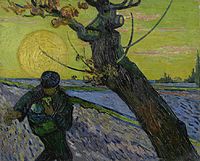
The Sower with Setting Sun, 1888
Van Gogh Museum, Amsterdam

In his commentary on Matthew, he writes of being ‘possessed by possessions’ and our desire to act in the world and serve the poor without losing them.  He speaks of the lure of wealth and cares to the world which ‘darken and choke our imaginations’ which reduces the Gospel to a sentimental ‘formula for “giving our lives meaning” without judgement’.  He also challenges the strategies we adopt as a church to ‘recover lost status and/or membership’ without facing the demands of being a disciple.

Canon Andrew, Neil Vigers and I have been discussing his engagement with Dietrich Bonhoeffer, who challenged the shallowness of what he called ‘cheap grace’. He argued for the increased visibility of the church - a church were the soil is being prepared for deep roots to be established and where we embody the fragrance of the joy and peace proclaimed by Isaiah. 

Hauerwise writes:  ‘What Bonhoeffer gives those in the ministry to do is imagine how the social significance of the everyday ministerial tasks such as preaching, presiding at the Eucharist, and caring for the dying are practices for the formation of a people who are capable of being a political alternative to the world.’

To speak of being an alternative is about cultivating an imaginative, social and ethical common life - which is a sign of God’s Kingdom. Our body language is shaped by practices which speak both of the truth of our human condition in all its frailty; and of the truth of God’s love which binds up the broken. In a complex world, we are to name signs of God’s Kingdom in mutual care and ecological concern and to challenge the toxicity of selfish desires to possess and consume.

Last week, we heard Paul grappling with these recognisable existential realities of tension, choice and struggling to do the good that he wills - for the soil of his life to be fruitful. Today, we hear him express the ultimate reality of his hope in Christ: there is no condemnation. Through his death and resurrection, sin and death are defeated;  the power and richness of resurrection life breaks in. Despite human weakness and distress, grace, joy, blessing bubbles us within us. The Spirit brings life and peace to our mortal bodies.

We share with Paul, Bonhoeffer and Hauerwas  practices which call for humility and repentance, joy and self-giving.  In word, sacrament and care we do taste, touch, see, hear and even ‘smell’ the rain of God’s Kingdom. Our practices embody and express with an intimacy and patience the blessing of God - enabling us to be a blessing to the world, that the world might clap and sing in praise. 

These practices they are rooted in the love of God which is spoken in the word of creation and the Word made flesh dwelling with us; it is a word we still hear in the cries, murmurs and songs of the Holy Spirit. 

In this Eucharist, the sower’s seed becomes bread for the eater; Christ the grain that dies, multiplies and feeds with heavenly food. Here we become alert to the signs of God’s Kingdom in our world - to the smell of the rain as God’s word touches the soil of our lives. We also need to cultivate the soil of our hearts; in prayer, God’s refreshing word rains down on us.

Whether we take a psalm, a favourite hymn, the Lord’s Prayer, or a line from Scripture; whether we use an app to pray the daily office or re-appropriate the monastic hours in our daily life, or pause as the kettle boils, as we walk from the station or sit beside another in compassionate, companionable silence. 


The rhythm of life is made holy; the soil is prepared; the seed is sown.
We smell the rain; it is rich with life.
May our lives carry the fragrance of life-giving, self-giving love.


© Julie Gittoes 2017