Showing posts with label Jesus. Show all posts

Tuesday, 15 April 2025

The most precious thing

 Sunday, 6 April, Passiontide: Isaiah 43: 16-21, Philippians 3:4b-14 

and John 12:1-8


What is most precious is often most fragile.

Our world, our friendships, every human heart; like a jar of precious perfume. 

In his novel “Alabaster”, Chris Aslan reimagines the story of Mary, Martha and Lazarus. He narrates their shame and sorrow, the freedom they long for and the stigma they face. They hear rumours about a new teacher; someone who might bring hope. 

The jar of pure nard is the most expensive thing they have, but it has not brought them good fortune. When the teacher comes to stay, Maryam smashes it open. 
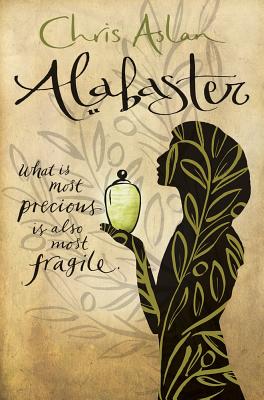
Her words take us into the tender and provocative moment in today’s gospel:

At the upper room I hurry inside, dripping spikenard all over the carpets, to where the teacher is reclining. Then I take one of his feet and I pour… I’ve never smelled anything like it… It’s rich and warm and a little heady…

The scent fills the room, intoxicating everyone… Spikenard spills everywhere and I pull off my headscarf to use as a mop… my hair falls around me and catches in the liquid, so I use it to wipe his feet as well. 

Spikenard might’ve been a year’s wages; a dowry perhaps. 

No wonder the reaction - assuming scandalous waste rather than abundant generosity. 

Could it not have been sold? Would not the poor have benefitted?

The air fills with fragrance, hands and  feet are drenched in perfume, skin and hair are soaked with oil. 

And Aslan’s Maryam says to the teacher:  “It’s the most precious thing we have”... it’s not enough, I know, but I want to honour you and to prepare you for what’s to come.”

Mary, like our imagined Maryam, dares to love with abundance and holds nothing back - even her own future. 

She faces criticism, scorn and censure for this show of devotion, for the waste.

Yet this outpouring is meeting a different kind of need - it's a fragrance of love which encompasses death, an embodied worship which expresses hope; which gives an unspoken glimpse of resurrection before the pain.

As Maryam holds the teacher’s feet, she thinks ahead: This body will soon be broken and destroyed like this jar. He chooses to do this for us…I start to weep. I wipe and I weep, whispering my adoration. 

Her body is communicating her longing, her worship, her gratitude; her relief, her trust, her sorrow. She sees the brokenness and anticipates burial. 

His feet are washed with oil before he washes the feet of others with water.

A jar is broken in devotion, before his body breaks to heal and restore. 

This is a holy moment: intimate and tender as oil mingles with tears; blessing and sorrow; dignity and honour and grace. 

In describing this chapter in his commenary on, David Ford says the essentials are: being loved by Jesus, loving and trusting Jesus, recognizing who Jesus is, a heart open to the suffering of others, prayer, service, life-giving signs, extravagant attention and generosity. 

We are invited to play our part in this drama of friendship with Jesus. 

Such friendship is the most beautiful thing: it is to be held in the loving gaze of God. 

Our bodies are fully part of our life with God as we offer our whole selves without shame or fear; resisting some of the harsh judgements we make about them.

Embodiment goes to the heart of the incarnation: God’s word dwells with us as we break bread and share wine, weep and find consolation in our tears. 'God's presence and his very self, and essence all divine' as the hymn puts it.

Jesus names the goodness in this moment saying that it is worthy of being remembered - not for its waste but because Mary has dobne a beautiful thing. 

She antipates Jesus’ act of self-giving love by anointing his precious body with the most precious thing she has. She’s not  being cautious or holding back; she lives beyond the metrics of calculation; of growth or exchange. It is a pure gift in response to love.

As Isaiah has promised, God will do a new thing - it springs forth and we are invited to perceive it. He writes of a new way - of fresh waters; he writes of people being formed anew - declaring their praise and adoration. 

Mary’s gift of life and love fill our senses as an act of worship, drawing our attention to God’s love in Jesus: spilling over to forgive, breaking to make whole, lifted up do draw us to Godself. 

In the Eucharist, we are drawn into the abundance of  Jesus’ act of self-giving love. In fragments of bread, a cup of wine and words of blessing, we are made welcome, forgiven, restored and made new. Drawn into communion, our bodies in one body. 

Consider for a moment the things that have sustained us when life has been painful or we’ve found ourselves in turmoil - what comforts us?  Often, it's time with those who love us; the gestures of those who care; the body language that doesn’t count the cost. 

These aren’t merely pragmatic or calculated; not empty platitudes or politeness. They are acts of kindness or creativity that resist the pain of a fragile and finite world - which capture our senses like spring flowers. 

The body language between Mary and Jesus speaks of facing  suffering and death with generosity - sharing all that we have, breaking it open; somehow finding with it a gift of beauty with a fragrance that hangs in the air. 

It is an act of resistance against the grave - death does not win, instead the sacred notes of love rise above it. 

When challenged, Jesus is not suggesting that the needs of the poor do not matter - or that we accept society's inequalities as inevitable. It invites us to worship wiht our whole heart and to be open-hearted with what we have. 

Mary reminds us to love in the moment - aware of what lies ahead for Jesus, she offers comfort and tenderness. The breaking open the jar is a breaking open of her heart with deep gratitude and love. 

We too are to love Jesus without limit; that friendship is the source of goodness, reminding us that we are from love, of love and for love; that we are also to show the same open-heartedness to those who are in need. 

Paul writes of the vindication of unconditional love. He has desecribed the way in which Jesus does not cling to power but empties himself for us. In the light of that, Paul sees his gains as fleeting, counting them as rubbish (a polite translation of the Greek!). 

There is nothing that we can do to attain our own righteousness - it is a gift in Christ by faith. He shared our embodied experience, suffering and death that we might know his resurrection.

Mary responds to the need in front of her - the one who’ll die outside a city wall and be buried in a stranger’s tomb.  She loves what is before her eyes, in her dining room, amongst friends and those who’ll deny or betray love. 

Her body language shows that it is always Jesus we serve when we love those whose need confronts us. Judas faces rebuke rather than blessing for holding back; for thinking in the abstract. 

The perfume is an anticipation of resurrection - it is a glimpse of hope, it is a reminder of beauty and goodness, of extravagance and vulnerability. It is the fragrance of love, broken open and spilling out. 

As Passiontide begins, we are gifted an image of utter generosity; of being present; Jesus between us and judgment; holding nothing back. 

The cross awaits with all its pain and abandonment; but in this moment, one woman chooses to make a gesture that fills the room with the scent of what is possible. That there will be life again. That love will triumph. 

We press on in this way of love, as friends - recognising Jesus and being open-hearted to others; in prayer, service, attention and generosity, that our bodies too might be life-giving signs, broken open in love. The spiritual writer Ignatius says this, may it be our prayer:

Lord my God, when your love spilled over into creation You throught of me. I am from love, of love, for love. Let my heart, o God, always recognize, cherish, and enjoy your goodness in all of creation. Direct all that is in me toward your praise. Teach me reverence for every person, all things. Energize me in your service. Lord God may nother ever distract me from your love. Neither health nor sickness, wealth or poverty, nhonour or dishjonour, long life nor short. May I never seek nor choose to be other than You intend or wish. Amen.


© Julie Gittoes 2025


Wednesday, 31 July 2024

Somewhere over the rainbow

 Easter 4 - 21 April  2024: Genesis 7:1-5, 11-18, 8:6-18, 9:8-13; Acts 4: 5-12 and John 10:11-18


Eva Cassidy, Frank Sinatra, Pink and Rufus Wainwright are amongst those who’ve covered Judy Garlard’s Oscar winning song from The Wizard of Oz. 

Somewhere over the rainbow

way up high


A song about wishing upon a star and dreaming of dreams coming true; of blue skies and trouble melting like lemon drops.

Somewhere over the rainbow… 

there’s a land that I heard of 

once in a lullaby.


A still from film of Judy Garland in The Wizard of Oz (1939)

In the film, Dorothy wonders out loud to her dog Toto if there’s ‘someplace where there isn’t any trouble’ and concludes that there must be; but that it’s far, far away. She wants to get away from Kansas and, as the lyricist Yip Harburg put it, ‘she had never seen anything colorful in her life except the rainbow’. 


And so, the famous song was born: a song which, depending on who sings it, evokes hope or sadness:

If happy little bluebirds fly

beyond the rainbow

why, oh, why can’t I?


Our first reading today ends with a rainbow set in the clouds - as a sign for future generations of God’s covenant with the earth, humanity and all living creatures. 


Until that point, Noah and his companions may have identified more with the words of a little known intro that Garland only sang once. In a 2009 cover, Jewel all but whispers it: 

When all the world is a hopeless jumble

and the raindrops tumble all around

heaven opens a magic lane.


Raindrops tumbling, pouring and flooding. The hopeless jumble of a world destroyed by human greed, ambition and carelessness. The waters and the ark become an icon of that ‘magic lane’; a way of safety. There are no bluebirds beyond the rainbow; but a raven flying to and fro before it. And the dove - returning once, and then a second time with an olive leaf, before flying free.


There is a promise of a world beyond the rainbow - of restored relationship and renewed hearts; of hope, justice, mercy and righteousness; of love embodied and enacted - fully, faithfully. 


It is no lullaby, designed to soothe us to sleep; the promise of a world that evaporates when we awake. 


Instead it is a vision of the world as God intends it to be; a world that our hearts long for.


Yet, like the judges judging Peter and John, power and its misuse can create dividing lines. Lines that evaluate others based on their status as social or economic status: based on health, gender, sexuality, ethnicity, education, age. 


No wonder that the rainbow has become a sign of liberation and equality! It is a sign of hope, forgiveness and life - it stands against the destruction of life, and for the commandment to love God and neighbour as ourselves.


The alternative is literally deathly.   When human beings are evaluated as socially or economically useful, we see not only division and competition. At its extreme something  life-limiting and life-denying is unleashed. As Matthew Parris wrote last month in a world of inputs and outputs, some lives - the vulnerable,  frail or elderly - are worth less than the energy of the young or more nimbler. 


His column on assisted dying was published on Good Friday.


An irony which highlights the radically alternative view which we hear running through our scriptures: a pulse of love that carries us through life and breaks the bonds of death; a pulse of love that speaks of communion, healing, compassion and peace.


God set that bow in the sky as a promise that the world would not be destroyed; that the response to our tendency to selfishness or harm would not be a deathly waterflood.  When we see the colour of that bow, caught as sun hits rain clouds, we are reminded of an alternative view of humanity; and of God’s ways of loving.


In Jesus, God became one of us - flesh of our flesh. Jesus is love with us, laying down his life for us. In John’s Gospel, he describes himself as the good shepherd. It’s an image that evokes the shepherding of Moses and David before they responded to God’s call to be agents of freedom or leadership. 


It reminds us that God is the true shepherd - gathering together and  binding up, leading by still waters; taking us through the valley of death to a rich banquet.  


Jesus, the good shepherd, knows us and we know him. However much we wrestle with doubts, fears, distractions - we are reminded that we belong to God and each other; that we are known and loved. 


Jesus contrasts himself with the hirelings - who do not have our interests or wellbeing at heart: those who attention and love is thin and unsafe; who abandon others in the face of danger because they do not want to carry the cost of life together. 


Instead Jesus lays down his life for us - rescuing us from death and inviting us to look after others in the flock. He calls us - and others we may not see as part of our flock, but who are known and beloved. 


When Peter speaks to those judging him in Acts - his story is an improvisation on this narrative of love he has known and witnessed; the love that recalled him from denial to renewed faith; the love that invited him to feed the sheep.


That love was known in Jesus of Nazareth: crucified by human beings, raised by God. 


In him, claims Peter, is the power to heal the broken. The one who was rejected is the cornerstone, the one on whom we can build life, together; the one who enacts a different social order.  


His words create a moment of silence. A silence that is broken: the judges judge the judged - a tragedy that means they miss an opportunity to rebuild their own lives. They do not see the good news of the judgement made by God in Christ - the burden of sin condemned and released; life given over instead to the generous and peaceable movement of the Spirit. 


We and every disciple come to this palace of sacrifice and abundance: receiving the gifts of God in bread and wine; remembering the story we are called to improvise on in our lives. Here, we are invited to connect our faith to the world's need - to echo the divine love for creation.


Here we are fed, rested and carried by the good shepherd who’s boundless love assures us that we belong and invites us to follow. 


How will we share the love of a shepherd who is patient, bold, determined: long nights and dangerous days in the pastures and the mud? It is an invitation to share goodness in the valleys and wild places of the world, amongst the wolves and with the flock.   


Somewhere over the rainbow is now.

That place that we’ve heard of is here.


© Julie Gittoes 2024


Saturday, 20 July 2024

Perfect Days

 17 March 2024, Lent 5: Jeremiah 31:31-34, Hebrews 5:5-10 and John 12:20-33


Oh, it’s such a perfect day, I’m glad I spent it with you.


Somewhere in downtown Tokyo, underneath the lights of the revolving Sky Tree building, Hirayama wakes up, folds the bedding away, washes, trims his moustache, mists his tree seedlings and yawns as he looks to the sky embracing a new day. 


It’s a routine which runs through Wim Wenders’  film “Perfect Days” - with minor variation in response to the people whose lives intersect with his quiet existence. Hirayama cleans toilets - with care and diligence - eats lunch in the same garden, takes a photograph - on film - of light through the canopy of trees - continues cleaning. 


He goes to the same bathhouse, laundrette and cafe-bar; he listens to cassette tapes in his van, reads the books he’s bought from the bargain shelf, takes off his glasses and sleeps. He observes the mini-dramas of others -  his niece, a divorcee and colleague - quietly offering what they don’t know they need; his work renders him all but invisible, and steps aside to avoid inconveniencing those needed to use the facilities. 


Oh, it’s such a perfect day, I’m glad I spent it with you.

Oh such a perfect day you just keep me hanging on.


He lives alone, without being lonely. He says little, but hears much. For him now is now, not yet is not yet.  His is an analogue world not a digital one: he lives lightly and simply, with a depth of attentiveness attuned to shifting moods: the shimmering light and shadows as leaves sway in the breeze, but also as the light and shadow of life, relationships, work and routines move around us. 


As these perfect days unfold, we see the world through Hirayama’s eyes; we glimpse something of his inner life. Despite hints of past sorrows - and occasional awkwardness, he has a sense of peace, his desires ordered to simplicity but above all contentment and a quiet joy. 


Such a perfect day.


Hirayama is inviting us to look at the world not just with our eyes but with our hearts open to its beauty. It is a way of seeing which sees the significance of the insignificant; which waits patiently for others to share the fears and sometimes takes almost foolish risks of generosity. 


Looking at the world with our hearts, and seemingly foolish risks of generosity, run through our readings today. 


In Jeremiah, we hear of a broken covenant, of God’s people being likened to an unfaithful spouse. But that is not the end of the story. God’s response to wayward human hearts and fractured relationships is to reach out again and again in love. 


There is forgiveness in the face of failure; a setting aside of the sin that separates and wounds. The covenant is renewed - renewed by the law being written on human hearts: love God with all that you are, love your neighbour as yourself. 


Oh such a perfect day you just keep me hanging on. 

You made me forget myself, I thought I was someone good.


Today's gospel begins with curiosity, seeking the good - with desire to see Jesus. We don’t know any more than that.


Are the Greeks seeking after the one who turned water into wine at Cana, bringing joy and abundance when human resources ran out? Are they seeking the one who fed thousands on a hill side and went on to describe himself as the bread of life, the true food?  


Had they heard of the stories he’d told which spoke of a radical kingdom of justice and peace - or of the conversations with individuals seeking to live out of an economy of love? Had rumours reached them that Jesus had called Lazarus out of the grave restoring him to life?


Perhaps this simple request went deeper than the desire to hang out with a celebrity - the equivalents of autographs and selfies.  Perhaps they did want to encounter the one who keeps us hanging on; who helps us forget ourselves, drawing us back to what is good and loving.


Jesus’ response in that moment is to meditate on his death - to speak in that moment of the hour that had come. Now was now. 


He names the fear and describes his life as seed falling to the ground - dying to bring life and fruit. He challenges his hearers to sit so lightly to this life - even to hate it - so that they might know eternal life. 


In “Perfect Days”, we watch as Hirayama notices a tiny sapling. The tree's seed has fallen to the ground and brought new life - but will struggle without light and nutrients. He takes it carefully from the soil, re-pots it at home and will nurture it until it can be given a place to flourish into maturity. 


Perhaps his way of living - in relation to his work, to creation, to others - is the kind of life giving subversion of life that Jesus is talking about. Hating the pace of a digital world; hating the rush to consume and exploit. Instead life is lived by noticing and responding: noticing where life can be nurtured, in the face of desires and worries; in the face of what we don’t know and even death itself.


On these perfect days… Lou Reed's refrain sounds more hopeful: you’re gonna reap just what you sow. Life, joy, compassion; the world seen through a heart inscribed with the covenant of love. 


Jesus speaks of his own death as a point of gathering all people together - people of all nations and languages. We are gathered not out of our choice but because of our need for love and healing; we are gathered because of God’s will and choice and being is to love us first. 


Jesus will be lifted up on a wooden cross that will become for us the tree of life: in the coming weeks, we will keep our own vigil around the cross - walking in its path - gathering around the agony and glory, the depth of God’s love for us, the ultimate communion. It is a song of love unknown - love to the loveless shown; our dear friend, who in our need, his life doth spend.


All that wounds us - all the world’s pain, hatred and indifference - is drawn into Jesus’ body: a sacrifice of love which dies like a seed, in order to bring life and replenish the earth. Here the fullness of God comes near to us, is made visible to us, in all that is overwhelming, frightening and alienating. As Hebrews expresses it, his prayers, cries are tears unite with ours; his suffering brings life and healing, calling us into obedience. Here God sees us - comes to us in our longing and loves us. 


Here, God reaps what God sows: drawing us to love and life with a compelling and mysterious power. It is strange. It is holy. Here we are drawn together in communion - bread of our basic needs, wine of the most joyous feast. Here our many bodies are united in one body - with the one who keeps us hanging on. 


As we shape perfect days - days of living lightly and intensely, of paying deep attention to the world and each other, may we remember it is for love. May we see with our hearts. May we love quietly, using words when we have to. May we plant seeds of hope, knowing what might have to die - in us and around us - for life to come.


Or, in the words of Laura Jean Turman, a queer writer and preacher from Atlanta:


Keep my anger 

from becoming meanness.

Keep my sorrow 

from collapsing into self-pity.

Keep my heart

soft enough to keep breaking.

Keep my anger 

turned towards justice,

not cruelty.


Remind me that all of this,

every bit of it,

is for love.


Keep me fiercely kind.


© Julie Gittoes 2024


Monday, 26 June 2023

He had compassion

 Trinity 2 - 18 June 2023: Exodus 19:2-8a, Romans 5:1-8 and Matthew 9:35-10:8


Jesus saw the crowds.


He had compassion on them.


They were harassed and helpless.


Writing in the British Medical Journal, Dr Sarah Chaney notes that the word compassion is everywhere in modern healthcare. Often it is described as an awareness of someone else’s distress and a desire to help relieve it. Her work on the history of nursing talks about altruism, sympathy, tact and diplomacy and the impact of class or gendered care. 


It is perhaps easy to talk about compassion as a set of individual values, behaviours or character traits. However, she also asks if there are certain conditions which make compassion more or less possible.  


That is certainly something which emerges in the work of my former colleague Ann Gallagher, Professor of Compassion and Care at the School of Nursing at the University of Surrey: she is concerned to explore how compassion is cultivated in relation not only to patient care, but also working environment and leadership. 


The King’s Fund also places compassion at the heart of their work on leadership - to engage and motivate staff with higher levels of well-being, which in turn results in high quality care. This might look like empathy in relation to challenges - supporting others to cope and respond well. It might look like enabling others to thrive as well as to be effective - it’s about trust and mutual support.


Indeed, Ann’s work seeks to counter short term answers and instead take a positive stance in relation to “crisis”.   In conversations we had ahead of the publication of her book on ‘slow ethics’, the teaching and parables of Jesus were one of the influential threads of thought - recognising that to be motivated by compassion means our actions don’t just benefit ourselves but a wider circle. 


As we hear in today’s gospel, for Jesus, compassion begins by being present: observing, listening, noticing, being attentive.  

He saw the crowds. 


They were harassed and helpless.


There was no one alongside them, leading them, caring for them.


He had compassion. 


Jesus' work is a work of compassion: binding up and strengthening, seeking out, bringing back, inviting to rest by still waters.


He sees that the harvest is plentiful and the workers are few: so he draws the disciples into this compelling calling of compassion.


They become the answer to prayer; what he has done, they will do. 


He gives them authority to liberate and enliven the harassed and helpless. They will proclaim the good news: coming alongside to teach, heal and raise up; noticing the struggle, casting out what is harmful and making peace.


We should not underestimate how hard it is to be compassionate; for it is not necessarily our instinctive or spontaneous response. As Henri Nouwen writes: What we desire most is to do away with suffering by fleeing from it or finding a quick cure for it. 


In Ann’s work, we see compassion emerging from the risk of slowing down - being attentive to the situation and understanding the struggle before helping. As Nouwen puts it: Compassion is hard because it requires the inner disposition to go with others to the place where they are weak, vulnerable, lonely and broken. 


Jesus sends the disciples to those places.  They go so that they can make the compassion of God visible, credible, believable, knowable.


They go to proclaim a kingdom of justice and mercy, of life and hope.  The earth is the Lord’s as we hear in Exodus, yet our Lord also works through human beings so that others might rise up on eagles’ wings.


The disciples go: without payment, having received without payment. What does this way of compassion demand?


Certainly, there is a level of risk, cost and vulnerability; to go amongst the harassed and helpless is a courageous as well as a compassionate act. 


The disciples went with both simplicity and dependence: going with what they had, taking no more than they needed, expecting no payment but trusting each other and those they met on their way.


They were not alone. They had each other - but also the Spirit of God expressed in Jesus’ words of authority as he commissioned them to compassion. No doubt they would have to be wise and careful, as well as full of care: noting the complexity of the world and human dynamics. 


Their way of being faithful - as they sought to make God’s love visible and credible in a world of pain - may have echoes with the King’s Fund vision for compassionate leadership. 


They were present on the road and in the towns, on the doorsteps and in the households: listening, attentive, taking in where people were hopeful or harassed; helpless or hospitable.


They would have had to have wisdom to understand the situation - the struggles, longings, needs and possibilities. They would have had to empathise - without becoming overwhelmed themselves by the joys, grief, distress or expectation. 


And then, and only then, helping the helpless, healing the harassed through their action. That might have been in releasing some from burdens and barriers; it might have been giving to others consolation and strength. 


In all this: in words and deeds, presence and action they proclaim that the kingdom of God is near. They made God’s love believable by going to the broken middle, by bringing the margins to the centre, by dwelling in that place. 


Jesus looked on the crowds and saw their need. His response to brokenness was to send others in his name and in the power of the Spirit that they too could participate in acts of compassion and peacemaking, in bringing life and meeting needs, in doing what was just and merciful. 


Such a way is not just about behaviours, values or character; it is also about changing the conditions in the world so that compassion becomes more possible. So that, in the words of our post communion prayer, people are fed, sustained and drawn into service. 


Yes, there is the hope of a joyful, heavenly banquet: but there is also the ‘slow ethic’ of an earthly movement towards God’s kingdom. Paul is radically honest about a trajectory that moves from suffering to endurance and only then to hope.  This isn’t cheap optimism, a passive consolation or the demand to put up with a status quo.


It might not be instantaneous, but it is a trajectory rooted in God’s love for the world: for in Jesus, that love is purer out whilst we were still harassed and helpless, separated from others and unable to cherish ourselves, carrying burdens and seeking hope. 


Therefore, he says, because we are justified by faith we have peace with God through Christ. Therefore, we are forgiven and stand in grace; therefore we grow in character and hope, in defiance of all we endure. Because God’s compassion is seen in love poured into our hearts through the Holy Spirit. 


That is today’s prayer. That we might receive that most excellent gift of love. The true bond of peace and all virtue. The gift that gives all our doings worth, and draws us into the fullness of life. 


We are commissioned to be agents of compassion; to take responsibility for the credibility of God’s love. In the words of Etty Hillesum, who was aware of God’s place in her life despite the horror of occupation and concentration camps: there must be someone to live through it all and bear witness to the fact that God lived, even in these times. And why should I not be that witness [cited in Rowan Williams, Tokens of Trust]


(c) Julie Gittoes 2023

Sunday, 19 February 2023

Don't worry - be happy? Don't worry - trust love!

 Second Sunday before Lent: Genesis 1:1-2:3, Romans 8:18-25 and Matthew 6:25-end


Bobby McFerrin is an american folk and jazz singer with a distinctive vocal technique who’s probably best known for the song, ‘don’t worry, be happy’.  


He wrote the track after seeing the slogan on a poster and he was taken by its simplicity. It was a hit which brought him worldwide recognition and won him a Grammy award in 1989.


For some, this was a sunny, optimistic song about survival: about surviving when rent has to be paid, about life without cash or style or a gal by his side. Worrying doesn’t lengthen our days; every life has some trouble, worrying can make it double. 


There’s a risk with such lyrics that they become superficial truisms; a saying that makes us feel worse rather than better.  Some of us will worry more than others - about little things or situations which feel insurmountable; the realities of our own lives and loved ones, or the scale of challenge confronting us in terms of living costs, racial justice and the environment. 


‘Don’t worry, be happy’ doesn’t seem to cut it. Yet as a piece of spiritual or practical wisdom not worrying is at the heart of today’s gospel. Jesus says, ‘I tell you, do not worry’; don’t worry about life, food, drink or clothing. 


As we heard that reading, there’s an important word coming before that statement: ‘therefore’. Therefore, do not worry. “Therefore” points us back to Jesus’ teaching in the sermon on the mount. 


Such teaching which both intensifies and internalises the law of love - it’s an ethic which gives a glimpse of God’s kingdom, which Jesus invites us to seek. 


It is a love which speaks of faithful hearts and which curtails insults or unkind thoughts; a love which entails truthfulness and restrains vengeance; a love which goes beyond our own loyalties of family ties.  


It is a love that shuns the false idols of wealth, consumption, acquisition and materialism; it makes space for generous giving, moderation in lifestyles and resisting being possessed by possessions. 


The scope of this love - from heart to action, thought to service - is the context and basis of Jesus saying: ‘therefore, do not worry’.


As Anna Case-Williams puts it, the ‘capacity to trust in God’s providence enough not to worry requires seeing the world differently’. That way of seeing flows from the poetic vision of Genesis - a world of beauty and goodness, plenty and fruitfulness. 


It’s a vision where God’s care and provision is evident: look at the birds of the air - from the murmurations of starlings to the blackbirds, sparrows, wrens and robins; look at the flowers of the fields - or snowdrops in a churchyard, daffodils in gardens and roses in parks. 


Matisse - reproduced here


Jesus is not being naive about basic needs or disregarding struggles for survival - for God’s goodness makes demands on us to seek justice and flourishing common life. This is a collective vision of shared responsibilities; narrowing the gap; being able to say this is good.


Yet, that work is a labour. Romans 8 presents us with an image of creation itself waiting with eager longing - for hope beyond futility, for freedom from decay. The whole creation groans, the Spirit groans within us as we await the glory that is to be revealed. 


Something decisive happened in Christ’s life, death and resurrection. We are invited to share in the labour of making hope visible through the outworking of love. 


As we labour we are set free from dazzling prizes and glittering possessions. For wealth is an affliction to those who have too much as to those exploited by it. There is something in Jesus’ teaching which is about being freed to pay attention to what is good and beautiful.


We are freed in hope and trust to seek God’s righteousness first: to seek that which is just, merciful, compassionate, hope-filled. 


Do not worry isn’t simply a truism that it adds nothing by way of length or quality to our days; it isn’t simply a catchy and optimistic song or good advice. Somehow it reflects the character of God’s new creation - of which we through faith are the first fruits.


The goodness of creation in all its fruitful abundance and the eager longings for liberation is a hope which enlarges our imaginations and encourages our actions. If we are no longer limited by fear and scarcity or overwhelmed by worry, might we live out of a love that is inexhaustible, a relentless mercy, a fathomless compassion? Might such a hope be manifest in our lives - because small acts of love reflect a love without limit. 


As our collect puts it, to rejoice that God created the heavens and the earth; that we are made in God’s image becomes a prayer that we may not only see where God is at work, but also respond to God’s likeness in all people. 


Such reverence and respect impacts on the work of racial justice and mutual flourishing - as we seek the radical inclusion of walking together in our differences for the sake of a kingdom of righteousness, of justice and peace: telling better stories, being allies and advocates; hearing different voices; celebrating diversity and dignity, with a unity of purpose. 


It’s not so much ‘don’t worry, be happy’ as ‘don’t worry, trust love’.


As Stanley Hauerwas puts it: ‘Such trust is not an irrational gesture against the chaos of life, but rather a witness to the very character of God’s care of creation.  So it is no wonder that Jesus directs our attention to birds and lilies to help us see how it is possible to live in joyful recognition that God has given us all we need’.


We can go further, that God has given us the people we need too: to journey with as we move hearts from lament to action; as we live out of the abundance of love for the sake of a hope that changes things. Amen.


© Julie Gittoes 2023