Sunday, 3 January 2021

Look up at the stars!

A sermon for Epiphany 2021 (feast transferred): Isaiah 60:1-6 and Matthew 2:1-12
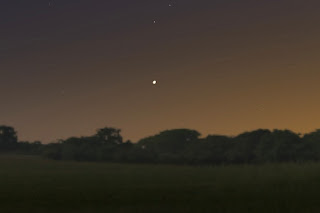


Jupiter and Saturn


The late Professor Stephen Hawkins once said:  “Remember to look up at the stars and not down at your feet. Try to make sense of what you see and wonder about what makes the universe exist.”


Look up at the stars: perhaps we miss that in north London; perhaps we only remember when we’re away from the functional glare of street lights. 


Maybe we peered at the night sky hoping to see the rare conjunction between Saturn and Jupiter; an unusual light, shining a little brighter.


Perhaps it's an innate human instinct to look up: and the longer we stare the more we see and the smaller we feel; with awe and expectation we try to make sense of the cosmos. 


In the beginning, the Spirit moved over a formless void; and lights were set in the dome of the heavens; the sun and moon and stars.


“Be curious” said Hawkins. In the midst of trying to make sense, he continued “however difficult life may seem, there is always something you can do and succeed at… It matters that you don't just give up.”


Image unknown


The magi in today’s Gospel were experts in heavenly realms; they were certainly curious. 


As astronomers, they were disciplined in the science of mapping the stars and planets; alert to different constellations; noticing changes in alignment; asking the kind of questions Professor Hawkins did.


Perhaps, like us, they looked upon a similar conjunction to the one seen last month. 


And as they looked, they saw not personal fate; but a sign of cosmic hope. 


Jupiter and Saturn blazing bright; a light had come causing them to arise.

A sign of royalty: the glory of the Lord rising upon them.


Years before, Abraham had been promised that his descendants would be more numerous than the stars; Isaiah foretold that nations would be drawn to this light; kings, to this bright, new dawn.


A still from T. S. Eliot reading Journey of the Magi


And the journey begins: in words from a sermon by Lancelot Andrews, taken up by T. S. Eliot, we’re drawn into their steps [text of The Journey of the Magi here]:


‘A cold coming we had of it,

Just the worst time of the year

For a journey, and such a long journey:

The ways deep and the weather sharp,

The very dead of winter.


There are camels too: not the multitude of which Isaiah spoke, but perhaps sore-footed; with camel men cursing and grumbling as the poem goes.


And did these star-gazers, at times, regret their journey, as Eliot supposes? Longing perhaps for the precision of their science over against the seeming folly of this journey?


Did they miss the the summer places as night-fires went out? Did they avoid those cities hostile and the towns unfriendly and instead travel all night, sleeping in snatches?


Herod and the Magi


This star of wonder had made them curious; they’d wondered about the universe; they could not give up.


These nameless pilgrims seek a royal birth; they go to a palace to pay homage. 


They find a named king seeking to cling to power; his palace a place of fear, deceit and brooding violence.


Amidst the pieces of silver and empty wine skins, Eliot simply says: 

But there was no information, and so we continued.


They continued to a smaller town; a more marginal place; a town that was satisfactory


Brian Whelan: 


Their curiosity and expertise, their determination and endurance had led them this far.


Their arrival looks back to Abraham and Isaiah - to promise and prophecy. All nations shall come to the light - God’s blessing of Israel becomes hope of healing for the nations. 


The bring gold and frankincense, yes; gifts marking this child our as a king; as the Lord worthy of worship. 


Yet they also offered at his feet the gift of myrrh; foreshadowing burial.


This is unexpected. As Eliot’s magi puts it: were we led all that way for

Birth or Death?


There was evidence of birth, for sure; and yet the poetic star-gazer continues: I had seen birth and death,

But had thought they were different; this Birth was

Hard and bitter agony for us, like Death, our death.


This birth is hard for Jesus will face opposition; a sword will pierce his mother’s heart.


This child who is Emmanuel - God with us - will not cultivate fear and deceit. Instead he is with us where the pain and grief is. 


This birth prefigures his life: in fulfilment of the law and prophets; in love that heals and sets free; that binds up broken-hearts and breaks down divisions.


Here is the King of the Jew; the hope of the nations. 


Not a king who rules through fear, oppression and violence; but the Lord who brings reconciliation through justice and compassion.


He dies with us; and we die with him.

He lives; that we might live.
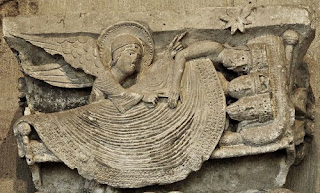


Gislebertus: The Dream of the Magi, Autun Cathedral


The magi sleep and dream.


They are warned about Herod’s intentions.


They return, but not to him; they return home by another road.


They returned to their palaces and kingdoms, their maps of the cosmos.

Yet, as Eliot puts it, they were: no longer at ease here, in the old dispensation.


They no longer clutched their gods.


For they had worshipped the beauty of holiness.

They had knelt and adored.

They’d set down burdens and sorrows alongside their costly treasures.


There they’d found comfort and prayerfulness.

Truth took on this strange beauty of birth and death.

Love enfleshed in tenderness. 


And now: curiosity had been met with joy.

Their ease unsettled in the face of this glory.

The old dispensation giving way to a new world.

A world where we too are called to carve out space that is less polarised.


We are to look up at the stars and to look into the face of Christ.


We are to dream: to dream that we will find another road where a commitment to being with and living for overcomes the fearful ‘I’. 


A world that may be more compassionate and just.


© Julie Gittoes 2021


Tuesday, 29 December 2020

What can we give? Our hearts

A sermon for Christmas Day 

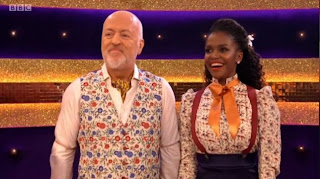
Image: courtesy of BBC

Strictly Come Dancing has always offered glitter, glamour and a touch of escapism on a Saturday night. Perhaps in the disappointments, losses and struggles of this year, even more so. 


And here we are: a Christmas Day like none we expected. And here we are: a community welcoming this great little one whose all-all embracing birth brings earth to heaven, stoops heaven to earth.


In the final, Bill Bailey and Oti Mabusi performed to Queen’s iconic song The Show Must Go On. 


They lifted the glitter ball trophy, hours after we went into Tier 4. Bailey said: ‘It very much was a rallying call… People are going to be isolated at Christmas. This is not just a song about the arts. This is an anthem about not giving up, keeping hope, getting through this!’


Albin Polasek: Shepherds and Angels


And we too are called to not give up, to keep hope and to get through this: together.


We’ve kept going: carrying out our tasks at home, at work, amongst friends and in our community. Like the shepherds keeping watch over those things we’re responsible for.


And there have been glimmers of light: acts of kindness and generosity; phone calls and offers of help; checking in with neighbours; opening our hearts to each other in the midst of the strangeness and loss, anxiety and isolation.


Today we, like the shepherds, are called to respond to a greater hope, a brighter light a deeper love.


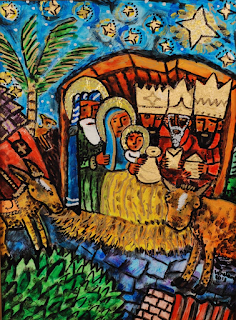
Nicholas Mynheer: Nativity


For although, as Isaiah describes it, it can feel as if we are in a land of darkness: of social distance, financial pressure, disrupted eduction and uncertain futures, there is a new dawn.


A child has been born for us: after the pain of labour, in the frailty of our flesh, here is love.


God acts to transform the world, to open our hearts, through the greatest power there is.


Love.


Speechless and crying to be fed; dependent and carrying all authority.


This little one is our mighty God; the source of counsel and peace. 


In this little one, fear is turned to love; despair to hope; isolation to friendship; hurt to trust.


Dinah Roe Kendall: The Shepherds went to see the Baby


The shepherds seek out this little one of great love.


The heart of the good news we celebrate today is God is with us.


That God loves us and will not let us go.


Limitless love in frail flesh.


Risking all; enfolding us in its fullness.


Abundant. Unconditional.


Calling forth love.


In this little one, we see a  love bridges every social distance; teaching us new body language of care. 


Refusing to give up; keeping hope; getting through this with love.


Luke will go on to tell of this boy growing in wisdom and debating in the temple; eating with tax collectors and pharisees; embracing women and men, old and young; healing, teaching, forgiving, restoring.


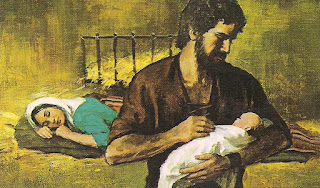
Joseph holding Jesus while Mary sleeps


For now this little one knows the vulnerability of every human need.

This little one will bear great love in suffering, dying and rising to new life.


It is a love that wins: the Word of God with us that has the final word.


The Christ-child comes to set us free to love:

to love God; to love ourselves; to love others.


This love is the main thing: it does not leave the world unchanged.


May this love keep us going in the disappointments, losses and struggles;  strengthen us to get through this with hope and perhaps a little joy too.


As we kneel before our crib, and sing joyful carols, may we ponder the wonder of this birth.


We ponder love that makes us whole; and let us give all that we are, for those who live under the shadow of darkness.


The carol at the end of today’s service speaks the earth as hard, the winter is bleak; yet the angels fill the heavens with light and song; it is Mary who cradles Jesus, kisses him; Joseph who takes him as his mother rests. 


This little family cradling love human and divine: drawing us to this light of love and hope. 


What can we offer or give, knowing we are loved this much? 


Our hearts.


Open the door; open our hearts; ponder what we find.


You are loved.


When the miracle happened it was not 

with bright light or fire - 

but a farm door with the thick smell of sheep 

and wind tugging at the shutters.


There was no sign the world had changed for ever

or that God had taken place;

just a child crying softly in a corner, 

and the door open, for those who came to find.


Nativity: Kenneth Steven [printed in the Church Times]


© Julie Gittoes


Mary: thy maker's maker

A sermon preached on Advent 4 - just as we went into Tier 4.


Chris Gollon: Madonna and child

Although we stand with Mary at the moment of annunciation, perhaps we are in fact already in the midst of birth pangs. Since March, we’ve waited and labouring to keep people safe love hurts.


This woman who’s response we know by heart; whose story is so well known; the figure who has stored the artistic imagination; the one who calls forth devotion. 


She stands before us: Mary, mother of our Lord Jesus Christ:

faithful.

trusting.

obedient.

joyful.

humble.


She has become a pattern of grace, endurance and hope.


She is receptive to the outpouring of the Spirit, not just today but until the day of Pentecost.


She waits.


She ponders and praises; she protests and prays.


She is one with us today.


One in a community of love and witness.


Sophie Hacker: from Art of Mary (Southwell Minster)


The one who is the fullness of God was born of her flesh. 


She is Theotōkos: God bearer.


In his sonnet series ‘La Corona’ the Anglican priest and poet, John Donne, writes of this intimate mystery of faith and love saying of Mary: thou are now, Thy Maker’s maker, and thy Father’s mother, Thou has light in dark, and shutt’st in little room immensity, cloister’d in thy dear womb.


Her story like ours is a tapestry of joys and sorrows; hopes and fears. We celebrate her character and our lives fill her silences. 


She is often presented as a devoted mother; resilient and wondering; tenderly nursing her son. She is both mother of sorrows and queen of heaven. 


The story of this particular woman is of cosmic significance. The wonder of pregnancy; eternity caught in a span. 


We wait with this woman who waited: nine months before her labour pains. 


Susie Hamilton: from Art of Mary (Southwell Minster)


Today we remember the way in which an angel greeted her with blessing and peace and favour.


She was troubled. She asked questions.


The angel spoke words of assurance, promise and power.


She responds: the Lords’ servant, aligning her will with God’s will.


Then there’s a moment of solitude: there is space and stillness; and yet did her heart beat a little faster, her breath a little shallower. Left by an angel; praying her beloved Jospeh would remain at her side. 


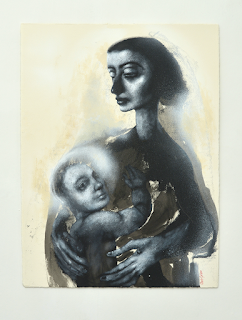
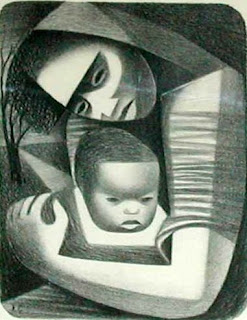
Elizabeth Catlett: Mother and Child


As we look forward to nativity, the Word of God is birthed in our midst. He will leave the cloister’d womb and gasp for air and cry and reach for Mary’s breast, for Joseph’s hand.


He comes in weakness to a world where the inn has no room. 


This Word is speechless now; but will grow up to speak wonders. 


Mary bore him, held him, guarded him fiercely. Her arms a crucible of passion and compassion. How many parable did she shape - stories of a woman’s lost coin, a wedding feast and yeast in bread?


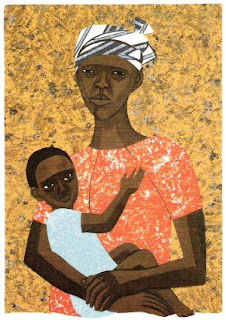
Elizabeth Catlett: Madonna 


This woman bears this child: holding him out to us. 


She presents him as one who disrupts the status quo, who knows our thoughts and fears; who heals and loves. 


He is near to us now. 


May we bear him in our hearts, thou not present in our churches.


For the one cloister’d in Mary’s womb is the one whose kingdom never fails. 


In a moment we’re going to hear a piece by Sufjan Stevens - whose music has a folksy and subversive yet strangely familiar take on Christmas (link at the end).


He sings of longing for blessing; for our hearts to be tuned to grace. Echoing Mary’s song, the Magnificat, he speaks of mercy and praise and unchanging love. 


Echoing Mary’s response to God, he sings to God saying: here’s my heart, take it; that we might bear Jesus. 


An advert by the Savills estate agent reads:

Homes have been a boardroom and a class room, often at the very same time.

Homes that have been both a place of work and the perfect staycation 

Homes that’ve offered a door to shield behind, a room to scream in and a wall to lean on; Homes that have kept us together while we’ve been apart; been workout spaces and worship spaces…


It ends thank you that every home has been more than a home; and as we shield and scream, work and worship, may we remember that this season God chooses to make a home with us; in our hearts. 


Christmas isn’t cancelled. It’s lived out more intimately, yes, but still real. May our homes protect us and be a place where God dwells and out of which we can bear Christ’s love to others. 


© Julie Gittoes


A stanza from John Donne's "La Corona" read at the end of the sermon. 


Annunciation


Salvation to all that will is nigh;

That All, which always is all everywhere,

Which cannot sin, and yet all sins must bear, 

Which cannot die, yet cannot choose but die,

Lo! faithful Virgin, yields Himself to lie

In prison, in thy womb; and though He there

Can take no sin, nor thou give, yet He'll wear,

Taken from thence, flesh, which death's force may try.

Ere by the spheres time was created thou

Wast in His mind, who is thy Son, and Brother;

Whom thou conceives, conceived; yea, thou art now

Thy Maker's maker, and thy Father's mother,

Those hast light in dark, and shutt'st in little room

Immensity, cloister'd in thy dear womb.


Sufjan Stevens: 


Sunday, 13 December 2020

Who are you?

Something that's neither sermon nor poem; but reflective verse (if that's a thing) for Advent 3. The readings were Isaiah 61: 1-4, 8-11 and John 1:1-6, 19-28


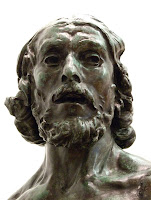
John’s face


Detail of St. John the Baptist Preaching by Rodin at the Museum of Modern Art, July 2007


There was a man sent from God.

His name was John.

This is his testimony, his witness.

It begins with a question. 

Who are you?


This man was sent from God. 

His name was John.

But who was he?

This one who knew who he was not;

who invited all to come to the river.


Other prophets may have addressed kings;

walked in the streets amongst the people;

rebuked them publicly; 

used visuals to make their point;

cried out for justice, mercy and peace.


Instead, this man

goes into the wilderness.

He went and stood on the banks 

of a river,

and waited.


John looks at us:


John the Baptist: Jacob Jordeans (Columbus Museum of Art)


Who are you,

this man who is sent to us:

who looks at us in the wilderness

and breaks the desert silence

with a confession?


He confessed

and did not deny it,

he confessed:

I am not the Messiah.

What then?


Elijah? No.

A prophet? No.

We must have an answer:

who are you?

What do you say about yourself?


This man was sent from God,

to be a voice.

A voice crying out in the wilderness:

Make straight the way;

prepare for the one to come.


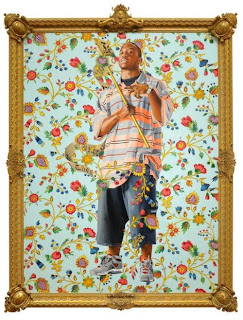
John like us:


Saint John the Baptist II: Kehinde Wiley (Museum of Art, Duke University)


And is he like us?

Are we to be like him?

Adopting this pose,

knowing who we’re not,

yet knowing whose we are?


Are we drawn by the same thread of love,

the same birth; the same breath?

Through water and wilderness, 

darkness and light,

pointing to the one who is not yet known.


We too are called by name,

each one of us called

to witness, to testify, to confess

the name of the one who is among us

as love.


We’re not dressed in camel’s hair, but in our own clothes.

Yet do the gestures our body language prompt the question?

Who is this God of love 

of whom you speak, to whom you point, 

the one you praise?


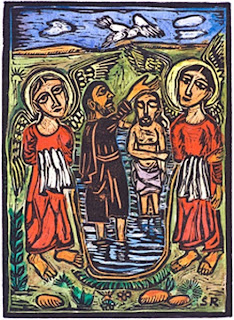
John at the river:


Baptism of Jesus 2:  Dr. P. Solomon Raj


John baptises with water,

inviting us to see our need for new birth.

To turn, listen, repent;

to open our hearts to a Kingdom were 

justice and mercy flow.


There was a man sent from God

pointing to the one who 

brings light;

the one standing among us.

Unknown.


This one is coming

of the Father’s love begotten.

Alpha and Omega,

source and ending.

He whom the prophets promised.


John says he’s not worthy

to untie his sandal.

Yet this one stands with us in our humanity.

Love divine in manger and mud, 

wilderness and water.


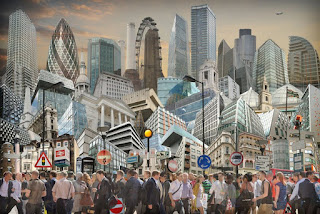
City:


Graham Holland: photo montage 


John took up the mantle of the prophets;

the greatest and yet the least.

A voice.

Crying out.

Prepare, get ready, listen.


See the light; 

listen to the Lord’s anointed.

Proclaim good news.

Proclaim liberty.

Proclaim the year of the Lord’s favour.


The voice cries:

for the broken-hearted 

for the sick and the grief stricken.

For the ruined, desolate cities 

and fearful generations wanting normality back.


The voice cries:

for love of justice;

for freedom;

for comfort; 

for blessing.


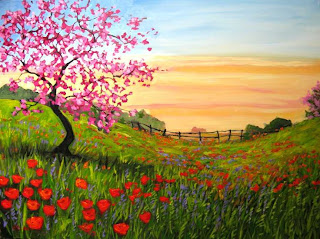
Blooms:


Image detail: David Hockney


For the earth will bring forth new shoots.

Seers, prophets and witnesses 

foretold and confessed:

that of one highly favoured lady, 

Emmanuel, God with us, the Christ was born.


A voice cried out in the wilderness:

for the light of love casting out fear;

the day spring from heaven, the anointed one;

warming hearts, blessing earth;

breathing life, destroying death.


John came to witness to light:

yet the world still weeps;

lives bearing the cost of 

power’s privilege and 

sin’s selfishness and separation.


A voice cries out in the wilderness:

a new day dawns.

He came, he comes, he will come again with justice.

Emmanuel. God with us.

Love’s unbroken thread; to mend a broken earth. 


There is joy in this, 

and comfort’s strength.

Who are you, are we, am I?

But fragile bodies, bearing love in flesh;

Voices, crying; hearts, opening;  hands, repairing.


Spirit-led and refusing to lose hope in what is

just and beautiful, and good and true.


© Julie Gittoes 2020