Saturday, 18 November 2023

In these living years

Sunday, 1st October, Trinity 17: Ezekiel 18:1-4, 25-end, Philippians 2:1-3 & 

Matthew 21:23-32


Generational stereotypes abound in memes and advertising, sketches and articles:

Boomers: well-off

Gen X: cynical 

Millennials: entitled

Gen Zs: civic-minded


But, as one headline puts it: ‘Boomers to the left of you; Gen Z to the right. Are we really so bafflingly different?’


At one level, the answer is “no”: we’re human with the same fears, affections, hopes, biases and limitations. Our experience might mean that we find solidarity or difference across generations because of our personality, interests, politics and community.


Yet at another level, the answer is “yes” because as individuals we do exist within cohorts or time frames; the impact of global events or national policy impact us differently.


Some of it is about cultural norms and reference points; or having analogue childhoods versus being digital natives; some of it is about wealth, taxes and the cost of living; coming of age in the era of student grants or student loans.


In a way, bridging the generation gap has always been with us.  It’s 30 or more years since Mike and the Mechanics debuted their rock ballad “The Living Years”. It’s a track which names the way ‘every generation blames the one before/all of their frustrations come beating on your door.’ We come hostage to hopes or imprisoned by fears. 


We can go back even further - 1000s of years rather than a few decades - and find those frustrations exposed by Ezekiel: in repeating the proverb about parents eating sour grapes and children’s teeth been set on edge, he is naming the inter-generational blame game.


Or, to return to the ballad, ‘we open up a quarrel between the present and the past/ we only sacrifice the future it’s the bitterness that lasts.’


Ezekiel speaks into this conundrum by reminding his hearers that each life belongs to the Lord - of parent and child alike - and together they share responsibility for the present and the future.  He asks what leads to life - and explores the impact of moments of change.


He names the pivot moment: when we walk away from what is righteous and pursue what is harmful, we bound to the fortunes and fate of death; when we walk away from what is wicked and pursue the law of love, we open up a new perspective that leads to life. 


The lyrics of “the living years” are personal and particular - a son regretting all the things he’d not told his father before he passed away, and yet hearing his echo in a baby’s new born tears. 


As the refrain puts it: ‘I just wish I could have told him in the living years.’


Ezekiel is concerned about these living years and breaking cycles of blame. 


We are judged not on the basis of being a boomer or millennial, Gen X or Gen Z - it’s true, we might not always see eye to eye - but on the basis of living in God’s ways. Repentance of hurt or harm opens up space for transformation. 


Bitter quarrels between present and past sacrifices the future; but Ezekiel promises God’s people life  based on a new heart and a renewed spirit. 


Turn and live, says the prophet.


Don’t miss the living years, says the ballad. 


We’re drawn into the substance of this life through the lens of a story Jesus tells when his authority is questioned - and in the words of  hymn which predates Mike and the Mechanics by almost 2000 years.  


Together they invite us into a way of life and faith which is fully integrated - it’s not about the ability to "talk the talk” of Christianity but allowing words and actions to stretch, enrich, sustain and deepen each other. 


Jesus’ story about the two sons highlights the gap between talk and action, intent and deed: one makes a promise but does not fulfil it; the other shrugs off the request, but goes on to do the work anyway.


It’s a very human dynamic. 


We, like the the first son, are capable of both promising things and putting them off, deciding against it, getting caught up in other stuff or simply forgetting.  


However we can also be like the second son - in our hearts being reluctant to do something but in the end being moved to step into the gap, spontaneously moved to act, responding to the need. 


Jesus tells this story in the context of questions about his authority - having arrived in Jerusalem a few days earlier riding on a donkey, to hosannas of hope and adulation; having within the  previous 24 hours cast traders out of the temple, challenging the things that got in the way of it being a house of prayer for all nations. 


We can imagine the outcry - who did he think he was? Responses to him vary across generations perhaps but also across social standing or position. Those without influence or control embraced him; those with power and status didn’t.  How much or how little hope or agency effected their capacity to accept the promise of good news.


This good news is about what leads to life - and demands a moment of change.  It’s not just about the promises we make and fail to keep - it’s about acknowledging mistakes knowing that we can turn and choose life. 


When we name our need and vulnerability, when we let go of self-reliance and selfishness, when we acknowledge the injustices or unfairness we see there is a choice: to blame others or to accept the invitation to shared responsibility - across the generations - and see where God is opening up new possibilities, where change might be possible and where hope might begin.


In the water of baptism, we are brought to new birth - cleansed, renewed, enlivened. There our thirst is quenched - promises are made, we turn to God and choose life. 


However many years ago that moment was for us, we know that we need to be sustained in our journey of faith: not only in prayer, learning and fellowship but by this hour on a Sunday when we are invited to turn and choose life - again and again. Here promises are renewed and forgiveness is received. 


Here we receive the gift of bread and wine which is life itself: receiving what we become and becoming what we received, that is the body of Christ. And we draw near not just with reverence but with an awareness of our need and a deep longing to be fed. Here we rejoice in the hope of an intergenerational community - of hope and life.


But we don’t stop there: this is just a gathered interval in our scattered lives - for we are bodies within the body of Christ moving into the world. We go out equipped to do what we say - acting with love and mercy, seeking equality and justice, embodying compassion and resisting blame. 


Perhaps we can offer a counter narrative to Mike and the Mechanics by healing the quarrels between the present and the past; refusing to sacrifice the future with bitterness. We are drawn into these living years by an early Christian hymn. 


Paul introduces it sayings: if there is any encouragement in Christ, any consolation from love, any sharing in the Spirit, any compassion and sympathy, make my joy complete: be of the same mind, having the same love, being of full accord and of one mind.


It doesn’t matter if we’re boomers or millennials, Gen Xs or Gen Zs - or even the Gen Alpha amongst us: none of us are to act with self ambition or conceit - but instead to look with humility to the needs and interests of others.


That radical intergenerational vision is rooted in the love of God revealed in Jesus - who emptied and humbled himself, becoming obedient to death on the cross. In turning to him we find life. In his name, we find our unity. 


In the power of the spirit we live our lives working out what this salvation - this hope of healing, forgiveness and life means. For God is at work in us in every breath or step we take - in our words, actions, choices, tasks. In these living years may we choose the life that truly is life. 


© Julie Gittoes 2023

Monday, 30 October 2023

You shall love

Sunday 29th October - last Sunday after Trinity: Leviticus 19:1-2, 15-18, 1 Thessalonians 2:1-8 and Matthew 22:34-end


+You shall love the Lord your God with all your heart and with all your soul and with all your mind. This is the greatest and first commandment. And a second is like it, you shall love your neighbour as yourself. 


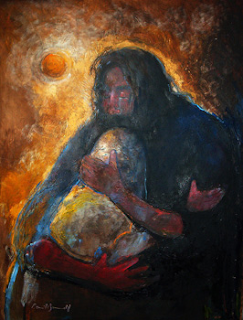
Image credit: Daniel Bonnell - Jesus Wept


How do we love in a time of fear? How, when two peoples, as one writer puts it, ‘with deep wounds, howling with grief, are fated to share the same small piece of land?’ [Freedland here]


Pain is both particular and vast for Israelis and Palestinians, the pain of Holocaust and Nakba and the cycles of trauma and fear of annihilation. The anxiety and grief that exists within communities in Barnet too, and a longing for safety and empathy. A pain so relentless and unquantifiable it breaks our hearts.  


Yet we must find a way of loving because the world is both too dangerous and too beautiful, too broken and too holy, too unjust and too full of possibility for anything else. 


The alternative is unending loss; the horror of conflict limits the range of our human sympathy or solidarity we can end up in a dark place; a place where more hatred is birthed; further harm conceived.


Our readings today invite us into that hard way of loving that allows for humanity and hope, empathy and justice, those things which make progress towards peace. Even when, especially when, our prayers are cries for resolution, pleas for freedom. 


You shall love. 


Leviticus reminds us that this is a command that flows from the very nature of God.


You shall be holy for I the Lord your God are holy. 


Holiness revealed in human lives looks like just judgement - without partiality or deference or slander; without vengeance, grudges or hatred; without profiting from the life of a neighbour by their blood. 


I am the Lord. I am the Lord.


You shall love.


Such love is a matter of effort and practice rather than a feeling or preference. It is a commandment. A matter of obedience. 


It means vulnerability and trust; it means crossing boundaries.


It seems beyond our human capacity. And it is. Yet we find hope. 


Jesus himself says you shall love, not as a social nicety but in the context of having silenced critics, amazed others and being tested by some. Betrayal, arrest, denial, condemnation and death are but days away for him.


There can be no more demanding context within which to say to friend, enemy, follower or critic: you shall love.


The love of which he speaks demands our all: heart, soul and mind. A whole-person attention God’s inexhaustible self. God’s love makes our love possible.


It means an acceptance that we are loved in order that we can love neighbour. That first step perhaps the hardest needing constant renewal in order to overflow to others. 


In Jesus, the fullness of God’s love has flesh and bones, blood and breath.  Love going to the cross and grave and depths of hell; love rising again to reach beyond locked doors and warm fearful hearts. 


To walk that way of love is to weep and laugh, touch and feed; to welcome, set free and forgive; to comfort, confront and guide; to listen, to wait and speak. 


Rabbi Jonathan Wittenberg, reflecting on solidarity in a time of fear writes on being kind or loving, from the Hebrew ‘Chesed’. [Rabbi Wittenberg's blog is here]


Such 'enduring kindness’ he says ‘sounds weak in response to terror. It’s not, it’s a way of life… it requires constancy, generosity, forbearance and the courage to stay present amidst pain. It demands our time, commitment and heart.’


You shall love. 


It is our way of life too. Life shaped by our prayer- by placing infinite love at the centre of our hearts. Life shaped by our community - by gathering around our Lord’s table. 


It is a life that requires much of us: our time, our commitment, our hearts. 


Writing to the Thessalonians, Paul spoke of the courage to walk this way of love and to share it with others, despite his own suffering and maltreatment.  He shared good news of God’s love  without flattery or greed, deceit or trickery but with gentleness. 


His words and actions drew on a reservoir of divine love: loving God whole-heartedly, and being loved absolutely, had shaped and tested his human heart - so that he could express a deep care for for the other, to those he did not know.


Rachel Goldberg, the American-Israeli mother of one of those taken hostage, addressed the United Nations yesterday: she spoke of pain and hope and the courage to resist hatred; to not let it erode our humanity [the link is here]. 


She also speaks of the Bedouin Muslim who stood in front of the shelter where her son and others hid. He tried to negotiate with the militants to

save them, telling them his family were in their and not to search it. He was brutally beaten by Hamas.  


The Muslim broadcaster Remona Aly spoke on Radio 2 about life and love which bring hope out of despair, like suns rising after darkness. She sees ‘suns rising’ she said ‘within people who bravely, vulnerably reach out to share each other’s pain.’ [Here is the link to Remona Aly's pause for thought]


We don’t not find ourselves outside Israeli shelters or Palestinian hospitals; nor are we negotiators or aid workers, but we are neighbours. And our neighbours need us to have forbearance and courage, generosity and constancy. To be there to listen. To not other them.  


Love is not weak but it is strengthened in prayer: turning to a loving God that our hearts might have the capacity to be alongside our neighbours. It begins with our silence, our cries. Let us pray, in words shared by Archbishop Justin:


God of compassion and justice,  we cry out to you for all who suffer in the Holy Land today. For your precious children, Israelis and Palestinians, traumatised and in fear for their lives. Lord, have mercy.


For the families of the bereaved, for those who have seen images they will never forget, for those anxiously waiting for news, despairing with each passing day. Lord, have mercy.


For young men and women heading into combat, bearing the burden of what others have done and what they will be asked to do. Lord, have mercy.


For civilians in Israel, Gaza and the West Bank, that they would be protected, and that every life would count,  and be cherished and remembered. Lord, have mercy.


For the wounded, and those facing a lifetime of scars, for those desperately seeking medical treatment where there is none. Lord, have mercy.


For medical and emergency personnel, risking their own lives to save those of others. Lord, have mercy.


For those who cannot see anything but rage and violence, that you would surprise them with mercy, and turn their hearts towards kindness for their fellow human beings. Lord, have mercy.


For people of peace, whose imagination is large enough to conceive of a different way, that they may speak, and act, and be heard. Lord, have mercy.


Mighty and caring God, you promised that one day, swords will be beaten into ploughshares, meet us in our distress, and bring peace upon this troubled land. Amen.


© Julie Gittoes 2023 (the concluding prayer, Archbishop of Canterbury)

Saturday, 28 October 2023

Barnet Windrush Celebration - a reflection

 As a relative newcomer in this Borough I’m glad to call home, this is a personal reflection rooted in my own Anglican tradition, which I hope might resonate. 

Growing up in the late 70s and early 80s, one of the most familiar, entertaining and joyous faces I saw on TV was that of Floella Benjamin.  I am one of what she calls her ‘Play School Babies’. 

Back then, I didn’t know that she was part of the Windrush generation. She was simply part of my cultural landscape - not only as a presenter from my childhood but as an advocate and politician of my adulthood. She reminds us that there is much to celebrate and give thanks for in the lives of those who may not be famous but who have committed to and shaped our communities for the better.

However, as the injustices of the Windrush scandal unfolded, I have had to learn through the lens of novels, conversations and documentaries some uncomfortable truths: that many, when they arrived at churches of my own tradition expecting a welcome rooted in share faith,  experienced instead racism and rejection. 

In response to that legacy, the Church of England has committed to a process of moving from lament and repentance to action. Paul Boateng, the Chair of our Racial Justice Commission has said: We will wash your feet, yes, but sometimes we will hold your feet to the fire’.

Washing feet and holding feet to the fire are both acts of love. Yes, I am blessed, challenged and inspired by the diversity of my own congregations week by week. Yes, we receive gifts from each other and share the abundant and transforming love of God revealed to us in Christ Jesus. 

But there is more to do in giving all people a voice at the table, a way of shaping the future. It means for us naming the flows of power or bias; binding up wounds, seeing the bodies in our corporate body; releasing creativity and difference for a common goal. 

Today matters, because it is about telling a richer and more honest story about our histories and cultures, the heritage we bring, the legacies we forge; being convinced that we are stronger communities together - more hospitable, dynamic, vibrant, compassionate. 

Back in May, I watched as Baroness Benjamin presented the Sovereign’s Sceptre to the King. It’s also known as the Rod of Equity and Mercy. On top of that gold rod is an enamelled dove - its wings outstretched - representing the Holy Spirit. This Spirit is God’s breath at work in us - the advocate, comforter, guide; an inspiration and challenge; 

Reflecting on that moment, Floella said: ‘Spirituality, equity and mercy. It is very symbolic to me. It represents everything I stand for and it puts out a clear message that diversity and inclusion are being embraced.’

That is an inspiring vision as we celebrate the Windrush generation in this Borough. Knowing we all have a responsibility to listen to the stories and to do our bit to inspire others - choosing to embrace equity and mercy, diversity and inclusion across our faith traditions and spiritual lives - in Barnet and beyond. That matters today more than ever. 

Almighty and everlasting God, we praise you for the gift and blessing of the Windrush generation. We thank you for their service to this country in so many essential roles and for all they have given for the building up of our national life. Enrich our understanding, deepen our appreciation for one another, banish ignorance, prejudice and fear and knit us together by the power o your Spirit who is the bond of love, though Jesus Christ our Lord. Amen. 


© Julie Gittoes 2023

Image and loyalty

 Sunday 22nd October: Isaiah 45:1-7, 1 Thess 1:1-10 and Matthew 22:15-22

Division, anguish, brokenness, fear, suspicion.

Those things seem endemic right now: across churches, communities, cities, countries.

How do we continue to extend compassion and grace to those who hold different views; who chant different slogans?

Today we hear the first of a series of difficult questions posed to Jesus as a kind of cross examination. It's a question which also reveals something of the political underbelly of life under Roman occupation - some wanted to see open revolt and the empire overthrown; others settled for a live and let live policy.

The question they ask is loaded and dangerous: is it lawful to pay taxes to the emperor. They address Jesus as one who is sincere and teachers the truth of God’s ways; who shows no deference or partiality.

It’s the kind of flattery that is more honest than they realise. Jesus sees and hears the malice. A yes or no would be inflammatory.

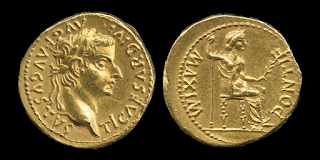
So instead Jesus asks to see a coin before posing his own question. It's a request to describe the piece of metal passed between hands: whose image does it bear  and whose title?

There is only one answer: the emperor’s.

Image here

A profile which acted as a reminder of his political power and Rome’s status; a symbol of defeat and humiliation to those being occupied too. In fact, one of Augustus’ successors inscribed coins with an image of a bound woman and the words Judae Capta or ‘Judea prisoner’.

Jesus’ response to the answer is one which is not only a statement of fact but a way of realigning or limiting power. 

To pay tax is a matter of returning to Caesar what was his. Yet, this foreign occupying power had no claim on all of human life.  His answer also asserts God’s ultimate sovereignty.  Our lives belong to God - reflected in our devotion and wholehearted service. 

Our worship is literally ascribing worth - absolute value and importance to God who is the creator and redeemer of all things. The disciples might pay tax, but they are not paying tribute - that is worshipping the emperor, giving them a central place in their life.

Jesus has found a ‘third way’. As Anna Case-Winters puts it, this is one which ‘is neither the violence of revolt nor the complicity of submission. It amounts to a nonviolent subversion of the oppressive power that does not concede Rome’s sovereignty; only God is sovereign.’

As so often, Jesus responds to the snare of divisive questions by inviting us to consider a harder question: what do we owe to God?

From the opening of Genesis, we know that God created human beings - that we might bear God’s likeness: that means ascribing dignity, worth and value to other human beings, but also that we owe God all that we are, as well as all that we have.

We cannot simply divide the world into a realm belonging to God and a realm belonging to forces of violence, evil and oppression. So what might it mean to dare to say that all things belong to God - and that we are to give God everything in the face of division?

How do we bear God’s image or see God’s image in others when there appear to be so many points of division, splinter groups, culture wars, conspiracy theories; so many hurts, traumas, fears?

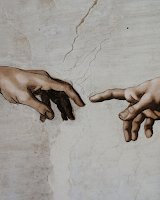
Image here

How do we lean into or yearn for such an all-embracing divine reign? 

Isaiah reminds us that God’s absolute sovereignty does not override the exercise of human freedom. We are invited to become co-creators in forming and shaping the world. 

We too are invited to acknowledge the Lordship of one who does not act on the world from outside it but through the mystery of the incarnation participates in it - in flesh of our flesh, sharing in weal and woe, calamity and joy.

It is this good news that Paul roots his letter to the Thessalonians in: first in giving thanks for them in prayer - and reminding them of the work of faith, labour of love and steadfast hope we are called to share in - through the name and person of Jesus Christ. The one who lived and died and rose again; breaking bonds of suffering and death; rescuing us from oppressive powers. 

To be imitators of him, in the power of the Spirit is about committing to the way we live - the means of bridging the gaps and meeting the needs. This is to inhabit the third way - not restoring to violence or complicity but subversion of all that dehumanises.

The language we use and the way we behave makes a difference: the voices we hear or the stories we silence, the behaviours we challenge or the people we protect, the virtues we commend or the sins some will overlook. Do we pursue Jesus’ third way in the choices we make?

To be an image-bearer puts justice, love and mercy centre stage; it invites a consistency between the prayers we say and our actions and decisions. To seek coherence rather than contradiction raises the bar.

Something might be pragmatic or popular, but not necessarily life-giving or just. Do we call it out? Something may be legal but not the most compassionate or merciful. Do we seek an alternative?

In politics and in economics what we render to earthly powers comes after what we render to God. Our way of engaging in the social and political realm is shaped by that prior commitment of faith and trust. 

This is to reject an easy path of our own security built on the exploitation of others or at the expense of their suffering. Instead there is the third way of sacrificial love which reaches out to the brokenhearted and challenges absolute force. We do not thrive as individuals, households or communities when we align ourselves with the Caesars of the world.

To pay our taxes is for us part of our contract to ensure the provision of education, health, and public services which support the welfare of all. Every era reimagines the contract of our fiscal-social life - redress balances of power - to find ways of alleviating want and enabling the flourishing of society for the common good. 

Some of you will have heard me talk about Love Matters: the Archbishops’ Commission report on families and households - listening to society, reflecting the gospel, challenging the church and influencing policy makers. 

It is more demanding to live out our broader convictions and loyalties - including making peace with our political other. We are not only image-bearers but members of the body of Christ: loving, forgiving, generous.

The grace of this is won on the cross. The one who is of the father’s love begotten is cast out of the city to die bearing the weight of God’s marred image in us. 

His is the face of endless, sacrificial love - not seen on a coin but placed in our hands as a wafer thin piece of bread, poured out in rich wine which anticipates a new kingdom. 

Our loyalty is to such a kingdom - of justice, mercy and peace - whilst other empires fade away. To give God what is God’s is to give our all. It is to notice the Spirit’s gifts - to live the gospel, being eager to do God’s will for the sake of a broken world and in the hope of the kingdom. 

© Julie Gittoes 2023