Showing posts with label image. Show all posts

Saturday, 20 July 2024

Witnessing beauty

 Second Sunday before Lent: 4 February 2024: 

Proverbs 8:1, 22-31,  Colossians 1:15-20 and John 1:1-4


Image Readers Digest


Mark Denman said of his work or art:  ‘photographers don't take pictures. They create images’.


Images are everywhere; we’re surrounded by visual representations.


Drawings, paintings and photographs; or for some of us, forming a mental image of something. 


Images conveying different meanings or feelings; or representing a concept or idea.


Adverts convey not only the brand of fruit juice, jeans or shampoo - but lifestyle, aspirations and status.


We might be concerned with our own self-image: how we feel about ourselves, how we’re perceived by others. 


We’ve become used to having a camera in our pocket: capturing moments, making memories. 


We balance being present in a moment of beauty with the urgency of capturing a digital image of what passes before our eyes.


Often we’re drawn to images of light: colour, brightness, shadows, reflections. 


Mark Denman reflects that ‘God creates the beauty. Through my camera, I am a witness’. 


Our first lesson from Proverbs reminded us of the way in which God rejoices in humanity and in the inhabited world. The wisdom of God delights in the depths and heights of creation; in springs of water, fields and mountains; in all that moves on the face of the earth.


There is a playfulness to such a description: something we want to delight in and hold onto in the images we take; but something that perhaps we miss in the pace of life; as human beings consume, develop and exploit; something we want to reclaim in all we conserve, research and protect.


Things are no longer the way they were; we long for the renewal of creation and for freedom from decay. The God who created all things seen and unseen is no unmoved-mover, but one whose love continues to reach out to us - to restore and to heal. 


The opening of John’s Gospel draws us into the great mystery at the heart of our faith: that the Word of God which was from the beginning became human, became flesh, dwelt with us. 


The one who brought life and light does not abandon our bruised and beautiful world; does not turn away from our hurting and hopeful human race. The light still shines in the darkness - and the darkness did not, and will not, overcome it. 


The nature of God is to love: to continue to reach out to us, even when we turn away; even when we get caught up in our own desires; even when we distort the truth for our own ends; even when we feel alone or uncertain.


Whether our hearts are full of joy and delight, or whether they carry hurt and sorrow, the pulse of love is there: holding us, guiding us, drawing us to its heart.


Perhaps we should worry less about how much love we have for God and embrace the truth that we are loved by God: something so simple; something we might spend a lifetime accepting. 


In Jesus we see God’s ways in human flesh: concerned to heal and willing to forgive; challenging priorities and use of wealth; sharing food and wine; putting the youngest at the centre; giving voice to the voiceless; bearing the pain with us; opening up new life; reminding us that we are children of God; inviting to risk loving and serving others.


In the Word made flesh we see the glory, grace and truth of God’s love.


What if we allow that seed of love to take root in us: to say we are loved; God delights in us. How might that change how we see ourselves, how we respond to others, how we use our time?


In Colossians, we hear Jesus described as ‘the image of the invisible God’: the one who was before the beginning, who creates and holds together. In him the fullness of God was pleased to dwell, in the substance of our flesh. In him all things are reconciled to Godself.


That work of reconciliation is revealed as love goes to the depths of human separation, pain and despair. The blood shed on the cross is the beginning of a new birth - the opening up of a way of peace as light and love confronts the darkness of death and is not overcome by it. 


The one who is the image of the invisible God is also the head of the body, the church. We are invited to have the mind of Christ in what we say; to show the compassion of Christ in what we do; to share the light of Christ when others struggle; to receive the love of Christ when we need each other - when someone else carries the light for us, so that we can find our way.


Jesus comes as the image of God not to condemn but to set free; not to punish but to heal and save. Therefore, the church is to embrace others - without prejudice or discrimination - but because in each human being we see the image of God. 


Everyone is part of God’s plan for salvation: we might not see it here on earth. Some things are fully reconciled when God is all in all. For now, we are invited to face the darkness recognising that the tragic and overwhelming are not the final reality. 


There is a light of new hope which gives us courage and strength; which enables us to make a new start. 


We have the image of God with us: love made real even when it hurts. We carry the image of God in us: holding the light and the delight. It is this wisdom that bids us eat and break bread together; that word that invites us to share outpoured wine and be blessed. 


It is God who creates the beauty - restores the hope and sustains the love. May the Spirit be at work in us as our lives become the witness to those things. 


© Julie Gittoes 2024


Saturday, 28 October 2023

Image and loyalty

 Sunday 22nd October: Isaiah 45:1-7, 1 Thess 1:1-10 and Matthew 22:15-22

Division, anguish, brokenness, fear, suspicion.

Those things seem endemic right now: across churches, communities, cities, countries.

How do we continue to extend compassion and grace to those who hold different views; who chant different slogans?

Today we hear the first of a series of difficult questions posed to Jesus as a kind of cross examination. It's a question which also reveals something of the political underbelly of life under Roman occupation - some wanted to see open revolt and the empire overthrown; others settled for a live and let live policy.

The question they ask is loaded and dangerous: is it lawful to pay taxes to the emperor. They address Jesus as one who is sincere and teachers the truth of God’s ways; who shows no deference or partiality.

It’s the kind of flattery that is more honest than they realise. Jesus sees and hears the malice. A yes or no would be inflammatory.

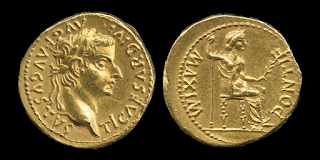
So instead Jesus asks to see a coin before posing his own question. It's a request to describe the piece of metal passed between hands: whose image does it bear  and whose title?

There is only one answer: the emperor’s.

Image here

A profile which acted as a reminder of his political power and Rome’s status; a symbol of defeat and humiliation to those being occupied too. In fact, one of Augustus’ successors inscribed coins with an image of a bound woman and the words Judae Capta or ‘Judea prisoner’.

Jesus’ response to the answer is one which is not only a statement of fact but a way of realigning or limiting power. 

To pay tax is a matter of returning to Caesar what was his. Yet, this foreign occupying power had no claim on all of human life.  His answer also asserts God’s ultimate sovereignty.  Our lives belong to God - reflected in our devotion and wholehearted service. 

Our worship is literally ascribing worth - absolute value and importance to God who is the creator and redeemer of all things. The disciples might pay tax, but they are not paying tribute - that is worshipping the emperor, giving them a central place in their life.

Jesus has found a ‘third way’. As Anna Case-Winters puts it, this is one which ‘is neither the violence of revolt nor the complicity of submission. It amounts to a nonviolent subversion of the oppressive power that does not concede Rome’s sovereignty; only God is sovereign.’

As so often, Jesus responds to the snare of divisive questions by inviting us to consider a harder question: what do we owe to God?

From the opening of Genesis, we know that God created human beings - that we might bear God’s likeness: that means ascribing dignity, worth and value to other human beings, but also that we owe God all that we are, as well as all that we have.

We cannot simply divide the world into a realm belonging to God and a realm belonging to forces of violence, evil and oppression. So what might it mean to dare to say that all things belong to God - and that we are to give God everything in the face of division?

How do we bear God’s image or see God’s image in others when there appear to be so many points of division, splinter groups, culture wars, conspiracy theories; so many hurts, traumas, fears?

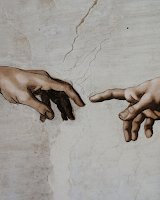
Image here

How do we lean into or yearn for such an all-embracing divine reign? 

Isaiah reminds us that God’s absolute sovereignty does not override the exercise of human freedom. We are invited to become co-creators in forming and shaping the world. 

We too are invited to acknowledge the Lordship of one who does not act on the world from outside it but through the mystery of the incarnation participates in it - in flesh of our flesh, sharing in weal and woe, calamity and joy.

It is this good news that Paul roots his letter to the Thessalonians in: first in giving thanks for them in prayer - and reminding them of the work of faith, labour of love and steadfast hope we are called to share in - through the name and person of Jesus Christ. The one who lived and died and rose again; breaking bonds of suffering and death; rescuing us from oppressive powers. 

To be imitators of him, in the power of the Spirit is about committing to the way we live - the means of bridging the gaps and meeting the needs. This is to inhabit the third way - not restoring to violence or complicity but subversion of all that dehumanises.

The language we use and the way we behave makes a difference: the voices we hear or the stories we silence, the behaviours we challenge or the people we protect, the virtues we commend or the sins some will overlook. Do we pursue Jesus’ third way in the choices we make?

To be an image-bearer puts justice, love and mercy centre stage; it invites a consistency between the prayers we say and our actions and decisions. To seek coherence rather than contradiction raises the bar.

Something might be pragmatic or popular, but not necessarily life-giving or just. Do we call it out? Something may be legal but not the most compassionate or merciful. Do we seek an alternative?

In politics and in economics what we render to earthly powers comes after what we render to God. Our way of engaging in the social and political realm is shaped by that prior commitment of faith and trust. 

This is to reject an easy path of our own security built on the exploitation of others or at the expense of their suffering. Instead there is the third way of sacrificial love which reaches out to the brokenhearted and challenges absolute force. We do not thrive as individuals, households or communities when we align ourselves with the Caesars of the world.

To pay our taxes is for us part of our contract to ensure the provision of education, health, and public services which support the welfare of all. Every era reimagines the contract of our fiscal-social life - redress balances of power - to find ways of alleviating want and enabling the flourishing of society for the common good. 

Some of you will have heard me talk about Love Matters: the Archbishops’ Commission report on families and households - listening to society, reflecting the gospel, challenging the church and influencing policy makers. 

It is more demanding to live out our broader convictions and loyalties - including making peace with our political other. We are not only image-bearers but members of the body of Christ: loving, forgiving, generous.

The grace of this is won on the cross. The one who is of the father’s love begotten is cast out of the city to die bearing the weight of God’s marred image in us. 

His is the face of endless, sacrificial love - not seen on a coin but placed in our hands as a wafer thin piece of bread, poured out in rich wine which anticipates a new kingdom. 

Our loyalty is to such a kingdom - of justice, mercy and peace - whilst other empires fade away. To give God what is God’s is to give our all. It is to notice the Spirit’s gifts - to live the gospel, being eager to do God’s will for the sake of a broken world and in the hope of the kingdom. 

© Julie Gittoes 2023