Saturday, 28 October 2023

Barnet Windrush Celebration - a reflection

 As a relative newcomer in this Borough I’m glad to call home, this is a personal reflection rooted in my own Anglican tradition, which I hope might resonate. 

Growing up in the late 70s and early 80s, one of the most familiar, entertaining and joyous faces I saw on TV was that of Floella Benjamin.  I am one of what she calls her ‘Play School Babies’. 

Back then, I didn’t know that she was part of the Windrush generation. She was simply part of my cultural landscape - not only as a presenter from my childhood but as an advocate and politician of my adulthood. She reminds us that there is much to celebrate and give thanks for in the lives of those who may not be famous but who have committed to and shaped our communities for the better.

However, as the injustices of the Windrush scandal unfolded, I have had to learn through the lens of novels, conversations and documentaries some uncomfortable truths: that many, when they arrived at churches of my own tradition expecting a welcome rooted in share faith,  experienced instead racism and rejection. 

In response to that legacy, the Church of England has committed to a process of moving from lament and repentance to action. Paul Boateng, the Chair of our Racial Justice Commission has said: We will wash your feet, yes, but sometimes we will hold your feet to the fire’.

Washing feet and holding feet to the fire are both acts of love. Yes, I am blessed, challenged and inspired by the diversity of my own congregations week by week. Yes, we receive gifts from each other and share the abundant and transforming love of God revealed to us in Christ Jesus. 

But there is more to do in giving all people a voice at the table, a way of shaping the future. It means for us naming the flows of power or bias; binding up wounds, seeing the bodies in our corporate body; releasing creativity and difference for a common goal. 

Today matters, because it is about telling a richer and more honest story about our histories and cultures, the heritage we bring, the legacies we forge; being convinced that we are stronger communities together - more hospitable, dynamic, vibrant, compassionate. 

Back in May, I watched as Baroness Benjamin presented the Sovereign’s Sceptre to the King. It’s also known as the Rod of Equity and Mercy. On top of that gold rod is an enamelled dove - its wings outstretched - representing the Holy Spirit. This Spirit is God’s breath at work in us - the advocate, comforter, guide; an inspiration and challenge; 

Reflecting on that moment, Floella said: ‘Spirituality, equity and mercy. It is very symbolic to me. It represents everything I stand for and it puts out a clear message that diversity and inclusion are being embraced.’

That is an inspiring vision as we celebrate the Windrush generation in this Borough. Knowing we all have a responsibility to listen to the stories and to do our bit to inspire others - choosing to embrace equity and mercy, diversity and inclusion across our faith traditions and spiritual lives - in Barnet and beyond. That matters today more than ever. 

Almighty and everlasting God, we praise you for the gift and blessing of the Windrush generation. We thank you for their service to this country in so many essential roles and for all they have given for the building up of our national life. Enrich our understanding, deepen our appreciation for one another, banish ignorance, prejudice and fear and knit us together by the power o your Spirit who is the bond of love, though Jesus Christ our Lord. Amen. 


© Julie Gittoes 2023

Image and loyalty

 Sunday 22nd October: Isaiah 45:1-7, 1 Thess 1:1-10 and Matthew 22:15-22

Division, anguish, brokenness, fear, suspicion.

Those things seem endemic right now: across churches, communities, cities, countries.

How do we continue to extend compassion and grace to those who hold different views; who chant different slogans?

Today we hear the first of a series of difficult questions posed to Jesus as a kind of cross examination. It's a question which also reveals something of the political underbelly of life under Roman occupation - some wanted to see open revolt and the empire overthrown; others settled for a live and let live policy.

The question they ask is loaded and dangerous: is it lawful to pay taxes to the emperor. They address Jesus as one who is sincere and teachers the truth of God’s ways; who shows no deference or partiality.

It’s the kind of flattery that is more honest than they realise. Jesus sees and hears the malice. A yes or no would be inflammatory.

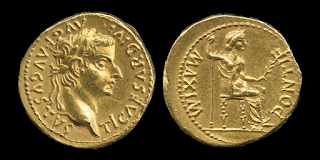
So instead Jesus asks to see a coin before posing his own question. It's a request to describe the piece of metal passed between hands: whose image does it bear  and whose title?

There is only one answer: the emperor’s.

Image here

A profile which acted as a reminder of his political power and Rome’s status; a symbol of defeat and humiliation to those being occupied too. In fact, one of Augustus’ successors inscribed coins with an image of a bound woman and the words Judae Capta or ‘Judea prisoner’.

Jesus’ response to the answer is one which is not only a statement of fact but a way of realigning or limiting power. 

To pay tax is a matter of returning to Caesar what was his. Yet, this foreign occupying power had no claim on all of human life.  His answer also asserts God’s ultimate sovereignty.  Our lives belong to God - reflected in our devotion and wholehearted service. 

Our worship is literally ascribing worth - absolute value and importance to God who is the creator and redeemer of all things. The disciples might pay tax, but they are not paying tribute - that is worshipping the emperor, giving them a central place in their life.

Jesus has found a ‘third way’. As Anna Case-Winters puts it, this is one which ‘is neither the violence of revolt nor the complicity of submission. It amounts to a nonviolent subversion of the oppressive power that does not concede Rome’s sovereignty; only God is sovereign.’

As so often, Jesus responds to the snare of divisive questions by inviting us to consider a harder question: what do we owe to God?

From the opening of Genesis, we know that God created human beings - that we might bear God’s likeness: that means ascribing dignity, worth and value to other human beings, but also that we owe God all that we are, as well as all that we have.

We cannot simply divide the world into a realm belonging to God and a realm belonging to forces of violence, evil and oppression. So what might it mean to dare to say that all things belong to God - and that we are to give God everything in the face of division?

How do we bear God’s image or see God’s image in others when there appear to be so many points of division, splinter groups, culture wars, conspiracy theories; so many hurts, traumas, fears?

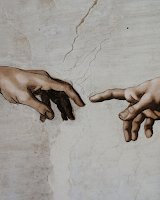
Image here

How do we lean into or yearn for such an all-embracing divine reign? 

Isaiah reminds us that God’s absolute sovereignty does not override the exercise of human freedom. We are invited to become co-creators in forming and shaping the world. 

We too are invited to acknowledge the Lordship of one who does not act on the world from outside it but through the mystery of the incarnation participates in it - in flesh of our flesh, sharing in weal and woe, calamity and joy.

It is this good news that Paul roots his letter to the Thessalonians in: first in giving thanks for them in prayer - and reminding them of the work of faith, labour of love and steadfast hope we are called to share in - through the name and person of Jesus Christ. The one who lived and died and rose again; breaking bonds of suffering and death; rescuing us from oppressive powers. 

To be imitators of him, in the power of the Spirit is about committing to the way we live - the means of bridging the gaps and meeting the needs. This is to inhabit the third way - not restoring to violence or complicity but subversion of all that dehumanises.

The language we use and the way we behave makes a difference: the voices we hear or the stories we silence, the behaviours we challenge or the people we protect, the virtues we commend or the sins some will overlook. Do we pursue Jesus’ third way in the choices we make?

To be an image-bearer puts justice, love and mercy centre stage; it invites a consistency between the prayers we say and our actions and decisions. To seek coherence rather than contradiction raises the bar.

Something might be pragmatic or popular, but not necessarily life-giving or just. Do we call it out? Something may be legal but not the most compassionate or merciful. Do we seek an alternative?

In politics and in economics what we render to earthly powers comes after what we render to God. Our way of engaging in the social and political realm is shaped by that prior commitment of faith and trust. 

This is to reject an easy path of our own security built on the exploitation of others or at the expense of their suffering. Instead there is the third way of sacrificial love which reaches out to the brokenhearted and challenges absolute force. We do not thrive as individuals, households or communities when we align ourselves with the Caesars of the world.

To pay our taxes is for us part of our contract to ensure the provision of education, health, and public services which support the welfare of all. Every era reimagines the contract of our fiscal-social life - redress balances of power - to find ways of alleviating want and enabling the flourishing of society for the common good. 

Some of you will have heard me talk about Love Matters: the Archbishops’ Commission report on families and households - listening to society, reflecting the gospel, challenging the church and influencing policy makers. 

It is more demanding to live out our broader convictions and loyalties - including making peace with our political other. We are not only image-bearers but members of the body of Christ: loving, forgiving, generous.

The grace of this is won on the cross. The one who is of the father’s love begotten is cast out of the city to die bearing the weight of God’s marred image in us. 

His is the face of endless, sacrificial love - not seen on a coin but placed in our hands as a wafer thin piece of bread, poured out in rich wine which anticipates a new kingdom. 

Our loyalty is to such a kingdom - of justice, mercy and peace - whilst other empires fade away. To give God what is God’s is to give our all. It is to notice the Spirit’s gifts - to live the gospel, being eager to do God’s will for the sake of a broken world and in the hope of the kingdom. 

© Julie Gittoes 2023

Sunday, 30 July 2023

Barbenheimer

 Sunday, 30 July: 1 Kings 3:5-1-12, Romans 8:26-39 and Matthew 13:31-33, 44-52


This has been a fascinating week in cinema with the simultaneous release of two films which appear to have absolutely nothing in common.


On the one hand, cinema-goers dressed in pink queued to see Barbie:  “life in plastic, it's fantastic”.


On the other, entering into the world of theoretical physics and the atomic bomb in Oppenheimer: “death destroyer of worlds”. 


To do the “Barbenheimer” - seeing both movies in one day or even one week - is intense, but not wholly contradictory. Rather, considering how they interact with one another reveals common threads.


Both deal with human frailty, potential and corruptibility; the legacies that haunt us or the problems we thought were solved.  both make us consider the kind of worlds we inhabit, imagine and create. 


As directors both Chistopher Nolan and Greta Gerwig explore power and patriarchy, ambition and arrogance, fragility and feminism, remorse and repentance. 


The sheer cheeriness of Barbieland’s candy-pink utopia only amplifies the bleakness of Oppenheimer’s dystopia of something not understood or feared until it was used.  


Barbie brings a party dancing to disco-pop to a halt as she asks “do you guys ever think about dying”; Oppenheimer, as he walks away from Einstein, knows he will never stop thinking about anything else.


There are layers of complexity in and beyond Oppenheimer the movie and Oppenheimer the man: from the clearance of Native Americans and Hispanos and Los Alamos to the unseen destruction of Hiroshima and Nagasaki; from the suspicion of the McCarthy era to chain reaction of an arms race and Cold War; from the personal betrayals to the weight of depression and responsibility  as campaigning becomes the pursuit of some sort of absolution.


As this plays out in screen one, in screen two we hear of a different sort of breach of stability; a different sort of fear. A membrane has ruptured, between Barbie World and reality.  The weight of human anxiety and depression, disappointment and longing for some sort of absolution seeps into the naivety of a pink plastic domain revealing a blond fragility. 


Stereotypical Barbie begins to experience the discomfort and tensions of the real world: whilst she tries to put things ‘right’, Barbie World is itself breached by Ken’s discovery of horses and patriarchy and a quest for respect which diminishes others. Neither world is ordered to enable the flourishing of all; power still operates out of the shadows. 


Yet there is a longing for liberation: not just in the acceptance of emotions but in acknowledging that we are enough, or "Kenough" as Ken puts it. But neither Barbie World nor “Kendom” are the answer - it is more complex than that.


There is a breach between the real world and the world as we long for it to be - as God calls it to be. It is a breach that Barbie cannot repair despite her longing to move from being made to making meaning.  It is a breach that God longs to repair - by not withholding his Son: for God so loved the world that he sent his Son, not to condemn but to bring hope of healing.


This is the mystery of the incarnation: God’s word made flesh, dwelling with us amidst the real tensions of human life with its power imbalances, burdens of guilt and exploitation and our longing for forgiveness; life with all the risk of intimacy, the struggle for self-acceptance and our place within systems we are subject to.


God comes into our world not through Barbie cars and roller blades, but through the labour pains of birth.  As Jesus enters adulthood, he is present at lakesides and in synagogues, on the road and at the table. He asks those whom he meets what they are looking for; breathing words of challenge, peace and dignity.


The breach between worlds is overcome in him - by his life, teaching us ways of healing; by his death, in bearing with our pain, separation and brokenness; in his resurrection, by revealing the power of love which wins, binding up hearts and gathering up lives.


In Jesus, we do not suddenly escape the contingency and complexity of our world; but we are given signs and markers of what life oriented to God’s ways might look like. 


In his parables Jesus speaks of a Kingdom - not a "Kendom" or any other humanely constructed realm. This Kingdom breaches the realms of earth and heaven, by bringing something of God’s reign to earth. 


If we listen to the words and images he uses, we notice several things. 


Image here


The first is that the stuff of this reign is small: a mustard seed, a grain of yeast. What is hidden away and barely visible will grow, changing and enriching what is around it. As a plant grows or a loaf rises, so we see the gradual process akin to the working out of God’s purposes.


We need to be patient and expectant; not losing heart or feeling disappointed. We are to trust the process that in our midst something is taking root and rising up which is beyond our expectations; hearts changing and movements of justice and mercy rising.


Such change and growth is not just for our sake, but for the sake of the world. A mustard seed produces a large enough shrub to provide nesting space for birds. Space to abide and make a home; to be safe and flourish. Yeast when combined with a proportion of flour - the most dough someone can knead - produces bread not just for some but for hundreds. It is a sign of feasting, sharing and hospitality.  


The next thing we notice is that a kingdom based on God’s ways with the world is worth everything we have: a treasure or a pearl for which we will gladly sell what we have in exchange for it. 


The parables describe a whole-hearted human response to this gift of love and grace - something we seek after and find, something we dig out and uncover.  There is risk and cost and joy to this quest - but it also brings to birth a newness, a set of possibilities, which redirect our priorities. 


Finally, this kingdom is like a dragnet - drawing in everything in its path; gathering up all kinds of people and lives. In part this echos Jesus’ own way of being in the world - time spent with a wedding couple and a grieving mother; daring to touch the leper and being touched by the haemorrhaging woman;  honouring the widow and embracing the child; debating with centurions, pharisees and samaritans. 


All those lives and stories belong to God - as do the theoretical physicist and doll creator, the campaigner and the fragile, the activist and the brokenhearted. On the one hand this kingdom does not demand rash judgement or a move to exclude or cut others off. On the other hand, to hold open the possibility of hope for all does mean living with complexity and uncertainty - it does demand wisdom to seek a way forward.


This is precisely what Solomon asked for when confronted with what it meant to lead a people chosen and yet rebellious. 


He recognises that to decide between good and evil, particular actions and their consequences demanded not wealth or trappings of power. It demands a mind that could discern - discover, seek after, uncover - what is right.


As we pray for our leaders, and for ourselves, that request remains the same: the pursuit of knowledge and peace, the seeking after justice and a sustainable future, all this demands a depth of wisdom beyond our human minds. It demands that we look to an ordering of the world in God’s ways - seeking to reconcile rather than divide.


Neither Oppenheimer nor Barbie are able to put things right. Yet they do point us to ideals and opportunities, they name the cost of ideology and the possibility of change or allowing space for others - seeking the purity of love which makes hatred cease.


Nor can we put things right in our own strength. The great hope of the climax of Romans 8 is that the Spirit helps us in our weakness - praying in and through and for us. The Spirit that searches the heart of God and our human hearts. There are echoes of mercy, whispers of love: our blessed assurance.


A Spirit that seeks to work all things for God’s good purposes. Paul ends with a resounding hope in the face of death - in the face of the questions of Oppenheimer and Barbie: Nothing - not hardship, distress, rulers or powers, not death or life, can separate us from the love of God in Christ Jesus our Lord. 


God is love: enfolding all the world in one embrace. We need to lean into that hope - a loving kindness that holds and guides us even when sin, brokenness, hurt, death and fragility haunt us.


Love is the final triumph. Meanwhile, we touch and taste and see that love in the ultimate fragility of broken bread.


Let us pray: Strengthen for service, Lord the hands that have taken holy things; may the ears which have heard your word be deaf to clamour and dispute; may the tongues which have sung your praise be free from deceit; may the eyes which have seen the tokens of your love shine with the light of hope; and may the bodies which have been fed with your body be refreshed with the fullness of your life; glory to you for ever. Amen.


[Common Worship post-communion prayer, proper 12]


© Julie Gittoes 2023

Saturday, 29 July 2023

Parables and paradox

 Sunday 23 July: Isaiah 44:6-8, Romans 8:12-25 and Matthew 13:24-30, 36-43


G. K. Chesterton might be best known for his fictional creation the priest-detective, Father Brown. He was also philosopher, literary critic and apologist for the Christian faith - and it was perhaps his commitment to giving an account of the hope that is in us which led to him being known as the ‘prince of paradox’.


Like St Paul, he recognised that human beings were made with the stature of being in the image of God, made to love and seek the good.  We know that in moments of joy, generosity and kindness.  And yet, the paradox of our human condition is that from Eden, we used our freedom to rebel rather than to worship, choosing self over others. 


We know the tensions in our hearts and lives - whenever we’ve experienced hurt or disappointment, when we take the easier path to protect ourselves. Every Sunday, we gather to acknowledge or confess our individual and collective acts of sin - by negligence, weakness of fault. But we also confess that there is hope - of brokenness being restored.


We are forgiven penitents. As Paul writes: we have received a spirit of adoption as children of God. This hope flows from another paradox, that of grace: the good news of the gospel announces both judgement and mercy. In Jesus, we embrace the hope of God with us, fully human and fully divine; the fullness of love we see on the cross is a paradox:  power in weakness, wisdom in foolishness, life in death.


For Chesterton as for Paul, paradox is a way of affirming that the truth of God is both knowable and mysterious: a love so deep and beyond our grasp, and yet something we can touch and taste in a wafer of bread placed in our hands.


Yet there is so much we don’t know - that we can’t make sense of. We live courageously somehow trusting that in the tensions of the both-and God. Trusting that when we don’t know, God does; hoping that there will be a more beautiful way forward as we wait for more wisdom and insight.


"The Wheat & The Tares" by Jeffrey Smith here

In today’s gospel we hear Jesus telling a story which invites us to practise this paradox of hopeful waiting.  It is a parable of potential goodness and abundance - the sowing of good seeds. It is also a parable of deceitful and destructive behaviour - the deliberate sowing of poisonous weeds. It shows us the reality of human impatience - the servants want to tear the weeds out immediately. It shows us the nature of divine patience - of waiting until harvest to separate weeds and wheat, avoiding the loss of both.


The parable reminds us of what we already know. The first is the tension that even amidst what is good, purposeful and full of potential, there can be things which are unjust, painful and harmful. Alongside that is the tension between patience and impatience when confronted with those things which are cruel or evil: how do we act well and wisely in showing restraint, whilst also acknowledging the reality of the situation. 


In relation to the ‘weeds’ sown amongst us, Jesus doesn’t shy away from naming those things which cause intentional harm ‘evil’. The motivations of the one who sows such seeds are loveless and harmful - the look of the young plants mimic that of good, healthy and nourishing grain. But they’re darnel, a toxic false wheat.


There is nothing to be gained by denying the reality of the weeds amongst the wheat. We know that our life is as mixed as the field in the parable. Our lives, communities and world contain the good and fruitful blessing of the wheat; but they also contain the bad and destructive harm of the weeds.  We live in this reality - and we also believe and trust in Jesus. 


He does not leave us without hope or consolation because as he shares and unpacks the parable, he makes it clear that evil is brought to an end: all causes of sin and harmful intent are bundled up and burnt away. 


It is a vivid image - it is a way of amplifying God’s promise to us that there will be freedom for those who are downtrodden, oppressed, wounded, marginalised For the love we preach is a love which comes to refine and purify. It is a love which brings justice as well as compassion; a love that restores all things to  wholeness; a love which shows mercy and has the final word.


This is the hope: injustice will end; oppression will cease. As our anthem puts it, it is and will be well with our soul because despite the sorrows and  trials of this life, there is the blest assurance that Christ hath shed his own blood for us.


This is our hope: the causes of hurt - to us and to creation -  will be exposed and burnt away. Because God loves the world, those things which exploit, break, harm or diminish will fade away.. All those causes in others, and in ourselves; those causes which are systemic or personal; those causes we campaign against, and those we don’t see. 


Meanwhile, we are perhaps like the servants in the parable: we are eager to see a quick harvest; we are impatient about the weeds and want them gone. The servants are self-confident in thinking that they know what is good and bad, wheat and weeds. However, when it is the owner who has the wisdom and humility to see that it is more complicated than that - roots are entangles, the plants are young, it’s hard to tell the difference.


The same is perhaps true in what we might call ‘ethical gardening’: we can never fully know the secrets and motivations of our own hearts, let alone that of others. There is a time to wait with patience and to show restraint; to know the wisdom of humility. Otherwise we risk harming not only the weeds but the wheat - and showing in ourselves an arrogant judgmentalism rather than loving mercy. 


However long we’ve walked this path of faith, whenever the seed of the gospel of hope was planted in our hearts, the truth is we are still growing. Our roots are delicate, our stems are tender, the graining beginning to ripen. Fruitful maturity takes every breath of our lifetime.


So how do we live well in this in-between time? How do we navigate the paradox of good and bad, patience and impatience?  It begins by praying to see that change in ourselves and by being the change we want to see.


As the prophet Isaiah reminds us God says to us:  Do not fear, or be afraid; have I not told you from of old and declared it?  We are witnesses to God’s faithful and redeeming love. 


In part it is by choosing what to bless and nurture, choosing what to challenge and resist - in ourselves, in our communities and in our world.


In part it is about trusting that God holds us safe in good soil and will bring all things to harvest. By drawing deeply on the core of abundant life, love and mercy we see flowing from the Eucharist.


It is by, in the words of Pope Francis [in Laudato Si’], considering how we strengthen the conviction that ‘we are one single human family’ with the earth as ‘our collective good’. When we see the use and abuse of the goods with which God has endowed the earth, he invites us to be responsible protectors of creation - seeing the interconnection between human goods and the goods for the earth.


For, as Paul wrote, we caught up in the labour pains of waiting with the whole of creation: hoping with patience for what we do not yet see.  It is well. It is well with my soul.


Julie Gittoes 2023 ©


Monday, 10 July 2023

Something has changed

Sunday, 9 July:  Zechariah 9:9-12, Romans 7:15-25a and Matthew 11:16-19, 25-end


Last Saturday night, resisting the compulsion to dance and sing was impossible. We knew the lyrics - most of us having belted out Disco 2000 before the turn of the millennium. This is what Pulp does for an encore. Heart-wrenching indie-Brit pop at its best; a joyous ecstatic reunion of 45,000 people standing in a field.


Jarvis Cocker’s moves were as sharp as ever, youthful even, but we’d aged too. The ballad Something Changed was tinged with sadness as he dedicated it to bassist Steve Mackey who died in March. “It's about how somebody can enter your life and really change it all” says Jarvis; and we kinda know that that’s true, and when we lose them we weep. 


It couldn’t end without Common People: perhaps the band’s best loved and most iconic song. It’s become part of our cultural fabric to such an extent that satirical social media content creator “Joe” spliced it with statements from Jacob Rees Mogg set against the refrain, I want to live like common people


The original, though, is acerbic and poignant enough - as it moves from flirtation, amusement to a brutal evocation of class divides, fear of failure and the reality of life without a safety net. Jarvis’ lyrics perhaps as poignant now as they ever were:  I said pretend you’ve got no money; she just laughed and said ‘oh you’re so funny’. I said yeah? Well I can’t see anybody else laughing. 


Today’s readings are shot through with joy and grief, comfort and challenge, weariness and rest.  With the same searing insight as a lyricist such as Jarvis, the reality of the human condition is peeled back; power games, guilt, accusations, wretchedness; the stuff of flesh and death. But we’re also given a dazzling glimpse of grace and hope - the searing light of God’s loving gaze. 


Sometimes we resist that, as Jarvis puts it in Sunrise: I used to hate the sun because it shone on everythin’ I’d done, made me feel that all I had done was overfill the ashtray of my life. And yet, we are invited to mourn the world’s grief and injustice; but we are also invited to learn to sing and dance to the new music of God’s ways with the world. 


Let’s start with Pau’s unflinching look at his life: as he considers, รก la Jarvis, everything that he had done, he does not understand his own actions. He sees the ashtray of his life - he confesses that he cannot always do what is right. 


He doesn’t mince his words by describing poor choices or making mistakes; nor does he say that it’d all be fine if he tried harder or had more will power, as he was politely declining the last piece of cake. 


He names a struggle that acts as a force on us: body and mind. Sin is in a way a short hand for those things we do which harm ourselves or others. Some of that is personal - the impatience, selfishness, prejudice or unkindness that can distort our behaviour; some of that is structural - the way wealth, greed, power and vested interests can exploit people, resources and creation.


As the American theologian and preacher Barbara Brown Taylor puts it, we need to retain the language of sin because abandoning it ‘will not make sin go away. Human beings will continue to experience alienation, deformation, damnation and death no matter what we call them. Abandoning the language will simply leave us speechless before them, and increase our denial of their presence in our lives. Ironically, it will also weaken the language of grace, since the full impact of forgiveness cannot be felt apart from the full impact of being forgiven’.


Because that's the flip side of those times when we, like Paul, feel wretched as we look at the ashtray of life - held captive by compulsions or systems. Yet, for him as for us, this is just one part of the story: there is the possibility of rescue. The sun will rise bringing new hope - comfort, life, love, forgiveness.


We can rejoice with the prophet Zechariah because God will come to us triumphant and victorious over sin. He will come with humility, in flesh of our flesh, not simply as a mentor, teacher or guide but as the one who comes to save. He comes to set us free because of a covenant, a promise of love. 


In our beauty and brokenness, in our potential and vulnerability, Jesus comes to save us: the power of the cross is to break the power of dominion - to command peace from sea to sea, to the ends of the earth, even to the depths of our hearts. 


As Jarvis puts it: life could have been very different but then, something changed.  


Thanks to God, says Paul, through Jesus our Lord. For in him, we die to sin and are made new. We are, in the language of our tradition of faith: simul iustus et peccator - simultaneously justified and sinner, sinner and saint.


Something has changed, as the lyrics continue: Do you believe that there’s someone up above? And does he have a timetable directing acts of love?

Well, yes, only this is no cupid firing arrows at random. It is the law of love of which Paul spoke; it is the sacrifice of love of Jesus which we touch, taste and see in bread and wine; it is the Spirit of love breathed into our bodies bound together in Christ’s body.


This is less a timetable and more a way of being in community which directs acts of love, helping us to see and understand what is going on. 


There will be times when we need to hear a message of repentance - literally turning back to God to seek forgiveness. There will be times when we celebrate around a common table as saints and sinners - embracing the hope and joy of God’s kingdom.


Jesus invites us along with his hearers to be wise in knowing when to sing and when to mourn. He ends this part of his teaching with the comforting invitation to find comfort and rest in him. When we are weary and overburdened, when we know we can’t make it on our own, he brings relief and solace with humility and gentleness. 


There is someone up above who directs our acts of love: the one who gives life, renewal, refreshment and rest. The one who invites us to take up a lighter yoke - one of compassion and mercy, not judgement and despair.


This is the full impact of forgiveness and being forgiven. This is hope. This is grace. This is love.


Life could have been very different; but then something has changed.


© Julie Gittoes 2023