Sunday, 19 February 2023

Don't worry - be happy? Don't worry - trust love!

 Second Sunday before Lent: Genesis 1:1-2:3, Romans 8:18-25 and Matthew 6:25-end


Bobby McFerrin is an american folk and jazz singer with a distinctive vocal technique who’s probably best known for the song, ‘don’t worry, be happy’.  


He wrote the track after seeing the slogan on a poster and he was taken by its simplicity. It was a hit which brought him worldwide recognition and won him a Grammy award in 1989.


For some, this was a sunny, optimistic song about survival: about surviving when rent has to be paid, about life without cash or style or a gal by his side. Worrying doesn’t lengthen our days; every life has some trouble, worrying can make it double. 


There’s a risk with such lyrics that they become superficial truisms; a saying that makes us feel worse rather than better.  Some of us will worry more than others - about little things or situations which feel insurmountable; the realities of our own lives and loved ones, or the scale of challenge confronting us in terms of living costs, racial justice and the environment. 


‘Don’t worry, be happy’ doesn’t seem to cut it. Yet as a piece of spiritual or practical wisdom not worrying is at the heart of today’s gospel. Jesus says, ‘I tell you, do not worry’; don’t worry about life, food, drink or clothing. 


As we heard that reading, there’s an important word coming before that statement: ‘therefore’. Therefore, do not worry. “Therefore” points us back to Jesus’ teaching in the sermon on the mount. 


Such teaching which both intensifies and internalises the law of love - it’s an ethic which gives a glimpse of God’s kingdom, which Jesus invites us to seek. 


It is a love which speaks of faithful hearts and which curtails insults or unkind thoughts; a love which entails truthfulness and restrains vengeance; a love which goes beyond our own loyalties of family ties.  


It is a love that shuns the false idols of wealth, consumption, acquisition and materialism; it makes space for generous giving, moderation in lifestyles and resisting being possessed by possessions. 


The scope of this love - from heart to action, thought to service - is the context and basis of Jesus saying: ‘therefore, do not worry’.


As Anna Case-Williams puts it, the ‘capacity to trust in God’s providence enough not to worry requires seeing the world differently’. That way of seeing flows from the poetic vision of Genesis - a world of beauty and goodness, plenty and fruitfulness. 


It’s a vision where God’s care and provision is evident: look at the birds of the air - from the murmurations of starlings to the blackbirds, sparrows, wrens and robins; look at the flowers of the fields - or snowdrops in a churchyard, daffodils in gardens and roses in parks. 


Matisse - reproduced here


Jesus is not being naive about basic needs or disregarding struggles for survival - for God’s goodness makes demands on us to seek justice and flourishing common life. This is a collective vision of shared responsibilities; narrowing the gap; being able to say this is good.


Yet, that work is a labour. Romans 8 presents us with an image of creation itself waiting with eager longing - for hope beyond futility, for freedom from decay. The whole creation groans, the Spirit groans within us as we await the glory that is to be revealed. 


Something decisive happened in Christ’s life, death and resurrection. We are invited to share in the labour of making hope visible through the outworking of love. 


As we labour we are set free from dazzling prizes and glittering possessions. For wealth is an affliction to those who have too much as to those exploited by it. There is something in Jesus’ teaching which is about being freed to pay attention to what is good and beautiful.


We are freed in hope and trust to seek God’s righteousness first: to seek that which is just, merciful, compassionate, hope-filled. 


Do not worry isn’t simply a truism that it adds nothing by way of length or quality to our days; it isn’t simply a catchy and optimistic song or good advice. Somehow it reflects the character of God’s new creation - of which we through faith are the first fruits.


The goodness of creation in all its fruitful abundance and the eager longings for liberation is a hope which enlarges our imaginations and encourages our actions. If we are no longer limited by fear and scarcity or overwhelmed by worry, might we live out of a love that is inexhaustible, a relentless mercy, a fathomless compassion? Might such a hope be manifest in our lives - because small acts of love reflect a love without limit. 


As our collect puts it, to rejoice that God created the heavens and the earth; that we are made in God’s image becomes a prayer that we may not only see where God is at work, but also respond to God’s likeness in all people. 


Such reverence and respect impacts on the work of racial justice and mutual flourishing - as we seek the radical inclusion of walking together in our differences for the sake of a kingdom of righteousness, of justice and peace: telling better stories, being allies and advocates; hearing different voices; celebrating diversity and dignity, with a unity of purpose. 


It’s not so much ‘don’t worry, be happy’ as ‘don’t worry, trust love’.


As Stanley Hauerwas puts it: ‘Such trust is not an irrational gesture against the chaos of life, but rather a witness to the very character of God’s care of creation.  So it is no wonder that Jesus directs our attention to birds and lilies to help us see how it is possible to live in joyful recognition that God has given us all we need’.


We can go further, that God has given us the people we need too: to journey with as we move hearts from lament to action; as we live out of the abundance of love for the sake of a hope that changes things. Amen.


© Julie Gittoes 2023


Saturday, 11 February 2023

Being salt and the shaker

 Third before Lent: Isaiah 58:1-12, 1 Corinthians 2:1-12 and Mathew 5:13-20


The poet and author   Anthony Liccione wrote: ​​To be the salt, you also need to be the shaker. To shake the world. Shake the truth. Shake the people. Shake the word. Have it sprinkle, melt and preserve humanity.


The slang to ‘be salty’ in modern slang is to be angry or upset by something; perhaps shaking the truth of injustice or the unkindness of people. As saltiness sprinkles, perhaps it melts hearts and preserves humanity. 


Today we hear the phrase ‘salt of the earth’ fall from Jesus’ lips. It’s a strong statement - not might be, could be or will be, but you are. It’s a marker of our identity. 


If salt also requires a shaker, then this is no patronising or condescending marker. An expectation of honesty and reasonableness might be part of it; but the goodness of dignity flows from the one in whom we live and move and have our being. That is the light and love of God.


Before he makes this statement, Jesus has been addressing the crowds on the mountain top. He teaches them about the way in which God’s grace and our obedience are woven together - plotting out the ways in which the pattern of our lives echo God’s love. 


Jesus names both the blessing and risk of this commitment: he speaks of what sustains us in grief and persecution, of God’s defence of the vulnerable; he speaks of the service we are called to give - seeking peace and seeking justice and righteousness with the fierce instinctiveness of thirst or hunger. 


As he names these ‘beatitudes’ or blessings, we might think of our attitudes: within a community of love - the body of Christ, the church - we are invited to cross over into this radical commitment, to the alternative reality of God’s ways with the world. Saltiness entails a response - it is useless without ‘taste’.


To be salt is to shake the world, the truth, the people, the word: sprinkling, melting, preserving. What words and actions, what stories and commitments, what risks and dreams might this entrail?  For it is because we love the world that we not only pray for it, but quarrel with it when there’s injustice and sooth it where there is pain, enhance it where there is joy and preserve it where there is goodness.


We take salt for granted - or regard it as a health concern - and yet for millennia it has been a sought after commodity with medical as well as culinary uses. Jesus is applying this to us - identifying us with  a substance which seasons, melts, soothes and cleanses; or which irritates or ruins; a substance with an edge?


We are salt: what sort of identity statement is that? We make a difference - goodness, anger, preserving or melting, healing or irritating, enlivening - and knowing when too much might spoil or embitter. 


Salt is precious: Jesus is confirming dignity and value to those who are poor, grieving, persecuted, humble; the frightened, the misfit, the hungry, the peacemaker; the advocate and mediator, the counsellor and healer; those who’d been wounded or who were forgotten; those who were rejected or felt unloved. 


Salt needs to be sprinkled, ground up or poured out - it needs a shaker - it dissolves, its flavour enhancing its surroundings. If it is bringing out the best - we have to be out in the world too; preserving, restoring, healing, soothing, cleansing; sometimes being the ‘edge’ that reflects strong response for change. 


Jesus talks about dying in order to live; salt too does not exist to preserve itself, but to enliven what is around it. It enhances, rather than overpowers; it heals, sometimes with a sting, rather than wounds; it melts away and purifies, rather than destroying or ruining. Even when it has an edge, it's a saltiness that makes us thirst for the true water of life.


It is this mystery which Paul proclaims: rather than put his own lofty words as the main thing, he points to Jesus Christ crucified; the one who came in weakness, fear and trembling; not plausible words of wisdom but the demonstration of the Spirit. All we have rests on the power of God. Beyond what the human heart conceived has been prepared for those who love him - revealed through Spirit, Spirit who searches everything, even the depths of God and gifts bestowed on us. 


What we do with salt matters - it is precious and is also poured out. It is meant to enhance not overwhelm. It's meant to heal and bless, not ruin. To be salty isn’t to leave bitterness and irritation in its wake; to be humble rather than proud. 


Sometimes it would feel easier to retreat - to be bland rather than bursting with boldness. That’s not what it is to be salty; sustaining, enriching, soothing, healing; where necessary challenging with a definite anger. 


Salt - and light. What this fulfils rather than abolishes. Not to break commandments but teaching them - love God, love neighbour as self. Jesus takes us deeper into what the law demands of us - in the conduct of our lives, in the subordination of all that we do to love: of acts of service, our financial stewardship, our acts of worship, our reading of scripture. All those things are to heighten our commitment to justice, mercy and faith. 


This is the opposite of self-interest, quarrelling and oppression - as Isaiah puts it it is about breaking bonds of injustice, breaking yokes of burden, sharing bread with the hungry, providing shelter for the homeless and comfort for the afflicted; this is the light of saltiness - the healing that springs up quickly. 


That's the kind of saltiness in our prayer: healing, loving and transforming. We are to be bold not bland, to be something enriching both when we gather together but also when we are poured out or dispersed in the world.  We are to seek and be part of a kingdom with a rich depths of flavour - rooted in the works of mercy and compassion, healing and justice. In the power of the Spirit, we are to be in the world to bless not ruin, for the life of the world.


We are to be rebuilders, repairers and restorers. This is also the universal scope of God’s blessing. Returning to Anthony Liccione: ​​“To be the salt, you also need to be the shaker. To shake the world. Shake the truth. Shake the people. Shake the word. Have it sprinkle, melt and preserve humanity.” 


(C) Julie Gittoes 2023


Monday, 23 January 2023

Who do you follow?

 Epiphany 3: Isaiah 9:1-4, 1 Corinthians 1:10-18 and Matthew 4:12-23


Who or what do you follow? 


A particular team or band?  A TV series or hobby?A public figure or movement?


Social media relies on followers. Verified accounts and influencers develop a strong brand identity - content, stories, expertise, hashtags, paid partnerships, lifetyles, campaigns. Data and engagement become a form of currency.


Advert - see here

Who or what we follow is important: who we get behind or support, the direction we want to go in. To follow suit isn’t just to show interest or understanding, but to copy or obey. Those things shape us and our communities - for good or ill. 


As human beings get caught up in following and influencing, perhaps these questions from William Du Bois sharpen our minds:


How shall Integrity face Oppression?

What shall Honesty do in the face of Deception?

Decency in the face of Insult?

What shall Virtue do to meet Brute Force?


Du Bois was a sociologist, historian and economist who championed civil rights - the first African-American to earn a doctorate from Harvard. He acknowledged that there were many answers - but also that some met such questions hourly and daily, others once a year or decade.


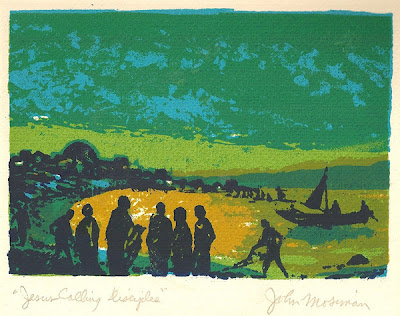
Today, Jesus invites two sets of siblings to follow him: they let go of their nets and he draws their skills into a new purpose - one which lifts the yoke of burden and breaks the rod of oppression. For in him not only is a kingdom of justice and compassion announced, is embodied and comes near. 


Matthew tells us that Jesus withdrew when he heard of John’s death. In the land beyond Jordan, he walks the way of the sea, in Galilee of the nations.


Before he begins to teach, preach and heal, before he calls disciples to follow, he fulfils the hope of Isaiah. The hope of a light that enlightens, a joy that multiples, a hope that nations and people will be set free.


Isaiah spoke in the face of oppression and exile; now that promise of God’s reign of justice and peace draws near in Jesus, God with us.


He takes up John the Baptist’s call to repentance - a radical change of life and direction that many long for. It is a call which invites us to follow suit - to get behind a movement from anguish to rejoicing. It’s a way which holds onto integrity and virtue, honesty and decency, which refuses to return force or insults with blows.  


The choice faced by Simon, Andrew, James and John is disruptive: and yet they risk the accusation of being irresponsible, foolish or impulsive by responding immediately. There’s no check list of pros or cons, no cost-benefit analysis. 


John Mosiman - see here

At that moment, they put something before family and work. They are invited into a new community - all their relationships and obligations are rooted in this deeper peace. 


Others, like them, will also respond to Jesus: touching his garment, kneeling at his feet, asking him questions, sharing broken bread. The wealthy and exploited, the enemy and the outcast, the leaders and the exhausted. Some turn away sad because to follow is too costly; others draw near, giving what they have, because here is life and love.


Jesus invites with power and with compassion. He sees us as we are and knows how to use our gifts. Those who mended and casted nets had a depth of patience, resilience and experience - now he wants to make them fish for people. 


He takes their awareness of their physical limits, their knowledge of water and weather, their attention and their dedication and he says I will make you. I will nurture and challenge, teach and perfect so that you will be who God created you to be. 


They, like us, are invited to bring their whole selves to this way of life. To follow and allow God to work with the stuff of our lives - our skills, experience, learning and memories; the anguish and the hope, the loves and dreams.


The writer Barbara Brown Taylor calls this moment a miracle story because although we might waver or hesitate, it is Jesus who makes the following possible. The God who calls us helps us to follow. In Jesus, God is capturing our imaginations as the hungry are fed, the powerful challenged, the excluded are embraced, the elderly are valued, the young raised up.


This is good news for all: whatever our age or mobility, gender or sexuality, race or occupation. 


It is good news which will make and remake us: there will be cost and blessing, surrender and risk. For this is the way of love which goes to the margins and changes the centre.


The call to us as we follow is what one commentator called a ‘social generosity’. It is a change of direction - transformed thoughts, seeking a different way: doing justice and loving kindness; seeing the fruit of power in generosity, dignity and equity; shaping a common life which rejects hate and division.


Such a way nurtures our integrity, decency, honesty and virtue through the dazzling brightness of God’s light and love. 


It is a dazzling brightness of light and love which confronts oppression, deception, insult and brute force as Jesus bears the weight of that human ill on the cross; and breaks the yoke of its power in resurrection. 


Such a way is what Paul is calling the Corinthians back to: they had allowed arguments and tribal loyalty to divide the body.  He reminds them that the foolishness of the cross stands before our eyes - as God’s love breaks the yoke of oppression.   


We are invited to follow Christ every time we take bread and receive blessing. Those are urgent moments of epiphany and decision - we see who Jesus is. 


That should be good news for every Londoner: love and grace which includes. By the power of the Spirit, may we respond to the light of God’s love and shine with the radiance of Christ day by day - in every act of loving care and resistance.


© Julie Gittoes 2023


Monday, 16 January 2023

Walking by starlight

 Epiphany transferred: Isaiah 60:1-6, Ephesians 3:1-12 and Matthew 2:1-12


The James Webb infrared telescope has been described as a $10 billion gift to the world. It sees the sky at wavelengths of light that are beyond what our eyes can discern. 


Nasa’s senior project scientist was thrilled and relieved after years of hard work.


A machine showing us our place in the Universe; thousands of galaxies in a grain of sand. Images of a ‘stellar nursery’ and a ‘cosmic dance’. 


Human beings have long to scale the heights of heaven or plumb the depths of space - arts and science set on a celestial quest. The desire to know the source of life,  to see beyond where darkness and light are both alike, to know what gives our earthly stardust breath,  to measure the pulse of the very heart of God.  


Today we travel towards our epiphany - the revealing of a mystery and a manifestation of love. 


This is the moment when,  U. A. Fanthrope puts it in her poem BC-AD, 


‘... three

Members of an obscure Persian sect

Walked haphazardly by starlight straight 

Into the kingdom of heaven.’


The love that flung stars into space, causing energy to pulse and atoms to form and life to be breathed into dust was made flesh and dwelt amongst us; perhaps no wonder then that cosmic signs singalled this birth.


Those who contemplated the skies not only followed a star but looked beyond it. They observed and inquired; they searched diligently and found. Then, they were overwhelmed with joy before a child, dependent on parental care and protection. 


There they knelt. There they offered gifts. 


They searched for the love that made us, and found that love with us.


Their worship and adoration left us a sign of who this child was and how he would gather nations to Godself. 


Gold: the marker of authority and kingship, yes; but found with and among us. The one who purifies a people as his own.

Frankincense: the one whom we worship and love beyond all things; opening our hearts in worship and service.

Myrrh: the king of our hearts who loves us to the end, to the grave and beyond; who brings healing to the nations, a new creation.


A mystery has been made known. 


The radiance of which Isaiah spoke breaks in that we might proclaim the praise of the Lord.  For we, with our different races, cultures and languages can seek and rejoice as we are made members of the same body, shares of the same body, as Paul puts it.


He continues saying that this wisdom, rich in variety, is now made known to rulers and authorities. 


The star-gazing wise men encounter one who is used by Rome to maintain order in an occupied land. Herod, like many rulers, rules with the assumption that all things are determined by power. He is fearful and fragile, crafty and yet intrigued; he operates through violence. 


The magi  move beyond him and walk haphazardly, as the poem puts it, into the kingdom of heaven.  For Jesus is the one who embodies God’s very self as a tiny child, as as an adult demonstrates God’s ways with the world.


Adoration of the Magi


Herod is defeated by such a person, movement and kingdom; by those who, in the words of the ethicist Stanley Hauerwas, ‘refuse to believe that violence will determine the meaning of history’. 


This story begins to shape the time we live in too. 


The magi take a different road home for the kingdom of heaven - God’s loving ways reshaping our lives - is a journey. In sleep, their imaginations have already begun to form around a more peaceable way. Their dream reveals to them that the safety and well-being of children, of the most vulnerable, cannot be left to the Herods of this world. 


We need to name that and seek alternatives, different routes for human flourishing, shaped by dreams that counter violence. Hauerwas continues: ‘God has given us gifts of bread and wine to be offered so that the world may know that there is an alternative to Herod’. 


Fed by the body body that we are to become, how can we be part of that alternative?


Perhaps in part, by doing our job; by doing what is entrusted to us - in work, at home, at school, in communities. Allowing our curiosity to be stirred, connections to be made, being attentive to where we find ourselves and acting out of what is possible or purposeful. 


And into that we bring the gift of our whole selves; and we pray that we will find the words and actions to reflect the radiance we see; that as we look around, we will be people who gather together rather than fragment, build up rather than tear down; seek the flourishing of others rather than their survival. As scientists and artists, pragmatists and dreamers, little by little a stellar - heavenly - kingdom will come. We join that cosmic dance.


May we who walk by starlight act with boldness and confidence through faith in God that the world might know a more radiant dawn. For God's love is worldly in focus, cosmic in scope.


© Julie Gittoes 2023


Saturday, 31 December 2022

Faithfuls

Christmas 2022: Isaiah 63:7-9, Hebrews 2:10-18 and John 1:1-14 A Sermon preached at Midnight Mass - from "The Traitors" to 'The Chord". The TV show IS based on games such as ‘wink-murder’ or 'mafia' which has proved popular with youth groups, including our own, for decades. The chord from 'O come all ye faithful' is well known amongst musicians - there are even t-shirts!


I  am a faithful.


Even if you’ve not followed "The Traitors", spoilers, reviews and comments have been all over mainstream and social media, adding a twist to the famous opening line of one of the carols we’ll sing tonight. 


Come on, you faithfuls!


Some players were nominated as traitors and were tasked with “murdering” the other faithful contestants, while the latter had to identify the traitors and “banish” them. 


Unlike the game played in church halls and youth clubs, over £100k was at stake.  Everyone played as a faithful.


There were group challenges and quizzes - building up bonds of friendship, camaraderie  and trust as well as the prize fund. Then there were accusations, theories, eliminations, betrayals; a creeping paranoia and mistrust, prejudices and judgements. 


The finale included cryptic farewells, parting gifts, special pleading and an ultimatum.  Could they all say, I am a faithful? Or would someone have to confess to a game of deceit and manipulation and  divided loyalties, with all the pressure that went with it?


Yes, it was a game - albeit one shot in a fabulous location with ordinary people. 


But games  can reveal the very worst as well as the best of family and friends. If you’re thinking of playing Monopoly, Cluedo or Absolute Balderdash tomorrow, we see the competitiveness, suspicions, duplicity, selfishness and disappointment - as well as, I hope, some magnanimity and laughter. 


O Come; come all ye faithful.


For to be faithful with all its joy, song and exaltation in no way denies the complexity, pain and fractious nature of the world we live in; the personal wounds and the systemic injustices - the greed, betrayals or inequalities, the abused power.


But there is more. To be faithful gives us a different lens on the world: one of hope. 


A hope of resolution; of something more; of outrageous possibility and extravagant love.


It’s a hope we see as human beings turn their hearts outwards to the other - letting go of self-reliance, self-absorption or selfishness. 


As "The Traitors" ended, we were given a glimpse of that in both friendship and forgiveness. To be faithful names the grace of those things. The little acts of kindness; the moments of consolation; the celebration of those fierce loves; the marking of new beginnings; the longevity of human companionship and creaturely companions too. 


It’s a hope we see and hear and receive afresh tonight because of a single Word. A Word made flesh. 


O come, all ye faithful. You are faithfuls. Come and adore the one who is God of God, light of light; very God birthed by Mary - reflecting God’s glory in the fullness of our human condition. 


We come here faithfully; coming to behold and adore Christ the Lord.


Sometime ago, the New York Times published a piece entitled ‘everyone wants to hear this one chord in a Christmas carol. The chord from an arrangement of ‘O come all ye faithful’. 


It is the one known as the “Word of the Father chord” or just “The Chord”: it brings awe, mystery and drama to our worship - full of anticipation as it finally resolves. A startling moment that captures our attention and moves our hearts. 


It is more than a scrumptious harmonic moment. It carries deep meaning and resonance. That final verse which we will sing this happy morning, is a reference to the opening of John’s Gospel read tonight. 


It takes us beyond angels and shepherds. It takes us to the very heart of God - to the love that creates and makes whole; a love that does not let us go, but longs for us to grow in friendship with God and each other. 


The one chord illuminates the one Word: there is a directness and simplicity to this pairing - it demands our attention, draws us into the mystery and intimacy of this love. It holds us there as heaven stoops to earth and raises earth to heaven. 


We are invited to be faithful in ways which are deeply practical. It is about being messengers of peace; rejoicing with those who rejoice; bringing comfort to those who weep. 


To be faith-full is to build community and trust; to restore hope and justice; to nurture understanding, confidence and purpose. That will look different in our homes, workplaces and communities.


However we feel this Christmas we know that the stresses, grief, anxiety, uncertainty and loneliness are real - but that they co-existing alongside the laughter, memories, comfort, opportunities and love.


The Word of the Chord is one who lives to share the sorrows and the joys - who is with us in the darkest hours. It’s a  love that cannot be banished; a love that restores the traitor; a love that calls us to one table, to share one bread - one cup, and serve one world. 


That is grace. And truth. And love. So come, ye faithful. Let us adore him. 


© Julie Gittoes 2022


Saturday, 24 December 2022

Wachet Auf - awake!

 Advent Sunday 2022: Isaiah 2:1-5, Romans 3:11-end and Matthew 24:36-44


In a poem which we will hear in full this evening, entitled ‘Advent Calendar’, Rowan Williams explores this holy season of expectation, in earthy terms.


He will come like last leaf’s fall - with flayed trees and shrouds of leaves; like frost tracing its icy beauty; like dark - with the bursting red December sun before the night sky envelops us. 


Today marks the beginning of  a holy season: one which is startling, not sentimental.  He will come, will come, / will come like crying in the night writes Rowan in the final stanza.


He will come like child yes; he comes like blood, like breaking as Mary labours to give birth. 


Image my own


This child comes, like every new born, disrupting rhythms and routines; this child breaks us open too, bringing the promise of new life to this death-bound world, marked with winds and mist and the star-snowed fields of sky.


In the cantata we’ll hear tonight, Bach draws us into a midnight hour: where maidens wait with lamps lit; where voices from watchtowers call us to awake from sleep and arise to meet the one who will come, will come, will come. 


He will come like a bridegroom; like one who has tenderly sought after his beloved. He will come like one bringing graceful strength and gentle judgement; like one inviting us to share in joy and gladness at a feast. 


The music stretches our imaginations with an emotional pull and a spiritual longing: oh to open our hearts and be alert to embrace the wonder of God; a God who calls us beloved. 


May lamps burn bright to embrace the one who comes: be alert, be prepared; wake from sleep, the Lord comes and will not delay.


In Christ, there is hope for more: not a confidence in the glittering prizes and illusions of this world; the lesser hopes destined to disappoint. This is a hope in victory over death, in loving and merciful judgement, in  new and abundant life. 


It is the kind of hope which gives us courage in the face of present struggles and worries.  He will come, will come, will come; saying beloved, I am here.


Yet our Gospel reading speaks not of labour pains or the cries of childbirth; nor does it speak of lamps, bridegrooms and wedding feasts. 


Instead, we are given a disturbing image of a household being broken into; of the distribution of a stealthy intruder, damage and loss. It challenges our peace and security. 


In part this is the scandal of Christ’s coming - like leaf fall, frost or darkness. He will come in a way that is unexpected. He comes like a child - born to wake us from sleep, to bring life out of death. 


If Bach takes up the imagery of well-trimmed lamps and the foresight to provide extra oil; he also wakes us up - calling us into a season which we do not embrace lightly or selfishly; but with vigilance and faithfulness. 


We are to keep awake; to notice what is going on in our hearts, communities and world. We are to be prepared, responsive, ready. We are to be rested yet alert; trusting in God.


So perhaps the shock of today’s gospel is a challenge to us in a couple of ways.


Are we if not literally asleep, then sleepwalking through life. Are we caught up in busyness or the mundane that we miss the urgency of the moment - moments to console or rejoice, support or love. Wachet auf - sleepers awake - pay attention to what matters.


Jesus doesn’t come in the way we expect - like a child, like a bridegroom and even with stealth. Perhaps we might take that as an invitation to let go of our assumptions and embrace Jesus with joy; knowing that there is no place, no circumstance that is too insignificant, ordinary, complex for God’s love to dwell there.


As we open our hearts in that way - letting go of the pressure to have every detail worked out - we make space for a God who calls us beloved. Sometimes, we have to let go of persistent fears, even the fear of death itself; and the heavy burdens, the many distractions of life or entrenched attitudes about ourselves or others. Those things which get in the way the beauty of God’s desire for us; which stop us loving our neighbours as ourselves. 


If the imagery of being robbed is a startling and disturbing one, perhaps in this way we can set it alongside the new life promised and how we make that present in our interactions now. 


For Paul, living in God’s daylight meant laying aside - being robbed of - what he calls the works of darkness: from quarrelling to drunkenness, debauchery to jealousy. In doing so we begin to make space for God’s ways of peace. We are called to awaken from the rest and refreshment of sleep to be active in offering hospitality and consolation. 


He will come, will come, will come: like leaf’s fall, frost and darkness; he will come like a child, bridegroom and beloved. 


He comes wanting us to be prepared for - and to prepare the way for - a transformed world: today we come to God’s banquet and joyful feast where in bread and wine we are called to light and joy, consolation and love.


Here, and at every Eucharist,  we are taught God’s ways; ways that we might walk in. Ultimately God will come as arbiter and judge over human hearts and between the nations. We pray now that the Spirit, our advocate and guide, will help us begin that work of turning swords into ploughshares, spears into pruning hooks. Laying aside all that does us harm.


Wachet Auf!

Awake!

Be vigilant and faithful!

Be prepared - with lamps brightly lit!

He will come - drawing us into a holy season. 


A season which is startling, not sentimental.


He will come with a birth that leads us through life and death to new life.

Live lightly and intensely, with purpose and love, before we let go of this life; trusting in a greater hope.


This child comes, like every new born, disrupting rhythms and routines; this child breaks us open too, bringing the promise of new life to this death-bound world, marked with winds and mist and the star-snowed fields of sky.


(C) Julie Gittoes 2022