September, Trinity 16: Isaiah 50:4-9a, James 3 :1-12 and Mark 8: 27-end
Some of the type-setting has gone awry this week: apologies!
Words have tremendous power.
Communicating meaning and purpose; stories, advice and wisdom.
Evoking feelings that enable us to imagine the lives of others, to stand in their shoes; to be a litter kinder.
Persuading us, with rhetorical flourish, to vote, to act, to change our mind; the messages that unite or divide communities.
Revealing our inner thoughts, ideas, hopes, wounds; with all the intimacy and
vulnerability that brings.
Words have the power to encourage or deceive; strengthen or undermine; and much else besides.
Words: spoken, heard, remembered.
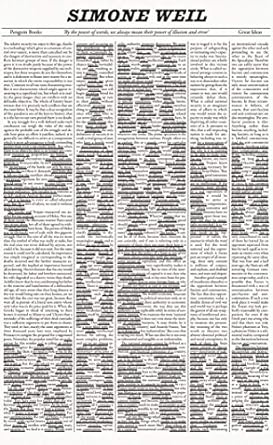
The philosopher, mystic and social activist Simone Weil wrote a series of essays entitled The Power of Words. She brings a moral clarity to the way in which language can be manipulated by the powerful and challenges us to think through the obligations we have to others.
Born to agnostic Jewish parents in Paris in 1909, Weil was attracted to Christianity - to love of neighbour, divine love in affliction, to a radical self-emptying in love. Known to be both brilliant and eccentric, she was fully immersed (at some personal cost) in the political movements of the twentieth century until her death aged 34.
In naming the ways in which order, equality, truth and liberty can make us human,
she says: 'There are certain words which possess, in themselves, when properly used, a virtue which illumines and lifts up towards the good'.
Words carry the gift and risk of influence.
Isaiah, like Weil, leans on the power of language as virtue; on words which seek the good.
‘Sustain the weary with a word’, Isaiah writes, aware that such speech flows from God. The words on the teacher’s tongue flow from listening. Listening, like Weil, to the oppressed, but also to God.
The word shared is not our own: no influencer hashtags or carefully branded messaging. The teacher is humble enough to listen - morning by morning, the ear awakens to God’s ways before a single word is said to another.
When this teacher does speak, it’s not for self-advancement or to exert influence: they speak to minister to others; to those who have been wearied by the changes and chances of this fleeting world.
Weariness creeps in on us: it might be personal circumstances, complex relationships, the responsibilities we carry; it might be daily struggles, bodily aches and the ways life can feel hard; or the wider anxieties about the world - living costs, climate change and conflict.
Support might come from councillors, teachers, carers or others, but what gift might a church community offer: sustaining the weary, sustaining each other, with a word of hope or joy, forgiveness or life even in the face of opposition?
The words of Isaiah do not just speak of practical pastoral wisdom - or of ways of grounding our human words in love divine. The passage we hear comes from a section known as the ‘servant song’ which has been interpreted as pointing to the nature of the Lord’s Messiah, to Jesus.
This is because Isaiah speaks not only of the opposition but of adversaries, disgrace, insults and spitting: a description taken up as Jesus describes the way that he is to walk; all that he bears in his body on the cross.
The suffering servant does not depart from or give up on the task of bringing comfort, raising up the weary, bringing healing where there is brokenness. The source of such assurance is the same as the wisdom of the message: the Lord is the
helper.
In today’s gospel, Jesus begins to teach his disciples about the way in which his identity as God’s Son, the servant and reconciler of all, takes him to the place of suffering and rejection, death and resurrection. For in this, love's redeeming work is done.
Jesus begins to open up this conversation with his disciples through a series of questions - first by asking them what the word on the street is about him. Then, as they exhaust that line of speculation and curiosity, he invites them to sit with that same question in their own hearts: who do they say that he is.
Peter with customary boldness dives in: he speaks the truth with conviction and instinct. He’s not overthinking the implications but expressing the hope he sees in Jesus, the trust that has built as he has been with him.
Jesus doesn’t allow that answer to be the full-stop at the end of the exchange. He
leads them into a place of more painful and costly teaching. The rebuke to Peter must have stung in that moment; but over time, Peter was to know the truth of this message.
He knew it as he fled when Jesus was arrested; as he watched from the shadows and denied him as dawn broke. He knew it as the crown mocked and the soldiers pierced his side. He knew it as Jesus’ body was buried.
Peter dared to hope in life out of death when he heard rumours of an empty tomb and ran to see. He flung himself into this hope, the word of life which raises up the
weary when he saw his Lord on the lake side, and found himself recalled in love.
As he learnt to love the questions as well as the answers; to allow Jesus into his heart, and to find there not a rational truth but a boundless, merciful and radical depth of love.
Yet as he was called to love and feed the sheep of Jesus’ flock, Peter is also reminded that Jesus invites him to walk the way of the cross too. To follow this way of love was to lose life for his sake, for the sake of the good news of a love that wins, and thereby to save it.
Mark’s earliest hearers would have known how stark and fearful a challenge it was to take up the cross: it was a symbol of shame, condemnation and death. Yet as Jesus takes it up, he undermines the power of imperial Rome.
Jesus spent his ministry bringing healing to people and relationships, binding up
broken hearts and feeding the hungry. He was concerned to alleviate suffering. To
walk in his way is to speak and act in such a way as to sustain the weary and
transform the status quo.
Pope Benedict said this: ‘Jesus from the throne of the cross welcomes every human being with infinite mercy.’
We are met with such mercy. To take up our own cross is to be agents of such mercy. To take it up on behalf of our beloved community and to know that the Lord we follow is with us step by step.
It is trust that others will sustain us with their words too, so that we can remain
faithful in love. It is to return to God’s words of life given for us in Scripture,
embodied for us in bread and wine and stirred up in us by the Spirit.
To follow Jesus is to choose to do the thing that exposes us to the risk of love and
mercy, rather than the thing that will save us from that burden of care, or preserve
our self-interest and comfort.
To return to Weil: it is to recognise that our words - and our lives - possess in
themselves, when properly used, a virtue which illumines and lifts up towards the
good’.
In his letter, James is encouraging his hearers to such a pattern of constancy and
consistency. He uses a range of images to remind us how our words have power -
that our speech can build up and sustain, or cause harm and diminish.
We know that our tongues can bless and curse: that a moment's thought can give us the time we need to hold it in check; but that a moment’s frustration can lead us to utter words we regret. The tongue is part of our imperfect bodies [as the recent graffiti art opposite the church says, ‘only God is perfection!].
Perhaps our hope is in our accountability to each other: noticing who within our
community can help us grow together, rather than fragment into division. In our
life together may we, like Weil, find the ‘possibility of living divine love in the
midst of affliction’; in our life nourished by the blessing we find at our Lord’s table
may we find the fullness of joy - but also sustenance in suffering and compassion
for others.
But we do not do this on our own. Our collect reminds us that we rely on the grace
and the power of God, and the Spirit’s life in us. As our post communion prayer puts it: love is the fulfilling of the law; may we love God with our whole hearts and our neighbours as ourselves. Amen.
© Julie Gittoes 2024


.jpg/1200px-Temptations_of_Christ_(San_Marco).jpg)