Showing posts with label ambassadors of peace. Show all posts

Monday, 30 December 2019

After Christmas

A sermon preached on Sunday 29th December. This goes to the heart of Christmas - the messiness of the world; it's violence and misused power; and yet God is with us in this place. How can our lives walk another way - a way of peace? The texts were: Isaiah 63:7-9, Hebrews 2:10-18 and Matthew 2:13-23


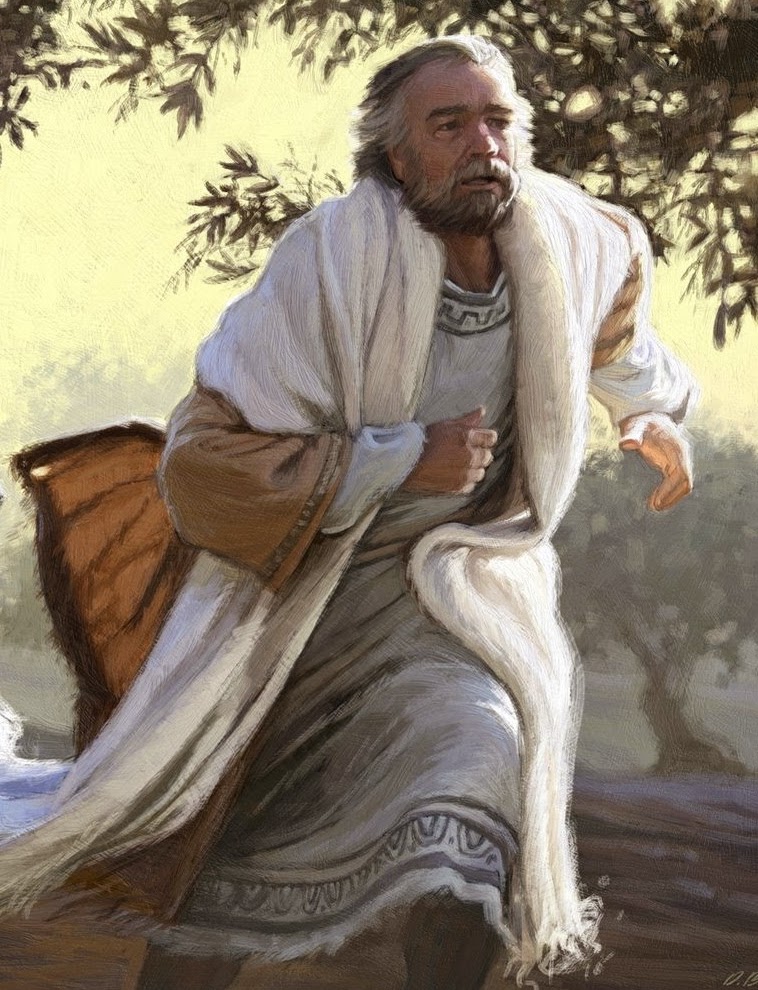
Joseph got up, took the child and his mother by night and went to Egypt.

The great of violence and destruction is real: the holy family flee.

As the priest-poet Malcolm Guite puts it:

We think of him as safe beneath the steeple,
Or cosy in a crib beside the font,
But he is with a million displaced people
On the long road of weariness and want.
For even as we sing our final carol
His family is up and on that road,
Fleeing the wrath of someone else’s quarrel,
Glancing behind and shouldering their load.

We live in a murky, brutal and wounded world.  It is into such a world as this that the Christ-child is born.

It is a world where children are held at borders, separated from parents; where families fleeing war and violence risk crossing the Mediterranean Sea in the hope of safety; where refugee camps become the only home a child knows; where human trafficking is still a reality; where the fear and power of tyrants and insurgents bring cruelty and destruction.  


A world where fathers get up and take the children and their mothers by night. 

Today, we’re confronted with the horror of Herod's fury; it reminds us of the way in which insecurity and power can envelop our lives.  The whole of Bethlehem was caught up in the implications of an infant's threat to stability.  

Herod snatched away his people's future in the destruction of children.  The catastrophic consequences of desire to cling to power is repeated in the lives of men and women in our own generation.  

As Malcolm’s sonnet continues:

Whilst Herod rages still from his dark tower
Christ clings to Mary, fingers tightly curled,
The lambs are slaughtered by the men of power,
And death squads spread their curse across the world.
But every Herod dies, and comes alone
To stand before the Lamb upon the throne.

What Herod did is appalling: wickedly massacring children to protect his own power.

This is the world that Jesus came to save.

The Christmas message is that God so loved the world that he sent us his Son.

It is a hopeful because there is no where where God is not; our humanity is glorified.  

It is disruptive because divine vulnerability shifts the balance of power in a fearful and war-torn world.  

The birth of the Christ-child is just the beginning.

The hope and joy of wise men contrast with Herod's fear and rage.  Their gifts reveal who this child is: our king and our God; the suffering servant who lays down his life for love of the world.  

Their journey continues along another road; they're witnesses to peace in vulnerability, power in weakness. Joseph must take his family along another road.  

They must flee and seek protection.

Herod searches and destroys; he is infuriated and kills.

There is wailing and lamentation. 

We feel silenced and helpless; we lament and cry out.  

The writer of the Hebrews reminds us that the one through whom all things exist shares our flesh and blood.

Jesus becomes like us and suffered with us; bleeding like us and dying with us us; so that through death he might destroy its power and set us free.

In Jesus, God reaches out to us - to all who suffer - in vulnerability. 

God continues to reach out to mothers crying out, to communities whose future is disrupted by the loss of children.  

God reaches out in Jesus Christ to bear the weight of pain and violence on the cross.

God reaches out in the resurrection to demonstrate that human wrath does not extinguish love.

God reaches out in the power of the Spirit to call us to live in the light of that hope. 

Trusting in Jesus, God with us, is not an escape from world; nor is it an attempt to conquer it in our own strength.  Rather, in him we seek the transformation of all that is by acts of compassion and justice which resist abuses of power.

The Gospel makes manifest the power of love in birth and death and in risen life; in a human family, in a complex world, in the midst of agony and grief.  

Such love shifts our horizons away from control and manipulation.  The change of heart wrought by God's reconciling love disrupts our tribalism; it seeks a kingdom of justice and equity which challenges the human tendency to control or oppress.

The promise of Isaiah - of mercy and the abundance of steadfast love - if fulfilled in God with us.


Mercy and the abundance of love is revealed in the speechless dependency of an infant; revealed alongside all who flee for safety, we see strength in weakness.

In time, Joseph got up, took the child and his mother, and went to the land of Israel.

We are to pray that our lives will frustrate the evil designs of others; that we might be agents of hope and reconciliation.  Hope that is rooted in a love that liberates, transforms and forgives. 

The promise and challenge of that is held in our Eucharist. Here God continues to give himself to us in the ordinary stuff of bread and wine; a sign of abundance and hope in a broken and fragile world.  Here we find assurance forgiveness, faithful love and renewed hope; here we learn to walk another way, the way of peace.

Jesus doesn't merely show us love or validate our human expressions of love.  Rather he demonstrates redemptive power of love.  Only he can forgive us, recall us, draw us into abundant life; he enables us to be agents of resistance, compassion and reconciliation.  

Let us pray [from S. Shakespeare, Prayers for an Inclusive Church]:

Weeping God
whose heart is pierced 
by the cry of the innocent:
receive into your arms
the waste of our violent;
confront the powers of fear
by the confidence of love;
and help us stand with all creatures
who bear the weights of cruelty and greed;
through Jesus Christ, Rachel’s child. Amen.

© Julie Gittoes 2019

Tuesday, 17 October 2017

Only Luke... only you...

This is the text of a sermon preached at St Luke's Chelsea for their Patronal Festival. It was a great delight to share in a wonderful celebration reflecting a vibrant community of worship and witness. Joy flowed through the music and liturgy into the conversations shared over a glass of fizz at the west end. It was a particular joy to be with Brian - my former training incumbent and friend - who has taught me so much about what it is to be a priest. It was good to be alongside his colleagues Emma and John too.  

The texts were Isaiah 35:3-6, 2 Timothy 4:5-17, Luke 10:1-9. I was really struck by the phrase in the epistle - 'only Luke is with me'. Sometimes we underestimate the impact we have of being with others. Sharing in God's mission is expressed in the intimacy of those seemingly small things - breath by breath - not just the strategic plans and big events. I was also struck by the fact that Luke places the angels song of peace on our lips - that we might be ambassadors of peace. 


St Luke the Evangelist 
Icon at St Luke's Chelsea 

Only Luke is with me.

Only Luke.

Is with me.

That one phrase, towards the end of what may be Paul’s last letter, reveals something of Luke’s character. 

He’s loyal and dedicated; a beloved physician who remains with a prisoner facing death. 

His kindness and faithfulness ease the pain of loneliness: sharing the kinship of God’s love.

But there’s more to it than that. 

Only Luke is with me.

That one phrase, not penned by him, takes us to the very heart of the good news which he shared.

As an evangelist, Luke wrote with passion, tenderness and beauty about the love of God revealed in Jesus Christ.

As an evangelist, Luke’s own life has been so shaped by that love that he embodies: being with Paul, as God was with us.

In his life, we see the fruit of the Spirit: love, peace, kindness; the doctor sharing the ‘wholesome medicine of the gospel’, bringing healing and wholeness. 

Luke alone is with me. 

Luke alone tells us some of the most memorable stories of our faith. 

He puts songs on the lips of Mary and Zechariah. Their words shape our imaginations with a vision of God’s Kingdom: scattering the proud, lifting up the lowly, filling the hungry, sending the rich away empty; the forgiveness of sins, light to those overwhelmed by darkness and the shadow of death. 


Luke alone tells us of angels and multitude of the heavenly host declaring peace on earth; he tells of shepherds seeing God’s word of peace in a speechless infant.  Luke alone tells us how Simeon holds that child in his arms - and embraces his own mortality: Master now you are dismissing your servant in peace. He has seen the light and glory of God which heals broken hearts and lives. 

Luke alone draws us into the home of Mary and Martha: faced with the different temperaments and affections of siblings, he invites us to lay aside busyness. He invites us to pause; to breath more deeply; to be held in God’s loving gaze. Then we take up our tasks again - infused with a different purpose. 

Luke alone is with me


He draws us into proximity with Jesus and each other. He alone tells us the parable of the Good Samaritan - teaching us to cross the road to be with those in distress. Within our political, social and church life, we continue to struggle to define who our neighbour is; but this familiar story enlarges our hearts. In a diverse parish such as this, we continue to find challenge and inspiration - crossing over boundaries of class, ethnicity, marital status, sexuality, occupation or age. 

In retelling this story, he’s pointing us to a God who loved us so much that he dwelt with us; met us in our hurt and bound up our wounds. We too are to be with

The beloved physician tells stories of those who were healed by Jesus: those in mental distress; Simon’s mother in law; the shunned leper; the paralysed and lame; the centurion’s servant. Time and time again, words of forgiveness, love and blessing bring restoration and inclusion.

Luke deliberately takes that good news of healing and wholeness into the realm of relationships and responsibilities. Luke alone recalls the parable we know as the prodigal son. It’s a story perhaps better described as a story of two beloved sons; of a loving father.


It’s a love that waits for us and rushes towards us; love which refuses to define us by our past or our misguided desires met in worldly temptations. It’s a love which challenges our resentments and jealousy; love which invites us to live with generosity and kindness. 

This love is not a zero sum game. Each child learns that they are loveable; that the other is also precious in the sight of God.  This is something profoundly intimate about this; the healing of our innermost being

Alongside the calming of storms and the feeding of thousands, Luke alone tells us of Zacchaeus - eating with and following Jesus. Salvation comes near to them - transforming his work, releasing unbounded generosity and justice.

Luke alone tells of the teenage Jesus in the Temple: he amazed the teachers with his understanding and astonished his parents. As an adult, Jesus stands up in his local synagogue to read  from the prophet Isaiah: good news for the poor, release to the captive, sight for the blind and freedom for the oppressed. This news of peace and hope cannot be confined to one place or one home town.  

Peace goes out into the whole world: and we, like the seventy appointed by Jesus, are sent out into every home and office; every shop and hospital.  The harvest is plentiful: men and women, young and old, rich and poor, anxious and ambitious long for peace. 

Amidst the pressures to achieve, our hurts or failures; amidst the reality of our mortality we long for something more. Amidst the voices telling us we are insignificant and glittering prizes of wealth, we long for love.

Luke alone takes the song of the angels and places it on our lips: peace to this house, to this place; peace to you. We become ambassadors of peace. 

On this festival day, as in every Eucharist, we take up that commission. We greet one another with a sign of peace. Our handshakes become the touch of God. We look on each other with the loving gaze of God. We speak God’s peace.


This is peace which calms our inner storms and forgives our bruising words. It restores dignity as we receive and give.  This peace was breathed on us by Jesus: his life, death and resurrection assuring us that there is no longer any place where God’s love is not. 

This peace is bequeathed to us by the Holy Spirit; this peace is the breath of God breathing through us. 

As we inhale and exhale, we pray. 

Peace. 

In peace, we are sent. No longer placing our trust in the purses and bags we carry - or being defined by status they confer. 

As we eat and drink with colleagues, strangers, friends, we take time with them in peace. We are to be present with others in fleeting moments: the person who makes our coffee or whose depression or grief we acknowledge; the human being sitting in a doorway; the employee with whom we have a difficult meeting. Such moments express the nearness of God’s Kingdom.


Only Luke was with me.

Luke, the beloved physician, teaches us how to be with God and with each other. 

Luke alone tells us of the disciples walking towards Emmaus: disciples who were shocked by Jesus’ death, who’d heard rumours of resurrection; who were unable to make sense of what they’d undergone. 

Yet, their risen Lord walks with them; opens scriptures to them; stays with them; eats with them. 

In a little while, we like them, will glimpse the love and peace of our risen Lord in the breaking of bread. 


Supper at Emmaus - Caravaggio

In a little while, we like them, will be sent out. 

We are to live lightly and intensely moment by moment; every task, every conversation, every encounter matters.

In being with another we set aside our own interests. Only we can offer that word of encouragement to that person, at that time. Only we can break the spell of loneliness; or entrust someone with responsibility. 

Tomorrow we will breath peace; breathing in and out. Tomorrow we offer strength to those feeling week; tomorrow we might receive that gift from another.

In the power of the Spirit, may we share the love God revealed in Jesus Christ; may we be ambassadors of a peaceable kingdom. 

This is the work of an evangelist: to say to those who are fearful, be strong do not fear. 

Only you. 

In that moment.

Only you are with me.

Together.

With others.


© Julie Gittoes 2017