Showing posts with label God with us. Show all posts

Saturday, 28 December 2024

Light rather than certainty

 Midnight Mass 2024: Isaiah 52:7-10, Hebrews 1:1-4 and John 1: 1-14


The power of God. The ambition of men.

The pope is dead. The throne is vacant.

What happens behind these walls will change everything.
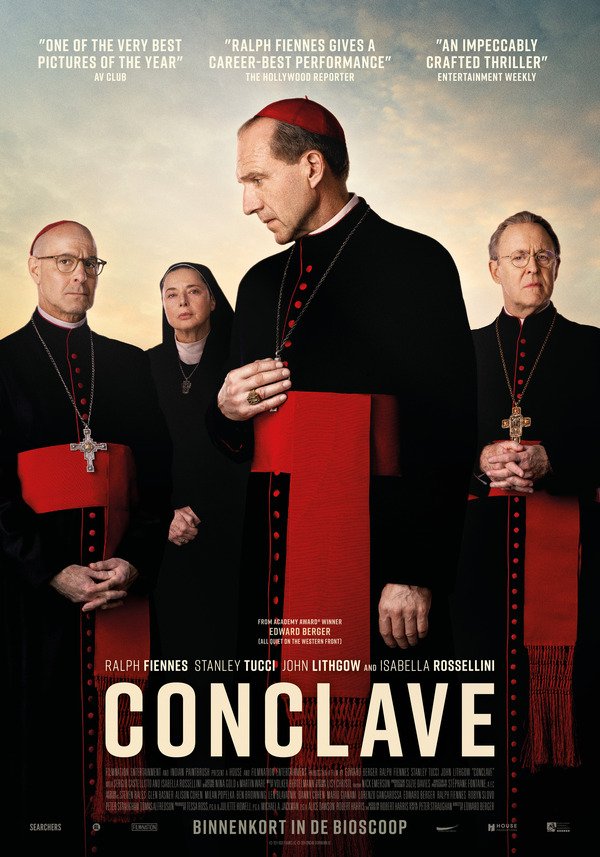


Taglines for the film “Conclave”. Based on a novel by Robert Harris, it's been praised for its cinematography and stellar cast - led by Ralph Fiennes, Stanley Tucci and Isabella Rossellini. 


It’s a suspenseful, glossy thriller; dark and claustrophobic. 


The themes are familiar: ambition, temptation, conspiracies and corruption; but also humility, courage, growing self-awareness; moments of repentance and forgiveness. 


It names the impact of grief, the nature of friendship, and the longing for hope. 


In his address, Cardinal Lawrence speaks from the heart saying: There is one sin which I have come to fear above all others… certainty. If there was only certainty, and no doubt, there would be no mystery. And therefore, no need for faith.


Sin is what separates us for each other and God. The pursuit of certainty can drive us to conspiracies and erode our capacity to trust or understand others.  It’s elusive,  brittle and divisive. An enemy of unity and of tolerance, as Cardinal Lawrence puts it. 


Certainties are shaken by the sorrow of death, the joys of friendship and commitment to a better future. Doubt, mystery and faith are our companions in these things. 

Birth also shakes and undoes certainty. The wonder of first breath; the dignity, vulnerability and possibility of a life unfolding in unknown ways. 


The birth we mark this holy night is a mystery calling forth faith - tenderness and hope. A mystery of love which exceeds our imagination; the eternal one, who holds our lives, dwells with us.


The writer of the letter to the Hebrews reminds us of how God spoke through prophets, calling us to do justice, seek mercy and walk humbly with our God. 


We don’t need a conclave to reveal either how our motivations or ambitions fall short of that; or how precious is our humanity, how tender our grief, how restless our longing for hope.


In response, God chooses to reveal Godself by dwelling with us: the glory of the creator’s very being, the sustainer of all things, comes to us in wordless infancy.


This child grows into adulthood - healing, consoling, teaching, debating, feeding, welcoming. He overcomes the old certainties of our misdirected hearts by bearing the weight of that sin and strife in his own body. 


The power of God - in vulnerability.

The ambition of men - undone.

There is a death, yes; but in him life is restored.

What happens in him - in the world, not behind closed doors - changes everything. 


The Word that was with God and was God became flesh: lived among us.


The Word brings life and light. Light that enlightens, that shines in the darkness.


Darkness did not, has not, will not overcome it. 


Light. Not certainty. Light. 


Light breaks down certainties and awakens possibilities.


At the end of “Conclave” windows open and light breaks in, dispelling claustrophobia. There is air, breath and laughter. Light.


We cannot retreat from the world in its beauty and brokenness, but we can seek the light - by refusing despair, resignation and indifference. 


Light  opens us to the mystery of the other - resisting suspicion, division and suffering; not allowing hate to creep into our hearts. 


Dare we let light shape our imaginations - affirming what is good, binding up broken hearts, persevering in love for the sake of a renewed world 


In dark times of tragedy or sorrow, we can turn to the light. We can hunger and thirst for righteousness, seeking what is just, beautiful, good, true - even joyful.


This week, in one of the world’s darkest places, the Jerusalem Patriarch said to Christians in Gaza: ‘you have become the light of our church in the entire world’. 


He spoke of joy in being present with them; of love and solidarity; of the need to protect their hearts - in light and love and life - in order to be ready to rebuild.


In the darkness we might ask ‘where is the light?’. John reminds us that Jesus is our light and life, our hope and joy.


In the darkness of this night, this world, we receive him. Emmanuel.  God with us. 


We receive him in the candles we light, the crib we bless, the forgiveness breathed on us; we receive him in the peace we share, the bread we break, the wine we pour out and in being with each other.


We receive him in being blessed to be a blessing of light to others: to be messengers of the good news of joy and comfort, healing and renewal. 


May the light of Christ kindle a hopeful flame in us - flames of hope and joy, mystery, faith and love; undoing certainty,  dispelling darkness. Amen.


© Julie Gittoes


Monday, 30 December 2019

After Christmas

A sermon preached on Sunday 29th December. This goes to the heart of Christmas - the messiness of the world; it's violence and misused power; and yet God is with us in this place. How can our lives walk another way - a way of peace? The texts were: Isaiah 63:7-9, Hebrews 2:10-18 and Matthew 2:13-23


Joseph got up, took the child and his mother by night and went to Egypt.

The great of violence and destruction is real: the holy family flee.

As the priest-poet Malcolm Guite puts it:

We think of him as safe beneath the steeple,
Or cosy in a crib beside the font,
But he is with a million displaced people
On the long road of weariness and want.
For even as we sing our final carol
His family is up and on that road,
Fleeing the wrath of someone else’s quarrel,
Glancing behind and shouldering their load.

We live in a murky, brutal and wounded world.  It is into such a world as this that the Christ-child is born.

It is a world where children are held at borders, separated from parents; where families fleeing war and violence risk crossing the Mediterranean Sea in the hope of safety; where refugee camps become the only home a child knows; where human trafficking is still a reality; where the fear and power of tyrants and insurgents bring cruelty and destruction.  


A world where fathers get up and take the children and their mothers by night. 

Today, we’re confronted with the horror of Herod's fury; it reminds us of the way in which insecurity and power can envelop our lives.  The whole of Bethlehem was caught up in the implications of an infant's threat to stability.  

Herod snatched away his people's future in the destruction of children.  The catastrophic consequences of desire to cling to power is repeated in the lives of men and women in our own generation.  

As Malcolm’s sonnet continues:

Whilst Herod rages still from his dark tower
Christ clings to Mary, fingers tightly curled,
The lambs are slaughtered by the men of power,
And death squads spread their curse across the world.
But every Herod dies, and comes alone
To stand before the Lamb upon the throne.

What Herod did is appalling: wickedly massacring children to protect his own power.

This is the world that Jesus came to save.

The Christmas message is that God so loved the world that he sent us his Son.

It is a hopeful because there is no where where God is not; our humanity is glorified.  

It is disruptive because divine vulnerability shifts the balance of power in a fearful and war-torn world.  

The birth of the Christ-child is just the beginning.

The hope and joy of wise men contrast with Herod's fear and rage.  Their gifts reveal who this child is: our king and our God; the suffering servant who lays down his life for love of the world.  

Their journey continues along another road; they're witnesses to peace in vulnerability, power in weakness. Joseph must take his family along another road.  

They must flee and seek protection.

Herod searches and destroys; he is infuriated and kills.

There is wailing and lamentation. 

We feel silenced and helpless; we lament and cry out.  

The writer of the Hebrews reminds us that the one through whom all things exist shares our flesh and blood.

Jesus becomes like us and suffered with us; bleeding like us and dying with us us; so that through death he might destroy its power and set us free.

In Jesus, God reaches out to us - to all who suffer - in vulnerability. 

God continues to reach out to mothers crying out, to communities whose future is disrupted by the loss of children.  

God reaches out in Jesus Christ to bear the weight of pain and violence on the cross.

God reaches out in the resurrection to demonstrate that human wrath does not extinguish love.

God reaches out in the power of the Spirit to call us to live in the light of that hope. 

Trusting in Jesus, God with us, is not an escape from world; nor is it an attempt to conquer it in our own strength.  Rather, in him we seek the transformation of all that is by acts of compassion and justice which resist abuses of power.

The Gospel makes manifest the power of love in birth and death and in risen life; in a human family, in a complex world, in the midst of agony and grief.  

Such love shifts our horizons away from control and manipulation.  The change of heart wrought by God's reconciling love disrupts our tribalism; it seeks a kingdom of justice and equity which challenges the human tendency to control or oppress.

The promise of Isaiah - of mercy and the abundance of steadfast love - if fulfilled in God with us.


Mercy and the abundance of love is revealed in the speechless dependency of an infant; revealed alongside all who flee for safety, we see strength in weakness.

In time, Joseph got up, took the child and his mother, and went to the land of Israel.

We are to pray that our lives will frustrate the evil designs of others; that we might be agents of hope and reconciliation.  Hope that is rooted in a love that liberates, transforms and forgives. 

The promise and challenge of that is held in our Eucharist. Here God continues to give himself to us in the ordinary stuff of bread and wine; a sign of abundance and hope in a broken and fragile world.  Here we find assurance forgiveness, faithful love and renewed hope; here we learn to walk another way, the way of peace.

Jesus doesn't merely show us love or validate our human expressions of love.  Rather he demonstrates redemptive power of love.  Only he can forgive us, recall us, draw us into abundant life; he enables us to be agents of resistance, compassion and reconciliation.  

Let us pray [from S. Shakespeare, Prayers for an Inclusive Church]:

Weeping God
whose heart is pierced 
by the cry of the innocent:
receive into your arms
the waste of our violent;
confront the powers of fear
by the confidence of love;
and help us stand with all creatures
who bear the weights of cruelty and greed;
through Jesus Christ, Rachel’s child. Amen.

© Julie Gittoes 2019

Wednesday, 25 December 2019

Billericay, Barry, Bethlehem and Barnet

A sermon preached at Midnight Mass: Isaiah 52: 7-10, Hebrews 1:1-12, John 1:1-14


After months of waiting, we’re getting closer , hour by hour, to the epic Christmas moment.

It might be a long way to Bethlehem; but it’s also a long way between Billericay and Barry as Gavin and Stacey return to the BBC.

The trailer has wet our appetite: Gavin opens his front door to his best mate Smithy.

Are you asking me to step in, he asks?

Seconds later, they’re singing their hearts out to Elton John’s Step into Christmas.

We last saw these characters on screen back in 2010: then, life was complicated. 

Truths were told; feelings expressed; situations left unresolved.

And now: What’s occurin’?

How would Smithy adapt to the commitment of fatherhood; given Nessa’s own very particular style of parenting?

What would unfold for Gavin and Stacy?  One moment they’re struggling with the grief of infertility; the next their world is turned upside down with an unexpected pregnancy.

Billericay, Barry and Bethlehem.

Places full of complex families: hopes, fears and loyalty; tears, laughter and struggles; tenderness, forgiveness and ways of living with each other.

Gavin and Stacey, lush; Nessa and Smithy, may be; Mary and Jospeh, absolutely.

It’s into such a world as this, that God reveals God’s very self: a word of light, and life and love, made flesh; living with us.

This Word of light and life and love was from the very beginning.

This love created all things in and for love.

This life was breathed into our flesh and blood.

This light shines. It shines in darkness. It is never overcome.

The stuff of life and love is risky; it makes us vulnerable. 

We’re blessed by human intimacy with its trust and tenderness. 

But we’re also hurt by intimacy’s betrayals and fears.

We long for relationship - yet we struggle with loneliness.

We see fragmentation - and we long to bring community.

We’re capable of acts of immense generosity, compassion and selflessness.

We take the short-cut to satisfaction by being greedy, possessive and selfish.

But God still loved us and this complex world: as the writer to the Hebrews puts it, God continued to speak by the prophets - calling us back to ways of love and mercy and compassion.

But today we remember that God speaks to us by a Word, a Son: the fullness of life and love and light became like us.

He became a human being: love conceived in a woman’s flesh, birthed from her womb, nourished at her breast. 

The one who dwelt with us became part of human history: dependent on the love and commitment of Mary and Joseph.

This is our God: taking the risk of being as a vulnerable baby.

This is our God:  born in a place of powerlessness. 

God dwelling with us: refusing to refuse to love.

This is our God: there is no sorrow or joy that I won’t be part of.

This is our God: where it darkest, there you will find me.

This is the one of whom Isaiah spoke: the one who comforted his people.

This one says: I am with you in broken bread, in the joy of wine poured out, in the intimacy of a word of blessing.

Billericay, Barry, Bethlehem and the Borough of Barnet:

Places full of complex families: hopes, fears and loyalty; tears, laughter and struggles; tenderness, forgiveness and ways of living with each other.

We step into Christmas because God steps down to earth.

Whatever life looks like today, tomorrow or in ten years time: God is with us. 

A light shining in the darkness.

A light kindling in our hearts the fire of love.

A love that will not be overcome by darkness.

May our lives bring such light and love to others. Amen.


© Julie Gittoes