Showing posts with label Paul. Show all posts

Monday, 27 October 2025

Letters

 19 October, Hampstead: Epistles - Genesis 50:15-21 and 2 Corinthians 1:1-7


When was the last time you received a letter - an actual piece of handwritten correspondence? When was the last time you committed thoughts, news or hopes to paper - and posted it to a friend or relative?


For me, it was only a few days ago. My mum writes to me every week. She has done that since I went to university. Comments on the day to day, social events, medical appointments, sermons, family news and what the cat’s been up to. 
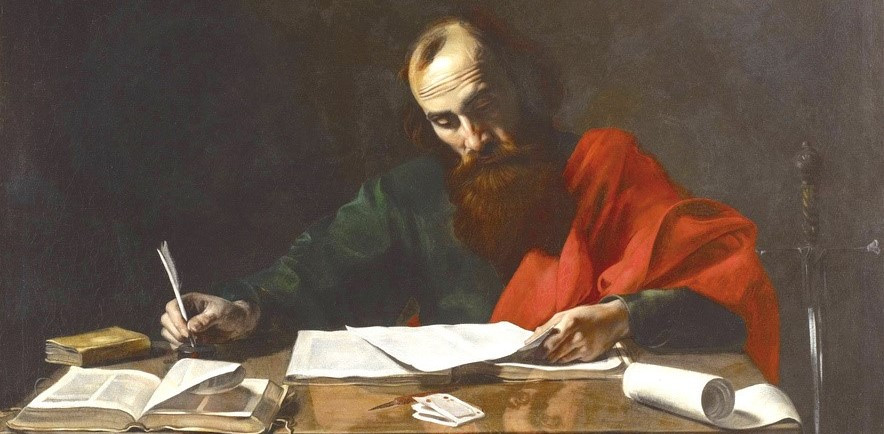


Image of St Paul


In that pre-email, pre-mobile phone era, letters were regularly exchanged between friends outside of term - news, trivia, requests, dilemmas. I still have some of them, long after more recent texts have been deleted or email accounts closed. I read of a friend’s hope that her then boyfriend would move to London with her. I re-read it the week before I conducted their marriage. 


My dad was a less prolific writer, aside from notes in his work diary detailing hours, the job and how much copper pipe. He wrote when I was at low ebb - the tensions and challenges of a shared-student house. The consolation of a familiar hand; the loving wisdom of a familiar voice. They remain amongst my most treasured possessions; kept alongside the letters of condolence friends wrote when he died too suddenly, too soon.


It goes both ways: letters I’ve written in response to someone else's grief; letters to the Home Office in support of a sibling in Christ; letters written to  express thoughts with care.  This year I decided to write more, to communicate with my friendship diaspora in pen and ink, not just regular DMs. Choosing the card or the paper, making time; picking up a favourite pen - a tool that might improve my erratic handwriting. 


Why? Because letters embody a person; character and emotion come through the text. Whether its quotidian details or a significant moment, a letter is a reference point as we navigate seasons of  life. It can be infused with love, faith, gratitude, worries - and prayer.  It’s important to take what we write - how it lands, its meaning and purpose.


This kind of labour is a skill and craft, the stuff of flesh and blood.  Our communication is more than typing, scrolling and swiping through a digital universe.  Letters make our thoughts visible - reclaiming our humanity.  There is pleasure in receiving such a gift. 


Our first lesson from Genesis speaks into the dynamics of death and history. It names complex relationships - memories, fears, and hopes. It speaks of an instruction. In the circumstances, it is something that’s used like an insurance policy - a way of the brothers mitigating risk or securing a future in uncertain times. 


They do not fully trust the expressions of a reconciled relationship between themselves and Joseph. They worry that things will fall apart without their father; that old grudges will reappear, old debts settled. 


So they create a ‘letter of wishes’, neither written nor spoken, but nevertheless some plausible final words of a dying man, words of supplication and forgiveness. There are tears on both sides. The grief is real, but so is the story of jealousy, harm, guilt; stability felt fragile, rooted in parental love.


The instruction serves as a catalyst, whereby things do not go unsaid. Past wrongs are acknowledged and forgiveness is sought afresh. In the face of bereavement, space is created to choose to act for the sake of the future. Joseph does not claim to stand in the place of God - but he is able to express the ways in which intended harm was transformed.  


His lens is both deeply personal but also attentive to God’s ways with the world: the working out of creative and re-creative activity over time, against the odds; oftentimes hidden, sometimes seen with hindsight, embodied in human life and thought. His words were kind and reassuring; but they point to the future hope and love that overcomes fear. 


Our second lesson is most definitely a letter. Several times, including in the first letter to the Corinthians, Paul says he’s writing with his own hand. He comments on the large letters he uses, his handwriting marked by all he endures. 


The fact that so many letters are within our holy scriptures sometimes obscures the reality that Paul was writing out of all the places we find ourselves.  He remembers people by name, asks for prayer and assures his hearers that they are prayed for.  He discusses practical arrangements from pleas to share resources with those in need to the return of a forgotten item like a cloak. 


He responds to challenges and questions - the tensions within the church and the social, cultural and political norms of the world in which they live; he offers words of consolation or encouragement. Sometimes he gives corrective comments on what he’d heard of their worship and teaching; other times he draws them into words of praise. Part of that was reflected in this evening’s introit - Christ’s life, death and resurrection [Um unsrer Sünden willen - text Philippians 2:8-9 - Felix Mendelssohn].


Once, when experiencing writer’s block in my own work, I decided to read the epistles as actual letters: yes, they are addressed to particular people in particular places - including Corinth and Achaia as we hear today - but they also resonate with us as members of that same church of God.  To read them as a whole draws us into their life - and Paul’s thinking. 


He’s working as a pastor, evangelist and theologian attending to the mystery of God’s love revealed to us in Christ Jesus - which we heard in Stanford’s setting of Romans 10 [If thou shalt confess with thy mouth - text Romans 10:9-10 - Charles Stanford. He is working out, in pen and ink, what that means for us as members of one body.  He is passing on a tradition he has received - of breaking bread in remembrance. He shares his own journey of faith and speaks of how faith transforms our life - the enfleshed poetry of faith, hope and love; the fruit of the Spirit; the radical inclusion through baptism. 


Words of grace, peace and blessing frame the opening of today’s letter - a reminder perhaps of how we should greet each other, not just in liturgical expression, but our interpersonal dealings - including our letters. Then, in this very short opening section, we get a glimpse of Paul’s pastoral and theological work. He speaks of suffering and consolation - and finding hope. He takes us to the heart of the gospel. 


The mercy of consolation is part of the character of God, made known in Jesus. In him, we are drawn into a movement of both being consoled in our affliction and also offering consolation to others. 


What Christ endures with us is also for us: that we might know healing and forgiveness, freedom and comfort in all that we endure. There is no made up instruction - but an embodied reality in the face of our fears, opening up a more hopeful future. 


Paul writes his letters on the road, in the company of others and sometimes in prison. He expresses solidarity with that depth of human experience - the pains and griefs and wounds we endure. This is not for him just a matter of empathy but a pointing towards divine mercy. He wants his hearers to hold onto the same unshakeable hope; of God’s love for the world, and the Holy Spirit at work in us. 


Paul writes to the Corinthians about repentance and forgiveness, of the need for generosity; about the power of God seen in human weakness. He exalts them to live in love and peace, to find ways to be advocates rather than adversaries. Poignant words in our own generation. He ends:


The grace of the Lord Jesus Christ, the love of God, and the communion of the Holy Spirit be with all of you.


© Julie Gittoes 2015

Sunday, 31 December 2017

The gate of the year


The text of a sermon preached at Guildford Cathedral Evensong on 31st December 2017 - New Year's Eve and Eve of the Naming of Jesus.  I'm grateful to the LSE blog for information about Minnie Louise Haskins. The texts were: Jeremiah 23: 1-6 and Colossians 2:8-17


And I said to the man who stood at the gate of the year:
“Give me a light that I may tread safely into the unknown.”
And he replied:
“Go out into the darkness and put your hand into the Hand of God.
That shall be to you better than light and safer than a known way.”

As we stand at the gate of the year, these words, first broadcast by George VI in Christmas 1938, continue to strike a chord.  Then, as now, there was a veil of uncertainty over our national life. Then, as now, we long for to tread safely into the unknown. In the face of the inconstancy of our resolutions, we look for light.

New Year’s Eve seems to be met with either a degree of ambivalence or boundless enthusiasm: it’s celebrated on the banks of the Thames, amongst close friends and family, with music and dancing or alone with a glass of fizz, a favourite film or an early night. 


Give me light…

Before Jools Holland opens his Annual Hootenanny, 2018 has already been greeted with fireworks from Sydney to Singapore; as the words of Auld Lang Syne fade, New York and Mexico will be counting down the final hours of 2017. 

Give me light …. light that I may tread safely…

At the gate of the year, the Observer Magazine offered a round up of the most compelling stories of 2017, witnessed at first hand: from the horror of Grenfell Tower and the plight of the Rohingya people; from the Oscars to Glastonbury. The New Review steers away from Trump and Brexit and speculates about the hottest talents and trends in 2018. 


And in the face of the unknown we share with Jeremiah the distress at what has been scattered or destroyed; we long for wise and just leadership, for light and for safety. At the gate of the year, we receive this reply: ‘Go into the darkness and put your hand into the Hand of God’.


We may associate them with the speech of a King, but they were penned by Minnie Louise Haskins. Today, she is remembered as an academic from the London School of Economics. As a social scientist, her professional achievements were remarkable - pursuing industrial welfare and the cooperation between employer and employee; contributing to the establishment of what we now know as the Charted Institute of Personnel and Development. 

This deep concern for welfare was not merely intellectual or theoretical. It was an embodied expression of her faith in a God, into whose hands she placed her own life.  Minnie’s famous words as we stand at the gate of a new year, are the preamble to a poem she wrote called God Knows. It formed part of a short collection published to raise funds. To raise funds for the Wesleyan Methodist Missionary Society whose work took her from Lambeth to India.  


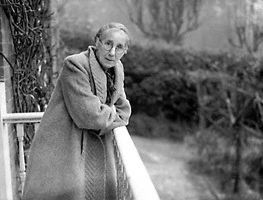
Minnie Louise Haskins (LSE)

Ill health prompted her return to Woolwich, where she ran a hostel for munitions workers and supervised a factory department. All this before she went to study at the LSE. It seems as Minnie routinely set out into the unknown. She lived by her own words - placing her trust in God who was ‘better than light and safer than a known way’; guiding and upholding her.


Such a tribute and personal biography would stand out amongst any New Year’s Honours list. My hunch is that Minnie didn’t seek such recognition. Her story is told on the LSE website but her legacy can’t be persevered in aspic. In our generation we need to equip and pray for Christians working, like Minnie, in welfare reform and human resources, poets and academics; volunteers and missionaries at home and overseas.   

Minnie’s life is a microcosm of the witness of the church: standing at the gate of the new year and facing the uncertainty with vision. In the few verses before the portion of Colossians heard this evening, Paul describes characteristics which are marks of a faithful church: a people knit together in love, with courageous hearts; people who encouraged others and were equipped with wisdom. 


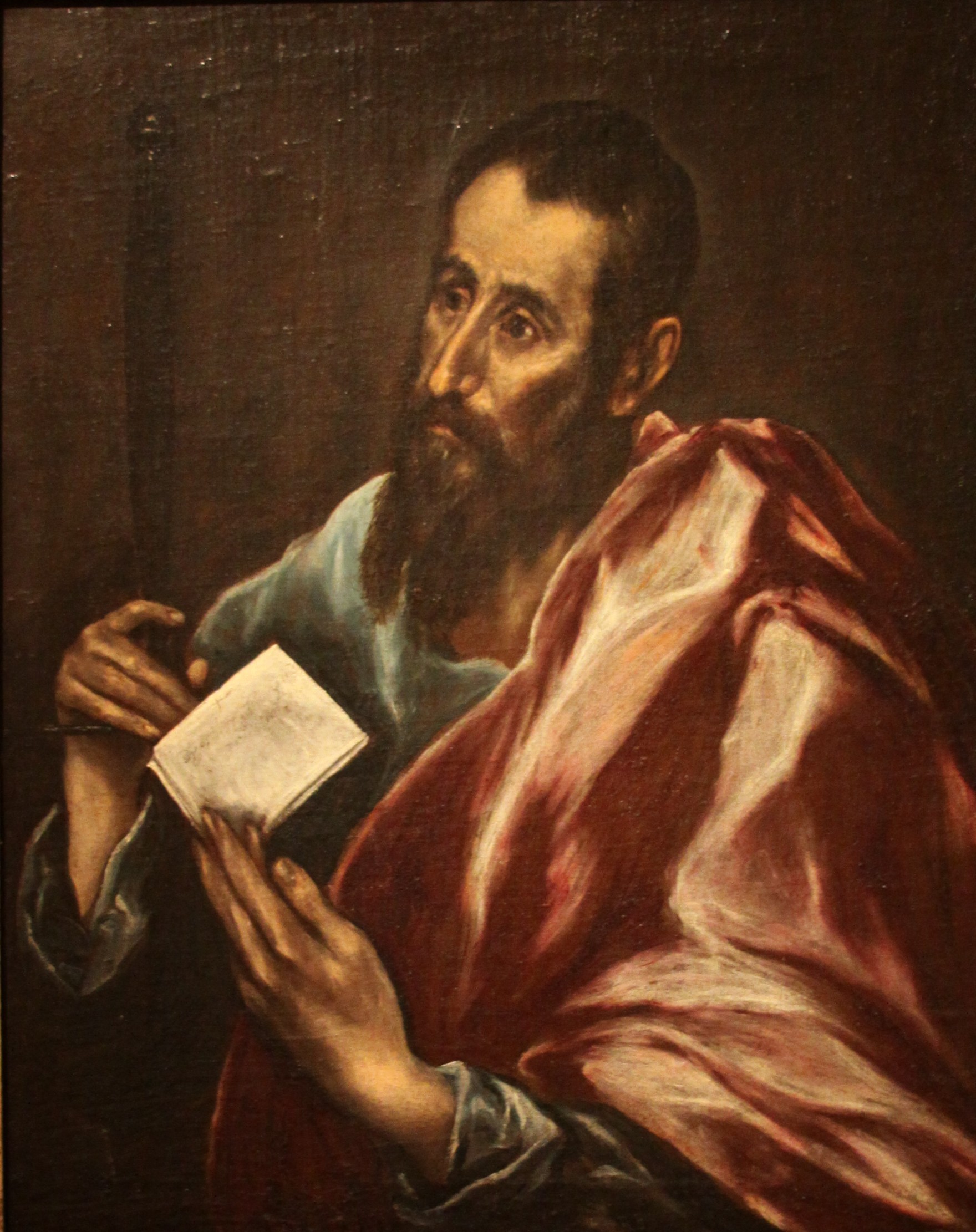
El Greco - St Paul

For Paul - and perhaps for Minnie - the imaginative explorations of faith and boldness in its outworking begin and end with the truth that Jesus is Lord.  Like them, our faith needs to be deeply rooted and continually built up - by cultivating habits of prayer and bible reading, and the compassion and conviction of others. 

On this New Year’s Eve, we celebrate the naming and circumcision of Jesus Christ: the one in whom the fullness of God dwells; the one in whom our humanity comes to fullness. In a very few verses, Paul names the one who is safer than the known way; one whose light shines in the darkness and is not overcome. This is his name: the Lord of righteousness; the promised Saviour.

At the gate of the year, we are not to be tempted by complex philosophies or superstitions; our hearts aren’t to be ruled by fake news or star signs.  Our diet regimes and resolutions are but a shadow of the truth. For we are to place our trust in Christ. In baptism, we share his life, death and risen life: or as our collect puts it, the image of God in us is wonderfully restored. 

We stand at the gate of the year knowing this: that trespasses have been erased. We who wound and are wounded by acts of mistrust, betrayal, selfishness and manipulation stand in the light of the cross. 


And like Minnie and many others, we are invited to go out into the darkness; into the of darkness of poverty, injustice and any kind of distress; into the darkness with a light that never fails; in the power of the Spirit we are to be fruitful and multiply in acts of patience, love and welfare in the interests of others: 


‘Put your hand into the Hand of God. That shall be to you better than light and safer than a known way’.


Julie Gittoes 2017 ©  

Monday, 4 September 2017

Silk Roads

This is the text of a sermon preached at Evensong on Sunday 3rd September. The texts were: 2 Kings 6:24-33, 7:3-end; Acts 18:1-16. The former was particularly challenging - with its talk of sieges/starvation. As one who doesn't dodge tricky or random texts, setting Kings alongside Acts drew me back to one of the books I read over the summer: The Silk Roads. I had the pleasure of hearing Peter Frankopan speak at an event at Westminster Central Hall - on the implications of Brexit. It's humbling to think that a vibrant and cosmopolitan city like Corinth fell into decline; we so readily assume the narrative of relentless progress but Frankopan's book reminds us that that history is more complex than that. So this is beginning to reflect on where we hear the voice of God in the midst of transition and uncertainty. 

As far as holiday reading goes, the historian Peter Frankopan’s bestseller The Silk Roads is an epic; its subtitle declares it to be a ‘new history of the world’. The endorsements do nothing to lower our expectations of the content: it’s described as ‘brilliant and fearless’; a ‘swashbuckling history’. It’s compelling, accessible and entertaining; ambitious in scope and detail. 


For Frankopan, it all began with a large map of the world: as a child he memorised names, capitals cities, rivers, deserts, oceans. As a teenager, he questioned the narrow geographical and historical focus of his lessons. As an academic, he seeks to embolden others to study people and places long ignored by scholars. 

Forces of trade, culture, religion, ideas and politics which have shaped our world. We watch Empires rise and fall as power flows from the Indus valley to the Oxus river; from Nineveh to Nagasaki; Lhasa to Pisa. It’s a humbling corrective to our Eurocentrism.

Frankopan identifies the halfway point between east and west as running from the eastern Mediterranean and Black Sea to the Himalayas: counties such as Azerbaijan, Syria, Uzbekistan and Russia. Places we associate with human rights violations, unstable regimes, violence and concern about cyber security. And yet…


… This fertile area between the Tigris and Euphrates is the birth place of civilisation; the biblical Garden of Eden. The rulers, traders, farmers, intellectuals and lawyers of competing kingdoms make there way into our scriptures: Babylonians, Mesopotamians, Assyrians, Greeks, Persians, Egyptians, Cretans and so on. That context might help us when we are confronted with the impact of the Arameans and Corinthians.

The history of the people of Israel is told through the narratives we find in 1 and 2 Kings. Those books take us from the end of David’s reign and into the golden age of his son Solomon; we read of the architectural splendour of a new Temple and the rift between tribes resulting in two separate kingdoms, Israel and Judah. A stable society collapses; a people are exiled. 

The drama of this story is Frankopan-esque given the interplay of trade, law, religion and power. The moral is this: when a nation and its leaders obey the commandment to love God and neighbour, there is peace and prosperity. When God’s people rejects these commands, social fragmentation, exploitation, economic disaster and occupation follow.


Prophets like Elijah and Elisha emerge to call God’s people back to ways of holiness and justice.  Last week we heard how Elisha was able to secure a peace deal. Having placed his trust in God’s protection he thwarts the Aramean attack; exercising spiritual diplomacy perhaps. He even persuades his King to offer hospitality and mercy rather than exacting vengeance. But…

… Benhadad of Aram returns.  He lays siege to Samaria. The people are facing starvation. The famine was so severe that unclean food was fetching a premium price. The King of Israel blames Elisha; Elisha continues to speak of God’s deliverance. The truth emerges not from the wisdom of the powerful but from the desperation of those who’re most vulnerable. 


The lepers lived in limbo on the margins: as unclean they were cut off from all forms of religious and social association; yet they depended on the gifts of food left for them. If a city is starving, there is nothing left for them. They have nothing to lose; if they’re facing death anyway, why not take a risk on the Arameans. Perhaps they’ll show mercy. 

They find a deserted camp: food, drink, clothes and great riches. Elisha’s prediction is true - the word of the Lord spoke of barley and meal. The attackers flee as soon as they hear the sound of what they take to be an even greater army. The lepers recognise that they are breaking the laws about right conduct in battle; their integrity enables the whole city to benefit from this windfall. All that is, apart from the captain who’d not believed Elisha; he’s crushed in the surge of people seeking food. 

Kings gives us one nation’s self-understanding and history - of war, famine, negotiation, social life, rivalries, trade and economics; it is infused with a sense of God’s call. The purposes of God echo through these pages through the words of prophets who continually remind us of the limitations of human power. They speak to us of love, mercy, righteousness and peace. 

It was into such a world as this - a world shaped by international affairs - that God sent his Son. At the crucible of civilisation, he lived, died and rose again to draw all people into a kingdom of God’s new creation. In him, the prophets’ hope for redemption was fulfilled. 

Frankopan charts the flow of goods and ideas along the trade routes from the Pacific, Central Asia, India, the Persian Gulf and the Mediterranean. As he says, ‘among the most powerful ideas were those that concerned the divine’ [The Faith Roads]. Christianity had begun to spread eastwards as well as westwards. Paul enters into this complex world of competing philosophies and local cults. He spoke to the Athenians about what they worshipped as unknown; proclaiming Christ Jesus.

Now he settles in Corinth. It is a Roman colony and commercial centre, with command over shipping routes Once more we get a glimpse of the movement of people through arteries of trade and in the face of persecution. He shares home and work with Aquila and Priscilla; Timothy joins him fresh from his own travels. Having a place within the city marketplace offers new opportunities for witness and debate within and beyond the synagogue. 

Paul proclaims the message of the ‘life-changing and world-changing Messiah’ [Loveday Alexander on Acts] to the Jews first; when he fails to persuade the whole community, he moves on to the home of Titius Justus. His actions and words draw a line, if you like; hearers are responsible for accepting or rejecting the message he’s shared. 


God is active in this cosmopolitan and vibrant city: not only in Paul’s words but also through the power of the Spirit blowing where it wills. The assurance Paul receives in this new place echoes his own words to the Athenians: we search after God though he is not far from us. 

Even though the weight of imperial strength is encroaching, Paul’s example continues to inspire us. He reveals the importance of dialogue and building relationships; of participating in the life of our towns and cities as part of our witness. In the words of the psalmist, ensuring that our ‘talking’ might tell of God’s ‘wonderful works’ (Ps 105:2).

The Silk Roads is the sort of history which re-shapes our present perspectives. Frankopan writes that ‘the age of the west is at a crossroads, if not an end’… ‘networks and connections are quietly being knitted together across the spine of Asia; or rather they are being restored’ [Conclusion].  

Where do we find ourselves in the midst of this?

Uncertainty around Brexit and the Korean peninsula loom large; an age of transition is marked by concern around population growth, climate change, trade agreements, resource scarcity, cyber security.  The worlds of Elisha and Paul are not as remote as we think: our scriptures resource us to attend to the ways in which God’s word has echoed in the face of transition. 


We will find ourselves on our own marketplaces day by day, debating, building relationships and witnessing to Christ in the power of the Spirit. We might pray and support those called to the work of commerce, diplomacy and international affairs; and for those for whom it’s part of their discipleship. 

We are also called to pray for the work of our ecumenical partnerships and inter-faith work; that new silk roads might be shaped by a deeper religious understanding and vision of God’s Kingdom.


© Julie Gittoes 2017


Sunday, 30 July 2017

Educating the heart

The text preached at the Cathedral Eucharist on 30th July: I'm used to my sermon writing mind alighting on 'curious' connections, but yesterday I ended up re-reading sections of Mark Haddon's 'The Curious Incident of the Dog in the Night-Time'. I vividly remembered the scene where Christopher goes to the Underground for the first time - the noise and wind and waiting for silence. 

Thinking about the Underground made me recall the 'thoughts for the day' posted on customer information white boards in ticket halls. So my train of thought went back to Solomon/wisdom, Paul/Holy Spirit and Jesus' parables - 'the kingdom of God is like...'. The texts were 1 Kings 3:5-12; Romans 8: 26-end; Matthew 13:31-33, 44-52.


I could feel a strong wind and a roaring and I closed my eyes and the roaring got louder and I groaned really loudly but I couldn’t block it out of my ears… and the roaring turned into a clattering and a squealing and it got slowly quieter and then it stopped and I kept my eyes closed… and the train started moving and it roared again… and it went into the tunnel at the end of the little station and it was quiet again… and the people were all walking into the tunnels that went out of the little station. 

The London Underground: captured with the words of Christopher, the 15 year old narrator come detective at the heart of Mark Haddon’s The Curious Incident of the Dog in the Night-time.

The Underground: overwhelming for Christopher who has Asperger’s Syndrome - who’s never gone further than the end of his road. 

The Tube: synonymous with heat, wind, noise, tunnels, escalators, interchanges, crowds, adverts, buskers,  pushchairs, suitcases, jostling, armpits, swaying, headphones, iPhones and the Evening Standard - read and then discarded.

Perhaps we’ve become immune to sensory and social overload as we navigate by instinct: the discomfort of forced intimacy; grimly avoiding eye contact; standing on the right; rushing by on the left. 

The beep of contactless payment or the frustration of ‘seek assistance’ and finally the thud and clunk of the barriers. 

And then, often in italicised script or in block capitals, we see thoughts for the day posted on customer information whiteboards from from Angel to the Oval, Earls Court to London Bridge.


The anonymous wisdom: Trust that every situation has seeds for growth and opportunity.

Or: The world is full of nice people, if you can’t find one, be one.

Words from John Constable: I never saw an ugly thing in my life… light, shade and perspective will make it beautiful.

Or Aristotle: Educating the mind without educating the heart is no education at all. 


After the roaring, rushing, clattering and squealing there’s space to reflect on human life and character. What do we want - or need? Is it time to shift our perspective or enlarge our vision? How do we live wisely?

We hear of Solomon’s musings on such questions, not in the din of rush hour but in the depths of his sleep. Prompted by God’s desire to bestow a gift on him, he examines the changes in his personal situation.

First he recognises the great and steadfast love of God; then he acknowledges the way in which his father sought to walk faithfully in obedience to God’s love.  

David may have stumbled and failed but he also repented and found forgiveness. His son is acutely aware the weight of mantel he’s taking on - of his youth, his inexperience and the enormity of the task ahead. 

He knows that wealth, longevity or revenge over his enemies aren’t the answer. Good governance depended on an understanding mind and the capacity to discern what is good.

And that is the beginning of wisdom - to know our limitations, to turn to the love of God and to reflect honestly on ourselves and our situation.  

Few are called upon to national leadership; each of us are called discern what is good. Whether it’s on Chapter or community committee; in family crises and budgeting priorities; in the mundane and the life changing; in the impression we make and the future we shape. 

Sometimes life can be overwhelming - like Christopher’s physical perception of being on the underground platform: we feel at the mercy of forces around us, unsure of what’ll happen next; listening, make sense, responding. Oftentimes, we bide our time - waiting for people and noise to ebb away. 

We understand the wind and roar of the tube; but it’s harder to know how to pray in the midst of weakness, adversity and indecision. Then we, like Christopher, groan audibly or inwardly; waiting for the quietness to descend. 


Like us, Paul groans in weakness - like him we do not lose hope because we trust in God’s loving purposes. Romans is, in part, a clarion call to live wisely - trusting in the power of reconciling love God in Christ and abiding in the Spirit.

God’s great and steadfast love has been made known among us in Jesus Christ. In him, humanity is destined to be conformed to his image. We are called and restored to right relationship with God and each other. Through Jesus’ life, death and resurrection, we are justified: that is, made right with God. We share in this glorious inheritance with a large family. 

This is our hope: nothing can separate us from the love of God in Christ Jesus our Lord. All this has been accomplished. We are to live wisely by embodying the implications of the depth of this love, the scope of its embrace, the personal implications and the demands of being part of this new creation.


Wiliam Blake: sketch of the Trinity 

The Spirit helps us to pray: searching out all our fears, distress, vulnerability and hardship; knowing our hopes, loves, opportunities and our heart. The very groans of our hearts are accompanied by the sighs of the Spirit. 

Our groans are translated into most intimate language of God’s breath.

In the noise of our world, and in the sighs of our hearts, we are to have wise and discerning minds. We are to pay deep attention to God’s steadfast love and to the movement of God’s Spirit in our own situations. 

And then, perhaps, we will see something of the kingdom of heaven on earth.

Like the thoughts on the underground, Jesus’ parables are brief, puzzling and memorable. No one image captures what the kingdom of heaven is like; each story educates our heart and shapes our character. Each scenario changes our perspective - enabling us to see beauty in light and shade.  Parables speak of growth and opportunity in every situation, however inauspicious. 

Jesus enlarges our vision through seeds, branches, yeast and flour: the insignificant things which harbour potential for growth, refuge, nourishment in and for the world.

He educates our hearts with a kingdom-vision of joy and delight; which demands our whole-hearted commitment, giving all that we have to make known the love of God. A love that will not let us go.

Jesus shifts our perspective: casting a net which reaps an abundant harvest; reminding us as Canon Andrew did last week of the difference between God’s merciful judgement and the limitations of our judgementalism. 

To be trained for this kingdom, means valuing the old and new; what is given and what is found in our pursuit of God’s loving wisdom.


In this Eucharist, let us pray ‘thy kingdom come: that in the noise we might find stillness, as the Spirit helps us in our weakness; that nothing will separate us from God’s love in Christ Jesus; that we, his body, may grow in love, mercy and wisdom.


© Julie Gittoes 2017