Saturday, 15 March 2025

Imagine Paradise - O Dust, arise!

 Sunday, 23rd February - 2nd before Lent: Genesis 2:4b-9, 15-end, Revelation 4 

and Luke 8: 22-25


Do you long for the refreshment and space of the natural world? The labour of your own garden or allotment; finding beauty in the changing seasons; trees and hills, vast open spaces and familiar parks. 


Are you drawn to the movement of water and waves? The hypnotic ebb and flow of tides; rush of waterfalls and coolness of shallow pools; the serene beauty of reflected skies; its overwhelming power and force. 


Do you crave the bright lights and creative energy of urban life? Streets full of people - commuters, shoppers, tourists; cultures, households, faiths; the restlessness, loneliness, and longing for stability; vibrant, tense, unequal.

Richard Powers' Playground - taking us to the depths of the sea and much more


Today we dwell in all three: moving from garden to lake to city.

Divine goodness combines with the work of our hands. 

Life comes forth from water; water puts life in danger.

The creator’s love, with us in Christ, speaks peace, casts out fear.

Dazzling brightness, thunder and lightning combine with songs of praise.

Our hope is cast in earth and sea, stone and human hearts.


In the words of the poet, farmer and essayist Wendell Berry, we might:

Imagine Paradise.

O Dust, arise!


Today, a garden is tended and made fruitful, and a stormy sea is calmed, fears subside. We find ourselves caught up in the story of God’s ways with the world. 

We are also given a glimpse of our destiny as a dazzling, noisy city is consumed with praise.

We imagine paradise.

Genesis takes us to the beginning. Dust arises as breath brings life to clay. 

The world teams with creaturely diversity and a pleasing fruitfulness. It is good and sustainable. 

This is a world bound together in a delicate eco-system. 

Yes, humanity is blessed by delight; but we are also entrusted with responsibility. 

In this world, it is not good to be alone. We need helpmates.

The creature does not just depend on the creator and creation.

There is a fresh creative act: companionship emerges from flesh and blood. 

There is goodness - in support for each other in the creative work of tending the earth.

Side-by-side, face-to-face, we learn joy and tenderness, compassion and patience.

The biblical scholar Walter Brueggemann expands our interpretation beyond marriage to how we live together. He writes that ‘the place of the garden is for this covenanted human community of solidarity, trust and well being. They are one! That is, in covenant. The garden exists as a context for the human community.’

All this is gifted freely to us: human companionship - the sharing of life and work, responsibility and creativity.

Such freedom is risky.  

Life and knowledge lie on a tree that is out of our reach.

We lay claim to it nevertheless: testing and twisting the limits, going beyond what we need to seize what we want.

Goodness is distorted as we trade faithfulness for willfulness, trust for disobedience, other for self, interdependence for fragmentation. 

When we take the mysteries of life and knowledge into our own hands - apart from our maker and sustainer - our freedom to act and interact becomes the desire to coerce and control.

As hearts turn inwards, we no longer labour side-by-side: our nakedness and vulnerability become a source of shame.  

We exchange a garden paradise for stormy seas. 

In his novel Playground, Richard Powers talks about curiosity and creativity but also power and coercion. He describes the  impact of story, imagination, memory and song and the ways in which human exceptionalism consumes. He explores the richness of friendships, compromise and forgiveness and the new empires of wealth and influence driving isolation and otherness. 

He takes us to the depths of the wonder of this world - in oceans and emotions - and opens up the risk of how we escape it through the risk of social media and an increasingly gamified life. 

Humanity has played games - cards, chess, and the open-ended go. Now he says: ‘mobile games that consisted of little more than tapping on the screen when a box popped up were destroying people’s lives’.

The plot of Playground names the wonder and the beauty, the playfulness and the hope, the sheer abundance of life; but also the greed and exploitation, the rifts that open up between us, the sadness.

‘We make things that we hope will be bigger than us’, he writes, ‘and then we’re desolate when that’s what they become.’ 

No wonder the prophets cried out for justice and mercy when we struggled to know how to live well together; no wonder they called us back to the commandments to love God and our neighbours as ourselves. 

The struggle of how to live well needs a new act of solidarity: but the creator draws alongside as a helpmate, refusing to refuse love and choosing to dwell with us.

Powers writes, ‘Your sea is so great and our craft so small, O Lord.’

Jesus knows the greatness of the seas - not just the depth of the oceans but the depths of our anxieties and fears; not just the richness of the creatures but our capacity for selfishness and self-protection; the greatness of the eco-systems and their fragility and our smallness.

Our craft feels so small: we wound and want to heal, we are wounded and want to be healed.

In today’s gospel, Jesus steps into that small craft - that ordinary boat - to be with us. He gives in to his need for rest. He is like that first helpmate, flesh of our flesh. But he is also God’s Word, abiding in the Father’s heart in peace.

Storms when they arise from the depths are ferocious, surging waters threaten to overwhelm both boat and crew.  Disaster looms, fear rises, Jesus sleeps.

He only awakens to the cries of humanity.

His rebuke clams the waves and subdues the wind. 

Jesus has mastery over creation.

Who then is this?

This is love, casting out fear. 

This is breath, bringing peace.

Here is God in the storms we most dread: grief and fear, loss and betrayal; in the games we cannot win and the times where faith waves.

God is with us. 

God is acting for us. 

God is loving us. Still. 

The one who said ‘dust, arise’ in the creation of Adam becomes one of us. The one who made a helpmate out of bone, comes to us in flesh and blood. 

His body heals, touches, feeds and teaches. 

His body is anointed, spat at, wept over and buried. 

His hands break bread with us as his body breaks for us. 

In his body, we are drawn into a new kinship. Here, though we are many we are one body. As we share in fragments of bread, we are called by name. We begin to imagine paradise as we share this bread of heaven, on earth.

As we participate in this Eucharist we are led through stormy seas from a garden to a city, from creation to new creation. We share in the song of heaven - holy, holy, holy. We come near to the refining power of God’s love - the one who was and is and is to come.

We long for that place beyond darkness and dazzling, of one equal light as John Donne puts it. A place beyond fears and hopes, ends and beginnings; of oneness and joy.

To long for it is not an escape into an artificial world or alternative reality: it is instead to embrace the renewal of the covenant of love. As that happens, we are invited not only to find delight and beauty, pleasure and satisfaction - but to seek to labour for a fruitful garden and help others navigate stormy seas. 

In a world of chaos, noise and pain, we are to be people whose hearts turn outwards towards the other: breathing peace, acting with compassion, giving with generosity. 

In a world of contention, exploitation and gamification, we are to be creative; to be fearless in seeking equity and justice; to be committed to the earth’s sustainability. 

Stormy seas might be crossed or be calmed. We might find in our urban lives places where gardens grow.

It might be the care we show to our churchyards and grounds; it might be encouraging others into green spaces or helping all ages connect with nature. It might be helping with Hendon’s own Tiny Orchard - sandwiched between the pharmacy and alms houses on Church Road.  

As we do so, our work turns grief to joy; our work is joined to heaven’s gift. In hope, we imagine paradise, as dust arises. 

Wendell Berry’s “Sabbath Poem VII” might become our prayer:

The clearing rests in song and shade.

It is a creature made

By old light held in soil and leaf,

By human joy and grief,

By human work,

Fidelity of sight and stroke,

By rain, by water on

The parent stone.

We join our work to Heaven's gift,

Our hope to what is left,

That field and woods at last agree

In an economy

Of widest worth.

High Heaven's Kingdom come on earth.

Imagine Paradise.

O Dust, arise!


© Julie Gittoes 2025


The fiery force - from the Lionesses to Hildegard of Bingen

2 March, Sunday next before Lent: Exodus 34:29-end, 2 Corinthians 3:12-4:2, 

and Luke 9:28-36

On Wednesday, there was a moment when the lights went out at Wembley. Only briefly.

Under the famous arch,  the crowd was buzzing. Long term fans, first timers, school groups, families and a cohort from Hendon had gathered to cheer on the Lionesses. 


Approaching Wembley

The European Champions were taking on Spain, the World Champions. The lights went out, phone torches lit up the stadium; the power came back, and there was, in the words of defender Millie Bright ‘fight and desire’. 

The ‘fight and desire’ for the team to ‘defend for each other, work hard for each other.’

Bright spoke of ‘togetherness’ and being on ‘a new journey’; ‘building connections’ and ‘creating even more chances’. 

What is true of football might also resonate with the life of faith - and indeed the new journey, connections and chances that Alma, Aryaneh and Yasamin embark on today. 

Today is just the beginning: you have promised to support them and build connections or togetherness as members of this household of faith, the body of Christ. 

In a moment, you will support them as they fight valiantly as disciples of Christ. This is not about matches or battles, but the fiery force of God’s love.

A love that sets us free and yet binds us together; a love that defends us and also builds deeper connections; a love that shapes our desires and creates more chances for forgiveness, possibility and new hope. 

In the words of another woman - not a lioness but a doctor of the church - Hildegard of Bingen:

This image of Divine Love spoke: I am the supreme and fiery force, who sets all living sparks alight.

Hildegard was one of the most influential women of the medieval period; or rather, one of the most influential figures of that age. 

She was a mystic and poet, composer and scholar. As Abbess of she was concerned about women’s health and wrote robustly to the then Pope about matters concerning her, her companions and her community.

In her ‘Book of Divine Works’ she records ten visions of encounter with God - beginning with a majestic figure of divine love, the life-giving force permeating the world.

We encounter such light, life and love in today’s readings.

There is pure joy and wonder, as if nothing would ever be the same having drawn near to the divine. 

Before we begin our Lenten journey, we are reminded of the ways in which humanity has encountered the glory of God.

For Moses, it was an experience that altered his very appearance. His face shone! He adopted a veil so that others might not be afraid to approach him.  Yet his face reveals a glimpse of God’s light and dazzling brightness visible to others. 

Paul though speaks of seeing God’s glory in the unveiled faces of others. He speaks of the way we are to mirror God’s love in our expressions, gestures; our body language and way of being. By the power of the Spirit, transformation is possible as we glimpse glory reflected in each other. 

Divine love - that fiery force - sets all living sparks alight. 

In our gospel, Peter and the other disciples glimpse something of the fiery force of divine love in such a way that it alters their perspective, rather than their circumstances. 

Jesus is seen alongside Moses and Elijah: in him is the fulfilment of the law of love and the prophetic vision of justice and mercy. Peter is so overwhelmed by the dazzling glory of this moment that he cannot simply allow the joy to enfold him.  

Insead, he wants to hold onto it, to capture it; he talks of creating dwelling places to fix the memory, akin to our tendency to see the world through the lens of a camera phone. 

We see through a filter rather than gazing directly; we capture the moment rather than being present in it.

Perhaps we can be too concerned to work hard and defend what is in front of us - to be consumed by pressures and deadlines - that we miss the spark, our heart’s desire, the love.

Peter reminds us that sometimes, we are invited to appreciate moments of joy and wonder for what they are. To appreciate them, to acknowledge the depth of feeling in that moment; to allow the goodness of the reflections of divine love we see in others to change us. 

After this mountain top experience of glory - more akin to Hildegard’s vision of divine love than the fleeting joy of a goal at Wembley - Jesus and the disciples return to the valley. They return to ordinary life - and to people longing for peace and wholeness, comfort and strength. 

We are to reflect light and love at those moments when the power goes out - when we face trials, uncertainties and disappointments. We encounter the living presence of God - the force that sparks life and light - in the ordinary stuff too. 

Our life together is built around the equivalents of the routine drills and training before the lights go on at Wembley: prayer and fellowship, breaking bread and practicing habits of gentleness, patience, kindness; in being forgiven and being a blessing.

When we’re shopping in Co-op or litter picking the churchyard; when we’re writing words for a deadline or supporting each other; a word of courtesy, noticing the other; our advocacy for someone else and their needs. 

We need joy and glory in our lives. The moments when divine love speaks saying ‘I have called you by name’; ‘you are beloved.’ Moments when we feel  ‘the supreme and fiery force, who sets all living sparks alight.’

But we cannot box it in or capture it. We cannot domesticate the wonder and beauty of God’s love. We cannot make that fleeting ‘high’ permanent. We won’t always leave the stadium on the winning side.

And yet, we will come down the proverbial mountain and know the joy and glory of the valley. 

Moses learns this as he teaches people how to live out the commands of love; shaping a community where there is honour and rest rather than lies and jealousy. 

Peter learns this as he walks with Jesus along the way of the cross: through brokenness and suffering to death and burial. His own denial must have felt a million miles away from the dazzling brightness of the mountain top. But the same Lord who’d told him to listen recalls him and restores him. 

Paul learns it as he writes to the Corinthians about not losing heart, seeking the truth and renouncing shameful behaviour; or, elsewhere, teaching them about sharing hospitality and being just and equitable in their dealings with others. 

This is the challenge of the journey we share together with  Alma, Aryaneh and Yasamin as those who are baptised: it is about bringing the love of God to places of sorrow and raising the sorrows to the heart of God. 

Our fight and desire is to defend and uphold the vulnerable; to work hard for each other - stranger or friend. 

Together we are to build connections of compassion; to create chances for cohesion. This fight and desire is that no one is left hurt and suffering. That is hard to imagine or make possible. And yet, that is where we are - more often in the shadow than the dazzling. 

There will be mountain top joys and valleys of struggle and the days of ordinariness or contentment. In all that Jesus abides with us. We are to keep looking for the sacred - the fiery force of divine love, no matter where the journey takes us. We are to walk in the light - noticing the other living sparks. 

I end with a quote from James Rebanks - reflecting on his experience of glory on a remote island, with Anna who cared for the eider ducks: 

We have to start somewhere… to go to work in our own communities and landscapes. We have to show up day in, day out, for years and years, doing the work… And we have to accept and keep faith in each other, and somehow work together. 

Like Alma, Aryaneh and Yasamin, we show up. We accept each other. We keep faith. We work together. Not in our own strength but as those who gather around one table to partakes of one bread; reflecting Christ’s life in word and deed; trusting the Spirit to change and make whole.


© Julie Gittoes 2025


Saturday, 28 December 2024

Light rather than certainty

 Midnight Mass 2024: Isaiah 52:7-10, Hebrews 1:1-4 and John 1: 1-14


The power of God. The ambition of men.

The pope is dead. The throne is vacant.

What happens behind these walls will change everything.


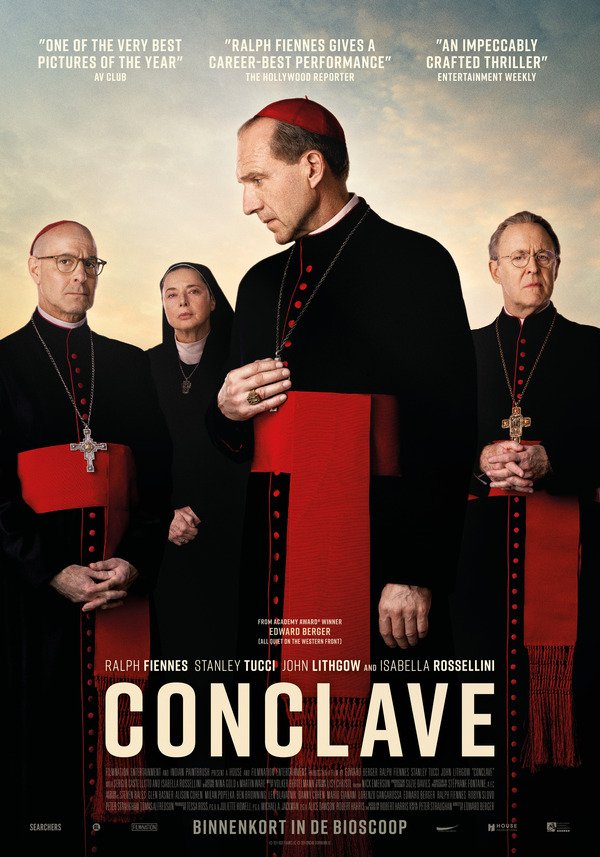
Taglines for the film “Conclave”. Based on a novel by Robert Harris, it's been praised for its cinematography and stellar cast - led by Ralph Fiennes, Stanley Tucci and Isabella Rossellini. 


It’s a suspenseful, glossy thriller; dark and claustrophobic. 


The themes are familiar: ambition, temptation, conspiracies and corruption; but also humility, courage, growing self-awareness; moments of repentance and forgiveness. 


It names the impact of grief, the nature of friendship, and the longing for hope. 


In his address, Cardinal Lawrence speaks from the heart saying: There is one sin which I have come to fear above all others… certainty. If there was only certainty, and no doubt, there would be no mystery. And therefore, no need for faith.


Sin is what separates us for each other and God. The pursuit of certainty can drive us to conspiracies and erode our capacity to trust or understand others.  It’s elusive,  brittle and divisive. An enemy of unity and of tolerance, as Cardinal Lawrence puts it. 


Certainties are shaken by the sorrow of death, the joys of friendship and commitment to a better future. Doubt, mystery and faith are our companions in these things. 

Birth also shakes and undoes certainty. The wonder of first breath; the dignity, vulnerability and possibility of a life unfolding in unknown ways. 


The birth we mark this holy night is a mystery calling forth faith - tenderness and hope. A mystery of love which exceeds our imagination; the eternal one, who holds our lives, dwells with us.


The writer of the letter to the Hebrews reminds us of how God spoke through prophets, calling us to do justice, seek mercy and walk humbly with our God. 


We don’t need a conclave to reveal either how our motivations or ambitions fall short of that; or how precious is our humanity, how tender our grief, how restless our longing for hope.


In response, God chooses to reveal Godself by dwelling with us: the glory of the creator’s very being, the sustainer of all things, comes to us in wordless infancy.


This child grows into adulthood - healing, consoling, teaching, debating, feeding, welcoming. He overcomes the old certainties of our misdirected hearts by bearing the weight of that sin and strife in his own body. 


The power of God - in vulnerability.

The ambition of men - undone.

There is a death, yes; but in him life is restored.

What happens in him - in the world, not behind closed doors - changes everything. 


The Word that was with God and was God became flesh: lived among us.


The Word brings life and light. Light that enlightens, that shines in the darkness.


Darkness did not, has not, will not overcome it. 


Light. Not certainty. Light. 


Light breaks down certainties and awakens possibilities.


At the end of “Conclave” windows open and light breaks in, dispelling claustrophobia. There is air, breath and laughter. Light.


We cannot retreat from the world in its beauty and brokenness, but we can seek the light - by refusing despair, resignation and indifference. 


Light  opens us to the mystery of the other - resisting suspicion, division and suffering; not allowing hate to creep into our hearts. 


Dare we let light shape our imaginations - affirming what is good, binding up broken hearts, persevering in love for the sake of a renewed world 


In dark times of tragedy or sorrow, we can turn to the light. We can hunger and thirst for righteousness, seeking what is just, beautiful, good, true - even joyful.


This week, in one of the world’s darkest places, the Jerusalem Patriarch said to Christians in Gaza: ‘you have become the light of our church in the entire world’. 


He spoke of joy in being present with them; of love and solidarity; of the need to protect their hearts - in light and love and life - in order to be ready to rebuild.


In the darkness we might ask ‘where is the light?’. John reminds us that Jesus is our light and life, our hope and joy.


In the darkness of this night, this world, we receive him. Emmanuel.  God with us. 


We receive him in the candles we light, the crib we bless, the forgiveness breathed on us; we receive him in the peace we share, the bread we break, the wine we pour out and in being with each other.


We receive him in being blessed to be a blessing of light to others: to be messengers of the good news of joy and comfort, healing and renewal. 


May the light of Christ kindle a hopeful flame in us - flames of hope and joy, mystery, faith and love; undoing certainty,  dispelling darkness. Amen.


© Julie Gittoes


Sunday, 22 December 2024

Emergency friends

Sunday 22nd December, Advent 4: Micah 5:2-5a, Hebrews 10:5-10 

and Luke 1: 39-45


A line from Claire Keegan's novel Small things like these: Bill wondered, ‘was there any point in being alive without helping one another?’


We all need help and can offer it: perhaps relying on emergency friends!


It might be the person you pick up the phone to when you need to talk through a situation or decision, to offload or find support. The ones who make space to catch-up even when diaries are bursting; who’ll turn up on the doorstep or pick up the phone at times of joy.


It might be the people you list as emergency contacts - or who rely on us: those who have spare keys, who feed cats, can give us a lift to hospital, who wait with us as we process painful news, or who will be at your side as you celebrate.


It might be one person or a handful; a close tightly knit circle or an eclectic mix of people gathered across the years, who’ve been there in different times and seasons. Those who’re older and wiser than us; those who’re younger with different energy and views.


We never know when we might need that ‘safety-net’ of friendship. Sometimes we rely on organisations or professionals to be that ‘friend’ for us.  


For example, the Roman Catholic charity Stella Maris works with seafarers. One of their port chaplains talks about supporting Rafi - a marinor taken seriously ill and hospitalized 1000s of miles from home. He said, ‘if I wasn’t there, he would have had no one. I became like his next of kin.’


Friendship can be the difference between being lonely, frightened and overwhelmed and being supported, cared for and encouraged. 


It’s a friendship such as this which we see in play in today’s gospel: a relational safety net in the face of joy and uncertainty, questions and hope. 


Mary heads to the hill country in haste. She turns up on the doorstep of her kinswoman. Perhaps Zechariah opened the door; his wife hearing the younger woman’s voice. 


Mary passes from threshold to household and into Elizabeth’s embrace. Driven there by fear and uncertainty, joy and longing. 


We don’t know if there were words tumbling from Mary’s mouth or how much Elizabeth knew by intuition or if shared her own story. 


Within this safety net of friendship, there is trust and hope. Both women gave themselves over to loving acceptance, echoing the promises of God being fulfilled in them. The moment of recognition flows from the fruit of their wombs - the one leaping for joy at the presence of the other. 


Then the conversation shifts. It’s more than a friendship between two women - different generations but both unexpectedly pregnant; both figuring out what their partners would think, say or do; and indeed what their off-spring would think, say and do! 


It’s a moment of praise and worship; greeting and leaping and joy; blessing and song. It is the breaking in of good news. Elizabeth pronounces a blessing on Mary: it affirms her faith and trust in God; it reaches from the present into a future where God’s promises will be fulfilled. 


We hear, say or sing Mary’s response day by day at evening prayer or evensong [we will sing a version of her magnificat at the end of the service]. From the core of her being she magnifies the Lord -  declaring God’s ways. The lowly, brokenhearted, oppressed and vulnerable are raised up; the rich, powerful, proud and stubborn are brought low. 


This is a renewed world, the stuff of the unfolding hope of a different future. Mary is sometimes depicted in icons as the undoer of knots - knots of injustice, sorrow, exploitation, selfishness. These things are undone in Jesus, the Christ child she carries in her womb and labours into the world.


She speaks as if the status quo has already been reversed. The eternal hope becomes a present reality. We are reminded of God’s faithfulness - the constancy of divine mercy - across generations and for ever. 


This encounter - this emergency friendship - acknowledges the world’s cries and celebrates that God sees it. 

God responds to it. God surprises us with where renewal begins - not from a place of power, but on the doorsteps and in households, amongst those there for each other in emergencies (the joyful ones and the sorrowful ones). 


As we reach the final Sunday of Advent, we are reminded that we prepare to expect the unexpected. To hope for it. The prophet Micah speaks into that curious logic.  Like us, his world was one of economic and social challenges; where violence and insecurity seemed intractable. 


Headlines this week draw our gaze to the plight of women. We have heard the testimony of Gisèle Pelicot whose dignity and courage shamed her abusers, empowering others to share their stories and speak for justice. We have heard women amplify the voices of Afghan girls who on reaching 6th grade are banned from education by the Taliban, sparking protests and vigils. 


Yet Micah hoped for a different world - and we can and should too. He looked for God’s presence in the unlikely places: in the small places, the little groups, the tiny child. This is how God’s holy one comes to us - then and now, not just in a crib but in our hearts. The word of God in a speechless infant is the source of our security, peace and strength. 


In him we are invited to see the image of God in each other. To be for each other that emergency friend. To do the small things. Courageously. Faithfully.  Small Things Like These - now released as a film - is set against the backdrop of the Magdalene laundries in Ireland. 


We see the protagonist Bill Furlong as a child and with his own children. He reflects on smallest gestures that make a difference against a tide of abuse, indifference or control.  He reflects on the daily kindnesses of Mrs Wilson - who had supported him and his mother, who in an early time might have ended up in the laundry. He reflects on the world of trouble ahead of him in seeking to save a life. 


Cillian Murphy shows us Furlong’s worry, love and courage. Keegan writes of such radical emergency friendship as he reflects,: ‘he found himself asking was there any point in being alive without helping one another? Was it possible to carry on along through all the years, the decades, through an entire life, without once being brave enough to go against what was there and yet call yourself a Christian, and face yourself in the mirror?”


We’re not called to bear the weight of this alone. The writer to the Hebrews calls this process of making whole, renewing and restoring ‘sanctification’ - and it is God’s work in us, by the power of the Holy Spirit, as we are forgiven and renewed, opening up our blessed hearts to others. 


In Jesus God’s love dwells with us; we are united with him in one body. We journey together with joy and sorrow, seeking reconciliation. In sharing our embodied selves, laughter and tears become holy. The world is broken and yet beautiful - the fullness of our embodied life together means that when no one else is there, we become each other’s next of kin. Emergency friends. Helping one another. Doing small things like these.


© Julie Gittoes 2024