Showing posts with label light. Show all posts

Saturday, 28 December 2024

Light rather than certainty

 Midnight Mass 2024: Isaiah 52:7-10, Hebrews 1:1-4 and John 1: 1-14


The power of God. The ambition of men.

The pope is dead. The throne is vacant.

What happens behind these walls will change everything.
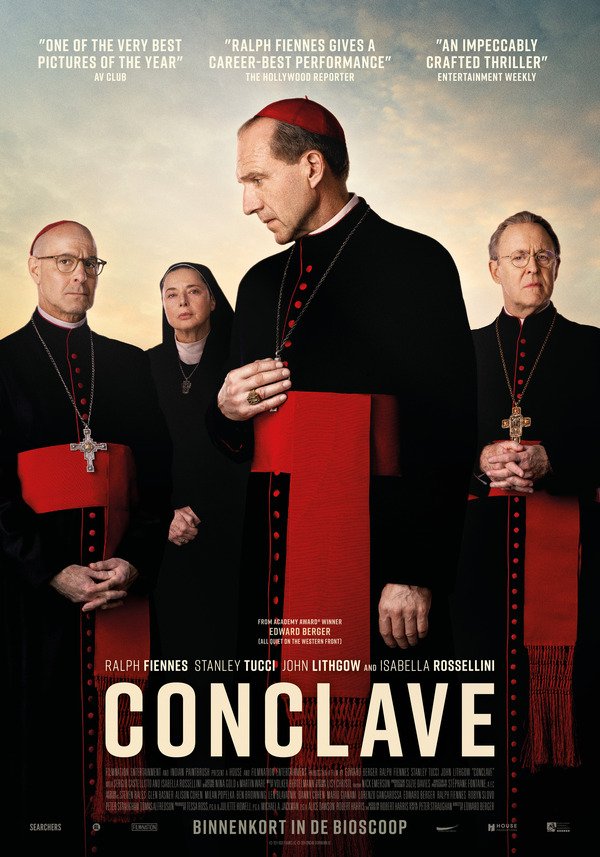


Taglines for the film “Conclave”. Based on a novel by Robert Harris, it's been praised for its cinematography and stellar cast - led by Ralph Fiennes, Stanley Tucci and Isabella Rossellini. 


It’s a suspenseful, glossy thriller; dark and claustrophobic. 


The themes are familiar: ambition, temptation, conspiracies and corruption; but also humility, courage, growing self-awareness; moments of repentance and forgiveness. 


It names the impact of grief, the nature of friendship, and the longing for hope. 


In his address, Cardinal Lawrence speaks from the heart saying: There is one sin which I have come to fear above all others… certainty. If there was only certainty, and no doubt, there would be no mystery. And therefore, no need for faith.


Sin is what separates us for each other and God. The pursuit of certainty can drive us to conspiracies and erode our capacity to trust or understand others.  It’s elusive,  brittle and divisive. An enemy of unity and of tolerance, as Cardinal Lawrence puts it. 


Certainties are shaken by the sorrow of death, the joys of friendship and commitment to a better future. Doubt, mystery and faith are our companions in these things. 

Birth also shakes and undoes certainty. The wonder of first breath; the dignity, vulnerability and possibility of a life unfolding in unknown ways. 


The birth we mark this holy night is a mystery calling forth faith - tenderness and hope. A mystery of love which exceeds our imagination; the eternal one, who holds our lives, dwells with us.


The writer of the letter to the Hebrews reminds us of how God spoke through prophets, calling us to do justice, seek mercy and walk humbly with our God. 


We don’t need a conclave to reveal either how our motivations or ambitions fall short of that; or how precious is our humanity, how tender our grief, how restless our longing for hope.


In response, God chooses to reveal Godself by dwelling with us: the glory of the creator’s very being, the sustainer of all things, comes to us in wordless infancy.


This child grows into adulthood - healing, consoling, teaching, debating, feeding, welcoming. He overcomes the old certainties of our misdirected hearts by bearing the weight of that sin and strife in his own body. 


The power of God - in vulnerability.

The ambition of men - undone.

There is a death, yes; but in him life is restored.

What happens in him - in the world, not behind closed doors - changes everything. 


The Word that was with God and was God became flesh: lived among us.


The Word brings life and light. Light that enlightens, that shines in the darkness.


Darkness did not, has not, will not overcome it. 


Light. Not certainty. Light. 


Light breaks down certainties and awakens possibilities.


At the end of “Conclave” windows open and light breaks in, dispelling claustrophobia. There is air, breath and laughter. Light.


We cannot retreat from the world in its beauty and brokenness, but we can seek the light - by refusing despair, resignation and indifference. 


Light  opens us to the mystery of the other - resisting suspicion, division and suffering; not allowing hate to creep into our hearts. 


Dare we let light shape our imaginations - affirming what is good, binding up broken hearts, persevering in love for the sake of a renewed world 


In dark times of tragedy or sorrow, we can turn to the light. We can hunger and thirst for righteousness, seeking what is just, beautiful, good, true - even joyful.


This week, in one of the world’s darkest places, the Jerusalem Patriarch said to Christians in Gaza: ‘you have become the light of our church in the entire world’. 


He spoke of joy in being present with them; of love and solidarity; of the need to protect their hearts - in light and love and life - in order to be ready to rebuild.


In the darkness we might ask ‘where is the light?’. John reminds us that Jesus is our light and life, our hope and joy.


In the darkness of this night, this world, we receive him. Emmanuel.  God with us. 


We receive him in the candles we light, the crib we bless, the forgiveness breathed on us; we receive him in the peace we share, the bread we break, the wine we pour out and in being with each other.


We receive him in being blessed to be a blessing of light to others: to be messengers of the good news of joy and comfort, healing and renewal. 


May the light of Christ kindle a hopeful flame in us - flames of hope and joy, mystery, faith and love; undoing certainty,  dispelling darkness. Amen.


© Julie Gittoes


Sunday, 28 July 2024

A whole lotta love

 Easter 7, 12 May: Sidney Sussex: Ezekiel 36: 24-8 and  John 17:6-19


‘A whole lotta love gone bad’: so runs the headline for The Guardian’s review of “The Tortured Poets Department”. 


Taylor Swift makes capital in processing her romantic travails: unsparing, with a quiet sadness.  Details ooze through the lyrics; love lost, lessons learnt, in searing particularity.


The Guardian review of 'The Tortured Poets Department' here


The closest I’ve come to my heart exploding, she sings, is a ring taken off her middle finger and put on the one people put wedding rings on. A joke to him that wasn’t a joke to her: playful or calculating, hurt by the one she knows and decodes. 


The one she’ll forget but not forgive, who didn’t measure up in any measure of a man. Was any of it true, she asks?  How do any of us ever know? 


To be human is to love: completely and imperfectly; hearts explode and spirits break. 


We live within the circles of intimacy of households and friendships, mentors and lovers. Somehow we are banded together as we attempt to live life, its challenges, failures, successes and rhythms. 


Our heartbeats ring out the joys; they toll the rhythms of our grief. We protect ourselves, retreating to solitude; we find balm in the company of others, the safety of friends; we take risks, giving all for another not knowing how it begins or ends.


Or as Swift puts it:  I would’ve died for your sins / instead I just died inside.


Today’s second reading takes us to the heart of love, to the heart of love in the face of betrayal and death. It takes us to the heart of Jesus’ prayer. 


Having washed his disciples’ feet, the atmosphere now carries the weight of pain and promise.  In Stations of the Gospel, Rowan conveys the intensity and density of this moment:


The bowl glows in the furnace.

Inside, the beads of sweat

Spit and scatter.


We might extend it in our mind’s eye: bread crumbs on the tables, the taste of wine lingering; the salt of sweat and tears; dirty water and the gaze of eyes turned towards him, and his eyes turned heavenward. 


‘I ask’ says Jesus. 


His parting words express the longing for unity in the face of betrayal, for protection in the face of hostility, and for joy as they are sent into the world.


The disciples have shared in his life up until this point. There is still so much that could be said - and letting go in the face of death breaks human hearts. He does die for our sins, all that separates us. There is still so much that will unfold - as resurrection life restores human hearts. He does not leave us dead inside.


They cannot bear it now. But he can ask, in love, for love to sustain them in loss; for love to renew their hope; for love to establish a new community. 


As David Ford puts it in his commentary, Jesus’s desire is that the: intimacy and intensity of God’s own life opened up for wholehearted, trusting participation in the ongoing drama of being loved and loving.


We and the disciples are sent into a world which can sometimes be hostile: where trust and participation is low; where communities can be siloed or marginalised. 


Jesus prays into that reality: that they and we might be protected in that ongoing drama.  


The worship that we share as we gather around our Lord’s table - the place where bread breaks and wine is poured out. Even now, our evening songs and prayers are but a gathered interval in our scattered life. 


We will be sent out from this place - blessed as we move into the spheres of our work and family life, our networks of relationship and numerous tasks.


The gift of the word is part of what sustains us, but the sacrament too. As the text of Wood’s anthem this evening reminds us, in me manet, et ego in eo, alleluia, the one who eats and drinks dwells in God, and God in them, alleluia. 


As bread gets inside us and enlarges our hearts, as blessing rests on us to expand our imaginations. In God, the desires of every living thing are satisfied.


Our hearts are turned from self-absorption to attention to God; and onwards into concern for others. God’s self-giving love for the world revealed in Jesus Christ, continues to flow through the power of the Spirit.


Jesus prays for this sanctification - this ongoing work of the Spirit.  Holiness is the nature of God - we draw near to this refining fire of love in worship, in penitence and faith, in forgiveness and renewal, moving from pain to peace, in our gathering and being sent.


As our introit puts: Holy is the True Light - passing wonderful, lending radiance to them that endured.


The radiance of that light falls on us too - in the heat of our conflicts and loves.  We share in ways of holiness - focused on what matters most, with dedication, and persistence. In this is glory and joy: in being faithful in small things, ordinary things; doing them with great love. 


As the seventeenth century priest and poet Thomas Traherne wrote:  ‘Those Things are most Holy which are most Agreeable with God’s Glory. Whose Glory is that he is Infinit Lov’.


There are echoes here in the words of the prophet Ezekiel. In the face of separation, exile and fragmentation he focuses on God’s action: gathering, cleansing and renewing.


Restoration confronts us with the radiance of holy and refining love. To be cleansed from the consequences of rebellion against God’s ways - letting go of the idols that have supplanted the commandments of love; letting go of the corruption that has exploited and diminished others.


God promises renewal: a new heart and a new Spirit. Human will and desire will be recommitted to ways of love. A heart of stone is cold, unresponsive and lifeless; a heart of flesh beats, kindles love and sustains life. 


When Jesus prays, he asks that we too might come alive to God’s love and God’s desire for the world.


In anticipation of Pentecost, we gather in awareness of risen life, but also in prayerful waiting. We are waiting for the Holy Spirit to touch human hearts, to create something new. 


We look to an inheritance, a home of unfading splendour; but here and now, we are being guided out of a troubled past and into an unknown future. The Spirit gives space for rehabilitation and redemption - in this world and in the world to come.


For now, we are called to continue in that drama of being loved and loving. To wholeheartedly participate in the life of the world - but with the intensity of God’s life in us; life shared in the intimacy of breath and gesture; in the infinite movements of renewal and pursuit of what is just, beautiful, equitable and peaceful. 


We are restored penitents.  Our heart beats celebrate life’s joys and mark our grief. Love will sometimes go awry; we won’t always measure up.  Everyday is an attempt to live this drama of being loved and loving. Sometimes we succeed; sometimes we don’t. But we practise habits of love - human and divine. We’re lent a radiance that restores.


© Julie Gittoes 2024

Saturday, 18 March 2023

Light Gatherers

 Mothering Sunday: 1 Samuel 1:20-end, Colossians 3:12-17 and John 19:25b-27 - Carol Ann Duffy's poem "The Light Gatherers" can be found here.


When you were small, your cupped palms

each held a candleworth under the skin, enough light to begin,

                             and as you grew,

light gathered in you, two clear raindrops

in your eyes,

                            warm pearls, shy,

in the lobes of your ears, even always

the light of a smile after your tears


So begins Carol Ann Duffy’s poem ‘The Light Gatherer’.


She describes kissed feet that glowed and a bowed head spotlit; when language came it glittered like a river; and sleep, when it came, had the whole moon for a night light. 


Mother and Child - Mary Cassatt 


Duffy is painting for us a picture of motherhood. 


It might not be universal. But being born is. 


She captures moments we cannot remember. 


The beginning of another human being. A spark of light and life.


When we were very small: the infancy of first breath and being held; the infancy of the awkward tenderness of cradling a newborn life. 


She captures childhood moments we cannot remember. And some that we do. 


Playing on our own; games with others. Learning. Falling.


The slow time of waiting, which goes too fast for adults.


We grow. We become more ourselves. Bound to others, to those who nurture us.


We remember them. As light gathers in us.


Duffy ends her poem with life opening out at the end of a tunnel of years. - through adolescence and into adulthood. 


We might see in Duffy’s poem a glimpse of how God sees us.


We are light gatherers - even when the light of a smile comes after our tears.


To be formed in the likeness of God is to be a child of light. 

Fragile, yet strong for others. 


Whole, when we feel broken.


Good, and forgiven forgivers.


Beloved, even when we don’t see it.


Our readings give us three pictures of what our life together is or could be like.


First, Hannah. Some of us, like her, will long for a child of our own.


All of us have experienced childhood.


Some of you have remained with children to nurse and wean them.


All of us have stood at a school gate: one side of it or another.


Part of the story of parent and child is that kind of letting go.


Letting go so that we can have the space and time to be who we are: called as human, blessed with personality and interests, taking that into work and relationships, to embrace or let go.


In all that, light gathers in us: the people who love us, care for us, teach us; those who make us laugh, bring us comfort, restore our confidence. 


Those who let go and never stop praying for us: holding us before God in love.


The second picture reminds us that parenting, nurture, motherhood and friendship exist within a wider network: a community.


John paints a picture that is perhaps shocking or surprising. 


God’s love made flesh in Jesus has been present at a wedding and late night conversations, in story telling and sharing bread. 


Now as his head bows on the cross, he looks at his own mother and closest friend and asks them to form a new household.


In their grief light gathers in them: just enough light to care for each other. 


Maybe carrying just a candleworth in their hands; enough warmth; even a light of a smile after their tears. 


This love made flesh is still at work: dead, buried and risen, and still rising in us. A love that doesn’t let us go.


Love like a night light: just enough to reassure us in the promises we make, the ripples of grief, the wild dreams of possibility and the small gestures of hope.


Image found here


As our third reading paints an image of life lived when we are looked on with love: a beloved community with enough light to begin and to grow.


In the smallness of our cupped palms there is light and love and joy: there is enough when we are fed with life in bread; when we are seen and blessed.


Light gathers in us when there is compassion and kindness; humility and patience. 


It gathers when we bear with one another: the patient work that mothers and friends, granddads and siblings, teachers and carers know. 


Light gatherers are to be clothed in love. 


Love which binds us together when it is hard; that breathes peace into broken hearts. Love which gives thanks; that calls out unhealthy habits; which forgives and allows that truth to take root. 


It’s a love that sings. 


With happiness, yes, of course; but a love that keeps on singing when we’re sorrowful. 


Whatever you do - in words and deeds - do it in Jesus’ name. In love.


Be the light, the love, the peace you want to see. Do it knowing there’s just enough in the palm of your hands; in the expanse of your hearts; your smiles, your tears, your embrace. 


Look around today:

Behold, your mothers.

Behold, your children.


You are God’s chosen ones. Light gatherers. Beloved. 

May God’s love dwell in you richly. Amen.


© Julie Gittoes 2023


Saturday, 6 March 2021

Where can we find light?

 Sunday, 14 February: 2 Kings 2:1-12 and Mark 9:2-9


When day comes, we ask ourselves,

where can we find light in this 

never-ending shade?


It was a little over a month ago that the poet Amanda Gorman spoke at the inauguration of the 46th President of the United States. 


Her poem was entitled “The Hill We Climb”. 


Her words embraced themes which resonate beyond the steps of the Capital. She allowed space for grief and growth, hurt and hope; purpose and promise; truth and trust. She picture of what stands before us rather than between us; acknowledged that norms and notions of what is ‘just’ isn’t always justice. 


Her words were infused with passion and joy; woven together with the vision of our Scriptures - that everyone shall sit under their own vine - their own fig tree - and be unafraid. 


Armando Alemdar Ara - The Transfiguration of Jesus 


The hill we are invited to climb today is one of transfiguration; of transformation; of unsettling, overwhelming and dazzling radiance.


A hill where perhaps we can say with Gorman:


For there is always light, 

If only we’re brave enough to see it.

If only we’re brave enough to be it. 


We come to this light: sharing with the disciples in this private moment. 


A moment of bewilderment and glory.

A moment Peter at least wants to hold on to.


Yet as they rise up from their fear, perhaps they ask what kind of love is this?


What kind of love?


Charles Pabst - the luminous mysteries


This is love incarnate - God’s beloved Son. 


This love is the fountain of mercy and justice.


This radiant moment connects us to promises and renews our purpose. 


Here we too are refashioned. 


At the feet of Moses who led a people to freedom, alerting them to the presence of God in cloud and fire; who called out the dangers of false idols and golden calfs; whose face glowed with God’s glory; who brought the commandments down from mountain top to the valley.


At the feet of Elijah who defended the worship of the Lord God; who called out the evil deeds of rulers and brought hope to the fearful; whose words of prophecy called people back to mercy and justice; who departed in glory, leaving Elisha a double portion of his spirit.


At the feet of Jesus we see the fulfilment of the law and the prophets; who came from glory as love incarnate; who stood alongside fragile and fractured humanity on muddy river banks; whose presence brought God’s Kingdom near in words, whispers, sighs and signs of compassion, welcome, healing, challenge and hope.


Now he sets his face towards Jerusalem: walking a path of suffering, rejection and death.


No wonder Peter wants to hold on to this sacred and wondrous moment; to hold onto this vision of glory.


A cloud overshadows them. 


A voice speaks.


This is my Son, the beloved.


Listen to him.


Found of mercy and justice.


And now, only Jesus. 


What kind of love. 


A love that raises the disciples up from a place of fear.


A love that takes them back to the valley.


A love that gives them a glimpse of glory; a glimpse of risen life. 


A light in shade: if we’re brave enough to see; brave enough to be.


Transfiguration - James B. Janknegt, USA


To rest in the Lord is to commit our way to him, and to trust him. 


To abide in radiance calls forth a response. 


And in commitment and trust, Jesus points the disciples - and each of us - back to this messy world. 


A world where the fault lines of social and economic circumstances collide with the stories we tell of past and present and future; where structures and legacies can be deployed to bind or to set free. 


A world where there are tensions, inequalities and injustices; where polarisation and privilege threaten to disfigure or diminish the dignity we have as human beings. 


Jesus takes us from radiance and reality. 


He brings us back to those who need us: the sick and sorrowful, the restless and vulnerable. 


This is the kind of love we see incarnate with us and acting for us. 

Love that liberates and brings life.


Dare we pray for a portion of God’s Spirit?

Truth to guide us and love to free us. 


Dare we become the light we seek?

With compassion, courage and resolve to see dignity restored. 


When it comes to racial justice, this is not a zero sum game - where someone else’s gain is our loss. We are invited out of apathy into equality. We are invited to a kind of love that reflects God’s glory as we honour one another.


In the words of my dear friend Anderson Jeremiah - a member of the Archbishop’s Antiracism Taskforce: the ‘way of the cross cannot be privatised as an individual spiritual journey. The cross becomes a dynamic public pursuit of fraternity, liberty and justice rooted in love. The cross and subsequent resurrection has overcome the world’s power game of domination, exploitation, greed and deception.’


Will we rise from fear - being the light we see and the love we receive?


Today we are gifted a glorious vision - in a world such as this.


Love incarnate: fount of mercy and justice 


In a world of inequity and pain, may our actions be our prayer. 

May we seek to honour one another and rise from fear. 

May we labour unto to the the glory of this kind of love.


© Julie Gittoes 2021