Showing posts with label reconciliation. Show all posts

Sunday, 30 July 2023

Barbenheimer

 Sunday, 30 July: 1 Kings 3:5-1-12, Romans 8:26-39 and Matthew 13:31-33, 44-52


This has been a fascinating week in cinema with the simultaneous release of two films which appear to have absolutely nothing in common.


On the one hand, cinema-goers dressed in pink queued to see Barbie:  “life in plastic, it's fantastic”.


On the other, entering into the world of theoretical physics and the atomic bomb in Oppenheimer: “death destroyer of worlds”. 


To do the “Barbenheimer” - seeing both movies in one day or even one week - is intense, but not wholly contradictory. Rather, considering how they interact with one another reveals common threads.


Both deal with human frailty, potential and corruptibility; the legacies that haunt us or the problems we thought were solved.  both make us consider the kind of worlds we inhabit, imagine and create. 


As directors both Chistopher Nolan and Greta Gerwig explore power and patriarchy, ambition and arrogance, fragility and feminism, remorse and repentance. 


The sheer cheeriness of Barbieland’s candy-pink utopia only amplifies the bleakness of Oppenheimer’s dystopia of something not understood or feared until it was used.  


Barbie brings a party dancing to disco-pop to a halt as she asks “do you guys ever think about dying”; Oppenheimer, as he walks away from Einstein, knows he will never stop thinking about anything else.


There are layers of complexity in and beyond Oppenheimer the movie and Oppenheimer the man: from the clearance of Native Americans and Hispanos and Los Alamos to the unseen destruction of Hiroshima and Nagasaki; from the suspicion of the McCarthy era to chain reaction of an arms race and Cold War; from the personal betrayals to the weight of depression and responsibility  as campaigning becomes the pursuit of some sort of absolution.


As this plays out in screen one, in screen two we hear of a different sort of breach of stability; a different sort of fear. A membrane has ruptured, between Barbie World and reality.  The weight of human anxiety and depression, disappointment and longing for some sort of absolution seeps into the naivety of a pink plastic domain revealing a blond fragility. 


Stereotypical Barbie begins to experience the discomfort and tensions of the real world: whilst she tries to put things ‘right’, Barbie World is itself breached by Ken’s discovery of horses and patriarchy and a quest for respect which diminishes others. Neither world is ordered to enable the flourishing of all; power still operates out of the shadows. 


Yet there is a longing for liberation: not just in the acceptance of emotions but in acknowledging that we are enough, or "Kenough" as Ken puts it. But neither Barbie World nor “Kendom” are the answer - it is more complex than that.


There is a breach between the real world and the world as we long for it to be - as God calls it to be. It is a breach that Barbie cannot repair despite her longing to move from being made to making meaning.  It is a breach that God longs to repair - by not withholding his Son: for God so loved the world that he sent his Son, not to condemn but to bring hope of healing.


This is the mystery of the incarnation: God’s word made flesh, dwelling with us amidst the real tensions of human life with its power imbalances, burdens of guilt and exploitation and our longing for forgiveness; life with all the risk of intimacy, the struggle for self-acceptance and our place within systems we are subject to.


God comes into our world not through Barbie cars and roller blades, but through the labour pains of birth.  As Jesus enters adulthood, he is present at lakesides and in synagogues, on the road and at the table. He asks those whom he meets what they are looking for; breathing words of challenge, peace and dignity.


The breach between worlds is overcome in him - by his life, teaching us ways of healing; by his death, in bearing with our pain, separation and brokenness; in his resurrection, by revealing the power of love which wins, binding up hearts and gathering up lives.


In Jesus, we do not suddenly escape the contingency and complexity of our world; but we are given signs and markers of what life oriented to God’s ways might look like. 


In his parables Jesus speaks of a Kingdom - not a "Kendom" or any other humanely constructed realm. This Kingdom breaches the realms of earth and heaven, by bringing something of God’s reign to earth. 


If we listen to the words and images he uses, we notice several things. 


Image here


The first is that the stuff of this reign is small: a mustard seed, a grain of yeast. What is hidden away and barely visible will grow, changing and enriching what is around it. As a plant grows or a loaf rises, so we see the gradual process akin to the working out of God’s purposes.


We need to be patient and expectant; not losing heart or feeling disappointed. We are to trust the process that in our midst something is taking root and rising up which is beyond our expectations; hearts changing and movements of justice and mercy rising.


Such change and growth is not just for our sake, but for the sake of the world. A mustard seed produces a large enough shrub to provide nesting space for birds. Space to abide and make a home; to be safe and flourish. Yeast when combined with a proportion of flour - the most dough someone can knead - produces bread not just for some but for hundreds. It is a sign of feasting, sharing and hospitality.  


The next thing we notice is that a kingdom based on God’s ways with the world is worth everything we have: a treasure or a pearl for which we will gladly sell what we have in exchange for it. 


The parables describe a whole-hearted human response to this gift of love and grace - something we seek after and find, something we dig out and uncover.  There is risk and cost and joy to this quest - but it also brings to birth a newness, a set of possibilities, which redirect our priorities. 


Finally, this kingdom is like a dragnet - drawing in everything in its path; gathering up all kinds of people and lives. In part this echos Jesus’ own way of being in the world - time spent with a wedding couple and a grieving mother; daring to touch the leper and being touched by the haemorrhaging woman;  honouring the widow and embracing the child; debating with centurions, pharisees and samaritans. 


All those lives and stories belong to God - as do the theoretical physicist and doll creator, the campaigner and the fragile, the activist and the brokenhearted. On the one hand this kingdom does not demand rash judgement or a move to exclude or cut others off. On the other hand, to hold open the possibility of hope for all does mean living with complexity and uncertainty - it does demand wisdom to seek a way forward.


This is precisely what Solomon asked for when confronted with what it meant to lead a people chosen and yet rebellious. 


He recognises that to decide between good and evil, particular actions and their consequences demanded not wealth or trappings of power. It demands a mind that could discern - discover, seek after, uncover - what is right.


As we pray for our leaders, and for ourselves, that request remains the same: the pursuit of knowledge and peace, the seeking after justice and a sustainable future, all this demands a depth of wisdom beyond our human minds. It demands that we look to an ordering of the world in God’s ways - seeking to reconcile rather than divide.


Neither Oppenheimer nor Barbie are able to put things right. Yet they do point us to ideals and opportunities, they name the cost of ideology and the possibility of change or allowing space for others - seeking the purity of love which makes hatred cease.


Nor can we put things right in our own strength. The great hope of the climax of Romans 8 is that the Spirit helps us in our weakness - praying in and through and for us. The Spirit that searches the heart of God and our human hearts. There are echoes of mercy, whispers of love: our blessed assurance.


A Spirit that seeks to work all things for God’s good purposes. Paul ends with a resounding hope in the face of death - in the face of the questions of Oppenheimer and Barbie: Nothing - not hardship, distress, rulers or powers, not death or life, can separate us from the love of God in Christ Jesus our Lord. 


God is love: enfolding all the world in one embrace. We need to lean into that hope - a loving kindness that holds and guides us even when sin, brokenness, hurt, death and fragility haunt us.


Love is the final triumph. Meanwhile, we touch and taste and see that love in the ultimate fragility of broken bread.


Let us pray: Strengthen for service, Lord the hands that have taken holy things; may the ears which have heard your word be deaf to clamour and dispute; may the tongues which have sung your praise be free from deceit; may the eyes which have seen the tokens of your love shine with the light of hope; and may the bodies which have been fed with your body be refreshed with the fullness of your life; glory to you for ever. Amen.


[Common Worship post-communion prayer, proper 12]


© Julie Gittoes 2023

Sunday, 26 August 2018

As shoes for your feet

A sermon preached at the Cathedral Eucharist 26th on Sunday 26 August 2018 - and the first time since I've been ordained that I've preached on shoes! Members of my various congregations have become particularly observant about my footwear; friends joke about the disproportionate number of shoes I bring to conferences... however, shoes have all sorts of practical and personal connotations about purpose and identity for example. The texts were : Joshua 24:1-2, 14-18; Ephesians 6: 10-20; John 6:56-69

As an aside, tracing the Gittoes family tree back through a plumber and publican, millers, servants and tenant farmers, it is satisfying to know that one ancestor was a "cordwainer".  In seventeenth century Wales, a certain John Gittoes (1643-1688) was plying the same trade as the creator the Saalburg shoe, crafting footwear from leather.

As shoes for your feet, put on whatever will make you ready to proclaim the gospel of peace.

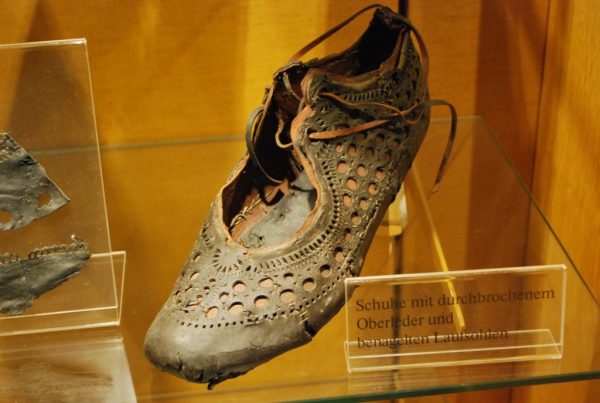
This month, a 2000 year old shoe went on display at the Saalburg in Germany. It had been found in a well - a practical, recognisable and intimate artefact; a point of human connection to those inhabiting the fort between the Roman Empire and Germanic tribes. 


With a hobnailed sole and leather upper, modelled on a military boot, this shoe offers warmth and protection. It also reveals both the craft of the maker and the wealth of the wearer. Holes punched into the soft leather created an intricate design.  This shoe wouldn’t look out of place on today’s high streets; taking retro fashion statements to another level. 

What would the roman shoemaker think of my own collection of footwear: from my faithful DMs, and liturgically coloured heels, to my trainers, converse and floral flats to umpteen pairs of clerical black slip ons, lace-ups, loafers and boots.  


A Canon's shoes!

As shoes for your feet.

When we look at the stories of Joshua, Peter or Paul; the witness of Ruth, Mary or Phoebe, it can feel as if we have big shoes to fill. As we walk in the steps of Jesus, we can sense the weight of responsibility, challenge, expectation and opportunity. 

Stepping into such shoes can feel overwhelming and precarious; but also exciting and rewarding. Eventually, we grow into them - or break them in - knowing we are where we are meant to be; we can be rooted, take risks and flourish.

Without over stretching the analogy it feels immediate and accessible to hear that when Paul talks to the Ephesians about clothing themselves with the armour of God, he also concerned with their feet.  The shoes we are to put on will make us ready to proclaim the gospel of peace. 

Like our physical shoes,  this ‘spiritual footwear’ is practical and intimate, bringing warmth and protection; equipping us for the all-weather terrain of God’s Kingdom.

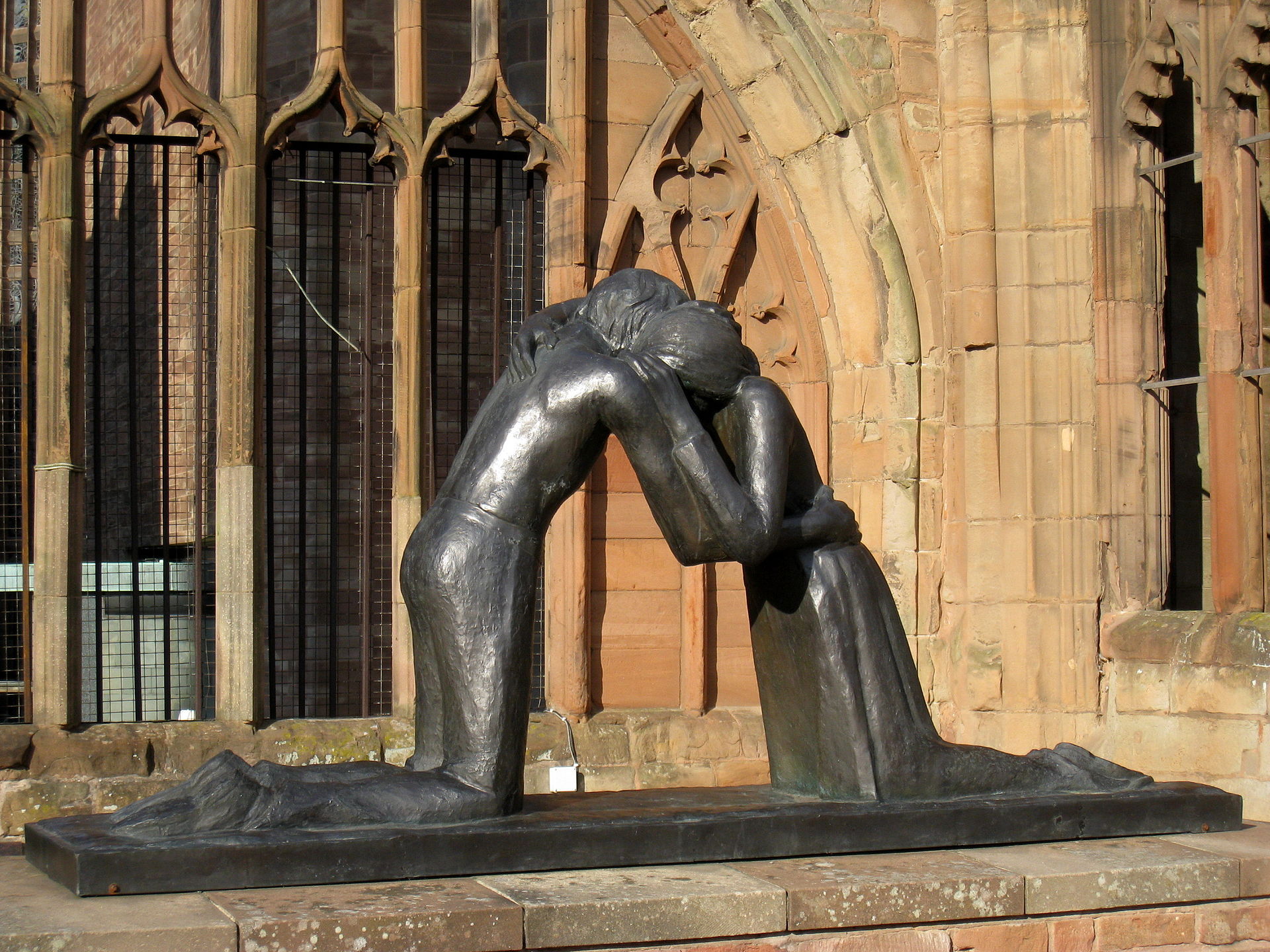
The steps we take in following Christ are steps towards peace. As Archbishop Justin’s priorities reminds us, this begins with prayer. It continues in the work of reconciliation, transforming conflict in the light of the cross. It involves witnessing in the power of the Spirit to the love of God revealed in Christ.  


Being made ready to proclaim peace demands commitment in the face of struggle. It means choosing life. Today’s readings explore these steps being taken: in gathered community, in communion with Christ, in walking in the world.

In Joshua, steps are taken in gathering together as community and renewing their commitment to serve the Lord.

Joshua was commissioned to lead the nation after Moses’ death. As his life and work draws to an end, he sets before them a choice: between the local gods of their ancestors and the God of the whole universe. 

In the verses omitted today, before he invites them to echo his own declaration, he confesses the story of faith of their community.

He retells God’s call to Abraham; of a promise of blessing which extends to the whole of humanity. He recalls the experience of slavery, the journey through the wilderness towards freedom; he speaks of human bravery in battle and of the nearness of God’s presence in rescuing them.

They are worship and serve the Lord, walk in God’s ways with sincerity and faithfulness. Choose. Life. Today.

His personal commitment is echoed by the voice of the people: ‘we too shall serve the Lord: he is our God’. Today, our footsteps have brought us from our homes to this place, as we too gather to affirm our faith; to recommit ourselves to serve God.


Steps taken

In Jesus’ words, steps are taken in response to an invitation to be in communion; to choose life.

In the beginning, the Word was with God; abiding in the intimacy of perfect communion. That very Word became flesh, entering the complexity human history and taking on the frailty of human a human body.  

That Word came to invite us to abide in him; to lead us to dwell in communion, sharing the very life of God. Jesus dwells with us at wedding feasts and gravesides; he taught on hillsides and sat at table with his friends.  In him, we see love poured out on the cross as God reconciled the world to Godself.

He has broken bread to feed a multitude; he has kindled in them the longing for living bread. The bread from heaven, given by God, is his flesh.  We are hunger for this bread - the presence of God’s love in our hearts.

This invitation to eat and abide demands a decisive response.  Some turn away, refusing the gift and demands of that love. Jesus asks, with openness and vulnerability, ‘Do you also wish to go away’. It is Peter who articulates the hope and courage of this choice. To whom can we go? In Jesus, we chose life; life in all its fullness. 

We hear and respond to that call each time we celebrate the Eucharist together. In broken bread, we are sustained and shaped by Jesus Christ. Our feet are drawn near in faith; our hands reach out to receive; we taste and see how marvellous the Lord is; our hearts are warmed by his love.

And we rise. Our feet walking onwards: clad in leather, heels clicking, laces tied. Our feet walk beyond the threshold of this place into a world. A world where, strengthened by the God’s Spirit, we serve as a pilgrim people; a people called to make peace.


Walking onwards

The Eucharist reveals to us the marks of God’s peaceable Kingdom. And in a messy and complicated world, our lives are to take the shape of the Eucharist as we too are taken, blessed and given for others. 

We are to bring communion to others, in places of beauty and brokenness: as we feed the hungry and struggle for justice; as we take time to be with the lonely and break the bread of hospitality together; as we seek to liberate the oppressed and listen to the anxious; as we share the intimacy and tenderness of care for others; to as we offer the gift of friendship which reveals to others the good news that they are loved by God.

As shoes for your feet, put on whatever will make you ready to proclaim the gospel of peace.

We walk with Jesus today, nourished by his body and empowered by the Spirit; we walk alert to what God is doing in the world; alert to where we need to offer support or challenge. 

Archbishop Justin says: ‘Reconciliation is one of our greatest needs and toughest challenges as human beings. In a world plagued by conflict, division and indifference, the Church has a crucial role to play as a community of reconcilers. Jesus calls every one of us to love God, our neighbours, ourselves and our enemies – a challenging command, with nobody left out.’

As Paul reminds the Ephesians, to do this we need walk in truth and faith, in righteousness and peace. We walk prayerfully, hopefully and courageously; bringing people together - taking small and risky steps of generosity and healing; making cups of tea, creating space to meet or facilitating a difficult meeting. We need to listen carefully and speak wisely; turning suspicion to trust.  We walk the way of reconciliation - transforming strangers into friends, friends into members of God’s household.

Walking this way is difficult: we need ‘spiritual shoes’ for our feet: shoes which are warm, practical and protective; shoes of humility, time and patience.  May we who have gathered to share our faith in God and been nourished in communion with the living bread, be equipped by the Spirit to walk in the world in the ways of peace.


© Julie Gittoes 2018

Sunday, 22 March 2015

We need to discuss values and vision

Enough of the dry politics of numbers. We need to discuss values and vision.

So runs the headline of Will Hutton's comment piece in today's Observer.

The byline continues: Political conversation has been drained of all vitality, fixated on a narrow set of targets. To breathe new life into it, our politicians should stop talking like accountants and rediscover moral purpose.

Hutton goes on discuss the way in which politicians of his parents' generation traded their competing visions and debated how they would achieve the common good. Our own generation is preoccupied with the all-consuming metric of national debt. He calls for an ecosystem of innovation and investment; for a state driven by values which has to organise itself so that it has the wherewithal to sustain improvements to education, health, infrastructure, housing and defence. He asks, 'where is the political vision?'


Illustration: briancains.com
The Observer: Sunday, 22nd October 2015

The question of vision is vitally important for us as members of the church, the body of Christ.  Sometimes the narrative told about our worship and common life is one of decline or of maintaining buildings; sometimes our own internal dialogue is dominated by deficits and numbers; our viability rather than vitality.

We could so easily rewrite The Observer's headline: Enough of the dry ecclesiology of numbers.
We need to discuss values and vision. Is not our Christian discourse, our understanding of faith and the mission of the church drained of all vitality if it is fixated on a narrow set of targets?  To breathe life into the church we too should stop talking like accountants and rediscover moral purpose.

As a priest, a theologian, a member of the body of Christ, I would suggest that the church is in a far more hopeful place than we sometimes think.  We have an Archbishop who has set out three clear priorities - priorities which remind us that the church is not just another human interest group or a branch of social service. We are the body of Christ: that is our identity within which we discover our calling. Therefore, our first priority is to pray; to place worship at the heart of our life, individually and corporately. We are to make time for it and to invest in it - because in prayer we draw near to God and God reaches out to us.

In a sermon today, Archbishop Justin spoke about prayer as the most risky, the most dangerous thing you can do. It changes us. It roots us in God. His second priority flows from the first: as a church we are to be agents of reconciliation.  God is the source of this forgiving and recreating activity. It demands trust; it demands that we speak of our core values; it means that we have to lay aside petty jealousies and personal agendas. It is undoubtedly a hard and costly path - as Bishop Andrew (Guildford) reminded us, we are called to take up our cross and walk to Jerusalem, in the hope of resurrection.

Our Archbishop's third priority is the call to witness.  It is the calling of the whole people of God to share the good news of Jesus Christ.  Witness is rooted in worship: our deep attention to God - in the beauty of holiness; in word and music; in sacrament and silence. Worship forms us as a holy people - our witness is bound up with the reflection of God's love in our life together as we learn to be patient and generous, forgiving and joyful.  That is a compelling vision of our life together; but it needs nurturing.  There will be times when we have to challenge one another about where we place our attention or how we engage with one another.

As a community of shaped by worship, there is a deep moral purpose to our witness. In the power of the Spirit we are called to witness to the love of God made manifest in Jesus Christ.  Acts of service are a tangible expression of that; they are signs of God's Kingdom - God's values - breaking into the present. However, those acts of service only make sense if we also share the overarching story of God's creative, redemptive and sustaining love.

That is what Paul does in Romans - with tremendous rhetorical flourish!  He is piling up imagery and poetic language to name both the fragility of our human condition and the extraordinary abundance of God's love.  We are called to do the same.  At Guildford Cathedral, we are on the cusp of embarking on a two year HLF project which will restore this building, and improve its facilities. However,   The People's Cathedral project only makes sense within the retelling of God's story.

As we capture human memories through the oral history project, as we improve the interpretation material on offer to visitors, as we deepen our engagement with families, schools and neighbouring institutions we we will be witnessing to God's love for the world.  The story of brick givers only makes sense in relation to why a new place of worship was built; our contribution to learning and dialogue only makes sense if we have a vision for the work of the Spirit as we seek wisdom.  All this is an expression of the gift of God's grace in world longing for hope.

Our first lesson speaks of the way in which the exercise of  human power can dehumanise and appear immune to the grace of God.  Pharaoh demands that Aaron performs a sign or wonder.  Yet in his court, this is to compete on the same terms of magicians, sorcerers and those immersed in secret arts. Even when Aaron's staff swallowed up theirs, Pharaoh's heart remained unmoved.  We know, from our retelling of this story in Exodus, as it is remembered in the Psalms, as it is reenacted on stage and screen, that plagues come and go.  Yet Pharaoh will not let God's people go free. It is only when confronted not just with the reality of mortality, but God's power over death, that Pharaoh let's them go.

Paul picks up on this theme of liberation and promise.  His retelling is of grace and life on a cosmic scale; but he begins with confronting the reality of our human nature. It began with Adam: it begins with human kind - and our misuse of freedom; our propensity for our desires to be misdirected.  God creates with perfect love and freedom; and the risk of that is that we do not always chose to obey his will and loving purpose for us.

Our sin is our separation from God and the way in which our in fragmented lives injure others. Paul writes of the way in which the law embodies the vision of God's command - to love and worship God; to love and serve each other.  It is the reality of that law which reveals the weakness of our nature and the way in which we cross or transgress those lines.  We get caught up in the little things: disappointments, grudges, failures & loss.

Our hope, says Paul, is in Christ.  In him we see a bigger picture, within which our lives take on new purpose.  Adam represents our frailty; Christ delivers us and gives us a new destiny in hope.  We move from the trespass of death to the gift of grace; from disobedience to righteousness; from condemnation to forgiveness; from death to life.  The impact of these layers of contrasts is cumulative: the impact of Christ's life and death and resurrection is cosmic. It is also radically particular to each on of us: loved, forgiven, transformed; living out of grace not human strength for we have no power of ourselves to help ourselves.

That is good news.  The grace of God overflowed to the many; all have a share in that abundance of that love.

Enough of the dry preoccupation with numbers. We need to discuss values and vision

In prayer we are caught up in God's love for us.
As members of the body of Christ we are to reflect that reconciling love.
In the power of the Spirit, we are to witness to that abundance.

We do all this for the sake of the Kingdom of God.  As Brian Cairns' illustration alongside Will Hutton's comment suggests - our political vision, our church and the Kingdom is to be a flourishing plant, not a withered stem.

© 2015 Julie Gittoes