Showing posts with label marriage. Show all posts

Sunday, 21 May 2017

Blessing

A sermon preached at Guildford Cathedral Evensong on  21 May: the readings were Zechariah 8:1-13 and Revelation 21:22-22:5.

Alleluia: Christ is risen!

Frocks and flowers; vintage cars and a village church; a designer dress for a society wedding; locals, journalists, celebrities and royalty: it seems that on the topic of #PippasWedding, both social and print media were in sync.

Wedding feasts feature in our scriptures as an image of God’s Kingdom - of the peaceable and joyful unity of earth and heaven, creation and Creator.  The excitement surrounding ‘the day’ touches on our human longing for faithfulness, intimacy, love; it delights in the orientation of our lives towards a future of blessing.

Blessing which is not just about ‘a couple’ or ‘their children’; but the stability of a household which enables generous hospitality. A wedding celebrates a marriage - a union of both radical exclusivity in fidelity and radical inclusivity in strengthen bonds of society.


We know, of course, that our human relationships are complex and fragile: we live amidst disagreement, the compulsions of self-interest, failing health; we face demands of work, the experience of loneliness, the harm done by coercion and abuse.

Being human embraces the tenderness of care for others - and the challenges, cost and strain of those acts of love. Being human embraces the reality of being cared for by others and the need for dignity in holding the memory of who we are.

If we scroll past photos of #PippasWedding and read beyond the front page of the newspaper, we confront the things which preoccupy editors and readers alike; the news weaves our individual cares and concerns into the uncertainty of our national life and global context.



We read of concerns for the wellbeing of the elderly and social care; concerns for the welfare of children in terms of nutrition and education.  There are stories about media bias and alternative facts; climate change, missile testing, asylum seekers and knife crime.

Words like 'tension', 'uproar', 'chaos', 'opportunism', 'feuds' and 'crisis' dominate headlines. Yet we also glimpse joy as some of the girls held captive in Nigeria are reunited with their families; and hope for reform in Iran as Rouhani wins a second term in an unexpected landslide.

How do we live wisely as disciples of Christ in the midst of uncertainty? Our readings offer us prophetic visions - words of hope and expectation of a world which will be renewed.  These are more than snappy slogans or dreams to anaesthetise us in the face of painful realities.

Both texts emerge in response to situations of great upheaval. For Zechariah it was return from exile, and the longing to rebuild the Temple; for John, it was the terror of persecution and a longing for heaven, when our Temple will be Godself.
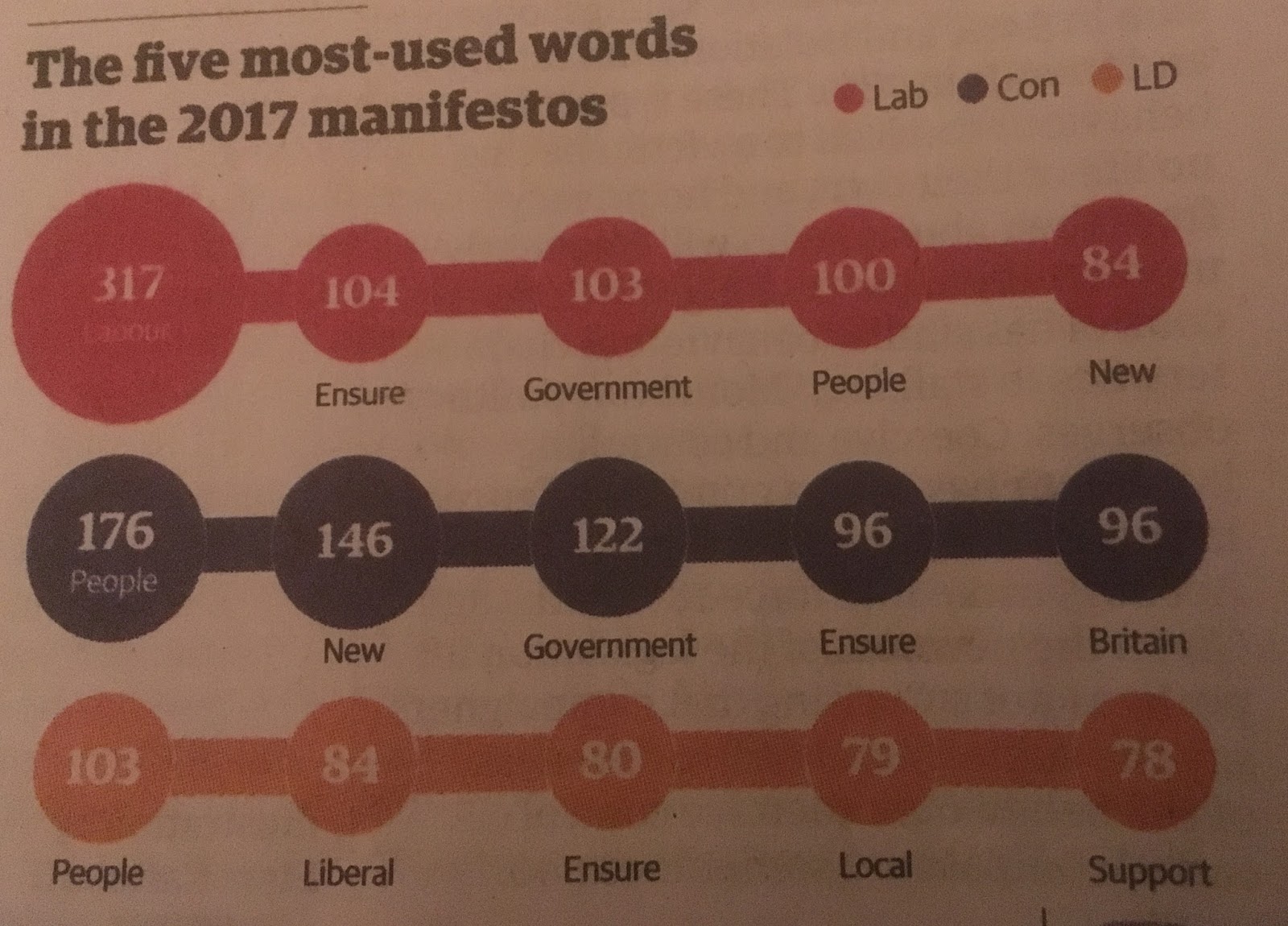


The most used words in the main political parties’ 2017 manifestos suggest that they will ‘ensure’ that in ‘government’ they will ‘work’ to do ‘new’ things to ‘support’ the ‘people’. 

The words resonating through our texts, speak of that which is faithful and holy; of salvation, strength and peace; of blessing, light and life; of humanity sharing in love divine. The new thing for which we long - and which God will fulfil - is the healing of the nations.

Neither Zechariah nor Revelation tell us how to vote - whose manifesto to support.  But they do give us a set of measures to hold each and every earthly power and authority to account.  They do not speak of GDP or taxation - but they do express signs of a flourishing social order within the abundance of creation.  They do not speak of policy - but they do hold a vision of joy, peace, justice and flourishing by which policies can be judged.

For Zechariah, there is a deep longing for the centrality of worship of God: for us too, worship is time and space set apart to offer our petitions and thanksgivings, to seek forgiveness and receive blessing.  Worship redirects our attention to the light and love of God - restoring our vision for right relationship with others.

Can we enable old and young to live together in safety? Might we honour the wisdom of age and cherish the joyful playfulness of youth?  This drawing together of all peoples might seem impossible for us - with our competing loyalties and priorities, but it is not impossible for God.

But to be God’s people in faithfulness and righteousness strengthens us to work hard. It is a recalling to rebuild the place of worship on firm foundations; it is calling to ensure reward for labour, safety and harmony. This vision of the good life is reflected in the the fruitfulness of agricultural land. People are blessed to be a blessing to others - we cannot possess this goodness, rather it flows ever outwards and onwards.

Zechariah’s prophetic measures are vital for us: vital as we seek to establish interdependence between the generations, deploying our social and economic capital with equity; vital as we renew our bonds of culture, trade and diplomacy across Europe; vital as we seek a fruitful sustainability in agriculture, industry and environmental policy across our regions.

I will save you, says our Lord; I will bless you. Do not be afraid but let your hands be strong.

The Revelations of John stretch our imaginations with colour, sound, metaphor and symbol. He wants us to be inspired by the dazzling glory of God’s reconciling love.  William Harris gives musical voice to this imagining in setting the words of Edmund Spenser: For Faire is the heaven... how then can mortal tongue hope to express the image of such endlesse perfectnesse? We glimpse that love through a glass darkly - yet God is with us in Christ Jesus, breaking bonds of sin and death; God continues to abide with us by the power of the Spirit, breathing upon us the blessing of peace.


There is no temple in the heavenly city for then we will see God face to face: God dwells with us and we with God. God who creates, redeems and sustains us, gathers all the nations into this renewed creation. This is a vision of all being made new. All our longings are satisfied; all our griefs are healed.

We walk by the light of God - bringing with us all that reflects the divine honour and glory in us. The waters of life - bright as crystal - wash away all that is false. The tree of life is fruitful; its leaves are for the healing of the nations.

This is less a prediction that a hope made real; a hope which we are being exhorted to reflect in the world which we inhabit.  If God is the one in whom we live and move and have our being, may we be a blessing to the world in which we live and move and have our being.

Blessing in how we treat employees, care for carers and the benefit we bring to our communities, and the careers we pursue. Blessing - by engaging with our MPs and in the choices we make about food, fuel and waste. Blessing - in all that this week holds. We are a new creation - in the power of the Spirit, may we reveal the light and love of God as Christ’s body here on earth.

© Julie Gittoes 2017

Sunday, 12 February 2017

Act faithfully

This is the text of a sermon preached at Guildford Cathedral on Sunday 12th February. The texts were: Ecclesiasticus 15:15-20; 1 Corinthians 3:1-9; Matthew 5:21-37. It was one of those sermons which involved struggle and hesitancy before the text - and in relation to life and witness of the church in our own generation. 


Having written a chapter for the collection of essays entitled Thinking Again About Marriage theology of marriage has been much on my mind. In view of discussions about marriage and sexuality in the run up to General Synod, what Jesus says about the nature of relationships is felt even more acutely. 


As we think about the 'goods of marriage' - and how we bless commitment and faithfulness - we must also have the courage to name and resist any form of abuse; to walk with the vulnerable and broken-hearted. What follows is concerned with recognising the challenge of an ethic rooted in who Jesus is - which is oriented towards fidelity and flourishing. This is mainly wrestling with text - and the cries our hearts. 


The musical She Loves Me has enjoyed an acclaimed revival at the Menier Chocolate Factory. In many ways, it is as sweet as the venue suggests: delightful witty and full of tender romance and old-school elegance.


Set in a parfumerie, it is a play that weaves together three separate love stories: George and Amalia moving from loathing, liking to loving - unaware that they are each others anonymous lonely hearts admirers; the beautiful and skittish Illona who’s seduced and betrayed time and time again; the faithful romantic, Mr Maraczek whose own marital misfortunes takes us beyond comedy to a place of crushing despair.


We can identify with these characters: loneliness, sexual attraction and the longing for companionship; disappointment, misunderstanding, betrayal; errors of judgement, moments of vulnerability, new beginnings.


All the risks and joys of being in relationship - as a couple, business partners, colleagues and friends - are revealed: there are moments of renewed resolved and changes of heart; words of truth are spoken and gestures of forgiveness embraced.  In this seemingly frivolous world of perfume, face cream and fancy soap - it seems that a seriousness about faithfulness and integrity triumphs over infidelity.


The call to act faithfully is at the heart of our worship: it is more than a moment of theatrical escapism.  In this place, we bring all that we are before God - our shortcomings and hurts, the things we’re thankful for and the burdens that weigh us down.


Honesty about our human nature - expressed in our collect as unruly wills and passions - is met  in worship with honesty about the nature of God. The one who created all things, identifies with us in Jesus Christ.


From infancy to his sermon on the mount, from the feeding of the 5000 to his entry into Jerusalem, from his death on the cross to the new life bursting from the tomb, we see the abundant love of God. We are to fix our hearts on this love - which sustains, challenges, heals and consoles.


That love still reaches out to us as we move through the acts and scenes of our liturgy - of gathering, confessing and being forgiven; of hearing and responding to God’s word; the cries of our hearts and our world are offered in prayer and the gift of peace is shared; broken bread and outpoured wine draw us into deeper communion. A communion of faithfulness.


In this drama, we are in Christ.  We are his body which is blessed and sent out - dispersed in into our homes, workplaces and communities in the power of the Spirit.


Through the lens of worship we hear Jesus’ teaching as good news.  For here, we receive grace to act faithfully - to love what God commands and to desire his promises.


Command and promise aren’t lived out it isolation - we live it together both in our worship and in our lives. We are to act faithfully in accord to a person; not a principle.  All that Jesus says is about relationships.


Relationships between friends and colleagues; about relationships of faithfulness and intimacy. The form of repetition stresses again and again that to love what God commands is a matter for the heart not just action.


Jesus sayings are hard. His illustrations sound extreme and bizarre. He stretches language, subverts complacency, reveals the demands of following him. He is describing a way of life, rooted in him; he invites us to take responsibility not just for our actions, but for our motivations. He is describing a community of hope and healing; humility and forgiveness.


As we confront the loving mercy of God in worship, we increase our capacity to reflect on our own emotional responses; to recognise and address our own anger and jealousy before it spills over to impact on others. If we are to be agents of reconciliation, let us seek to resolve grievances we have with others. Jesus deepens our understanding of these obligations.


Our calling as disciples is profoundly relational, not merely about dignity of our outward duties.  Our relationships ought to be means of honouring one another in the promises we make. There is a fundamental level of integrity which we are called to uphold - epitomised in truthful speech which does not need to hide behind oaths, but which is about keeping our word.


Jesus is primarily concerned with wholesome and flourishing human relationships - he’s alert to the impact of infidelity in the most intimate of relationships. But, says Jesus, look into your hearts: like anger, lust as a reaction, motivation or intent is also something to be kept in check. It opens us to exploitation, manipulation and potentially reduces others to objects of our unruly wills and passions.


In relation to marriage and divorce, Jesus words are about protecting the vulnerable and giving dignity to the dependent. Setting aside differences in social context, life expectancy and legal understandings of marriage, Jesus is being more radical than it sounds to our ears.


He is restoring - or introducing - a balance of power with the marriage relationship. He’s challenging the practice of dismissing wives lightly. Instead he allows space for the couple to enter into a mutual relationship between helpmates or companions. It's the calling of the church to extend this circle of blessing.


The goods of marriage - fidelity, shared endeavour, fruitfulness, stability, kindness, and care - are a cause of blessing; and a microcosm of the goods of life in Christ. Jesus’ words enable us to appropriately grieve for relationships which break down under the pressure of circumstances or disagreement, and to walk with the broken-hearted, extending hope of new life; his words call us to name exploitation, abuse and bullying - to have the courage to end such cycles and bring release; in him, we are to console the anxious and traumatised.


Jesus teaching flowing from the beatitudes calls us to a pattern of life:  together we learn to be a place of blessing - in worship, relationships and tasks. We share all that we are in a diverse community. Regardless of class, health or education, economic or relational status, gender, age or sexuality we are to act faithfully - choosing to fix our hearts on the call to love. As the body of Christ we affirm and encourage one another in that pattern of life.


Paul brings us back to the pragmatic working out of this: he asserts that we are to be guided by the Holy Spirit rather than living by the standards of the world.  And yet, the Corinthians, like us, get caught up in their own quarrels and jealousies; they follow their human inclinations in asserting rival loyalties.


We are to heed his advice too: recognising that we are all servants of God, with particular responsibilities within a common purpose. Paul doesn’t invoke personal authority or individual talent; there is no manipulation or coercion of others. Instead he speaks of nourishing one another - recognising that we work together with the free agency of others in love; trusting God for our growth.


May we choose to keep the commandments of love; may we desire God’s promises; in the drama of our lives, may we be serious about faithfulness and integrity.  Receiving the bread of life in this Eucharist, we are nourished in faith and love by Christ; we receive his grace that we might be Spirit led, breath by breath, as people of blessing and healing.  Amen.


© Julie Gittoes 2017