Showing posts with label healing. Show all posts

Sunday, 27 October 2024

At the roadside

 27th October 2024, Last after Trinity: Jeremiah 31:7-9, Hebrews 7:23-end  & Mark 10:46-end


When was the last time you sat at the roadside?


On route to a holiday, dad would spot a convenient layby seating area  - within minutes the deckchairs would be out, the gas stove lit and the kettle was whistling. After a cuppa and a bite to eat before, we’d be on our way.


Perhaps that’s just a snapshot of the 70s and 80s.  Maybe the closest many of us get is waiting for a bus or an Uber. Waiting to be on our way.


Urban roadsides are places recycling bins and pavements, trees, bus shelters and other “street furniture”; sometimes tempt us to dwell there at cafe tables, shops spill out their wares of fruit and veg, household goods and special offers. 


Sometimes someone will be at the roadside, on the edge. Seeking our gaze or dodging it at the petrol station forecourt or subway. A smile or an apology; a sandwich or something to drink. When we want to be on our way. 


Roadsides can be places where life is written off: the non-place we pass by or through; the place outside, on the margins. 


This month saw the death of Gustavo GutiĆ©rrez - a Peruvian priest and liberation theologian who worked out a radical vision of Catholic social teaching as what he called God’s preferential option for the poor. 


In his Latin American context, he wrote that the question was ‘not how to speak of God in a world come of age, but rather how to proclaim God as Father in a world that is inhumane. What can it mean, he wrote, to tell a non-person that he or she is God’s child?’


In today’s gospel, Jesus enacts the truth of this statement. We find Bartimaeus on the roadside. Even as he cries out for mercy, many tell him to be quiet - regarding him as a disruption, someone not worthy of attention.  He has been overlooked and neglected.


The crowd - those who make up Bartimaeus' neighbours and wider society - render him invisible, unseen.  And yet in the darkness of such clouds a voice does speak. Jesus hears him and stops. He stands still and calls him.  He restores his personhood and agency by asking Bartimeaus what he wanted him to do for him. He doesn’t presume to know. He doesn’t reduce him to his blindness. 


It is a moment of acknowledgement of Bartimaeus in all his fullness - with needs and hopes, fears and desires.  He is invited to look into his own heart and to name what he finds there. 


His worth as a human being is seen as his sight is restored; he is invited to reflect and grow as well as embracing healing and wholeness. He is praised for his faith and he follows. He is able to go on his way from the roadside. Echoing Jeremiah, shouts become a song of praise; a proclamation of faith is made. 


I wonder if the crowd also goes on their way changed: they cannot unsee Bartimaeus’ humanity; they shift from silencing him to encouraging him to take heart, to respond to Jesus’ voice.  It is possible that the many are also healed so that they can share in the restoration of the one?


Yes, Bartimaeus wants to see. But also to be seen by his community. There is movement and joy in this. They paused at the roadside, their eyes are opened.  Opened not only by Jesus’ stillness and call to Bartimaeus but also by the fact that it was the blind man who saw Jesus as he really was. 


Bartimaeus, who had addressed Jesus as Son of David - the Lord’s Messiah, foretold by prophets. He also calls him teacher: the one who comes with sacrificial love, bringing liberation in humble service.


Perhaps here too, Jesus himself is seen: not as a leader with power and military might; not as just another wise man or healer, but as God’s own Son.  The one who comes through life with us and dies for us; the one who bore our weakness, as Hebrews puts it; breaking bonds of sin that we might live; and himself makes continual intercession for us. 


In him, Jeremiah is fulfilled: we are all brought back with tears and consolation: those with child and the lame; the blind and those who are in labour. Upheld, we shall not stumble; there is a joyful letting go into new life, which Bartimeaus embodies. 


As he responds to Jesus and follows him, Bartimeaus throws off his cloak: the garment he’d wrapped about himself for warmth, the covering he’d spread out before him on the roadside to catch coins from those who saw but did not stop. 


He trusted Jesus so much - and with such joy - that he let go of what was familiar and necessary to him. He exchanges the precarious security of a cloak for the challenge and life of walking the way of Jesus.  


In him he found security and safety becoming a disciple; a pilgrim perhaps, someone who had now fallen in love with the solid ground of God’s love. 


Bartimaeus had seen Jesus and Jesus saw him; the crowd were drawn into this moment of transformed sight. Eyes that have been long closed are opened and there is a glimpse of heaven. It is a moment of honesty and trust, vulnerability and joy. 


How do we move forward from this roadside place?


Perhaps it is partly the persistence of naming our own longings in prayer. Jesus asks us that same question:’what do you want me to do for you?’ We might not know how to answer it yet; but perhaps we need to pause to examine our hearts. What do we notice or discover there?


Perhaps we also need to see Jesus afresh - and imagine what liberation might look like. To see Jesus is to shape our lives after his example and teaching. To see others and put them first; to raise them and encourage them to take heart; to be on the roadside and not be too busy to be on our way.  


Gustavo GutiĆ©rrez wrote that this  'involves a commitment that implies leaving the road one is on' in order to enter the world of another'; one who might be seen as an  "insignificant person" - the scorned or unseen, the overburdened, misunderstood or those who feel second rate or left beyond. 


We are to cry out with mercy and respond with joy. We are to be seen and to see. As Pope Francis wrote on X:  ‘Our work with and for the poor does not make any noise. Yet, day by day it causes growth for the common good’.


That growth for the common good means that we are to respond to voices and to see. To turn aside at the roadside, and join with others on the way. To find ourselves astonished as we fall in love with the solid ground of God’s loving gaze towards us. 


I end with the poem 'The Opening of Eyes' by David Whyte:

That day I saw beneath dark clouds
the passing light over the water
and I heard the voice of the world speak out,
I knew then, as I had before
life is no passing memory of what has been
nor the remaining pages in a great book
waiting to be read.

It is the opening of eyes long closed.
It is the vision of far off things
seen for the silence they hold.
It is the heart after years
of secret conversing
speaking out loud in the clear air.

It is Moses in the desert
fallen to his knees before the lit bush.
It is the man throwing away his shoes
as if to enter heaven
and finding himself astonished,
opened at last,
fallen in love with solid ground.

© Julie Gittoes 2024

Thursday, 1 August 2024

Overflow of life

 Sunday, 30th June: Wisdom 1:13-15, 2:23-24, 2 Corinthians 8:7-end and Mark 5:21-end


God does not delight in the death of the living.


Bold and hopeful words from the Book of Wisdom: God creates that living things might exist.


The created order is drawn into this pattern of generativity - of creativity - that is wholesome: good, healthy, virtuous, fruitful.


Part of what it is to me made in the image and likeness of God is to carry within us this light of hope; this desire of wholeness; the longing of immortality.


Such gifts given freely in love - an act of divine creativity without compulsion. 


Envy crept into the world: a fear of scarcity and lack; selfishness shaping our desires; what we want rather than what others need.


In the world as we know it, our hearts can be turned inwards towards, away from others and God. And yet, we know that the first impulse of light and love is there. 


In commandments shaping and guiding our loves: to honour and bless, to seek what is just and merciful, beautiful and true.


When hearts turned away from commandments, prophets called us back, helping us reimagine a more whole and wholesome future.


When hearts turned away from love, God’s word dwelt among us: loving us in flesh of our flesh.


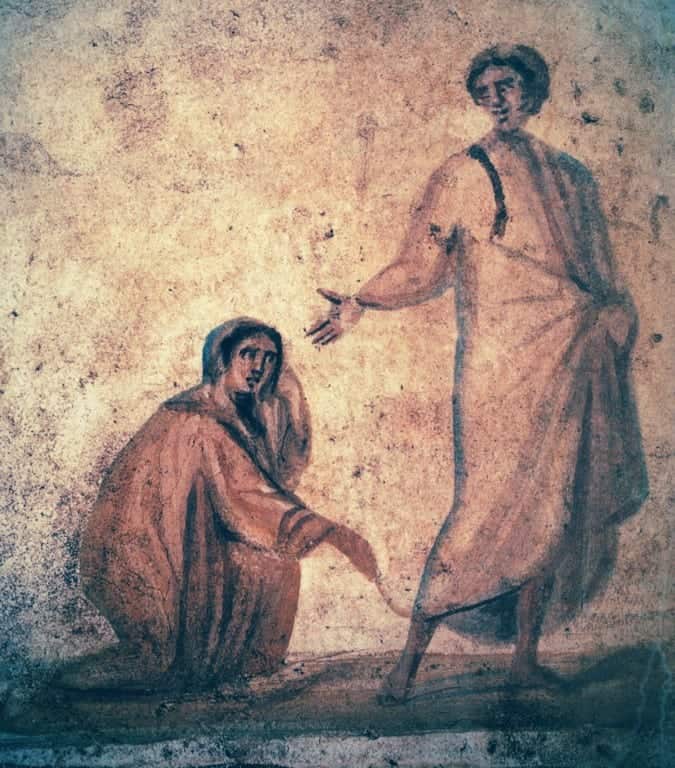
Image from the catacombs in Rome


In today’s gospel reading, Jesus is radiating this love in ways which raise up and restore; bringing healing and wholeness; taking the sting of death and restoring life. 


We know what it's like to be in the midst of a crowd: at stations  and festivals, in stadiums and marches, watching the Euros or dancing at the Eras tour.


Today Jesus encounters two children of God: two daughters - one who’d been suffering for as long as the other had been alive; one facing death barely as life had begun. 


Twelve long and yet fleeting years.


The father of the young girl is a person of power and influence, he falls at Jesus’ feet, laying all his authority and anxiety before him. He pleads for health and life. 


The older woman has no such public status. She is marginalised and invisible - crouching near the ground, she creeps along amidst the moving feet of the crowd. 


Like many perimenopausal women, she’d sought out medical advice to no avail; she’d spent her money on possible cures and treatments, yet the symptoms and bleeding would not stop. 


She had heard of Jesus: a healer, a teacher; a story-teller.


Amidst the robes, sandals and dust she reached out and touched the hem of his garment. The smallest gesture, a fragment of fabric.


Then she felt the moment that her flow of blood stopped.


He too felt it. Felt the flow of power from him towards another. 


That moment of intense and intentional longing was not just another body in the crowd. He sees her. He raises her up. 


Her healing is holistic: she is made whole and restored to social life and belonging; she is able to tell the whole truth of her life, her body, her shame, her hope. She becomes a witness to that movement of God’s love in him; he praises her faith. 


Perhaps now she can take - or retake - her place community. Healing does not restore to her youthfulness and fertility; but it does restore her to that place of wise elder; to a life that is generative in the care and support she gives to others, to the memories of faith she carries.


How must Jairus have felt as he watched this moment of disruption, or interruption? Watching not as the man of authority but as the anxious parent. 


How must he have felt when the news reached him that the journey was now in vain; hope of healing lost to him. He need not trouble this teacher.


Jesus though invites him to move from fear to trust. He invites him to step aside from the competition and wailing, from the crowds and mocking laughter. 


In him is made real the words of Wisdom: God does not delight in the death of the living. She is not dead, he says, but asleep.


That same power that flowed to stem a flow of love now flows to restore the breath of life. Talitha cum. 


He takes her hand. He invites her to get up. She stands and walks. 


Jesus is the one who brings the radiating energy of life and love; who moves fear to faith; who builds trust and restores hope. This healing is an invitation into the wholesome life of generativity. 


Such generativity - such a life giving move - is directed to the needs of others. For Paul, as he proclaims the good news of Jesus who brings life out of death, who breaks the bonds of the grave, this means attending to those in need, on the margins.


For him the grace of God brings unity, a reconciling love. A love that extends across difference and disagreement in practical support. In his case across Jewish and Gentile communities. 


The wholesome death-defying life that he commends is about generosity in the face of affliction. The only competition is an eagerness to give - abundance and need are in a reciprocal relationship: no one having too little or too much.


We too should be eager to share in this overflow of life. 


© Julie Gittoes 2024

Tuesday, 25 June 2019

Somebody bigger than me coming

A reflection from Evensong at St Mary's on the Eve of John the Baptist. The readings were: Genesis 24:1-27 and Mark 5:21-end. A reflection based around a poem by Lucille Clifton.


John the Baptist is the one who makes way for the Light.

The cousin who leapt for joy in his mother’s womb as Mary approached, that Light newly conceived in her.

The last of the prophets crying out in the wilderness, his strangeness strangely compelling.

One preparing the way for somebody bigger; challenging us to turn, to repent, to behold Love made flesh.


In a poem simply entitled John, the African American poet Lucille Clifton writes:

somebody coming in blackness
like a star
and the world be a great bush
on his head
and his eyes be fire
in the city
and his mouth be true as time

he be calling the people brother
even in the prison
even in the jail

i’m just only a baptist preacher
somebody bigger than me coming
in blackness like a star


His life and witness is like a thread running backwards through scripture, weaving us into God’s promise to Abraham, of descendants as numerous as stars.

somebody coming in blackness

That same thread can be traced onwards into Jesus’ ministry, unfolding in stories of tender touch bringing healing and new life.

somebody coming in blackness like a star

Today we celebrate John’s birth through the lens of an old man. Abraham, now advanced in years, looks back on God’s promise of blessing; and he looks forward to that promise being fulfilled through his descendants.

He prays for Isaac: for a wife of his own kin to be his kindred spirit; for a commitment to a place to be their home.  The servant embarks on this endeavour - to find a woman of God’s choosing. 


And at a spring, outside a town, in the practical intimacy of Rebekah giving water, a marriage is arranged and sealed with deep love.

A thread unfolds; God’s purposes worked out in love: somebody coming

Those purposes unfold in the giving of commandments to love; in the praise and lament of psalmist; in the messiness of history; in the cries of the prophets for mercy and justice.

And now somebody comes: i’m just only a baptist preacher

The crowds ask ‘Who art thou?’. He speaks in terms of who he is not - not Elias, not the Christ, No!

He is a voice preparing the way: unlocking the gate, standing as a way-marker, pointing beyond: somebody coming in blackness like a star

This baptist preacher be calling us brother. He holds no fantasies of his open ambition or greatness. Even in the prison and in the jail he be calling us brother; be calling us sister. 

Behold! Look! See! Adore!

somebody coming

One who is like a star in the blackness of our human frailty.

This one will listen to a father’s anxiety.

Like a star in the blackness, this someone will draw crowds.

This somebody will notice when someone reaches out in faith.


This one will give the marginalised a place in the public square.

In the blackness of grief and death, this light will quietly bring life.

somebody coming... like a star

In life, John will speak words of fire and heat; challenge and repentance. 

His mouth be true as time.

On a muddy river bank he will call us to behold one who is light and love and truth.

He says:
i’m just only a baptist preacher
somebody bigger than me coming
in blackness like a star

May respond to John’s witness in being alert to the light of God.

May we follow his witness in pointing others to  Christ.

May our lives, like his, be marked with love of truth, mercy and peace.


In the power of the Spirit, may we behold and make known the love of God, revealed in Jesus.


© Julie Gittoes 2019

Sunday, 21 May 2017

Blessing

A sermon preached at Guildford Cathedral Evensong on  21 May: the readings were Zechariah 8:1-13 and Revelation 21:22-22:5.

Alleluia: Christ is risen!

Frocks and flowers; vintage cars and a village church; a designer dress for a society wedding; locals, journalists, celebrities and royalty: it seems that on the topic of #PippasWedding, both social and print media were in sync.

Wedding feasts feature in our scriptures as an image of God’s Kingdom - of the peaceable and joyful unity of earth and heaven, creation and Creator.  The excitement surrounding ‘the day’ touches on our human longing for faithfulness, intimacy, love; it delights in the orientation of our lives towards a future of blessing.

Blessing which is not just about ‘a couple’ or ‘their children’; but the stability of a household which enables generous hospitality. A wedding celebrates a marriage - a union of both radical exclusivity in fidelity and radical inclusivity in strengthen bonds of society.


We know, of course, that our human relationships are complex and fragile: we live amidst disagreement, the compulsions of self-interest, failing health; we face demands of work, the experience of loneliness, the harm done by coercion and abuse.

Being human embraces the tenderness of care for others - and the challenges, cost and strain of those acts of love. Being human embraces the reality of being cared for by others and the need for dignity in holding the memory of who we are.

If we scroll past photos of #PippasWedding and read beyond the front page of the newspaper, we confront the things which preoccupy editors and readers alike; the news weaves our individual cares and concerns into the uncertainty of our national life and global context.


We read of concerns for the wellbeing of the elderly and social care; concerns for the welfare of children in terms of nutrition and education.  There are stories about media bias and alternative facts; climate change, missile testing, asylum seekers and knife crime.

Words like 'tension', 'uproar', 'chaos', 'opportunism', 'feuds' and 'crisis' dominate headlines. Yet we also glimpse joy as some of the girls held captive in Nigeria are reunited with their families; and hope for reform in Iran as Rouhani wins a second term in an unexpected landslide.

How do we live wisely as disciples of Christ in the midst of uncertainty? Our readings offer us prophetic visions - words of hope and expectation of a world which will be renewed.  These are more than snappy slogans or dreams to anaesthetise us in the face of painful realities.

Both texts emerge in response to situations of great upheaval. For Zechariah it was return from exile, and the longing to rebuild the Temple; for John, it was the terror of persecution and a longing for heaven, when our Temple will be Godself.


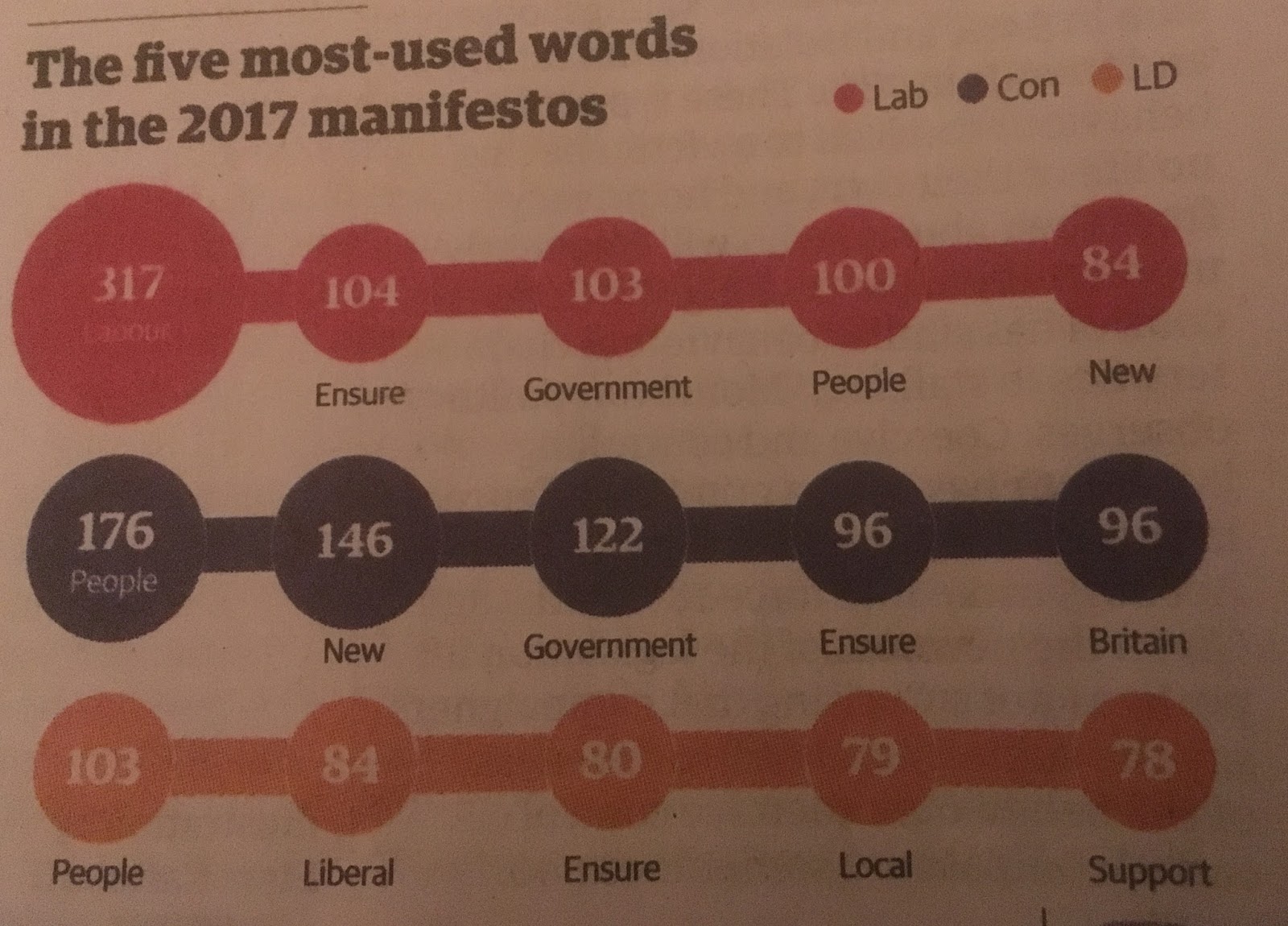
The most used words in the main political parties’ 2017 manifestos suggest that they will ‘ensure’ that in ‘government’ they will ‘work’ to do ‘new’ things to ‘support’ the ‘people’. 

The words resonating through our texts, speak of that which is faithful and holy; of salvation, strength and peace; of blessing, light and life; of humanity sharing in love divine. The new thing for which we long - and which God will fulfil - is the healing of the nations.

Neither Zechariah nor Revelation tell us how to vote - whose manifesto to support.  But they do give us a set of measures to hold each and every earthly power and authority to account.  They do not speak of GDP or taxation - but they do express signs of a flourishing social order within the abundance of creation.  They do not speak of policy - but they do hold a vision of joy, peace, justice and flourishing by which policies can be judged.

For Zechariah, there is a deep longing for the centrality of worship of God: for us too, worship is time and space set apart to offer our petitions and thanksgivings, to seek forgiveness and receive blessing.  Worship redirects our attention to the light and love of God - restoring our vision for right relationship with others.

Can we enable old and young to live together in safety? Might we honour the wisdom of age and cherish the joyful playfulness of youth?  This drawing together of all peoples might seem impossible for us - with our competing loyalties and priorities, but it is not impossible for God.

But to be God’s people in faithfulness and righteousness strengthens us to work hard. It is a recalling to rebuild the place of worship on firm foundations; it is calling to ensure reward for labour, safety and harmony. This vision of the good life is reflected in the the fruitfulness of agricultural land. People are blessed to be a blessing to others - we cannot possess this goodness, rather it flows ever outwards and onwards.

Zechariah’s prophetic measures are vital for us: vital as we seek to establish interdependence between the generations, deploying our social and economic capital with equity; vital as we renew our bonds of culture, trade and diplomacy across Europe; vital as we seek a fruitful sustainability in agriculture, industry and environmental policy across our regions.

I will save you, says our Lord; I will bless you. Do not be afraid but let your hands be strong.

The Revelations of John stretch our imaginations with colour, sound, metaphor and symbol. He wants us to be inspired by the dazzling glory of God’s reconciling love.  William Harris gives musical voice to this imagining in setting the words of Edmund Spenser: For Faire is the heaven... how then can mortal tongue hope to express the image of such endlesse perfectnesse? We glimpse that love through a glass darkly - yet God is with us in Christ Jesus, breaking bonds of sin and death; God continues to abide with us by the power of the Spirit, breathing upon us the blessing of peace.


There is no temple in the heavenly city for then we will see God face to face: God dwells with us and we with God. God who creates, redeems and sustains us, gathers all the nations into this renewed creation. This is a vision of all being made new. All our longings are satisfied; all our griefs are healed.

We walk by the light of God - bringing with us all that reflects the divine honour and glory in us. The waters of life - bright as crystal - wash away all that is false. The tree of life is fruitful; its leaves are for the healing of the nations.

This is less a prediction that a hope made real; a hope which we are being exhorted to reflect in the world which we inhabit.  If God is the one in whom we live and move and have our being, may we be a blessing to the world in which we live and move and have our being.

Blessing in how we treat employees, care for carers and the benefit we bring to our communities, and the careers we pursue. Blessing - by engaging with our MPs and in the choices we make about food, fuel and waste. Blessing - in all that this week holds. We are a new creation - in the power of the Spirit, may we reveal the light and love of God as Christ’s body here on earth.

© Julie Gittoes 2017