Showing posts with label Rowan Williams. Show all posts

Saturday, 20 July 2024

Learning to live

 Sunday, 3rd March - Lent 3: Exodus 20:1-17, 1 Corinthians 1:18-25 and John 2:13-22


At the Brits last night, Raye made history by winning six awards. Her love of music drove her to be an artist - her beginnings in a Christian home where her father placed her hands on piano keys.


She’s not unusual in finding that the course of life took her away from church, but now she hosts hymns services at home with friends. After thanking her producer, she thanked her grandmother for her prayers. 
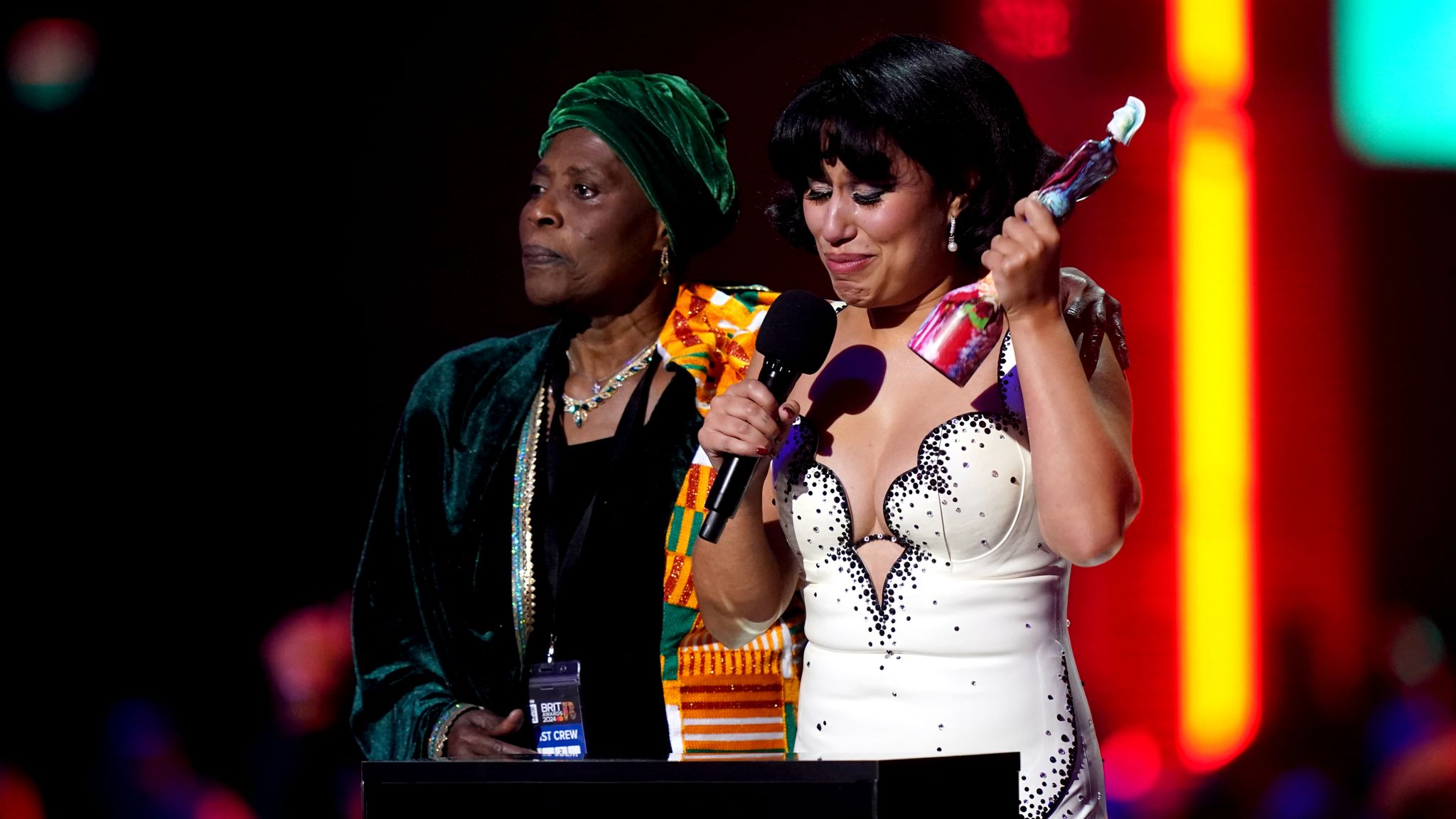

Raye with her grandmother at the Brits: Sky News article

Elsewhere she’s talked about how grateful she is for her own faith - how it’s pulled her out of what she calls a ‘really dark place’: coping with trauma, addiction and pressure. It’s a reality she acknowledges in her song “Hard out here”. She said: there was  ‘a moment where I really found God, in the time that I really needed it and it saved my life… I really owe my life to faith, it’s kept me going and it’s kept me okay, it’s given me strength’. 


In our first reading today, we hear the words of the ten commandments which frame life in relation to God: words which emerged after a time of crisis, after a period of slavery and migration. In our Lent book Tarry Awhile Selina Stone talks about the place of movement in our journey of faith. 


For God’s people there were times of temptation and frustration in the wilderness; times when stability seemed a distant hope.   These instructions or guidance on living well emerged at a time when the community was beginning to take on a more settled form. Having owed their life to their faith, what did they now need to keep them going - to keep them ok?


The Greyhound might be the only pub in North London - if not in the city - with the text of the ten commandments on wooden panels on the wall.  


Today we have the opportunity to hear them afresh not as something life-limiting, but as something life-giving.  In the midst of the challenges of our own lives, how do  these words help us use this gift of freedom - of healing and salvation?


The commandments speak about God and human relationships and, in the middle, the need for rest.


They invite a certain kind of self-awareness - taking seriously our embodied existence. They ask us to consider how attending to the pulse of divine love might help us live wisely. 


Perhaps obedience to the commandments is one of those things which, as Rowan Williams puts it, ‘is about learning how to live in heaven by learning how to live on earth, in the body, in the moment.’


‘Learning how to live in heaven by learning how to live on earth’ might include naming what it is to be human: where are the challenges, the risk of harm, the things that overwhelm us or niggle away at us or our relationships?  


It also has to do with how we live well with freedom and desire:  not just for ourselves, but for our neighbours. There is something profoundly practical about the commandments - honouring life in various ways, setting aside the idols we create of wealth or status, looking at our relationship with work and time.


The command to rest lies at the heart of this list of guidance: it echoes the rhythm of creation - goodness poured forth, life, breath and love taking shape, and then God rested. We are invited to hold onto that space as something holy, special, consecrated, set apart and blessed. 


As God’s people moved from slavery, migration to the settled state of a home, they could find rest. However, we know how easy it is for us as human beings to have an uncritical or unhealthy relationship with the opposite of rest: our work. 


If we are tired, overworked and stressed we risk burning out and our relationship to activity and to rest become dysfunctional: holding onto the hope of a lie in or time away; becoming ill the moment we stop; or missing those moments to delight in life as it happens around us.


To think of the balance between work and rest looks shifts across our lives: the pressures of work and parenting, the domestic labour we juggle and long hours or multiple jobs; our self-worth impacted by seasons of illness where we are unable to work, or times when we are unable to find the work we’d love to or need to do; the years of retirement which itself might have seasons of being occupied with volunteering, family, service and the things which bring pleasure. 


In all this rest might elude us - sleeplessness, worry or loneliness. Rest might elude us as we strive for the things that command our attention which become idols: from wealth and possessions, to social media and status.  


The problem with idols is that not only do they demand our focus but they can also demand a high price in terms of well-being, addiction, envy and dissatisfaction. All of which negatively impacts on our relationships - and displaces that first call to love God, to know ourselves as beloved by God, and to allow that love to shape how we live. 


The purpose of the commandments was to create and support a community: helping us to learn to live well, on earth, in our bodies. They still have a relevance - challenging us when we stop honouring each other in our primary households, parent and child, partner and friend; inviting us to be faithful in work, rest and relationships; reminding us that there is more to life than exchange and consumption. Inviting us to shape our lives around a pulse of love.


When Rowan talks about learning to live in the body, in the moment he is inviting us to see faith as a deeply natural rhythm - it’s not just about our minds, but our whole reality.  If the commandments point out some of the pitfalls in life, imagination and relationship, he points reminds us that ‘this is the sort of challenge and transformation that trust in Christ is likely to open up for you, and this is how you can guard against losing the plot’ - or being consumed by the dark places as Raye puts it. 


In today’s gospel we witness Jesus inviting us to honour holy places - as places of sanctuary and inspiration, as places holding us safely as we share the depths of our loves, hopes and faith.  But he goes beyond that in pointing to his body as the palace where God chooses to dwell - God’s goodness in the flesh. 


That body would live and die and rise again: with the unstoppable power of God’s love and breath.  It’s a way of seeing bodies as sites of the sacred - in need of rest and honour, because they are loved by God.  If that is true of our bodies, what of the bodies around us. If we value our bodies as places where God’s grace and delight are made known, then we are called to value the bodies of those who’re exploited, suffering, addicted, lonely. 


Jesus moves in a few verses from concern to compassion, anger to action when he sees the loving commandments of a loving God being broken: he reveals the power of love to act and to deepen relationships - with compassion and justice. 


Paul reminds the Corinthians that the message of the cross - the place where God’s goodness and love in Christ goes to the depths of human pain, darkness and alienation - is power rather than foolishness, strength not weakness. His death carries the weight of our restlessness and disobedience and allows us to find peace and renews our obedience in love. 


Sometimes we see power as foolishness and weakness as strength in the world around us. Alexei Navalny’s death and funeral have attracted as much attention as his political campaign and arrest. What is being talked about more is his conversion to Christianity following Putin’s attempt to kill him in 2020. 


The following year he told a court: ‘the fact is that I am a Christian, which usually rather sets me up as an example for constant ridicule in the Anti-Corruption Foundation, because most of our people are atheist and I was once quite a militant atheist myself.’ He went on to describe how his faith gave him clarity and focus in grim circumstances.


We might not win Brit awards or face persecution for our religious or political convictions, but we are called to live with a radical new awareness of how we belong to each other: a depth of connection between us and creation, between all that is and a loving God. 


We can sit a bit lighter to material satisfactions - and go beyond the surface of things; we find that our inclination to selfishness is transformed into selflessness; our failures forgiven. We are invited into an economy of gift rather than exchange - and find here, in song and word, silence and peace, blessing and bread all that helps us to ‘learn how to live in heaven by learning how to live on earth, in the body, in the moment.’


© Julie Gittoes 2024


Selina Stone: Tarry Awhile - Archbishop's Lent Book 2024

Rowan Williams: "We learn to live in heaven by learning to live on earth', Catholic Herald Feb 20204


Monday, 6 February 2017

Alternative facts...

This is the text of a sermon preached at Evensong on 5th February. The texts were Amos 2:4-end and Ephesians 4:17-end. As I read them, I pondered the nature of truth - particularly in the context of the concept of 'alternative facts'. Truth and falsehood shape our behaviour and relationships - the kind of society we want to foster. 

It also struck me - having spent a lot of time reading Dan Hardy's work recently - that we are in danger of losing a sense of what he called 'sociopoiesis' (literally creating the social); that we are facing the fragmentation of aspects of our common life rather than seeing the 'building up' of our social life. How can the church speak of truth - or indeed embody it? We aren't immune from abuses of power either; but we are called to face the 'truth' of God and the 'truth' of our human condition. It means facing the cross - the place of judgement and forgiveness.  

All of which led me to think about the nature of holiness - and the painful process of refinement which enables trust to grow and for lives to reflect the fruit of the Spirit.

Two weeks ago, on 22nd January, the phrase ‘alternative facts’ entered our public discourse.

It’s been widely reported Kellyanne Conway used the words ’alternative facts’ in defence of the White House Press Secretary, Sean Spicer. To recap, in his first briefing he accused the media of deliberately underestimating the crowds at the inauguration. 

As photos, figures and counter arguments circulated, the journalist Chuck Todd said Spicer’s claim was ’a provable falsehood’.  In response, Conway called this ‘overly dramatic’; Spicer had given ‘alternative facts’. Todd replied, saying: ‘alternative facts are not facts. They’re falsehoods’.

Alternative facts: it's been described as Orwellian; discussed in newspaper editorials; parodied in Twitter memes. It's begun to filter into our everyday language. We suspect we’re being misled; with a hollow laugh, we call it an ‘alternative fact’. 

Does this latest addition to the repertoire of office banter enable us safeguard truth? Or does it trivialise and unwittingly condone untruthful speech?

Our readings this evening have quite a bit to say about truth and speech: they give us plumb lines - or barometers if you like - in discerning what is good and right and wise. Both Amos and Paul help us to see the disastrous consequences of falsehood; both reveal to us what God desires for human flourishing.  

As prophet and apostle they extend and deeper our understanding of truth. We are invited to look beyond verifiable facts and conformity to evidence; to see truth as rooted in the reality of God; to see that truth reflected in our fidelity to God’s ways.

Amos names the extent of human falsehood: in their rejection of the commandments to love God and neighbour, people have been led astray by lies. In turning away from the love of God, they’ve turned in on themselves in self-interest, exploitation, injustice, delusion and the relentless pursuit of misguided desires. 

Rejection of the truth of God’s love and holiness leads to the dehumanising of the weak and vulnerable. Rejection of the truth of God’s faithfulness and liberty degrades the powerful too; their ill-treatment of others strips away their own dignity. The image of God in them is marred. 

This is not truth: we were made for more than this. 

This is falsehood: an unattractive and corrosive alternative way of life.

Yet God remains faithful. He calls and recalls us that we might be true.

What it means for us to be true to God and true to our human nature is revealed in Jesus Christ: in him we see the intensity of love divine. 

In Ephesians, we are caught up in the abundance of God’s love for creation - finding ourselves energised by its sheer lavishness. Yet Paul always turns his mind back to the practical, to the relational. Love for him is not an abstract principle; rather it is a love which is embodied - in Christ and, by the power of the Spirit, in us.

Like Amos, Paul is pretty direct about the darkness of life lived apart from the truth of God’s love: futility, alienation, greed, hardness of heart, excess and personal gratification. When we are driven by human appetites alone we become desensitised to the needs of others. 

We become numb - seeking pleasure but without pangs of conscience about how we treat others. It’s a world where we hide behind alternative facts; because perhaps the truth is too painful.  

As we have been reminded this week, the church is not immune from the abuses of power; we have failed to protect the vulnerable; we too are continually called to face the truth. That's painful and costly. It's vital to ensure the the well-being of those in our care. In the midst of that we are recalled in love, to bring dignity and grace to others. 

God in Christ meets us in the chaos of this imperfection and draws us back to the truth of love. 

He meets us in the bewilderment, fragmentation and fears of our lives; he meets us in the midst of all that makes us turn in on ourselves. In the Gospels we see in Jesus’ face to face interactions, a move from the delusion of alternative facts to a truth that sets us free.  The good news is the truth about judgement, mercy, forgiveness; challenge, affirmation and new life. It is a thing most wonderful in the words of our anthem [It is a thing most wonderful: Philip Moore]; a great love like fire which burns away sin and death. 
 We were taught this truth in Jesus life, death and resurrection; a flame of love is kindled in our hearts as we learn to lay aside the old self; being clothed instead in what is of God - what is right and holy. To grow into the likeness of Christ - individually and corporately - is a process.

That process of being brought to our senses can be painful. Paul so vividly understands the language of ‘bodies’ in relation to the life of Christian community; perhaps we might think of it like the pain of circulation and warmth returning to cold limbs. It’s no wonder that much biblical talk of holiness describes it as being ‘refined’. In worship, we face the holiness of God; in penitence and faith, our hurts and fragmentations are healed by his love. This is a process of becoming holy as we face the truth - ours and God’s.


Rowan Williams puts it like this: the church ‘is holy… not because it is a gathering of the good and well-behaved, but because it speaks of the triumph of grace in the coming together of strangers and sinners, who, miraculously, trust one another to join in common repentance and common praise… humanly speaking, holiness is always like this: God’s endurance in the middle of our refusal of him, his capacity to meet every refusal with the gift of himself’ [1994, p. 136].


Paul’s letter to the Ephesians is an outwork of this hope and practice. Truth builds up the body of Christ - mutual respect, behaving with integrity, disagreeing well and abiding in love. Truth means acknowledging our emotions - but it also means refusing to turn to self-pity or resentment. We will get angry; but let’s not be drawn into a cycle of hurt. We will face frustrations; but let’s not get sucked into a the realm of ‘alternative facts’.

If cumulative acts of falsehood lead to bitterness, blame, recrimination and fear; cumulative acts of truthfulness lead to encouragement, sympathy, concern, affirmation and hope.  In building each other up, we draw others to the compelling love of God.  To do otherwise risks harming our relationships and risks grieving the Holy Spirit. 

Attentive the Spirit at work in this place and in us, let us pray that we may grow in the truth of God’s love revealed in Jesus Christ; may we grow in a holy trust which makes that love known in all that lies ahead this week. 


© Julie Gittoes 2017

Tuesday, 29 March 2016

Burning like fire!


A sermon preached at Evensong at Guildford Cathedral on Easter Day Evensong: The texts were Psalm 66; Isaiah 43: 1-13; John 20:19-23. The film Watership Down happened to be showing that afternoon - some comments on Twitter suggested it wasn't an appropriate children's movie for Easter Day. However, perhaps the story of rabbits names the reality of pain and hope in the face of mortality. The Gospel of Jesus' life, death and resurrection brings the good news into our human condition; it reveals the destiny of the whole created order. Sin and death are overcome: Alleluia: Christ is risen! 


Bright Eyes by Art Garfunkel is guaranteed to make me cry.

My eyes begin to well up in the opening bars.  Is it a kind of dream?

The words and melody of the refrain are really gut-wrenching:

Bright eyes, burning like fire
Bright eyes, how can you close and fail?
How can the light that burned so brightly
Suddenly burn so pale?
Bright eyes.

It's a favourite song for my sister too. Most of us probably associate it with the film for which it was written - Watership Down.  As eleven year old, it was the book which gripped my imagination - exciting, beautiful, sad, terrifying and hopeful. My copy is dog eared and held together with sellotape.

Watership Down begins with the decision to leave a comfortable warren behind when safety is compromised by a vision of its destruction. Hazel leads them on along and dangerous journey. Snares and threats surround them; the viability of their peaceful habitat is established as a result of courage, loyalty and ingenuity.

The places are real; as are the animal instincts. Yet, the addition of a rabbit 'culture' with its own language and mythology perhaps touch our own hopes and fears. That includes the reality of death.


In the epilogue, Hazel dozes. He dreams. He senses the nearness of a mythical rabbit. It seemed to him that 'he would not be needing his body anymore, so he left it'. He's told not to worry. He slips away - 'running easily down through the wood, where the first primroses were beginning to bloom'.

Bright Eyes is a fitting evocation of our mortality: how can eyes that burn so brightly close and fail?

Whether or not we read it as a child or discovered it as an adult; whether we're captivated by Richard Adams' words or Martin Rosen's film adaptation: this saga about a motley band of rabbits poses stark questions about life and death. It does so more effectively than the Kinder chocolate bunnies wrapped in gold with neat red bows around their necks!  But it's our scriptures - not rabbits - which speak truthfully about life, death and resurrection.

Our life span is a fleeting breath. For the disciples, caught up in what was a catastrophic cycle of violence, perhaps they too asked, how could one whose life had burned to brightly suddenly burn so pale?  Jesus, the one who'd proclaimed the nearness of God's Kingdom, burned like fire: words of forgiveness and challenge; acts of healing and nourishment.

It seemed to them that all this was undone by their acts of betrayal, denial and misunderstanding. All that might have been was brought to a hideous end by the corrosive combination of power, fear and weakness. They fled and waited; they watched and prepared spices.

Like us, they had words and rituals for grief. Even if death didn't make sense there was a body to tend with love and dignity.  Grief has its own emptiness: the shadows reaching into the night; the habits of relating and quirks of character; the things left unsaid and undone.

The emptiness of a tomb is of a different order.  


The very absence of a body points to a presence that is more real. Resurrection is an expression of abundance not lack. It reveals the transfigured, incorruptible embodiment, to which we move; as we are transformed from one degree of glory to another.

Bright Eyes speaks of a fog on the horizon and a strange glow in the sky; it asks 'what does it mean?'
Locked doors were for the disciples a response to that question. It meant something risky; it meant something new; something that would change them and us, and the cosmos.

Resurrection reveals the fullness of God breaking into our lives. It is something that we cannot contain; but something in which we can trust.

Resurrection declares that God is with us from first cry to final breath: with us with such love that death is overcome; with us to such an extent that forgiveness and peace pour forth. 

Resurrection fulfils the words of the prophet Isaiah: the one who created us says 'do not fear for I have redeemed you; I have called you my name you are mine'.

To believe in the risen Jesus is to trust that the transformative power of God is active in the sphere of human life; it empowers us in the present. More than that, that transformation and recreative activity is at work in the whole created order.

The disciples in that upper room encounter resurrection in the intimacy of known relationships and in the honesty of their despair and disappointment.

Fears are named in the Gospel of John - in an exhaled breath if you like.
And in response a word peace is expressed - it is breathed out.

They are shown their Lord's wounded hands and pierced side. He has not left his body behind, like the rabbit Hazel. Rather it is transformed in power and glory. The disciples' outward sight kindles in them their inner joy.

The refrain is not: is this a dream?
The refrain of resurrection is: Peace be with you!

Today is not the end of something. It is but the beginning - they are commissioned.

The Son was sent by the Father - to draw the whole world to himself.
The Son now sends the disciples - in the power of the Spirit.

The mission they receive - the calling we share - is to reveal the compassionate, liberating and forgiving love of God.

Oftentimes, as human beings - alone and together - we feel just as frightened and confused as those locked behind physical doors. Perhaps our constraints are the fears of our hearts; the memories of hurt and failure we lock down inside ourselves.

Our risen Lord stands alongside us - just as he stood alongside those first disciples, without reproach for their shortcomings. He breaths his Spirit on us. Our life is but a breath; but it is to be a breath of peace.

In Watership Down, the rabbits were motivated by their fears and hopes - and by trust in a dream of a better place. In Christ, we are motivated by hopes and new realities - and by trust in God, working his purpose out in and through us, by the power of his Spirit.  

Fictional rabbits journeyed across a real landscape. In the reality of our lives, across the tangible landscapes of work, relationships, places and circumstances, we are to show the same courage and perseverance; the same hope and resilience.

That means we are to live love; that means we are live forgiveness.

Sometimes that means naming, challenging and freeing others from the human equivalents of 'snares' or 'dictator-state warrens'.

Love and forgiveness of the Spirit's work within us. As Rowan Williams puts it in his book Resurrection: 'Forgiveness is precisely the deep and abiding sense of what relation - with God or with other human beings - can and should be; and so it is itself a stimulus, an irritant, necessarily provoking protest at impoverished versions of social and personal relationships'.

The one who died has risen in love.
That power is at work in us enabling us to rise in hope.
This is our faith: to witness in the power of the Spirit, to the compassionate and liberating love of God.


Resurrection light that burns brightly, does not burn pale; it burns brighter still.
Resurrection is cosmic in scope: with deeply personal impact.

God's Kingdom embraces non-human animals: God's Spirit refines our smallest gestures. 
As the psalmist puts is: be joyful in God, all the earth... say to God, 'how awesome are your deeds'.

Christ is risen: flame of love burns within us!
Christ sheds his peaceful light in all the world!
Live that love; share that peace.


Sunday, 6 December 2015

He will come... like child

Waiting…

It's part of the human condition; but we're not always very good at it.

Whether it's queueing to get through airport security or the tendency to crowd round a train door when the platform is barely in sight, we want to be on the move.

Seeing Bond on opening night; ordering books for next day delivery; take-aways, ready meals, Jamie's 30 minute suppers.

Waiting in; waiting up; waiting around; waiting your turn.

A minute - a moment – a second... Even longer.


Perhaps the sign of joyless impatient waiting is the mesmerising whirl of the digital circle of doom on our screens. Our lives are lived at such a pace, with an intensity driven by technology. And we're waiting for something to download, we get impatient. The faster our broadband speed, the more impatient we get when it buffers.

Waiting....

Waiting until something happens; until you can do something. Waiting for the expected; for an event, a meeting, something longed for or something that will change us.

Allowing time to go by; staying in one place; not doing very much.

Perhaps this morning we will be able to practice the sort of waiting that that is about attention to God; the sort of waiting that is about paying deep attention to what is going on around us… within us.

Perhaps it'll be an exercise in non-anxious waiting to take us into Advent with a deeper sense of expectation.

Perhaps we'll cultivate the right sort of patient impatience of longing for God; for his Kingdom to come.

Perhaps we'll be renewed in witnessing to the good news of God with us in our own generation.

The advent of Christmas ads appear well before we've hosted our first carol service, but long after mince pies appeared in my local Co-op.  John Lewis with its science defying man on the moon invites us to show someone they're loved; Sainsbury's shares Mog's calamitous story ending with the message that Christmas is for sharing.

Such ads have tremendous power to shape our waiting. They shape the expectations of those we'll encounter.  Paying attention to them reminds us of human longings - for companionship; but they should also disrupt us. As the debate about the Lord's Pray ad has illustrated, advertisers have a vested interest igniting desires and making us want things now; encouraging us to spend rather than wait; to consume rather than conserve.

In #MulberryMiracle, the brand presents a tongue in cheek nativity: a host of visitors arrive to share in the excitement of an unexpected present. They 'oooh' and 'aaah' over a most beautiful thing; something amazing. A thing of wonder; something quite stupendous.


'Guys, it's just a bag' says Joe. In a brilliant piece of parody, the Christmas starts with Christ campaign tweaked the tagline: It's Christmas. What are you worshipping?

We too are called to subvert the culture in which we wait: we do that by attending to the narrative of our world; by accurately describing its fears, longings, hopes and anxieties.

Our calling is to be with people as they grapple with the challenges, pressures and delights of life. To do that we have to wait upon, pay deep attention to, the one who is God with us.

The poetry of John's prologue has become iconic: In the beginning was the Word. The Word was with God. The Word was God.

There's an intensity to this divine communion and creativity: the fullness of life and in the words of John Donne, one equal light.

Darkness did not overcome. We, like John, are to testify to this light.
The true light, which enlightens everyone, was coming into the world.

In expressing this hope, a vision for the healing of humanity, John distils the history of salvation into but a few verses. The depth of his attention to the way in which God was in Christ Jesus reconciling the world to himself is spine tingling.

Yet, he also pays deep attention to the gritty reality of the world: a world filled with violence, division, rejection, ignorance, greed and loneliness. Yet he also pays attention to how wisdom, meaning and hope was expressed in Hebraic and Greek thought.

Logos.

This Word was coming.

This Word is the summation of all ideas, thoughts, wisdom, reason and knowledge.
This Word has the power to create, change and transform

This Word was coming.

Coming to what is his own; becoming flesh; living among us.

Here is the heart of the Gospel.

The one who abided close to the Father's heart comes to us: there is communion, glory, light and love.

We have received from this fullness and are called to make it known.

For all the magnificence, grandeur and power of this Prologue, John's words point to an intimate, human and disruptive reality.

For this Word came, comes and will come like child.

He abides close to Mary's heart: conceived in her flesh, sustained at her breast, needing her to respond to every physical need. The Word as wordless infant cries and abides in the stability of Joseph's loving presence.

He knew the stability of a home and the skill of a craft; as an adult he had no fixed abode and walked with us in the world.

At this time of year, we are away of the frailty and changeability of the world. Rowan's poem 'Advent Calendar' captures the sharp edged beauty of the seasons; the resistance and self-absorption of human condition.

And that is our hope.

When loss flays us to the bone; when we feel chocked by grief. He comes to us.

When we are with those in our communities who feel that life and opportunities are shrinking; when we delight with them in the surprising beauty or gentle radiance of transformation. He comes to us.
We wait on him and with him today: to pay deep attention to the story of how the Eternal Word became flesh; of how he comes like crying in the night to break down barriers of fear.

For the one who comes to us is amazing, wonderful and beautiful: we worship him.

For the one who comes to us invites us to share our lives in loving mercy and generous hospitality in calamity and ordinary; he invites us to reach out to the lonely and despairing with the oxygen of companionship and the gift of our lives.

May we be drawn afresh into the peace, truth, light and glory today.
As we wait and abide in God's love, may we be refreshed and recalled.

Be drawn into the love of God. He will come like child.
A child drawing us into relationship; demanding our attention.

Wait.

He will come.


© Julie Gittoes 2015

The text of Rowan Williams' poem Advent Calendar can be found here: http://rowanwilliams.archbishopofcanterbury.org/articles.php/2280/advent-calendar-a-poem-by-dr-rowan-williams