Showing posts with label Augustine. Show all posts

Tuesday, 16 July 2019

Wrestling of the heart

On a Sunday full of high profile sporting events, this is a sermon preached at Evensong on wrestling from Wimbledon to Jacob and the struggles of our hearts. 

The texts were Genesis 32:9-30; Mark 7:1-23

Simona Halep’s face beams from the front pages of the Sunday papers: she holds aloft the famous Venus Rosewater Dish; she’s fulfilled a dream her mum had when she about ten years old.
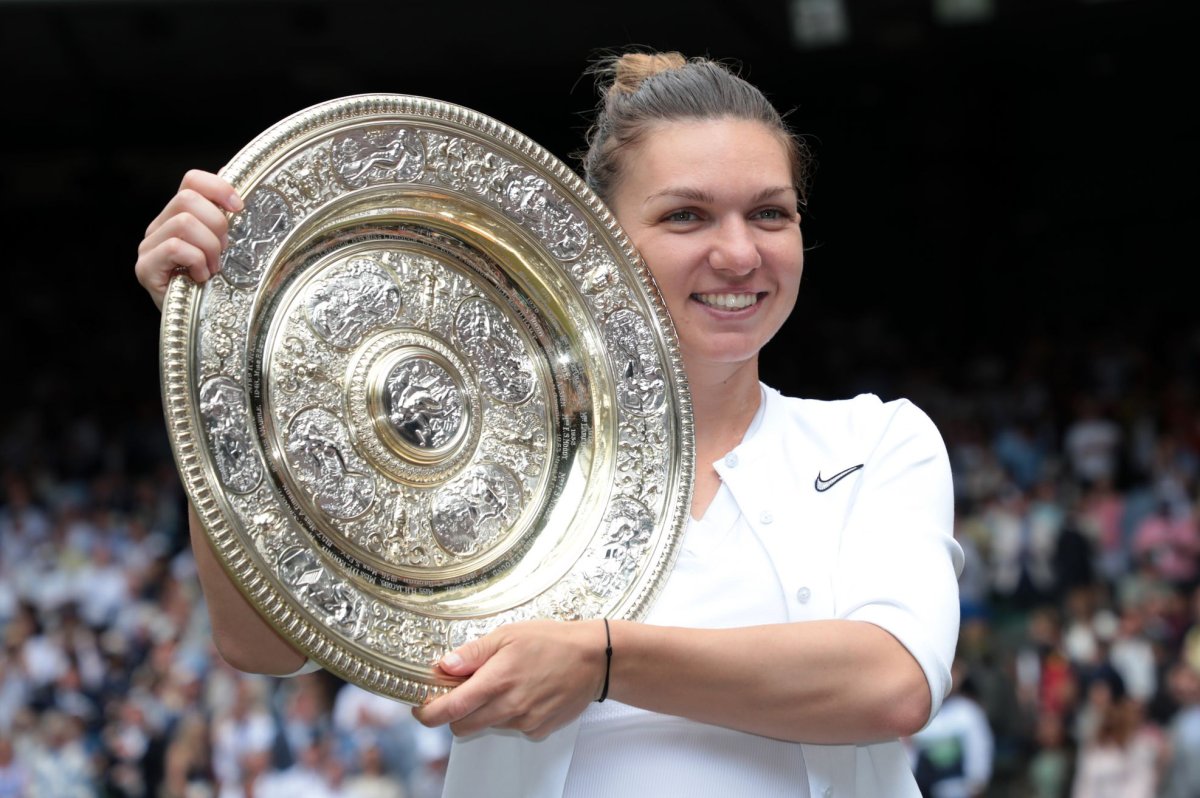


Yesterday, the 27 year old played near-flawless tennis to defeat Serena Williams. Williams, perhaps the game’s greatest player, paid tribute to her opponent’s tenacity and power saying ‘she really played out of her mind’.

This weekend is full of dreams being made, or lost. 

New Zealand pile pressure on England in the Cricket World Cup; Lewis Hamilton races his way into the record book; and back at Wimbledon, Federer wrestles with Djokovic.

Paul is particularly fond of sporting imagery: athletics, running, boxing.  Early today, my friend and church leader, Pete Greig, posted some tips for preachers on Facebook saying:  

When Moses served in the courts of Pharaoh, he was clearly playing tennis.

When Peter stood with the eleven, raised his voice and was bowled, he was presumably playing cricket.

And there’s Formula 1 in 2 Kings 9:20 ‘The driving is like that of Jehu son of Nimshi,’ cry the spectators. He drives like a maniac.


Perhaps he takes it a little too far into dad-joke territory;  but in Genesis we have an episode of wrestling and struggle which evokes the determination of today’s sportsmen and women. 

This nightlong wrestling bout is a life-changing encounter: his name is changed and his future is reshaped. The physical, spiritual and psychological struggle comes as he prepares to reconcile with the brother whom he deceived.

In the poem ‘Jacob Wrestles with the Angel’ [full text], the priest Malcolm Guite writes of Jacob’s fears: he dare not face his brother; he dare not look on his act of betrayal. Having sent his family and goods ahead of him, he is left alone on the river bank; wrestling with the embodiment of human dread and divine love.

Guite voices the poem for Jacob, but it could tell of all the things we wrestle with. He writes:

But in the desert darkness one has found me,
Embracing me, He will not let me go,
Nor will I let Him go, whose arms surround me,
Until he tells me all I need to know,
And blesses me where daybreak stakes its claim,
With love that wounds and heals; and with His name.

This strange wrestling - at first fighting God; then holding God close; being embraced by God, yet also emerging from the encounter both wounded and blessed. 

Jacob has seen God face to face; he has wrestled and prevailed. His new name bestows upon him a renewed call - to be reconciled; to establish a people; to be a blessing.


This wrestling isn’t over a match point or personal best: it is a wrestling that heals memories of hurt and failure; and a process of re-directing our hearts towards our first love. It is by fixing our attention on desire for God, and God’s love of us, that shapes our character, our decisions and our actions. 

Mark recounts an episode of wrestling with the stuff of the heart - and our human tendency to create rules which deflect our attention quite literally from the heart of the matter.

Whether it was the traditions of washing utensils; or the mechanism of dodging the responsibilities of human kinship; Jesus challenges us to align what we say with our lips in worship and how we behave towards others.

As the words of confession in Evensong remind us, ‘we have erred, and strayed’ from the ways of our almighty and merciful father, ‘like lost sheep’. We have followed too much ‘the devices and desires of our own hearts’. 

In neglecting God’s holy laws of love we have ‘left undone those things which we ought to have done; and we have done those things we ought not to have done’.

Jesus lists those things which mar God’s image in us - which harm our relationships and break our hearts: from pride to envy, wickedness to theft, fornication to slander. And yet, this is not the end of the story.

Like Jacob we wrestle with who we - and who we are called to be - in the intimate and physical proximity of God. However, we find that it is God who comes alongside us and is indeed with us.

The metaphorical dislocation of a  hip joint is painful; but it might just be the nudge into awareness of our faults and the the prompt to turn our hearts from what defiles to what gives life.

At every Evensong we wrestle with what we desire and what God desires of us. And in receiving afresh the assurance of forgiveness are hearts are opened, cleansed, set free. 


As the words of absolution put it: let us beseech God to ‘grant us true repentance, and his holy Spirit, that those things may please him, which we do at this present; and that the rest of our life hereafter may be pure, and holy; so that at the last we may come to his eternal joy’.

We ask this in the name of Jesus who is with us in our wrestling.

Our hearts long for something more: something beyond us; something that heals our broken hearts and which makes us open hearted to the other.

The God who forms us knows our hearts; the God who knows our hearts dwells with us in Christ; the God who dwelt with us sends the Spirit to restore our hearts that we might find peace and purpose.

As St Augustine eloquently put it in his Confessions, this is the end of our wrestling: Lord ‘Thou hast formed us for Thyself, and our hearts are restless till they find rest in Thee.'

© Julie Gittoes 2019

Sunday, 27 November 2016

The One who is to come

This is the text of a sermon preached at Guildford Cathedral on Advent Sunday. The texts were: Isaiah 2:1-5; Romans 13:11-end; Matthew 24:36-44. It was one of those sermons which didn't seem to settle... the more I grappled with it and as I pondered the texted, it felt more mysterious and paradoxical. Our meeting for lectio before the service helped hugely - and I owe to Donald and Canon Andrew insights about beginning at the end and the consummation of love. Reading texts together is a powerful gift of time, attention and meaning; a good habit of Advent! Ultimately, words of a prayer attributed to St Augustine acted as a pulse to the sermon - Jesus, the one who was and is and is to come.


Lord Jesus our Saviour, the One who is to come, we come to you now.

At this time of year, Black Friday has become a discomforting feature of retail trends.

Let’s name it as it is: something that plays to dark instincts of greed. It takes its place alongside other gloom-ridden, quasi-apocalyptic days.

Black Thursday: the first day of stock market crash of 1929, which led to the Great Depression.

Black Wednesday: Britain’s departure for the European Exchange Rate Mechanism in 1992.

Black Friday: the US import marking a day of frenzied discounted consumption; unplanned spending and bargain hunting; marketing hype, impulse buys and debt.

Some independent bookstores have chosen to shun to Black Friday; instead they embraced Civilised Saturday. For bibliophiles, it promises a more restful shopping experience with the added value of knowledgeable staff and special events.

We too are to dispel the darkness of Black Friday.  At the dawning of a new year, we are to embrace a live giving alternative.

At Advent, we begin at the end: we begin with the consummation of a promise in love.

Because love wins, we are called to a pattern of life which expresses gratitude rather than greed.

To begin at the end demands a change of heart; a shift in our attention towards God.

In Advent are invited to be.

To be still. To watch. To wait.

Lord Jesus our Saviour, the One who is to come, we come to you now.

It would be understandable if on Advent Sunday we focused on political upheavals at home or abroad.  2016 has been marked by significant questions of truth, expertise, popularism and identity.

We live in times dominated by uprisings, terror, war, and rumours of war; we hear of famines, earthquakes and a changing climate. No wonder such events are read as ‘signs of the end times’.

To watch and wait might seem counter intuitive.

When events are alarming, unpredictable and destabilising, there is a time to lament and protest - our psalms and prayers give voice to that.  But Jesus calls us to a spirit of watchfulness which resists false expectations, which rests in the assurance that God will come.

Jesus urges us to be awake. To be attentive to God.

In the face of global disruption, we are challenged to look into our own hearts.

That’s why Advent is so alarming.

Are we ready? Have we prepared ourselves? Will we be caught unawares?

We confront the reality of the breaking in of God’s love: the Alpha and Omega, who was and is and is to come.

We pray with St Augustine:
Lord Jesus our Saviour, the One who is to come, we come to you now.

We come to Jesus in the hope that he’ll rouse us from sleep: that our hearts might be directed to God in worship; that the Spirit might kindle in our hearts the fire of love; that our wills and desires might be directed to ways of peace.

We know not the hour of our own death nor the time of Christ’s return. Yet Paul does not despair as if we are living in uncertainty. Rather it’s the opposite; life has a greater clarity and meaning and purpose.  Jesus came to us in humility; he will come again in glory. In baptism, are caught up in that process of transformation. Christ brings the ultimate regime change from darkness to light; from night to day.


If we are alert to the nearness of God, we live in his light. To live in light means that we lay aside the stuff of Black Friday: the need to gratify temporal desires; jealously, quarrelling and the revelling are distractions.

The alternative is to walk in the light of the Lord: the hope of the prophet Isaiah has been fulfilled; live that reality.

As we open doors on our Advent Calendar, we are intentionally making space for God. As we walk in the light, pray that we might act with wisdom, embody hope and be alert to love.  That is certainly the aim of our cathedral calendar - inviting us to hear and respond to God’s story as we wait.

We continue to pray:  Lord Jesus our Saviour, the One who is to come, we come to you now.

Jesus’ words in today’s Gospel both alarm us and give us hope. The task of disciple is to live by faith - that means refusing to live by fear and embracing life lived in loving obedience to God. Just like Isaiah and Paul, we are in this for the long haul.  We are to embody the love of God. By witnessing, in the power of the Spirit, to that love made manifest in the humility of Jesus.

But what of Jesus’ words about division, separation and the brutal disruption of daily life?

Jesus uses dramatic and apocalyptic language to convey the urgency of the situation and the demands of the challenge he presents to us.  We are called to be ready and prepared; we do not know how much time is left to us here on earth. We are to use the time that we have to an active waiting on God, which makes hope possible.

All this is summed up in the imperative: keep awake!

The Eucharist in which we share, restores our hope in God’s kingdom. We hear of God’s work of creation and redemption; of love which patiently reaches out to us in love. Here we come to the one who is to come; here we lament and repent; here we are forgiven and sent out.

Here receive what we are, and become what we receive: the Body of Christ. And bodies live and move and breath and act in the world.  We are a body called to both hope and patience - in world which is often devoid of the former and which has no time for the latter.

As the Body of Christ, our lives are woven into the world in the ordinary and complex negotiations of our common life. Like the prophets, we are to be alert to the signs of the kingdom.

Living with hope and patience is to walk in the light: it is to keep our eyes fixed on God and to practice his acts of mercy. We are to show loving kindness and extend hospitality; in so doing we become a sign of God’s kingdom, walking in Jesus steps.

Lord Jesus our Saviour, the One who is to come, we come to you now.
Our hearts are cold; Lord, warm them by your selfless love.
Our hearts are sinful; cleanse them with your precious blood.
Our hearts are weak; strengthen them with your joyous Spirit.
Our hearts are empty; fill them with your divine presence.
Come, Emmanuel: enter our lives, possess them always and only for yourself.

© Julie  Gittoes 2016