Friday, 13 March 2020

Walk fearlessly

A sermon preached on the Second Sunday in Lent which was also our Beethoven Weekend. The texts were: Genesis 12:1-4a, Romans 4: 1-5, 13-17, John 3:1-17 and quotations from Beethoven were found here.

“No friend have I. I must live by myself alone; but I know well that God is nearer to me than others in my art, so I will walk fearlessly with Him.”
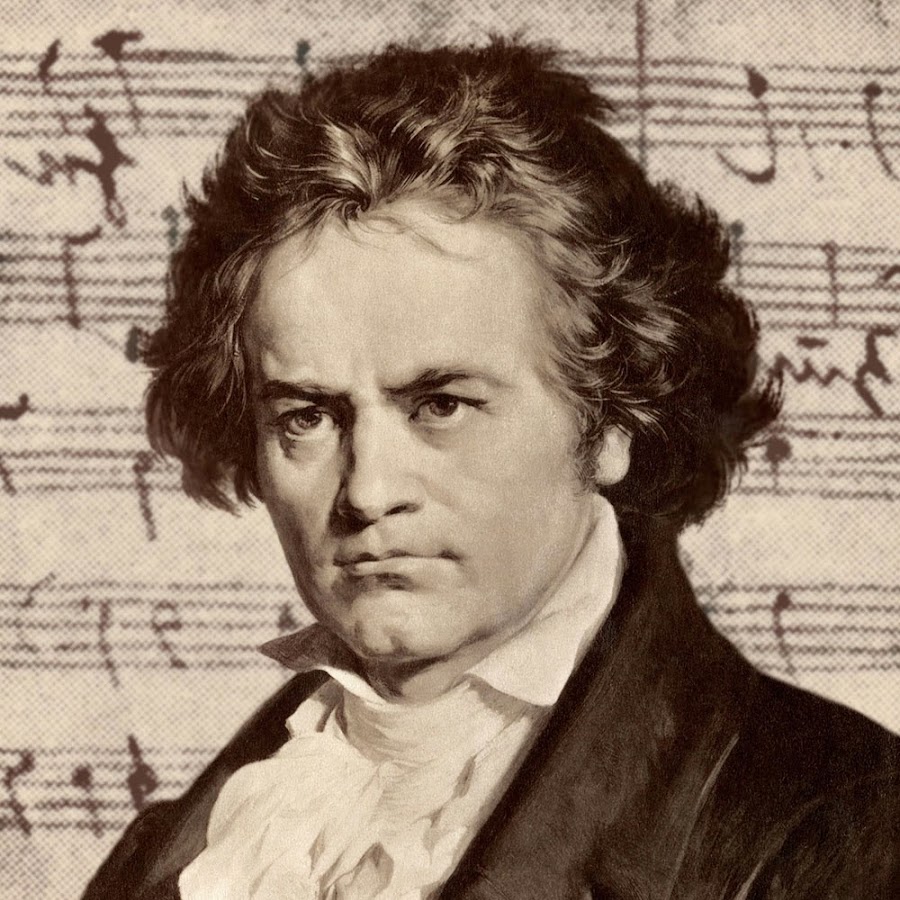


Words written by Beethoven, whose life and work we celebrate this weekend. He wrote these words having dedicated the Moonlight Sonata to a woman he loved;  he wrote them knowing that class and status meant their love was prohibited. 

Yesterday, we were drawn into Beethoven’s legacy in an embodied way. We heard some young musicians talk about why they’d chosen particular pieces to perform; and how they engaged with the emotional energy of his work.

We were drawn into Beethoven’s story in an embodied way in a dramatic performance accompanied by the music which flowed from his pen. We heard of his loves and his loneliness; his creative impulse and his despair. At the end, we were gifted a glimpse of hope.

Some have written that Beethoven had a curious faith. A faith which was deeply personal, reaching towards God; and finding expression beyond the assertion of creeds and dogmas. Whilst he might have had an aversion to sitting in the pews; his fascination with the texts of the Mass and the rhythmic patters of psalms.

He sought to integrate his own personal styles and interpretations of the texts; driven by his years of research and his emotional involvement. We are drawn into something that is both personal and universal; drawing us on person to person, as we reach towards God.  

In the setting we will hear this evening, the Mass in C, we are invited into a work of reassurance and hope. He is reported to have said: “My chief aim was to awaken and permanently instill religious feelings not only into the singers but also into the listeners.”

The themes of awakening and fearlessness; of human creativity and life alone are recognisable to us; but also to the biblical narrative we are drawn into. There too do we find expression of a faith which are curious and trusting. In the lives of Abraham, Nicodemus and Paul we find glimpses echos of nearness of God of which Beethoven wrote, echos which resound within the human experience  from heartache to reassurance.

Abram is invited to lear all that he knows: home and land, livelihood and kin.  He begins a journey of trust; setting out into the unknown. He places his faith in a promise; he responds to a call which tugs at our deepest longings.


In older age, he goes: he embraces a way of life which is visibly different to all that has been. He does not, indeed cannot rely on his own goodness or power, knowledge or influence. Instead he responds to the promise of blessing; a blessing not just to one family or nation, but for the whole earth.

Perhaps we can imagine Abram saying: No friend have I. No children; no future. I must live by myself alone; in the few kin I have.  But I know well that God is nearer to me than others in my art, on this journey into the unknown. So I will walk fearlessly with Him. In hope. In a promise.

Abraham was renamed in hope by a faithful God; and to him Paul turns in thinking about the nature of trust in God. This is not a matter of knowing in the sense of looking upon an object and knowing its weight and form. 

This kind of knowledge is rooted in love and hope: it challenges us to think about where we place our trust, and how such commitments shape our lives.  The faith of which Paul writes is a radical openness to love. A love that brings life; a love that calls us into being; a love that defeats death; a love that exceeds all human imagination in its creativity. 

It is a love that calls. A love that displaces all other idols of status and human regard; of achievement and power. It is a love which displaces wealth itself. 

It is a love that reshapes our worldly commitments; and calls us to be a blessing to others, in order that they too may bless. 

Like Beethoven and Abraham, Paul and Nicodemus, it might not always be clear what lies ahead. Sometimes we will find human longings unmet; or our lives constrained by the wills of others. And yet, we are invited to walk fearlessly with God; the God who kindles, instills and awakens the flame of love in our hearts.

This promise rests on grace not our effort. It rests on a promise fulfilled; and a new future unfolding. 

For Nicodemus this journey is played out over the course of John’s Gospel. He begins by trusting in facts, in noticing what he sees. He is drawn to trust in a person. He continues in curiosity; he is unashamed in his questions. 

He is invited to trust God’s love. A love revealed in the one who will be lifted up on a cross; a love which is at work in the world through the movement of the Spirit. Through this love, his curiosity becomes a deepening commitment. 

It is Nicodemus who stands alongside the beloved disciple and Jesus’ mother at the end; taking a crucified body to be laid in a tomb. It is he who, with the women, brings spices to anoint a body which has born the cost of loving to the end. In the face of the isolation of death and grief, he and they, wait and walk in fearless love. 


For Beethoven, music was the means by which he could express the desolations of isolation and frailty; the wondrous power of nature and the human heart; and within that stir curiosity and joy, solidarity and conviction and the movement of the love, human and divine.

Our lives and bodies are also marked with our convictions: our convictions are revealed in how we spend time and money; our habits and actions reveal the priorities in our hearts. In the midst the storms of this world, dare we live with an intensity and focus, a lightness and commitment that strengthens bonds of community and awakens in others a glimpse of hope in which they can place their trust. 

Our lives and bodies are are marked with the sign of the cross; marked by the love of one who was lifted up in order that we might be reconciled with God and each other. 

The evangelist John reveals to us that God so loved the world that he gave us his only Son, so that everyone who believes in him, trusts in him, may not perish but may have eternal life.

God reveals the depth of love for us in becoming one of us in Jesus Christ. As we enter into relationship with Jesus and follow him we receive the life that is in him; that life flows from his relationship to the Father. 

This life enables us to see see others as Jesus sees them; to love them as he does; to see and love ourselves and Jesus sees and loves us.

This life and love is a dwelling in God: it transforms how we act and speak; it enables us to be compassionate, creative and courageous.

God did not send the Son into the world to condemn the world, but in order that the world may be saved through him.  

To save means to heal, to liberate to make whole: Jesus came to save us from fears and welcome us into new life.

Jesus comes to give us to the very life of God, so that life flows through us. Jesus was lifted up on the cross and in his resurrection; so our humanity too is lifted up with God, abiding in love that continually reshapes us.

May we be alert to where the Spirit is moving in our lives and in our community; may we notice where there is pain and isolation and be with others; may we notice where there is joy and love, and draw near to bless; may we notice where there is fear and speak words of consolation. 

May we hear the promise of life and love awakened in us; when the way ahead is unclear or painful, may we walk fearlessly; in delight and confusion, in companionship and when we are alone, may we know that love is with us, lifting us up.

© Julie Gittoes 2020


Temptation and freedom

A Sermon preached on the first Sunday of Lent. The texts were: Genesis 2:15-17, 3:1-7, Romans 5:12-19 and Matthew 4:1-11


Dan Price is the boss of card payment company in Seattle. He’s the boss who took a $1million pay cut to put  himself, and all 120 of his staff, on a $70,000 minimum salary.

In a piece for the BBC he reveals the trigger for such a policy: when a friend revealed how she was struggling to pay rent and bills whilst working 50 hours a week in two jobs, he saw the human face of financial and social inequality. 

Price is the same age as Mark Zuckerberg, the founder and CEO of Facebook; but he’s no longer living out the lifestyle clichés of a tech millionaire.  He confides that on some days, he has dark moments, when he wants to be just as rich as Zuckerberg, to compete with him; to be on the Forbes list, have his face on the cover of Time magazine and make lots of money. 

He says, ‘All these greedy things are tempting. It’s not like it's easy to turn down. But my life is so much better’.The health, productivity, morale and stability of his staff have also improved.  As Price puts it, ‘We saw, every day, the effects of giving somebody freedom.’

The twin poles of temptation and freedom are at the very heart of our human experience.

We are created in and for freedom.

That gift of God to us is fraught with risk and possibility. 

It makes every act of generosity and love, creativity and kindness of great value; because those actions and attitudes spring from a freedom not compulsion.

We are created in and for freedom.

The way in which we inhabit and exercise that gift is fraught with temptation.

It means we are susceptible to the desire to possess and consume; exploit and manipulate.

Freedom means that we are not puppets or robots, controlled or programmed by God.

Freedom means that we are curious, longing for knowledge and life; testing the ‘what ifs’, the shortcuts and ambitions.

We’re tempted: attracted to go beyond limits; to find ourselves out of our depth and fearful.

That is the story that Genesis seeks to capture: it invites to inhabit its images and metaphors and find therein a recognisable truth.

The ubiquitous apple; an apple with a bite taken from it. 


The apple is good and pleasing to the eye; surely to take it and touch it would cause no harm? And if no harm was caused, if no death occurred, why not eat for the sake of wisdom and knowledge; for a fully awareness of what is good and evil?

The man and the woman share in this first act of trespass. They assume their independence from God; it’s an act of separation which means their relationship to one another is impaired. Shame and suspicion creep in; they cannot look upon each other in the same way.

In succumbing to temptation, their freedom is for the other is distorted. 

Freedom becomes bondage; a limitation on our capacity to do good. We are bound to sin. 

Bound to those the things that glitter and attract, the wealth and status rejected by one tech entrepreneur; to the darker compulsions to violence, which we have seen bubble up in our own parish.

As our litany on Ash Wednesday reminded us, our lives are laid open before God: our pride and impatience; our self-indulgence and hypocrisy; our negligence and laziness; our envy and indifference. 

And yet, we are rescued from the chaos of sin and separation; from our misdirected desires.

We are rescued by the same means as which we were created: by overflowing love of God.

In Jesus Christ, God is with us: as Paul puts it, through him, all know the grace of God. Through his obedience we are justified, or restored to right relationship with God and each other.  We pray that through the ongoing work of the Spirit in our lives and in our world, that that grace will be a sign of hope; a bond of peace and the source of all virtue.

Resisting temptation and setting people free is not a one-off act for us: it is a response to God’s love moment by moment; and often we will fail through our own negligence or will.

Our hope remains in Christ. 

In our Gospel reading today, we see him facing temptations which urge him to act from a position of power and privilege: to meet his own needs; to be protected from the vulnerability of his humanity; to rule the kingdoms of the world by domination.

Jesus is tempted to one thing: but in his refusal, his redemptive act liberates us for life in all its fullness. This work is of freedom is through the costly path of service, suffering and death.

For the people of Israel, the years in the wilderness had been a time of testing, but also of divine guidance; aligning their wills and lives with the love of God. We see God’s loving care in the provision of manna; but we also see it in the revelation of the commandments; the framing of community life by love, and a naming of those things which do harm including lies, theft, adultery and dishonouring others.

Jesus faces three temptations or challenges about the use of his power; which take us to the essence of who he is as God’s son.


Christ in the Wilderness -  Briton Riviere

He’s invited to turn stones into bread; to provide a lavish supply of food.

Satisfy your hunger, says the tempter: no, says Jesus, for we are sustained not by bread alone. No, I will not love the world simply by satiating physical desires; by refusing to go deeper into human longings; by colluding with greed.  Love that gets to the heart of our needs and hopes, that is real.

Jesus has no need to prove himself or satisfy is physical needs here: he remains faithful to God and uses his ministry to not only feed others, but to challenge others to a radical life of hospitality and generous service. 

He’s invited to take the risk of demonstrating his power and identity in a sensational act of bravado.

No, says Jesus, I won’t perform a stunt. He  won't take a short cut to cultivate human regard or a fleeting celebrity. I won't put God to the test in that way; I won’t take advantage of that love. Instead, I will take up the cross. I will will walk with humanity in the way of sorrow. 

God’s love doesn't change human hearts by performing dramatic feats of reckless showmanship. Such love is superficial and fleeting: it doesn't forgive or heal; it doesn't challenge or embrace.

He’s invited to accept the splendour and power of earthly kings, to rule over rather than be with.

Jesus has no need to seize glory and authority in that way. It is not God's way of loving. Resorting to domination on someone else's terms is not real love.  Love that coerces and bullies a response isn't real.   

Attention to God in worship is the beginning of love; serving others by attending to their needs, that's real love.  This is love that walks the way of grief and exclusion; transforming it into joy and welcome.

It is through this love that the eating of an apple becomes a happy fault; the means by which God’s love stoops down to us to raise us up.  We are no longer condemned and death has no more dominion

Here in bread and wine we are offered the food that gives life: which sets before us the cost of love and the gift of freedom. May we embrace that not just for our own sake; but for the sake of our world. 

May we too make those costly and ordinary acts of love; standing against powers of darkness and bringing light: let us pray.

© Julie Gittoes 2020

Saturday, 29 February 2020

Expansive Dreams

A sermon preached at Magdalene College, Oxford for Evensong on the Sunday before Lent. 
The texts were  2 Kings 2:1-12 and Matthew 17: 1-23


It’s been described as ‘furiously fast, furiously funny and still not for the faint-hearted’; ‘a magnificent comedy that us good for both heart and the soul’.  

Sex Education is now in its second series, explores significant questions beyond teenage sexual escapades. It talks about mental health, bullying and parental pressure; it handles addiction, assault and consent. It frames questions of identity, belonging and inclusion. 

The search for intimacy is seen as something serious and good, which can’t be reduced to sex. There is hope as well as heartache. The characters are open to growth and change, acceptance and forgiveness. 

For Maeve Wiley this means, in part, deciding whether to rebel or excel; whether to be defined by her past experiences of rejection or by the potential she’s invited to explore. Teetering on the cusp of self-sabotage she faces the frosty welcome of her more privileged peers who aspire to be prime-ministers and movie-makers.

What she’s written heartbreakingly eloquent, honest and moving:  ‘In 10 years' time, I want to live in a house with big windows. I want the house to be large enough to have a kitchen table with four chairs but not too roomy to ever feel the depth of my aloneness. Because I'll probably be alone. But I think aloneness won't feel so all-consuming with windows that protect me from the world but still let me watch it.’


And her teacher’s response:  ‘You’re a beautiful writer, Maeve. You can have more expansive dreams than four chairs and some windows.’

We can all have more expansive dreams; but to do that we need to feel safe. Sometimes we do need to be alone, but we also need to work together. 

The physical framing of Maeve’s ten year dream reflects her fears and isolation; her need for safety and a level of self-reliance. Her past is shaping what she allows herself to hope for; but being made in the image of God, our human potential is more audacious than that. 

Today’s readings invite us to dream expansively; but they also allow us to name our fears and the things that make us feel safe. 

In our first lesson, Elijah is aware that he is to leave the earthly realm; and this moment of departure is something that he feels should be, a private encounter between him and God. He is imaging perhaps his own space where he is alone and protected. 

Elisha, his devoted and loyal follower, feels differently: he makes pronouncements which affirm the intimacy of their present relationship, but which also reveal something of his own expansive dream. He is not only a follower, but an heir and successor.

When Elijah himself tells Elisha to say - because the Lord is sending him onwards - the younger man will not leave. 

As the news of Elijah’s departure seems becomes widespread with other prophetic voices chiming in, again Elisha asserts his knowledge of that reality; but also bids them be silent as he journeys on. He has no intention of leaving him.

As Elijah’s removes his mantel, and as waters part, we enter the intimate and liminal moment before he is taken up to heaven. Here, he lays aside the sign of his office; his work is done.

But as the horizon shifts for him, as earthly life draws to a close; for Elisha the proximity of this moment opens up a more expansive dream.

It may seem presumptuous to lay claim to a double portion of Elijah’s spirt; a ten year dream that is so audacious it seeks to surpass his master.  Yet, perhaps like those in Maeve’s cohort, the confident request masks a feeling of inadequacy. 

Elisha is loyal. He’s had the privilege of time with Elijah. Yet he knows he cannot rely on his own strength to step up to accomplish the task ahead of him. 

Here Elijah has to discern whether or not Elisha is up to it: a little like Maeve’s teacher having to challenge and encourage, cajole and affirm to test out whether she has the character as well as the ability to take the next step.

His discernment is predicated on the what God reveals of Godself in the moment of departure; and how receptive Elisha is to seeing things differently. 

Elisha watches and waits; he glimpses in a vision of immense heat and power and energy the reality that his mentor had indeed been the spiritual driving force of the nation. 


Icon from Greek Orthodox Church in St Louis, MO 

This is a moment of letting go: his way of relating in physical proximity comes to Elijah to an end; and yet in letting go, a new and expansive future opens up. A future which needs careful handling. 

Any power and authority entrusted to us can be like a fire or whirlwind. Does it disrupt, distort or corrupt our instincts for good? Or perhaps does it real something of who we are and our character under pressure?

Some of us will be coming to terms with the report about Jean Vanier over the last 24 hours: recognising afresh the dangers of making our heroes saints; of uncritical human regard for fame and influence. 

The conversation between Elijah and Elisha reflects back to us the need for wise mentors; of the importance of accompanying one another in accountability; of the discernment needed in seeking to fulfil our hearts desire; of letting go of our heroes and seeing things through the refining fire of God’s love. 

Those lessons apply to each of us - whatever our roles and responsibilities, however expansive our dreams. Alone and together we need there to be safety and support; we need to trust enough to flourish, but not to trust so much that we collide with that which diminishes others.

What then of our second reading? Might it also shape our expansive dreams whilst also holding in check our desire for power and glory?

In this moment of transfiguration, we see not a change in Jesus, but a change in how those closest to him see him. They see the fullness of God’s light and life. In the body of this one who is God with us, the beloved son, they see the radiance of love.  

Moses and Elijah frame this love with freedom and faithfulness and justice.


Transfiguration - James B. Janknegt, USA

But this body will suffer and die; this body will carry the weight of human violence and exploitation; this body unmasks our delusions of grandeur and self-interest; this body defeat’s the power of death itself. For this body will rise again; declaring that love has the last word.

This love checks the abuse of our power and privilege; it reveals that we cannot rely on our own strength alone. It points us to the risk of humility and trust; of placing our faith in God whose will it is that frail and bruised bodies should be restored, transfigured, redeemed and made whole.


Yes, like Maeve we must  expansive dreams; but those dreams don’t lock us in behind windows. Our need for safety should challenge us to keep others safe. Love moves us from fear to trust, from human effort to divine grace; from self-reliance to accountability. 

All this for the sake of others. In our learning, creativity, responsibility and potential, may we seek to be people who bring life and hope our of sorrow and death.  So we pray for the Holy Spirit's gift of charity - bond of peace and source of all virtue. 

© Julie Gittoes 2020

Until the day dawns

This sermon was very hard to write let alone preach, coming as it did the day after the news about Jean Vanier. I included within this sermon caveat that what I said was difficult; that we needed to check in with ourselves; that some of us might want to talk to someone (including our safeguarding officer). 

Yes, the world is charged with the grandeur of God; there is a fragile beauty. There is also the reality of toil and heartache; harm caused by abuses of power; bewilderment at our fallen heroes; and the reality of our mixed motives. This is an attempt, however partial, to name some of that complexity; a complexity that is  still infused with grace and hope. 

The texts for Sunday, 23rd  February were Exodus 24: 12-18; 2 Peter 1:16-21; Matthew 17: 1-9


Sunrise from my (former) kitchen window

There are over 65 millions posts on Instagram which include the #sunrise all of them seeking to capture the colour and light of the dawn.

What is it about the breaking in of a new day that gladdens our hearts? 

Darkness is pushed back; there is a fragile beauty. 

The world is, in the words of the poet Gerard Manley Hopkins, charged with the grandeur of God.

The world is awakening. For night owls, insomniacs, and early risers this moment is unbidden: glimpsing it a rarity for some, a source of energy or anxiety for others. 

We treasure this grandeur with hope perhaps, or gratitude; a moments peace or the cue to press snooze: as the poem continues, it will flame out, like the shining from shook foil; /It gathers to a greatness, like the ooze of oil / Crushed.

The grandeur of God.

Unbidden, never spent; brooding over us.

And yet, alongside this there are the things over which we labour; the toil of hands and lives.  The things we struggle with; those things which mar God’s image in us; or scare the landscape of our world, diminishing its greatness. 

There is hope and grandeur, yes; but there are also the dark places where light needs to shine. 

Today, God’s grandeur and light and glory, is seen in flesh and blood: This is my Son, my Beloved, with whom I am well pleased. Listen to him.

Today, amidst the mess of this beautiful and challenging world, we are also told: You will do well to be attentive to this as to a lamp shining in a dark place, until the day dawns and the morning star rises in your heart.

Two things to hold on to:

My beloved Son.  Listen to him.

Be attentive. As to a lamp shining in a dark place.

Transfiguration gives us a glimpse of light and glory on the cusp of Lent.


Transfiguration - Alexander Andreyevich Ivanov (1824)

We see God’s grandeur , the breaking in of a new dawn, in Jesus Christ: this hope is particularly poignant.

Yesterday morning, a report was published about one of my theological inspirations the late Jean Vanier. 

A man whose commentary on John’s Gospel explored the challenge and beauty of God’s love; love revealed in Word made flesh, dwelling with us.

A man who founded a network of communities serving adults with mental and physical disabilities; treating them as equals, as children of God.

This same man has been accused of manipulative sexual relationships with colleagues; women have spoken out about the emotional and spiritual abuse they experienced.

This news is heartbreaking for it revealed the harm done when there is power and influence, without accountability.  It was shattering because we want our heroes to be perfect; we make them saints. We fail to acknowledge, that they, like us, are flawed, with mixed motives. 

It has also painfully revealed to us the damage that uncritical human regard and admiration can do. As Sr Catherine Wybourne reflects in her blog, when she heard Vanier speak, she half expected someone to genuflect before him. No-one did; but nor did anyone ‘challenge anything he said, either. Every word was received as incontrovertible wisdom.’

It does indeed feel as if we are in a dark place; what then are we to do; who then can we trust?

We are to trust in Jesus; God’s beloved Son. We are to listen to him. We are to be attentive to him in the dark places of our world and of our lives.

This listening begins with prayer:

We pray for the women who’ve carried the cost of their stories, the weight of a hidden truth, the pain of not being believed. For they have spoken and been heard.

We pray for the  L’Arche communities; for wisdom and strength as they create safe spaces where all can flourish; for that work to not be discredited.

As we pray for forgiveness of Jean Vanier, we also pray for ourselves and all who’ve been inspired by him.  For when our trust is undermined or when a hero falls from grace; when we see the suffering caused, we are also confronted with the reality of our human condition.

We are all flawed with mixed motivations: we are capable of doing good, but also of causing harm. We wrestle with our own desires and vulnerabilities; with temptations to take advantage or pursue selfish ends. 

Lent brings this into sharp focus.  What we call sin is the reality of things that distort God’s image in us; that we are capable of being wounded and wounding others. So we pray that God will reshape our wills, hearts and lives that we might love goodness.

We do not do this alone. At the very heart of the Christian life is the immense courage needed to be compassionate to others; it is risky and demanding. It is why, in our life together, we remain accountable to one another. 

Before we begin our lenten journey of prayer, fasting and generosity, we are given a glimpse of the light of Christ to give us hope for the journey.

At this moment of transfiguration, Jesus is revealed in majesty before he suffered death on the cross. Our collect for today not only asks that we, like the disciples, may see that glory; but that also we might be strengthened and changed. 

We are to be attentive to this light shining in a dark place: strengthened when we suffer and changed that we might reflect more of God’s loving goodness. 
Todays’ readings are full of promise and give us a glimpse of that goodness.

There are echoes and parallels in what we’ve heard read today: words of commandments carved in stone; words of that same love poured out in human flesh. 

Moses and Elijah remind us of God’s call to freedom and to faithfulness; to the commandant of love and the prophetic work of justice. 

We hear words of glory reflected in Moses’ human face, a brightness which faded over time; we hear of that same glory reflected radiating in all its fullness in God’s beloved Son; it does not fade, it is who he is.

What we see in our Gospel, is not a change in Jesus but a change in the disciples’ understanding of who he was.  Peter, quite understandably wants to hold on to this experience; to make it permanent. 

Yet this is just the beginning of a journey: for this body, glimpsed in all its divine radiance, is a body which will suffer and die for us. This body will carry the weight of human violence and defeat its power. For this body will rise again.

The dying and rising of this body, gives hope to our bodies. It gives hope to the whole of creation - infused with God’s grandeur but also harmed by greed and carelessness. Frail bodies and bruised creation will be restored, transfigured, redeemed and made whole.

As he writes of this experience, Peter does so knowing it only made sense in all its fullness after Jesus’ death; this glory is only shared when resurrection life has broken the bonds of death. 

As he writes, this experience becomes a gift to us; an image of God’s presence with us in Jesus which is to be a light in dark places. He gifts us this image that we might listen and pay attention - not to cleverly divided myths and untruths - but to the love that casts out fear.

We are to hold onto this light as we walk in the way of vulnerability and compassion; being courageous yes, but not alone. Sustained by the words of scripture and the grace of the sacrament. Before we depart today that we who’ve gathered at this table might reflect the life and light of Christ in word and deed. Knowing that it is not human fame and honour that saves, but only the power of God who can bring changes us. For it is only this light that can drive our darkness.


Transfiguration - Armando Alemdar Ara

The world is charged with the grandeur of God; and for all the toil and sorrow, Manley Hopkins gives us hope:

And for all this, nature is never spent;
    There lives the dearest freshness deep down things;
And though the last lights off the black West went
    Oh, morning, at the brown brink eastward, springs —
Because the Holy Ghost over the bent
    World broods with warm breast and with ah! bright wings.

©  Julie Gittoes 2020