Showing posts with label wilderness. Show all posts

Saturday, 20 July 2024

What was that wilderness like?

 1st Sunday of Lent - 18 February 2024: Genesis 9:8-17, 1 Peter 3:18-end and Mark 1:9-15


The British Caribbean poet Malika Brooker writes:

I know you were weary those forty

days

in the wilderness. What was that 

wilderness like - 

Dry dust, and swirling wind, no colour…


In today’s gospel, Mark leaves us with precisely that question: what was it like?


The brevity of his account means we have to imagine the temptations of flesh and mind; tugging at the identity of God’s beloved Son.  


'Christ in the Wilderness', 1898, by Briton Riviere

Brooker’s word play paints an image of a heart beating fast against a ribcage, of a dry throat swallowing saliva and the way the stomach  contracts with hunger. All this as day stretched like a bending river / day stretched and curled like a meandering river. 


The wilderness has an undertow dragging at the weary one; skin and soul fragile and exposed. Yet, Jesus stood firm in the dry dust. 


River and dust.


Mark places Jesus at a meandering river: plunged into flowing waters in solidarity with us. He comes up and the heavens are torn apart as the Spirit descends with the stirring air. 


God’s Son. Beloved. 


Mark places Jesus in the dry dust: that same Spirit drives God’s beloved Son into the wilderness. Time stretches for 40 days - temptations faced in the wildness of creation and the hope of grace. 


The beloved. 


The artist Stanley Spencer leans into the wildness of the wilderness and creaturely companionship. He finds himself drawn to this brief episode in Jesus’ life saying: I felt because you have not anything much in the actual life in the wilderness except temptation, that one has an excuse for imagining what his life might have been like. 


Spencer gives us colour absent in Brooker’s poem: an earthy series full of rocks and trees and wild beasts. The foxes and eagles, scorpions and a hen with her brood; fingers reaching out to daisies, knees planted in craters, hands extending to heaven. His Christ in the wilderness holds the covenant with all living creatures as Noah was promised. 


There is tenderness as well as weariness here: Christ abides in the wilderness - draws near to every living creature - and attends to God. 


In Christ, God beholds creation - a holy visitation.

He is alone - yet with us.

In the wilderness - wrestling with the ‘what ifs’.

He attends to his heavenly father - in solitude, stretching before him.

In the midst of creation - holding its violence and vulnerability.


The Spirit reveals who Jesus is and the Spirit drives him into the wilderness: from refreshing water to parched land.


Mark’s brevity shows us something of what it is to be human - but also reveals God’s solidarity with us in Jesus.


We are made aware that we are God’s beloved; but that goes hand in hand with the reality of our frailty, the ways we’re stretched and challenged, tested and tempted. The wilderness is for Jesus a time of preparation for his public ministry - but also a foreshadowing of what he accomplishes as in him God reconciles the world to Godself.


It is in him that we see love which is full of compassion and devoid of selfishness or pride; in him we see that hope can emerge from the wilderness, that we are not crushed by it. 


We hold together the truth that we are beloved - loved dust with the breath of God in us - and the fact that we are vulnerable - able to wound others and be wounded by them.  And yet, Jesus not only speaks but also embodies good news for us.  


He invites us to repent, to let go of hurts, regrets and burdens; he invites us to place our trust in the strength of love which goes to the depths; he invites us to notice the nearness of God, breath by breath.


Oftentimes we face our own unchosen wilderness: the tricky colleague, the relationship that ends,  the ways loneliness or anxiety breaks in, the disruption of illness, the waves of grief, the unbidden pressures of life which feel parched, rugged or barren. 


We cannot dodge the discomfort, uncertainty or loss. We wrestle with it.  


In his baptism, Jesus understands who he is: the beloved, the fullness of God in human flesh. It is in the wilderness that it becomes clear how that power of love will be made known - in weakness and sacrifice, not coercion and manipulation. 


For us, our struggles in the wilderness prompt us to explore who we are - and whose we are. 


There is much in the world that seeks to define us by external markers of status - from gender, work, age, gender, sexuality or class. Likewise there is much that tempts us to find ourselves in our image - the brands we consume which consume us, the influence we have and how influences us. The transience of trends and the temptations of tribes that other others. 


The gospel reveals that only God can name us - as beloved, called by name in baptism. Our identity and our belonging is held in that - and we hold onto that promise in times of waiting and wilderness. When we waver, perhaps others hold that assurance for us: reminding us of who we are as we hear echoes of beloved in uncomfortable times. 


For we too rely on angels to minister to us - offering comfort and truth, help and rest, solace and strength. Perhaps Jesus found grace in cooling breezes, fresh water, the company of creatures and the shade of rocks or trees in his wilderness. 


For us too, perhaps divine grace is found in birdsong and domestic animals as well as in the human companionship of those who hold us and remind us that we are beloved. 


But as Peter reminds us, that grace is known in the one who suffers with us and for us; who lives with us and for us. 


As the poet Brooker puts it: Since those days we fast in our thirst / for salvation, / long forgotten, the bloodied scar on his / nailed palm. 


The one who was put to death is alive in the spirit - and our baptism lays claim on that hope of resurrection life through him. 


Our world includes wilderness; even then God’s impulse is to bring life out of death. 


© Julie Gittoes 2024

Saturday, 23 December 2023

Comfort?

 10 December 2023 - Advent 2: Isaiah 40:1-11, 2 Peter 3:8-15a and Mark 1:1-8


Image: a still from the sound of music YouTube

Maria famously begins her list of favourite things with: Raindrops on roses and whiskers on kittens, bright copper kettles and warm woollen mittens, brown paper packages tied up with strings.

Her list goes on: ponies and strudels, doorbells and snowflakes.

In the film, the song occurs in a scene with the children afraid of a thunderstorm; in the original, it’s sung as Maria prepares to leave Mother Abbess to join the Von Trapps.

In both cases, Maria is looking for comfort in ways that are familiar to us.

How many of us had - or still have - that favourite teddy, soft toy or blanket?

Or perhaps it was a favourite story - a piece of music or a film? 

Maybe there’s a place we go to find consolation: the hills or coast, a particular cafe or comfy chair.

Or we reach out to a friend, mentor or someone who gets us.

All these things bring comfort in their own way

Psychologists refer to “comforters” as transitional objects - bridging the gap between dependence on a parent to being about to soothe or settle and comfort ourselves. 

We might outgrow them over time, but we don’t outgrow the need for comfort. When life ‘stings’ or when we feel sad, thinking of our favourite things can be comforting; then, as Maria puts it, we don’t feel so bad

Today’s readings are full of cries and comfort. 

Words of reassurance are  met with a voice that cries out; a voice that calls us to ‘cry out’; and the content of such cries do not sound comfortable.


In our Advent waiting comfort is sought in a wilderness place: a place where the glory of the Lord will be revealed, but so too is our human frailty like withered grass and a faded flower.


Isaiah, like prophets before and after him, knew that the wilderness could be a place of captivity, exile or journey. He and they also knew that wilderness was an experience of loss, trauma or hardship;  trust betrayed, justice denied, compassion withheld, penalty paid.


It is in this place that God speaks with tenderness.


It is in such a place that a way is prepared for the Lord.


And the promise of consolation comes: comfort, O comfort my people!


These words come not in the midst of a thunderstorm, or moving from the convent to the world, but to those who are under occupation. 


Whether it’s the Babylon of Isaiah or the Rome of John, pleas for comfort are heard in the wilderness places, where human rule and power limit freedoms and flourishing. 

We’re invited to go there in Advent: what might we find in the wilderness? Are there hidden joys - or hearts redirected to comfort others?


There is something about the wilderness that strips away our illusions of self-reliance; we’re freed from the dazzling worldly prizes which consume us, or the securities that insulate or separate us from the other : there is a level of vulnerability and risk; we have to wait on God, watching for signs of God’s presence.


That place of vulnerability and risk might also turn our hearts away from selfishness and back towards our first loves. To love God with all that we are - but also to love our neighbour with the love we ourselves are held in.  


That turning back is what we mean by repentance: watching and waiting in the wilderness - be it a place or a season - draws us near to the comfort and consolation of God. As we acknowledge what is in our hearts, we are moved to sorrow, penitence and the desire for change which embodies hope.


The wilderness is a place of grappling with all that separates us from God and each other - what in shorthand we call sin. We are confronted with the pain of what that separation, selfishness and sin does to us and to others.


As God draws near to comfort us in that place, knowing the cost and the harm, but also reminding us that we cannot fix this on our own. Our watching and waiting in the wilderness might be a place where we can confess our need and be made whole: delivered from what oppresses us, free from what preoccupies us, forgiven for what burdens us, healed of what harms us..


The wilderness is a ‘levelling place’: we glimpse a different kind of landscape.  Isaiah speaks of valleys being lifted up and hills made low; of the uneven and rough places made smooth; the crooked path made straight. 


Isaish paints a picture which allows us to reimagine the landscape of the world: not to take away its beauty, awe and wonder, but to enable us to see where we stand - to see what the world could be like. It is on this even highway that all flesh shall see God; all flesh be restored, healed, saved.


Voices cry out where there is inequality, oppression and injustice; voices cry out at our human frailty. Voices also cry out for justice, righteousness, healing, freedom, renewal; for penitence, faithfulness, loving mercy, forgiveness and a new hope.


Philip Kolin’s poem describes John as a prophet of fire and repentance. His voice is a flame igniting something in us -  the waters he stood in, waves engraved with grace. Sin and woe are plunged into the darkness of those waters where life is rebirthed towards the light. Each honeyed syllable of his message opens hearts and unburdens souls.


Yet he knew that he was preparing the way for the one who was coming into the world: the one who fulfilled the hopes of the prophets - a light to lighten all nations. 

In Jesus, God draws near to us in the wilderness, when life stings; when we feel sad and need comfort. In flesh of our flesh, he is our comforter, coming to feed us; gather us up and carry us; leading us out of a wilderness to a more level place.

This is the good news with which Mark chooses to open his gospel: this good news is a regime change amidst all the empires, powers and dominions of this world.


In his poem “The British”, the late Benjamin Zephaniah spoke about the sheer difference and blended life of our nation. Leaving those ingredients to simmer, he spoke of how, as they mix, languages flourish, binding them together with English. 


He allows for cooling time and suggests we add some unity, understanding and respect for the future, serve with justice and enjoy. He notes all ingredients are equally important - to treat one as better leaves a bitter taste. He offers us a warning too - which might be a wilderness levelling place - but also a comforter of what is possible there.


Warning: an unequal spread of 

justice will damage the people 

and cause pain. Give justice and equality 

to all. 


May this Advent be one where we find comfort in the desert, for the sake of God's kingdom.


©  Julie Gittoes 2023


Sunday, 14 June 2020

Holy Tears

The texts of reflections from this morning's worship in Hendon. Sadly, the church wifi went down towards the end of this part of the service. 


Sinai: from creative commons

They journeyed. They entered the wilderness. There they camped. 

A place of escape; but not the destination. Open space; open skies.  Guided by cloud in the heat of the day; by fire in the cool of the night. 

And did the remember what God had promised Abraham? That they’d be blessed; that they’d be numerous than the stars; more numerous than the sand. Blessed to be a blessing. 


Sinai: wikipedia

They journeyed. They camped.  Freedom was uncomfortable in this strange land. They longed for the tastes of Egypt; of garlic and melons, fish and cucumbers. And yet, in this strange landscape, their needs were met with manna and quail. Freedom meant having enough.   

As they camped there before the mountain, did they know that that covenant would be renewed? 


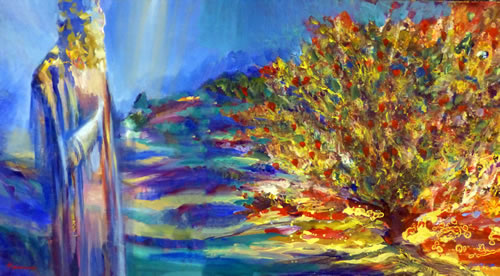
Image: Yoram Raanan

Moses was one who led them: he’d demanded their freedom; he'd heard their grumbles; and still he spoke for them. He knew the wilderness. He’d learnt to turn aside once before.

In a wilderness like this, he’d dared to look; he’d stood on holy ground. Where the presence of love burned in the world and did not consume it. There in flame I AM spoke. The one who was, and is and is to come. 


Image: Rae Chichilnitsky

And I AM will touch his heart again; I AM will give voice to commandments and renew this covenant.  Obey and keep says the voice of I AM; guide these people through the wilderness that they may know a way of promise and peace.  

And will they honour the name of I AM; will they honour each other? For way back when, when Abram said ‘yes’ and Sarah laughed, a promise was made.  A people  grew like sand and stars; brothers dreamed and brothers parted; plenty turned to slavery; and yet God said, there is way of love.


Image: Richard McBee

Moses went up the mountain. The Lord called to him. I AM speaks and Moses listens. This is neither a burning bush nor an overshadowing cloud. It is just him. On this mountain. In this wilderness. Waiting. Breathing. Listening. But he must also speak.


Image: Lisa Fahey

He must speak of I AM who carried this people on eagles’ wings. I AM is like this majestic bird; carrying them from a place of bondage; preventing them from falling; drawing them home to Godself.

But fledglings must learn to fly. Before wings grow strong, the mother eagle swoops down and carries them up. Higher, this time. Until they grow accustomed to the air currents; and the beating of their own wings.  


Image: Ercole de' Roberti

The same is true for God’s people. We must listen to the voice of love, and obey it; we must adjust to the breath of love, and take flight on it this vortex of air. Keep it, this way of promise and peace.


Image: Nasa

For God loves the whole world.  This orb of life. Fragile. Diverse. Full of beauty and creativity, gifted freedom; yet consumed with the desire to acquire and control. I AM says they whole world is mine. Yet, with you I make a covenant out of all peoples; blessed to be a blessing; a light to lighten the nations. 


More treasured than keepsakes, mementos and souvenirs; even more precious than the heirloom, or gift or childhood toy. This is how God looks on his chosen people; precious and beloved. Called to obey God’s voice and keep the covenant in order to draw others back to Godself.


This is a holy nation: drawing near to the refining fire of God’s love; this is a kingdom of priests mediating something of God’s justice. And yes, the people embrace this call; and yet we know that for centuries the prophets continued to challenge and recall them to God’s ways of mercy and compassion.

Yet here in the wilderness there is a willingness to trust and obey; a willingness to listen and act; to receive a promise in order to bring hope; to embrace a covenant in order to bring light in darkness; to receive a blessing in order to bless.

The grace of this convent - this way of promise and peace - is a sign to the world of God’s love of humanity. 

We are heirs in faith; heirs of the promise of this kingdom. In Jesus, this promise and peace is extended to all.  So their answer is on our lips: everything that the Lord has spoken we will do. 

Will we seek after the lost sheep; will we go into the harvest?

Be bold and be brave in the way of promise and peace; bringing good news and raising others up.


Stock image

Jesus left the wilderness and came to his own. He walked amongst them. He went about in their towns and cities; we walked the land, step by step. 

He taught in synagogues: opening the scroll, declaring liberation for all held captive. He proclaimed good news: in him the kingdom of heaven drew near, touching earth and transforming lives. 


Image: unknown

There was something attractive and compelling about these words.  In Jesus the holy one, the great I AM had come near. He came alongside us in our suffering and sorrows; he came to the places of loneliness and despair and was in solidarity with us. 

Jesus loved. In him the heart of God spoke. In him, the love spoke and acted, living out the answer to our deepest longings. In him, this way of promise and peace is extended to all; we walk as members of Christ’s body, we are Spirit-led in making this love visible in the world. 
And crowds were curious. They were drawn to the life and love they saw in Jesus. They were attracted to this good news of freedom and hope, of peace and healing. And yet, they were vulnerable.  They were harassed and helpless.


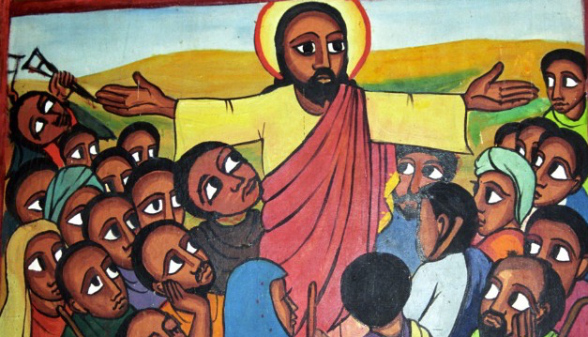
Icon found here

And Jesus looked on them - and we see in him emotional at the very dept of his being; a physical sensation that leads him to act. We are to look on the world as Jesus looked on the crowd: to be moved with gut-wrenching, heart-stopping, all-consuming love. We are to be jolted out of complacency or disconnection - and to see them with love.

These sheep - God’s flock - were harassed and helpless; scattered, stressed, vulnerable; crying out with hurt and longing.  In need of compassion and hope. We are to see each other differently, with the eyes of Christ; to respond differently with the love of Christ. 

There is longing and the season is ripe. Jesus responds to the crowd at the level of authentic human response; he will pour out love for them and us, going to the very depths of suffering and death to bring new life. 

Jesus sees their need and also calls others to pay attention. To see what is happening - and to listen to human cries and to obey God’s call. 


Image found here

And they followed him; and he called them.  And as we hear their names, we know that they like us are not perfect. There is humility in this list - we know some of the details of their lives: they were stubborn and argumentative; they were ambitious and misunderstood; they denied and betrayed. 

Yet these flawed human beings, like us, are capable of extending great love in our gestures - small, persistent and effective. And yet, they too are sent: they are sent to share the same space as Jesus. They too are to walk the land; they share is vulnerability and poverty; they share the journey and the resting places. They will face opposition and will raise others up.


They go and they make known a kingdom. Not only do they speak words of love and kindle hopes for justice; they bring the kingdom near. 

There are tangible signs of release as people are restored to dignity; as of healing breaks in. There are tangible signs of promise, as mercy is extended to those who have suffered; signs of hope as penitence is met with forgiveness. 

What will it take for the kingdom to come near today?


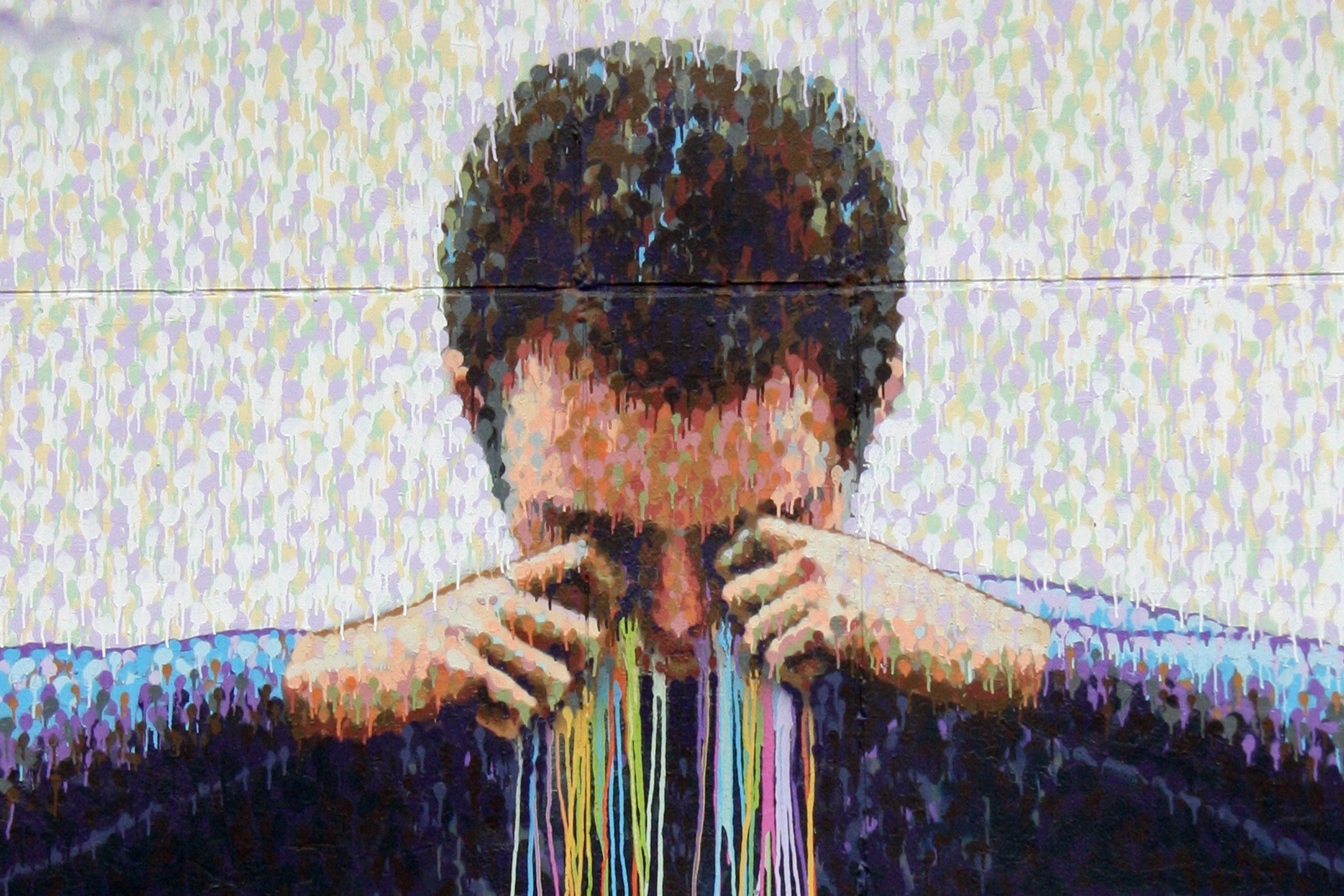
Image: The Artist's Tears - Jimmy C (James Cochran)

Do we see those holy tears? 

Tears of how racism has impacted on the identity of individuals; or how as whole we are less than we might be because of the exclusion of some. Tears of social and economic inequality - which means some bear the disproportionate impact of lockdown; which means as a society we suffer. 

Tears of repentance as we seek to learn, to listen to understand and to be better stewards of this kingdom. A kingdom which speaks, in the empty, desolate and vulnerable places of promise; a kingdom which speaks in the corridors of power and the places of plenty, of justice and peace. 


Image found here

But we have this treasure in clay jars: the frailty of our human nature demands a constant recalling to the claims of the gospel for creation; for the raising up of others to new life; and a gentleness in understanding ourselves and others. We have a gospel to proclaim; a way to walk in; a kingdom that is near to us. 

Miriam Therese Winter:

Be bold in the claiming of the gospel for the whole creation. 
Be brave in the lifting up of the life of God in every place.
Be firm in carrying the holy name of Jesus Christ into the place of worldly power.
Be gentle in the understanding of ourselves and one another. 
And may songs of the Creator sound with love in all the earth,
the tenderness of Christ Jesus cover the wounds of the people
and the truth of the Holy Spirit rise free in every age. Amen. 


© Julie Gittoes 2020