Tuesday, 23 December 2025

Tree of Life

 Advent Sunday 2025: Isaiah 2:1-5, Romans 13:11-14 and Matthew 24: 36-44


A translation of Isaiah 2  by David Rosenberg in A Poet’s Bible:


One day

[. . .]

God
will come forward


to settle the conflicts between us

finally      the one
true witness


even the finality of holocaust
will melt away
like lowland snow


the military hardware
translated into monkey bars
where children play


the hardened postures
crumbled
like ancient statues


children will wave through the gunholes
of tanks
rumbling off to the junkyard


people will find hands
in theirs
instead of guns


learn to walk
into their gardens
instead of battle


Oh House of Israel
let’s walk in the sunlight ways
of his presence


Twenty years ago, a sculpture entitled “The Tree of Life” was unveiled in the British Museum. It echoed Isaiah; embodied the prophet’s hope. 


This ‘tree’ was made by a group of artists from Mozambique using weapons used during their country’s 17 year civil war: decommissioned AK-47 rifles, pistols and rocket-propelled grenade launchers had been cut up and repurposed to create this symbol of reconciliation after conflict. 
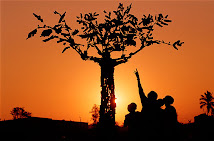


Tree of Life


This sign of healing, hope and recreation was part of a wider  project supported by Christian Aid and run by Transforming Arms into Tools. They employed former child soldiers to dismantle guns. The parts were then swapped locally for everything from building materials to sewing machines, bicycles to farming equipment. 


The founder of the project Bishop Dinis Sengulane challenged those who saw the sculpture, saying: ‘we would like you to adapt this to your own reality. People involved in the armament industry, even in making toy guns, should realize that guns are instruments for destroying human life.’


Artists and prophets are inviting us to imagine what we might do if we lived in a world where war ceased. What would we do with the money and resources, skill and energy?


As with our news cycles, so with Isaiah, human beings too often exchange bold vision for old ways. Yet in the face of that painful reality, such a vision keeps hope alive. Maybe it even burns brighter in uncertain times. 


One of the gifts of Advent is that it gives us space to acknowledge what we experience now and also what God intends for the future.  It reminds us of what is possible: that love can cast out fear. Something sacred might be built when swords become ploughs, guns exchanged for sewing machines.  


In the now and not yet, Jesus calls us to stay awake. When the violence that denies his peace is so real and evident, we are to keep our hearts and minds fixed on the hope of his coming. Being alert is not a passive posture. We can choose to live and act and walk in the light of our Lord now. 


Being alert, watchful and awake is difficult because we do not know ‘when’ of our Lord’s coming. We risk either hypervigilance - or complacency. 


How do we live with this knowing, but not knowing? 


What does hope look like in the waiting?


Jesus gives us two vivid images: the story of Noah and the flood alongside a homeowner and a thief. They are stories of being prepared and alert; of trusting in God’s justice, refusing to let go of hope.


Noah is so familiar - comforting even - the ark prepared for the animals in their pairs. Perhaps we might be challenged and inspired to think about what we take care of today; as we look at our natural world, what do we preserve and protect, renew and regenerate?  [South Wales valleys]


A thief in the night? That feels far more disturbing - especially if you’ve experienced a break-in or theft. It doesn’t sit comfortably as a parable about justice springing up from the earth - or mercy flowing like an everlasting stream. 


The image shocks us. It forces us to pay attention - to consider how we use each day, each moment. It’s an invitation to see opportunities to encourage or do good, to bring a little hope in a troubled world. [Advent calendar] It’s a disincentive to letting the minutes run through our hands like sand in an hourglass, indifferent, unmoved.


To be ready or alert, attentive or watchful is about the small things in many ways. It’s a great equaliser. Rather than assuming it is wealth or status that determines the future,  we rely on knowing the end of the story.


There will be a tree of life, for the healing of the nations: we live now praying and hoping, advocating and lamenting that the world will see the face of the one who is the judge and arbiter between peoples and nations. 


Our lives and bodies and our people and sacred places can be little signs of that: speaking of communion, of sanctuary, of grace. 


The day of the Lord is coming - in the midst of parties and shopping, baking and preparing. Advent reminds us of what we know: the one who comes as an infant, the fullness of God with us, is the one who will come again.  On that day the fullness of God will be all in all - with the plumb line of truth, forgiveness and healing. 


Maybe in Advent our calling is to be “still points” in a frantic world: watching, paying attention, serving; dwelling with God in worship, scripture  and prayer. Waiting on Christ. Being united in him with each other. 


In his letter to the Romans, Paul is teasing out what this might look like. He does that in a series of ‘pairs’.


He begins by contrasting being asleep with being awake, and extends the idea to the realm of different ways of life: being asleep and giving in to one’s own desires; being awake and trying to live accounting to Jesus’ command to love neighbour as ourself. 


He turns to the very ordinary habit of dressing and undressing: throwing off those things which ‘don’t look good’ not because of a fashion fail, but because they harm us and others; they don’t reflect God’s will for us. He talks of putting on new clothing as a visible marker of the internal shift, of being clothed with compassion, kindness and self control. 


He goes further inviting his hearers to put off or shun works of darkness - and instead to put on armour of light: maybe a spiritual hi-vis of faithfulness and peace. 


All this is set against the expectation that our salvation, our healing, is near; but that we don’t know when. As Jesus taught we cannot set a diary date for “The End”, nor do we know when we will die. It's an invitation to live lightly and intensely - not knowing when we let go of life, yet every moment and gesture being of value.


Such uncertainty isn’t a call to either hypervigilance or complacency - but to daily faithfulness, to daily forgiveness. It's to live as if that new world is already here, making love known. The final stanza of Jan Richardson’s  ‘Blessing for travelling in the dark’:


That in the darkness there there be a blessing.

That in the shadows there be a welcome.

That in the night you will be encompassed

By the Love that knows your name. 


© Julie Gittoes 2025


Saturday, 22 November 2025

Do not weary of doing what is good

 16 November, 2nd Sunday before Advent: Malachi 4:1-2a, 2 Thessalonians 3:6-13 and Luke 21:5-19


From The Archers to Eastenders, The House of Cards to The West Wing, Shakespeare to Les Mis, dramas and soap operas weave together common themes: family feuds, personal ambition, star-crossed lovers, political intrigue and hopes for justice. 


It’s not just the big stuff. It’s the inner workings of our own thoughts and emotions: what we want, and what is possible; relying on our own judgement or seeking advice from others. 


This week, some of us saw the ways in which it did, or didn’t, work out in Monteverdi’s opera Coronation of Poppea.  The title is the spoiler alert - as we follow Poppea’s rise to power. She gets her man, the Emperor; she gets the crown. 


However, as the operatic narrative unfolds, we are forced to face serious questions: about the use and misuse of power; about private lives and public roles; about love, deceit, virtue and status; about accountability, corruption, entitlement and so much more. 


We know that Poppea - played brilliantly by Kristina - and Nerone are far from perfect actors: In their desire for each other, they ignore advice and drive others to collude or seek revenge. In their desire for power, they become the sole arbiters of what is right and just. 


Despite the moral ambiguities and harms, the music draws us into the emotional lives of these characters: into the intimacy of their world, their desires, their thoughts and actions. The beauty of Monteverdi’s score, the sentiment of the lyrics,  leads us to suspend our judgement as this dangerously compelling couple gaze upon each other. 


The edge is taken off the treachery as we hear the triumphant final duet. As in life, it can be hard to spot selfish motives when packaged with beauty. Yet, for those keeping in mind Roman history, we know that the lives of those with main character syndrome unravels; they meet untimely or violent deaths. 


Human power fades. As Malachi puts it: the arrogant and evildoers will be stubble. Their influence will pass; there is a possibility of restoration and peace.  We are called into a living hope: the sun of righteousness will rise; and will bring healing to people and nations. 


In today’s gospel, Jesus picks up on the realities of violence, exploitation and injustice; a world in which he is crucified. In the midst of that, he tells his followers not to be afraid; to remain faithful to God’s love and wisdom; to not be led astray by worldly powers and ambitions. 


Instead, in the words of our second lesson, we are not to grow weary of doing what is right and good.


The lives of Nerone and Poppea are recorded by Tacitus. When they rule the Roman Empire, the stones that Jesus’s disciples are still standing in all their glory. Within a decade, in 70 AD, the temple was destroyed. 


The disciples admire the architectural wonder and its seemingly unshakeable weight. They are also looking at a building whose massive stones hold religious memory and identity. 


When Jesus looks at the same building, he does not speak of stability and glory. Instead he speaks of change and fragility; he foretells its loss. His words resonate and unsettle, because what he says is not just true of structures but of our own lives. 


To be human is to recognise that all that we hold on to will eventually pass away. From those who seem most powerful to our own relative comfort and the daily patterns of our lives: it’s not permanent. 


We flourish like a flower in the field, as the funeral service puts it. And when the wind goes over it is gone; and its place will know it no more - but the goodness of the Lord endures for ever; and the Lord’s love of us.


We live in times where many of us will have a sense of being unsettled: whether that’s our own financial security or concerns about changing climate; whether it's the pace of development in our city or shifts in global political power. 


Familiar norms seem less stable; the future feels less certain. This isn’t new. When Jesus talks about war and famine, we can be tempted to see our own circumstances as the fulfilment of his words. 


But what if our now is yet one more episode in the ebbs and flows of human history. Jesus cautions against predicting end times. Not only is that of God alone; but also because human nature can be drawn like Poppea and Nerone into dynamics of selfish fulfillment and exploitation. The command good gets exchanged for personal desires - in corridors of power and in our own spheres of influence.


That can all seem rather gloomy and hopeless. But that is not where Jesus or the words of the readings leave us. Jesus is reminding us that human systems might break and buckle, but that new life and hope will emerge.


Do not grow weary of doing what is right and good.


This is what he bears in his own body: the truth that death comes before resurrection, loss of self before new life; repentance and forgiveness, before blessing and renewal. 


We sometimes call passages like that which we have heard today ‘apocalyptic’. That means unveiling - the making known of something hidden. It is the honest disclosure of motives and where they lead. It is an insight into the ways of the world and the truth of our hearts. 


It is an unveiling that is not leaving us in despair, but the gate way to healing and wholeness. Jesus stands with us offering words of wisdom and inviting us into habits of life which resist selfish desires; he invites us into a bigger story of a love that wins. Love that triumphs not in a moment of coronation, but in the choice of God’s ways; in doing what is good.


Jesus is helping us to set aside those things which are illusions - about the world and who we are - and to let go of those things we have pursued which diminish and wound. Instead we are to embrace life as a gift - to work together in mutual support and interdependence. To never lose heart in doing what is good, rather than succumbing to idleness; to continue to do what is right, rather than becoming busybodies. 


It is hard to face the challenge that Jesus presents today: the lies we mistake for truth; the ways we pin our hopes on our own strength rather than trusting in God’s love for us; the things we cling onto, rather than noticing what we need to let go of; the things that feel like ruin and failure, but which might turn our hearts to the new dawn of the sun of righteousness, bringing healing and new hope. 


Jesus calls us to be quietly confident in him; to love in a way that is magnificently defiant in the face of some of culture’s delusions, the imposter gods we create in our own image. 


He says to not be afraid. Do not despair. 


Instead, when the earth shakes, find ways of bearing witness to faith, hope and love. Tell stories that speak of changed lives, of forgiveness and new beginnings;  in our relationships, make peace; try to be a little more patient with each other. 


When things change and life feels hard, then love. More. Listen well - commit to being present in the places we find ourselves, knowing that God is with us.  Notice what we see, speak with kindness and gentleness; praying that the Spirit is within us breath by breath. 


Be faithful. Do not grow weary of doing what is good. God is faithful and with us still. In what has been, is and will be. 


To keep going with such  endurance demands the spiritual equivalent of the ultra-marathon coaching Sara Cox received as she undertook her epic northern run. 


When we feel numb or exhausted and it feels easier to give up altogether or to give in to despair, we are called to witness to love: with resilience, courage and hope. 


We do that drawing on the well-spring of our scriptures; on patterns of prayer - the prayer Jesus taught us, breath prayers, our petitions and thanks givings. 


We do that by committing to rhythms of worship - of saying sorry and embracing forgiveness; of taking the blessing we receive and being that for others. We do that in committing to community - to the fellowship we share around one table; to the service of one world. 


What is happening around us is not death, but birth. Such labour hurts. But God’s love is our midwife; and by endurance, there will be joy; and possibility. 


Gracious Lord, in this holy sacrament, you give substance to our hope: bring us at the last to that fullness of life for which we long; through Jesus Christ our Saviour. Amen.


© Julie Gittoes 2025


Monday, 27 October 2025

Wrestling

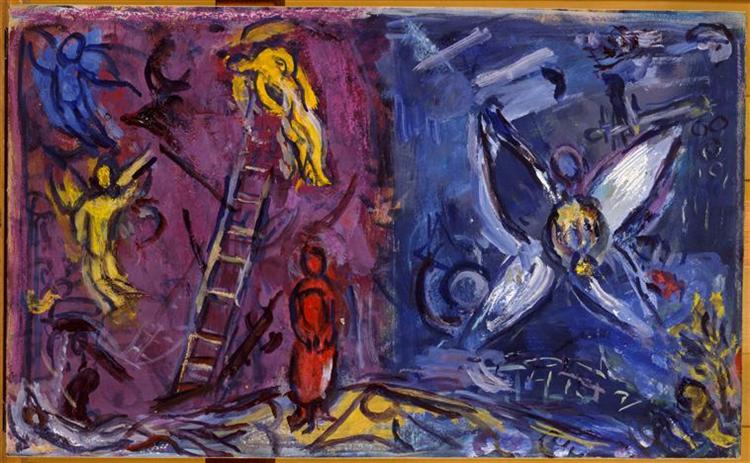
 19 October - Trinity 18: Genesis 32:22-31, 2 Timothy 3:14-4:5, Luke 18:1-8


But in the desert darkness one has found me,

Embracing me, He will not let me go,

Nor will I let Him go, whose arms surround me,

Until he tells me all I need to know.


Words from Malcolm Guite’s poem about Jacob wrestling. He’s in a dark place. Alone. He carries the weight of  burdens from the past. He is wrestling with God and himself;  with the relationships he needs to mend and the guilt he wants to let go of. 


Jacob wrestles with a love that will not let him go. 


Many threads of today’s readings draw us into moments of struggle; and of a God who is with us in the midst of that. We glimpse something important about persistence in faith, wrestling with questions, grappling for justice.  


Jacob wasn’t the first or last to wrestle with another. Wrestling is probably one of the oldest competitive sports in the world - with depictions found in ancient Egypt, Greece and Rome.  


Whether in the original or modern freestyle, the rules for matches are pretty similar as competitors wrestle with each other - executing holds and techniques.  


There is one church in Bradford where faith and wrestling come together: Bible stories combined with body slams, where ring drama meets real-life hope as their website puts it. Through events and services, their mission is to help people encounter the love of Jesus through the art, drama and raw energy of wrestling. 


On the BBC’s “Songs of Praise”, Gareth ‘Angel’ Thompson explains why he opened this ministry to help those who may have been ‘forced to navigate difficult childhoods and volatile family situations. He says, ‘you look at the word ‘wrestling’ - they are wrestling with their demons, insecurities, their past, their circumstances.’


Like Jacob before them, physical wrestling is also a moment of grappling with deeper questions: faith and life, relationships and healing. In the vulnerability of encounter, change is possible.  He wrestles his way to grace and hope. 


Guite’s poem about this life-changing encounter as he wrestled with an angel: his name changes and his future opens up. It is a moment that occurs on his way to his meeting with his estranged brother Esau, who he had wronged. 


There is pain in the wrestling, and wounding; but there is also the possibility of reconciliation. He wrestles all night and walks away limping, but also blessed. In the struggle, God meets him and refuses to let him go; in the grappling of body, mind and spirit, his heart is filled with a love. 


As Guite reminds us, our lives have glimpses of this story too. He says: 'in our brokenness and alienation must also wrestle with, and be changed by the love that wounds and heals.’


It’s not that such stories sanitize struggle, minimising the uncertainty and cost. Rather they sanctify it - bringing relationship rather than separation. The wrestling fosters advocates rather than adversaries. 


Today’s readings aren’t only about the wrestlers who refused to let go, who see blessings emerging from the bruising. It’s also about those who are persistent - the widows and prophets who cry out against injustice. 


Jesus tells a parable about the need to pray always and never lose heart: she refused to give up, to stop knocking, even when faced with indifference and a system rigged against her. Hers is a holy defiance in a world of justice delayed. 


It’s a story that speaks about persistence in personal faith but also questions of public justice. It’s a parable of protest and liberation - of God’s preferential option for those on the margins. It reminds us that God is with us not just in the holiness of the sanctuary and the holiness of our streets. 


Maybe we need a parable like this in our own generation: resisting the disappointments and confronting exploitation and refusing to let go of hope. He encourages us to pray. Persistently. 


The judge mocks God’s justice and the woman before him. The judge is the mirror opposite of what we hope for in a judge - wielding power not mercy. The woman represents a lack of ‘clout’ but she embodies the determined cries of the prophets. Her relentlessness makes the judge relents. 


In the story Jesus that Jesus tells he doesn’t identify God with the most powerful character in the story. He invites us to open our minds to other interpretations. 


On the one hand, he is making the point that if this judge will eventually concede and respond to the cries of the aggrieved, then how much more will God bring in a reign of justice. How much more will God answer our prayers and respond to us with love and care. 


On the other hand, we can turn our attention away from the judge and towards the widow: her persistence when she is fobbed off is a different kind of wrestling. Her boldness and faithfulness, her courage and determination put her on the path of change. Her concern for justice seeks life in the face of forces of death. 


We too are caught between powers of domination and impulses of compassion. We wrestle with our insecurities and pasts and circumstances. We wrestle in the wilderness and darkness, in the streets and public spaces: love endures in the struggle. 


God is there beside us when we limp; whispers hope in the tensions. Wrestling is honest: there is embrace. God does not let us go, until we know what we need to know. These are perhaps holy words for a weary word. 


This is where Paul leads us when he writes to Timothy: reminding us that to read the words of scripture is to find forgiveness and freedom. Those words draw us to the living Word, Christ Jesus himself. The one who speaks love not fear. 


And we too are to speak: to announce this life-giving; to bear witness to it in our lives. We proclaim and persuade - to put faith into practice, giving an account of the hope that is in us. That means our conduct, our aims, our patience and our commitment is to wrestle - to grapple with the hard work of reconciliation - and to discover the raw energy of our faith. 


We come back to scripture; we come back to the altar. In persistence and patience, being changed by the love of our wounded healer. Here we mercy and comfort - in order that our witness might grow through the breath of the Spirit of God. 


I dare not face my brother in the morning,

I dare not look upon the things I’ve done,

Dare not ignore a nightmare’s dreadful warning,

Dare not endure the rising of the sun.

My family, my goods, are sent before me,

I cannot sleep on this strange river shore,

I have betrayed the son of one who bore me,

And my own soul rejects me to the core.


But in the desert darkness one has found me,

Embracing me, He will not let me go,

Nor will I let Him go, whose arms surround me,

Until he tells me all I need to know,

And blesses me where daybreak stakes its claim,

With love that wounds and heals; and with His name.


© Julie Gittoes 2025


Letters

 19 October, Hampstead: Epistles - Genesis 50:15-21 and 2 Corinthians 1:1-7


When was the last time you received a letter - an actual piece of handwritten correspondence? When was the last time you committed thoughts, news or hopes to paper - and posted it to a friend or relative?


For me, it was only a few days ago. My mum writes to me every week. She has done that since I went to university. Comments on the day to day, social events, medical appointments, sermons, family news and what the cat’s been up to. 


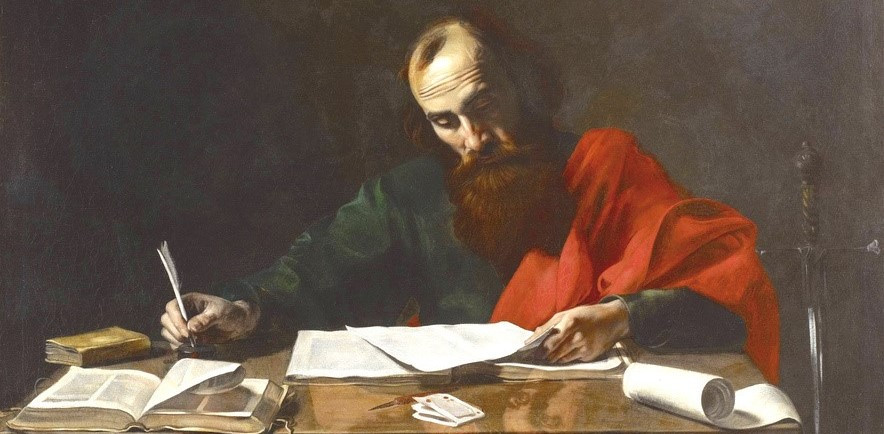
Image of St Paul


In that pre-email, pre-mobile phone era, letters were regularly exchanged between friends outside of term - news, trivia, requests, dilemmas. I still have some of them, long after more recent texts have been deleted or email accounts closed. I read of a friend’s hope that her then boyfriend would move to London with her. I re-read it the week before I conducted their marriage. 


My dad was a less prolific writer, aside from notes in his work diary detailing hours, the job and how much copper pipe. He wrote when I was at low ebb - the tensions and challenges of a shared-student house. The consolation of a familiar hand; the loving wisdom of a familiar voice. They remain amongst my most treasured possessions; kept alongside the letters of condolence friends wrote when he died too suddenly, too soon.


It goes both ways: letters I’ve written in response to someone else's grief; letters to the Home Office in support of a sibling in Christ; letters written to  express thoughts with care.  This year I decided to write more, to communicate with my friendship diaspora in pen and ink, not just regular DMs. Choosing the card or the paper, making time; picking up a favourite pen - a tool that might improve my erratic handwriting. 


Why? Because letters embody a person; character and emotion come through the text. Whether its quotidian details or a significant moment, a letter is a reference point as we navigate seasons of  life. It can be infused with love, faith, gratitude, worries - and prayer.  It’s important to take what we write - how it lands, its meaning and purpose.


This kind of labour is a skill and craft, the stuff of flesh and blood.  Our communication is more than typing, scrolling and swiping through a digital universe.  Letters make our thoughts visible - reclaiming our humanity.  There is pleasure in receiving such a gift. 


Our first lesson from Genesis speaks into the dynamics of death and history. It names complex relationships - memories, fears, and hopes. It speaks of an instruction. In the circumstances, it is something that’s used like an insurance policy - a way of the brothers mitigating risk or securing a future in uncertain times. 


They do not fully trust the expressions of a reconciled relationship between themselves and Joseph. They worry that things will fall apart without their father; that old grudges will reappear, old debts settled. 


So they create a ‘letter of wishes’, neither written nor spoken, but nevertheless some plausible final words of a dying man, words of supplication and forgiveness. There are tears on both sides. The grief is real, but so is the story of jealousy, harm, guilt; stability felt fragile, rooted in parental love.


The instruction serves as a catalyst, whereby things do not go unsaid. Past wrongs are acknowledged and forgiveness is sought afresh. In the face of bereavement, space is created to choose to act for the sake of the future. Joseph does not claim to stand in the place of God - but he is able to express the ways in which intended harm was transformed.  


His lens is both deeply personal but also attentive to God’s ways with the world: the working out of creative and re-creative activity over time, against the odds; oftentimes hidden, sometimes seen with hindsight, embodied in human life and thought. His words were kind and reassuring; but they point to the future hope and love that overcomes fear. 


Our second lesson is most definitely a letter. Several times, including in the first letter to the Corinthians, Paul says he’s writing with his own hand. He comments on the large letters he uses, his handwriting marked by all he endures. 


The fact that so many letters are within our holy scriptures sometimes obscures the reality that Paul was writing out of all the places we find ourselves.  He remembers people by name, asks for prayer and assures his hearers that they are prayed for.  He discusses practical arrangements from pleas to share resources with those in need to the return of a forgotten item like a cloak. 


He responds to challenges and questions - the tensions within the church and the social, cultural and political norms of the world in which they live; he offers words of consolation or encouragement. Sometimes he gives corrective comments on what he’d heard of their worship and teaching; other times he draws them into words of praise. Part of that was reflected in this evening’s introit - Christ’s life, death and resurrection [Um unsrer Sünden willen - text Philippians 2:8-9 - Felix Mendelssohn].


Once, when experiencing writer’s block in my own work, I decided to read the epistles as actual letters: yes, they are addressed to particular people in particular places - including Corinth and Achaia as we hear today - but they also resonate with us as members of that same church of God.  To read them as a whole draws us into their life - and Paul’s thinking. 


He’s working as a pastor, evangelist and theologian attending to the mystery of God’s love revealed to us in Christ Jesus - which we heard in Stanford’s setting of Romans 10 [If thou shalt confess with thy mouth - text Romans 10:9-10 - Charles Stanford. He is working out, in pen and ink, what that means for us as members of one body.  He is passing on a tradition he has received - of breaking bread in remembrance. He shares his own journey of faith and speaks of how faith transforms our life - the enfleshed poetry of faith, hope and love; the fruit of the Spirit; the radical inclusion through baptism. 


Words of grace, peace and blessing frame the opening of today’s letter - a reminder perhaps of how we should greet each other, not just in liturgical expression, but our interpersonal dealings - including our letters. Then, in this very short opening section, we get a glimpse of Paul’s pastoral and theological work. He speaks of suffering and consolation - and finding hope. He takes us to the heart of the gospel. 


The mercy of consolation is part of the character of God, made known in Jesus. In him, we are drawn into a movement of both being consoled in our affliction and also offering consolation to others. 


What Christ endures with us is also for us: that we might know healing and forgiveness, freedom and comfort in all that we endure. There is no made up instruction - but an embodied reality in the face of our fears, opening up a more hopeful future. 


Paul writes his letters on the road, in the company of others and sometimes in prison. He expresses solidarity with that depth of human experience - the pains and griefs and wounds we endure. This is not for him just a matter of empathy but a pointing towards divine mercy. He wants his hearers to hold onto the same unshakeable hope; of God’s love for the world, and the Holy Spirit at work in us. 


Paul writes to the Corinthians about repentance and forgiveness, of the need for generosity; about the power of God seen in human weakness. He exalts them to live in love and peace, to find ways to be advocates rather than adversaries. Poignant words in our own generation. He ends:


The grace of the Lord Jesus Christ, the love of God, and the communion of the Holy Spirit be with all of you.


© Julie Gittoes 2015