Saturday, 6 November 2021

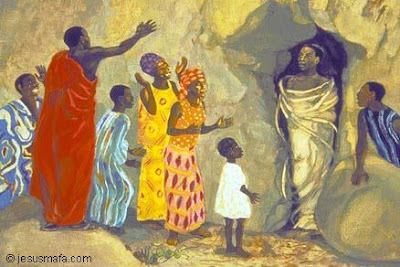
Jesus wept

 Isaiah 25:6-9, Revelation 21:1-6a and John 11:32-44: A sermon on the Sunday when we celebrated All Saints in the morning and commemorated All Souls in the evening.  


Image credit: Maria Lang - Jesus wept


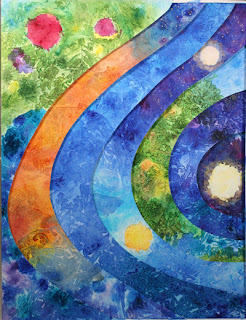
Over the last 18 months we’ve seen rainbows painted in windows and on recycling bins, featuring in street art and in school displays. Key workers became our heroes - contemporary saints, if you like. Over the last 18 months, a mural of hand drawn hearts has been painted on the Southbank - next to St Thomas’s Hospital and opposite Parliament - a visual representation of lives lost and of personal memories. It’s a tribute to very many souls.


In the midst of life, we are in death.  But All Saints and All Souls remind us of a deeper truth: in the midst of death, we are promised life.  We affirm value of every life; those who’ve taught us the faith; the connections across time, culture, history, and eternity.  Rainbows - God’s faithful love. Hearts our personal memories.


Surprisingly, perhaps, the Gospel for All Saints Sunday is the story of the raising of Lazarus. It's relatable and mysterious: one family’s loss, one life restored; but pointing to the one who leads us through life, beyond death to everlasting life.  Today,  we're invited to a grave in grief, remembrance, gratitude, and hope; but also invited to a bountiful kingdom - no lack, no tears. 


Two words at the heart of the story which may resonate:  “Jesus wept.” 


The one who is God with us - weeps with us. The God who will destroy death, is consumed by grief; the one who will wipe away tears, allows tears to flow. 


We might wonder why why the tears: when he’d stayed away, when onlookers suggest he could have prevented death; why the tears when joy is on the horizon.  When he calls Lazarus from the stench of death and decay he’s also calling us to enter a new kingdom - a kingdom opened by his own death and resurrection. That is the hope, so why the tears?


Jesus wept: and gives space to our grief.  He stands with Mary - and with Martha too. He comes alongside all those who loved Lazarus. His tears acknowledge that the loss of the life is to be mourned; that our grief can’t be rushed through. I wonder if part of the vocation of those called to be saints is to weep with those who weep?    


Jesus wept: and names the reality of the death and grief, mourning and tears that we endure. Even though his presence at the graveside foreshadows the hope of new life, those new joys will be shot through with the feelings of sadness; shot through with a new awareness of how precious life is. What is about to happen changes things; it points to the reality that love wins; but tears acknowledge that life won’t be the same either. So I wonder if part of our calling as members of Christ's body, the call to be be saints, is to hold space for life and joy and love?


Jesus wept: and expresses our embodied humanity.  Our faith is embodied too and it get reflected in our emotions and gestures.  Martha articulates her disappointment, frustration and anger deep at Jesus’s delay; but she also listens, trusts in who he is and is open to his words. Her sister Mary kneels before Jesus - a posture of petition, prayer and entreaty; her body expressing trust even when her words are questioning.   When Jesus comes to the grave, when he speaks to his heavenly Father of glory and belief, his face is still damp with tears.  When he calls Lazarus’ name, it’s through tear stained eyes. Perhaps part of our vocation, as those called to be saints, is a concern for all of human nature - our mental, physical and emotional wellbeing - and to pray with love.


Jesus wept: and he takes another step on the journey to Jerusalem where he will take up his cross. Even now, as he speaks words of life, the hostility of some in authority is turning into calls for his death. He will lay down his life not only for Lazarus but for all he calls friends - there is no greater love than this. That love flows out in the abundance of wine at a wedding and in the bread broken and shared amongst many on a hillside; that love flows in the living water offered to a woman at a well and in the water poured over aching feet. That love flows when Jesus is lifted up on the cross to draw all people to Godself. For God so loved the world - with every fibre and breath and tear and ache. So I wonder if part of our callings as saints, as members of Christ's body is  to love in this way - with vitality and intimacy, with generosity and sacrifice.


Jesus wept: and the fulfilment of Isaiah draws a little closer - as Lazarus is unbound, we glimpse the truth that in Jesus death will be swallowed up and shrouds will be destroyed. 


Jesus wept: and the hope of Revelation draws a little closer - in him, the home of God is with mortals and all will be made new. We catch a foretaste of the ultimate reality - the one who weeps will wipe away every tear. 


Perhaps part of the vocation of those called to be saints is to hold on to this hope - to turn it into a catalyst for change; to seek life and to plead for justice. 


Image credit: Jesus Mafa project 


Today, as we remember, All Saints and All Souls we do so with gratitude and hope, we mourn them and celebrate them. The tears we have shed over a lifetime are part of the process of grief and healing; but we also look to a time when tears will be no more. 


Rainbows renew our trust in the hope of a new heaven and a new earth; a time when feasting replaces mourning; when God’s promise of love will be all in all. Hearts remind us of our loves and our sorrows, our tears and our pain; they remind us that we are human and that we long healing. 


Through the lens of our scriptures, our own tears might move us with compassion to follow the saints in seeking God’s kingdom for our world needs the love that God commands. Yes, we are mortal, but we trust in a God who calls us to life. The one who weeps with us is the one who restores life.


© Julie Gittoes 2021

Monday, 18 October 2021

Her bleeding stopped: the embodied borderland of the menopause

‘Her bleeding stopped’: the embodied borderland of the menopause

A paper given at the SST Conference in 2021


Papers shift and change - not least the passing of time and the limitations the pandemic has placed on research. However the focus of this short paper remains the same: to explore the embodied borderlands of the menopause, with a focus on the woman whose constant bleeding stopped. It’s a borderland of life and mortality, generatively and barrenness, flows of blood and of power. So I want to talk about the M-word before focusing on one woman’s story; we’ll look at a some commentaries - and the theological space it opens up around bodies, before ending with a coda on the ecclesial body. 


On their 2003 album “One Last Flutter”, the satirical cabaret act Fascinating Aïda founded by the amazing Dillie Keane, sing a track called: ‘is it me or is hot in here?’ It’s a song which names just one of the physical aspects of the menopause - hormonal shifts which effect the body’s temperature regulation:

First I’m dressed up like the yeti; then I’m just a sweaty betty.


The song concludes with the humorous, but recognisable: Put your cardies on girls; take your cardies off girls; cardies on, cardies off… too darn hot.


There is no equivalent of ‘the talk’ before this season of life accompanied by not only fluctuations in temperature, but of mood, libido, body hair, sleep and weight. Those things mark out the transitional years of peri-menopause, before the menopause itself - defined as twelve months without a period. Until bleeding stops, bleeding might be erratic, sporadic or heavy to the point of life-restricting flows of blood.


Until recently, conversations about the menopause have been largely absent from public discourse. High profile voices within the media such as Kirsty Wark (“Menopause and Me“) and Mariella Frostrup (“The Truth about the Menopause”) have begun to examine our reluctance to talk about it and the questions we’re embarrassed to ask. They’ve discussed the science and self-care; named the frustrations when talking to GPs or the costs of treatment and therapies (from diet, HRT, CBT to exercise).


In the light of this, and its impact on spiritual life, relationships and ministry, I wondered if we might make some theological understanding of this embodied borderland might look like. 


These bodies bleed, and live; they carry the potential to give life; a fragile and painful potential as well as a joyous one.These bodies bleed with discomfort and stigma and disappointment. When these bodies stop bleeding, they enter a physical borderland. This is not just the borderland between the yeti and sweaty betty, but a borderland of what is possible or impossible when it comes to promise, fulfilment, tragedy and letting go.


The biblical narrative carries within it glimpses of the stigma of infertility and glimpses of grace in unexpected pregnancy in old age.  I thought I might dwell more on those matriarchs today; but instead I want to focus in this paper on an intriguing episode which invites us to consider a peri-menopausal and menopausal borderland. 


It’s a story retold in the Synoptic Gospels about a woman, whose illness led to constant bleeding. It’s a story picked up in early Christian art in the catacombs. 


Elaine Storkey suggests that persistent and erratic bleeding for 12 years places her in middle-age.

She’s someone who’s life is “locked down” by pain, fatigue and discomfort. Her cycles bound by then cycles of law and purity; her social, physical and economic life, depleted. 


When she reached out to touch the hem of Jesus’ garment in hope of healing, it reads as a moment when her suffering and isolation ends. The language Storkey uses suggests we take from it blessing, renewal, future and purpose meaning that we too are no longer ‘defined by limitations’. 


It can be read or heard as a moment of interruption or disruption whilst Jesus is on the way to someone else’s house.  He’s going to a twelve year old daughter who’s dying, at the point of death or already dead. 


Mark’s description of her situation might echo many a menopause documentary: she’d endured; visited many physicians; had spent all she had; and felt worse rather than better. For as long as one daughter had lived, this middle-aged daughter had bleed. 


Some commentators treat this interruption with brevity. Stanley Hauerwas notes the desperate situation of isolation - based on the Levitical laws on menstruation - and her extraordinary act of touching Jesus’s cloak. He credits her faith - that is ‘confident that Jesus is who he says he is’ [ 2006, p.102]. A cure is pronounced; her isolation ends; the narrative moves on.


Others such as Anna Case-Winters, sees the stories of dying daughter and the daughter with the flow of blood as being intertwined: ‘on the way to the restoration of one, Jesus restores the other’ [2015, p.134]. Both, she writes, are situation which violate ritual purity customs because of blood and death; yet Jesus extends himself to those in need.  The woman does not make a public appeal. She approaches ‘discretely and timidly from behind’ - an approach, which Case Winters describes as ‘consistent with her status - doubly marginalised by her gender and her ritual impurity’ [2015, p. 136].  


Amy-Jill Levine and Ben Witherington III dispute the centrality of ritual impurity. They highlight in particular Luke’s focus on medical condition - and her economic condition having ‘lavishly spent her money on physicians’ [2018, p.241].  In all three accounts, there is a moment when the private reaching out becomes a moment of public recognition: of the need, of her trust, of the healing. She is to be a daughter who “takes heart” because faith had made her well.


Yet amongst the crowd and these moving feet, there is not only a flow of blood but a flow of power. 


A powerful man has no power to save his daughter; he’s hindered when this woman’s unseen disruption becomes public. She felt in her body that she was healed; Jesus felt that power had gone forth from him. 


Levine and Witherington focus the nature of this embodiment: ‘Jesus recognises his own physical reactions: he is as much in the body as the hemorrhaging woman: as she felt blood flow from her, so he felt power flow from him’ [2018, p. 241]. In their commentary on Luke, this is a Christological point - the genuineness of Jesus’s humanity and the woman’s declaration of faith. As she states why she touched his cloak and how she was healed, Jesus affirmed her testimony. 


And yet, we are left hanging. Is this episode serving more than a literary function of delay? This woman receives no commission; we do not know if she becomes one of the women to follow Jesus; we know nothing of her return to community. Is there more to this disruption with its flow of blood, felt healing and flow of power?


This woman stretched out her hand and touched the hem of Jesus’ garment; she’s commended for her faith. Power flowed where blood flowed and her bleeding stopped.


I want to suggest that this flow of power is not about stemming a flow of blood so that “normal” cycles of fertility are resumed; but that the nature of this woman’s transformation might speak more to the transition of peri-menopause and the abating of blood at menopause. I want to suggest that it does so in ways which allow us talk about that transition well; in a way that enables us to grieve for what might have been, to reconfigure our identity and embrace this embodied borderland in hopeful ways. 


In Reconceiving Fertility,  Moss and Baden helpful invite precisely this sort of attention to the text: no skipping over the disruption; no inscribing of a return to “normality”; but the ambiguity of bleeding that stops. They say: ‘The woman goes from a sodden, leaky, malleable body into a dry, hard one’ [2015, p ]. This imagery they suggest “masculating”: healing takes the form of the flow of blood being dried up, her new condition is in some way “hardened”. 


This language carried overtones of barrenness - and the kind of negative language used of the childless or the feelings of childbearing being no longer possible. In Mark’s Gospel, they note, this language of begin dried up or scorched is associated with judgement and death. In a biological sense, bodies that bleed are open to the possibility of new life; when the flow is erratic, excessive and finally ceases, we confront the borderlands of mortality.


In this disruptive episode, is it possible that being healed is not the same as becoming fertile, but rather an openness to a new form of embodiment. In early Christianity, was it, as Moss and Baden suggest, the fact that the ‘proverbial biological clock was overshadowed by a much louder, eschatological time-piece’?  [2015, p ].


This is a provocative image of menopausal time:  confronting one’s own mortality, of erratic flows of blood and of a biological clock that is ticking; and perhaps too fears of depletion, isolation, invisibility and grief.


Drawing on Ethiopian eunuch, Moss and Baden argue that the disruption and loss of biological procreative destiny does not automatically cut us off from social structures and the transmission of power. Indeed, it the evolutionary/biological phenomenon of living beyond reproductive years opens up space for the wisdom, presence and time of the matriarch (not just the patriarch). 


Moss and Baden talk about resurrection bodies in the context of an ‘afterlife that is a celebration of God, not a family reunion. It is a vision… that values fertility and infertility equally’ [2015, p. 217].    They go on to suggest that ‘it is the barren womb that anticipates the finality of God’s plan for humanity. It is an arresting reversal of social hierarchies’ [2015, p.223].


The womb, when bleeding stops, might neither be a return to fertility nor a sign of brokenness or failed womanhood: but, in this radical view, ‘the telos of human existence’ [2015, p. 224].  This challenges the social norms that prize some bodies more than others - it challenges the invisibility of the menopausal body. 


Yet there is in this account a kind of hope that skips the pain and grief of this transition: ‘the new rule’, the ‘new normal’ and the ‘heavenly ideal’. How does it shed light on the lived reality?


For one thing, there is something about talking about this embodied peri/post menopausal borderland in a way which breaks down the taboo of this aspect of our life. Dare we acknowledge the lived reality of these hormonal shifts, acknowledging the impact on our relational, spiritual and working lives. 


The flow of blood might be a source of discomfort and isolation; but when bleeding stops, there may be forms of grief as well as relief and liberation. We hold and name these embodied borders - not solely as a one form of anticipated eschatological future, but as an expression of wisdom in the present out of which, perhaps, our social and institutional life might be strengthened.


Is there space for wise women of blood and of power: a physical shift  - as felt by the nameless haemorrhaging woman - that bears witness to the flow of the Spirit within the ecclesial community?


In Un/familiar Theology, Susannah Cornwall opens up the space to consider such generativity: she talks of the responsibility we have when we take on our roles as ‘transmitters, disseminators and chapter of the culture we pass on (to our social and cultural mentees as well as our own offspring) [2018, p.6].


Does this embodied borderland of the menopause allow us to be more generous with our ecclesial boundaries perhaps? Does it allow us to name mortality, loss and grief, but also new power, purpose and passion? When her bleeding stopped, this woman became a witness - her life opening out in new, unknown and unspoken ways. The power she had felt within her becoming perhaps a source of regeneration, in anticipation of the fulfilment of God’s Kingdom.


Her body was moved and changed by the power of Jesus, when she reached out touched just the hem of his garment. Our ecclesial body too is moved and changed by the power of Jesus, when we touch and taste and see the fragility of what is given; the power of what is poured out.  This body given for us is a redeemed life of the flesh. In the Eucharist, the power of blood and love flow - a constituting and reconstituting memory of God’s character shared with us in death and resurrection. 


Rachel Mann expresses this sacramental turn vividly: ‘in the eucharist we are sustained and renewed as we take God into our guts. To be members of the Body of Christ means that we are people of compassion - of gut and womb’.  Wombs that bleed and birth and dry up and yet speak of new life. One woman’s flow of blood interrupted a journey towards death; when her bleeding stopped, did that perhaps anticipate the restoration of life. This middle-aged menopausal body, opening up perhaps the power and possibility of new life and wisdom. 


© Julie Gittoes 2021

Thursday, 5 August 2021

Blood and power

 Sunday, 27th June: Wisdom 1:13-15; 2:23-24 and Mark 5:21-43


Up until the first lockdown, to move through London was to move among the crowds: from the tube to the theatre, Soho to Southbank, commuting and culture, Kings Road to Kings Cross.


Perhaps we miss it, or dread it: the wave of bodies passing down a street - feet,  trudging; shoulders bumping. The pace of urban proximity. A pace that can become a tide of hasty, preoccupied indifference; a sea of feet.


Today’s gospel takes us onto a crowded streets - the the ebb and flow of people and of power.


Jairus


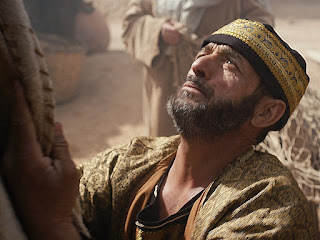
First we encounter Jairus. He’s a powerful man, a religious leader, but he has no power to save his daughter. In the midst of the crowd, in the midst of the clamour and pace, he falls to his knees at Jesus’ feet.


From his position of power, he reaches out in desperation. His daughter - who is growing to womanhood - is dying. He needs help and attention, hope and restored life.


Jesus says nothing: he simply goes with him.


And the crowds continue to press in; they move with the pace of urgent curiosity with Jairus and Jesus.


Image from catacombs


And there in the crowd is someone else whose need is great. A women who has lived with erratic and persistent bleeding for 12 years. 


Mark’s description of her situation might echo many a menopause documentary: she’d endured; visited many physicians; had spent all she had; and felt worse rather than better. For as long as one daughter had lived, this middle-aged daughter had bleed; the one is on the cusp of  adolescence, the other becoming infertile.


She’s been locked down by pain, discomfort and fatigue; her own menstrual cycles bound by the cycles of law and purity; her own social, spiritual and economic life, depleted. 


She moving towards Jesus in the flow of people, with her flow of blood; longing for life-restoring power to flow into her to make her well. 


We might read or hear her story as a moment of interruption or disruption whilst Jesus is on the way to someone else’s house.  He’s going to a twelve year old daughter who’s dying, at the point of death or already dead. 


Dare we pay some attention to this woman, to look her in the eye as she too reaches it out in need, in faith and in hope? Some commentators do treat her story with brevity: crediting her faith, pronouncing her cured; as her isolation ends, she can move on and so do we: and quickly.


Perhaps there is more to this: the stories of women’s bodies - bleeding and dying - are intertwined. Both of them are in violation of laws on purity; yet Jesus extends himself to them as he moves through the crowd. 


On the way to restore the younger one, Jesus also restores the older other. The Father of the one, makes a public claim for Jesus’ attention; she reaches out in secretly, privately.


Amongst these moving feet, there is a flow of blood and a flow of power; a flow of hope and of new life. She felt in her body that she was healed; Jesus felt in his body that power had gone out from him.


They are both aware of their own embodiment, their own physical reactions. 


This says something about who Jesus is: the fullness of his humanity but also the fullness of God dwelling in him. God abiding with us in flesh of our flesh. 


Yet, this moment of need, of trust and of healing also becomes a public moment of recognition: she is to take heart for her faith has made her well; she becomes a witness to Jesus - as she tells of how she was healed, he affirms her testimony.


If we refuse to skip over this disruption, and instead pay attention to this woman, what do we find? There is no return to youthfulness or “normal” cycles of fertility; and yet, as her bleeding stops, she finds her voice. May be she joins the company of those who follow Jesus; may be she returns to her community.


Either way, she is no longer depleted but full of life.


Perhaps her body can speak to bodies going through the transition of the peri-menopause and the time when bleeding stops at the menopause. How does it allow us to talk about and inhabit women’s bodies in a hopeful way - enabling us to grieve for what might have been and embrace new life?


The wideness of God’s mercy in this moment is something that raise her up, allowing her to share the wisdom, presence and time of the matriarch


But we also become aware that a different sort of biological clock is ticking: the little girl has died. 


The scene shifts dramatically. The crowd is now wailing: there is an intensity of commotion as we move towards loss and grief; the heart stopping moment of death. 


Image via Pinterest


And yet, here power pours forth. God in Jesus does not delight, as the book of wisdom puts it, in the death of the living. 


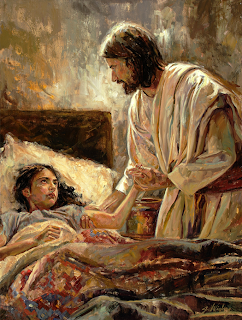
Here, as he holds her hand there is a wholesome and generative force at work; as he breathes those words ‘Taliltha cum’, life is restored; for God has made us in the image of his own eternity. 


For now, food is shared; life is renewed.  It gives us hope, that in the bodies of these women, young and old, we are marked for resurrection rather than death. 


The church too, as Christ’s body, is moved and changed by the power of Jesus:  when we touch and taste and see the fragility of what is given; the power of what is poured out.  This body given for us is a redeemed life of the flesh. In the Eucharist, the power of blood and love flow - a constituting and reconstituting memory of God’s character shared with us in death and resurrection. 


Rachel Mann expresses this sacramental turn vividly: ‘in the eucharist we are sustained and renewed as we take God into our guts. To be members of the Body of Christ means that we are people of compassion - of gut and womb’.  Wombs that bleed and birth and dry up and yet speak of new life. 


In these bodies - menopausal and adolescent - there is an opening up perhaps the power and possibility of new life and wisdom which anticipates the resurrection. 


What of those other bodies, those other daughters?


How often do we make eye contact with the person who’s made their home, pitched their tent, outside a tube station? Do we appreciate the small, but human scale, difference we make when we chat to a Big Issue vendor? Do we make time to give directions to someone who’s lost or confused about what bus to take?


May daughters of Zion rejoice: with healing, truth and justice, the kingdom comes.


Listen to The Porter's Gate: Daughters of Zion here


© Julie Gittoes 2021


Care for Creation

 Sunday, 5 June: Care for Creation - Genesis 3.8–15 and Mark 3:20-end


Original Image

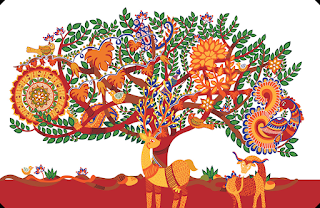
Nature writing has become increasing popular: books about footpaths and coastlines; birds, butterflies and trees. Writers such as Richard Maybe explore how we think about nature in relation to our lives - describing the earth as a commonwealth of all species.


Perhaps are tapping into or reflecting on our increased appreciation of the countryside; but there’s more to it than a whimsical nostalgia. Much of this writing is questioning our current values and lifestyles; economic growth and materialism. Some, like George Monbiot, use their words as journalists to make us think about climate, sustainability and environmental degradation. 


Original Image


Words about the natural world are doing more than expressing beauty or describing eco-systems. Maybe describes nature writers as ‘translators of the language of the natural world’; and perhaps Genesis is also in the business of translating the language of the natural world as God's creation and our place within it.


We’ll be familiar with the way Genesis tells multiple stories about goodness and diversity of the created order, irreducible to binaries or polar opposites. It speaks of water and land - the salty seas, fresh water lakes, peaty moorland and fertile deltas. It speaks of creatures that swim and fly and bestride the earth, each named and given a place. 


Genesis also speaks of us: of human beings formed out of dust with the breath of life. Created with purpose - to till and keep this earthly garden. There is goodness here too; and freedom and creativity; curiosity and order. This breathe of life is not something we can hold on to; we have to exhale - live moment by moment; to live lightly; to live in relation to the gift of what surrounds us. 


Image: Chris Gollon


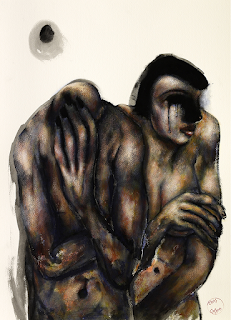
But, as we are all too aware, there is a moment of disruption. The word fall or sin doesn’t occur in reading we’ve heard today. But we do hear of enmity - of fear, shame and secrecy; of using the natural world; of blame and trickery. All those things which mark a shift from trust to mistrust; codependence to fragmentation. 


Human beings were created with freedom as well as purpose: they had options framed by permission and also prohibition: they were allowed to eat the fruit of the earth, but they were also given boundaries.


One commentator describes the place of the serpent as a ‘living metaphor’: presenting options to the human will; inviting action in response to new possibilities. The passing of blame between human and non-human creatures reveals the attractiveness of the enticement, and the guilt at not valuing the gift of freedom and instead ignoring the boundaries. 


As one writer puts it: ‘they had wanted knowledge rather than trust. And now they have it. They now have more than they could have wanted to know. And there is no place to run’. 


The rebellion in this story is in thinking that we can have purpose and freedom without limit; that living without limit risks our freedom; that embracing freedom without purpose takes away the safety of the boundaries. 


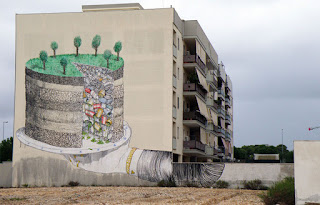
Original Street Art


There is enmity - a split, a breach, a shift in relating. There is a separation between creatures; a desire to hide in shame; the pain to live with consequences. It’s a harm caused by a shortness of breath - a shortness of breath that drives us to consume and control, to pollute and destroy.


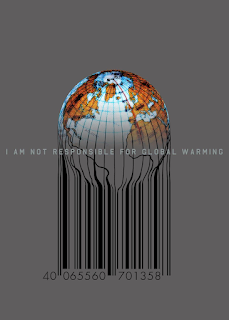
Original poster


We are invited to look at our own carbon footprint - to consider ways where we can buy less; and use our economic influence to shape a more sustainable future. This might be part of our calling to be ea ‘second wind’ to breath deeply and live lightly. 


Stanley Spencer: Christ in the Wilderness


In the gospel, we encounter Jesus: we are drawn into the stories of how he walked the earth. The grain he plucked and ate on the journey; the lakes, deserts and mountains he knew; the birds, flowers and animals he notices, whose language he translates to teach us about God’s love. 


Those who encounter him, don’t quite know what to make of him: the scribes are hostile, misunderstanding and provoke questions about power and motive; his family are sceptical and want to protect him, fearing his out of his mind; and some listen, respond and commit, the disciples - the women, the twelve, the curious; those with power wealth, status and those with little.


They listen. They catch this second wind; and draw a deeper breath. They are inspired. They do God’s will as members of Jesus’ kin, his body; led by the Spirit. 


Jesus is stronger than any enmity or enticement: he knows the impulses of the human heart and calls out the gravest sin. That is to think we can have freedom without boundaries; that we can find our purpose without trust; that we can do as we please without causing hostility. This is to sin against the Spirit - to distort trust in God who gives breath and life and invites us to breathe with praise and hope, justice and imagination. 


To care for creation is to live not only with breathtaking wonder at beauty but to enlarge our imaginations as we care for the fragile complexity. We are to find inspiration - breathing in from our tradition - in order to inspire others and reshape expectations. 


Miriam will be working with the Eco-Church team to guide and encourage us as we seek to care for creation; as we seek to overcome enmity and separation between human beings and other animals. 


That might mean reusing/recycling; looking at lowering our energy usage; composting and encouraging the wildlife in our churchyard; as we seek to drive or fly less; as we reduce our meat consumption; as we work with schools and other organisations - including our friends of other faiths to learn habits of consuming less “stuff” and conserving energy more. 


Marsh Green URC Eco-Church


We commit ourselves to this work as our world cries out for healing. As we cry out for mercy and forgiveness we find new ways of serving one another and our world with reverence, for the Lord is our hope.


 This work of renewal and care is one of the marks of mission of the Anglican Communion: to strive to safeguard the integrity of creation and sustain and renew life of the earth. 


© Julie Gittoes 2021