Wednesday, 11 September 2019

Making Mary's song our song

A sermon preached at Sunday's Patronal Festival St Mary’s. In part revisiting reflections on the Magnificat in a different context - how her song becomes our song. The texts were: Isaiah 61.10 - 11; Galatians 4.4 - 7; Luke 1.46 - 55 


‘That human beings have rights; that they are born equal; that they are owed sustenance, and shelter and refuge from persecution: these were never self-evident truths’. 

So writes Tom Holland, the award-winning historian, biographer and broadcaster in an essay [in the New Statesman] entitled: ‘Why even atheists think like Christians’ 

His point is that Christian concepts and assumptions saturate the western world. In his typically epic style, Holland traces this from the Venerable Bede to Corbin via Marx, Churchill and many others.

The conviction that all peoples have a duty of charity towards each other is socially transformative, is bound up with the vision of Genesis that human beings have a common origin. 

We have to regularly recalibrate or reclaim the lived truth of that narrative - especially when Christianity itself is co-opted in political or social agenda that seeks to diminish the weak or serve only the strong. 

Campaigns to end discrimination flow from a presumption that we all possess inherent worth. Holland the historian turns to Paul the Apostle, saying: ‘the knowledge of what constituted a just society was written not with ink but with the Spirit of the Living God, not on tables of stone but on tablets of human hearts’.

One such human heart is that of Mary. The Spirit of the Living God infuse her song; her words saturate our world.


Chris Gollon - Madonna and Child (2013)

Today we are drawn into a moment of rejoicing and song.

It’s a moment which flows from the intimacy of Marys’s response to the message of an angel.

It’s a moment which reflects the hopes and promises of all the ages.

Mary’s song is first heard by an expectant older mother, Elizabeth: it’s an intimate moment of greeting and blessing, of recognition and joy.

Mary’s song echos through the generations bearing us up with our own cries of hope and protest, praise and delight. 

Mary journeyed from Nazareth to the remote hill country to give and receive kindness and affection. These woman in their first and second trimesters, share the same hopes and anxieties; the same physical changes and sensations of pregnancy. And in the midst of the expected gift of life, there is immense delight, excitement and energy. 

There is awe and wonder, joy and dignity. The name of their Lord is on Mary’s lips; promises of God are being fulfilled.  Words of praise and gratitude overflow into a song of hope and radical change. 

We make her declaring our own as we sing or say the Magnificat: Mary gives thanks for what God has done for her and she expresses God’s generosity towards her. 

She goes on to draw out the consequences for the world. The one whose name is holy will make known mercy from one generation to another. And mercy is revealed in deliverance from poverty, exploitation and domination. 

Mary - this determined, trusting, courageous and joyful woman - makes the voice of the prophets her own. The poor are lifted up and the rich sent away empty; the hungry are filled with good things and the powerful are brought down.  

Her song is a powerful declaration of what salvation looks like: relationships are transformed, imaginations are renewed and resources are redeployed.  This song calls us to embody the compassion and justice of God; the flourishing of the whole of creation is a promised fulfilled in the pursuit of equity.

We are to make Mary’s song our own - committing ourselves to feed the world and banish fear; embracing the lonely, vulnerable and fearful; challenging those gifted with economic and social capital. 

The prophet Isaiah has steer words to say to those in positions of authority: denounced their lies and superficial religion; he challenged the abuse of power and the exploitation of the poor.  He looked forward to a time of peace - when we could set aside our reliance on military might and the false gods of wealth.

Isaiah isn’t all doom and gloom: he looked forward to a day of rejoicing and righteousness and praise. 

In the passage we hear this morning, that this work of redemption is likened to the shoots from the earth. From the smallest seeds; planted, unseen, in the womb of the earth, new life and hope springs up.

Mary praises God because in her womb God’s word is enfleshed: new life and hope will be brought forth. From this small place their will be righteousness for all nations. 

In the fullness of time, God’s Son is sent, born of a woman.

Redemption breaks in in the cries of an infant; in a babe at his mother’s breast.

A Son is born under the law so that we might know adoption and grace.

Blessing is found in the fruit of Mary’s womb.

We are blessed by God’s love dwelling with us in flesh of our flesh. 

Blessing is found in the Son who makes us all children.

We bless as we come receptive to the gift of the Spirit, crying in our hearts.

A cry that is a channel of love.

Mary’s song rejoices that her body will birth the love of God in a tiny child; perhaps tinged with the fear that a sword will piece her soul too.

Her cry speaks of the power of God to raise up the powerless, isolated and exploited.

That power is made perfect in the weakness of human flesh: birthed and fed; teaching and healing; celebrating and rebuking; dying and rising. 

That power breaks through in us too: as we break bread, we do this in remembrance of our living Lord; and the Spirit’s power enables us to change the world for the better.

Our world cries outfor that gift of peace and love: a world where fires rage in the Amazon and sea birds swallow plastic; a world of zero hours contracts and food banks; a world of the homeless and refugees.

Cries are heard:
Her name is Yvette Abaka: a 50 year old mother of two. She has witnessed six years of war in the Central African Republic. NGO funding helped her and other women to start a bakery;  These breadwinners have created small, vibrant economic networks, bringing divided communities together.

Our world cries out:
His name was Perry Jordan Brammer: aged 15, stabbed on Willan Road Tottenham on 30th August. Members of the public who witnessed the attack gave him first aid. As he fought for his life. He died a week later.

Cries are heard: when groups such as London Citizens prioritise personal relationships; when institutions work together to work for the common good. Listening to listening to communities; combating knife crime, improving mental health and campaigning for the living wage.

Like Mary, we sing songs of praise and protest, hope and vision. We make her joyful song about God’s with boldness and tenacity.

We respond to cries: singing increases our capacity to act; the Spirit strengthens us to seek justice, compassion and peace. We commit to Mary’s manifesto of struggle and change with hope and courage. 

Some truths aren’t self-evident. They are written with the Spirit of the Living God; written on human hearts formed within Christ’s body.

The body Mary carries in her body is God with us. That body will teach and heal, console and provoke. That body will be beaten, mocked and lifted up on a cross. That dying body destroys death and brings new life. In broken bread, we are fed, restored and strengthened by his body; we become his body, receiving dignity and purpose.


We sing out in places of vulnerability and fear; we stand in solidarity with suffering and anxious. As his body we cry out for those seeking healing and hope; we act of those seeking justice and peace. May our lives be blessings of love.

© Julie Gittoes 2019


Wednesday, 4 September 2019

Writing about humanity

A sermon from Evensong 1 September: Isaiah 33:13-22 and John 3:22-36

Writing in one of today’s papers, Johanna Thomas-Corr writes: ‘The hoopla around the lunch of Margaret Atwood’s The Testaments is more reminiscent of the unveiling of an iPhone or something Pokémon related that that of a mere book’.


The Testaments is the long awaited sequel to The Handmaid’s Tale: a dystopian novel which has gained a new audience as a restful of its Emmy award winning TV adaptation. It’s the most borrowed book from London libraries; sales have increased 160% since the title of its swap was revealed. 

It tells of ecological disaster; the dismantling of democracy; the erosion of women’s rights. It was chilling when it was published 34 years ago; now the red-clocked handmaidens with their white bonnets stand as a symbol of women’s resistance. 

There’s something prophetic about Atwood’s work: she’s described as being before her time but perhaps that’s precisely because she’s so attuned to the dynamics and pressures of the world we live in. As Thomas-Corr’s profile peace puts it: ‘if there’s something that interests her about humanity, she’ll write about it.'

Isaiah, as we’ve noted in recent weeks, is also alert to the dynamics and pressures of his own world. He notes the way power shifts and discerns where false hopes lie. He calls out the lies and smooth words. He names those things which are illusory or which will lead to death and destruction. 

Yes, he is interested in humanity; but that’s not all he speaks and writes about. 

He speaks about humanity in relation to the world - but that is shaped by his primary commitment to the words and commandments of God.

He names the ways of the godless: the evil doers; the reckless; and the sinful: who despise the call to justice and mercy.

He names the ways of the righteous: those who aren’t susceptible to bribes; who do not profit from oppression; who speak of what is right and hesitance themselves from evil.

He names the ways of the Lord: who will judge and rule and save; whose majesty is to be acknowledged; who commandments are to be understood.

Jerusalem is to be the quiet habitation of the Lord: restored and rebuilt that God’s people might be healed and built up.

Isaiah spoke in later chapters of God’s messiah; the suffering servant. It is this one, chosen and beloved, who will dwell with us in the habitation of our flesh.

John the Baptist was interested in the stuff of humanity: naming our need to turn to God; to find hope, forgiveness and a new beginning.

John also names the stuff of God: knowing that he was not the Messiah, but the one going ahead to prepare the way. The one who captured imaginations, aroused curiosity and made our hearts and mind receptive to the Lord’s beloved Son.

His joy was fulfilled when he sees his beloved cousin on the banks for the Jordan: he baptised him in solidarity with the fragility and potential of our human condition. 

He beholds him afresh today: knowing that he must decrease for God’s Son to increase. He points others to him. 

He points to this one who is above all; who abides with the Father.

He points to this one who knows the earth; who is flesh of our flesh.

He points to this one who will give the Spirit measure upon measure.

This is our Lord.

The Word who gives voice to our hopes and our salvation.

This Word is beloved of the Father.

Humanity is of interest to this Word.

Our Lord sees us and loves us.

We abide in the hands of this one.

In ecology, democracy and feminism: the words of the Word challenge us.

Our Lord calls us to obedient love.

Moment by moment, this love calls us to live lightly and intensely.

Calling us to speak and to act: for the sake of the eco-systems of which we’re apart; for the sake of our social and political life; for the sake of the equitable treatment of women and men.

This Word is heaven touching earth; and raising earth to heaven.

His Spirit leads us to echo the prophetic cries for mercy, justice and truth.

That we too may give word to that which builds up and renews.

We do so in the assurance that in this Word of love, even death is but the beginning of life.


© Julie Gittoes 2019

Showing honour

A sermon preached at the Eucharist 1st September on honour and showing honour. The text were: Proverbs 25:6-7; Hebrews 13:1-8, 15-16; Luke 14: 1, 7-14


Channel Four’s Come Dine With Me  is still running after fifteen years.  

It may be one of your guilty TV pleasures, but if you’re not familiar with the format, it’s quite simple. Over the course of a week, five amateur cooks each host a dinner party; whilst also being the guests invited to enjoy - and rate - the menus and entertainment offered in the homes of their competitors.  


With a £1000 cash prize at stake, the current tag line is pretty spot on: ‘The knives (and forks) are out as strangers compete to be crowned top dinner party host’. Part of what makes the show compelling is the voiceover provided by the comedian Dave Lamb which veers from sarcasm to curt observation.

Rachel Bloomsdale the Executive Producer believes that it’s very reflective of what it is to be British because of the humour running through it - and what she describes as an obsession ‘with status and class and who’s better than who and who’s got what’. 

A range of tactics get deployed: simplicity, complexity, novelty and controversy.  The worst thing, she says, ‘is when contestants say they’re going to be better than everyone else. Even if they do a brilliant dinner, they’ll still lose points because of the way they behaved. Nobody likes a show-off’.

Whether we’re a guest or a host, there are conscious of points of ettiequte or custom. Debretts states that social rank may still be deemed to be of ‘utmost importance’ whilst conceding that the nature of the occasions should offer ‘indications as to the relative significance of guests’. Age, professional, charity representation or local connections might be ‘determining factors’.

Wikihow might take a more informal approach to preparing to host a dinner; but even so when it comes to guests of honour - be it a boss or elderly relative - there are rules about sitting at the right or the left.

The scene described in today’s Gospel is recognisable: walk into any dining room, wedding reception or social function and we’ll pick up on those signifiers of status, honour or importance. 

Perhaps there’s a top table; or chairs draped with scarves to save a space. At school, do the popular or sporty people sit together? Do we notice those sitting alone? Perhaps you’ve bene asked to move - or stood scanning the room for a friendly face?

Luke tells us that Jesus is being watched closely; but he’s also the one who notices.

He decodes what’s going on around the table. 

There is something about human nature that can be magpie-like about the desire for honour or status. This desire for social capital is perhaps a twin to the desire for wealth.

I wonder what Jesus make on the impact of the digital world on our social interactions: the sharing of meals on Instagram; the habit of leaving our phone on the table when we eat.

Jesus’ teaching is an invitation to both humility and generosity.  He invites us to follow his example in giving our full attention to the people we’re with, irrespective of who they are or what they do.

Jesus was being watched; and he watches what happened.

People of importance and privilege could afford to rock up fashionably late before using their  confidence and honoured status to claim ‘their place’. 


One the other hand, if you arrived early or on time, you might want want to find a good seat. You might possibly end up in the best seat - knowing there was a risk of immense social awkwardness or embarrassment should a more honoured guest arrive. 

Jesus draws on the ancient wisdom of Proverbs which is encapsulated in the short saying we have heard this morning. The story he tells isn’t simply a way to navigate the social system - i.e. chose the worst seat to get elevated to the best.

No, this isn’t game-playing. 

He calls out the negative consequences of self-seeking; of the metric of honour and disgrace.  Instead he invites us to use our imaginations to think about how we might live well together.

Living together with kindness and generosity.

If we are less anxious about where we sit or whose company we keep, if we stop trying to exalt ourselves, might we make space for others? 

In being humble ourselves, might we give dignity others and allow them to flourish?  

As we celebrate the achievements of our young people in exam seasons, we can also help them to see that pursuing their subjects, passions and careers is not about seeking honour for its own sake. 

Rather we are to honour others - their difference and their brilliance; their vulnerabilities and their foibles. Part of the gift of community we can offer is the welcome we offer.

There is no place for humiliation or exclusion based on age, gender, social status, race, sexuality or ability.

In the places where we live and work we can discern who is regarded with honour or who is looked down upon - and we can dare to do things differently.

Part of the calling of the church is do build social capital: we are a place where all can be held in equal honour and dignity.

This is good news not just for us, but for our world. 

The meal that we share together is a participation in the life of Christ;  here our hearts are changed. By the power of the Spirit, we are healed of our desire of status. By God’s gracious intervention we know ourselves as beloved.  Here the true host bids us sit and eat.

The nearness of God in broken bread reverses normal expectations of social status. We are in possession of dignity and honour as children of God; as children of God, our hearts our enlarged to show empathy and generosity, compassion and service - enables us to contribute to the wider society.  

Jesus invites us to break cycles of social reciprocity for a widening circle of blessing where the honoured honour others. Our Scriptures are remind us about God’s preferential treatment of the stranger and widow, orphan and poor. 

And all who receive grace and love in this way are liberated to extend hospitality to others, regardless of circumstances. 

This is the blessing of mutual love.

This is the possibility of entertaining angels unawares. 

This is a human relatedness that identifies with the depths of isolation and pain; and the delights of intimacy and relationship.

This is honour which flows from contentment.

It is dignity which flows from praise of God not love of money.

As Hebrews puts it: Do not neglect to do good and to share what you have.

It’s a society where many are lonely or live alone; where inequality is increasing and many are fearful; where there are flourishing enterprises, vibrant arts and new discoveries; where we need investment in housing, health, social care and education; where Brexit has revealed divisions and challenges. 

We have our part to play in shaping a vision for our national life which cultivates a sense of being in community; where all can be valued and contribute. Where every seat at the proverbial table is a seat of honour.  You can be a sign of hope and generosity. In the power of the Spirit, you share the love of God revealed in Jesus.


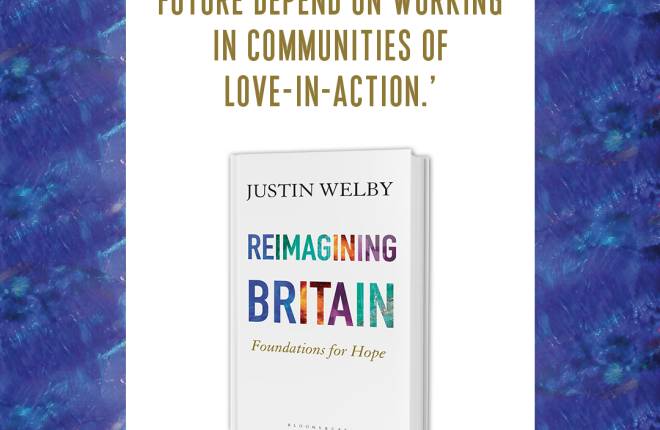
Our Archbishop has invited us to reimagine Britain on foundations of hope.  He says: ’the people of God are called to be a blessing to those places where they live. Obedience to God is seen in imitation of God, and those in love for those in the world around and in care for the concerns of God: the poor, the weak, and the creation. Most of all… a people of hope, of faith and of love for one another, for neighbour and even for enemy’.

To live God’s Kingdom in our fractured Kingdom means abandoning seeking worldly status.

We are to open our hearts to the self-giving love of Christ. 

Let’s be generous, hospitable and humble. Let’s honour others.


© Julie Gittoes 2019

Monday, 26 August 2019

Illusion

A sermon preached at Evensong - thinking about optical illusions and Isaiah's challenge to return to the Lord rather than seeking 'smooth words' or 'prophetic illusions'.How might scripture shape our 'faith optic' to ask the right questions in the face of illusion in public discourse. 

The texts were Isaiah 30: 8-31; 2 Corinthians 9


In February 2015, Cecilia Bleasdale took a photograph of the dress she planned to wear at her daughter Grace’s wedding.

After disagreeing about the perceived colour of the dress, Grace went on to post a picture of the dress on Facebook, where friends  continued to disagree over the colour they saw: was it white with gold lace or blue with black lace?

The discuss soon went well beyond the small island community of Colonsay.  The dress was the the subject of 4.4 million tweets within 24 hours. 

Celebrities including Justin Beiber and Kim Kardashian came out on different sides of the colour perception; Taylor Swift said it left her confused; Lady Gaga went her own way, calling it ‘periwinkle and grey’.

The creative director of Roman Originals was gobsmacked by the attention the dress was getting. The company confirmed that it was blue and black; it sold out within 30 minutes of restocking; and the debate continued, attracted scientific not just celebrity interest. 

The science of why people saw the same dress differently is complicated: more than on explanation was offered. 

It was an illusion: a distortion of the senses or a misrepresentation of the sensory stimulus.

Our brains process colour by relying on two things: the colour of the object  itself and the colour of the light source. The image of ‘the dress’ was overexposed. It was partly in shadow, with a blue-ish hue (the blue/black perception); and partly under the store’s yellow lighting (read as white/gold). 

Whereas optical illusions can be disorientating but also somehow satisfying - as our eyes learn to read a single image as either a duck or a hare.

It is far more damaging in our social, political or religious sphere. Tonight we hear again words from Isaiah who once more warns Judah about the false promise of relying on Egypt to save them from the Assyrians. 

A rebellious and faithless people chose not to see or hear what is right: they want smooth words and prophetic illusions. 

Our public discourse is shaped by blogs, data analysis and social media as well as political speeches, policy documents and press interviews: there is so much data and information circulating on climate change, public services and trade deals; surges of protest, activism and debates about democracy. 

There are those in the academic realm who talk about intensive explorations of the ‘discourse of illusion within multifarious dimensions of contemporary public discourse’: just the sound of that makes our eyes spin as much as any optical illusion.

How do we resist the siren calls of smooth words and prophetic illusion that tell us that it’ll be alright?

Just as we can understand our optical biases in relation to light and colour, can we attune our spiritual gaze to see more clearly?

Amidst the shadows and back lighting, we can see those things which are oppressive or deceitful; we can place our trust in a God.

The Lord our God waits to be gracious to us.

God’s character of mercy and justice can be our plumb line.

As Isaiah expresses it: In returning and rest you shall be saved; in quietness and in trust shall be your strength.

In the face of adversity and affliction, we can be agents of blessing.

God has set before us a way of love which reaches out to neighbour and accords dignity to each person. 

This is the way, Isaiah writes, walk in it.

We read the illusions and truths of our own generation through the lens of love.

A love that multiplies when given and shared. A love that enriches and overflows.

Such love is not politically naive or socially biased: rather it can be a blessing in abundance in the small things; it can be a clarion call of resistance in the big things.


In the face of anxiety and uncertainty, thanksgiving and joy, this love is an optic which brings change, renewal and hope.  Let us pray for this gift of grace.

© Julie Gittoes 2019