Sunday, 25 October 2015

We wait for justice

The text of a sermon preached on Sunday 25th October 2015: Isaiah 59: 9-20 and Luke 14:-14

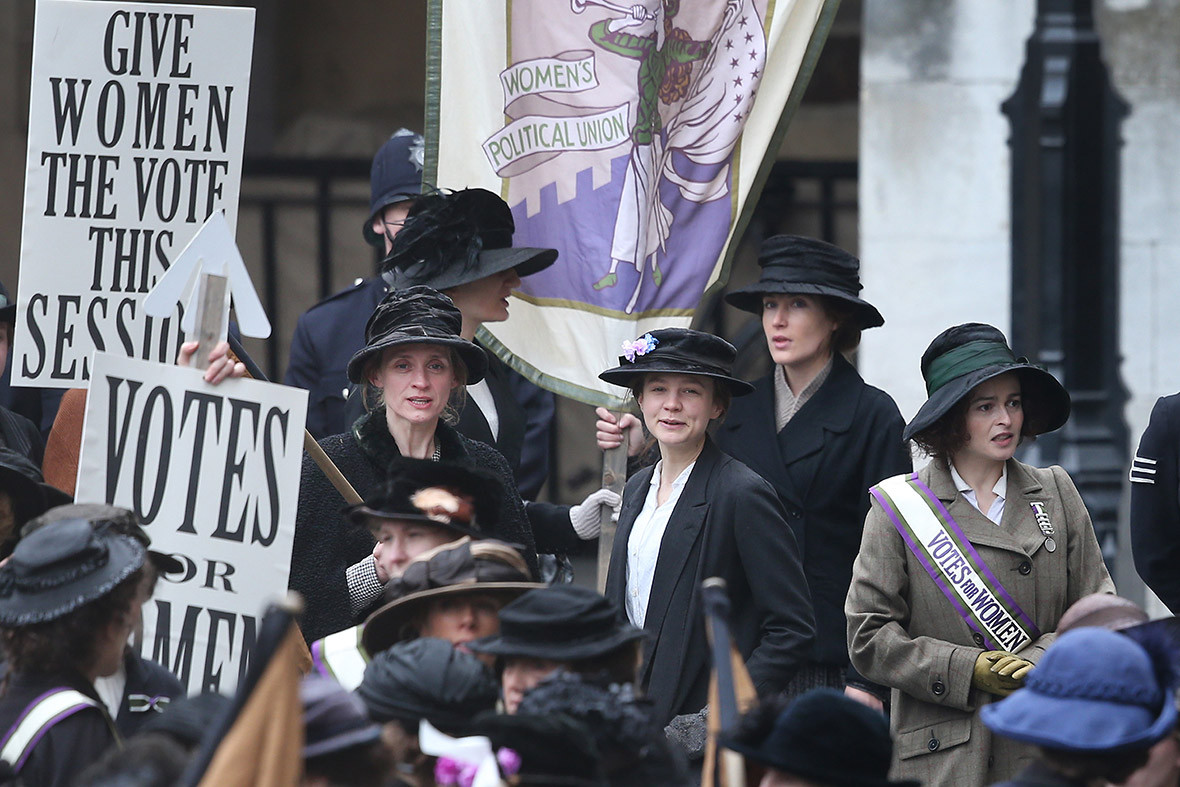
The screenwriter Abi Morgan says of her latest film, Suffragette: these were voiceless women. We gave them a voice. The dramatisation of the a story we known we know is shocking.

We glimpse Emmiline Pankhurst emerging from hiding to give a defiant speech; we follow Emily Davison to the Derby before newsreel of her funeral draws the film to a close. Their narratives are familiar to us; we have their words.


The decision to use the fictional Maud and Alice, Edith and Violet gives the film a heartbeat of ordinariness, which intensifies the impact of historic moments. Their testimonies were transcribed by others; their destinies were mapped out by others.

The shock of this story sees the dangerous drudgery of laundries; the use of photographic surveillance; the violation of force feeding; the disruption of family life as a result of detention; the incremental radicalisation of some; the police brutality.  Alongside the shifting dynamics of female friendship we see the fear and suspicion pervading communities.

Therein lies the second shock. The rhetoric is all too contemporary: gathering intelligence, maintaining civil stability, threats to security; the tension between them and us; choices between words and deeds.

News headlines seek to categorise and divide: worker or shirker, refugee or migrant; Christian or Muslim; Unions or Government; civil liberty or civil disobedience; the right to privacy or the need for surveillance. Are there voices in our society which repeat the refrain of Isaiah? Voices crying out We wait for justice but there is none; for salvation, but it is far off.  

Isaiah describes a society which is a long way from the vision of God's Kingdom, shaped by the right judgment of God's love and faithfulness: justice and righteousness are out of reach; people wait for the light, yet they are left stumbling in the gloom; there is oppression and revolt; speech has become dishonest.  Isaiah captures the cries of our humanity.

How often do we cry out to God for ourselves or others? We hear the cries of junior doctors or steel workers; the elderly or those who care for them; the jobless or the overworked; the pensioner or student.  Open any newspaper today, and those cries are heard across the globe from the victims of gun crime in the States to the factory workers in China.

If we listen carefully to Isaiah, we hear words of challenge: he gives voice to consequences of sin.  That is the shorthand for all that separates us from each other; for all that separates us from God. The voice seeking justice also cries out that our transgressions are many; that sins testify against us; that we know our iniquities. Sin is a result of turning away from God. It is a denial of God's will and purpose. It's the choice to follow our own devices and desires; even when that leads to the exploitation and dehumanisation of others.

The confession at the heart of Isaiah is honest about our human condition: because we're human, sometimes we are motivated by self-interest or fear. When we fail to put God's love at the centre of our lives - individually and corporately - we experience fragmentation and alienation at every level. That's not God's will for us; because  we're human, still look for light and long for justice. For we are created in God's image and blessed with the gift of freedom, to bless others.

The confession at the heart of Isaiah is honest about God's power to draw us back into right relationship.Though we turned away and rebelled, he did not abandon his own. When we lack the courage to plead for truth or fail to stand up for justice, God himself acts. Through the words of his prophet we hear the divine expression of displeasure but also the promise of a Redeemer; one who will bring us back and restore us.  The  imagery is of might and strength. We are called back to God's commandments to love him and to uphold his righteousness in our dealings with others. We are forgiven and receive God's grace that - in the words of our anthem - we may decline from sin and incline to virtue.

The name of the Lord is glorious: the source of light, peace, hope and righteousness. The hope writ large is that east and west will turn back to God and away from the self-deception of human pride. Yet, we know that amongst nations and in the outworking of our lives, that things still go awry. We continue to thirst for justice and the manifestation of righteousness; we seek after truth and purpose.   God's response is to fulfil the promise of redemption in his Son, Jesus Christ. In him, God's love is made perfect in human weakness.

By drawing near to us, he restores our centre of gravity. He invites us to live in response to his generous love. We do so not because of obedience to a law alone; but because of our relationship to Jesus. We still grapple with the complexity of our human life - with the cries for affirmation, forgiveness and justice. But in Christ, we are called to be part of the solution; seeking to build the Kingdom of God.

In Luke's Gospel, we catch a glimpse of what that might look like: what happens when we put God centre stage rather than self.  Jesus draws us into the radical demands of the law.  He looks at the person in need and hears his cries; he brings healing and restoration. He challenges us to see the law as a gift of responding to human need in love, rather than a mechanism of isolating us from their demands. Silence and disengagement of those in authority,  leads to a profound teaching about the nature of discipleship.

He plays to our human instinct about social embarrassment, awkwardness and shame. Rather than occupying positions of entitlement or having pride in our status, we are called to make space for others. Our Proclaiming Liberty lectures are in a way making space for conversation, relationship, understanding and action. We pray and act, saying,  "Come, Holy Spirit", kindle in us love of God's Kingdom.

The cost of that is played out in all sorts of ways. It is played out in the sorrow expressed to those who've been victims of abuse in the church; it is reflected in our concerns to make our churches safe places for the most vulnerable; as we learnt in Thursday's lecture about trafficking, it is revealed when we draw attention to victims of trafficking and when act to shine light in the darkness.  It is the power of God's Spirit at work in us, and in the world, that moves us to a closer approximation of God's Kingdom: may justice, truth, righteousness reign.  May we walk, by grace, in a perfect heart.

Let us pray:

O God, whose Son Jesus Christ cared for the welfare of everyone and went about doing good to all: grant us the imagination and resolution to create in this country and throughout the world a just social order; make us agents of your compassion to the suffering, the persecuted and the oppressed, through the Spirit of your Son, who shared the sufferings of humanity, our pattern and redeemer, Jesus Christ. Amen.

© Julie Gittoes 2015

Saturday, 24 October 2015

Who is Jesus?

Reflections on Hebrews 1: 1-4 for midweek service at St Katherine's: Who is Jesus?

I'm Jesus of the outspoken. Jesus had his followers; I have 600, 000 followers on Twitter. It's about leading the way - I am the new Jesus.

So said Katie Hopkins the former reality TV star and controversial columnist when when she spoke at a church media conference yesterday. She remains resolutely unrepentant about her provocative views; she describes herself as a role model for young women because of the strength of her opinions.   She's not the only famous person to use Jesus as reference point to describe influence or popularity. John Lennon said of The Beatles: We're more popular than Jesus now.


Hopkins sees herself as a Jesus figure because of perceived influence based on Twitter followers; because she sees herself as leading a movement. Her speech is designed to provoke outrage. But there's another side Katie. She's a woman living with severe epilepsy, to the extent she is regularly admitted to A&E as a result of dislocated joints.

Her illness ended her career in the MI5 and the army; she came to prominence in The Apprentice, with reputation for emotional detachment and ruthlessness. She's a human being caught in media storms about refugees or autism; projecting callous judgments rather than compassion. She is a human being whose frailty and disappointments seem to foster the need to foster self-reliance and judge anything that looks like weakness.

Katie's identification with Jesus smacks of hubris. Yet the irony is that Jesus is the one who meets her, you and me in the messiness of our lives. Katie's response to those things is expressed in public vitriol or silently in private. Yet, Jesus is the one drawing near to us amidst our the resentments, fears, pain contradictions and uncertainties.

So who is Jesus? Is he just one of any number of influential, charismatic or outspoken people who leads the way?   Or is he embodiment of God's love who transforms us into agents of altruism and compassion?

Jesus is famous for his teaching about justice, compassion and the use of our money; he told memorable stories about a lost sheep, the good samaritan and wise or foolish bridesmaids. He challenged attitudes and priorities; he brought healing and forgiveness. He was the voice of the voiceless; he debated with the outspoken; he knew their innermost thoughts and loved them. He lived. He died. And that was not the end.

Our reading from Hebrews draws us into a deeper understanding of who he is. He is the fullness of what it means to be human; he is the fullness of God. He shared our humanity that we might know the abundance of life with him, in relationship to others. In him we are forgiven and restored. He loves Katie. And you. And me.

God created us in love and freedom, longing for us to be people of blessing; but knowing we'd made mistakes; or wound hurt others with our selfishness; we carry burdens of failure, self-reliance and perfection  which can be overwhelming. God chose to keep loving us; teaching us.  He spoke to us in the words of prophets - reminding us of his call to act with justice and mercy; urging us to love God, neighbour and ourself.

Ultimately, God responds our human tendency is to mess things up by becoming one with us.  The Word that abided with God from the beginning, the Word that was God dwells with us. Jesus is the reflection of God's glory; the exact imprint of his being.  In Jesus, God's  love is made perfect in human weakness In him we know God.  It is that tangible yet paradoxical truth that sets us free to be fully who we are called to be.

He forgives and restores us for he lived and died and rose again for us.  There is no longer any place where God is not: his love reaches out to us in the  depths of despair, or failure; in him even death itself is defeated. Nothing can separate us from the love of God in Christ Jesus our Lord. Not only does his light and glory draw us back to God; but in the power of his Spirit, we find inspiration and hope; the Spirit cries out with us, uniting our prayers with Jesus; drawing us to the light and glory of God.

Who is Jesus? He is the light, glory and love of God who transforms us by liberating us our anger, weakness, fear and self-reliance.  He liberates us by taking on the vulnerability and frailty of our human nature. He invites us to love as he loves.  We aren't called to be a new Jesus; but we are called to follow him. Literally. Step by step; day by day.

So let us pray that in the power of the Spirit we might witness to the love of God made madifest in Jesus Christ:

O God, forasmuch as without you we are not able to please you; mercifully grant that your Holy Spirit may in all things direct and rule our hearts; through Jesus Christ your Son our lord, who is alive and reigns with you, in theunity of the Holy Spirit, one God, now and for ever. Amen. 

© Julie Gittoes 2015

Sunday, 11 October 2015

I gave it all up to...

This Sunday at Guildford Cathedral, we celebrating our harvest festival and the baptism of Gabriel.  We also marked the end of our month long focus on stewardship.  Combining those themes in relation to Jesus' challenge to the rich young man makes us reflect on what we are called to 'give' or 'give up' in our discipleship; but also to remind ourselves that we give in response to God's love and  for the sake of God's Kingdom. Whatever our status or economic situation, we are called to give all that we are - as living sacrifices. 

Each month The Guardian runs a column entitled 'I gave it all up to...'. A man in  his 50s gave it all up... to cycle the world with his dog. His business was unfulfilling so he sold his possessions, loaded his panniers with clothes, a tent, cooking utensils and hasn't stopped since. He feels physically and mentally lighter.

A young couple, gave it all up... to live off the land. Having quit steady jobs, they gave away their stuff. Now they look after three acres of land in west Cork rearing goats, growing vegetables and hosting a stream of B&B guests. They think they're happier facing the challenges of running a small holding.

We might question the sustainability of the alternative lifestyles of eccentrics doing what they want.  Yet, as we gather celebrate Gabriel's baptism, we all reflect on what we give up to follow Christ. What  difference does it make to put the love of God at the centre of our lives?

Gabriel  will be baptised in the name of the Father, Son and Holy Spirit. The cross will be traced on his forehead, a mark of God's love made manifest in Christ's dying and rising for us. Today his parents and godparents speak for him; we promise to support him. In our worship, we gather to pay attention to God - to hear words of forgiveness, love, peace and blessing. Then we will be dismissed, sent out, scattered in the world. With Gabriel we learn to love and serve as members of the body of Christ, walking together in the light of Christ.


Our baptism is the context in which we think about what we give up: not because we're bored of a conventional lifestyle but because we are called into relationship with God. Putting God at the centre shapes our lives -  from the major decisions to the most mundane interactions. Today's readings invite us to respond to a love that is gratuitous. In creating, restoring and sustaining us, God loves lavishly, faithfully, abundantly, generously. And freely.  To place such love at the heart of our lives changes us and frees us to give.

At a human level commitment to others constrain us: loyalty to friends, faithfulness to a spouse, the demands of caring for infants or elderly relatives.  We are also freed to be ourselves. There is reciprocity in encouragement, care, joy and intimacy. Commitment is costly. We renegotiate how we spend our money and time.  We feel betrayed when that loving trust is undermined.

Peter's exclamation is typically honest: the disciples gave it all up to follow Jesus. Is he doing a cost benefit analysis of his decision?  Or is he being a little bit smug about their radical commitment?  Whatever's running through his mind, it's sparked by Jesus' exchange with the young man and comments about riches.

There is an urgency about the rich young man: his sought after God, sensing some kind of lack in his life. He longs to hear the good news. Jesus begins with a challenge about keeping the commandments - listing those relating to our dealings with others. The man's life seems to stand up to that moral scrutiny; but more is demanded of him.  Jesus looks at him with the fullness of the love of God - full of compassion and grace.  It's the sort of love that invites us into a deep relationship with God. And we know that such depth and intimacy demands our all; it demands all that we ar for the sake of the Kingdom.

Following Jesus, being a disciple, is more than following a set of religious rules. It's the risky business of letting God shape all our thoughts, actions and desires.  Placing our trust in wealth and possessions is part of creaturely condition; our desires get misdirected. Concerns about material security - from the housing ladder to our supermarket shop - reflect a deeper anxiety about our 'worth' and 'purpose'.  It can be hard to disentangle ourselves from that web of 'stuff'. Indeed it's impossible for us, but not for God.

The God who took the risk of pouring out his love into creation knows that we get caught up in stuff. He knows our separation from him and our fragmented lives, in shorthand, our sin. And he choses to reach out to us in the messiness of that.  We received the gift the law to love God and our neighbour. His prophets called us back to God's ways of justice and mercy. But the ultimate good news  is that God chose to be radically present with us in his Son.

Jesus speaks to us and holds us in his gaze. He sees us as we are; and he loves us. He loves us to the end - bringing life out of death; joy out of sorrow. By the power of the Spirit, his word continues to be living and active amongst us. As we share in bread, wine and blessing, as we pour out water and light candles, we ask God to forgive us - to liberate us from all that prevents us from following him wholeheartedly.

The letter to the Hebrews reminds that nothing is left hidden from God - our inner thoughts and unconscious intention. The relief - and release - is not only does God know everything about us, but in Jesus there is nothing he has not faced.  He is God with us: there is no temptation, hurt or loss that he hasn't faced. God's love is made perfect in our human weakness.  It is a love that captivates us and changes us.  His holiness transforms us. We become his holy people.

Therefore, we can have every confidence to that we will find grace and mercy in our time of need - for in love his Spirit is continually poured out upon us. We rejoice today that Gabriel is being drawn into the fullness of life promised by God: in his infant vulnerability and dependency; in his openness to learning, exploring and delighting in the world. He will need our encouragement as he embarks on a life of responding day by day to the good news of God's forgiving, generous, reconciling and creative love.

Perhaps as we welcome him, we can look at ourselves afresh and determine what it is that entangles us and separates us from God?  Does what we possess, possess us?  As we celebrate harvest, we have the opportunity to reflect God's generosity by giving to those in need. As a Cathedral dedicated to the Holy Spirit,  our giving is in the pursuit of wisdom and the fostering relationships: rooted in worship we make space for debate about liberty; we make space  for 500 sixth-formers to participate in Question Time. Might those things be signs of the Kingdom?

If so, what does our discipleship ask us to give up and what our cathedral commit to? Our financial giving isn't a membership fee, it isn't solely about obedience to a discipline of tithing. It's more than that. Our giving is a freewill offering, an act of thanksgiving, a response to the vision of God's Kingdom. Giving it all away is an act of trust; reflecting our expression of God's purposes for us. We are to be a living  sacrifice.  In giving our all, we share in God's mission of blessing the world.


Readings: Hebrews 4: 12-16 and Mark 10: 17-31

© Julie Gittoes 2015
 

Saturday, 3 October 2015

Dare we be changed?

The text of a sermon preached at Guildford Cathedral Evensong  on Sunday, 27th September: Exodus 24 and Matthew 9:1-8

It is a truism that a picture is worth a thousand words. When we open a newspaper we see an image captured by a photographer; chosen to do more than 'share' that captured moment; but to evoke powerful emotions.  It was the image of a dead toddler on a beach that shocked us into responding to the human impact of the refugee crisis; this morning front pages carried a celebratory shot of  members of the Welsh rugby team reacting to victory, marking a sensational night of glory.

The centre page of The Guardian on a Saturday is devoted to images from across the world, capturing that week's news. Last week,  this 'Eyewitness' section was devoted to 'The pope on tour'. Pope Francis riding down Fifth Avenue; nuns waving and smiling to greet his arrival at St Patrick's Cathedral; meeting Fidel Castro at his home in Havana; meeting with Barack Obama at the White House; and finally an image of dozens of Congress staff, smartphones held aloft, trying to capture a picture, trying to hold a moment, taking selfies proving that they were there. Would  we capture the photo and miss the moment or miss the photo and become captivated by the moment?


Photograph: Vincenzo Pinto/AFP/Getty Images
The Guardian 

Pope Francis has captivated the world's media this week in a particularly intense way: images captured his presence but it was his words that captured our attention. He set out a bold vision of social responsibility. He challenged a nation's representatives to defend and preserve the dignity of their citizens, particularly those in situations of vulnerability and risk.

He began by drawing our attention to Moses. We are called to do the same this evening as we reflect on Exodus 24. Pope Francis reminds us that Mose is the patriarch and lawgiver of the people of Israel. In his words, 'he symbolizes the need of peoples to keep alive their sense of unity by means of just legislation'.  On the other hand, Moses is, as Pope Francis expresses it one who 'leads us directly to God and thus to the transcendent dignity of the human being'.

Moses is called to draw near to God. He does so alone. Yet he is surrounded by others who continue to worship. He is a leader; leading us to God. He faces the holiness of God. He glimpses the glory. Yet such glory is like fire. Fire gives energy, warmth and light; it consumes and refines. To be called upon to wait in the presence of such holiness transforms us. Holiness is the nature of God. It is other, transcendent, compelling.

Our worship is our mountain top. Here we glimpse God's character in the beauty of music and silence; in the repeated sound of glory; in the repeated words of blessing; in the repeated joy, justice, trust and light of the Magnificat and Nunc Dimitis.  What we glimpse we are called to receive; what we receive we are called to share.

Moses is called to tell the people the words of the Lord. The commandments and ordinances, which we too are called to love, are God's communication to us. God calls us away from violence, deceit, envy and a desire to possess what is not ours. God calls us to love of him; to love our neighbour as ourselves. This is the way of holiness.  We too are called to the pursuit of justice and mercy; compassion and generosity.

Moses gives symbolises unity under just legislation; Moses leads us to God and reveals the transcendent dignity of our shared humanity. The people of Israel are whole-hearted in their repeated assertion that they will do what he has spoken. We know that the biblical narrative reveals repeated failures on our part to do the words spoken by God; to put into practice the holiness demanded of us, or called forth from us when we encounter God.

Yet God remains faithful to us. As symbolised in the ancient ritual enacted by Moses, there is an everlasting covenant. It requires our obedience. As David Steindl-Rast writes in 'Music of Silence', obedience does not mean 'just doing what you are told, the sort of obedience a dog learns in obedience school. It means loving listening to the Word of God that comes to us moment by moment'. This sort of intensive listening demands a choice in every situation - will our response be life-giving or will we continue in lazy habits or give in to our whims?

We are led to God in worship; to the holiness of his love, light and glory. We are united in obedience to God's commands; we are committed to preserving the dignity of the other. We are called to be a holy people.

Pope Francis addressed Congress, the people of the United States and each one of us with this call.  For we too are called to sustain the life of society and to generate solidarity; we too face moments of crisis and tension; we too seek to move forward with wisdom and dignity. In his speech, Pope Francis uses Abraham Lincoln, Martin Luther King, Dorothy Day and Thomas Merton as examples of people who help us see and interpret reality. These individual 'selves' are perhaps the antithesis of the selfie. It calls us to holiness in complexity.

They are people who,  rather than focusing on themselves, have focused on others. Rather than personal posterity, they've sought the common good; they have been bold enough to seek the Kingdom of God.  Markers of that Kingdom are threads that run through Pope Francis' address: seeking freedom and confronting fundamentalism; responding with hope, healing, peace and justice; a renewed spirit of fraternity and solidarity, generous cooperation for the good of all.

He speaks of responding to our neighbour - looking on their humanity with a love that it humane; a love that is both passionate and compassionate. He spoke against the death penalty and for dignity and rehabilitation. He spoke out against poverty and for harnessing enterprise, wealth and resources for a sustainable economy. He spoke about the environmental challenge and the use of technology; and the richness and beauty of family life;  he calls us to prayer and to dialogue; to dream and to act.

Our lives are an outworking of that call. As we exercise that calling over the coming week we are called to witness to Jesus Christ. We do that as musicians, teachers, trustees, accountants, volunteers, civil servants, medics and add your own name to that list. We witness as who we are, in Christ. If we encounter others, drawing on our encounter with God, we become channels of his healing and reconciling love.

We hear of Jesus returning home, where he immediately encountered people of faith and need.  Jesus sees both the burden they carry and the hope placed in him; he sees faith which holds another before God. There is obedience, transcendence and dignity. His response is to bring freedom. He acts as one who is ready to forgive sins and to heal the body. He restores. In an act of restoring our frailty, alienation and failure, God's Kingdom draws near.

Those who watch this unfold are filled with awe. They glorify God. But they attribute this power to transform to some sort of untapped human capacity.  They miss the point. Jesus is not an exemplar of a general human possibility.  Who he is cannot be abstracted from the witness of the narratives of the gospel writers: he is God with us, the Son of God, the Lord's Messiah,  the Word made flesh.  Jesus is able to save, restore and forgive us because he is fully like us; but also because he manifests the fullness of God's glory in his  life, death and resurrection.

He renews our humanity fulfilling the covenant. We are called to be eyewitnesses to that new reality: not in captured moments, claiming human authority or clamouring to leave a trail of selfies. But as members of Christ's body on earth.  We need continual refining by risking proximity to God's holiness: in worship, in scripture, in the honesty of companions along the way.  How do we live prayerfully and purposefully? Dare we be changed - fixing our gaze on the love of God made manifest in Jesus Christ, and being empowered by the Holy Spirit?


© Julie Gittoes 2015

A company of women: more than humanity in art

On 1st October, it was a delight to speak at the private view of 'Incarnation, Mary and Women from the Bible', a solo touring exhibition by the renowned British artist Chris Gollon. It is on show at Durham Cathedral this month, curated by David Tregunna. Since its launch at Guildford Cathedral in 2014, the number of paintings has grown. The fascinating and moving thing for me, having been involved wih the evolution of this project, is that as the number of "women" have grown, the intensity of pondering the mystery of the Incarnation has deepened. This is the text of my talk about Chris's work, as he captures something "more than" humanity in art:

It's thrilling to see Chris Gollon's work in a Cathedral which is enlivened by the witness of saints; in intimacy of the Galilee Chapel the lives of Bede and Cuthbert are joined by a company of women who know the depth of love and the pain of loss.  We might 'know' their stories; we might be encountering for the first time today. They, like us, are confront the messiness of life: despair and hope, vulnerability and power; passion and  endurance.

It's humbling to be here, in this holy place alongside as we encounter these women face to face; women whose stories we hand over to Christ and receive back afresh.  Humbling because 20 years ago this weekend I was a fresher at Trevs; a young woman grappling with theology, trying to make sense of vocation, establishing friendships, student life between first love & final exams

Tonight our lives intersect for a moment. A moment where we rightly enjoy wine and conversation. A moment when we look at faces other than our own, and perhaps see ourselves differently.  A moment where we see the fullness of humanity laid bare in Chris's images.  He invites us to pay attention to particular lives; to be drawn into moments of exhaustion, trepidation, hope and decision alongside them.

Chris makes us wait with these women - some of them iconic others unknown: Rachel, Hannah, Lucy, many nameless wives, the women of Jerusalem and the woman caught in adultery. Their loves and losses, prayers and cries interact with ours. Our lives, yours, mine and those of today's freshers, express the same hopes, fears and potential


Chris Gollon (2015)
Jesus and the Woman Taken in Adultey (Jesus Draws in the Dust) 

And yet, Chris invites us to contemplate something more. There is humanity in his art; but there is also transcendence. Amidst darkness there is an intensity of light; amidst heartrending cries, bruised skin and the hands that plead, nurse, protect and accuse there is something transformative and compelling. As the Irish poet Micheal O'Siadhail puts it 'even in our brokenness something of the beyond is breaking in'.

In Mary we see intimacy of a mother cradling an infant son, in a glow of radiant light.  She holds the one who is God with us. We glimpse a creative love that will not let us go. In Judas' Wife we see grief writ large in its incomprehensible disruption and alienation. In the Pieta we see the cost of redemptive love as Mary bears the dead weight of her son, with prayerful resilience.  In Mary Magdalene's exhaustion and tenacity, we see new light at the foot of the cross. We might call it grace, or hope; a glimpse of resurrection.

How do we make sense of our stories in the context of a story with cosmic significance. Chris brings illumination in new images shown for the first time. Images which reveal our frailty and the intimate otherness of the Word made flesh. In the triptych entitled Jesus and the Woman Taken in Adultery (Jesus Draws in the Dust), Chris draws us into a moment fraught with tension and frailty. The crowd is hostile, impatient and accusatory; the woman is fearful, humiliated and condemned. Jesus draws in the dust – he risks giving us space and time to look at ourselves; to see things differently.

Inspired by Rowan Williams' reflection on this story and shaped by our conversations,  Chris extends this moment – rooting it in earth and flesh; infusing it with light and assurance. Wagging fingers, tear stained eyes, trembling lips and Jesus’ gaze holding the hope of forgiveness and release.  Judgment is made in the subversion of judgement. As we wait for fears to disperse, we glimpse a moment of grace.

The graced-ness we see is the enduring power of a love that will not let us go; that will not stop forgiving.  Love that reaches to the depths of betrayal and despair; love that restores us in exhaustion and misdirected desires; love that draws us into new hopes and possibilities.  Love we glimpse in gestures these women make; the pauses we hold.  Incarnation is the fullest expression of love.

Chris releases  light radiating from the Christ figure - addressing one woman and a volatile mob. It's a light that captures his power to heal. The crowd is crowding in on him in need. Person by person, they encounter him; his touch restores and makes whole. Such transformation extends beyond the canvas.  His light draws us in; it irradiates us.


Chris Gollon 2015
Jesus Healing the Sick 

Thank you Chris for holding a series of moment and inviting us to glimpse eternity in humanity;  for letting us explore love, intimacy, grief and renewal.   Thank you for giving us permission to be provoked and inspired; to wait, to walk away and to see what unfolds moment by moment.


© Julie Gittoes 2015

Wednesday, 23 September 2015

Untidy holiness


It was a very great pleasure to join Fr Richard Lamey, his colleagues and members of the parish, for Evensong at St Paul's Wokingham on Sunday evening.  They are in the midst of a series of Evensong sermons on 'My prayer one for the Church of England'.

It was a delight and challenge to respond to Richard's refreshingly honest and thought provoking question: given that the Church of England has, as he diplomatically put it, quite a few things not entirely perfect, what do we hope for, pray for, need to let go of or indeed do more of?


My reply 'untidy holiness' might sound like a curious prayer for the CofE: but it is rooted in the same honesty and hope as Richard's question.  It is honest about our untidiness, our differences and our disagreements; it places hope in the nature of God and indeed God's capacity to transform us.  To seek to embody a holy grace in an untidy church is demanding; but we need such a vision more than ever.


Catherine Clancy - All Hearts To Love Will Come (2015)


Over recent days the national press has been full of headlines about the Anglican Communion: Archbishop Justin's invitation to the Primates was seen by some as a 'last throw of the dice to avert a split; a way of loosening ties or occupying separate bedrooms. Giles Fraser and others have offered a commentary on why the world wide communion is under strain - narratives of growth or decline, different theologies, proclaiming the gospel in different cultures.


The important thing is that where Archbishop Justin has extended an invitation, rooted in a relational authority.  He spent two years, visiting every Primate; praying with them, listening to them, building bonds of affection. He has now invited them to pray together; to shape an agenda around their concerns; to talk about health, education and yes, sexuality; to build bonds of affection. Is this not, perhaps, an exercise in holy living in an untidy church?


Our Archbishop spoke to General Synod in 2014 about the need for a massive cultural change within the CofE - so that people could flourish together despite deeply held differences. It was he who coined the phrase about learning to live as an untidy church, learning to love those whom we disagree and seeking mutual flourishing. All this is rooted in holy grace.


I would commend Archbishop Justin's address to you for the way in which he talks about love being demonstrated and received; his expression of how trust is earned and reciprocated.[1] CofE isn't out there it's us. We often pray that we may love others as Christ love us. That sounds so simple; yet in reality accepting those who've wounded us or with whom we disagree is tremendously hard and often painful.


Yet, accepting that they, like us, are deeply love by Christ, means that we must love them deeply too. For that love is a gift given in order to be passed on. That love is born by Jesus on the cross - with open arms and pieced side.  That is love we encounter in our worship. That is holiness. Untidy holiness or holiness in untidiness is my prayer precisely because it is hopeful and challenging. It reminds us that we need to put God's holiness at the centre of our lives: a refining fire - bringing healing and forming our character, enabling us to love, serve and witness.


This evening's readings draw us both into the awesome mystery of that holiness and into its relational outworking. Holiness of God converts us, transforms us and motivates us to be a holy people; a movement of hope in the world: that is compelling!


In Isaiah, we are caught up into an extraordinary vision of the holiness of God's presence. It is described in terms which exceeds our imagination - enthroned, high and lofty; so all-consuming that the hem of the Lord's robe fills the temple. There is smoke and the threshold shakes. Heavenly beings sing a a hymn of praise which we echo in our worship - holy, holy, holy is the Lord. The whole earth if full of his glory.


No wonder the prophet feels disorientated, overwhelmed and inadequate. The fragility of his humanity is laid bare - he and those amongst whom he lives have unclean lips. This captures something of our untidiness - what we say so often contradicts what we believe. We are eminently capable of excelling ourselves in criticism, gossip and corrosive speech. And yet. And yet our eyes too have seen the Lord.


How do we live with this contradiction? The starting point is, perhaps, that we are invited to be. Were invited to stand still on holy ground - in our worship and in those moments when we glimpse God's grace and mercy at work in our world. If we can abide in God, it is God who reaches out to us. His holiness cleanses and refines us. In Isaiah's case, it is as if a burning coal touches his lips. Freed from guilt, sins forgiven, he can hear and respond to God's call.  Holiness is attractive. God's holiness moves and calls us. It is beautiful, humbling, fearful and liberating. 


As we like Isaiah face the holiness of God in worship, all aspects of our life are raised up to God: the contradictions and inconsistencies, the hopes and aspirations.   Worship acts like a crucible - burning away our frailties and enabling us to respond to God's call on our lives. We are, in the words of Paul to the fractious Christian community in Rome, to present our bodies as a living sacrifice, holy and acceptable to God. Such spiritual worship is offered with hearts and voices in praise and prayer, in silence and music; in word and sacrament. It is also offered in our lives. 


Paul speaks of the renewal of our minds; of a transformation flowing from the way we pay attention to God in worship.  He speaks of being able to discern the will of God, rather than being conformed to the world. In a society where disagreement is rarely handled well, within families and institutions, part of our witness might be to living in an untidy holiness.  To live in this way is about inviting the Holy Spirit to cultivate in us the fruit of holiness: in patience, gentleness, compassion and joy. What is good, acceptable and perfect in our lives are those moments when God's holiness breaks in amidst of our untidiness; when we commit to those tiny yet decisive acts which create trust.


Sometimes that is frustrating, when we fail to do the good we long to; sometimes it is painful, when our gesture of love is brushed off. And yet, this is the way we are called to walk in. To do what we do out of a holy love is difficult and risky. Paul invites us to be humble when we look at ourselves, but to be generous in our delight in the diversity of the body of Christ.  Some of those gifts are to specific forms of ministry exercised within the church; but some of them are patterns of compassion, cheerfulness, generosity and diligence in whatever is entrusted to us in the places we live and work.  The habit of worshipping and walking together is important, 'the hour in Church on Sunday is the hour that makes sense of the rest of the week', as Richard puts it in his September letter.


You are already living out that holy grace in the inevitable untidiness that you confront in Wokingham. In the churches of this benefice, as well as this Deanery, your worship reflects both catholic tradition and informality; you work with ecumenical partners to offer a welcome that is inclusive; you do not attach conditions to being part of the life of worship, save that of a desire to be open to the love of God. All of that is to pay attention to the holiness of God.


Encounter with God's holiness shapes your lives as you deepen your faith in learning together in discussion groups; you find refreshment in holiness in the oasis you offer of midweek worship; the witness of MU to families.  You grapple with how to respond to the untidiness of our world out of the holy grace at work in you - in practical support of refugees and in seeking to understand and shape the debate about how we live and die well.


In seeking to be the church you are called to be, you are listening to each other as well as to God. In hearing the stories of this place and your community, you will discern how to welcome in worship and serve in community. Holiness is encounter with God. Holiness is a way of being in relationship. Holiness counteracts fear and cultivates love. Holiness is less a list of dos and don'ts it is about character in Paul.  Living in holiness gives us assurance; it enables us to take risks with patience and generosity. If our attention is focused on the light and glory of God, filling the temple, then the potential of our human lives is opened up. Holy grace enables us to radiate the light of God in an untidy world.


In the power of the Spirit, we are called to witness to the love of God made manifest in Jesus Christ. Paul's words serve as an encouragement: let love be genuine. Hate what is evil. Hold fast to what is good. Love with mutual affection. Rejoice in hope. Be patient in suffering. Persevere in prayer. Contribute to the needs of your brothers and sisters. Extend hospitality to the stranger.


Rooted in prayer, that sounds like a pretty pragmatic and ambitious plan for living with a holy grace in an untidy church. Holiness is a closer walk with God. 


© Julie Gittoes


[1] http://www.archbishopofcanterbury.org/articles.php/5251/archbishop-justins-presidential-address-to-general-synod

Monday, 7 September 2015

Barbara Pym: still holding up a mirror to the CofE!

I've never given an after dinner speech. Nor had my friend and colleague Dr Clare Coombe.  However, we are both fans of Barbara Pym and when we were invited to give a joint speech at the dinner of the annual Pym Society Conference entitled Partners in Pym, we said "yes" with barely a moment's hesitation. After some re-reading of Excellent Women and A Glass of Blessings we embarked on our task. Why do we find Pym so compelling? What might a classicist and a theologian have to say to a groups of academics and fans?


Clare Coombe - Thank you for inviting us to give this year's after dinner speech and thank you for your welcome. We hope that you have enjoyed the dinner and that you all have plenty to drink.  It is a pleasure to be here and to share some of our delight in the novels of Barbara Pym with you.

Julie Gittoes  - As friends, we have more than a Pym connection.  Two women under a certain age; both with doctorates; we both work for the Church of England, specifically in relation to Cathedrals and education; we're both lovers of gin and shoes.  And, as we discovered a few years ago, we share an enthusiasm for the novels of Barbara Pym.

CC - Yet, we are different, too.  Slightly different ages; born in different parts of the country; she single, I married; she is ordained, I am not; she has a cat, I have rabbits.

JG - As we planned for this evening, we wondered what we – non-experts in Barbara Pym’s work – might possibly say on the subject of ‘Partners in Pym’ that would interest or entertain you. We realized that perhaps the only thing we might be qualified to speak about would be what it is that makes us delight in Pym, and how our own personal circumstances, as young women in the Church, inform our reading and response to her novels.  So why would women like us read Barbara Pym?


CC - A very close friend of mine had always spoken very highly of Pym’s novels, yet I did not actually read one until, working my way through a list of recommended reading for those wanting to learn more about the Church of England, I encountered, beneath the weighty introductions to theology and ecclesiastical history, a few novels, which included Iris Murdoch’s The Bell and Pym’s A Glass of Blessings.  Naturally, I leapt upon it, possibly partly in avoidance of some of the other options on the list, and was, of course, rewarded with one of the most honest, witty, and endearing books I have read.

Over the years, I have come back again and again to A Glass of Blessings, as well as reading Pym’s other novels, and I find something new in it every time.  As I have grown older and especially as I have become more involved in the Church, I also find it, in particular, a more and more challenging novel, and, of all the works of Pym’s that I have read, it is the one which I find holds up an uncomfortable mirror in front of me, before which I simultaneously joy and sorrow, just a little.  Certainly, for me, it is very far from the ‘comfortable little world in which [readers] can relax’, as A S Byatt once claimed!

Pym provides a mirror on the Church of England, and especially the high church Anglicanism that I favour, which remains resonant more than fifty years on, and for those of us working and living within those frameworks today, this explains the continuing appeal of books like A Glass of Blessings.  However, I also believe that her portrayals of people, and human relationships, are really what make her works both attractive and important for readers in 2015, and not only readers who lived through the 1950s or read the novels ‘the first time round’, but also for people of our own generation, not because they provide access to an earlier time, or a nostalgic break from a 21st century reality, but because they contain universal truths about human nature which are as important now as they were then and in the years before that.

JG - I encountered Barbara Pym quite by chance when a member of my book group suggested that we read Excellent Women.  Within a few lines I was captivated by her style and the characters  themselves. The decades between her writing and my reading collapsed.  In fact preaching on the first Sunday of Lent a couple of years ago was an opportune moment to quote Mrs Bonner saying: 'A very interesting sermon, but what a lot of talk about sin. I suppose it's only to be expected at the beginning of Lent, but it's all so miserable, don't you think?'. At which point several Pym fans made themselves known - among them Clare & our Canon Precentor.

There were parallels between Mildred's situation and my own: I was an unmarried women, over 30, living alone.   There are differences too: she's the child of a vicarage, I'm a plumber's daughter; she wondered if she'd marry a vicar, I am one.

Since the advent of civil partnerships, the word spinster no longer appears in the calling of banns or marriage certificate; and nor does the word bachelor. Those who've never been married are 'single'.  Those relational markers still shape our lives and interactions, explicitly or implicitly.  Within the life of the church, the exercise of leadership (a buzz word for ministry perhaps unknown to Pym) is often related to being married; marriage and 2.4 children is sometimes seen as the model for Christian life and discipleship. As a Bishop once said to a Vicar: 'Don't worry I was unmarried for the first five years of my ministry.'

As an institution the CofE is facing new challenges: Synods are discussing a reform and renewal agenda; clergy and parishes  are encouraged to pursue what our Bishop calls ‘discipleship multiplication’; in the midst of disagreement we seek mutual flourishing –  as Archbishop Justin puts it, we need holy grace in an untidy church.

And yet with Ladies Clubs, flower arrangers, jumbles sales, incense, good looking curates and the tea urn: in seems as if little has changed. What I find compelling about Pym's novels is her perception of the expectations about men and women, lay and ordained in relation to both marriage and singleness.  She throws open questions about what it is to belong within community, what it means to live life to the full; she doesn't shy away from the choices we make, our longing for dignity and purpose.  There is the vulnerability, laughter, ordinariness, joy and gritty reality.

CC - From the perspective of the Church and my own life, in particular, the universality and endurance of Pym’s novels, and especially A Glass of Blessings, is epitomized by a very particular theme:  tea.  Or, in fact, food and drink in general!  (I wonder, after all, whether we are really all here tonight for the dinner…)  I often find that I judge a parish by whether its coffee is filter or instant, fair trade, served in paper or polystyrene, or, better still, replaced by a glass of wine or sherry, and ‘Church tea’, much like the cup that Wilmet tries and quickly puts down, is something that my husband and I classify as a very particular drink, not really related at all to any other sort of tea.

The centrality of such things to the functioning of the Church in this country on a daily basis is, in my experience, very much like in the novels:  thus, for the past month our Heads of Departments meetings at work have focused almost exclusively on the new tea and coffee arrangements for staff and volunteers now that our refectory is being run by an external partner, and in a single week, I have had more people visit the Cathedral Library than in my entire time working there, now that they have all been told it is their new station for accessing morning coffee!  Again, in my experience, in that peculiarly British way, much pastoral care in the Church still revolves around the provision of tea at the right moment.

At the other end of the spectrum, even (or perhaps especially!) at high church services, there is always a feeling that important events in the Church calendar should be marked as much by the provision of wine and cheese straws as with the correct liturgy and behaviour.  The tensions that arise from these dynamics, such as the balance between refraining from meat when fasting and the temptation to replace it with the most sophisticated fish dishes, are, for me, presented in an amusing, tender, and compassionate way by Pym, but one which does not shy away from presenting a genuine critique.

JG - In  Excellent Women social and relational questions are played out in the structures and patterns of church  life.  Ritual and seasons offer a particular rhythm to the narrative.   In Mildred we have a knowing narrator – whose reflections, hopes and disappointments helps us think about marriage and singleness; working life and social interactions; attitudes to church and expectations of clergy; loneliness and concern for others.  Mildred's conversations, observations and self-reflection might help us pick up on contemporary resonances.

Growing up in Herefordshire, jumble sales were a regular feature of parish life – a fundraiser, social gathering, a way of passing on cloths, books, bric-a-brac you no longer wanted. As Rocky puts it: 'you’d think 'churches existed for jumble sales alone'.  Pym takes this element of parish life, and uses it to ask a poignant question about aging and mortality; loneliness and isolation. As she picks up discarded photographs still in their frames, Winifrend says:  'I think it's dreadful when people send their relations to jumble sales... how can they do it?'   In a society where increasing numbers of adults report that they feel lonely, feeing unwanted is not limited to the unmarried.  Rocky assumes that everyone has someone to turn to.  Mildred challenges him:   '"Not everybody," I said, thinking of the many rejected ones who lived in  lonely  bed sitting rooms with nobody to talk to them or prepare meals.'

There's a deep pastoral concern at the heart of Pym’s novels: what kind of relationships do we establish and what judgements do we make about others?  As a priest, I’m also intrigued by the way the church is perceived and engaged with by those on the boundaries. Rocky says 'Why should the Church want to get anywhere?' said Rocky. 'I think it's much more comforting to think of it as staying just where it is.' That notion of comfort takes on a much more tangible expression. As he confronts difficulties in his relationship we get that glimpse of support as Rocky goes to the pub with Julian.

Helena is perhaps sharper and more brutal in her critique. As an anthropologist, as she reflects on the tribes and cultures which are the object of her study, she applauds their virtue regarding them much better than many so-called good people who go to Church.  The relationships between male clergy and the women of the parish are the subject of Mildred’s consideration, something she has to negotiate for herself despite the judgement of others. They are also the subject of a scathing reproach by Helena: 'All those old women swooning over good-looking curates won't get it anywhere.'

Should the church be trying to get somewhere? The language might be different, but the concerns are the same. Opening any copy of the Church Times reveals aspirations for churches to be committed to growth, making disciples, shaped by God.  All this is important in building up the Church and seeking God's Kingdom. Good preaching and pastoral care; making room for academics like Everard and the cultivation of virtue as Mildred tries to like him a little more. Pym is honest about the struggles of spiritual life – kneeling, uncomfortably, expecting something that never came; or finding that, as women walking at the head of a group on the way to the abbey,  'even the priests had accepted our leadership. This seemed a solemn and wonderful thing'.

CC – In addition to exploring personal spirituality and gender roles in the Church, I have found that, by returning to my theme of food and drink in A Glass of Blessings, we can also consider the theme of class in the novel.  This is one which I also find ultimately very challenging, and which raises further questions about how we might make better room in the Church.

Working in a place like St Albans, I am often made acutely aware that the task of someone running adult education and working for the Church is, in both aspects, made far easier because of the St Albans demographic:  my ready audience of well-heeled, well-educated, Radio 4 listeners.  A Glass of Blessings provides, for me, an excellent set of reminders to reflect on the ease with which one might slip into the ‘right kind of people’ mentality, those whom Wilmet separates into the classes of smoked salmon as opposed to tinned salmon; we are challenged to remember that Fr Bode, with his preference for tinned salmon connected inextricably for Wilmet with his ‘slightly common voice’ and the fact that he ‘had once read the wrong lesson at a carol service’, is also the one who provides the best pastoral care for Mary on the death of her mother.

JG – Another challenging, yet compelling, element of Pym’s writing is the way in which she draws us into moments of introspection in the lives of her characters. Mildred reveals both vulnerability and defiance when she says: 'I suppose an unmarried woman just over 30, who lives alone and who has no apparent ties, must expect to find herself involved or interested in other people's business... I don't know whether spinsters are really more inquisitive than married women, though I believe they are thought to be because of the emptiness of their lives.'  Mildred’s responses to questions about her marital status are fascinating and inconsistent, which is perhaps refreshingly honest for a heroine: she tells William that Julian 'isn't the kind of person I should want to marry'. Sometimes she imagines herself married.   Elsewhere she says, 'I don’t want anyone.' Is it an assertion of independence, a denial of unexpected feelings?  Certainly anyone exposed to that sort of teasing and speculation about love is bound to be defensive.

That leads me to themes which I think make Pym’s world so intriguing, encouraging and recognizable. It’s her concern for choice and dignity; the way in which she opens up the question of what it means to lead a full life.  Marriage, making a career, living alone, becoming indispensable to the parish, or indeed the vicar, as an ‘excellent woman’ even joining a religious community. All these are examined and commented upon as being dreary or unnatural, liberating or fulfilling,  or in the case of the Napiers’ pattern of life as being disturbed. Mildred ponders all these things as she washes up and as she makes the tea; as she buys lipstick or sips a drink in the pub.

If marriage is a source of blessing or unhappiness amongst many, then Mildred is indeed liberated to reject the unkind moniker of ‘chief of the rejected ones’ or ‘fussy spinster’ and find a way of living a full life.  Love in its rich variety is part of that tapestry. She talks to Rocky of different sorts of love 'neither weaker nor stronger than the first, perhaps not to be compared at all.'

The most hopeful legacy for me is that if Mildred can step away from being defined as a spinster or a pragmatic vicar’s daughter, then I can also have the assurance that being a single vicar isn’t the most interesting or defining thing about me either. If she can determine what a full life balancing responsibilities with choices and a sense of assurance or calling, then so can I.  Interesting work, incremental shifts in virtue, and incomparable ways of loving: leading a full-life is open-ended and generative.

All that for me, remains to be worked out in the church and in the world: where we are all juggling the demands of family life, marriage and the reality of being single for at least some part of our life. Perhaps the sitcom Rev is part of that Pym legacy – the factions, pressures, the relationships and joys; prayer, fundraising, worship and mission.  Perhaps we can also add to the list of stereotypes and expectations the issues around being a vicar’s husband. Or indeed a vicar, whose husband or wife might be a bishop.

CC - I would also add one further point about why I think a woman like me, or indeed anyone in the modern day, but perhaps those who particularly find themselves juggling the world of church tea with the personal preference for new dresses and gin martinis, would, and should, continue to read books like A Glass of Blessings, and what we might learn from them.  For, or perhaps because of, the many frustrations of Wilmet’s flawed character, it is she, in particular, who brings me back again and again to this novel, for in her I see so much of myself.  She, like me, would perhaps have been worrying about what to wear for tonight’s talk before worrying about not having written the content!


With members of the Barbara Pym Society Committee

She is a woman of her time, in a way, or indeed of even earlier, yet, in her, like in many of Pym’s characters, I see traits of a very modern woman, with the same frustrations, vanities, egocentricity, grass-is-greener attitude, and unfounded superiority with which many of us struggle, arguably even more so in the 2010s than ever before.  And, here, I return again to the connection with the Church of England that, for those of us working for her and worshipping within her, is particularly poignant within this novel. Our vanity, attitude, and superiority continues to divide us from what we are truly called to be, yet they are also, as Pym recognizes and portrays so compellingly in her novels, a fundamental part of the struggle of being human.


© Julie Gittoes and Clare Coombe