Saturday, 29 October 2022

Beyond Reith's vision

 Bible Sunday, 23rd October: Isaiah 45: 22-25, Romans 15:1-6, Luke 6:16-24


This month marks the BBC’s centenary: their first director General, Lord Reith, famously said that the BBC was ‘to inform, educate and entertain’.


That’s still the corporation’s stated mission. In a 2 minute ad celebrating 100 years, the Beeb’s described as an unique experiment - no corporate sponsors - a bridge, a common ground, a reflection on who we are; something that  only exists if we really believe it matters, and which belongs to all of us.


We probably each have our favourite: from The Archers to Eastenders, Newsnight to  Strictly, HIGNFY to Songs of Praise; from the Proms to Top of the Pops, Blue Peter to Life on Earth, Panorama to Dr Who; the World Service to local radio and the Shipping Forecast; from CBeebies to Sounds and iPlayer.


However impressive the visuals and graphics, the sheer diversity of how the BBC has sought to inform, educate and entertain highlights the importance of the spoken word - in drama, news, comedy, documentary, and even praise. Those words reflect what’s going on in the world, conveys meaning and may even change lives. 


Today is Bible Sunday: a day when we give thanks for the Scriptures - for those who’ve translated them and helped us to learn from them in commentary and teaching.  Yet it’s more than that. It is a reminder of the way God speaks.


The Bible is made up of hundreds and thousands of words - of human beings trying to make sense of the world and ourselves, seeking after meaning and purpose; and hundreds and thousands of words of God reaching out to us, seeking to reveal something of Godself and God’s ways of love - and guiding us as we walk in them. Ultimately, those words point us to the Word made flesh in Jesus. 


As a prophet, Isaiah used words to encourage others to turn back to God. Prophets educated and informed - telling as it is; speaking truth and justice; naming the consequences of human action - what builds up or destroys, what raises up or marginalises.  Today we hear Isaiah speaking words of righteousness and strength - following a time of captivity, freedom is breaking in. Babylon may have been defeated by the human agency of other rulers, but to inhabit that gift, to rebuild their life together, God’s people were called back to God. There is no other. 


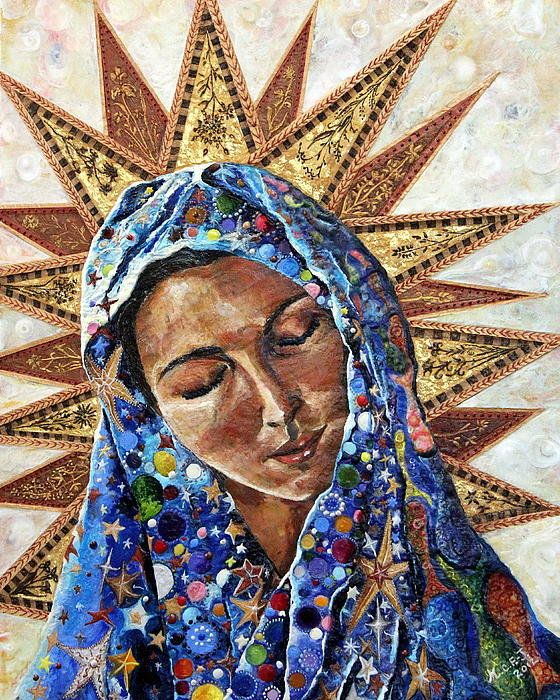
Image: Mike Moyer


In today’s Gospel, we hear of that moment when Jesus returns to that place where he’d been brought up and nurtured; and, in the familiar rhythm of attending synagogue, he stands and takes up the scroll of Isaiah. He reads those familiar words - words of good news and freedom, recovery, favour and release.


Eyes remained fixed on him as he sat down. In that moment of ordinary worship and observance, the words point to the Word: anointing, fulfilment and goodness.  Then there is amazement - perhaps a desire to celebrate the local lad made good; high expectations of him or the hope that they could hold on to him. 


Yet, this isn’t about change just in his own community - but a vision of radical inclusion which enfolds the whole world.   This goes beyond merely informing and educating; it is more than entertainment. This is about teaching that makes whole; words that proclaim the habits of justice and hope of sustained transformation through mercy and compassion. 


Interestingly there is only one  prisoner to be set free in direct connection to the words of Jesus, or by his presence as God’s Word of love made flesh. That person was Barabas. The one who was released from prison as Jesus was bound, held captive and mocked before he walked the way to the cross. There, in the weight of that isolation and suffering and death, God’s Word has the last word: a love brings new life even from the grave. 


This fulfilment of God’s word was not just for the life of the church but the whole world. Yet today, as we gather as is our custom, we are reminded of what is at the heart of our life together. God’s words remain a source of encouragement, learning and hope; God’s Word made flesh, broken and poured out in bread and wine, remaining a gift to sustain us. 


Paul, when writing to the church in Rome, is aware of the ways in which they are divided - disagreeing over whether to eat meat offered to idols or to refrain; disagreeing over other pressure points in their life together - strong and weak. And yet, God is at work in them - and in us. God desires that we unite around a  common purpose.  


Here in Hendon we are continuing to tease out that common purpose - what does that look like in response to those seeking company, friendship and warmth; what does it look like in music and creativity; what does that look like for our young people, families and teachers; what does that mean in the partnerships we form?


Rather than focusing on our differences, we are invited to extend a vision of encouragement, justice, and a love that strengthens and builds up.  All of that flows from and flows into our worship - giving glory to God. 


Bible Sunday isn’t just about reading more of it more often: but seeing where God is at work in church, world, community and creation.  In a way, we are all broadcasters. Going beyond a Reithian vision to inform, educate and entertain 


Our words can transmit love and  beauty, our actions share justice and  joy. We share God’s promises that are fulfilled in Jesus Christ in the building up of our neighbours: the church isn’t just an  unique experiment - with no corporate sponsors. It in some ways offers a common ground - in all our diversity and disagreement; it is a bridge between the world as it is and how God longs for it to be. 


The Bible too reflects who we are and who we’re becoming. The church as Christ’s body doesn’t exist because we believe it matters - but because we believe in something that matters, we’re called into a life which belongs to all of us.  


We are called to proclaim the year of God’s favour - that season of jubilee when debts are erased, land restored, justice enacted and inequality reduced. In the power of the Spirit we are to witness to the love of God revealed in Christ Jesus. The one who is the Word made flesh. 


Tuesday, 18 October 2022

Prayer: the heart of advocacy and action


Sunday October 16, 2022: Genesis 32:22-3, 2 Timothy 3:14-4:5, Luke 18:1-8

In ‘The Diary’ column of the New Statesman, a criminal defence barrister comments on going back to court after strike action. Our advocates had been advocating not for clients but for the justice system itself. 

When confronted with her inbox, this barrister, like many others, finds ‘a long and brutal queue’: the people making up the 60,000 case backlog. She opens the files - the first an 18 month wait for a date, the next two years for a muder case, then three years for a theft. 

Those held on remand and those waiting to give evidence might well feel like the widow in today’s parable: someone waiting for justice. 

She is one of those, who along with the poor, the stranger and the orphan, is among scripture’s protected characteristics; a person who’s vulnerability and plea for justice evokes our empathy.  Afterall, for the prophets, providing justice for widows was a  litmus test for being faithful to God’s commandments.

We know nothing of her circumstances - her age, or means - but here she stands in the public square, courageously demanding that an injustice is put right. Day after day, she makes her appeal.

Day after the judge resists her pleas and refuses to help - he owns the description of himself as having no respect for God or people by repeating in his own inner dialogue.  It seems unlikely he was concerned for his reputation by being shamed into action.

Would he give in through boredom or irritation? Maybe.  But, we are told, she is bothering him and wearing him out - to the point he feels verbally, if not literally, beaten black and blue.

When he sets up this parable, Jesus says this is about the need to pray and not lose heart. 

In saying that, it’s not that he suggests that prayer is a matter of grinding God down with our petitions and requests. Indeed, there is a basic contrast - unlike the mean-spirited and heartless judge, God desires to grant justice to those who cry out for it.

And yet, our experience of prayer can involve urgency and struggle; how do we experience God in those seasons of longing and waiting; as we wrestle and cry out; as we long for peace or healing, comfort of justice?

If we read this parable through the lens of the widow and the judge, we might find that the story is more about us and prayer. It allows space for God to disturb us - opening up our hearts as we seek justice, but also hearing the justice demanded of us.


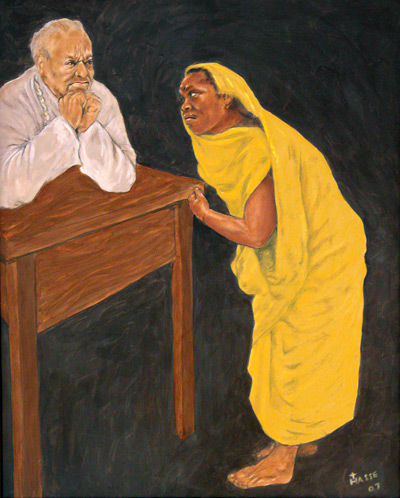
Image

First, let’s stand in the place of the widow.  We know nothing of the details of her petition, but we can think of times when we risk losing heart: when we feel a bit rudderless or lacking in direction; when we’re wearied by the changes and changes of this fleeting world, as one prayer puts it; when the news real makes us cynical or despairing; or when we feel resigned to situations which don’t seem to change for the better.   

This  widow does not lose heart: she remains focused and determined;  her courageous advocacy shapes the rhythm of her day giving her purpose. She is also precise in tackling this one thing - the thing that is most pressing and urgent. She continues. Like many who’ve campaigned - for the release of hostages, for justice of Hillsborough or Grenfille, or more local cases needing change.

Her example reminds us that prayer is hard: especially as we look for, strive for, long for significant change. Every day she risked disappointment - but remained convinced by justice and patiently pressed into that hope.  

Prayer is also  mysterious. Sometimes the power is basically showing up - being present before God with the cries of the world in our heart; maintaining those daily habits of repetition and determination. Praying when justice seems slow, peace fragile and healing painful - that’s part of our faithfulness. Praying through the silence or frustration until something shifts and opens up.

Second, let’s stand in the place of the judge: what if it’s God being the persistent widow pleading with us?   What if part of prayer is allowing the space and time for God to knock at our door - that heart might soften; that we might respond to demands of justice; perhaps attending to  the wounded world which wounds God’s heart - and opens ours. 

Without being too hard on ourselves, it is ok to acknowledge that sometimes we feel indifferent or fed up; that we feel irritable or unsympathetic; that sometimes - out of fatigue or helplessness of being overwhelmed perhaps - our hearts sometimes turn away from the pain and brokenness of others.

Then we are called back to the multiple and various cries of scripture - finding there words of consolation and challenge. There we find the cries of human beings seeking justice; and of God crying out for them. Those cries prompt us to care enough to listen and act.  

It is a truism to say prayer changes us, but it does in ways we might not always expect. In prayer, the Spirit cries within us - changing that inner critic or judge; removing the obstacles of our own fear, prejudice, hurt; building us up when we feel exhausted or inadequate.

Leonard Cohen wrote in ‘Anthem’ that there is a crack in everything, that’s how the light gets in. Prayer is such a crack - through which the light of God works through our imperfect loves. Cohen rarely spoke about his lyrics, but on this he said: there is a crack in everything…that’s where the light gets in, and that’s where the resurrection is and that’s where the return, that’s where the repentance is.

Cries for justice and our prayers for change confront us with the brokenness of things but also with the hope of healing.  There is a crack. The light gets in. A light that shines in our hearts, that reveals the world as it is and brings a glimmer of hope and compassion and a desire to act. 

This way of praying and wrestling can be bruising!

Jacob experienced that in the long, dark hours of the night; yet at dawn, light breaks in. He persisted until the blessing of a new name and a new future were granted to him. 

Paul encourages Timothy to persist too - continuing in what has been learnt and believed; proclaiming the message of the gospel. That a message of hope and love, forgiveness and justice was to be shared whether the time was favourable or unfavourable. 

So let us pray in a what that opens us up to wrestling with God: to do so is to hold God close, as God draws near to us; it is to refuse to walk away, give up or succumb to compassion fatigue. To wrestle with prayer is the opposite of indifference, it might let more light in. 

As we wait and pray, blessings might come; our desire for justice might grow. Praying is at the heart of our action, our advocacy.  So may we run the way of God’s commandments  - open to truth, trusting in love, seeking justice. Amen. 


© Julie Gittoes 2022

Saturday, 15 October 2022

Divine significance - a different metric

Sunday 2 October: Habakkuk 1:1-4, 2:1-4, 2 Timothy 1:1-14 and Luke 17:5-10


W. H. Auden wrote:

And still they come, new from those

nations to which the study of that 

which can be weighed and measured 

is a consuming love.


It often seems that to be human is to measure things: to quantify everything in numbers: from birth weight to height, from calories to pass marks. We know we need accurate measurements when lending money, administering medicine, constructing buildings or even baking bakes. A mistake or miscalculation has consequences ranging from the mildly inconvenient to expensive or even fatal. 


Yet in other ways perhaps we over rely on numbers to make things real or to make good judgements: interpreting data to quantify performance, health and growth. Even the church is not immune from the study of that which can be measured - counting Sunday attendance at certain times of the year. 


Yet, what we are call to is a consuming love - not of that which can be weighed and recorded, but an alternative metric of value and purpose: for example, the sincerity of faith shared across the generations by Lois, Eunice and Timothy. A faith that is quantified by life lived with love and thanksgiving, not by works alone.


And yet, in today’s Gospel we hear the apostles saying to Jesus: "Increase our faith!" 


In the verses before they express this longing or request, Jesus has shared with his followers words of demanding teaching: he has presented the challenge and responsibility of guiding others; he’s spoken of  broken relationships, and the patterns of repentance and forgiveness. 


In response, it’s perhaps unsurprising that the disciples want ‘more faith’. They aren’t seeking short cuts or an easy life - but somehow wanting more, wanting to measure up, or to quantify that they’re up to it.


This can’t be weighed in numbers or quantity, but perhaps we too want to know if we have faith that is genuine or sufficient.


Commenting on today’s Gospel Pope Francis says: Jesus explains this by indicating what the measure of faith is: service.


Jesus’s response might seem strange, dramatic or impatient; he deploys bold or exaggerated imagery to make a point. The smallest seed is enough to follow him in ways we feel are impossible.  For as Paul reminds Timothy, we need not fear or be ashamed because we trust in the power of God - and the help of the Holy Spirit.


Jesus doesn’t end there: he continues with a parable which grates and disturbs us - it presents an overbearing or perhaps indifferent master - and ends with a line inviting us to see ourselves as worthless slaves.


Elizabeth Johnson writes that the master-slave relationship, now totally abhorrent in human society [is] no longer suitable as a metaphor for relationship with God. 


It’s an image which might remind the wealthy and powerful of their privilege and remind them of the need for humility; but for others, for whom the present experience of servitude or the legacy of slavery is real, it sounds as if that denial of dignity is being locked in. 


To our ears, the questions and responses jar. Yet Jesus is leading us to a point of acknowledging that however small or great our achievements, we are ultimately dependent on God, fulfilling obligations of love. 


To recognise the offence of the imagery, reminds us that we are not the centre of the world. Somehow, we find freedom in this duty to live with a consuming love we cannot measure or quantify. 


Recognising the risk and offence of the imagery, Pope Francis leans into the attitude of being willing to serve. He says: Jesus wishes to say that this is how people of faith are with regard to God: they completely give themselves over to his will, without calculations or pretexts. 


More faith then is not a matter of what we want - something manipulative or dramatic; it isn’t a matter of removing all doubts or fears; or even having all the answers to challenging questions. It is not something that we can quantify, weigh, measure or count - there is no ‘more’, ‘better’ or ‘stronger’ in this life of faith. 


Rather, faith is a way of life. It’s an attitude, a posture, an alignment of wills in love and trust. It’s a matter of engagement and hope - something that we live out in our lives. Something which brings strength and blessing in the sharing of this consuming love. 


Small is significant. Every word and gesture; the dignity of every human person. In the words taken from a linocut by a New Zealand priest, Divine significance usually looks like insignificance. 


Images by the Rev'd Sarah West can be found here


As Paul reminds Timothy, faith is  a matter of turning to Jesus. Coming to him in hope and trust - leaning into his mercy and love and goodness; finding justice and mercy and challenge; bringing to Jesus the pain, vulnerability and risk. 


Jesus is telling them that they have faith - in relation to him. There isn’t more to be measured out or bought. 


Faith as trust and relationship. 


Faith as living out what we have encountered.

Ordinariness of loving and forgiving, serving and caring. 


As straightforward, intuitive or committed as when someone pulls a pint, fulfils a day’s teaching, comes to the end of a shift in hospital or in the supermarket, or feeds a  child, bakes a cake or walks the dog.

Faith is the business of living out not so much an employment contact but a covenant of love. 


Even against the backdrop of destruction, violence, strive and contention, the prophet Habakkuk reminds us that we are to live by faith: we stand at our watch posts seeing what is happening, the Spirit crying within us for an end to wrongdoing; we stand at our watch posts, rekindling the gift of God that is within us.


As Paul reminds Timothy, this rekindling is the basis of daily living. Embracing the gift - committing to habits, to the discipline of this consuming love. 


Resting in the assurance of God’s creative and recreative love; and taking that into our lives. Faith is being who we are and doing what we do - inspired, equipped, sustained by love.


This love was revealed in Jesus - the one who through the cross abolished death and brought life. We can trust in him - in faith and love - with the help of the Holy Spirit. 


Having faith is to trust in and lean on God: there will be struggles, doubts and worries; there will be questions and moments when things don’t make sense.  Yet, we continue to walk this way - seeking God’s ways and knowing God seeks after us. 


Faith deepens as we live it; lean into it. We give much of it away in love - rather than clinging on to it ourselves in the hope of increase we can weigh and measure. As we are fed by a wafer of bread, we receive and become Christ’s body - living and breathing, walking and serving in the world.


God comes to us in a way that looks insignificant; God comes in an overwhelming love in small things; Divine significance usually looks like insignificance. And there is ultimate value in that. 


Sunday, 25 September 2022

Seeing differently

Sunday September 25, 2022: Amos 6:1a, 4-7, 1 Timothy 6:6-19, Luke 16:19-31: a sermon preached at St Mary's and Christ Church


Last week began with words from Archbishop Justin on the nature of loving service, those we remember; whereas those who cling to power and privilege are long forgotten [Her Late Majesty's Funeral].  The week ended with a “mini-budget” and an MP [David Lammy] saying ‘I have a joke about trickle down economics. 99% of you won’t ever get it’. 


It’s a joke which we know isn’t funny. As the psalmist says, we trust in a God who gives bread to those who hunger, and the poor are still waiting for justice.


A sermon isn’t a lesson in economics or Trussenomics.. Rather it is an opportunity to see our world, its systems and priorities through the lens of scripture. The contrast is stark. Today, we hear of the prophet Amos pointing out that weath and revelry pass - alas, he cries, for those who’re at ease, secure, notable and rich - but who are not grieved at the plight of others.


We hear too from Timothy the familiar words said at funerals: taking us to the heart of the human condition ‘we brought nothing into the world, we take nothing out’ Therefore, we are to be content with food and clothing, and take hold of the life that is life. Loving service now - and hope in death, the gate of glory.


Paul warns the younger man Timothy that love of money can supplant love of God and obedience to God’s commandment: hearts turn inwards, swayed by harmful desires; succumbing to greed rather than generosity, comfort rather than compassion. But riches are uncertain and what we have we should be ready to share. 


We know that we are facing a cost of living crisis and that the most vulnerable are already suffering. Putting profit before people and selfishness over stewardship is cruel. As the CEO of the Children’s Society puts it: ‘billions in tax savings for high income earners is going to do nothing to help families bearing the brunt of this crisis’ [from Twitter 24 September]. 


Whatever our capital p  politics, it hurts us to see what God sees; in the words of Amos, we should be grieved at the plight of others. To acknowledge the brokenness and brokenness, the systems of greed and exploitation is part of our call to be capital p prophetic. 


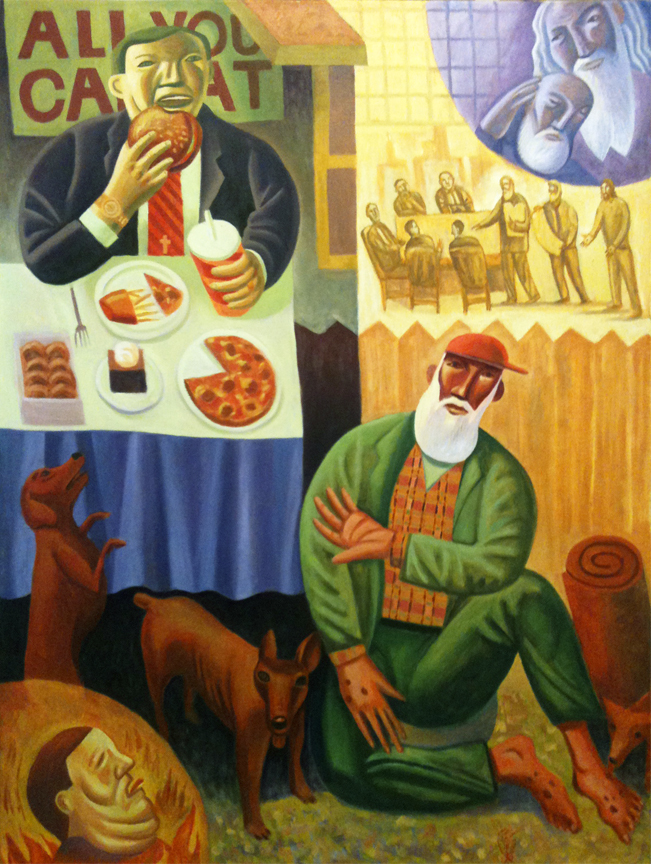
In the parable Jesus tells, the unnamed rich man chooses not see what is in front of him as he feasts sumptuously - he neither acknowledges Lazarus nor alleviates his suffering. Lazarus is visible, human, real; longing for a crumb, consoled by the presence of dogs.


The Rich Man and Lazarus - James Janknegt


In this story, death is the gate of a great reversal: the wealthy, gluttonous foodie thirsts  in agony; the poor man is comforted by Abraham.  There is a chasm  set between them. 


Lazarus cannot be sent to do the richman’s bidding: neither in offering soothing water nor in warning his brothers. The wisdom of Moses and the prophets should be enough for us: love God and neighbour - alas for those who are rich.


There is an urgency to this uncomfortable story: it highlights what’s at stake; strips away the illusion that our choices are endless. It’s a story about wealth, the temptations of riches and the apathy induced by material comfort. It challenges us - whatever our financial position - to see the world as God sees it: to see the reality of suffering,  need and ultimately human dignity.


The richman couldn't not see Lazarus - he may have considered whether he was lazy or ‘deserving’ poor; wondered what led to his circumstances; tossed him spare change occasionally. He may have considered, as he entertained wealthy friends, how to solve ‘the problem’ of street homeless. He may have noticed him, but not truly seen him. 


Jesus invites us to see each other: to recognise our shared humanity, dignity and worth; to see the kinship between us. The one who is God with us, invites us to risk the cost and vulnerability of being in relationship with others; to hear their stories and see in their faces something of our own fear and fragility, indeed our own mortality. 


To see Lazarus, the richman would not only glimpse something of his own fractured dignity; to acknowledge his circumstances, privilege and complicity in the suffering of others. To see would be to admit ‘we bring nothing into the world, we take nothing out’; that to cling to power is to be forgotten; it is to be grieved at the plight of others, to be content with what we have and to share.


One of the refrains of Moses and the prophets is that love of God, true fear and awe of God, is the beginning of wisdom. If we show such reverence - to the one in whom we live and move and have our being - we cannot not have the same reverence for others: our fellow human beings who bear God’s image and indeed the whole of creation. 


We are all impoverished by the incapacity to grieve the plight of others;  by the trading contentment for what we have for craving more than we need; by exchanging short term profit for long term sustainability. 


To see in this way demands personal commitment and collective effort. It means finding ways to reduce or cross the chasm between want and plenty - a chasm we create and reinforce through the policies and politics we choose. It is unsettling because it demands courage and imagination, but Jesus subverts the norms and hierarchies we live by, crossing the chasm of life and death to bring new life.


In the book The Spirit Level  Richard Wilkinson and Kate Pickett argue that inequality has a damaging effect on society: ‘eroding trust, increasing anxiety and illness, encouraging excessive consumption’. Equality, they argue, is better for everyone.  The Joseph Roundtree Foundation called for more research on the policy and tax implications of their work - some of that includes recognition of our interdependence and need for security; reducing stigma and increasing commitment to the common good.


To take hold of life that really is life might mean bearing the burdens of others, being content with what we have and confronting privilege. We trust in a God who crosses over the chasms we construct and maintain - in Jesus we are shown a way of selflessness and loving service. As Archbishop Justin said, we are shown who do follow - losing our lives in order to gain them.


We have everything we need: created and creaturely goodness; the gift of forgiveness and the hope of blessing; we have the life, death and resurrection of Jesus; we have power of the Spirit gathering us together as one. Dare we offer healing love to our world - in what we spend, in how we protest, in what we campaign for, in who we see and who - and what - we serve. Amen.


© Julie Gittoes 2022

Saturday, 17 September 2022

Breathing the words of Mary

 A sermon preached at our patronal with prayers for Her Late Majesty: Isaiah 61:1-11, Galatians 4:4-7 & Luke 1:46-55 

Standing in front of our Vicars’ board is a humbling and poignant thing: the dates  connect us to past generations, eras and circumstances. They mark out times of  conquest, plague and reformation; of settlements, civil war and restoration; of  empire, industrialisation and commonwealth; of the blitz and the welfare state, state  funerals and accession. 

Most of the names are unremembered apart from being said out loud by the  current incumbent wondering how they navigated change, how they, in the power  of the Spirit, shared God’s word and witnessed to Christ. 

They baptised at the font we use today; they, like us, took bread and wine saying  take and eat do this in remembrance of me; we are united with them in every ‘our  Father’. We laugh and weep like them; we comfort and seek consolation like them.  

We come as T. S. Eliot expresses it: ‘you are not here to verify, instruct yourself, or  inform curiosity or carry report. You are here to kneel where prayer has been valid’. 

Amidst the changes and chances of this fleeting world, we continue this rhythm of  worship and witness; dwelling in the eternal pulse of love, the fullness of God. Our  lives are but small things held within this overarching story of God’s love for the  world. 


We trust in a God who works through small things: through one woman’s “yes”  God’s Son is made flesh; immensity cloister’d in [her] dear womb. It is through the  child-bearing of blessed Mary that we receive adoption as children of God, and if  children then also heirs.  

Heirs of a promise of a kingdom. Archbishop Fisher, who gave Her Late Majesty a  book of devotions as she prepared for her coronation, said: ‘The Christian lives in  two worlds at once; the world of Christ’s completed kingdom… and the world of  continued conflict against the powers of evil’.  

In some ways, Mary’s song - the familiar words of the Magnificat - is one which  shapes how we live between these two kingdoms.


Mary’s whole being is caught up in praise of God, the assurance of grace: she  embodies the words of Isaiah as mind, body, soul and Spirit are caught up in the  fullest expression rejoicing and exultation. She also calls us into service of God’s  kingdom on earth. 

On Friday, Bishop Sarah said: ‘A life lived in the service of others is a rare jewel. It is  a jewel that Her Late Majesty The Queen wore as a crown.’ Isaiah speaks of a rich  crown too - of jewel and garland, garnets and robes. These were no mere earthy  vesture but speak of God’s salvation and righteousness. 

Salvation being God’s power to heal, restore and make whole. Righteousness being  the quality of God’s faithfulness and loving mercy. Through Jesus, salvation is for  any and for all - the greatest and the least. Mary speaks of this promise, remembered  across all generations. 

In Jesus, the powers of evil are undone: though his presence in the world, through  his death and descent to the very depths of alienation and despair, though glorious  hope of resurrection. As Rowan Williams puts it: ‘he comes to his new and risen life,  his universal kingship by searching out all the forgotten and failed members of the  human family’.  

This is the stuff of the world of Christ’s completed kingdom. This is our hope. 

Mary names the conflict and struggle of this world. She gives thanks for what God  has done in faithfulness, blessing and generosity. She speaks of the consequences  for the world.  

The one whose name is holy will make known mercy from one generation to  another. And mercy is revealed in deliverance from poverty, exploitation and  domination.  

As this courageous, joyful, obedient and determined young woman makes the voice  of the prophets her own, God’s own Son is being knit together in her womb. Her  words look forward to the start of his public ministry: the poor lifted up, the rich  sent away; the hungry filled, the powerful challenged.  

She declares the work of salvation and righteousness in relational terms: human community  transformed, resources redeployed and imaginations enlarged. This is a song through which  we too are called to embody God’s compassion, love and mercy; through which we seek  all that makes for the flourishing of humanity and all creation. 

Today, we hold in mind the life and words of one who, as a young woman, made  vows and promises which she spent a lifetime inhabiting. Her Late Majesty was  greeted in an Abbey with great pomp and ceremony; but she also knelt, laying aside  regal robes and jewels, to be anointed.  

The Queen - photographed by Cecil Beaton to commemorate her coronation in 1953

In her book of devotions, Archbishop Fisher had invited her to ponder this moment  - anointed God’s servant until her dying day, drawing on resources of divine grace  with a heart, mind and hands to do his will. The words Fisher gave the young  queen were, ’in answer to God’s call and consecration, I dare to breathe the Virgin  Mary’s words: “Behold the handmaid of the Lord; be it unto me according to thy  word”.’ 

We too as adopted children and heirs are invited to breathe Mary’s words as we live  trusting in God’s Kingdom amidst the real conflicts and challenges of the earthly  realm.  

Suc works are often about small things. Like seeds planted in hope - germinating  unseen - brings forth shoots from the earth; small things out of which new life and  hope springs up.  Bringing the margins to the centre is not the preserve of the new Prince and Princess of Wales alone; it is the work of all of us, members of Christ’s body; people who breathe in Mary’s words. 

God’s righteousness and salvation is enfleshed in Mary’s womb; from this small  God’s power and love is made perfect in human weakness. This power breaks  through in us too - as we break bread in remembrance of our living Lord; as the  Spirit breathes through us, strengthen us for service. 

In a small thing - a fragile wafer - we are fed, restored, strengthened by Christ’s  body; we become his body, receiving dignity and purpose as adopted children  and heirs.  

We receive this gift not just for ourselves but for the world. Here, even in our grief  we sing songs of hope and praise, vision and protest. Here, we commit to the  pursuit of justice, compassion and peace; to courageous advocacy for the powerless  and marginalized. Here, we like Mary, and all who dare to breathe her words,  commit afresh to acts of service as a nation mourns Her Late Majesty who shares  with us the inheritance of God’s kingdom. 


We sing Mary’s song in places of vulnerability and fear; we breathe her words in  solidarity with suffering and anxious. As members of Christ’s body we do small  things which bring healing and hope; bringing the margins to the centre, seeking  justice and peace. 

The day before her coronation, an archbishop invited a young queen to ponder this  peace in these words: ’But above all God has taken me into his peace and I praise for  his being what he is, for his goodness, his enabling power, the certainty of his  unfailing love’.  

As she takes our rest, may we continue in our service: may God be in my head in  our thinking, speaking and at our departing. Amen.


© Julie Gittoes 2022