Wednesday, 5 September 2018

Disgust, holiness and hospitality


This is the text of a sermon preached at Guildford Cathedral on Sunday, 2nd September. A couple of years ago a friend recommended Richard Beck's book "Unclean"; and the themes of disgust, holiness and hospitality resonated with the questions about the law raised by the following texts: Deuteronomy 4:1-2, 6-9; James 1:17-end; Mark 7:1-8, 14-15,21-23


It’s 19th April 1987. A 25 year old woman visits a London hospital. She’s perhaps the most photographed fashion icon of her generation; but the image captured on this day isn’t remembered because of her striking blue dress.

Instead it continues to be remembered because it broke down barriers of stigma. Princess Dianna had looked a nameless AIDS patient in the eye, smiled and shook his hand without wearing gloves.
Photo: Princess Diana shaking hands with an AIDS patient ...


Research had demonstrated a few years previously that HIV AIDS couldn’t be transmitted by person to person touch. However, it was this ordinary gesture of human interaction, in front of the world’s media, which began to challenge ignorance, misunderstanding and fear.

A nurse at the London Middlesex Hospital said, “If a royal was allowed to go in shake a patient's hands, somebody at the bus stop or the supermarket could do the same”.

Today, HIV-positive people live full, healthy, loving lives, serving in professions from lawyers and haulage drives. Nevertheless, HIV remains an urgent global challenge with more than a million people dying from AIDS in 2015; and many more being infected, orphaned or losing their livelihood or social status.

HIV-AIDS induced fear and exclusion because it touches on triggers of disgust outlined by the psychologist Richard Beck in his book entitled “Unclean”: sex and bodily fluids, sickness and contagion, contamination and death. 

He explores the visceral reactions of disgust and avoidance, but this  is more than an exercise in psychological analysis. He also explores what it means for those patterns to be redeemed.  Beck grapples what it means for God to desire mercy and not sacrifice; for Jesus to eat with tax collectors and sinners; or for the church to draw boundaries of inclusion and exclusion. 

He sets this out as two impulses: “one impulse - holiness and purity - erects boundaries, while the other impulse - mercy and hospitality - crosses and ignores those boundaries”. 

Spectrum Summer Reading Group Gets Unclean

The commandments in Deuteronomy, negotiate these impulses of holiness and mercy. They were teaching about giving honour to God in worship, delighting in sabbath rest and by shunning forms idolatry; and observing them all to strengthened community through giving honour to parental and martial relationships; outlawing false witness, theft and murder.

The people of Israel were called to be a distinctive community; to be wise and discerning. It’s not surprising that as they encountered other nations and traditions debate arose as to how to guard, teach and live out these ordinances.  What was allowable on the sabbath? Should wealth be set aside for God or family obligations? What about food was safe or unclean? What about sex, sickness and death?

Teachers, priests and scribes didn’t the people to forget. They didn’t want to take anything away from the commandments; but diligence in observing them led to more  burdensome detailed laws were added in.

In Mark’s gospel we glimpse part of that ongoing debate. The scribes and Pharisees have continue to challenge Jesus about the nature of purity and the keeping of the law. Elsewhere, this division is focused on human need such as hunger, illness or isolation; in part Jesus exposes our vulnerability and kindles a desire for mercy; for loving embrace.

In order to remain ceremonially clean, the priests had to be careful about what they ate or touched. Over time such prescriptions were observed more widely. So they attack Jesus and his disciples - for eating with unclean hands.

As Jesus’ explores elsewhere in the parable of the good Samaritan, the impulse for purity set up boundaries which made it hard to fulfill the impulse for mercy.  Today, he challenges the hypocrisy of getting things out of proportion. By focusing on the minutiae of the tradition, Jesus accusers risked failing to fulfill the will of God which the commandments embodied.

He goes on to describe with a bluntness, which may evoke an element of disgust, the way in which food is eaten and digested, asking: how can something which passes through our bodies be a source of defilement?  

Drain (plumbing) - Wikipedia

Instead we are to examine our own hearts and consider what human nature is capable of: envy, deceit and adultery; greed, pride and stupidity; anger, self-indulgence and deceit.

No wonder the psalmist cries out: “Create in me a clean heart, O God; and put a new and right spirit within me” (Ps 51).  As my spiritual director put it. We have to guard our hearts. We guard our hearts from being misled by the overwhelming power of sexual chemistry which plays on our loneliness, and desire for intimacy.

We also have to guard our hearts when we seek self-advancement at the expense of others; when our guilt or failure tempts us to be less than honest, eating away at trust within community; when our envy, conscious or not, diminishes others; when our frustration drives us to despair rather than facing the challenging but creative conversation.

It is because of the frailty of these human hearts, that God’s only begotten Son, Jesus Christ, came from the intimacy of his Father’s heart to be with us. To be with us in the fleshly and messy reality of our lives. Love draws near in our bodily lowliness and prideful hearts.  
William Butler Yeats - Wikipedia, la enciclopedia libre

As the poet, W B Yeats puts it: “Love had pitched his mansion in / The place of excrement; / For nothing can be sole or whole / that has not been rent”. It takes our proximity with birth and intimacy, illness and death to realise that that is where love is; in the midst of nappies and bedpans. And God goes there
What then does it mean for our fragile, sensual, muscular, ageing, graceful and imperfect bodies for the Word to become flesh? Out of his fullness, we have all received endless grace. The law was given by Moses; grace and truth came through Jesus Christ”. We are redeemed by grace; by God becoming one of us.

Jesus touched the sick with healing love and restored the dying to life; he embraced those made ‘other’ through sexual exploitation or mental distress; he ate with those whose hearts were open. He was betrayed and abused; cursed and humiliated. He died. And in dying broke death’s power; in his risen life is forgiveness, mercy and love.

The aspiration of our cathedral community to be warm-hearted is an expression of the commandments to love: to love God and neighbour. We cannot do that in our own strength; it is God’s Spirit who warms our hearts, kindling that flame of love. As James writes, all our generous acts of giving come from above; through grace our creatureliness bears the truth of God’s image.  The fullness of life in God is revealed in a fruitful life.

James uses language which is vivid and physical. He senses that the good that we do begins with what is planted in our hearts, that God’s word of love.  We are to be quick and attentive in our listening; but slow in our speaking and our anger.

Doing what we hear is mediated in a multitude of loving gestures.  The gentleness of which he speaks is not a soft option. It means caring for orphans and widows; protecting the vulnerable; listening to the dispossessed;  showing compassion to the stranger. Seeking what is just in this world - walking with humility before God.
 The Children's Society Case Study | Virtual College


No human being, whatever age, should feel alone. As Christians we don’t offer simple answers to complex problems. But we do commit to being alongside those who feel unloved, isolated, scared; those who self-harm, who’re grief stricken and unable to cope. As the Children’s Society tagline puts it:  We listen. We support. We act. 

In our workplaces and homes, may we who are united in prayer and the breaking of bread bring hope and hospitality to others. The impulse for holiness is made real in the impulse of mercy; breaking down barriers of stigma and despair.


© Julie Gittoes 2018


Sunday, 26 August 2018

As shoes for your feet

A sermon preached at the Cathedral Eucharist 26th on Sunday 26 August 2018 - and the first time since I've been ordained that I've preached on shoes! Members of my various congregations have become particularly observant about my footwear; friends joke about the disproportionate number of shoes I bring to conferences... however, shoes have all sorts of practical and personal connotations about purpose and identity for example. The texts were : Joshua 24:1-2, 14-18; Ephesians 6: 10-20; John 6:56-69

As an aside, tracing the Gittoes family tree back through a plumber and publican, millers, servants and tenant farmers, it is satisfying to know that one ancestor was a "cordwainer".  In seventeenth century Wales, a certain John Gittoes (1643-1688) was plying the same trade as the creator the Saalburg shoe, crafting footwear from leather.

As shoes for your feet, put on whatever will make you ready to proclaim the gospel of peace.

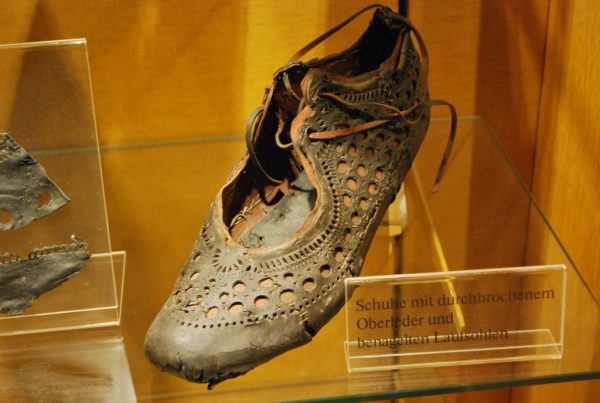
This month, a 2000 year old shoe went on display at the Saalburg in Germany. It had been found in a well - a practical, recognisable and intimate artefact; a point of human connection to those inhabiting the fort between the Roman Empire and Germanic tribes. 


With a hobnailed sole and leather upper, modelled on a military boot, this shoe offers warmth and protection. It also reveals both the craft of the maker and the wealth of the wearer. Holes punched into the soft leather created an intricate design.  This shoe wouldn’t look out of place on today’s high streets; taking retro fashion statements to another level. 

What would the roman shoemaker think of my own collection of footwear: from my faithful DMs, and liturgically coloured heels, to my trainers, converse and floral flats to umpteen pairs of clerical black slip ons, lace-ups, loafers and boots.  


A Canon's shoes!

As shoes for your feet.

When we look at the stories of Joshua, Peter or Paul; the witness of Ruth, Mary or Phoebe, it can feel as if we have big shoes to fill. As we walk in the steps of Jesus, we can sense the weight of responsibility, challenge, expectation and opportunity. 

Stepping into such shoes can feel overwhelming and precarious; but also exciting and rewarding. Eventually, we grow into them - or break them in - knowing we are where we are meant to be; we can be rooted, take risks and flourish.

Without over stretching the analogy it feels immediate and accessible to hear that when Paul talks to the Ephesians about clothing themselves with the armour of God, he also concerned with their feet.  The shoes we are to put on will make us ready to proclaim the gospel of peace. 

Like our physical shoes,  this ‘spiritual footwear’ is practical and intimate, bringing warmth and protection; equipping us for the all-weather terrain of God’s Kingdom.

The steps we take in following Christ are steps towards peace. As Archbishop Justin’s priorities reminds us, this begins with prayer. It continues in the work of reconciliation, transforming conflict in the light of the cross. It involves witnessing in the power of the Spirit to the love of God revealed in Christ.  


Being made ready to proclaim peace demands commitment in the face of struggle. It means choosing life. Today’s readings explore these steps being taken: in gathered community, in communion with Christ, in walking in the world.

In Joshua, steps are taken in gathering together as community and renewing their commitment to serve the Lord.

Joshua was commissioned to lead the nation after Moses’ death. As his life and work draws to an end, he sets before them a choice: between the local gods of their ancestors and the God of the whole universe. 

In the verses omitted today, before he invites them to echo his own declaration, he confesses the story of faith of their community.

He retells God’s call to Abraham; of a promise of blessing which extends to the whole of humanity. He recalls the experience of slavery, the journey through the wilderness towards freedom; he speaks of human bravery in battle and of the nearness of God’s presence in rescuing them.

They are worship and serve the Lord, walk in God’s ways with sincerity and faithfulness. Choose. Life. Today.

His personal commitment is echoed by the voice of the people: ‘we too shall serve the Lord: he is our God’. Today, our footsteps have brought us from our homes to this place, as we too gather to affirm our faith; to recommit ourselves to serve God.


Steps taken

In Jesus’ words, steps are taken in response to an invitation to be in communion; to choose life.

In the beginning, the Word was with God; abiding in the intimacy of perfect communion. That very Word became flesh, entering the complexity human history and taking on the frailty of human a human body.  

That Word came to invite us to abide in him; to lead us to dwell in communion, sharing the very life of God. Jesus dwells with us at wedding feasts and gravesides; he taught on hillsides and sat at table with his friends.  In him, we see love poured out on the cross as God reconciled the world to Godself.

He has broken bread to feed a multitude; he has kindled in them the longing for living bread. The bread from heaven, given by God, is his flesh.  We are hunger for this bread - the presence of God’s love in our hearts.

This invitation to eat and abide demands a decisive response.  Some turn away, refusing the gift and demands of that love. Jesus asks, with openness and vulnerability, ‘Do you also wish to go away’. It is Peter who articulates the hope and courage of this choice. To whom can we go? In Jesus, we chose life; life in all its fullness. 

We hear and respond to that call each time we celebrate the Eucharist together. In broken bread, we are sustained and shaped by Jesus Christ. Our feet are drawn near in faith; our hands reach out to receive; we taste and see how marvellous the Lord is; our hearts are warmed by his love.

And we rise. Our feet walking onwards: clad in leather, heels clicking, laces tied. Our feet walk beyond the threshold of this place into a world. A world where, strengthened by the God’s Spirit, we serve as a pilgrim people; a people called to make peace.


Walking onwards

The Eucharist reveals to us the marks of God’s peaceable Kingdom. And in a messy and complicated world, our lives are to take the shape of the Eucharist as we too are taken, blessed and given for others. 

We are to bring communion to others, in places of beauty and brokenness: as we feed the hungry and struggle for justice; as we take time to be with the lonely and break the bread of hospitality together; as we seek to liberate the oppressed and listen to the anxious; as we share the intimacy and tenderness of care for others; to as we offer the gift of friendship which reveals to others the good news that they are loved by God.

As shoes for your feet, put on whatever will make you ready to proclaim the gospel of peace.

We walk with Jesus today, nourished by his body and empowered by the Spirit; we walk alert to what God is doing in the world; alert to where we need to offer support or challenge. 

Archbishop Justin says: ‘Reconciliation is one of our greatest needs and toughest challenges as human beings. In a world plagued by conflict, division and indifference, the Church has a crucial role to play as a community of reconcilers. Jesus calls every one of us to love God, our neighbours, ourselves and our enemies – a challenging command, with nobody left out.’

As Paul reminds the Ephesians, to do this we need walk in truth and faith, in righteousness and peace. We walk prayerfully, hopefully and courageously; bringing people together - taking small and risky steps of generosity and healing; making cups of tea, creating space to meet or facilitating a difficult meeting. We need to listen carefully and speak wisely; turning suspicion to trust.  We walk the way of reconciliation - transforming strangers into friends, friends into members of God’s household.

Walking this way is difficult: we need ‘spiritual shoes’ for our feet: shoes which are warm, practical and protective; shoes of humility, time and patience.  May we who have gathered to share our faith in God and been nourished in communion with the living bread, be equipped by the Spirit to walk in the world in the ways of peace.


© Julie Gittoes 2018

Tuesday, 21 August 2018

Let freedom ring

This is the text of a sermon preached at Guildford Cathedral at Evensong on 19 August. The texts were Exodus 2:23-3:10 and Hebrews 13:1-15 - both readings speak of the faithfulness of God and the call to liberation. 

Today, the American city of Detroit will be full of song and celebration as people gather to honour the Queen of Soul in her home town. It was here, in the church her father led, that Ree Ree as she was known locally began her singing career and her spiritual life. 
Aretha Franklin Was Already Famous, But Her Hat-Maker Wasn ...

On a crisp, bright day, almost a decade ago, Aretha Franklin stood on the steps of the Capitol. Wrapped in a thick grey coat, paired with a striking hat, her gloved hands held the microphone, and she sang. 

She sang: ‘Let freedom ring’. 

Let it ring, ring ring… let freedom ring.

President Obama closed his eyes; and a vast audience was moved to tears. This was an historic moment but also a prophetic one.  Her voice expressed the hopes and heartbreak of many; it distilled the struggle against segregation and the legacy of slavery.  

Over recent days, tributes have woven together her life story with the impact she had on others. It has been said that she was the voice of America: she toured with Martin Luther King and at his funeral, her rendition of "Precious Lord" gave voice to the bewilderment and resilience of grief. 

Let freedom ring.

Pain and trauma were re-voiced in blues and soul; jazz and gospel expressed out a vision which defied abuse and turned heartbreak into strength.  Hers was the voice which spelt out R-E-S-P-E-C-T, enabling generations to voice their own cry for equality regardless of race or gender.  This voice was gift, crafted by skill and underpinned by character; flawed and flawless, hopeful and human. 

Respect (song) - Wikipedia
In the words of Barak and Michelle Obama’s tribute: Every time she sang, we were all graced with a glimpse of the divine… In her voice, we could feel our history, all of it and in every shade - our power and our pain, our darkness and our light, our quest for redemption and our hard-one respect.

Let it ring… let freedom ring.

This cry is voiced in the scriptures which shaped Aretha’s life and shapes ours. The journey towards freedom is fraught with struggle - with power and pain, the darkness and light. The book of Exodus names the groaning and cries of a people who are enslaved.  The misery and suffering of the Israelites is observed by God; by a God who seeks to deliver them.  

How is that redemption song voiced? How does freedom ring? God works through flawed humanity to restore hope. A flawless glimpse of the divine is made real in human lives. Aretha embodied that in song. Moses embodied it in a call to lead.

The Jewish poet Yakov Azriel retells the family story of Exodus; inviting us to stand with Moses as something mysterious breaks into the mundane; as human curiosity meets divine holiness. He writes:

In the shadow of a burning bush, and in
Its light, we gaze beyond the desert dune.
https://bibleartists.files.wordpress.com/2011/01/4-moses-at-the-burning-bush-rembrandt.jpg

Moses' story is as complex as that of the Queen of Soul. A Hebrew by birth, given up for his own safety and raised in Pharaoh's palace; living in privilege yet aware of the injustice of the regime. His intolerance for abuse and exploitation leads to an act of violence. He's a man fearing for his own life yet his own people mistrust him.  The Moses we encounter tonight is a shepherd fugitive.  

Now he looks and turns aside: a bush ablaze yet not consumed. In Azriel’s words:

In the bush's shadow, and its light a thin
Unbroken thread of grace is seen...

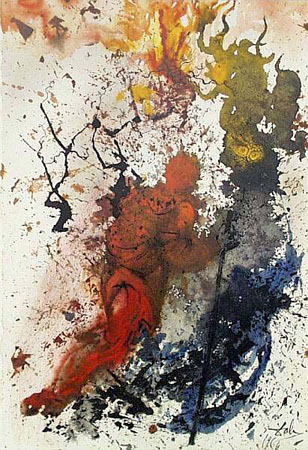
There in the burning bush we see a flame of freedom.  God does not coerce Moses; rather he ignites his curiosity.  This isn't a dazzling display of power and glory. In shadow and light of an intriguing phenomenon, there's a thin line of grace which enables Moses to gaze beyond the desert dunes. In the darkness of exile there are glimmers of light and new purpose.

He hears his name.
The soles of his feet touch the heat of holy ground.
He hides his face.
His words: Here I am.
A voice: God’s ‘I am’.

https://bibleartists.files.wordpress.com/2011/01/4-the-burning-bush-dali.jpg


God chooses to act through one who already burns with a passion for justice. Moses will cry out for freedom in the face of systemic oppression.  The voice from this blazing bush is an invitation to us to; a call to courageously enact the possibilities of God’s goodness. This voice is, in the words of one Walter Brueggemann, ‘a flaming warrant for truth to power’. 

Moses goes on to express a number of objections to this challenging call. His reluctance is met by the assurance of support from his brother - and by God’s very self. God’s faithfulness as expressed in ‘I am’; the one who was and is and ever will be.  

God works through our passions and our voices can be threads of grace. Exodus tells one story of slaves and fugitives whose lives are marked by hope and blessing. Yet cry for freedom to ring out has not ceased. 

It’s no less daunting for us than it was for Moses to both stand on holy ground and respond to this call of radical transformation: of relationships, structures, priorities and communities. Our second lesson reminds us that this is about the whole of our life; but it also reminds us that we depend on the love of God.

The writer of Hebrews reminds us of God’s love in words which echo the voice from the flaming bush: Jesus is the same, yesterday, today and for ever. Jesus is ‘I am’, God with us.

For in him, God makes new his covenant and takes notice of human suffering. In Jesus Christ, God’s love reaches out to the vulnerable and marginalised. His teaching challenges the false assurance possessions, status and independence. His love meets us in the depths of despair and humiliation; and heals when we are wounded and fearful.  He bears the agony of the cross and the coldness of the tomb. And freedom rings out in resurrection life.

The writer of Hebrews also reminds us of the very practical demands of letting freedom ring out. Mutual love is revealed in friendship and support; our bodies can communicate tenderness, creativity, compassion and support.  We are to imitate those whose lives have revealed God’s love to us. 


 Angels Unawares | Kimberly Ramey

Hospitality is not confined to those we know - but to those with whom our lives intersect in fleeting ways. Those who are imprisoned or on probation, those who seek refuge or who become invisible in residential care aren’t kept at arms length as ‘other’. They are part of us.  We are to be content with what we have - a prophetic message in a world of zero hour contracts and executive pay increases, where human beings are still enslaved and trafficked.

Collectively and individually, we are to let freedom ring out: confronting the power of inequality, abuse, illness and discrimination. In our lives, that thread of grace, the glimpse of the divine, can run on.  It runs on in what ignites our passion for justice; in what kindles our compassion.  

Each of us can take a lead - in acts of service, influencing others, finding allies in campaigning and seeking the welfare of society; in living out R-E-S-P-E-C-T.

May we walk in the light of Christ, by the power of the Spirit at work in us, revealing something of God's love: Let freedom ring out. 

© Julie Gittoes 2018

 
*This painting created by Kimberley Ramey and the narrative accompanying it speaks movingly and honestly of the challenge of Hebrews and moments of hospitality which can be glimpsed or lost; sharing the image and the link to her work to read more about this.


Sunday, 29 July 2018

Receiving life in our fragile bodies

This is a sermon preached at the Cathedral on Sunday 29 July. The texts were 2 Kings 4:42-44, Ephesians 3:14-21 and John 6:1-21. 

The two things which underpinned it's inspiration: the headlines about stockpiling food; a poem by Malcolm Guite called "Love's Choice". Particularly the line about the lightness of bread 'a wafer-thin sensation'; yet in this sensation we encounter the fullness of Christ. 

I was also struck by a comment made on Twitter by Dr Ayla Lepine about a painting by Eularia Clarke called "The Five Thousand", she described it as 'holiness in the everyday everywhere". 

John's Gospel tells of an episode which is more than simply a miraculous feeding - and we hear it in a context where there is ongoing anxiety about our ability to feed our nation. 


Aunty Credwyn’s afternoon tea is one of the legendary memories of my childhood: the table seemed to heave under the weight of cakes and sandwiches. Plates were emptied and replenished; our eyes boggled at the plenty. 

Elijah’s words could have been her motto: They shall eat and have some left.

If you were to venture Credwyn’s larder, you’d have found an abundance of a different sort: boxes and boxes of washing powder, bags and bags of flour, tins and tins of fruit.

Her capacity for hospitality may well have been shaped by the experience of wartime rationing.

It seems inconceivable that today we read newspaper headlines such as “Hoarding food now seems the only sensible thing to do”.


The Swedish government has issued advice to households on how to cope in situations of ‘major strain’; when services are disrupted by crises from a cyber attack to terrorism. The leaflet suggested stocking up on non-perishables.

Jean Vanier, in his commentary on John’s Gospel, writes: We human beings do not possess life; we receive life in our fragile bodies.

We receive life via a food supply chain reliant on imports and structured on a system of “just in time” deliveries.  All of us depend on physical nourishment; for some that dependence is more precarious than others. 

Social media responded to Dominic Raab’s assurances about ‘adequate food’ with pictures of Spam; but it was the food writer Jack Monroe who pointed out that mass panic and stockpiling hurts those least able to buy: ‘those living hand to mouth, paycheque to paycheque, food bank trip to food bank trip’.

Today’s readings weave together very real physical concerns with deeper questions about the kind of community God calls us to be.  Jesus himself is concerned for life in our fragile bodies:  Where are we to buy bread for these people to eat?

Those of us who’ve enjoyed the excitement of going along to a festival or carnival, might conjure up a vivid image of a crowd caught up in an event. There’s a momentum all of its own; but at some point people get hungry. 

Jesus notices this: those drawn there by the desire to hear his words and to see signs of healing now needed to be fed. He asks out loud, where are we to by bread?

Philip responds by commenting on the impracticality of the question: they can’t afford enough bread. Andrew’s pragmatism is tinged with a realistic sense of scarcity and inadequacy.

Jesus’ response reveals God’s compassion; his actions are directed to our welfare: sit and eat, he says; rest here a while. He gives thanks and distributes food. Nothing is held back; all are satisfied. Nothing is lost; fragments are gathered up. 

As Vanier reminds us, this is not simply a miracle of multiplying food but also of creating and building a caring community where people are concerned for one another. 

This is a foretaste of heaven in ordinary. The twentieth century painter Eularia Clarke captures this brilliantly in her depiction of the feeding of the 5000: bicycles and handbags are set down, fish and chips are spread out; babies rest in their carrycots, children quench their thirst, adults eat without guarding what is theirs; strangers notice the needs of others, perhaps for the first time. 


In Jesus we see the fullness of God with us. A fullness which loves abundantly in order that we may learn how to live like that too. In Paul’s words of prayer to the Ephesians, we are to be filled with the fullness of God - in order that God’s power at work in us may accomplish more than we dare to ask or imagine. 

This is not a vision of competition or rivalry; it’s not life ordered by self-protection or lack. It is an invitation to be liberated from selfishness to become self-giving. Our Gospel reminds us of how costly and challenging it is to live in this way.

The crowds want to claim Jesus as a leader who will satisfy their physical needs for ever; but he wants to lead them into a deeper dependence on God who’ll reshape our attitudes and actions. 

Jesus disappears: he takes his rest and prays. To give out does not mean we must burn out. To be in community with others, we need also to be alone.  To nourish others - emotionally, physically, mentally and intellectually - we need to nourish ourselves. 

This lesson in sustaining life in all its fullness confuses the disciples. Perhaps they had hoped to hold on to the success of this feast; to enjoy the exultation and admiration of the crowd. 

As Jesus goes up the mountain, they walk back down to the lake and wait. They wait until it gets dark. And still he has not returned to them; so they return to Capernum.

Their impatience turns to fear when the storm rises up. Their journey is not merely physical; it is also spiritual. They, like us, long to abide forever on the sun-kissed mountain top where our longings are satisfied; where our fragile bodies are fed; where we know life in its fullness as an equitable harmony, where all is gathered up.

They, like us, return to a world which is fraught with lack, fear and complexity. We face storms which are beyond our control: uncertainty about the future; the fading hopes of our wishful thinking; cycles of anxiety and addiction We do not possess life; we receive it in fragile bodies. Bodies which are dependent on others; bodies which have the capacity to nourish others.

Jesus meets the disciples and us with words of assurance: It is I; do not be afraid. 

Paul prays that the Ephesians, may know this fearless assurance of Christ might dwelling in them. Today’s collect echoes his supplication: ‘open our hearts to the riches of your grace, that we might bring forth the fruit of the Spirit in love and joy and peace’. 

At this cathedral we long to be open hearted - open to God and open to all. To fulfil that hope, in this Eucharist, we bow our knees before our heavenly Father; we are strengthened in our inner being through his Spirit; Christ dwells in our hearts in faith. Our fragile bodies are spiritually fed. As we take fragments of bread, we are being rooted and grounded in love. We receive in what is wafer thin, the fullness of God.

Here in broken bread and poured out wine, we touch and taste and see what is the breadth and length and height and depth of love. Love that surpasses all knowledge. Love that was manifested in compassion as crowds were fed on a hill side. Love that was manifested in peace as disciples clung to their boat.  

This love is cosmic in scope: it creates, redeems and sustains. This love is inexhaustible and yet known in intimate indwelling of us.  We gather to share this meal with the household of God, for the sake of God’s Kingdom. 


Here God’s love chooses to be emptied into us that we might accomplish more than we can imagine. In a world which is struggling with uncertainty about the future; where fragile bodies need to be fed,  let us pray that we may receive and give life, across all generations and forever: in the food we share, the compassion we show, the support we give. 


© Julie Gittoes 2018